Skip to content
Rust-Free Aluminum Fencing in Kansas City — the Wrought-Iron Look Without the Upkeep

Rust-Free Aluminum Fencing in Kansas City — the Wrought-Iron Look Without the Upkeep

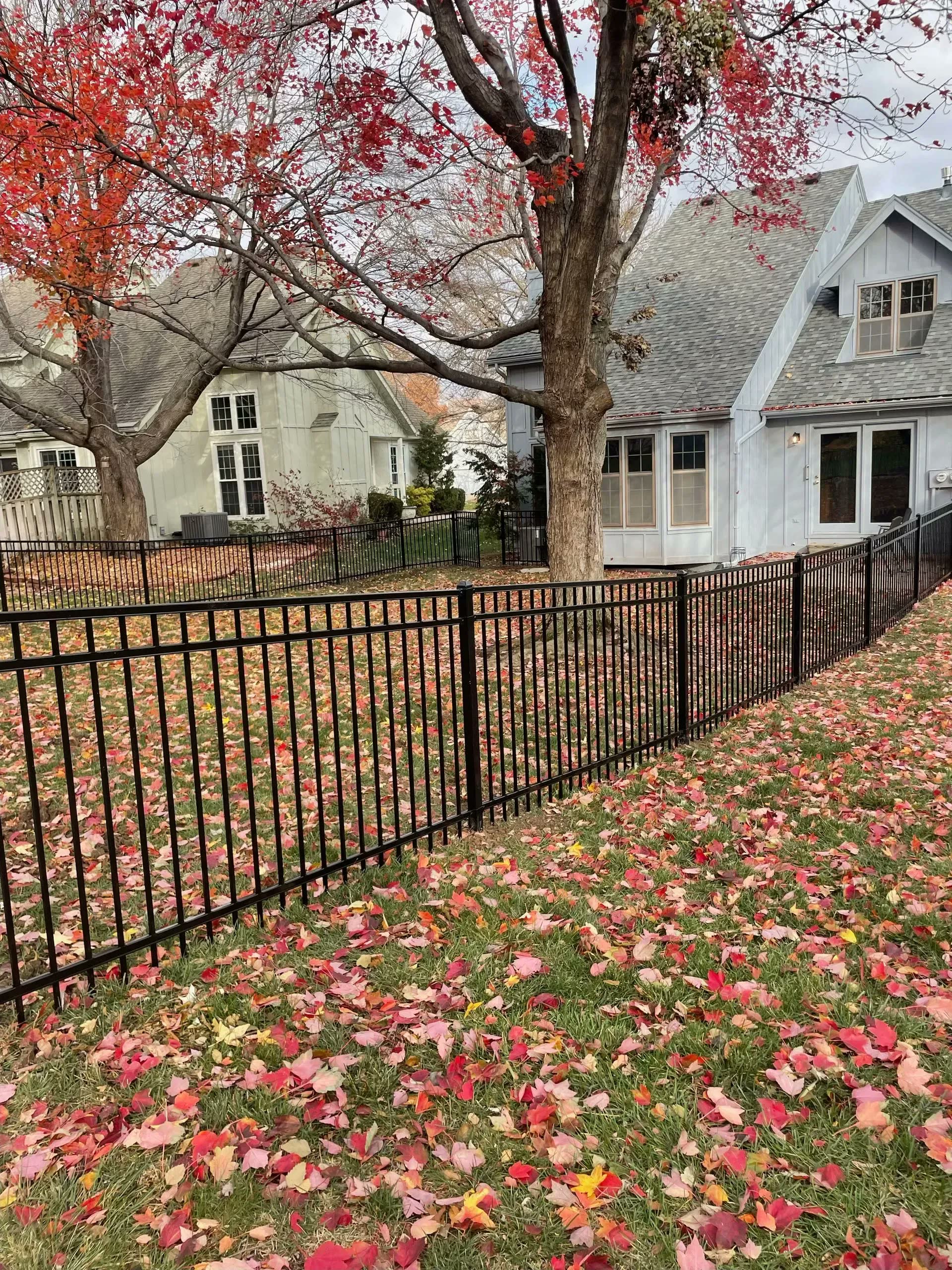
Aluminum gives you the black ornamental fence line without steel’s scrape-prime-repaint cycle — it can’t rust, so the factory powder-coat finish just stays put. RKC installs heavy-gauge powder-coated aluminum in spear-top, flat-top, and staggered profiles, black or bronze, as a rackable panel that follows a sloped lot without stepping gaps into it. Pool-code-ready where a barrier is required, rust-free everywhere, and every post set 36 inches deep in poured concrete — built for every storm the metro throws at it.

★★★★★
4.9
from 85 reviews
Licensed
& Insured · KS + MO
400+
fences installed
A+ BBB Rated Rust-Free Powder-Coat Pool-Code-Ready Free On-Site Estimates
Browse aluminum profiles in our catalog ↓

The short answer

Aluminum is the wrought-iron look with none of the maintenance — and the default material for a pool enclosure. It can’t rust, so the factory powder-coat finish never needs repainting; a rackable panel rakes to follow a sloped yard; and where it wraps a pool, it meets the barrier code out of the box. Heavy-gauge stock and 36-inch concrete-set posts are what keep it true.

RKC installs and repairs every type of fence — wood, vinyl, chain link, ornamental iron, aluminum, and commercial security — plus in-house staining. If you want the same silhouette in real steel, that is ornamental iron; if the pool is the whole reason you’re fencing, start at pool fencing.

The part that decides it

The Aluminum Decision Guide — Rust, Pool Code, and the Iron Look, Answered

Aluminum gets quoted as one product, but five questions decide whether it’s right for your yard — and whether the version you were quoted will actually hold up. Each row takes one of those questions, gives the plain answer, then the trade detail underneath it and the reason it matters.

The questionThe plain answerHow it’s builtWhy it decides the fence
Will it rust?No — aluminum can’t rust the way steel doesAluminum forms a thin, sealed oxide layer that stops corrosion; the colour is a baked-on powder coat over an E-coat primer, not paintThis is the whole reason aluminum exists as a fence — it gives the black ornamental look without the scrape-prime-repaint cycle that steel needs in KC’s rain and freeze-thaw
Can it go around a pool?Yes — it’s the default pool-barrier material herePool-code wants a 48-inch minimum height, a 4-inch maximum picket gap, a flush bottom rail with no toe-hold, and a self-closing, self-latching gate — aluminum is built to all of itA pool barrier is a different rulebook, not a taller fence; aluminum meets the barrier spec out of the box, which is why most metro pool enclosures are aluminum
Iron look, no upkeep?That’s exactly what it’s forShaped spear-top or flat-top pickets and a factory black or bronze finish read like wrought iron from the curbYou get the ornamental silhouette without steel’s weight, price, or maintenance — no staining, no sealing, no rust; an occasional rinse is the entire upkeep
Will it dent?Depends entirely on the wall thicknessWe install heavy-gauge residential and commercial extrusion; big-box aluminum is thin-wall (0.040-inch or less) and dents from a leaning ladder or a palm-slapHeavy-gauge shrugs off a mower bump or a thrown football; the gauge, not the word “aluminum,” is what decides whether it holds its line
On a sloped yard?Yes — the panel rakes to follow the groundA rackable panel pivots at each picket so the whole panel rakes with the grade instead of stepping down in stairsNo sawtooth gaps under the bottom rail — which matters for looks on a front yard and for code under a pool barrier, where a gap is a failed inspection
How long will it last?Decades — it fails at the post, not the metalHeavy-gauge powder-coated aluminum runs 30-plus years in the KC climate on posts set to depthAluminum almost never wears out; it goes wrong at a shallow post that heaves in the frost line, which is the installer’s call, not the material’s

The spec that carries every row is the gauge and the footing: heavy-gauge extrusion so it doesn’t dent, and a 36-inch concrete-set post so it doesn’t heave. If you want the same look with real steel weight, weigh it against ornamental iron; if it’s wrapping a pool, the barrier rules take over — see pool fencing.

The look-alike choice

Aluminum or Ornamental Iron?

From the curb they read the same — a slim black picket line — but one is rust-proof aluminum and the other is real steel. What you want out of it usually settles which metal.

Aluminum — the look without the rust

Lighter, rust-proof, and finished at the factory with a baked-on powder coat. It delivers the ornamental silhouette with essentially no upkeep — no priming, no repainting, no rust bleed down a stone pier — and it installs for less than steel.

Ornamental iron — real steel weight

Heavier and stronger against a hard impact, and the authentic choice for a period home. The trade-off is maintenance: steel has to be kept coated or it rusts in KC’s rain and freeze-thaw. See ornamental iron for the full picture.

Where aluminum wins

Any run you don’t want to think about again — a front-yard boundary, a pool enclosure, a long line around a pond or common area. You get the black-iron look, and the finish outlives the maintenance schedule steel would put you on.

Where iron wins

A historic or high-end home where the mass and authenticity of real steel is the point, a short accent run at an entry, or anywhere a hard knock is likely and you want the heaviest possible section. There, iron’s weight earns its upkeep.

Where aluminum is the default

Fencing the Pool

A pool barrier is a different rulebook, not a taller fence — and aluminum is built to it out of the box. Four details separate a barrier that passes from a fence that just looks like one.

1

Height and the 4-inch rule

A pool barrier runs a minimum height — typically 48 inches — with a picket gap no wider than 4 inches, so nothing about it invites a climb-through. Aluminum’s standard picket spacing is built to that gap; we set the height to the barrier requirement, not the yard fence next to it.

2

The flush bottom rail

The bottom rail sits low with no toe-hold and no wide gap underneath — a child can’t get a foot on a rail to climb it or slip beneath it. On a sloped yard the rackable panel keeps that bottom line tight to the ground, which is exactly where an ordinary stepped panel opens a gap and fails.

3

The self-closing, self-latching gate

The gate is the part inspectors watch: it has to swing shut and latch on its own, with the latch out of easy reach. We hang it on self-closing hinges with a self-latching, key-lockable latch — the gate is where a competent pool fence most often falls short of the barrier code.

4

Built to pass the final inspection

We build the whole enclosure to the barrier spec your pool’s final inspection checks, so the fence isn’t the reason the pool doesn’t clear. If the pool is the entire reason you’re fencing, start at pool fencing, where the barrier rules lead.

Built for every storm

Why Aluminum Outlasts the KC Weather — and What Actually Fails

Aluminum doesn’t rust, rot, or warp — so when an aluminum fence goes wrong, it’s the install, not the metal. Here’s what holds it up through the rain, the freeze-thaw, and the years.

It can’t rust

Aluminum forms a sealed oxide layer that stops corrosion, and the powder-coat over an E-coat primer is a second barrier. No rust bleed, no flaking paint, no annual sanding — the reason it beats steel iron in a wet climate.

No rot, no warp

Nothing about aluminum cares about moisture or a swing from July heat to January cold. It doesn’t swell, cup, or check the way wood does, and it doesn’t get brittle in the cold the way a thin panel can — the section holds its shape season after season.

The footing is the real test

The KC frost line runs 30–36 inches, and a light aluminum post set shallow heaves in the first hard winter and racks the panels out of square. Every post goes a full 36 inches into poured concrete — that footing, not the metal, is what decides whether it stays true.

The gate posts get braced

Aluminum is light, so an unbraced gate post walks over time under the weight of a swinging gate. Gate and corner posts get a cross-brace tied to the adjacent line post, so the gate closes the same in year ten as it did on day one.

Aluminum catalog

Aluminum Profiles We Install in the KC Metro

Spear-top, flat-top, and staggered pickets in black and bronze — every post set to 36 inches. Use the catalog to weigh profiles, colours, and heights before you commit.

Select a style above to see colors and details

See the full catalog — every material and style →

Recent aluminum installs

Aluminum Fences We’ve Built Across the KC Metro

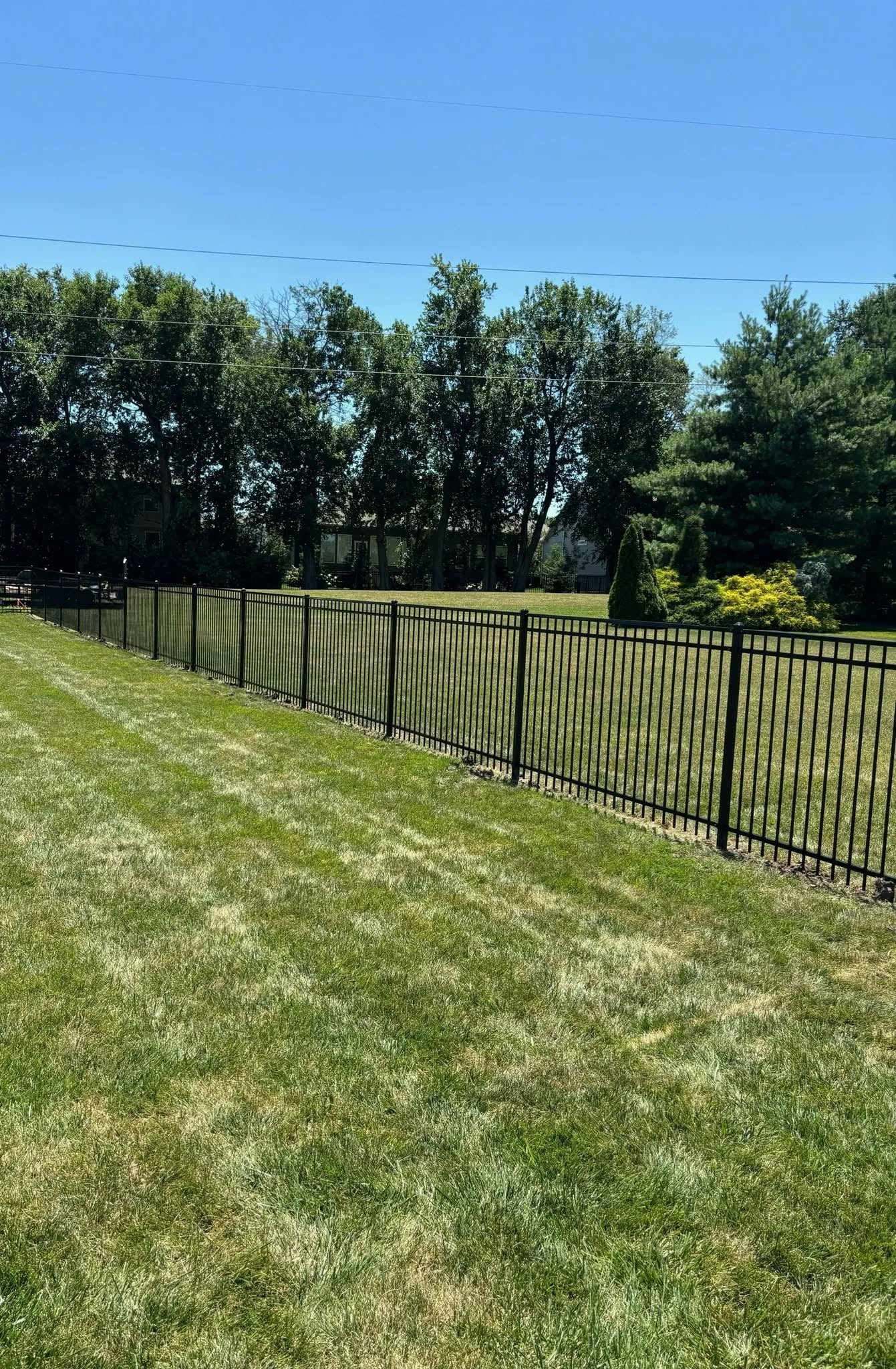
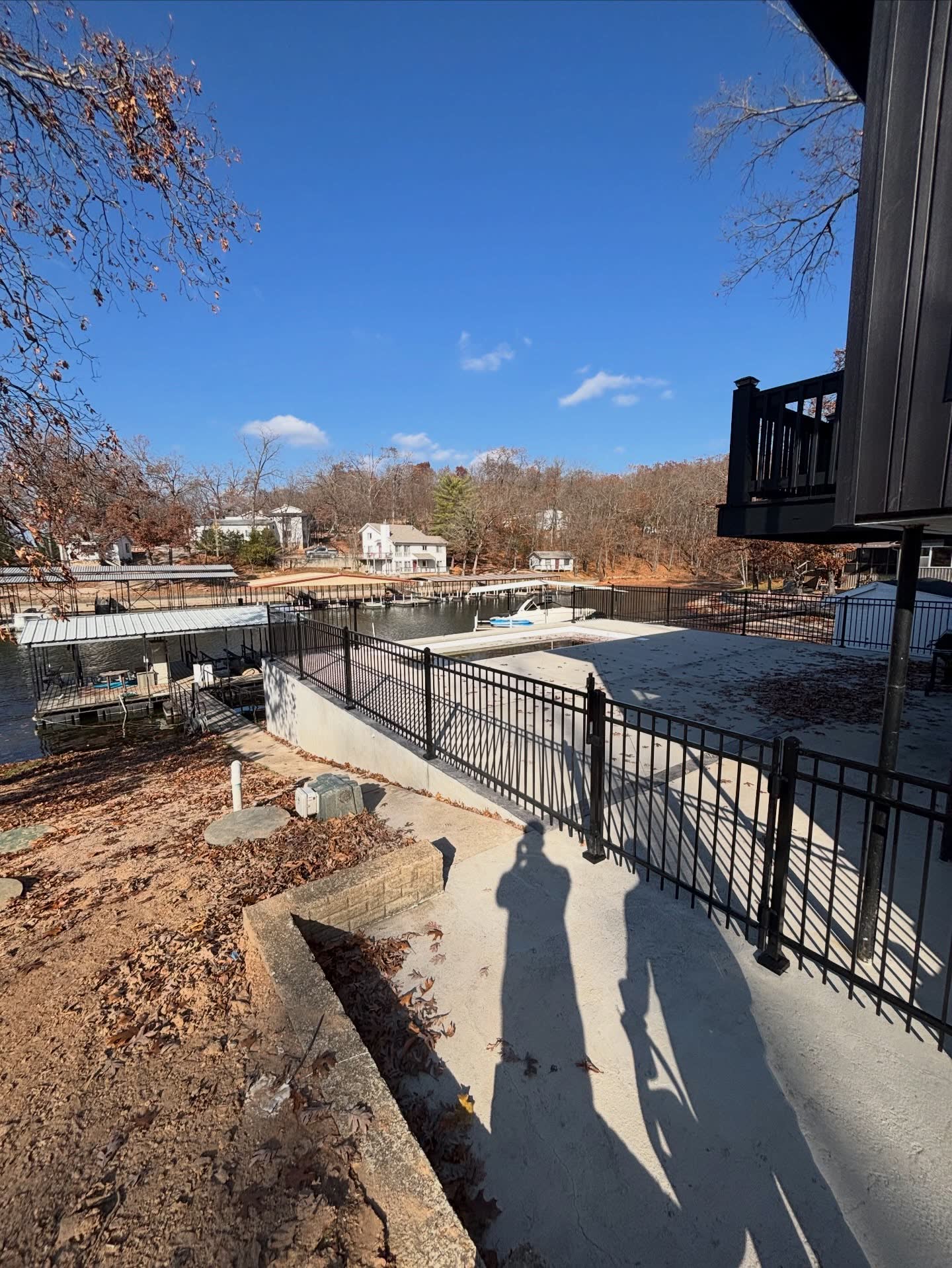
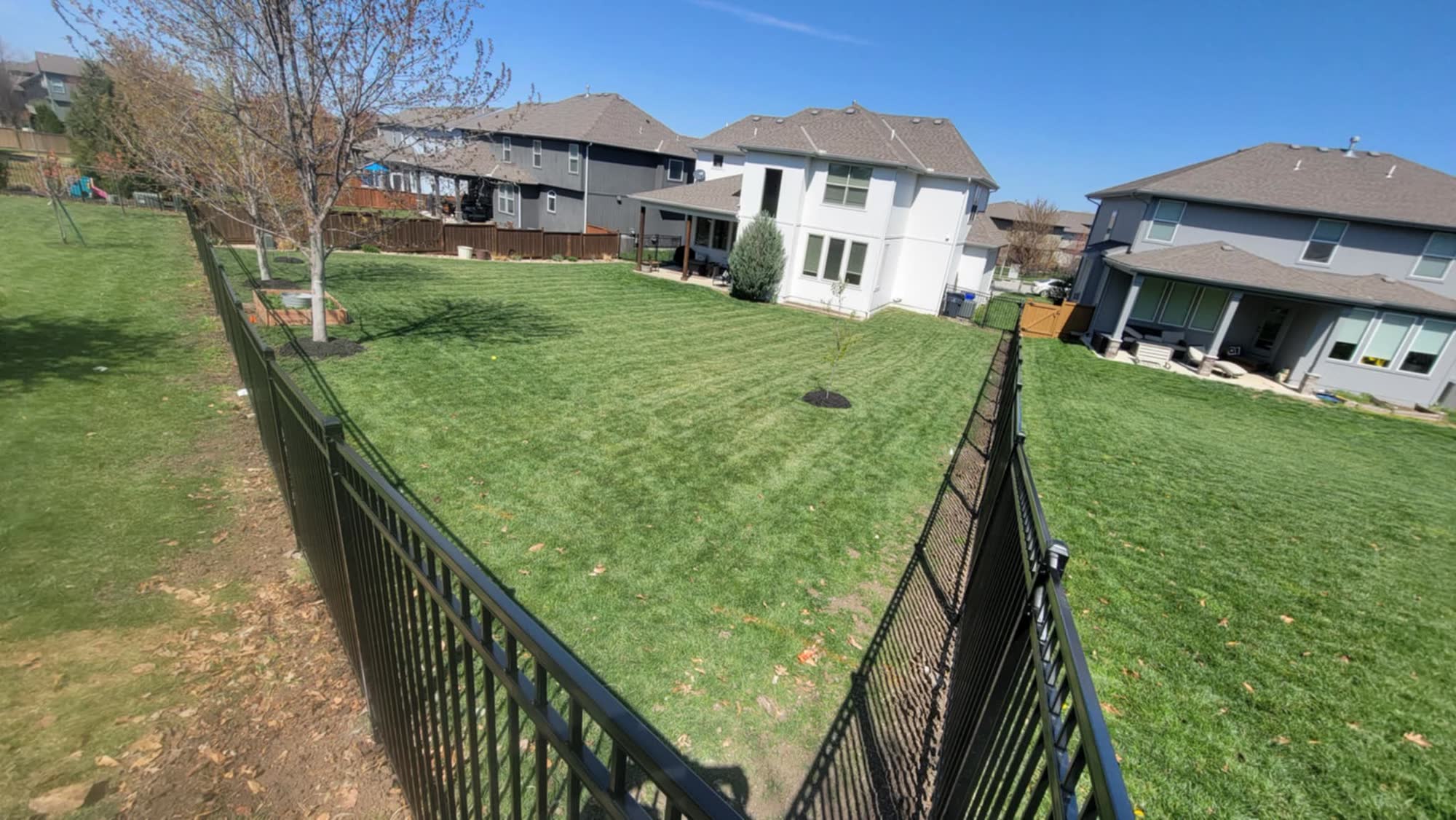
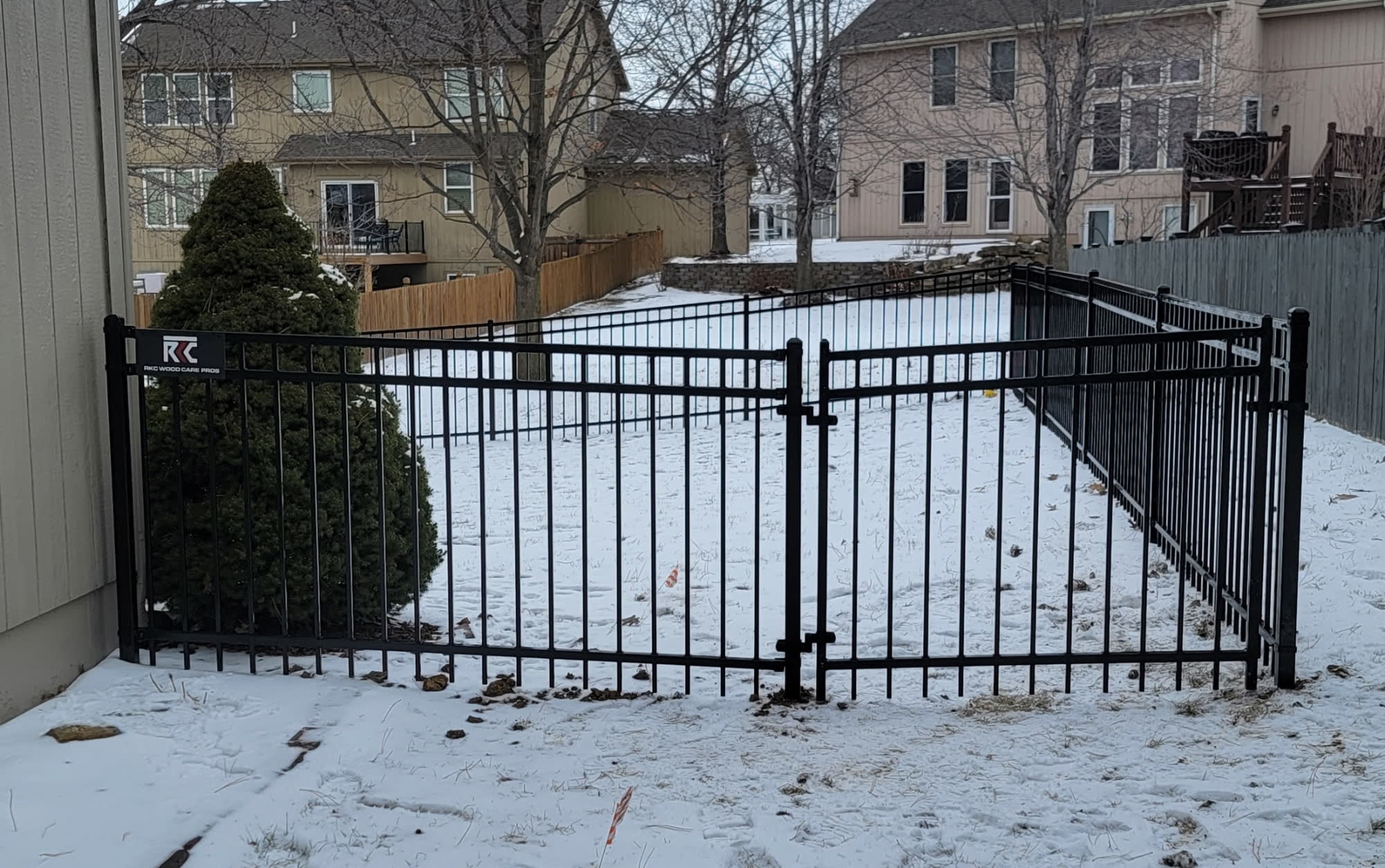
Every photo here is a real RKC aluminum install. Black and bronze, front-yard, lakefront, and drive-gate runs across the metro.

REVIEWS

What Kansas City Homeowners Say About RKC

4.9 ★ · 85 Google reviews

Every review is on our Google Business Profile — read them there, unedited.

Read all 85 reviews on Google

Kansas City aluminum questions

What KC Homeowners Ask About Aluminum Fences

The questions we field most on an aluminum quote. Don’t see yours? Get Josh on the line at (913) 286-1091.

Does aluminum fencing rust in Kansas City?
No — aluminum doesn't rust the way steel does. Instead of the flaking iron-oxide corrosion that eats a wrought-iron fence, aluminum forms a thin, sealed oxide layer that protects the metal. On top of that, the fences we install are powder-coated over an E-coat primer, so the colour is baked on rather than painted. That combination is exactly why aluminum gets chosen over real iron in a wet, freeze-thaw climate: it delivers the black ornamental look with none of the scrape-prime-repaint upkeep that steel demands here.
Is aluminum fencing pool-code compatible in Kansas City?
Yes — aluminum is the most common pool-barrier material in the metro because it meets the barrier requirements out of the box. A pool barrier is a different rulebook than an ordinary fence: it wants a minimum height (typically 48 inches), a picket gap no wider than 4 inches, a flush bottom rail with no toe-hold to climb, and a gate that is self-closing and self-latching. We build the enclosure to that barrier spec so it passes the final pool inspection. Start at pool fencing if the pool is the whole reason you're fencing.
What's the difference between aluminum and ornamental iron?
They look nearly identical from the curb — the same slim black picket line — but they're different metals with different trade-offs. Ornamental iron is real steel: heavier, stronger against a hard impact, and the traditional choice, but it has to be primed and repainted over the years or it rusts. Aluminum is lighter and can't rust, so its factory powder-coat finish stays put with essentially no upkeep, and it costs less to install. Iron wins where you want maximum mass and authenticity; aluminum wins where you want the look without the maintenance. See ornamental iron for the steel version.
Will aluminum fence bend or dent easily?
It comes down to the wall thickness, not the word 'aluminum.' The heavy-gauge residential and commercial extrusion we install resists the everyday knocks — a mower bump, a football, a thrown toy. The thin-wall aluminum sold at big-box stores (0.040-inch or less) is a different product: it can dent from a palm-slap and bend under a leaning ladder. Any aluminum can be marked by a severe hit like a falling limb, but with heavy-gauge stock an individual picket can be swapped rather than replacing the run. We spec the gauge to the job and put it on the estimate.
Can aluminum fence follow a sloped or uneven yard?
Yes, and it handles a slope better than a rigid panel. Aluminum is installed as a rackable panel — each picket pivots slightly where it meets the rails, so the whole panel rakes to follow the grade instead of stepping down in stair-steps. That keeps the bottom rail close to the ground the whole way, with no sawtooth gaps. On a front yard that reads as a clean, continuous line; around a pool it matters for code, because a gap under the barrier is a failed inspection.
What colors does aluminum fencing come in?
Black is by far the most common — it reads as classic wrought iron and recedes visually so the eye reads through to the yard. Bronze is the warm-brown alternative that suits traditional and earth-tone homes, and white and a few muted greens and grays are available as well. The colour is a factory powder-coat, so it's consistent panel to panel and doesn't need repainting. We bring physical samples to the on-site estimate so the colour gets chosen in natural light against your actual house, not off a screen.
How much does aluminum fence installation cost in Kansas City?
Aluminum is the premium fence material, and around the metro a residential run generally lands in the range of roughly $32–$60 a foot installed depending on height, picket profile, gate count, and whether it's built to pool-code. It runs above cedar or vinyl, and what you're paying for is a 30-plus-year lifespan, zero staining or sealing, and the open ornamental look that a solid panel can't give you. Every estimate is free and itemized, and financing is available to spread the cost. For a private-yard screen instead, privacy fencing is usually the better spend.
How deep do aluminum fence posts go, and how long does the fence last?
Every post goes 36 inches deep in poured concrete, below the Kansas City frost line, which runs 30–36 inches. Aluminum panels are light, which tempts a shallow hole, but a shallow post heaves in the first hard winter and racks the panels out of square — so the footing is what actually decides the lifespan, not the metal. Set to depth, heavy-gauge powder-coated aluminum runs 30-plus years here with no rust and no refinishing. Gate and corner posts get a cross-brace so a swinging gate doesn't walk the post over time.

Want the same look in real steel? See ornamental iron; for a private-yard screen, see privacy fencing.

Ready when you are

Get a free estimate — we usually respond the same day.

Call (913) 286-1091