
Horizontal cedar
About 130 feet of horizontal cedar slats with a small gap between boards, built in late winter while the ground was firm enough to set posts. The horizontal lines suit a modern renovation.

A Prairie Village fence has to fit: between houses that sit close together, around maples and oaks that have been growing for decades, and next to a house that may have just been renovated. We work the line around the roots, carry materials in by hand where a machine can't go, and set every post 36 inches deep in concrete. 4.9★ from 85 Google reviews.
The short answer
Fence installation in Prairie Village is close-quarters work. Lots are narrow, neighbors are a few steps away, and mature maples and oaks send roots under most fence lines. We find the roots before we dig, fit the posts around them, and still set each one 36 inches deep in concrete, below the frost line.
RKC installs and repairs every type of fence — wood, vinyl, chain link, ornamental iron, aluminum, and commercial security — plus gates, automatic openers, and in-house staining. This page covers Prairie Village; for the company as a whole, see our Olathe fence company overview.

Aluminum
A low black aluminum fence is how a lot of Prairie Village front yards get a boundary without walling off the house. It keeps the porch and the old trees in view, and the panels are light enough to carry down a narrow side yard by hand. On one front-and-side-yard job here we ran about 140 feet of three-rail flat-top and spaced the posts so a walk gate can be added later. Front-yard fences have their own rules in most places, so we check yours before we quote.
Prairie Village aluminum fence details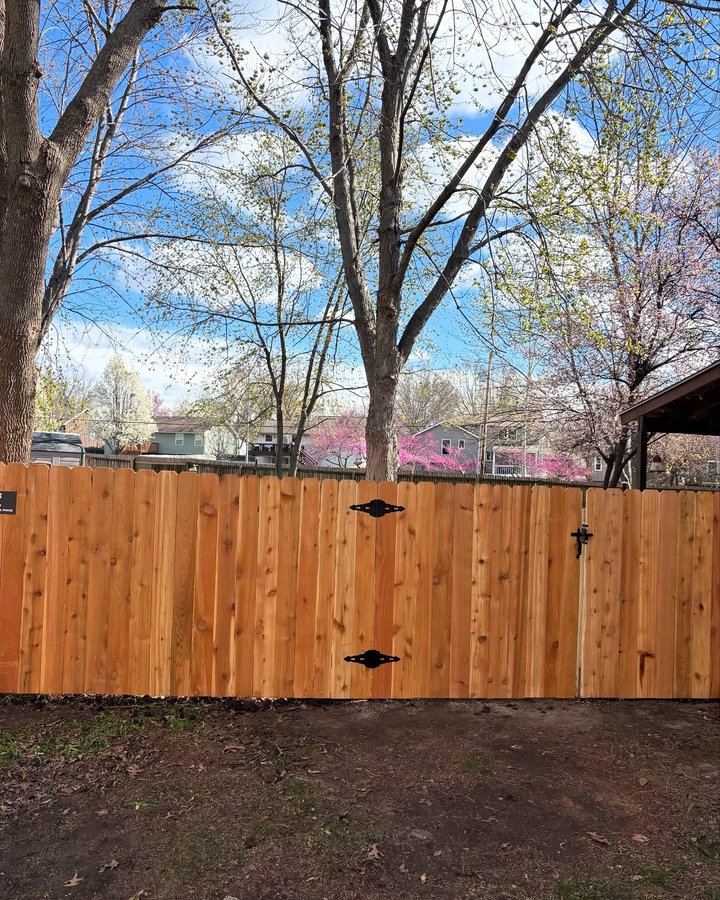
Wood & cedar
Western Red Cedar fits the cottage look of the post-war Cape Cods and ranches that fill Prairie Village, and the styles here lean softer than in the newer suburbs: spaced pickets, scalloped tops, a shorter fence out front and a taller one in back. When a house gets new gray or white paint, the old orange-to-silver cedar can look out of place, so more owners are asking for a pre-stained caramel or espresso tone. We stain in-house, which means the color gets matched by the same people who built the fence.
Prairie Village wood fence details
Privacy
Privacy from the house next door is the request we hear most in Prairie Village, because the houses sit close and the backyards are small. Board-on-board closes every gap; shadowbox looks finished from both sides, which matters when the neighbor is a few steps away and sees your fence every day. Many runs here are short, so the gate and the corners do a lot of the work, and we set every post 36 inches deep even when a root means moving it a few inches along the line.
Prairie Village privacy fence details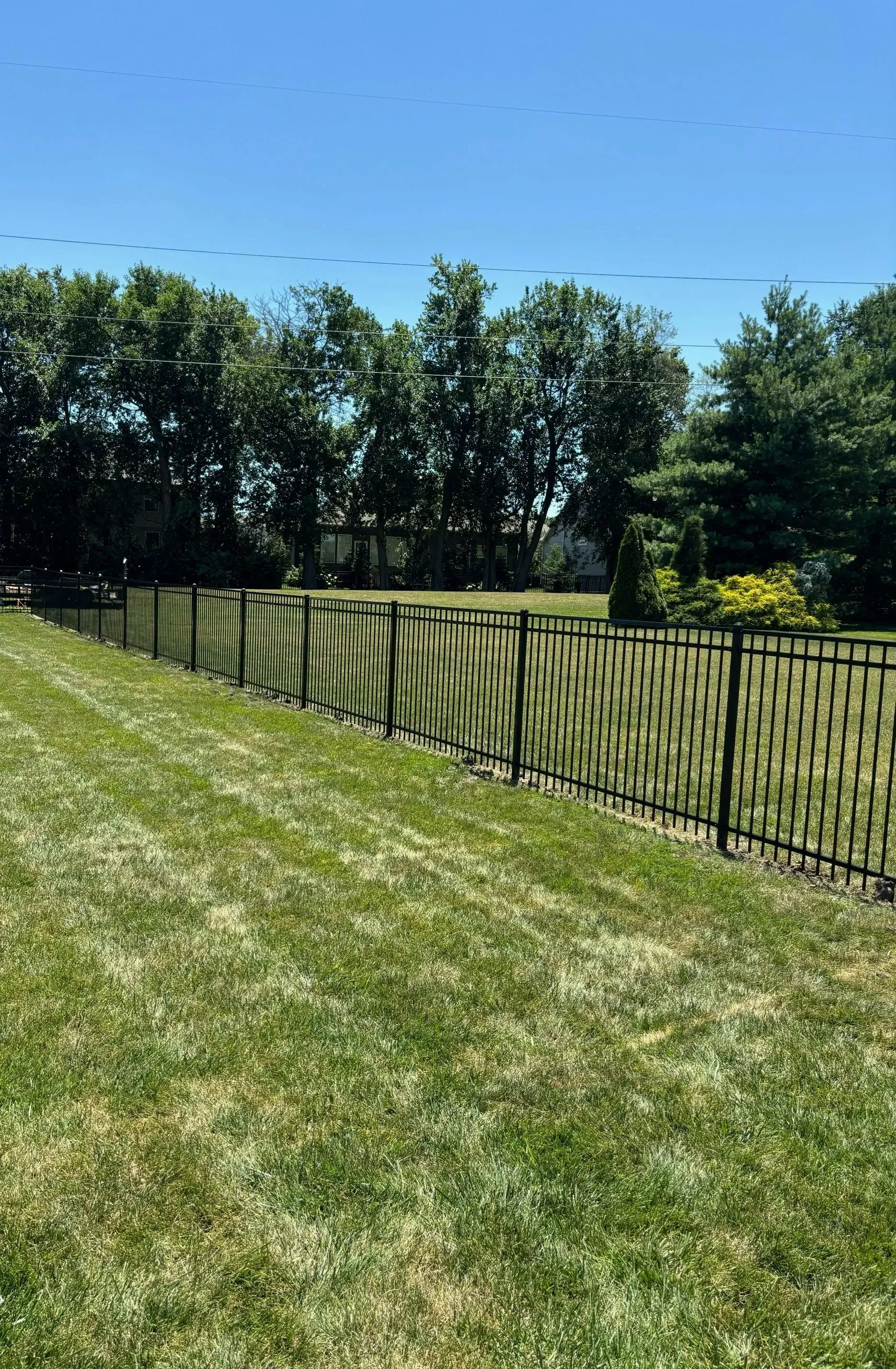
Ornamental iron
Welded iron shows up most on the rebuilt houses, where a new two-story replaced a ranch and the owner wants the front of the lot to look as finished as the house. Steel is heavier and more rigid than aluminum, so it holds a long, straight line and a hefty gate without flexing. It also costs more, and for a plain backyard enclosure aluminum usually does the same job. Every iron post gets an E-coat under the powder coat so the shaded, damp soil under the trees doesn't start rust at the base.
Prairie Village ornamental iron details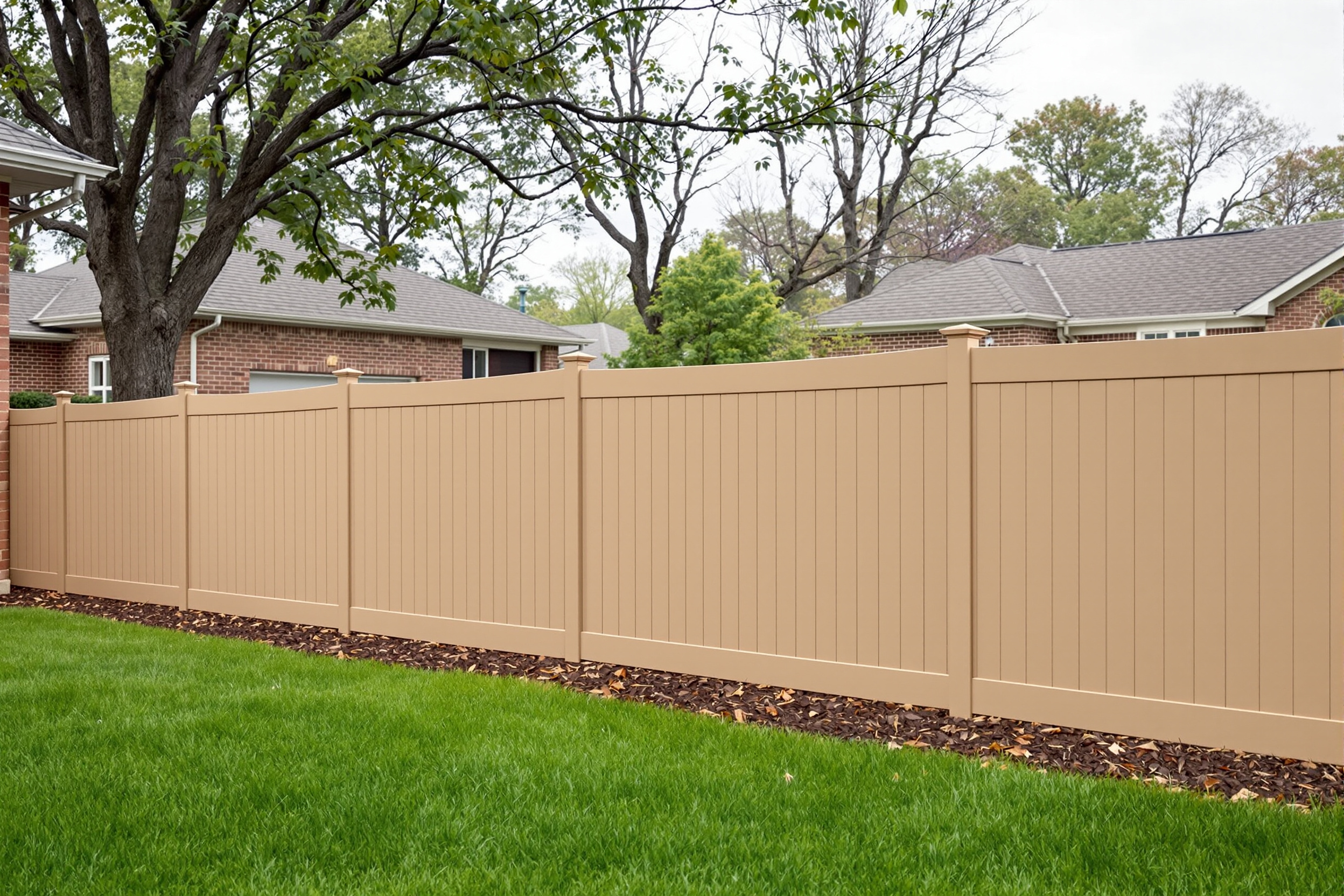
Vinyl
Vinyl appeals to Prairie Village owners who are done re-staining an older cedar fence every couple of years. Under a big canopy, wood stays damp longer and grays faster; vinyl doesn't rot, and the green film that shade leaves on it washes off with a hose. The tradeoffs are a higher price up front and a look that's cleaner than the classic cedar most streets here still have. If your neighborhood has a homes association with opinions about materials, we check before you commit.
Prairie Village vinyl fence details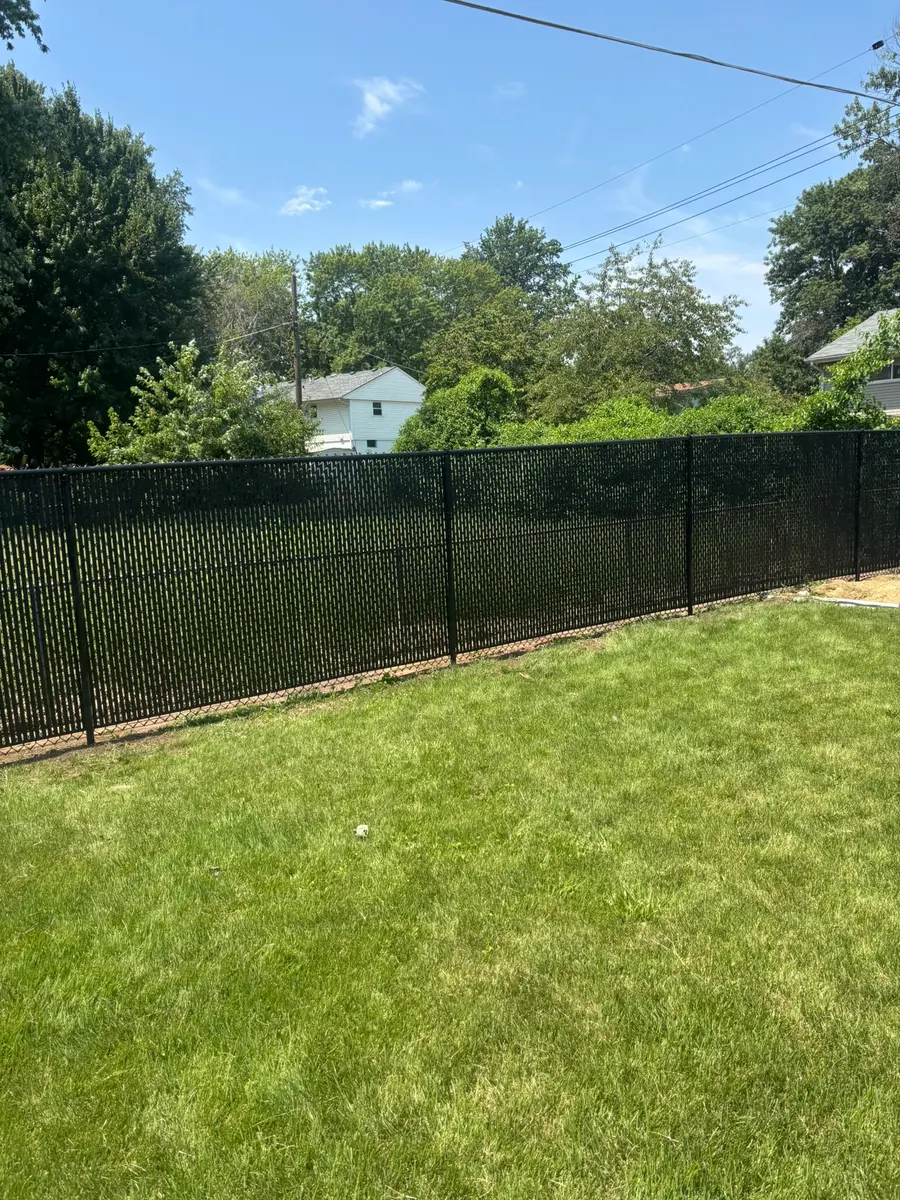
Chain link
Chain link in Prairie Village is mostly a back-of-the-lot fence: a dog run, a rear line behind a garden, or a stretch that meets a neighbor's old fence. It's the lowest cost per foot and goes in quickly, which helps on a tight lot where the crew can't spread out. Black vinyl-coated fabric fades into the shade under the trees in a way galvanized doesn't. We use 9-gauge fabric on homes and put a truss rod at every terminal post.
Prairie Village chain link fence details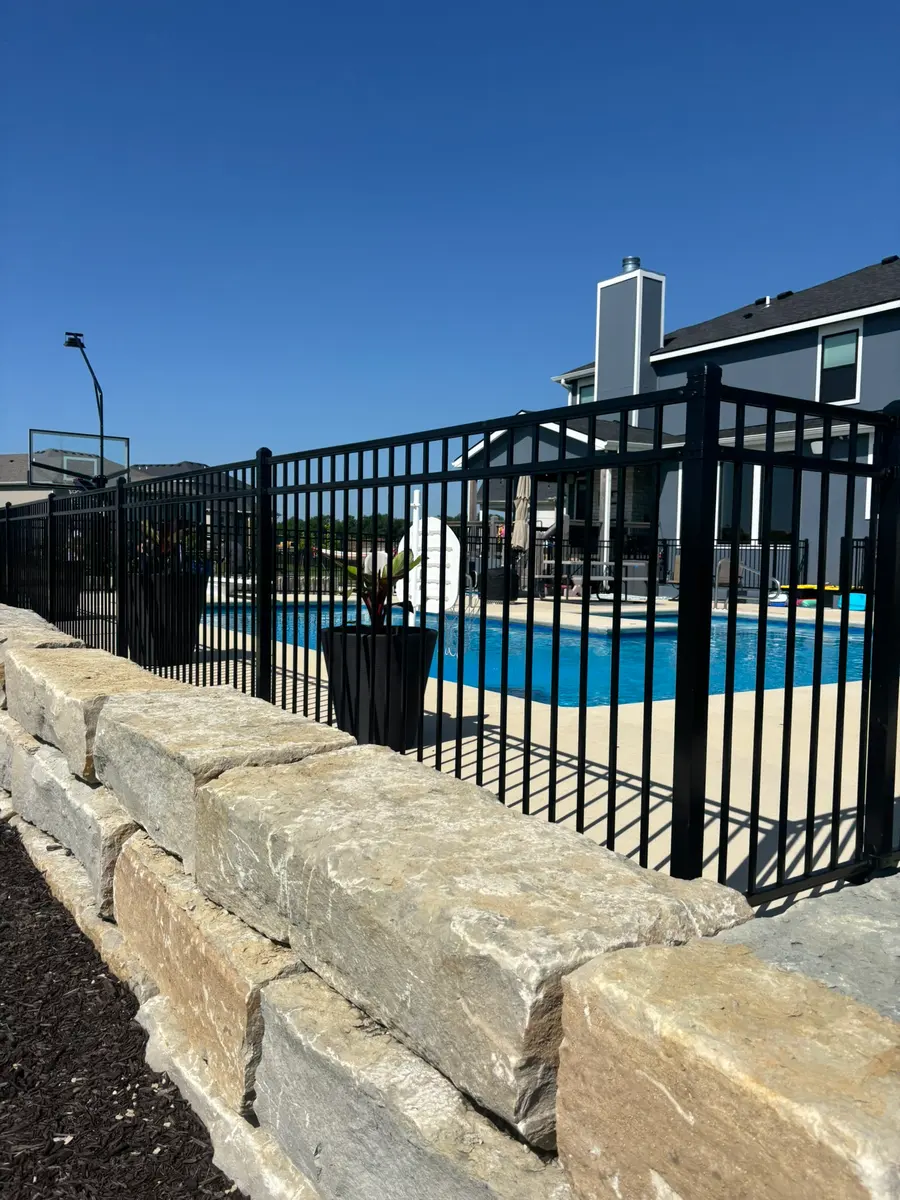
Pool
A pool on a smaller Prairie Village lot usually sits close to the house and the property line, so the fence has to meet the safety rules without boxing in the whole yard. That means a minimum height, spacing a child can't climb through, and gates that close and latch on their own. We confirm the current requirements with the city before we build. Aluminum is the common choice because it can't rust beside the water and leaves the yard open to the house.
Prairie Village pool fence details
Commercial
Prairie Village is almost all houses, so commercial fencing here is small and close to the shopping centers like Corinth Square and the Village Shops: dumpster and utility enclosures, screening for a service area behind the stores, and a finished railing where parking meets a sidewalk. The work has to look tidy because shoppers walk right past it. We build to commercial gauge, and the certificate of insurance and W-9 go out with the proposal.
Prairie Village commercial fence detailsAlready have a fence? We also do fence repair, staining and sealing, and gate installation in Prairie Village, and if your homes association has to approve the plan, start with HOA-approved fencing in Prairie Village.
Trees, roots, and tight yards
Prairie Village is full of mature maples and oaks, many planted when the neighborhoods were new, and a lot of them stand within a few feet of a property line. Before we can plan the posts, we have to know what's in the way. These are the situations we run into most and how each one changes the build. Every yard gets walked before we quote.
| What's near the fence line | What it means for the posts | How we build around it |
|---|---|---|
| A large maple or oak a few feet from the line | Thick roots run where the posts want to go, often close to the surface | Find the roots before we dig, then shift a post along the line or adjust the bay spacing so no major root gets cut |
| A limb hanging over the run | An ice storm or a summer wind can drop it straight onto the panels | We point it out at the estimate so you can have it trimmed first; panels go in so a damaged section can be swapped without rebuilding the run |
| A neighbor's tree right on the property line | The trunk may sit exactly where the fence would go | Leave a gap around the trunk and finish both ends with a post, so the tree can keep growing without pushing the fence |
| A stump from a tree that came down | Rotting roots leave soft, uneven ground | Dig past the soft soil to firm ground and set the post 36 inches deep in concrete |
| A narrow gap between two houses | No room for a machine or a pile of materials | Carry materials in by hand and dig the side-yard posts by hand, to the same 36-inch depth |
| Older buried utility lines | Gas, water, and cable lines in established neighborhoods are not always where you would expect | Have the lines marked through Kansas 811 before any digging, then hand-dig near the marks |
Moving a post a few inches doesn't change how it's set: it still goes 36 inches deep in concrete. When roots push the spacing around, the boards and rails are cut to fit so the fence still looks even from the yard. Material choices are covered on the Prairie Village cedar page and the aluminum page.
Fences for renovated homes
Prairie Village has no empty land left to build on, so new construction here means renovating a post-war ranch or tearing it down and building again. Either way, the old fence rarely suits the new house. These recent Prairie Village jobs show what owners are choosing instead.
About 130 feet of horizontal cedar slats with a small gap between boards, built in late winter while the ground was firm enough to set posts. The horizontal lines suit a modern renovation.
A Trex composite privacy fence for an owner who wanted the look of wood without staining it every few years. It sits on the same 36-inch footing as our cedar fences.
Black three-rail aluminum across the front and side yard, low and open so the house and the fall color stay in view, with posts spaced for a gate later.
Not every job is a new fence. On another Prairie Village property we cleaned the existing cedar fence and the deck, let both dry to the right moisture level, and applied two coats of semi-transparent stain so the fence and the deck match.
Ice storms and fallen limbs
Most of the fence repair calls we get from Prairie Village come after a storm, and the cause is usually a tree limb rather than the wind. Ice builds up on the big maples and oaks, a limb breaks, and it lands across a few panels. The panels take the damage. The posts usually survive if they were set deep.
That's why the way we build a new fence here also makes it easier to repair. With posts set 36 inches in concrete and panels between them that can be replaced one at a time, a fallen limb usually means a section or two of new boards and a stain match, not a whole new fence. If a post did crack or tip, we replace that one post. Fence repair in Prairie Village covers the details.
Shade also affects wood fences under these trees. Cedar under a full canopy stays damp longer after rain and turns gray sooner than cedar in an open yard. A stain coat every few years slows that down, and we keep track of when it's due. Owners who would rather skip the staining entirely are usually the ones who choose vinyl or composite.
Around Prairie Village
All of Prairie Village. It's a small city, and the main thing that changes from street to street is how big the trees are and how much room there is between the houses. These are the areas we're in most often.
Streets around the Corinth shopping center where neat front yards are the norm. We see a lot of low aluminum and spaced-picket cedar out front, and a taller privacy run in back.
Around the former Meadowbrook golf course, now Meadowbrook Park. Some newer homes sit beside long-established ones, so a new fence often has to sit comfortably next to an older one.
Some of the oldest streets in town, with big trees and the tightest side yards. Most jobs here involve working carefully around roots and getting materials in by hand.
Residential pockets where a ranch is renovated or replaced and the new house needs a fence that matches it.
Places near our regular Prairie Village routes: the Village Shops, Corinth Square, Franklin Park, Harmon Park, and Meadowbrook Park. Roads we use most: Mission Road, Roe Avenue, 75th Street, and Tomahawk Road.
Prairie Village fence pricing
Our per-foot rates are the same across the metro. What changes in Prairie Village is the labor on your particular lot. Posts dug by hand in a narrow side yard, careful work around a big root system, removing an old fence that sits right against the neighbor's, and pre-staining to match a renovated house can all add time. Most Prairie Village fences are short runs, so gates and corners make up a bigger share of the total than they do on a big suburban lot.
Estimates are free and itemized. If your side yard needs hand-digging or a tree changes the layout, the estimate will show that as its own line.
Prairie Village fence questions
Most of these come up while we're standing in the yard looking at the trees. Have a different question? Josh, the owner, answers the phone at (913) 286-1091.
More of our work
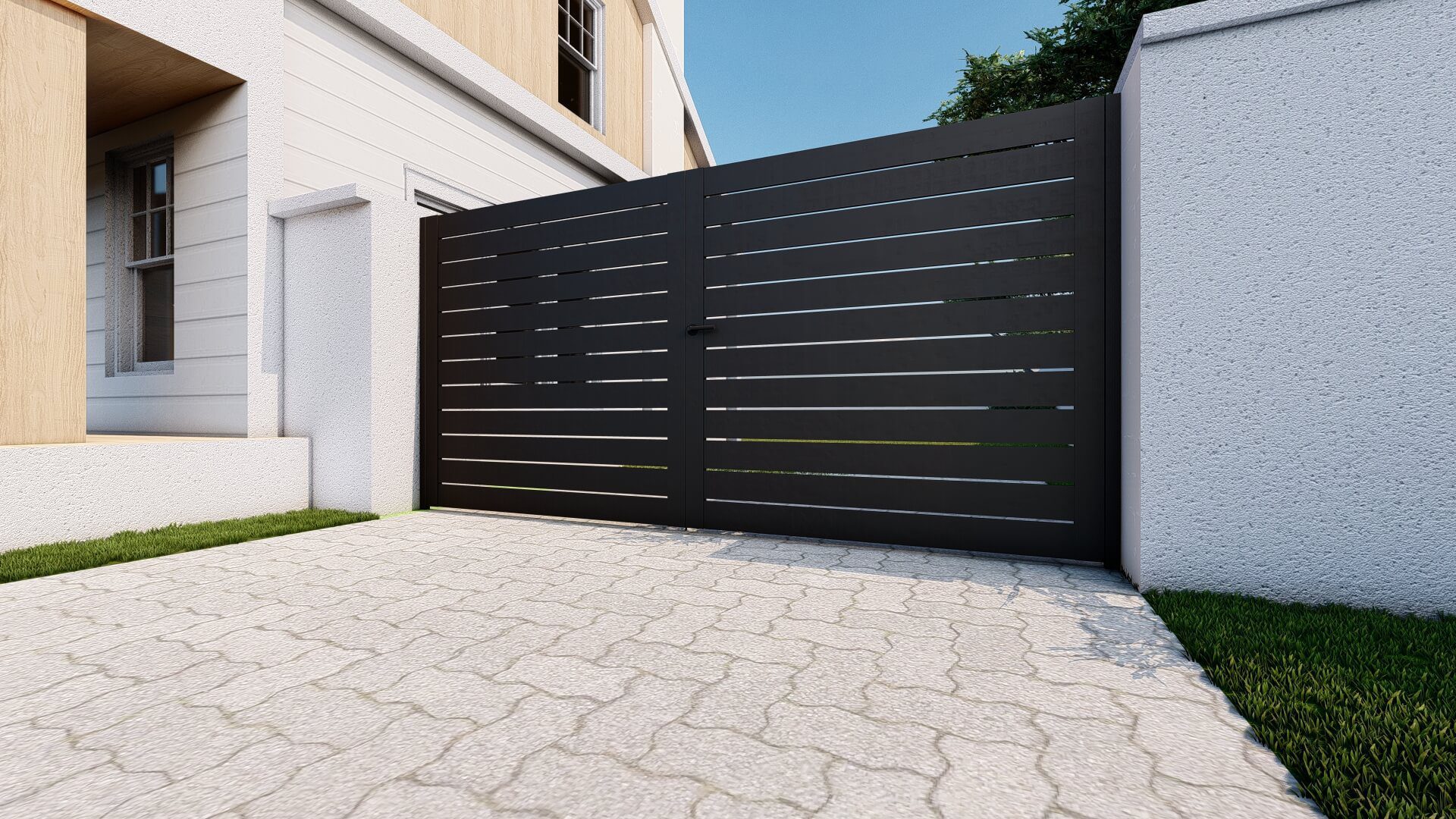
A sample of what RKC builds around Prairie Village and northeast Johnson County. Picket, board fence, stained cedar, and black iron: the same range of work we do on these streets.


REVIEWS
4.9 ★ · 85 Google reviews
Every review is on our Google Business Profile — read them there, unedited.
Read all 85 reviews on GoogleService area
Prairie Village shares borders with Leawood to the south, Mission to the north, and Overland Park to the west, and we build in all three. Lots tend to get bigger as you head south into Leawood and Overland Park. For the rest of the metro, start from our Olathe fence company overview.
A free estimate at your home. We'll walk the line with you, find the roots, and show you where each post will go.
Ready when you are
Get a free estimate — we usually respond the same day.