Skip to content
Chain Link Fence Installation in Prairie Village, KS — Coated, Slatted & Root-Safe on Tight Inner-Ring Lots

Chain Link Fence Installation in Prairie Village, KS — Coated, Slatted & Root-Safe on Tight Inner-Ring Lots

Prairie Village keeps cedar picket and modern horizontal out front — so chain link's job here is the back line: a dog run behind the garage, a screened side yard, the utility run that a solid wall would only crowd on these narrow 1950s lots. These tree-lined streets make an install surgical, not fast — we hand-dig around seventy-year-old maple and oak roots, shoot the boundary tight where the neighbor's wall is a few steps away, and set every post 36 inches into the clay for the freeze-thaw and the gates. In black, coated mesh all but disappears into the landscaping; where your old run sits on sound posts, we re-fabric instead of tearing it out. RKC installs and repairs every type of fence — wood, vinyl, chain link, ornamental iron, aluminum, and commercial security — plus gates and in-house staining. Built for Every Storm. 400+ fences installed since 2021.

★★★★★
4.9
from 85 reviews
Licensed
& Insured · KS + MO
400+
fences installed
A+ BBB Rated 400+ Fences Installed Since 2021 Kansas City Fence Contractor Free On-Site Estimates
Browse chain link options ↓

WHERE CHAIN LINK BELONGS ON A VILLAGE LOT

The Low-Profile Way to Hold a Yard Without Touching the Street

1

The quiet back-line run behind the cedar out front

Prairie Village keeps its street face classic — cedar spaced-picket and scalloped tops on the Cape Cods, and more and more black horizontal on the renovated ranches. Chain link isn't that fence, and we don't pretend it is. Its place here is the back line: a dog run tucked behind the garage, a garden or AC-unit enclosure, the side yard nobody but you sees. Done in black and set tight against a hedge, it all but disappears — the affordable way to hold a dog without touching the look the block is known for.
2

Dug by hand through eighty years of maple root

The reason a Prairie Village fence costs more to put in than a wide-open Gardner lot is what's under the grass. These 1950s streets are lined with silver maple and oak that have had seventy and eighty years to spread, and their roots run right where the postholes go. We hand-locate and hand-dig around the big structural roots instead of tearing through them — slower, but it keeps the tree healthy and the posts true. A crew that augers straight through root wood leaves you a leaning fence and a sick maple both.

3

Often the fix is re-fabric, not a full tear-out

Half the chain link in the older Prairie Village neighborhoods went up decades ago, and a lot of it sits on posts that are still plumb and sound. When the frame's good and only the fabric has gone gray and saggy, the cheap, sensible move is to strip the tired mesh and re-hang fresh coated wire on the footings you already have — a near-new fence for a fraction of a full rebuild. We tell you straight which it is: sound posts get re-fabbed, rotted or heaved ones get reset. No tearing out steel that has years left in it.

4

Set 36 inches deep, the same as every RKC fence

A back-of-house run is still a real fence, and it gets the real standard. Every line post drops a full 36 inches into the clay, past the Johnson County frost line, so a freeze-thaw winter can't heave it and a gate that has to swing clear of a narrow side yard stays square for years. Corners and gate posts go heavier, footed and braced. RKC gives a wire dog run the same depth it gives an estate cedar privacy fence — the Kansas City fence contractor whose 'Built for Every Storm' isn't reserved for the fence out front.

ROOTS, CLOSE NEIGHBORS & THE FINISH

What Prairie Village's Tight, Tree-Shaded Lots Mean for Your Chain Link

1

Narrow lots and close neighbors make it surgical, not fast

A Prairie Village install is a tight operation. The lots are small, the houses sit close, and a mini-skid often won't fit down the side yard, so a lot of the dig is done by hand between the foundation and the property line. We shoot the boundary carefully before anything moves — a few inches of encroachment matters a great deal when your neighbor's wall is fifteen feet away — and we work clean so a job in a lived-in yard doesn't wreck the beds. It's the opposite of a new-subdivision run, and it's what the town's close-quarters lots demand.

2

Ice-storm limbs and shifting mid-century soil are the repair calls

Ask what actually damages a fence here and the answer is almost never wind — the mature canopy shelters these yards. It's a heavy limb coming down in an ice storm, and it's the slow soil movement under seventy-year-old lots that leaves a gate pinching or dragging. Chain link takes both better than most: a limb that shatters a cedar panel usually just bends a top rail we can straighten, and a gate on a deep, heavy post can be re-squared instead of rebuilt. We set for the ground that's actually here — old fill, old utilities, and roots — not a textbook lot.

3

Galvanized for the hidden line, black-coated to vanish into the yard

Bare galvanized is the budget wire — plain silver, right for a run that stays out of sight behind the garage or along a service side. A PVC coat in black runs $3 to $6 more a foot and, in a landscaped Prairie Village backyard, that's usually the pick: black mesh reads as a dark line behind a hedge or a bed and stops looking like a utility fence entirely. It also seals the wire down at grade, where the shade keeps things damp and an uncoated run pits first. Same steel, same 36-inch posts under both.

WHICH FINISH FOR A LANDSCAPED YARD

Galvanized or Black-Coated on a Village Lot?

The steel and the footings don't change between the two — the coating is the whole decision, and in a landscaped Prairie Village backyard it comes down to whether the run is meant to be seen or meant to disappear. Galvanized keeps the cost down on anything hidden behind the garage; a black jacket makes the same fence recede into the beds and hedges, and can carry slats later. Both ride identical 36-inch posts. Here's each against the Village runs it suits.

On a Village lotGalvanizedBlack Vinyl-Coated
How it looks in a landscaped yardPlain silver — right only where the run stays hiddenRecedes to a thin dark line behind beds and hedges
A 120-ft back-line run, hung$1,560–2,280-ish — the floor for a decades-long fence$1,920–2,760 once the $3–6 coat is added; slat-ready
How the shaded, damp ground wears it20–30 years; pits first at grade in the slow-drying shade25–35 years; the coat locks water off the wire down low
The Village runs it fitsHidden dog runs, service sides, trash corralsAny run the patio or the neighbors can see
Pick it whenThe fence is out of sight and the budget is tightThe run shares the view — the usual Prairie Village case

The short version: bare where it hides, black where it shows, slats where a narrow run needs a screen without a wall. If real solid privacy from a close neighbor is the goal — the town's number-one request — that's a cedar or horizontal job; price it on the metro privacy fencing page. Whichever way it goes, it comes back on one written estimate with the numbers laid out to compare.

HOLDING THE DOG ON A NARROW LOT

Containing a Yard Between Close Houses and Mature-Tree Roots

Most Prairie Village chain link goes up to hold a dog on a small, tree-shaded lot — and doing that between close neighbors and eighty-year-old roots is where a careful install earns its money. Four things decide whether the run truly holds, and the gauge of the wire is only where the list starts.

Wire and height sized to the dog, on a lot with no spare room

Most Prairie Village chain link exists to hold a dog on a small lot, and small lots leave no margin — a run that fails means an animal in a busy inner-ring street. That calls for 9-gauge; a dog that leans and digs the corners will find the limit of light 11-gauge, which belongs on a garden. Four feet holds most breeds, five or six for a jumper, and a bottom tension wire keeps the fabric pinned to grade so nothing noses under. We size it to the animal in front of us.

Hand-dug around the roots, still a full 36 inches down

The mature maple and oak canopy is the whole reason a Village yard looks the way it does, so we dig around it, not through it — hand-locating the big structural roots and easing each hole in beside them. But careful doesn't mean shallow: every post still reaches a full 36 inches into the clay, past the frost line, because a run that survives a limb strike is worthless if a freeze-thaw winter heaves it out of plumb. Protect the tree, keep the depth.

Set for shifting mid-century soil and a gate that stays square

The 'gate pinch' that plagues older Village homes comes from seventy-year-old fill quietly moving underfoot, dragging a gate out of true. We answer it at the post: gate and corner posts go a gauge heavier, belled and braced, deep enough that the soil can shift around them without carrying them. The hardware is the adjustable kind, so when the ground moves again in a decade we can bring the gate back to square in an afternoon instead of rebuilding it.

Coated to hide it, or re-fabbed onto posts that still stand

Two moves keep a Village chain-link run looking right for less. On a visible line, a black coat drops the fence into the landscaping so it stops reading as utility wire. And where an old run's posts are still plumb and sound — common across the older neighborhoods — we strip the gray, saggy fabric and re-hang fresh coated mesh on the existing footings, a near-new fence without the cost or the disruption of a full tear-out in a tight, lived-in yard.

THE RUNS WE PUT UP

Chain-Link Builds for a Prairie Village Property

9-Gauge Galvanized Residential by RKC Wood Care Pros in Prairie Village, KS

9-Gauge Galvanized Residential

The hidden dog run and service side yard

Four- or six-foot galvanized fabric on braced corners — the back-line dog run, the trash-and-recycling corral, the utility side nobody sees from the street. Corners and ends anchor the pull, the selvage is knuckled smooth top and bottom, and a bottom tension wire holds the fabric tight to grade so a determined dog can't nose under it. It's the cheapest fence that still rides out a couple of decades of Kansas winters, and on a narrow lot it goes exactly where a solid panel would feel like a wall.

  • Price: $13–19/LF installed
  • Lifespan: 20–30 years
  • Maintenance: Occasional tension-wire retightening
Black Vinyl-Coated 9-Gauge by RKC Wood Care Pros in Prairie Village, KS

Black Vinyl-Coated 9-Gauge

Disappears behind the beds and hedges

A 9-gauge core sealed under a black PVC coat, and the standard pick for a Prairie Village backyard people actually spend time in. Against green plantings and a mature-tree backdrop it recedes to a thin dark line instead of announcing itself, and the coat locks water off the wire at grade — worth a decade over bare steel in these shaded, slow-drying yards. It'll take woven slats later if you want the run screened. Brown and green cost the same; black is what nearly everyone chooses here.

  • Price: $16–23/LF installed
  • Lifespan: 25–35 years
  • Maintenance: Soap-and-water rinse
Coated 9-Gauge with Privacy Slats by RKC Wood Care Pros in Prairie Village, KS

Coated 9-Gauge with Privacy Slats

A screened run in a lot with no room for a wall

Vinyl slats woven vertically through coated mesh give you a screen on a narrow lot where a full 6-foot cedar wall would crowd the neighbor and block what little light the side yard gets. It won't match cedar for solid privacy, but it breaks the sightline on a dog run or a pool-equipment corner for far less, and the airy structure doesn't box in an already-tight space. A middle option for the Village lot that wants some cover without committing to a solid fence.

  • Price: $20–28/LF installed
  • Lifespan: 20+ years (fabric); slats 10–15
  • Maintenance: Replace faded slats as needed
6-Gauge Light Commercial by RKC Wood Care Pros in Prairie Village, KS

6-Gauge Light Commercial

Corinth Square and Village Shops service areas

Prairie Village is nearly all residential, so the commercial wire here is modest — a dumpster corral or equipment screen behind a Corinth Square or Village Shops storefront, a mechanical enclosure at a retail center. Thicker mesh on heavier posts, truss-braced, with a gate sized for a service truck or a waste hauler. We build the few light-commercial runs the town needs to the same depth and bracing standard, so the enclosure outlasts a couple of tenant turnovers.

  • Price: $19–29/LF installed
  • Lifespan: 30+ years
  • Maintenance: Annual visual inspection
9-gauge galvanized chain link fence cost comparison — Prairie Village, KS — RKC Wood Care Pros

PRAIRIE VILLAGE CHAIN LINK FENCE PRICING

What Chain Link Fence Installation Costs in Prairie Village

9-Gauge Galvanized — 4 ft

$13–17

per linear foot installed

The hidden back-line dog or utility run.

Black Vinyl-Coated — 4–6 ft

$18–23

per linear foot installed

The pick that disappears into a landscaped yard.

Re-Fabric an Existing Run

$8–13

per linear foot installed

Fresh coated mesh on sound mid-century posts.

Slats, gates, root-safe hand-digging, and re-fabric work on an existing run are each itemized on every Prairie Village estimate — call (913) 286-1091 or request an on-site walkthrough.

OUR PROCESS

How a Chain Link Fence Install in Prairie Village Actually Happens

1

Walk the lot — roots, clearances, gates, and whether the frame can be saved

We pace the boundary, take the footage, and read the real constraints: where the big maple and oak roots run, how tight the side-yard access is, and whether an existing run's posts are sound enough to re-fabric instead of replace. That last call can cut the number in half, so we make it honestly. Coating, slats, every gate's size and swing, and the layout around the roots all land on a written, line-by-line quote before anyone signs — nothing quoted over the phone.

2

Call the locate, string the line, mark the hand-dig holes

No shovel goes in until the free 811 locate has cleared the yard — and in Prairie Village's older neighborhoods there's plenty down there, from 1950s utilities to old debris fill. We string the boundary tight, mark every posthole, and flag which ones fall on root wood so the crew knows where to switch to hand tools. On a lot where the neighbor's foundation is a few steps away, this careful layout is what keeps the run straight and off the line.

3

Hand-dig the roots, set the posts, draw the mesh tight

Around the big structural roots we dig by hand, easing the hole in beside the root instead of cutting through it, then drop each post a full 36 inches into concrete under the frost line and crown the top to shed water. Terminals go up a gauge, belled and braced, so a side-yard gate stays square. We let the footings cure a day or two — longer in the cold — then pull the fabric taut, tie it to every post, and string tension wire along the top and bottom.

4

Hang the gates, re-tension, and walk it clean

Gates go on last, on deep posts with hardware we can bring back to square as the mid-century soil keeps shifting — the fix for the 'gate pinch' that plagues older Village lots. We make a final tension pass, work every latch, rake the beds back into shape, and haul off the old fabric and any debris before we leave. Then we walk the finished line with you. Posts and structural hardware carry our workmanship warranty on every Prairie Village job.

RECENT PRAIRIE VILLAGE INSTALLS

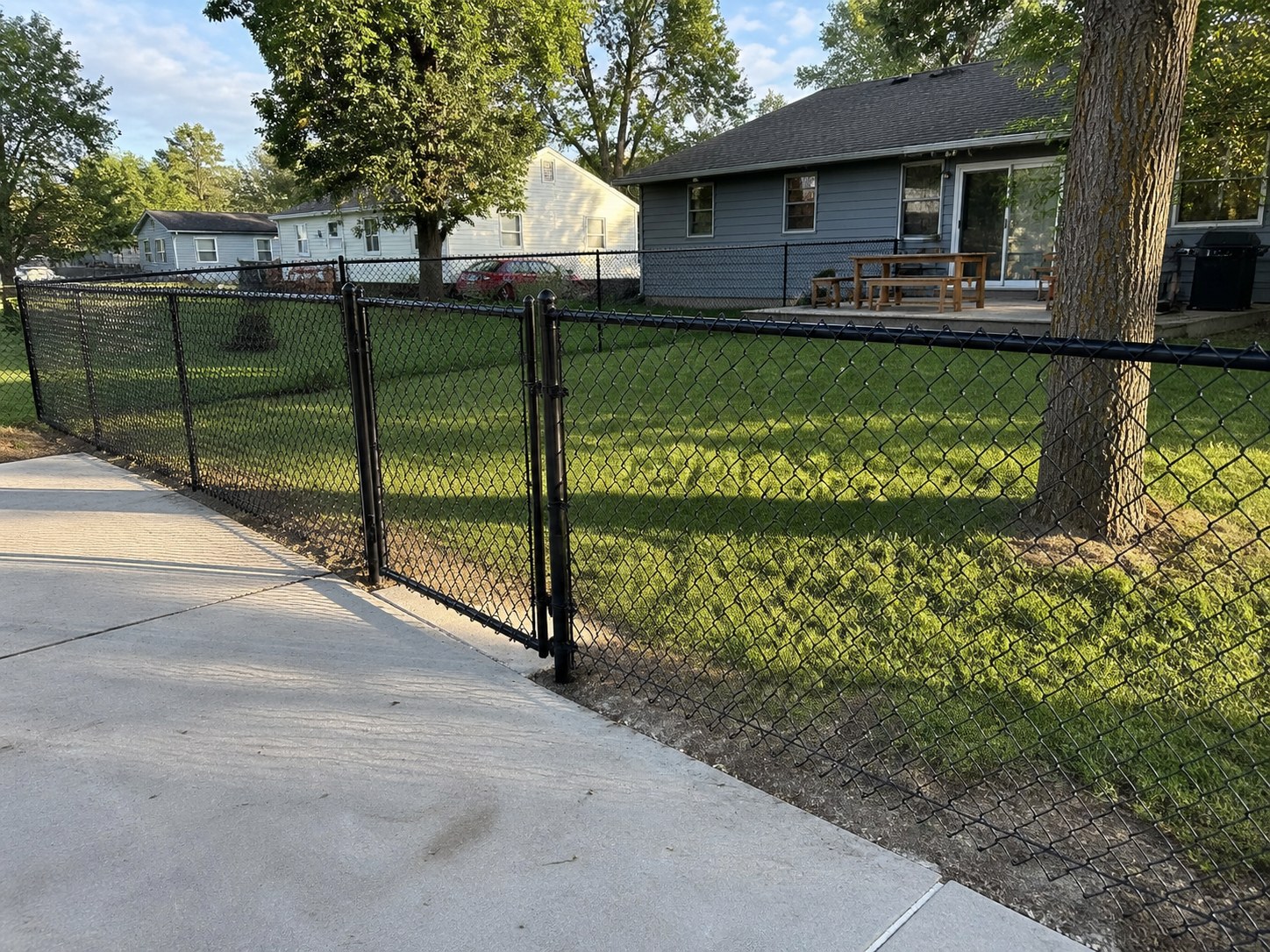
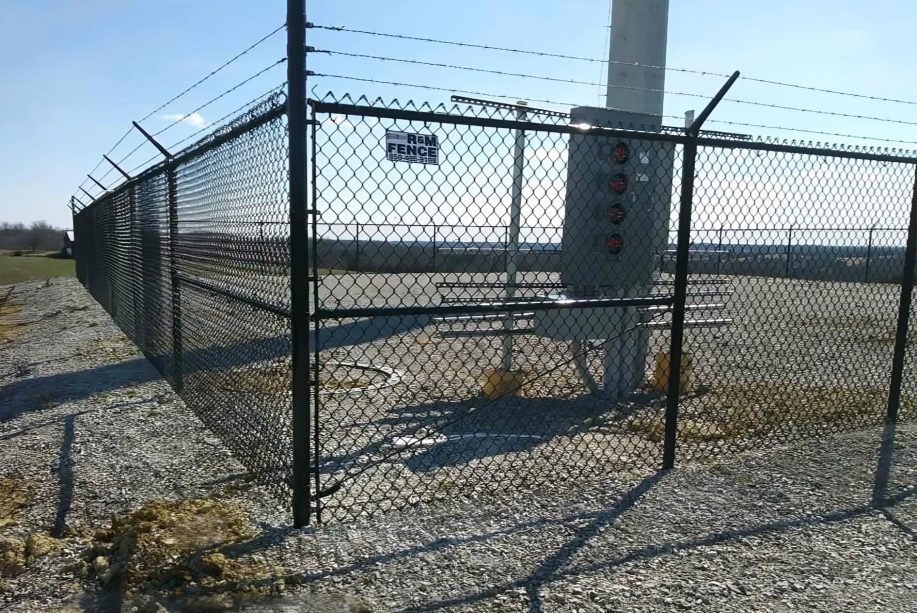
Black vinyl-coated chain link back-line dog run in Prairie Village, KS — RKC Wood Care Pros
Chain Link Fence · Prairie Village
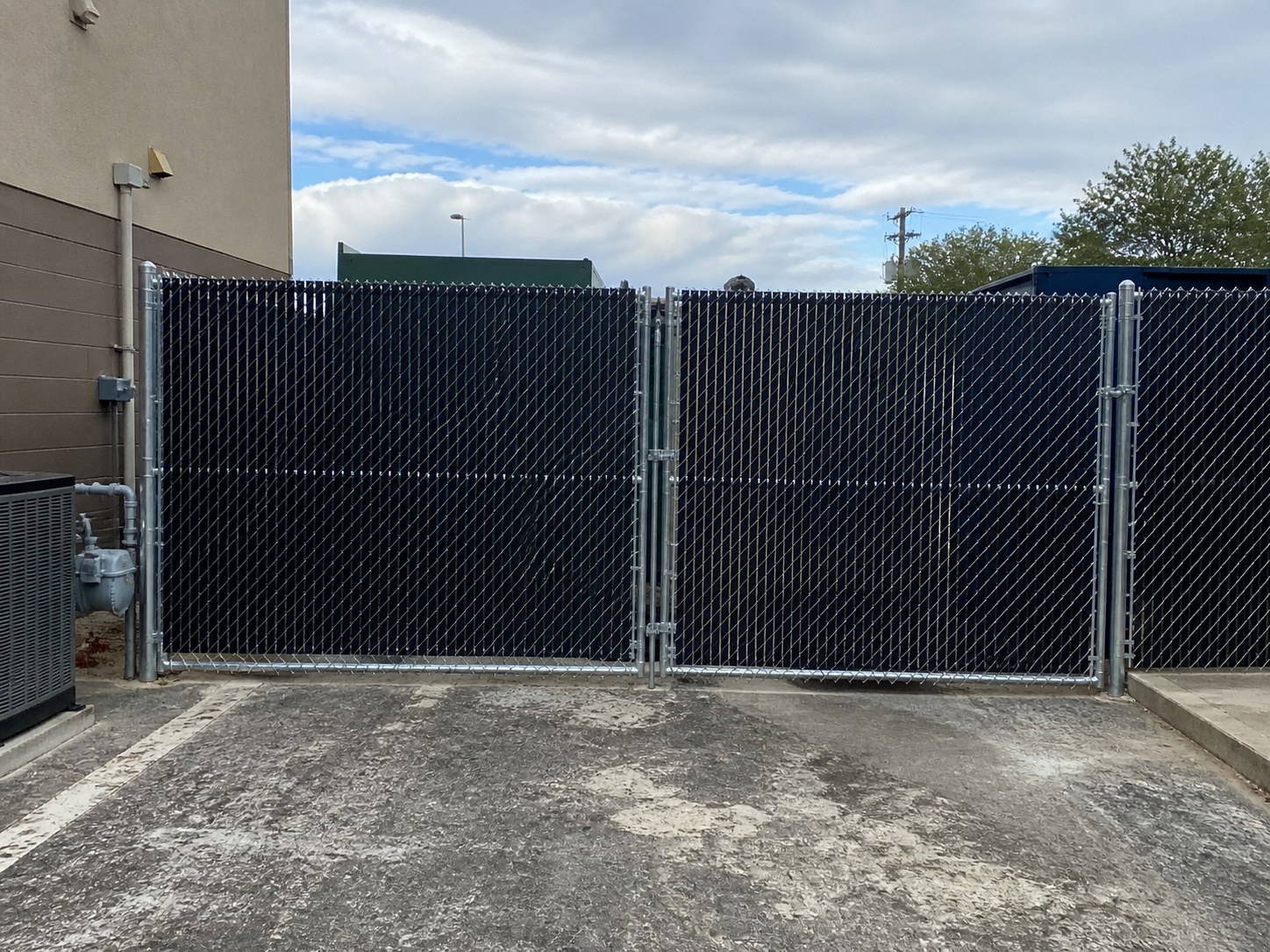
Coated chain link fence with privacy slats on a narrow lot in Prairie Village, KS — RKC Wood Care Pros
Chain Link Fence · Prairie Village
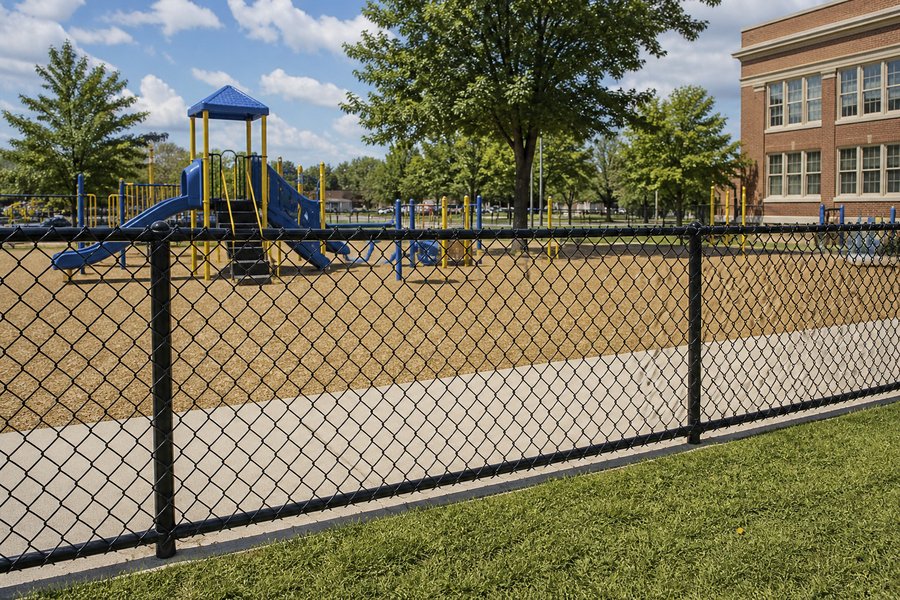
Galvanized chain link fence with tension wire hand-dug around tree roots in Prairie Village, KS — RKC Wood Care Pros
Chain Link Fence · Prairie Village
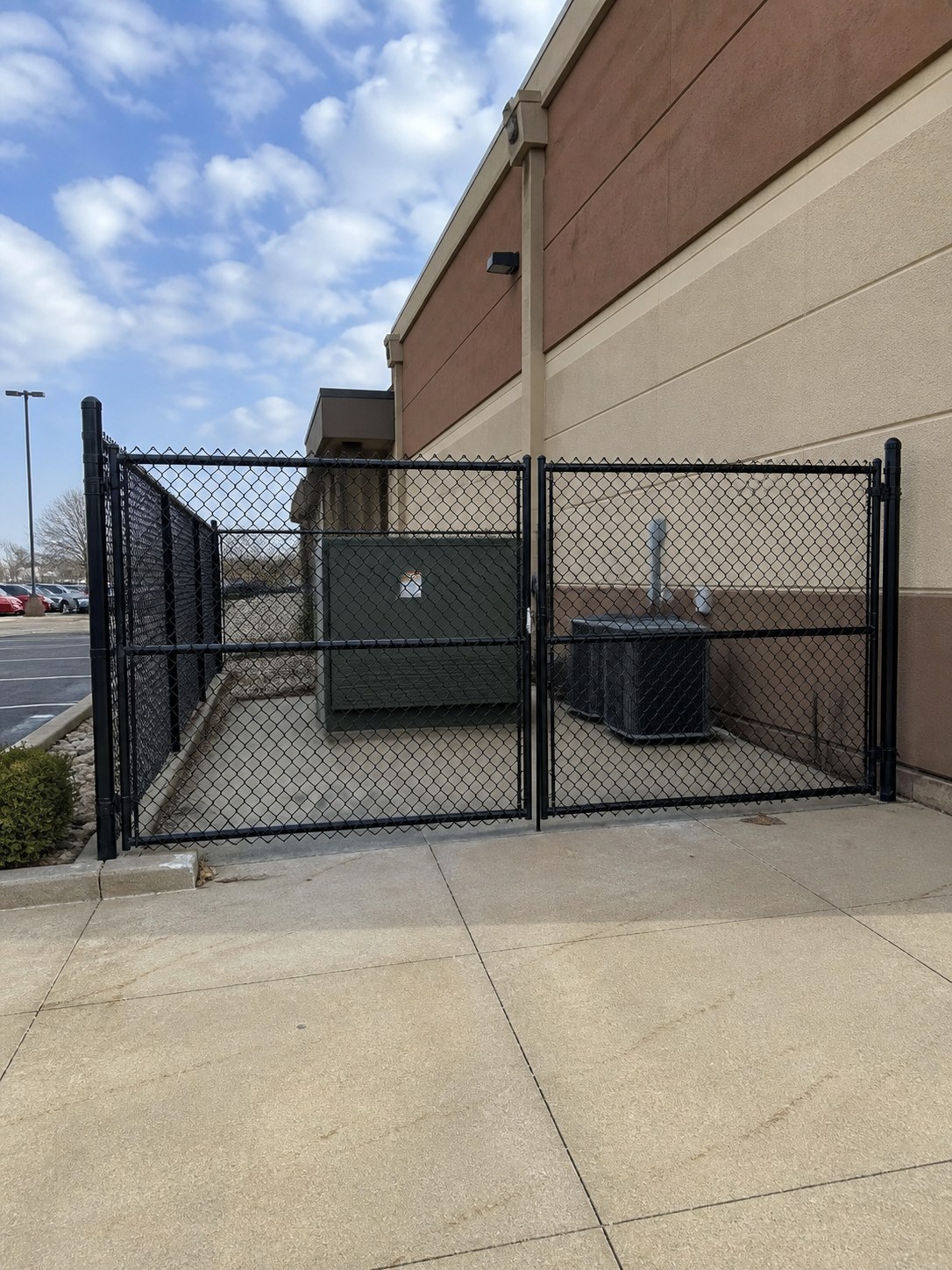
Black coated chain link utility enclosure behind a home in Prairie Village, KS — RKC Wood Care Pros
Chain Link Fence · Prairie Village

REVIEWS

What Kansas City Homeowners Say About RKC

4.9 ★ · 85 Google reviews

Every review is on our Google Business Profile — read them there, unedited.

Read all 85 reviews on Google

PRAIRIE VILLAGE CHAIN LINK FENCE QUESTIONS

Chain Link Fence Installation Questions Village Homeowners Ask Most

Black vinyl-coated chain link fence — Prairie Village, KS installation FAQ — RKC Wood Care Pros

Gauge & Material

What gauge chain link should a Prairie Village backyard use?
For a house, 9-gauge — galvanized or coated — is the residential wire, tough enough for a family dog and Kansas winters without flexing. 11-gauge is thinner and cheaper, fine for a light garden ring but not an animal that leans and digs. 6-gauge is commercial weight, more than a Village backyard needs unless you're screening a retail enclosure. We match the gauge to the job, not the price sheet, and on a lot this visible we'll usually steer you to coated 9-gauge so the run looks deliberate.
Will a black-coated fence really disappear in my yard?
As close as a fence gets. Black mesh has almost no visual weight against green plantings, a hedge, or a mature-tree backdrop — the eye reads it as a thin dark line and moves on, which is exactly why it's the standard pick in a landscaped Prairie Village backyard. Set it behind a bed or a row of shrubs and most visitors won't register it's there. Bare galvanized, by contrast, catches light and looks utilitarian, so we save it for the runs that stay out of sight.
Can you dig without killing my trees?
That's the whole point of how we work here. Prairie Village's silver maples and oaks are the reason the streets look the way they do, and we protect them: we hand-locate the big structural roots, dig the postholes in beside them rather than through them, and shift a post a few inches when that's what saves a root. Cutting through major root wood both destabilizes the post and stresses the tree — a fence crew that augers blind through a Village side yard does damage that shows up in the canopy a year later.

Pricing & Repair

What does chain link fence installation cost in Prairie Village?
Residential 9-gauge galvanized runs $13 to $19 a foot installed here; black or green coated 9-gauge runs $16 to $23; a coated run with woven privacy slats runs $20 to $28. The tight lots and hand-digging around roots put us at the higher end of the metro range — there's real labor in a careful Village install. If your posts are still sound, re-fabricing an existing run runs $8 to $13 a foot and is far cheaper than a full replacement. Every estimate is free, itemized, and written.
My old chain link is sagging — do I need a whole new fence?
Often not. In Prairie Village's older neighborhoods a lot of chain link is decades old but still standing on plumb, sound posts — in that case only the fabric has failed, and we can strip the tired mesh and re-hang fresh coated wire on the footings you already have for a fraction of a rebuild. Where a post has rotted at grade or heaved out of a freeze-thaw winter, we reset that one. We'll tell you honestly which it is after we push on a few posts and read the line.
How does chain link compare to the cedar and horizontal fences everyone puts up here?
It's roughly 40 to 50 percent less per foot, and it's a different job. Cedar spaced-picket and modern black horizontal are the Prairie Village street fence — they carry the cottage look and the renovation aesthetic the town prizes, and that's where most of the money goes out front. Chain link earns its keep out back: the dog run, the utility screen, the side line where a wall would crowd the lot. If a solid privacy or picture-frame fence is the goal, price cedar and horizontal on the Prairie Village wood and privacy pages instead.

OTHER PRAIRIE VILLAGE FENCE OPTIONS

Considering Other Materials or Services for Your Village Fence?

Ready when you are

Get a free estimate — we usually respond the same day.

Call (913) 286-1091