Skip to content
Commercial Fence Installation in Kansas City — Security-Spec Perimeters That Stay Plumb

Commercial Fence Installation in Kansas City — Security-Spec Perimeters That Stay Plumb

A commercial perimeter isn’t a residential fence scaled up — it’s heavier-gauge material, deeper engineered footings, and an install phased so the site never has to shut down. RKC installs commercial chain link (9- and 6-gauge), ornamental security, and slat screening, with cantilever slide and swing gates sized for truck traffic. Perimeter posts set 42 to 48 inches deep in poured concrete — below the frost line and rated for the load a tall run carries. Licensed and insured, KS and MO.

★★★★★
4.9
from 85 reviews
Licensed
& Insured · KS + MO
400+
fences installed
A+ BBB Rated Licensed & Insured KS + MO Commercial-Gauge Spec Free On-Site Site Visit
Browse commercial systems in our catalog ↓

The short answer

Commercial work is specified by the site, not the catalog. A storage yard wants gauge and a gate throat; a school or office frontage wants a line that looks like architecture; a screened enclosure wants full blockout. RKC sets commercial perimeter posts 42 to 48 inches deep, builds in commercial gauge, and phases the install so the site keeps running while it goes up.

RKC installs and repairs every type of fence — wood, vinyl, chain link, ornamental iron, aluminum, and commercial security — plus in-house staining. Most property managers start from a chain link perimeter or an ornamental security spec and a phasing plan.

The part that decides it

The Commercial Fence Decision Guide — Security, Screening, and the Gate, Answered

Commercial fencing gets quoted as one line item, but the site decides almost everything about it. Six questions settle which system, which gauge, and how deep the posts go. Each row takes one of those questions, gives the plain answer, then the build detail underneath it and the reason it matters.

The questionThe plain answerHow it’s builtWhy it decides the fence
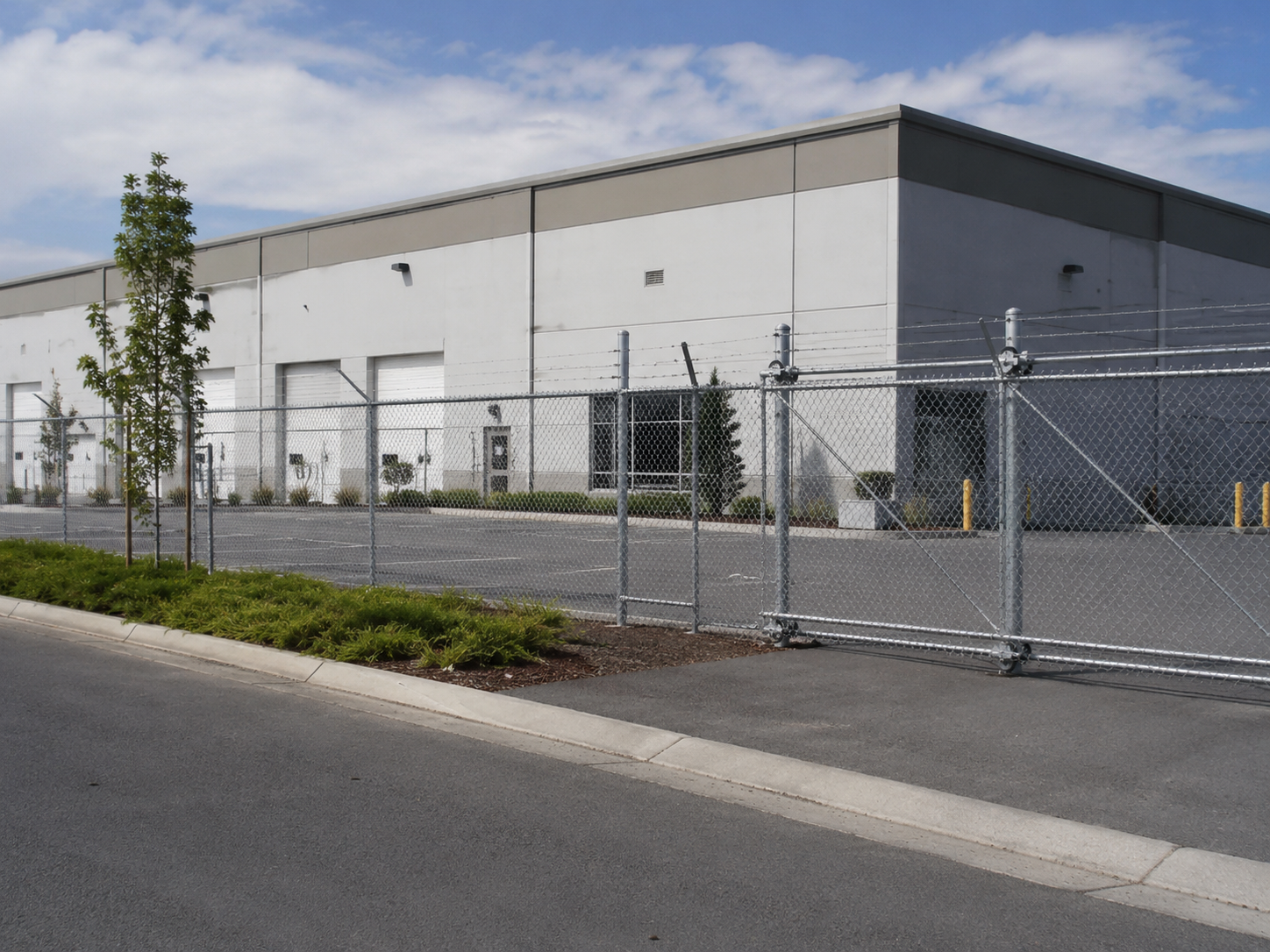
Just need it secure, not pretty?Commercial chain link — the workhorse perimeterGalvanized 9-gauge fabric, or 6-gauge where the line takes real abuse, on heavier framework with a bottom tension wire and corner bracingIt’s the most secured perimeter per dollar for a storage yard, a laydown area, or an industrial line where function beats looks
Need to block the view?Solid slat or screen turns the same frame opaqueCommercial-gauge vinyl or aluminum slat paneled into the line for full-height blockout, or a solid commercial privacy buildScreens a yard, a dumpster run, or utility equipment where a see-through mesh would just advertise what’s behind it
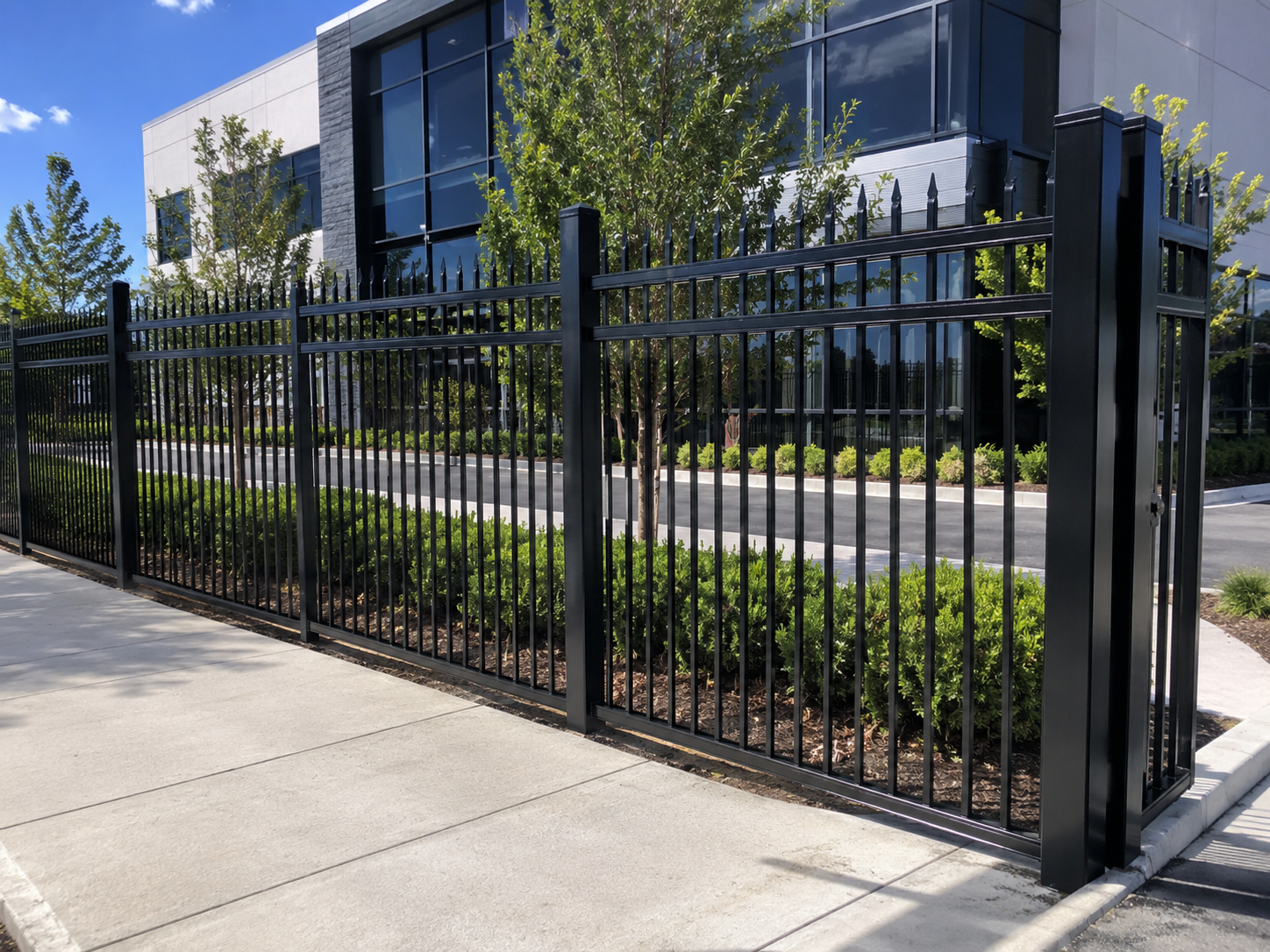
Has to look good at the street?Ornamental security — reads as architecture, works as a barrierPowder-coated steel or aluminum picket, spear or flat top, in a heavier commercial wall thickness, matched to the buildingSchools, office parks, and apartment entries want a line that says organized operation from the curb, not a chain-link look
Trying to stop climbers?The top of the fence does that workA barbed or razor top on chain link, or a spear-top picket on ornamental, over a taller run in heavier gaugeAnti-climb is a top-of-fence decision, and the right package depends on how hard the site actually has to keep people out
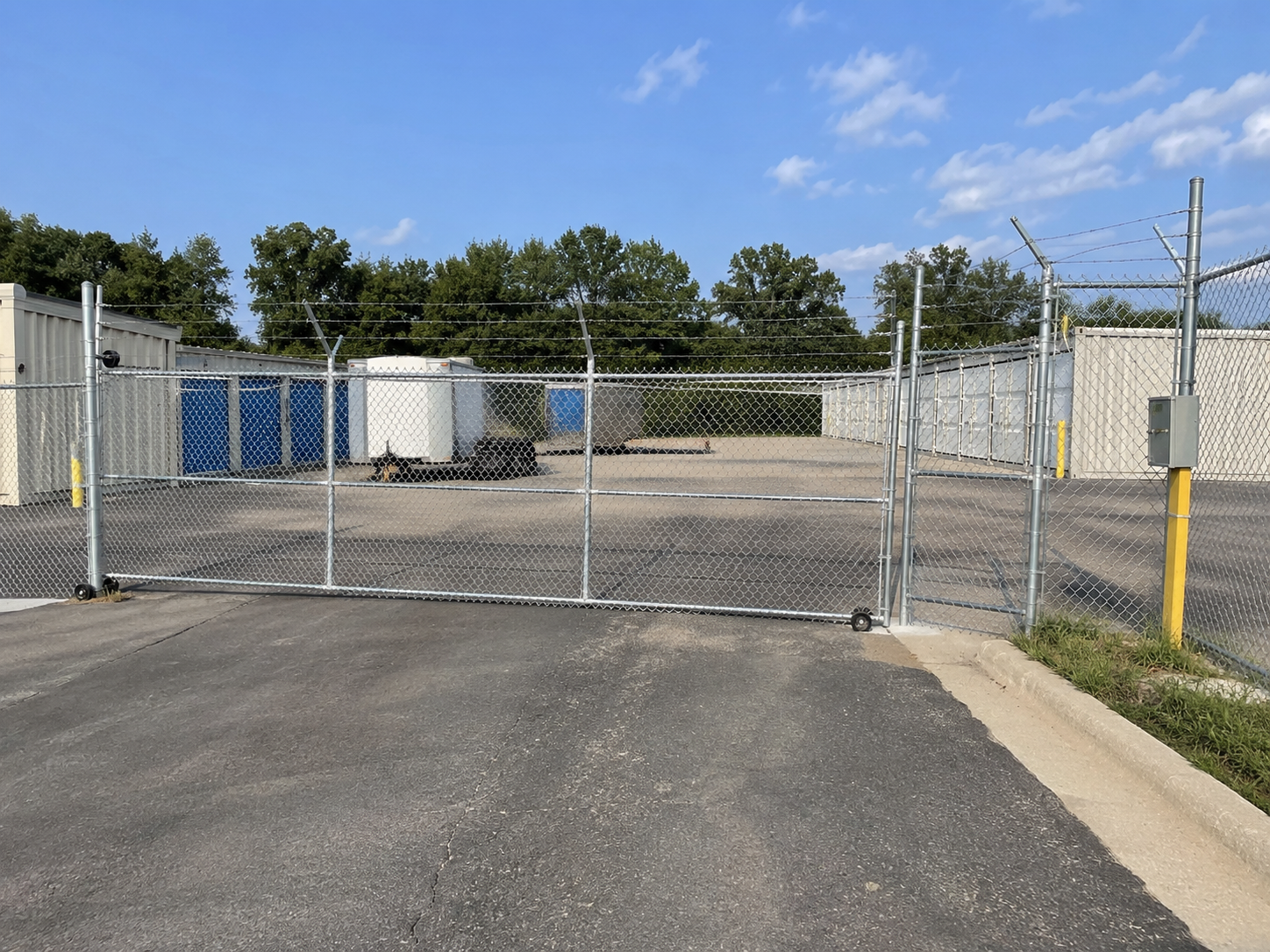
Do trucks drive through it?The gate, not the fence, is the hard partA cantilever slide gate sized to the opening throat, or a heavy swing gate, hung on oversized cross-braced postsVehicle gates carry the most load and see the most use, so the gate and its footing decide whether the entrance still works in year five
Why do commercial posts go deeper?Taller, longer runs carry more load — so the footing growsResidential posts go 36 inches; a commercial 6-foot line goes 42, an 8-foot line and the gate posts 48-plus, on oversized concrete footingsA commercial run is taller and catches more wind, and nobody wants to re-mobilize a crew to fix a leaning line — the depth is what buys that

Two things carry every row: the material gauge and the footing. Commercial-gauge fabric or a heavier ornamental wall so the line takes abuse, and a 42-to-48-inch engineered post so a tall run doesn’t lean. If the site wants the estate look with a security edge at the street, weigh ornamental iron; for a straight secure boundary, chain link is usually the most fence per dollar.

Match the system to the site

Chain Link, Slat, Ornamental, or Commercial Wood?

Every commercial system has a right-use profile — the wrong spec costs money on day one and operations downstream. What the site has to do usually settles the choice before the budget does.

Commercial chain link — the secure workhorse

Galvanized 9- or 6-gauge fabric on heavy framework with tension wire and corner bracing, topped with barbed or razor wire where a site needs it. The most secured perimeter per dollar for storage yards, industrial lines, and construction laydown.

Slat & screen — full-height blockout

Commercial-gauge vinyl or aluminum slat, or a solid commercial privacy build, that turns a perimeter opaque. The pick for screening a yard, a dumpster enclosure, or utility equipment you don’t want visible from the road.

Ornamental security — architecture at the street

Powder-coated steel or aluminum picket in a commercial wall thickness, spear or flat top, matched to the building. The choice for schools, office parks, and apartment entries where the frontage has to look finished, not fortified. See ornamental iron.

Commercial wood — short-term and budget lines

Heavier pressure-treated framing where a solid, lower-cost boundary is the point — lumber and landscape-supply yards, short-term perimeter, and industrial overspill. Built to take the site, not to win curb appeal.

Where commercial is a different job

How a Long Perimeter Goes In Without Shutting You Down

A 1,000-foot line isn’t a weekend project — crammed into one marathon day it comes back out of square. Four things keep a multi-day commercial install from getting in the way of the operation.

1

Phased over days, not crammed into one

The work is sequenced: posts, then the line, then gates and hardware, then the walkthrough. Phasing is what lets the crew keep the fence tight and plumb over a long run instead of racing it in and re-squaring it a week later.

2

Posts first, cured before the line hangs

Perimeter posts go in and the concrete cures before any fabric or panel loads them. On a commercial-height run that footing is doing real work against wind and gate load, so it sets up fully before it carries weight.

3

The site stays open throughout

Tenant and employee access, deliveries, and laydown staging get coordinated with your on-site contact before mobilization, and the run is sequenced so a gap is never left open overnight. The operation keeps moving while the fence goes up around it.

4

Walkthrough and a documented punch list

The job closes with a walkthrough alongside your on-site contact, and any punch items get written down and worked to close — so the project wraps clean and documented instead of leaving loose ends dangling on the invoice.

Built for every storm

What Makes It Commercial-Spec — and Where the Cheap Version Fails

A residential-gauge fence at a commercial height bows, rusts, or shifts within a couple of winters — the spec, not the label, is what holds a perimeter up. Four things separate a commercial line from a residential fence scaled up.

Commercial gauge, not a substitute

Commercial chain link is 9- or 6-gauge fabric, not 11-gauge residential mesh; commercial ornamental uses a thicker wall than the residential profile. The gauge and framework get named on the estimate so a lighter substitute can’t quietly show up at a commercial height.

Engineered post depth

The KC frost line runs 30–36 inches; residential posts go 36. Commercial 6-foot runs go 42, and 8-foot runs and gate posts go 48-plus on oversized footings — a taller line catches more wind and needs the deeper embedment to stay plumb over its length.

Anti-climb where the site needs it

The top of the fence is its own decision. Barbed or razor tops on chain link, spear tops on ornamental, over taller runs in heavier gauge — matched to how hard the site actually has to keep people out, not defaulted to the most aggressive option.

Paperwork procurement can file

Commercial work needs more than a fence. RKC is licensed and insured in KS and MO and provides the W-9 and certificate of insurance your procurement keeps on file, plus itemized invoicing that matches the scope and a punch list documented in writing.

Commercial catalog

Commercial Systems We Install in the KC Metro

Commercial chain link, ornamental security, slat screening, and vehicle gates — every perimeter post set to engineered depth. Use the catalog to compare systems and specs before the site visit.

Select a style above to see colors and details

See the full catalog — every material and style →

Recent commercial installs

Commercial Fences We’ve Built Across the KC Metro

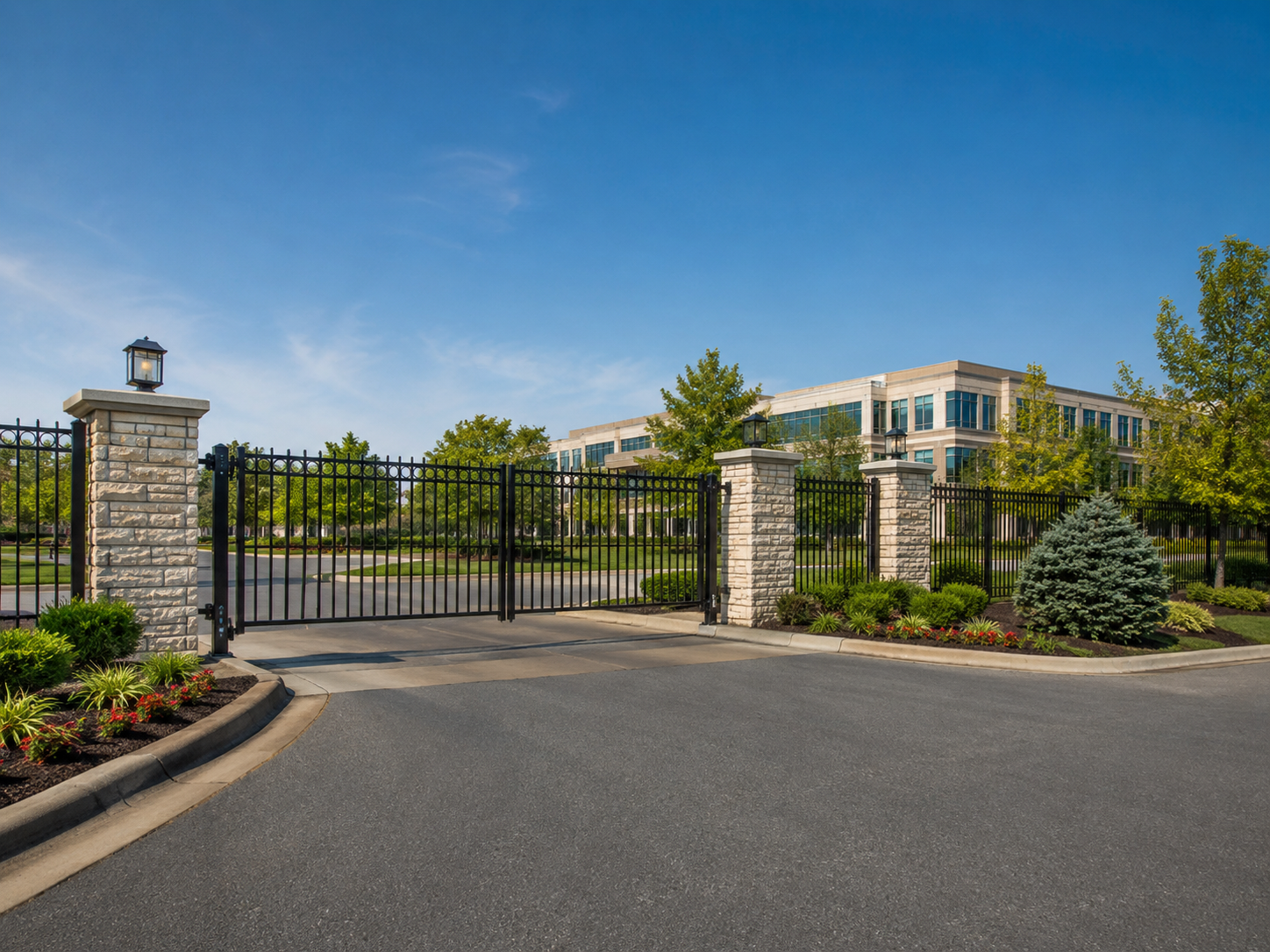
Every photo here is a real RKC commercial install. Chain-link security, ornamental frontage, and vehicle-gate runs across the metro.

REVIEWS

What Kansas City Homeowners Say About RKC

4.9 ★ · 85 Google reviews

Every review is on our Google Business Profile — read them there, unedited.

Read all 85 reviews on Google

Kansas City commercial questions

What KC Property Managers Ask About Commercial Fencing

The questions we field most on a commercial site visit. Don’t see yours? Get Josh on the line at (913) 286-1091.

What counts as commercial or security fencing?
Commercial or security fencing protects business property, equipment, and people with heavier materials and taller runs than a typical residential fence. The common systems are commercial-gauge chain link (often with an anti-climb top), ornamental steel or aluminum for sites where appearance matters, and solid slat or privacy screening for yards and enclosures — usually paired with vehicle and pedestrian gates for controlled access. RKC installs all of them across the Kansas City metro, spec'd to the site rather than to a catalog.
What's the difference between 9-gauge and 6-gauge chain link?
It's the wire diameter. 9-gauge is 0.148-inch wire; 6-gauge is 0.192-inch — roughly 30% thicker and much harder to cut or deform. 9-gauge is the standard for most commercial perimeters: storage yards, construction laydown, general industrial. 6-gauge is specified where the line sees regular impact or climb attempts and the extra material is worth it. We call out the gauge and framework on the estimate so you're comparing the same fence, not a residential-spec substitute at a commercial height.
When is ornamental the right choice for a commercial site instead of chain link?
When appearance carries weight — schools, office parks, HOA common areas, apartment entries, and any frontage the public sees. Ornamental powder-coated steel or aluminum reads like architecture from the street while still functioning as a barrier, and it's low-maintenance: no staining, no sealing, and on aluminum no rust to manage. Chain link is the right call for high-volume perimeter, storage, and industrial work where function matters more than looks. When the scope is ambiguous we quote both with a clear recommendation.
What anti-climb options are available for a security fence?
On chain link, the top of the run does the work: a three-strand barbed top is the common commercial standard, razor ribbon steps it up for higher-security sites, and a V-shaped barbed outrigger leans the deterrent outward. On ornamental steel or aluminum, an integrated spear-top picket gives no comfortable handhold to climb over, and taller runs in a heavier gauge raise the bar further. The right package depends on the site's actual threat level — we walk the options at the site visit rather than defaulting to the most aggressive one.
Can RKC sequence a multi-day commercial install so the site stays open?
Yes — that's how commercial perimeters get built. A long run doesn't go in over a weekend: posts get set and the concrete cures before the fabric or panels hang, then gates and hardware, then the walkthrough. We phase the work around your operation — tenant and employee access, deliveries, and laydown staging coordinated with your on-site contact — so a gap is never left open overnight and the site keeps running while the fence goes up.
Do you work with property managers and general contractors?
Yes — a large share of our commercial work runs through property managers, facilities directors, and GCs. RKC is licensed and insured on both sides of the state line, and we provide the paperwork those workflows need for their files, including a W-9 and a certificate of insurance, plus itemized invoicing that matches the agreed scope. The punch list is documented in writing at the walkthrough so the project closes out clean rather than dragging with open items.
How deep do commercial fence posts go?
Deeper than residential, because the run is taller and longer and carries more wind load. Residential fences use 36-inch posts, set below the Kansas City frost line of 30–36 inches. A commercial 6-foot perimeter goes to 42 inches; 8-foot runs and gate posts go 48 inches or more, on oversized concrete footings. Commercial-height fencing concentrates load vertically, so the embedment has to exceed the residential spec to hold plumb over the length of the line — the footing is what keeps a long perimeter from leaning.
How much does commercial fence installation cost in Kansas City?
It depends on the system, the height, and the gate count, but as a metro range: commercial chain link generally runs about $15–$22 a foot for a 6-foot 9-gauge line, with 6-gauge material or 8-foot heights adding to that; commercial slat screening runs roughly $22–$32 a foot; and commercial ornamental runs about $28–$45 a foot. Larger and custom perimeters are scoped project by project. Every proposal is itemized — gauge, height, footage, and gate count — and the site visit is free. Financing is available where it helps spread the cost.

Weighing a specific system? See chain link for the workhorse perimeter, or ornamental iron for security that reads as architecture.

Ready when you are

Get a free estimate — we usually respond the same day.

Call (913) 286-1091