Skip to content
Low-Maintenance Vinyl Fence Installation in Kansas City

Low-Maintenance Vinyl Fence Installation in Kansas City

Vinyl is the fence you stop maintaining — no staining, sealing, or painting required, ever. RKC installs co-extruded PVC with the UV-stabilizing layer built into the outer surface and an aluminum-insert bottom rail that holds a long span flat, every post set 36 inches deep in poured concrete. Privacy, picket, and ranch-rail styles that stand up to Kansas City freeze-thaw without cracking — and when a panel is damaged, we swap it rather than rebuild the run.

★★★★★
4.9
from 85 reviews
Licensed
& Insured · KS + MO
400+
fences installed
A+ BBB Rated No Staining or Sealing Aluminum-Reinforced Rails Free On-Site Estimates
Browse vinyl fence styles in our catalog ↓

The short answer

Vinyl is the low-maintenance alternative to cedar — it costs more to install and never needs staining or sealing. Where a cedar fence is on a re-coat cycle for its whole life, a vinyl fence just gets an occasional wash. Quality co-extruded panel with an aluminum-reinforced rail handles Kansas City's freeze-thaw without cracking, and every post still goes 36 inches deep in the clay.

RKC installs and repairs every type of fence — wood, vinyl, chain link, ornamental iron, aluminum, and commercial security — plus in-house staining. Weighing it against wood? See wood fence installation and the privacy fence comparison. Vinyl damage is a repair, usually a panel swap.

The comparison that decides it

Vinyl vs. Cedar Over the Life of the Fence — Cost, Maintenance, and Lifespan

The vinyl decision is really a decision about the stain cycle. Cedar is cheaper to install and then costs you every few years; vinyl costs more up front and then leaves you alone. Here is the whole picture side by side, KC prices and timelines.

Over the fence's lifeCedar (wood)Vinyl
Up-front install costLower — about $25–$38 / LF for privacyHigher — about $28–$45 / LF for privacy
First finish coatStain at ~30 days, then it is on the clockNone — the colour is the material
Recurring maintenanceRe-stain every 2–3 years, foreverAn occasional wash — no staining, sealing, or painting required
20-year upkeep spendFive to seven re-coats, a real running costEffectively nil beyond washing
Lifespan in KC15–25 years kept on its cycle20–30 years
RepairabilityAny board or post, easily matchedA damaged panel swaps out; colour-match on old runs is the catch
The lookReal wood grain that ages and can be re-colouredClean and uniform; the colour is permanent

The honest read: if you will actually keep cedar on its stain cycle, it is the warmer and cheaper-to-install choice. If you know you won't, vinyl's higher install price buys its way out of the maintenance entirely. We quote both side by side rather than steering you — the full cedar side is on the wood page.

The Kansas City winter question

Does Vinyl Crack in a Kansas City Winter? Only the Cheap Kind

It is the most common worry about vinyl here, and the honest answer is that the material is fine — the bargain product is not. PVC does stiffen in deep cold, so a thin, low-grade panel can crack on impact on a frigid day. Everything below is how we spec vinyl so that never happens.

Co-extrusion, not mixed resin

The UV-stabilizing package belongs in the outer layer where the sun and cold actually hit. Cheaper panel mixes it through, leaving less where it matters — that is the panel that chalks white and turns brittle after a few KC winters. Co-extruded stock holds up.

Wall thickness you can feel

Pick up a picket. Thin single-wall stock flexes in your hand and it will crack under a ball, a snow shovel, or a dog in the cold. Real wall thickness is the least glamorous spec on the quote and the one that most predicts whether it survives winter.

Aluminum insert in the bottom rail

A structural aluminum spine inside the bottom rail stops a long span from sagging and stiffens the whole panel against a cold-weather impact. Leaving it out is a quiet way a bid gets cheaper — and a quiet way the fence fails.

Expansion room in the rails

Vinyl measurably expands and contracts across the range Kansas City sees — a hot July afternoon to a January freeze. We set the rails with room to move, so the panel is never bound tight and stressed when the temperature swings.

The styles

Privacy, Picket, Ranch Rail — and Horizontal

Vinyl comes in the same range of looks as wood, in colours that never need repainting. White is the staple; tan, khaki, and woodgrain textures read quieter against a yard.

Tongue-and-groove privacy

Interlocking boards with no gap and no fasteners showing — the fully private vinyl build, and the one where a damaged section lifts out and swaps cleanly.

Semi-private & picket

Spaced boards for partial screening, or a picket profile for a front boundary. Picket also satisfies an openness rule where a solid privacy panel is not allowed out front.

Ranch rail

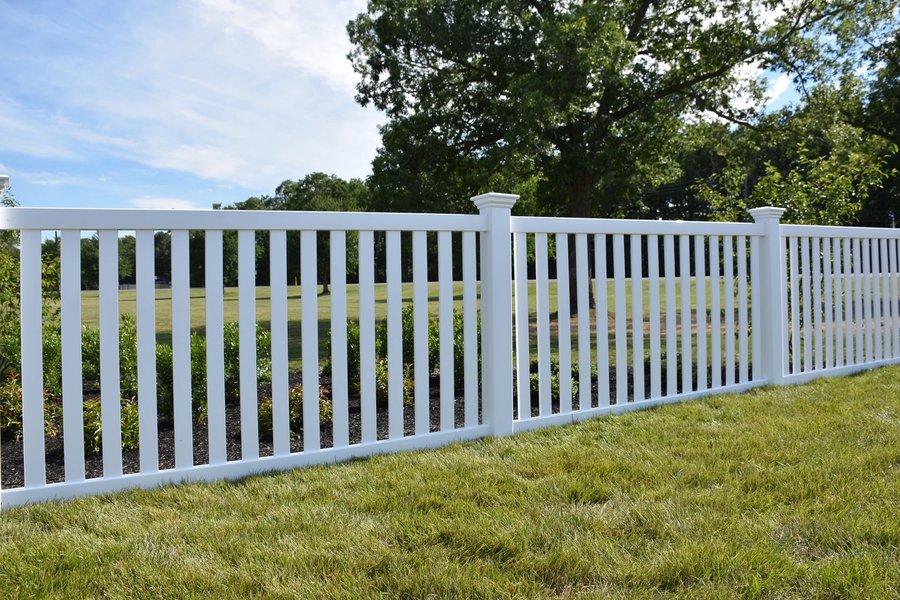
Two or three horizontal rails on spaced posts — a clean boundary line for a larger lot, cheap per foot, and effectively decorative rather than containing.

Horizontal & woodgrain

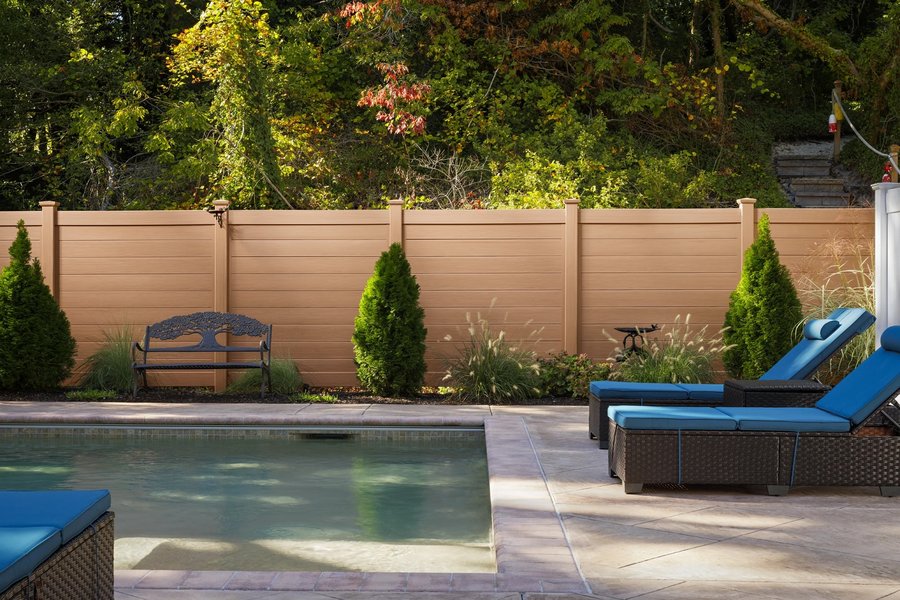
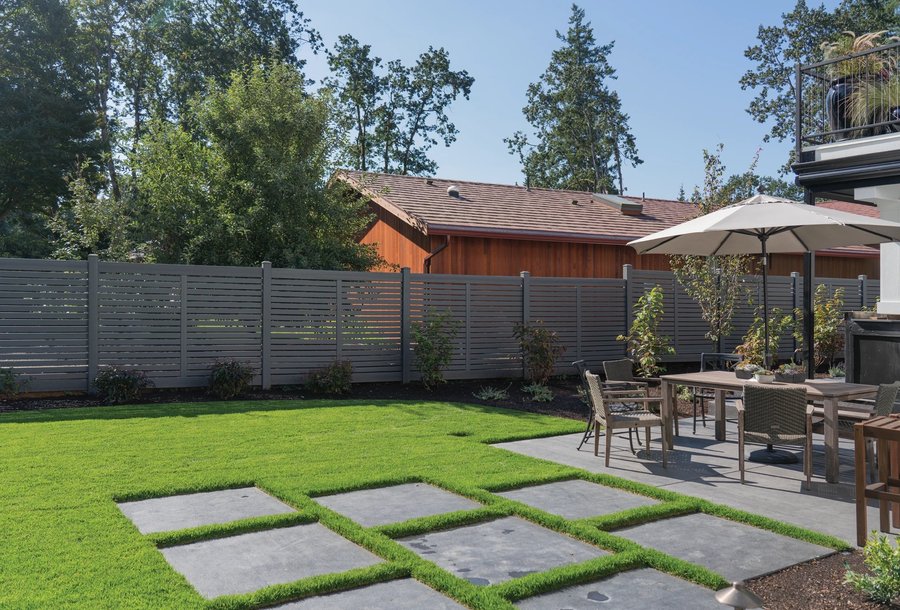
Sideways boards for a modern line, and woodgrain textures that read like wood from the street without the stain cycle. The contemporary look, permanent colour.

Vinyl fence catalog

Every Vinyl Style We Install in the KC Metro

Privacy, picket, and ranch rail in co-extruded panel — every post set to 36 inches. Flip through the catalog for styles, colours, and specs ahead of your estimate.

Select a style above to see colors and details

See the full catalog — every material and style →

How the install runs

Measured to the Panel, Set to the Clay

Vinyl panels arrive at fixed lengths, so the layout has to be right before the order goes in. A rigid panel has less tolerance for a post an inch off than a wood fence does — precision up front is the whole game.

1

Measure, then order to it

We record the run, the corners, the gates, and the grade, and the panels are ordered to that measurement — not the other way around. Colour and profile are confirmed before anything is cut.

2

Permit and utility locate

City permit pulled, 811 locate scheduled, and any HOA submission handled before we break ground. Vinyl is a covenant-approved material in many subdivisions, though some restrict colour to earth tones.

3

Posts 36 inches, cured, then panels

Hollow vinyl posts mean the concrete footing does all the structural work, so depth matters more, not less. Every post goes 36 inches into poured concrete and cures before the panels are set with expansion room in the rails.

4

Walkthrough and warranty paperwork

We walk the run with you and hand over the manufacturer paperwork. There is no stain date to schedule after this one — the absence of that follow-up is the entire argument for vinyl.

Recent vinyl installs

Vinyl Fences We’ve Built Across the KC Metro

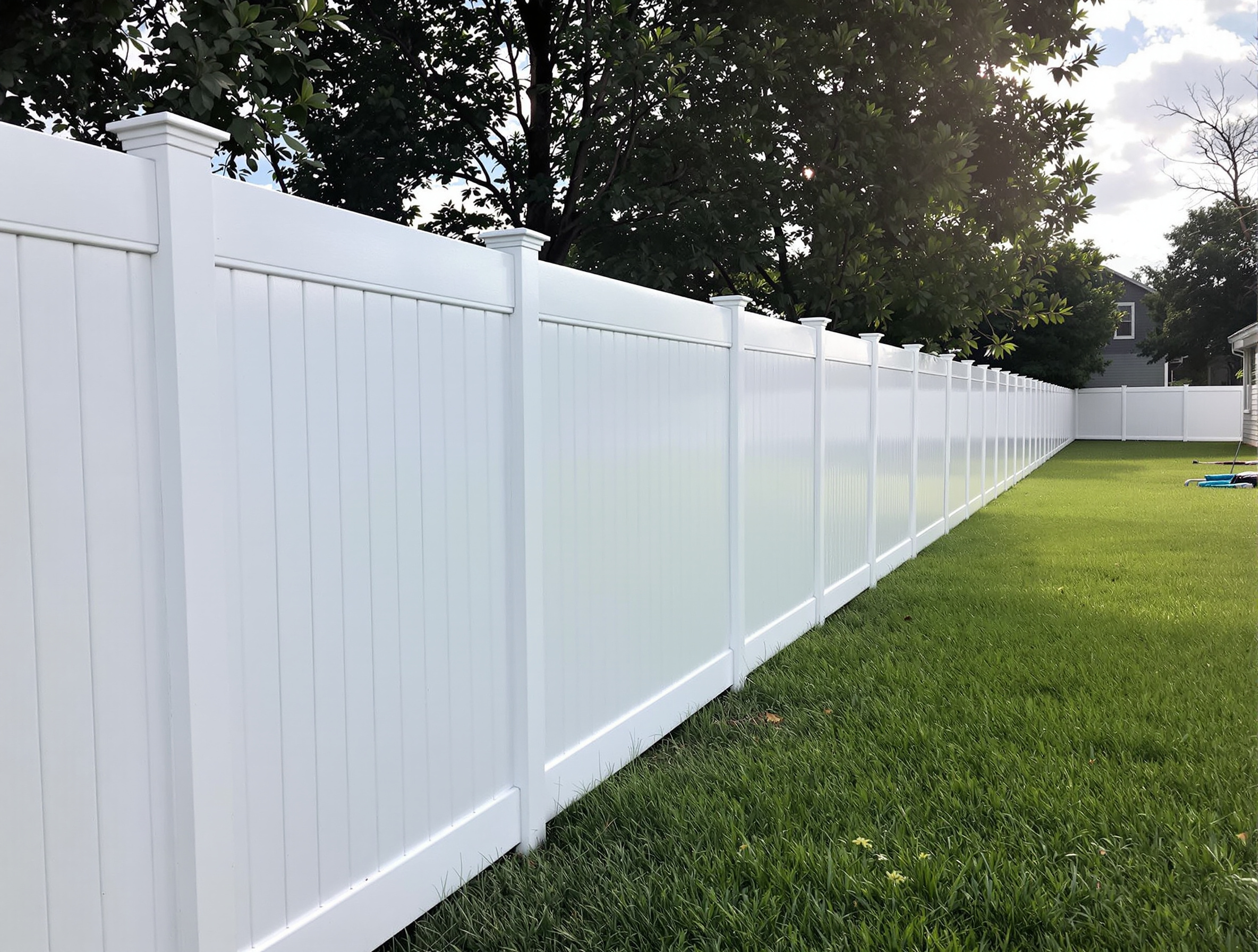
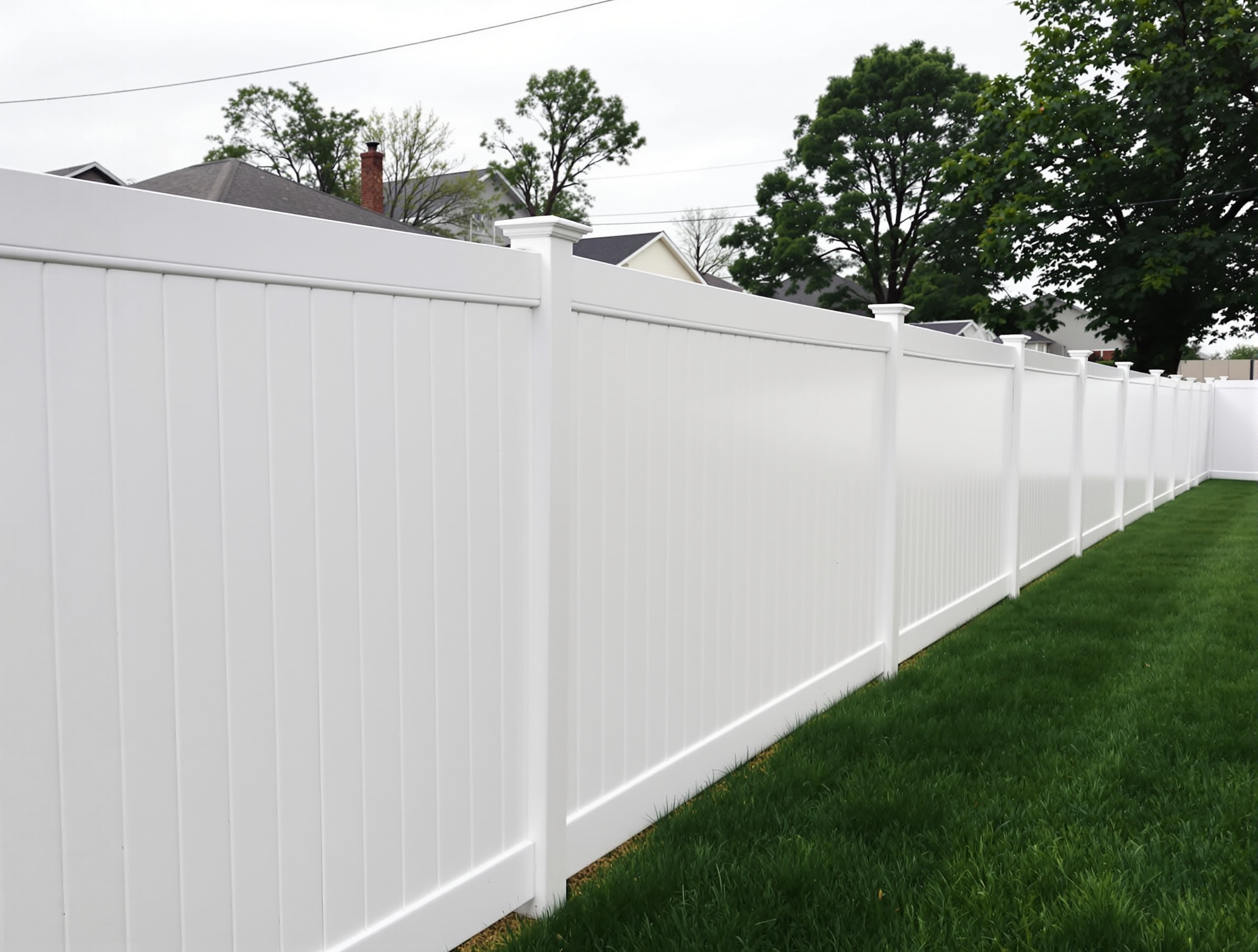
These are all real RKC vinyl jobs on the ground. White privacy, horizontal, and picket — permanent colour, no stain cycle.

REVIEWS

What Kansas City Homeowners Say About RKC

4.9 ★ · 85 Google reviews

Every review is on our Google Business Profile — read them there, unedited.

Read all 85 reviews on Google

Kansas City vinyl fence questions

What KC Homeowners Ask About Vinyl Fences

The questions that decide a vinyl fence, answered straight. Something missing? Josh takes the call at (913) 286-1091.

How much does a vinyl fence cost to install in Kansas City?
Vinyl privacy runs about $28–$45 a foot installed across the metro, with picket and ranch-rail styles a bit lower. A typical 150-to-200-foot privacy backyard lands roughly $4,500–$9,000. Vinyl prices above cedar up front, and the trade is that it never needs staining — so across 20 years its total cost of ownership often comes out lower. What moves the per-foot number: style, gates, grade change, and panel colour. Every quote is free and broken out line by line.
How long does vinyl fence last?
A quality vinyl fence lasts 20–30 years in Kansas City, longer than cedar and with far less upkeep. The key is buying co-extruded panel — where the UV-stabilizing layer is built into the outer surface rather than mixed through cheap resin — and an aluminum-insert bottom rail that keeps a long span from sagging. Thin, single-wall bargain vinyl is the stuff that chalks and gets brittle; the panel we install is engineered for the freeze-thaw swings here.
Does vinyl fence crack in Kansas City winters?
Quality vinyl does not; cheap vinyl can. It is a fair concern — PVC gets more brittle in deep cold, so a thin, low-grade single-wall panel can crack under an impact on a frigid day. We install co-extruded panel with real wall thickness and an aluminum-reinforced bottom rail, and we set the rails with room for the material to expand and contract across the temperature range KC sees. Built that way, vinyl handles Kansas City winters without cracking — the failures you hear about are almost always thin bargain product, not the material itself.
Vinyl fence cost vs. wood?
Wood (cedar) costs less to install, vinyl costs less to own. Cedar runs about $25–$38 per linear foot for privacy and needs staining every 2–3 years; vinyl runs about $28–$45 and needs no staining, sealing, or painting — just an occasional wash. Over 20 years, cedar's five-to-seven re-coats close and often reverse the up-front gap. If you will keep cedar stained, it is the warmer, cheaper-to-install choice; if you want to stop maintaining a fence, vinyl is the low-maintenance answer. Compare them on the wood page.
Can you install a vinyl fence on a slope?
Yes. Vinyl handles a slope by stepping — each level panel steps down the grade like a staircase — because the rigid, fixed-length panels do not rack as freely as a wood fence's individual pickets. On a gentle grade the step is barely noticeable; on a steeper one it reads as a clean stepped line. We measure the fall at the estimate and lay it out so the steps are even and the gaps at the bottom stay within reason.
Can a vinyl fence be installed on concrete?
Yes — on an existing patio, pool deck, or slab, we core-drill the concrete and set the posts in the drilled holes with the right anchoring, or use surface-mount brackets rated for the panel where drilling is not an option. The right method depends on the slab thickness and what the fence has to hold, especially around a pool where a barrier has to stay rigid. We assess the concrete at the estimate and spec the mount to it.
How long does it take to install a vinyl fence?
Most residential vinyl fences take 1–3 days of on-site work once permits clear and the panels arrive. Like any fence, the posts go in first and the concrete cures before the panels are set, so a job usually spans a couple of visits. Vinyl panels arrive at fixed lengths, so the measurement drives the order — we confirm the layout carefully up front, because a rigid panel has less tolerance for a post an inch out of place than a wood fence does.
Do you repair vinyl fence in Kansas City?
Yes. A cracked or storm-damaged vinyl panel can usually be swapped out rather than replacing the run — that is one of vinyl's genuine advantages. The catch is colour: vinyl fades slightly over years, so a brand-new white panel in a ten-year-old fence can show, and we keep the original spec on record to get as close a match as possible. Leaning posts and hardware are straightforward fixes. See fence repair for how we handle it.

Weighing your options: wood fence installation and the privacy fence comparison. A damaged panel is a repair, usually a swap.

Ready when you are

Get a free estimate — we usually respond the same day.

Call (913) 286-1091