
Soft ground settles a post
A post is only as stable as the soil under its footing. In a spring-fed pocket, that soil stays saturated and soft, so the whole footing settles — the fence looks fine for a year, then a section starts to dip or lean.
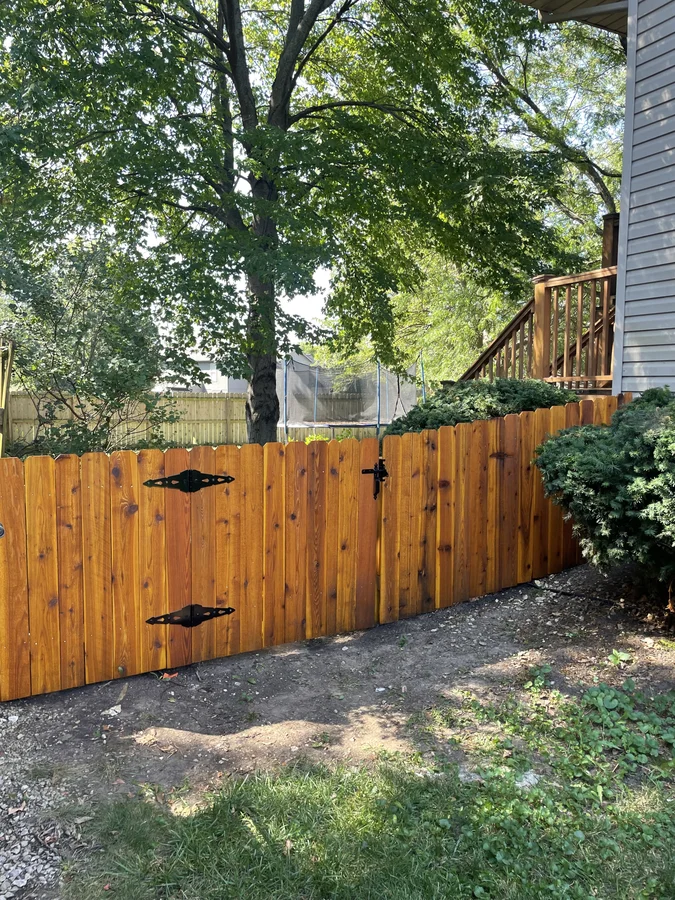
Blue Springs has real springs — underground water that softens the soil in “wet” pockets and settles a post that was not set for it. This is an active-family suburb where 6 ft cedar privacy is the overwhelming favorite, built for big dogs and busy kids, with vinyl a close second. RKC reads the ground first, footings deeper and drained where the water sits, and every post goes 36 inches into concrete. 4.9★ from 85 Google reviews.
The short answer
Blue Springs earns its name: underground springs create “wet” pockets that settle a standard post. The fix is a deeper, drained footing set for the soil at your specific lot. Above the ground line, this is an active-family suburb — 6 ft cedar privacy is the overwhelming favorite, vinyl is a close second, and the older 1980s streets are prime territory for converting tired chain link into solid wood. RKC reads the ground, then builds the fence the yard is actually for.
RKC installs and repairs every type of fence — wood, vinyl, chain link, ornamental iron, aluminum, and commercial security — plus custom gates and in-house staining. this is the Blue Springs hub. For the metro-wide picture, see our Kansas City fence contractor overview.
The springs are real
Most Blue Springs yards are flat and easy. But specific “wet” pockets of the city sit over high groundwater, and that changes everything about how a post has to be set. Water in the soil softens the ground a post bears on, and a standard-depth set in one of those pockets sinks or leans over a few seasons. It is the most Blue Springs-specific thing about building here — and it is invisible until you know to look.
A post is only as stable as the soil under its footing. In a spring-fed pocket, that soil stays saturated and soft, so the whole footing settles — the fence looks fine for a year, then a section starts to dip or lean.
At the estimate we read the lot for the signs — low spots that stay damp, spongy soil, the neighborhood’s history. Where the ground runs wet, the footing plan changes before a single post goes in.
The fix is a footing set deeper to reach firmer soil, with gravel drainage so water moves away rather than pooling against the concrete. It costs a little more on the affected posts, and it is the difference between a fence that stays put and one that chases the water table.
Where the city meets open ground on the east, wind adds a second load. Combined with soft soil, that is where bracing and depth matter most — we set for both rather than assuming a flat, calm lot.
The active-family fence
This is an active-family suburb, and the fence follows from that: big dogs, busy kids, and a private backyard. Solid 6 ft cedar is the overwhelming favorite, vinyl runs a close second on the higher-end lots, and a lot of our work is trading tired 1980s chain link for real privacy. Here is how those choices actually shake out.
A 6 ft board-on-board or shadowbox cedar wall gives the dog a boundary and the kids a private yard, at the most affordable start. Leave it to gray or stain it to hold the color — either way it is the default here for a reason.
More up front, but it never needs staining and stays white on its own — which is why you see it more around the Adams Dairy area. Co-extruded panel with an aluminum insert through the rail, so it holds a straight line for decades.
Older Blue Springs still has plenty of aging chain link, and when an owner wants real privacy we tear it out and rebuild in cedar or vinyl. Those settled older lots make for a clean rebuild — it is some of the most common work we do in the city.
A scalloped top dips gently between posts, an arched top rises in the middle of each section — both are a look, not a rule, and we build either in cedar or vinyl when you want a softer line than a flat run.
The ground read, area by area
The one question a Blue Springs fence has to answer is what the soil is doing under it — soft and spring-fed, or firm and flat — and it varies by neighborhood. Here is how the ground reads across the areas we work most, and the build call each one forces, so the footing plan is set before the posts go in.
| Area | The ground read | The build call |
|---|---|---|
| Spring-fed “wet” pockets | High groundwater keeps the soil soft, and a standard-depth post settles or leans | Footings set deeper to reach firm ground, gravel-drained so water moves away from the concrete |
| Chapman Farms & newer subdivisions | Flat, well-graded, firm — the easy end of town | Straight 36" concrete-set cedar or vinyl privacy; we still probe for a buried wet spot at the estimate |
| Adams Dairy Pkwy corridor | Flat higher-end lots, the expansion side of the city | More ornamental iron and high-end vinyl; a deeper footing on any low spot that holds water |
| Copper Leaf & Brittany Ridge | Established ground, aging 1990s cedar reaching the end of its run | The replacement wave — tear out the old run and rebuild as one project |
| 1980s established pockets | Settled, workable soil with old chain link still standing | Chain-link-to-cedar conversion when the owner wants solid privacy — the freest rebuild in town |
| Eastern edge | More exposed to open ground and prevailing wind | Post depth and bracing sized for the wind load, not a calm-lot assumption |
Whatever the pocket, every post goes to at least 36 inches and deeper where the water demands it, drained so it bears on firm soil. The late-summer re-stain lives on our calendar via in-house staining, and a tired run can often be brought back with fence repair instead of a full rebuild.
Blue Springs neighborhoods
Blue Springs runs from newer flat-lot subdivisions to older chain-link neighborhoods ripe for conversion, and the fence job changes with them. Below are the areas we work most. Yours might not be shown and that is no problem; these simply have particulars worth mentioning up front.
Newer subdivision on flat, well-graded ground — cedar and vinyl privacy is the norm for these young families. Clean lots and straightforward sets, once we probe for any buried wet spot.
The expansion corridor, where you see more ornamental iron and high-end vinyl. Higher-end lots — and any low spot that holds water gets a deeper, drained footing.
Established cedar-privacy neighborhoods. Solid 6 ft cedar is the default, and aging 1990s runs are reaching replacement age — the steady rebuild work here.
Family-oriented streets where pets and privacy drive demand. Solid 6 ft cedar is the default, with a scalloped or arched top where the owner wants a more decorative line.
Older Blue Springs where chain link still stands. These are our prime chain-link-to-cedar conversion neighborhoods — an owner trading an aging run for solid privacy, and the freest rebuild in the city.
Landmarks near our regular Blue Springs routes: Blue Springs Lake, Fleming Park, Adams Dairy Landing, Burrus Old Mill Park, and Pink Hill Park. Roads we cross daily: I-70, M-7, US-40, Adams Dairy Parkway, and 7 Highway. Commercial work clusters around the Adams Dairy Landing retail expansion and the large church and school campuses.
What we install in Blue Springs
Cedar, vinyl, ornamental, and gates — one owner-operated crew that footings for the ground and finishes the wood. Each link opens a dedicated Blue Springs page with pricing and neighborhood context. Repair, staining, and gates are handled in-house too.
Cedar is the top choice in Blue Springs — solid 6 ft privacy for the big dogs and active kids that drive most yards. Board-on-board or shadowbox, built finished-side-out and set deep against the wet ground.
Blue Springs details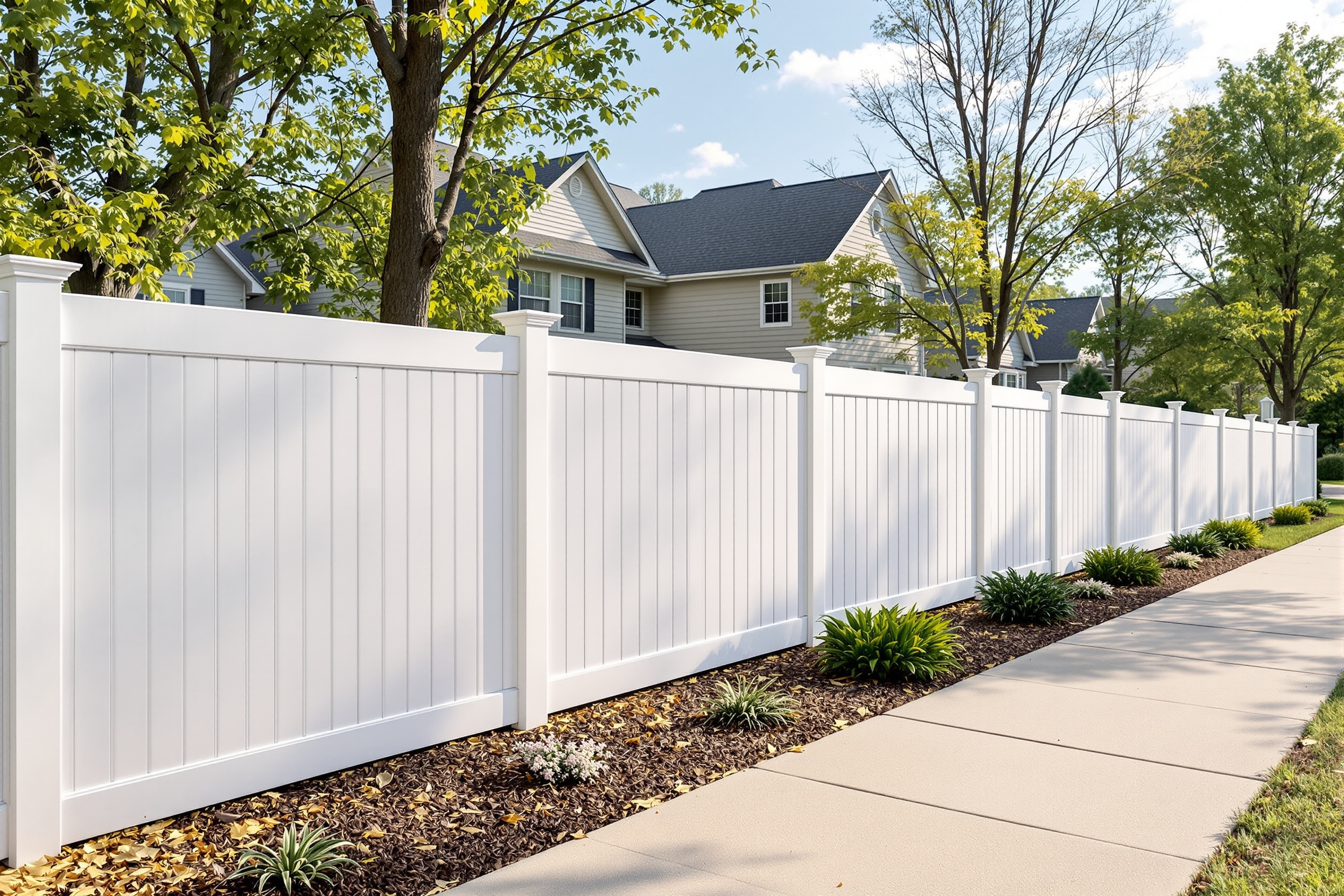
A close second to cedar here — low-maintenance 6 ft privacy that stays white, popular on the higher-end Adams Dairy lots. Co-extruded panel, aluminum insert through the rail.
Blue Springs details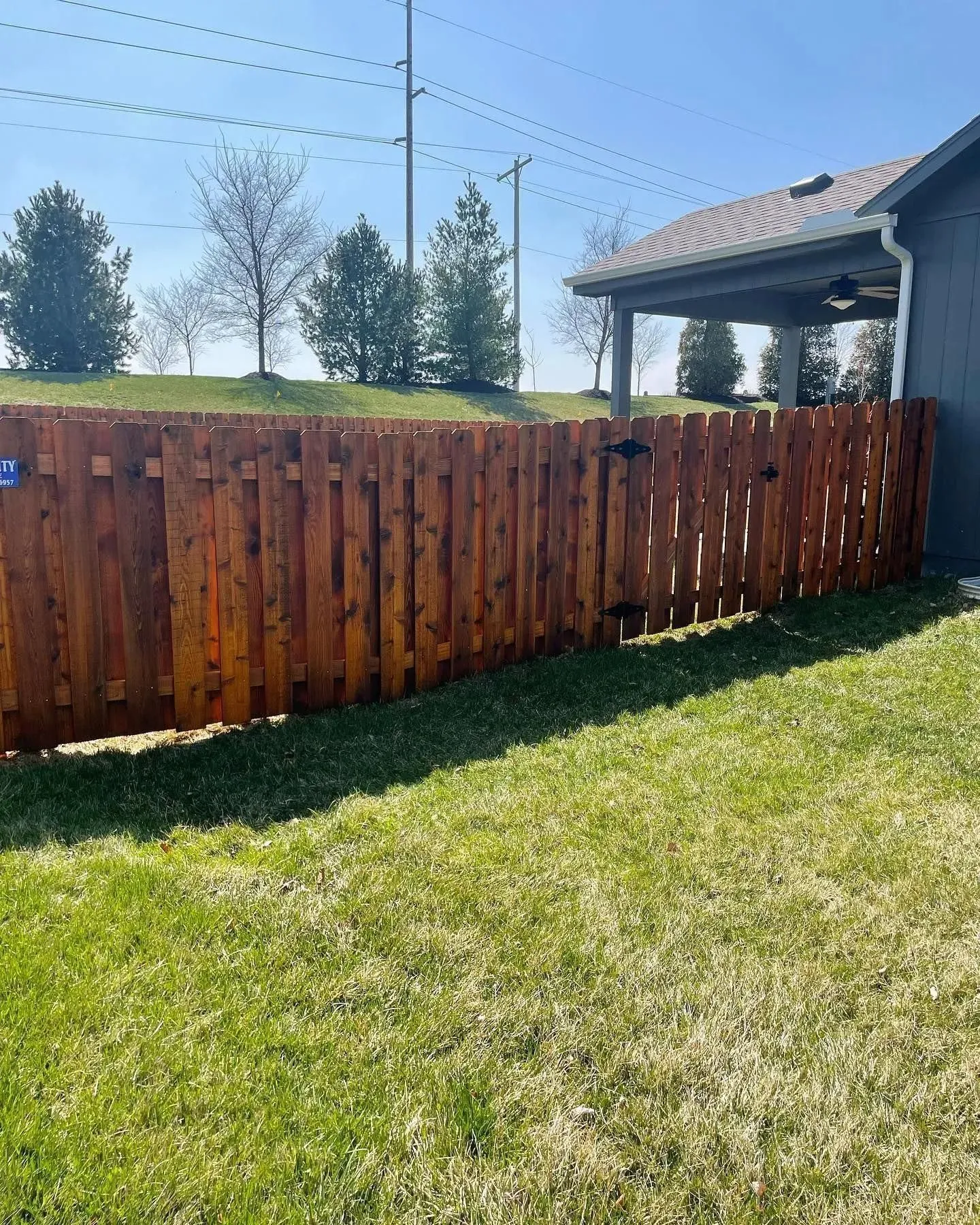
Solid 6 ft cedar and vinyl privacy for the families and pets that drive most demand. Board-on-board, shadowbox, or a scalloped top where you want a more decorative line — your call, built to the wet ground.
Blue Springs details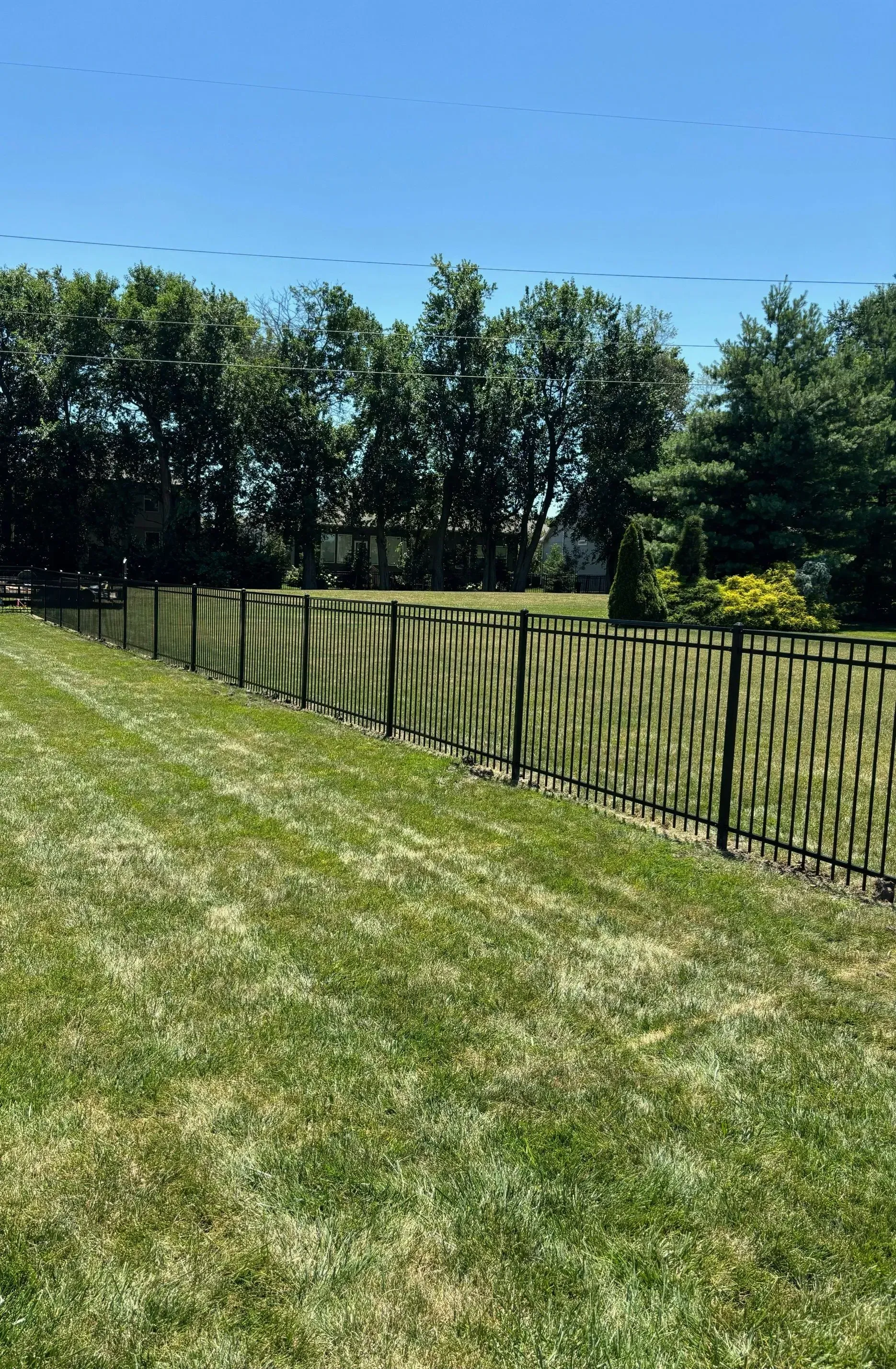
Seen more in the Adams Dairy area and on view lots — black steel over E-coat, welded, fabricated to the run. Footed deep where the ground runs wet.
Blue Springs details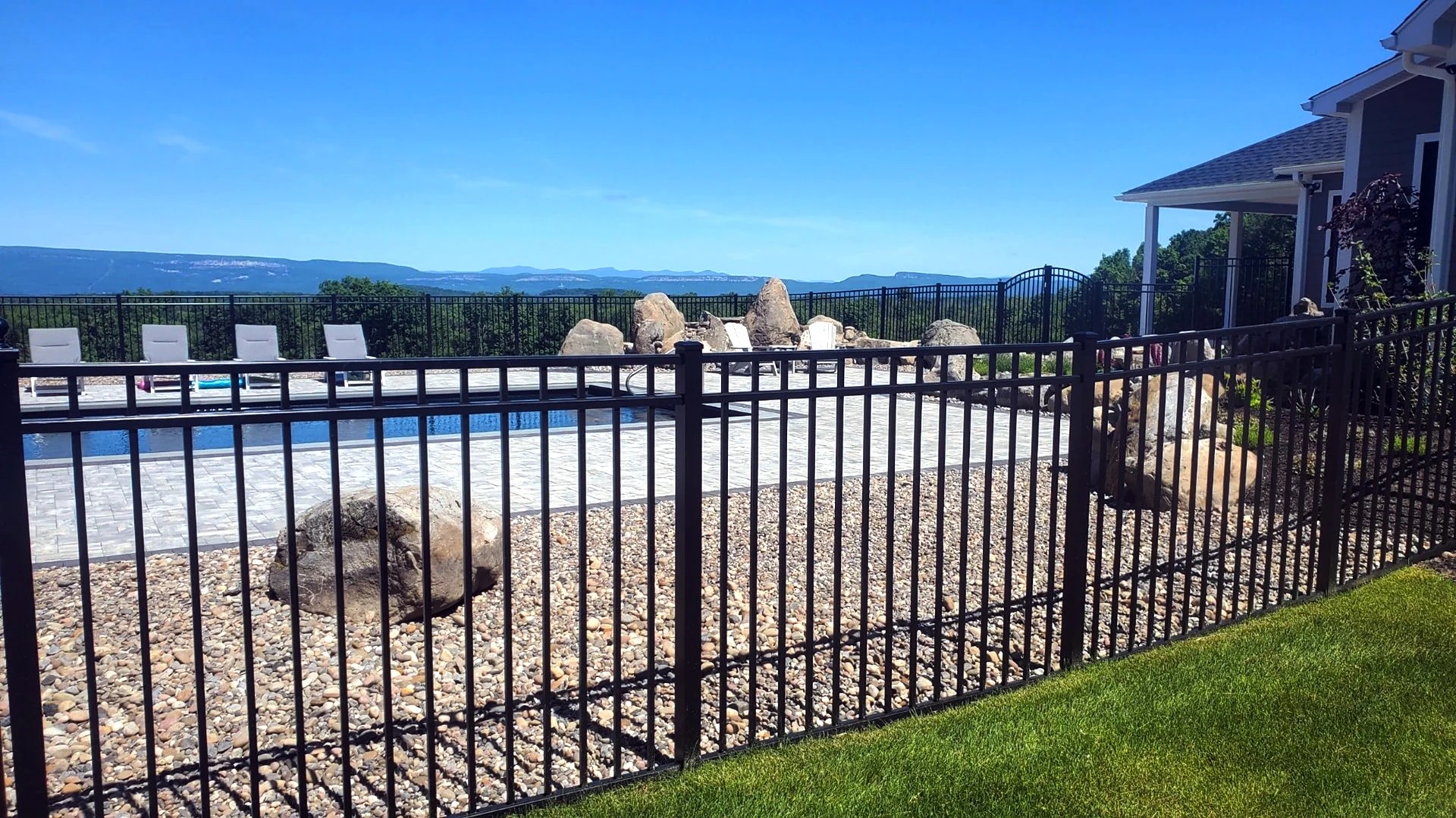
Rackable powder-coated aluminum for pool lines — rust-proof, the iron look without the weight, drained footings on the soft-soil lots.
Blue Springs details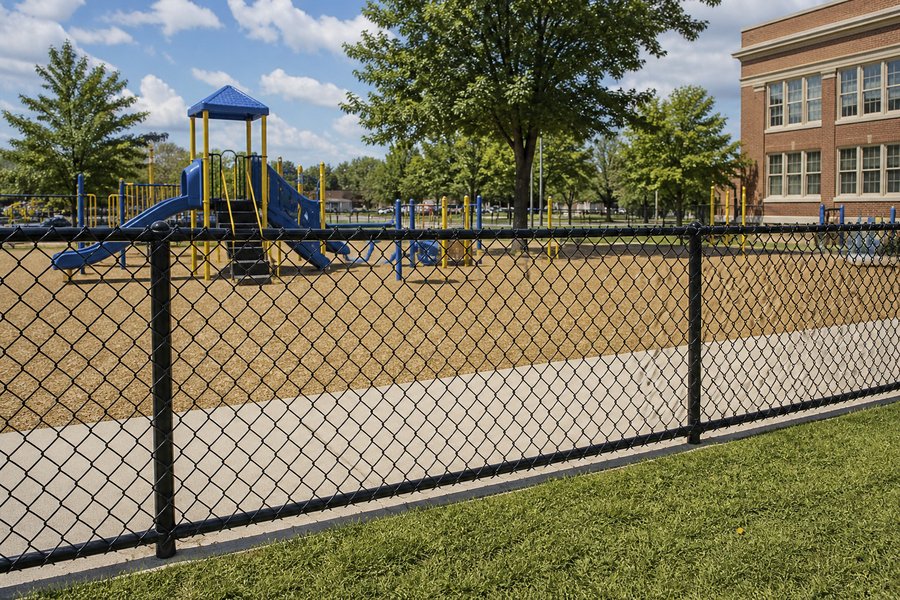
Mostly the 1980s neighborhoods and commercial work now — and the material we most often convert away from when an owner upgrades an old run to cedar or vinyl. 9-gauge residential, 6-gauge commercial.
Blue Springs details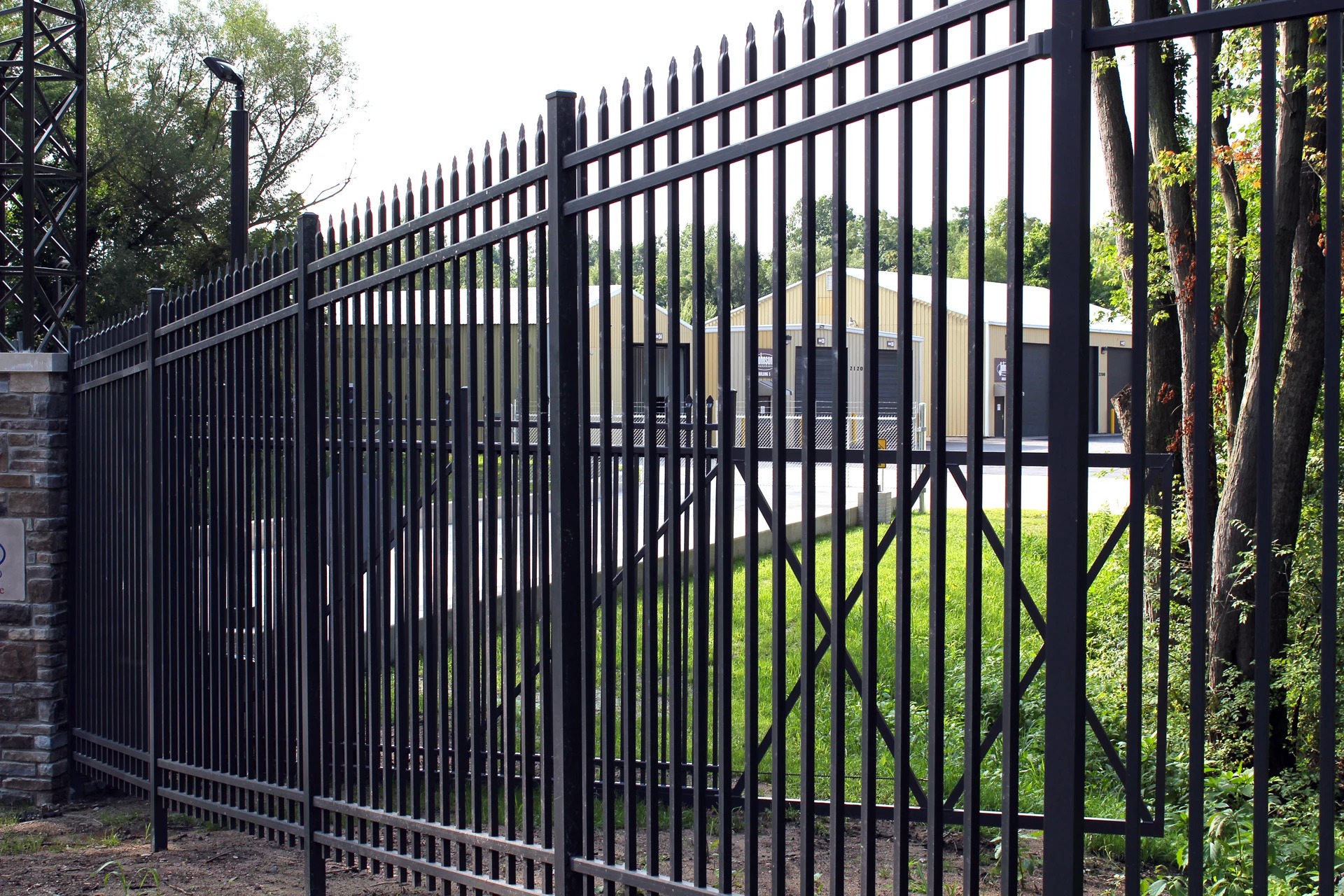
Perimeter and screening for the Adams Dairy Landing retail expansion and the large church and school campuses. Proposal includes the certificate of insurance and W-9 up front.
Blue Springs details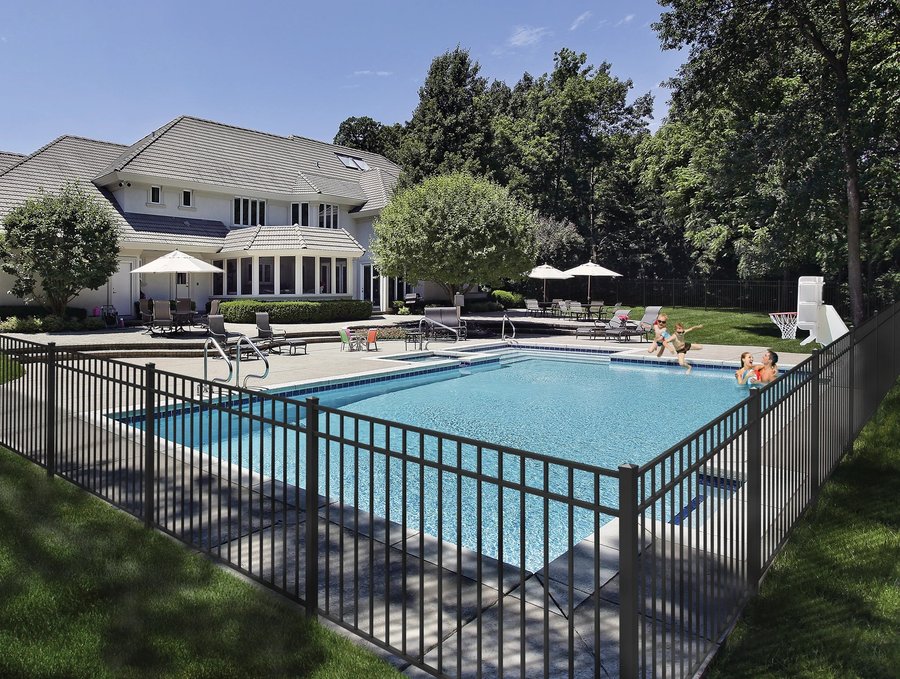
Barrier-code aluminum and iron — 48-inch height, non-climbable spacing, self-closing self-latching gates, footed deep on the soft-soil lots to pass the first inspection.
Blue Springs detailsFence already standing? We also handle fence repair, staining and sealing, and gate installation across Blue Springs. Working within an association? We also serve Blue Springs metro-wide for HOA-compliant fencing.
Blue Springs fence pricing
A 150-to-200-foot cedar backyard comes in at $3,750 to $7,000 installed; vinyl runs a touch above. The Blue Springs-specific variable is the ground — a wet-pocket lot needs deeper, drained footings, which we itemize on only the affected posts. A decorative scalloped or arched top adds a little, and tearing out an old chain-link run is its own line. One metro rate applies everywhere; a Blue Springs fence is priced like any Jackson County job.
Each quote is free, in writing, and itemized so nothing hides. If your lot sits over a wet pocket, the deeper-footing adjustment appears only on the affected posts — quoted before you sign.
Recent Blue Springs projects
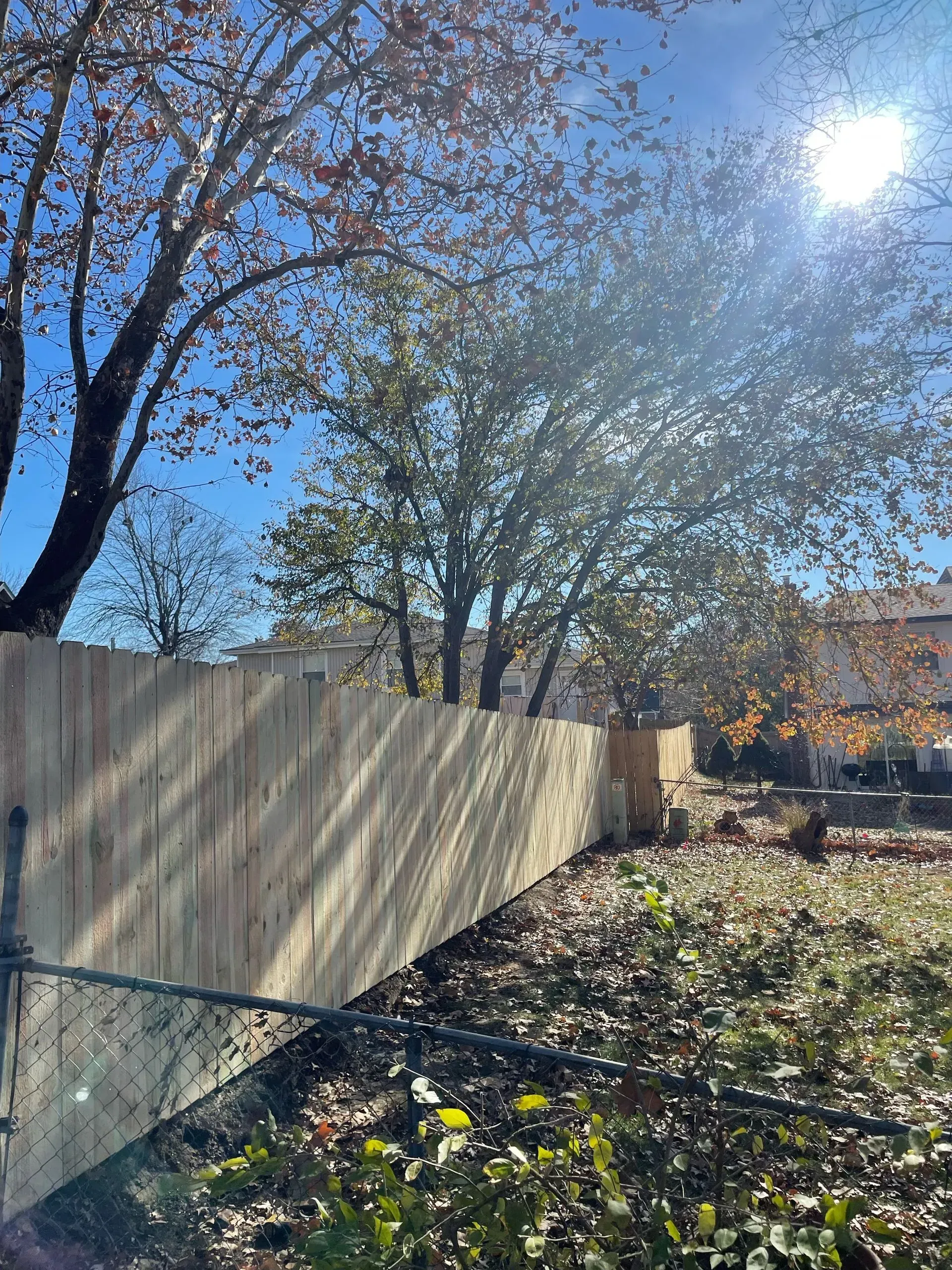
Each shot is a true RKC install around Blue Springs. Solid cedar, stained shadowbox, and ornamental — built for the active-family yard and the wet ground under it.
REVIEWS
4.9 ★ · 85 Google reviews
Every review is on our Google Business Profile — read them there, unedited.
Read all 85 reviews on GoogleBlue Springs fence questions
The points Blue Springs homeowners raise most on a quote. Not answered here? Josh is reachable at (913) 286-1091.
Service area
Blue Springs sits in eastern Jackson County, and we build right across its edges into Lee's Summit to the south, Independence to the west, and Grain Valley to the east along I-70. For coverage across the whole metro, start at our Kansas City fence contractor overview.
Free, at your property, no pressure — and we read the ground before we put a number on it.
Ready when you are