Skip to content
Ornamental Iron Fencing in Kansas City — the Estate Look With a Security Edge

Ornamental Iron Fencing in Kansas City — the Estate Look With a Security Edge

Ornamental iron is real steel — heavier and stronger than aluminum, so it carries a genuine security edge, and it’s E-coated and powder-coated so it won’t rust the way bare iron does. RKC installs welded steel panels in spear-top, flat-top, staggered, and scalloped profiles, black or bronze, that frame a house instead of hiding it. Every post set 36 inches deep in poured concrete, below the frost line — built for every storm the metro throws at it.

★★★★★
4.9
from 85 reviews
Licensed
& Insured · KS + MO
400+
fences installed
A+ BBB Rated E-Coat + Powder-Coat Steel Welded Panels Free On-Site Estimates
Browse ornamental profiles in our catalog ↓

The short answer

Ornamental iron is the one fence that adds curb appeal and a security edge at the same time. It’s real welded steel — heavier and harder to defeat than a lighter panel — and it’s E-coated and powder-coated so it won’t rust the way bare iron does. Spear-top, flat-top, staggered, or scalloped, on posts set 36 inches deep, it frames the house instead of closing it off.

RKC installs and repairs every type of fence — wood, vinyl, chain link, ornamental iron, aluminum, and commercial security — plus in-house staining. If you want the same picket line at a lower weight and no rust worry, that is aluminum; if it’s wrapping a pool, start at pool fencing.

The part that decides it

The Ornamental Steel Decision Guide — Rust, Security, and the Picket Top, Answered

Ornamental gets quoted as one product, but six questions decide whether it’s the right metal for your yard — and whether the version you were quoted will still look new in ten years. Each row takes one of those questions, gives the plain answer, then the trade detail underneath it and the reason it matters.

The questionThe plain answerHow it’s builtWhy it decides the fence
Won’t steel rust?Not with the right finish — bare steel rusts, a coated panel doesn’tEvery steel panel is E-coated first — an electrocoat primer that bonds inside the hollow pickets and over the welds where paint can’t reach — then powder-coated on top; two layers baked on, not surface paintPainted ornamental gives up at the welds, where the coating is thinnest and water sits; the finish system, not the metal, decides whether it bleeds rust in two winters or holds its color for decades
Steel or aluminum?Steel for weight and a hard hit; aluminum for zero upkeepOrnamental steel is real, heavier stock that shrugs off a ladder fall or a mower strike and feels solid at the gate; aluminum is lighter and can’t rust at allYou’re choosing mass against maintenance — steel where impact or authenticity is the point, aluminum where you want the same picket line with nothing to keep up
Which picket top?The top sets the job — security, pool, curb, or period lookSpear-top reads as security and estate front yard; flat-top is the clean, pool-appropriate profile; staggered is the curb-appeal upgrade; scalloped suits traditional and historic homesThe top is the one style call that also decides function — a pointed spear discourages a climb, a flat top clears the barrier spec — so the use narrows the choice before looks do
Is it actually more secure?Yes — that’s ornamental steel’s real edge over a decorative fenceWelded pickets-through-rails with no bolted joints to work loose, a rigid steel section that resists spreading, and a spear top with no comfortable handholdThis is the fence that does curb appeal and deterrence at once; a panel that looks like an estate fence but is welded steel is why it wins front yards and light perimeters
Will it dent or take a hit?Better than any lighter metal fence — that’s the reason to buy steelThe heavier section absorbs a knock that would dent a thin panel, and because the panel is welded we can cut out and replace a damaged section rather than the whole runWhere a hard impact is likely — a driveway edge, a ballfield line, a busy corner lot — steel’s mass is exactly what you’re paying for over lighter stock
How long, and what fails first?Decades — and when it goes wrong it’s the footing, not the steelCoated steel on posts set 36 inches deep in poured concrete runs well past 20 years in this climate; a shallow post is what heaves and racks a rigid panel out of squareOrnamental is unforgiving of a bad footing because a rigid panel can’t be shimmed or trimmed on site — so the depth below the frost line, not the metal, is the number that matters

The spec that carries every row is the finish and the footing: an E-coat primer beneath the powder coat so the steel doesn’t bleed rust at the welds, and a 36-inch concrete-set post so a rigid panel doesn’t heave out of square. If you’d rather have the same look with no rust worry and less weight, weigh it against aluminum; if it’s enclosing a pool, the barrier rules take over — see pool fencing.

The style call that’s also a function call

Spear, Flat, Staggered, or Scalloped?

The picket top is the one ornamental choice that sets both the look and the job the fence does. Where the fence goes usually settles the top before curb appeal gets a vote.

Spear-top — security and the estate front yard

Pointed pickets are the classic wrought-iron silhouette and the one that reads as security: there’s no comfortable handhold at the top to climb over. It’s the go-to for a front-yard boundary or a light perimeter where you want the property to look finished and hard to get over at once.

Flat-top — clean, modern, pool-appropriate

A level top rail is the understated, contemporary profile — and it’s the one that suits a pool enclosure, where the barrier spec wants no toe-holds or points. It recedes visually so the eye reads past it, which is why it pairs well with modern homes and open sightlines.

Staggered picket — the curb-appeal upgrade

A rhythm of high-and-low picket tops dresses up a plain run without changing the material. It’s a common front-yard upgrade for homeowners who want more than a flat line but not the full estate look — decorative, still all-steel, still welded.

Scalloped — traditional and historic homes

An arched or scalloped top line suits period and traditional architecture, and it’s often what a custom-welded panel is for. Where a home’s style calls for the older look, this is the profile that matches it instead of fighting it.

Where ornamental steel earns its price

Curb Appeal and a Security Edge in One Fence

A decorative fence and a deterrent are usually two different products — ornamental steel is both. Four build details are what let one picket line frame the house and resist being climbed or forced.

1

Welded, not bolted

Every panel is welded pickets-through-rails at the factory — no field-bolted picket-to-rail joints that work loose in wind and rattle apart over a few seasons. A welded panel stays tight and square, which is what keeps a security line from developing gaps someone can spread.

2

A rigid steel section

Because it’s real steel and not a lightweight extrusion, the section resists being bent or pried apart. That mass is the difference between a fence that looks like a deterrent and one that actually is — and it’s why the same panel also shrugs off a mower bump or a ladder leaning against it.

3

A spear top with no handhold

Where security is the point, a spear-top profile gives nothing comfortable to grab or stand on at the top of the run. It reads as classic estate iron from the curb and does double duty as the part of the fence that discourages a climb.

4

A matching gate on the same line

The drive or walk gate is built from the same welded steel and hung on heavy hinges so the entrance matches the fence instead of undercutting it. Corner and gate posts get a cross-brace so the heaviest, most-used part of the line keeps closing true for years.

Built for every storm

Why Coated Steel Outlasts the KC Weather — and What Actually Fails

Coated ornamental steel doesn’t rot or warp, and it won’t rust where the finish is done right — so when it goes wrong, it’s the finish or the footing, not the metal. Here’s what holds it up through the rain, the freeze-thaw, and the years.

The finish is the whole game

Bare steel rusts; E-coated, powder-coated steel doesn’t bleed for a very long time. The E-coat reaches the weld seams and the hollow picket interiors where paint can’t, and the powder coat seals it — no rust bleed, no flaking, no annual sanding. Skip the E-coat and the welds are the first thing to go.

It doesn’t rot or go brittle

Nothing about steel cares whether it’s a wet July or a hard January. It doesn’t swell, cup, or check the way wood does, and the section doesn’t get brittle in the cold the way a thin panel can — the fence holds its exact shape and spacing season after season.

The footing is the real test

The KC frost line runs 30–36 inches, and a post set shallow heaves in the first hard winter and racks a rigid panel out of square — the one failure ornamental can’t hide, because the panel can’t be shimmed on site. Every post goes a full 36 inches into poured concrete; that footing decides the lifespan.

The gate posts get braced

A steel gate has real weight, so an unbraced gate post walks over time under a swinging load. Gate and corner posts get a cross-brace tied to the adjacent line post, so the gate closes the same in year ten as it did on day one.

Ornamental catalog

Ornamental Profiles We Install in the KC Metro

Spear-top, flat-top, staggered, and scalloped pickets in black and bronze — every post set to 36 inches. Use the catalog to weigh profiles, colors, and heights before you commit.

Select a style above to see colors and details

See the full catalog — every material and style →

Recent ornamental installs

Ornamental Fences We’ve Built Across the KC Metro

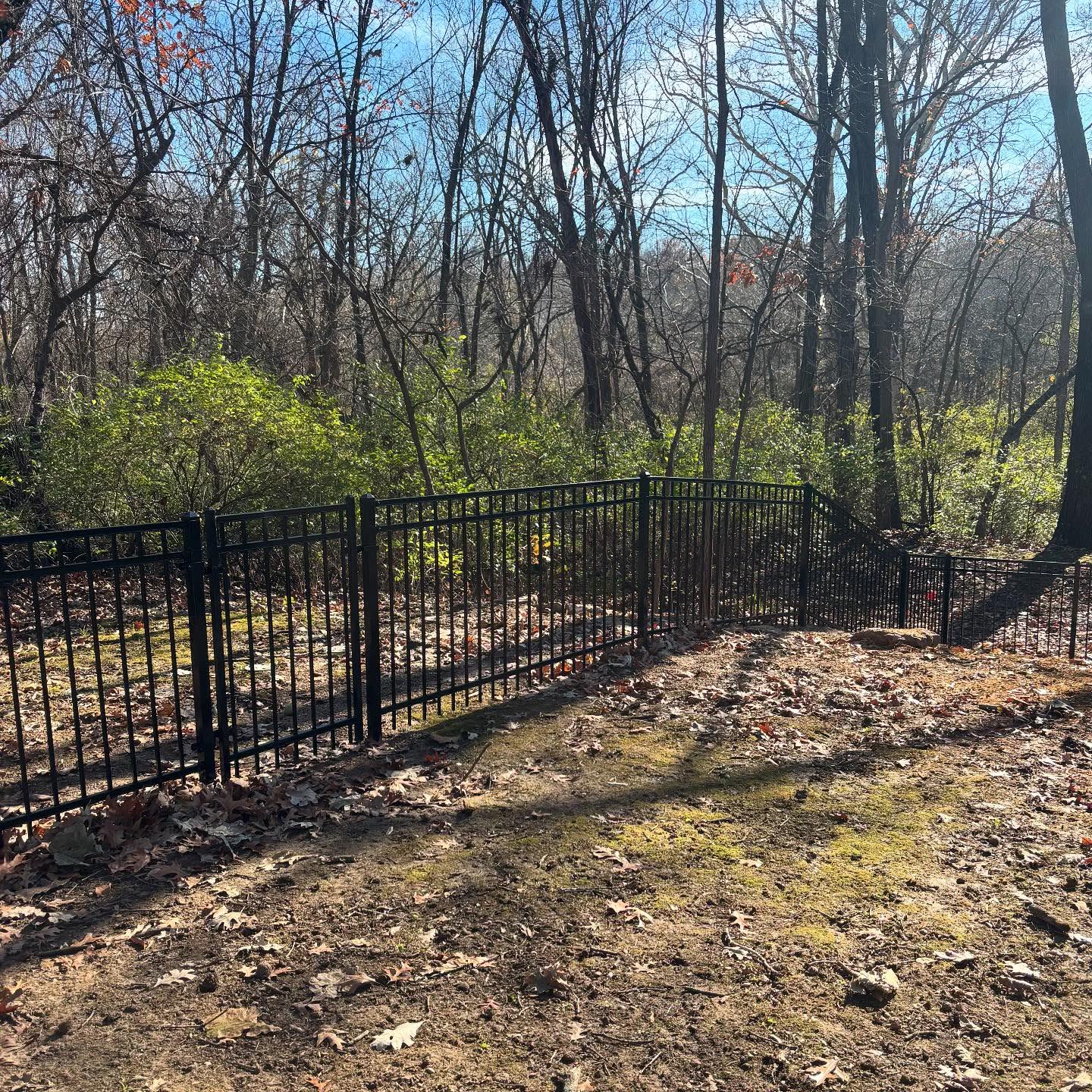
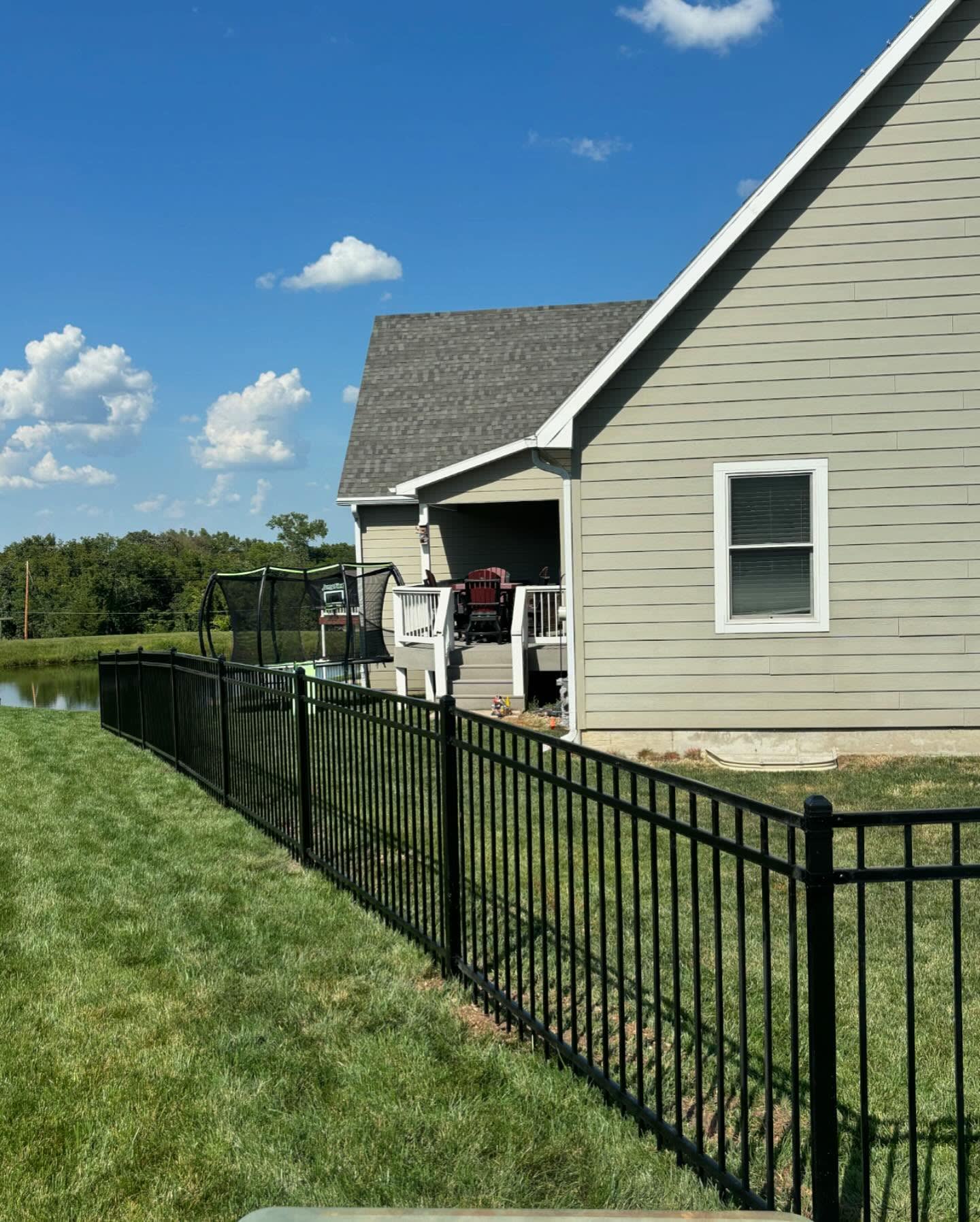
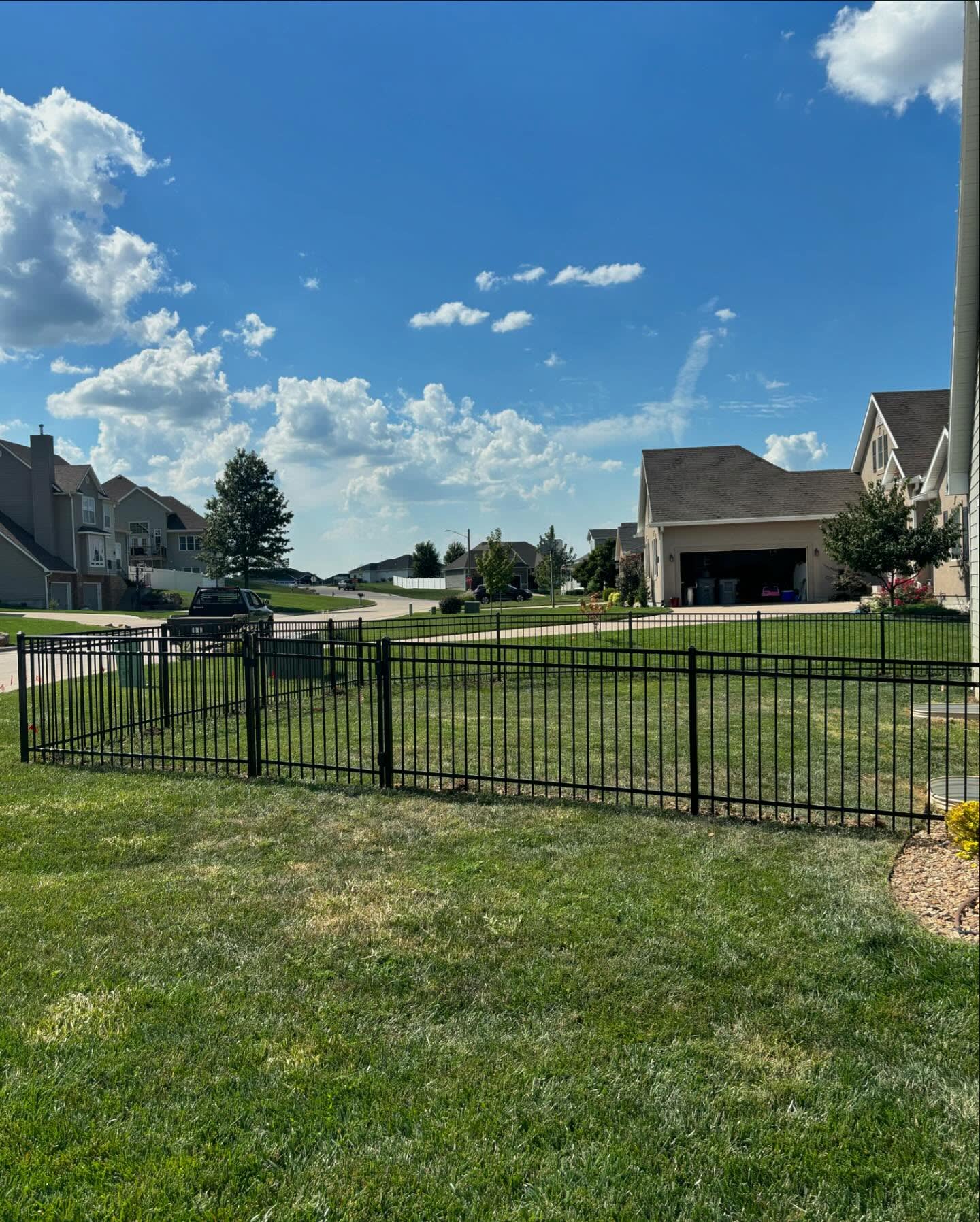
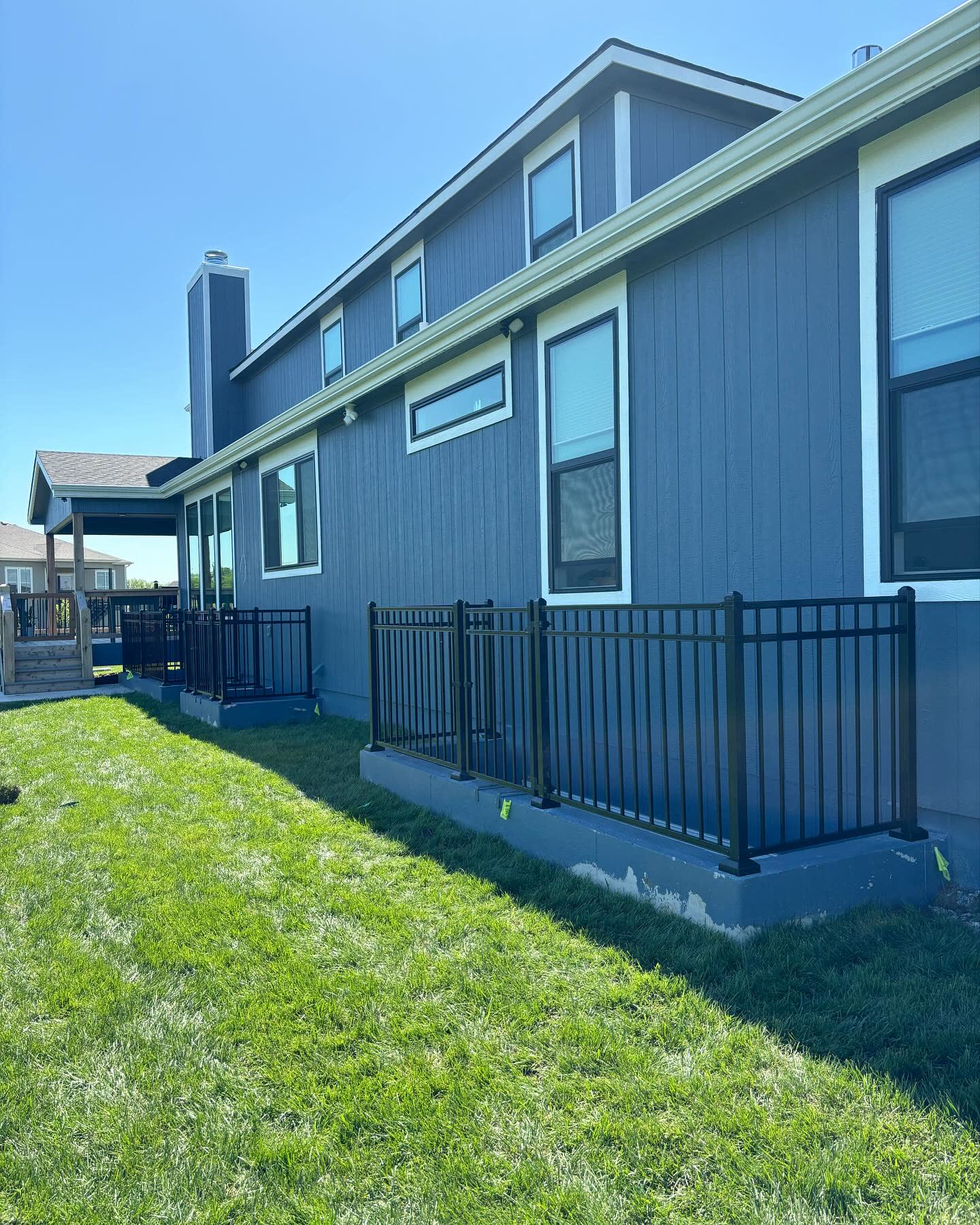
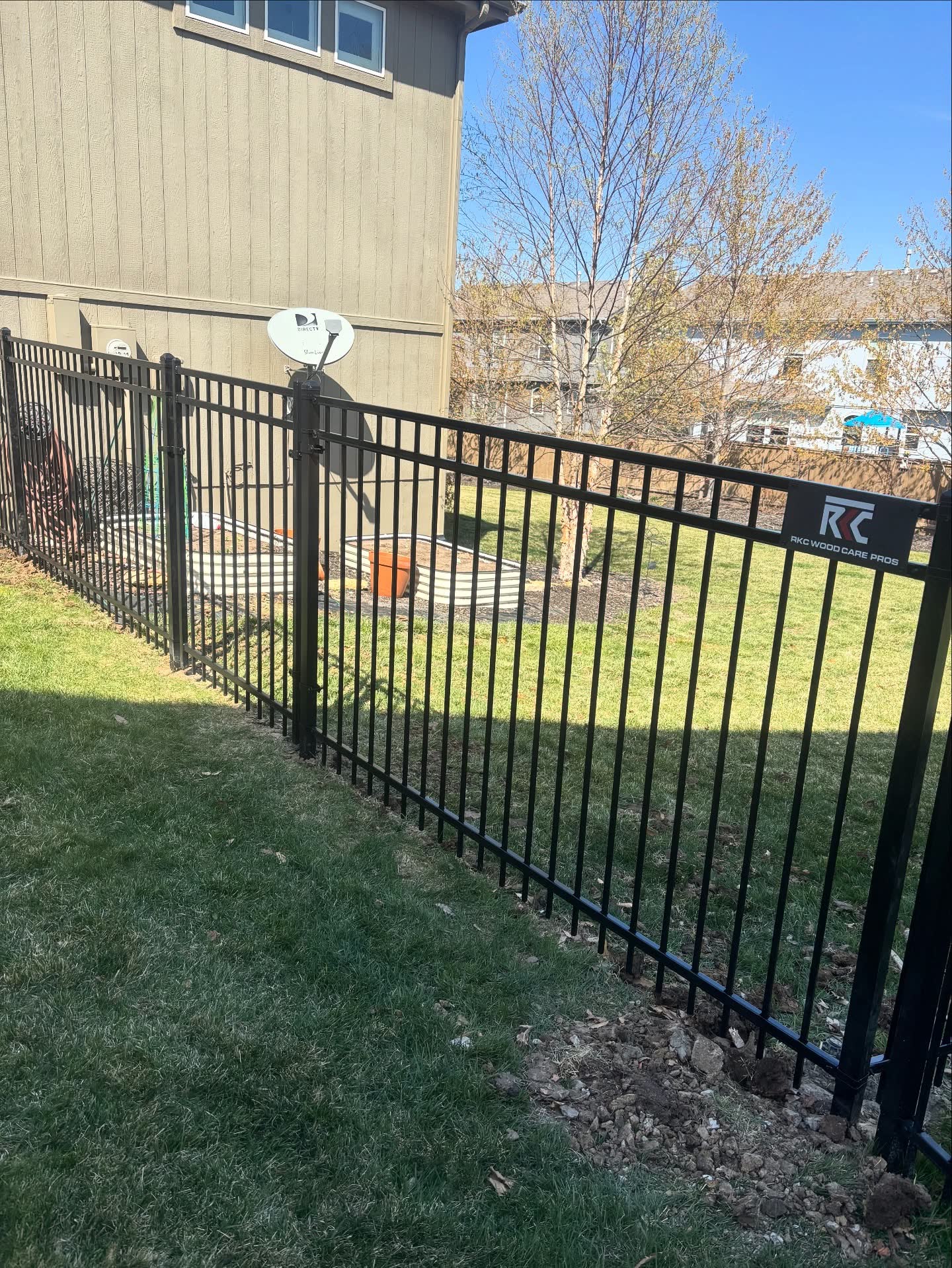
Every photo here is a real RKC ornamental install. Black steel and aluminum, front-yard, poolside, and drive-gate runs across the metro.

REVIEWS

What Kansas City Homeowners Say About RKC

4.9 ★ · 85 Google reviews

Every review is on our Google Business Profile — read them there, unedited.

Read all 85 reviews on Google

Kansas City ornamental questions

What KC Homeowners Ask About Ornamental Iron

The questions we field most on an ornamental quote. Don’t see yours? Get Josh on the line at (913) 286-1091.

Does ornamental iron fencing rust in Kansas City?
Bare steel will — but a properly finished ornamental fence won't for a very long time. The steel panels we install are E-coated first: an electrocoat primer that bonds to the metal and reaches the hollow inside of each picket and the weld joints, where ordinary paint can't get. A baked-on powder coat goes over that. Painted ornamental typically rusts at the welds within a couple of KC winters because the coating is thinnest exactly where water sits. The two-layer E-coat-plus-powder-coat system is what separates a fence that holds its color for decades from one that bleeds rust early. If you'd rather skip the finish question entirely, aluminum can't rust at all.
What's the difference between ornamental iron and aluminum fencing?
From the curb they read the same — a slim black picket line — but they're different metals with different jobs. Ornamental iron is real steel: heavier, more rigid, and stronger against a hard impact like a ladder fall or a mower strike, which makes it the choice where security, authenticity, or the weight at the gate matters. Because it's steel, it has to be coated (E-coat plus powder-coat) to stay rust-free. Aluminum is roughly 40% lighter, never rusts, and installs for a little less, so it wins on front yards, pet runs, and any line you don't want to think about again. We spec whichever fits the use — see aluminum fencing for the lighter version.
What is E-coat and why does it matter on an ornamental fence?
E-coat is an electrocoat primer applied before the color goes on. The panel is cleaned, treated, then dipped in a charged coating bath so the primer is drawn evenly onto every surface — including the inside of the hollow pickets and the weld seams that a paint gun can't reach — and baked on. A thermoset powder coat is applied over it. That double system is why a good ornamental steel fence resists rust bleed for many years, while a paint-only finish tends to fail first at the welds. It's the single biggest reason two ornamental fences that look identical on day one age completely differently.
Which ornamental picket top should I choose — spear, flat, staggered, or scalloped?
Function usually decides it before looks do. Spear-top pickets read as classic security and estate front-yard, and the pointed top discourages a climb. Flat-top is the clean, modern profile and the one that suits a pool enclosure, where the barrier spec wants no toe-holds. Staggered picket is the curb-appeal upgrade — a rhythm of high-low tops that dresses up a front line. Scalloped or arched profiles suit traditional and historic homes. We bring physical samples to the on-site estimate so you can hold each top against your actual house before anything is fabricated.
Is ornamental iron fence good for security?
It's the fence that does curb appeal and deterrence at the same time, which is its real advantage over a purely decorative panel. Three things make it hard to defeat: the pickets are welded through the rails rather than bolted, so nothing works loose; the steel section is rigid and resists being spread or bent apart; and a spear top gives no comfortable handhold to climb over. That's why ornamental steel is the common pick for a front-yard boundary, a pool enclosure, and a light commercial or perimeter line where you want the property to look finished, not fortified.
Can an ornamental iron fence go around a pool?
Yes, and flat-top ornamental is a common pool-barrier profile. A pool barrier is a different rulebook than an ordinary fence: it wants a minimum height (typically 48 inches), a picket gap no wider than 4 inches, a flush bottom rail with no toe-hold to climb, and a gate that swings shut and latches on its own. A flat-top panel meets that spacing and safety spec, while a pointed spear-top usually doesn't. We build the enclosure to the barrier spec your pool's final inspection checks. If the pool is the whole reason you're fencing, start at pool fencing.
Can ornamental fence be powder-coated a custom color?
Yes. Satin black is by far the most common — it reads as classic wrought iron and recedes so the eye reads through to the yard and the house. Bronze, white, and a few muted greens and grays are available as stock colors, and custom colors can be produced for an added cost and a longer lead time. Because the color is a factory powder coat rather than field paint, it's consistent panel to panel and doesn't need repainting. We bring samples to the estimate so the color is chosen in natural light against your actual house, not off a screen.
How deep do ornamental fence posts go, and how long does the fence last?
Every post goes 36 inches deep in poured concrete, below the Kansas City frost line, which runs 30–36 inches. Ornamental panels are rigid — they can't be shimmed or trimmed on site the way a wood run can — so a shallow post that heaves in the first hard winter racks the whole panel out of square. Set to depth, coated ornamental steel runs well past 20 years here, and the failure mode is almost always the footing rather than the metal. Gate and corner posts get a cross-brace so a swinging gate doesn't walk the post over time. Every estimate is free and itemized, and financing is available to spread the cost.

Want the same look at a lighter weight with no rust worry? See aluminum; for a private-yard screen instead, see privacy fencing.

Ready when you are

Get a free estimate — we usually respond the same day.

Call (913) 286-1091