Skip to content
Cedar and Wood Fence Installation in Kansas City

Cedar and Wood Fence Installation in Kansas City

A wood fence in Kansas City lives or dies underground. RKC installs Western Red Cedar and pressure-treated pine in every style the metro wants — board-on-board, shadowbox, horizontal, dog-ear, and picture-frame — with every 4x4 post set 36 inches deep in poured concrete below the KC frost line, fastened with galvanized ring-shank nails, and stained in-house on a schedule we track. The same company installs, stains, and repairs the fence for its whole life.

★★★★★
4.9
from 85 reviews
Licensed
& Insured · KS + MO
400+
fences installed
A+ BBB Rated 36-Inch Posts, Documented In-House Staining Free On-Site Estimates
Browse wood fence styles in our catalog ↓

The short answer

Cedar is the Kansas City wood-fence default, and how deep the posts go decides how long it lasts. RKC builds cedar and pressure-treated pine — board-on-board, shadowbox, horizontal, picket — with every post set 36 inches in poured concrete, below the 30–36 inch frost line the clay and freeze-thaw would otherwise heave. Then the same company stains it in-house and repairs it when it needs it.

RKC installs and repairs every type of fence — wood, vinyl, chain link, ornamental iron, aluminum, and commercial security — plus in-house staining. Cedar needs a finish plan (staining and sealing), and a broken board is a repair, not a replacement.

The part you can’t see

Why RKC Sets Every Wood Fence Post 36 Inches Deep in Kansas City Clay

A wood fence fails from the footing, not the pickets — so the number that matters most is the one underground. Here is the 36-inch standard translated from the question you actually ask into the build detail and the KC reason behind it.

What you askIn plain EnglishThe RKC build detailWhy it matters in KC
How deep should the posts go?Deep enough that a KC winter can’t lift them36 inches, in poured concrete, with a bell-bottom footingThe KC frost line runs 30–36 inches; a post above it heaves 2–3 inches every freeze-thaw cycle, and the metro logs 80+ a winter
In concrete, or just tamped dirt?Wet-poured concrete, not a dry bag40+ lbs of wet-set concrete per post, flared at the baseDense KC clay holds water against the post and a privacy run takes real wind — a dry-set or half-bag footing walks within a few seasons
Will it survive the wind?That’s a post-and-spacing question4x4 cedar or PT posts on 6–8 ft centers; hidden steel where the run is exposedA 6-foot privacy panel is a 48-square-foot sail, and KC sees 25+ mph wind days routinely
What actually holds the boards on?The right fastenersGalvanized ring-shank nails or structural screws, joist hangers at the railsSmooth-shank nails loosen in a few years as cedar cycles wet and dry; ring-shank and screws hold for the life of the fence
How long will it last?Depends on depth and stain15–25 years for cedar on 36-inch posts, kept on a stain cycleA shallow-set fence roughly halves that — it heaves and the posts rot early no matter how good the boards are

Josh walks every install, and the 36-inch footing is documented with jobsite depth photos — because it is the one part of the fence a homeowner can never verify after the concrete is poured. It is also why our replacements outlast the fences they replace. New cedar then goes on a stain schedule, and a damaged board is a repair down the road, never a teardown.

The material choice

Western Red Cedar or Pressure-Treated Pine?

Both perform in Kansas City. The choice is longevity and looks versus up-front cost. We quote both side by side rather than steering you to the pricier option — here is how they actually differ.

Cedar — the premium default

Natural oils resist rot and insects with no chemical treatment. Dimensionally stable, so it stays flat on a picket. Takes semi-transparent stain beautifully and shows its grain. Runs 15–25 years here. The reason it is the "JoCo look" and the metro standard.

Pressure-treated pine — the value pick

Chemically protected against rot, meaningfully cheaper per foot, and durable when set deep. Runs 10–15 years. It arrives wet, so it waits longer before its first stain. An honest choice on a long run where budget leads — not a lesser one.

Mixing the two on purpose

Treated 4x4 posts below grade with cedar boards above is a common, deliberate combination — the treated timber handles the soil-contact rot zone while the visible fence is cedar. It saves money in the one place where saving money is defensible.

Grade matters as much as species

Tight-grain, small-knot cedar stays straight and finishes evenly; knotty construction-grade cedar cups and bleeds resin around the knots. When a covenant reaches down to "wood grade," this is the distinction it means. We build to the grade that lasts.

The style choice

Board-on-Board, Shadowbox, Horizontal — Which Wood Fence Fits

"Privacy fence" describes an outcome, not a build — and the builds behave differently. Wind, cost, how it ages, and how the neighbour feels about it all change with the profile.

Board-on-board

Overlapping pickets, so the run stays solid even after cedar shrinks in its first dry summer. Finished from both sides, more lumber than a plain privacy fence, and the profile we recommend where a run faces a street or a shared line.

Shadowbox

Alternating pickets on either side of the rail — about 90% private, both faces finished, and wind passes through instead of loading the panel. The "good-neighbor" build many HOAs mandate, and the diplomatic answer on a shared line.

Horizontal

Boards run sideways for a clean, modern line — the contemporary look that is exploding in the newer master-planned areas. It wants straight, well-graded lumber and careful spacing, and it reads high-end on the right house.

Dog-ear & spaced picket

Dog-ear is the straightforward solid privacy workhorse; spaced picket is the low, open, front-yard classic. Picket also satisfies front-yard height and openness rules where a solid privacy fence is not allowed.

Picture-frame & top cap

A trim board framing the panel and a horizontal cap over the top — it protects the picket end grain and is what a covenant means by "looks finished from the street." Worth the upgrade on a street-facing run.

Stockade & split rail

Stockade is a tight, economical solid-board run; split rail is the open, rural boundary look for a larger lot. Both are cedar or PT, both set to the same 36-inch standard — the style is open, the footing is not negotiable.

Wood fence catalog

Every Wood Fence Style We Install in the KC Metro

Cedar and pressure-treated pine in every major profile — all built to the same 36-inch-post standard. Browse the catalog to compare styles, colors, and specs before your estimate.

Select a style above to see colors and details

See the full catalog — vinyl, ornamental, chain link, and more →

How the install runs

From First Call to Finished Fence

Posts first, concrete cures, panels go up — with a stain plan written before we leave. Most residential wood fences run 1–3 days of on-site work once permits clear.

1

Estimate and material choice

We measure the property, walk cedar versus pine and the style options on your actual lot, and send a written, itemized estimate — posts, concrete, hardware, permit, and cleanup on separate lines.

2

Permit and utility locate

We pull the city permit and schedule the 811 utility locate before breaking ground. Where an HOA applies, the architectural submission goes in too, and we do not dig until it is approved.

3

Posts to 36 inches, then panels

Every post is set 36 inches in wet-poured concrete and left to cure before the panels are hung. Galvanized ring-shank nails, joist hangers at the rails, kickboard where the ground runs wet.

4

Walkthrough and stain schedule

We walk every foot of the fence with you before the balance is due, and the first stain coat is booked for about 30 days out — logged on our calendar, handled by the same crew.

What wood fences cost

Cedar and Pine Pricing in the KC Metro

A 150-to-200-foot cedar backyard runs about $3,750–$7,000 installed. Material, style, gates, grade, and old-fence removal move the number — here is how the pieces price.

Cedar privacy

About $25–$35 per linear foot installed, board-on-board around $28–$38. The metro default and the best long-term value on curb appeal and lifespan.

Pressure-treated pine

About $18–$28 per linear foot installed. The budget-conscious privacy choice, durable when set to depth, with a longer wait before the first stain.

Horizontal & picture-frame

A step above standard privacy per foot — they use straighter, higher-grade lumber and more careful layout. The modern and finished-from-the-street looks.

What moves your number

Gate count, grade change on a sloped lot, old-fence tear-out, steel-post reinforcement on an exposed run, and premium stain. All itemized before you sign.

Every estimate is free, written, and itemized. Factor the stain cycle into the real cost of ownership — see fence staining and sealing — and know that a broken board later is a repair, not a replacement.

Recent wood installs

Cedar Fences We’ve Built Across the KC Metro

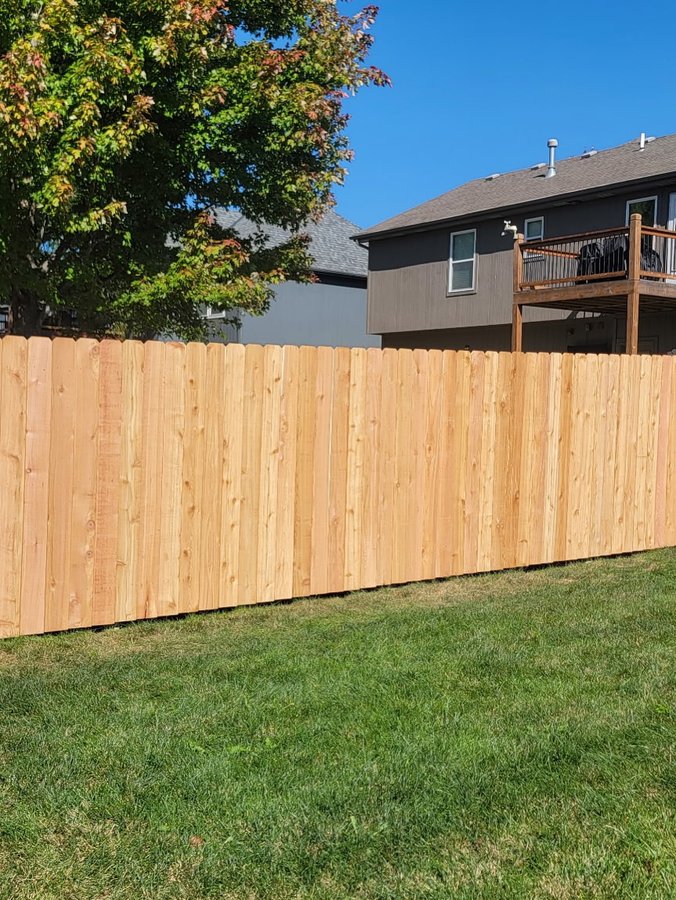
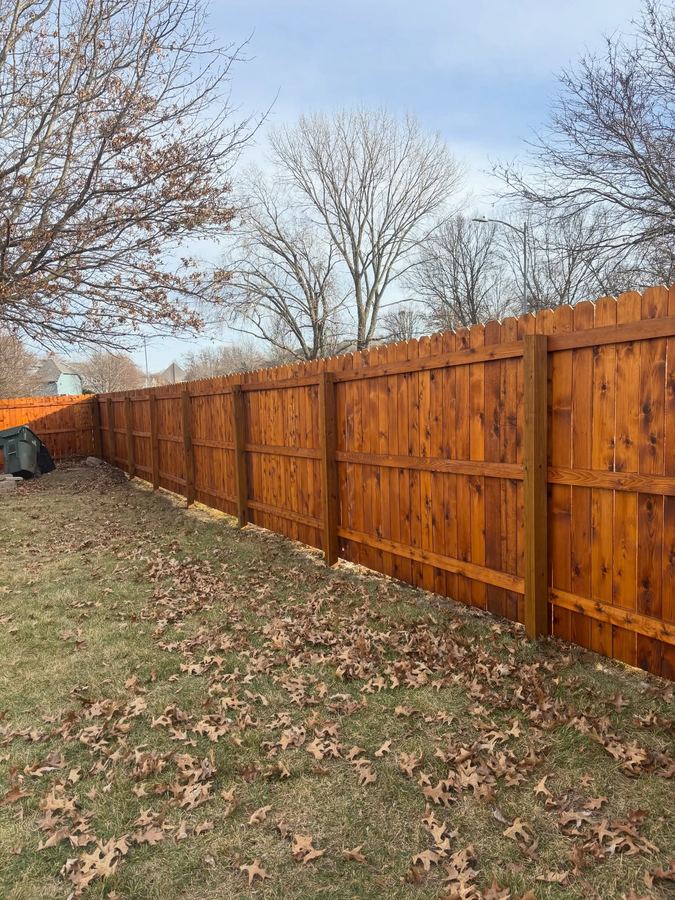
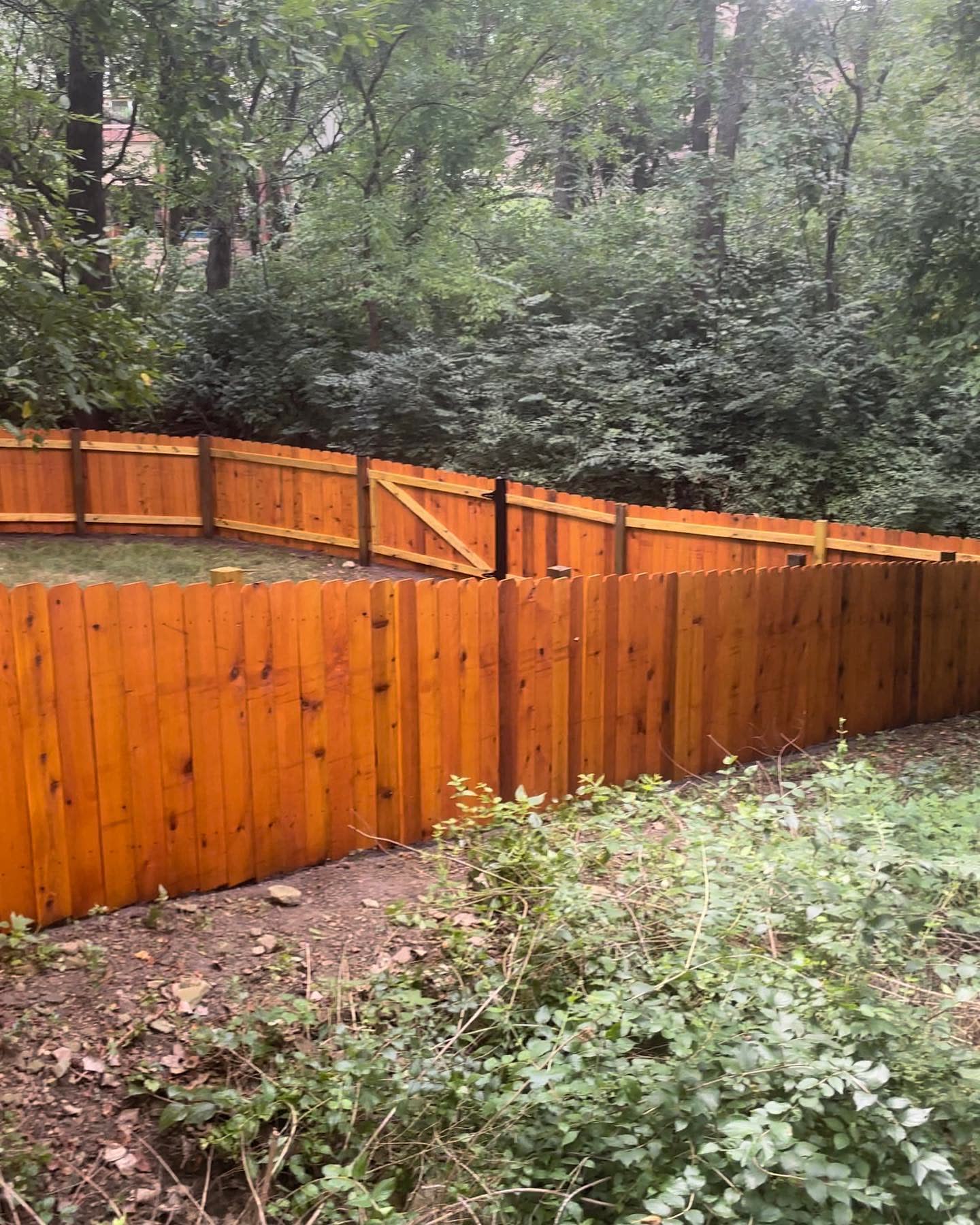
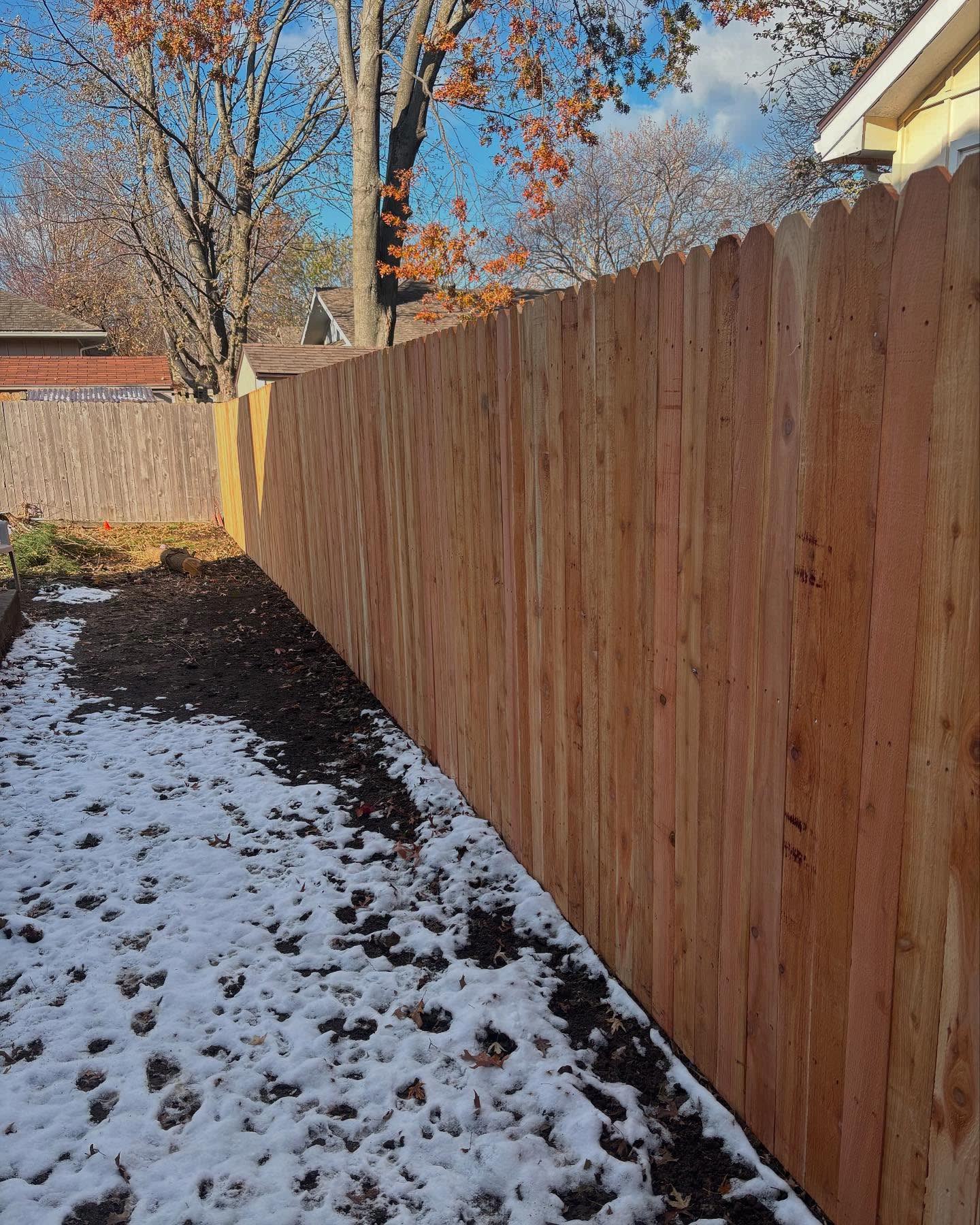
Every photo is a real RKC wood fence. Privacy, dog-ear, and stained cedar, on flat lots and sloped ones across the metro.

REVIEWS

What Kansas City Homeowners Say About RKC

4.9 ★ · 85 Google reviews

Every review is on our Google Business Profile — read them there, unedited.

Read all 85 reviews on Google

Kansas City wood fence questions

What KC Homeowners Ask About Wood Fences

The questions that come up most on cedar and pine estimates across the metro. If yours isn’t here, call (913) 286-1091 — Josh usually picks up.

What is the best wood for a fence in Kansas City?
Western Red Cedar for most homeowners, pressure-treated pine when budget leads. Cedar carries natural oils that resist rot and insects without chemical treatment, stays dimensionally stable so it doesn't warp, and takes a stain beautifully — it runs 15–25 years here. Pressure-treated pine is chemically protected, costs meaningfully less per foot, and runs 10–15 years. Both perform in KC's freeze-thaw climate when set 36 inches deep; the choice is cost versus longevity and looks.
How much does a cedar fence cost per foot?
A 6-foot cedar privacy fence typically runs about $25–$35 per linear foot installed in the KC metro, with board-on-board around $28–$38 and pressure-treated pine around $18–$28. A standard 150-to-200-foot backyard lands roughly $3,750–$7,000. What moves your number: style and board pattern, gates, grade change, old-fence removal, and whether the run needs steel-post reinforcement on an exposed lot. Every estimate is free and itemized.
Should wood fence posts be set in concrete?
Yes — in Kansas City clay, poured concrete is the difference between a fence that stays plumb and one that leans in a few winters. We set every post 36 inches deep in wet-poured concrete with a bell-bottom footing, below the 30–36 inch frost line. Dry-setting a post or dropping a half-bag of mix in the hole saves labour and fails early, because the clay holds water against the base and the wind loads the run. The footing is the part you can't see and the part that decides how long the fence lasts.
What is board-on-board fencing?
Board-on-board is a privacy style where the pickets overlap — each board laps the gap between the two behind it, so the run stays solid even after cedar shrinks in its first dry summer. A plain solid-board fence can open small gaps as it dries; board-on-board never does, and it looks finished from both sides. It uses more lumber than a plain privacy fence, so it costs a little more, and it is the profile we recommend where a run faces a street or a shared line.
How long does a wood fence last?
Cedar set on 36-inch posts and kept stained every 2–3 years runs 15–25 years in Kansas City. Pressure-treated pine runs 10–15. The two biggest variables are both within your control: post depth and the stain cycle. A shallow-set fence heaves and its posts rot early, cutting the life roughly in half; an unstained cedar fence greys and checks years before its time. Build it deep and keep it on a stain plan and it lasts the long end of the range.
How long does it take to install a wood fence?
Most residential wood fences take 1–3 days of on-site work once permits clear and material arrives. Posts go in first and the concrete cures before the panels are hung, so a typical job spans a couple of visits rather than one. The longer part of the timeline is usually the front end — the permit and any HOA review — which can add a couple of weeks. We give you a realistic schedule at the estimate rather than a best-case number.
How often do I need to stain a wood fence?
Every 2–3 years for cedar in Kansas City, and toward the shorter end in full sun. The first coat goes on about 30 days after install, once the new wood has cured enough to accept a penetrating stain. Keeping the fence on that cycle is half of what determines its lifespan — unprotected cedar greys inside 12–18 months. Because we stain in-house, the crew that builds your fence handles the finish and logs your recoat date. See fence staining and sealing for the full schedule.
Can a wood fence be repaired if a board breaks?
Yes — a broken board, a cracked rail, or a leaning post is almost always a repair, not a reason to replace the fence. We match the material and color to your existing run so the repair blends in rather than reading as a patch, and if a post has moved we re-set it to 36 inches. The only time we steer you toward replacement is when most of the run is at end-of-life. See fence repair for the repair-versus-replace decision.

A wood fence is a lifecycle: build it here, keep it on a stain plan, and repair a board or a post rather than replacing the run.

Ready when you are

Get a free estimate — we usually respond the same day.

Call (913) 286-1091