Skip to content
Kansas City Fence Repair for Leaning Posts, Broken Panels and Storm Damage

Kansas City Fence Repair for Leaning Posts, Broken Panels and Storm Damage

A fence rarely fails all at once — it fails at a few posts, a rail, and a section the last storm took down. RKC is the Kansas City fence contractor that diagnoses a repair post by post, repairs before it replaces, and re-sets what actually failed 36 inches deep in poured concrete — below the 30–36 inch KC frost line the shallow original posts never reached. Storm sections documented for your insurance, and the same crew that repairs your fence also stains and rebuilds it.

★★★★★
4.9
from 85 reviews
Licensed
& Insured · KS + MO
400+
fences installed
A+ BBB Rated Repair-First, Not Replace-First Insurance Documentation Free On-Site Estimates

The short answer

Kansas City fence repair almost always starts underground. The leaning, the rot, and the storm failures nearly all trace back to posts set shallower than the 30–36 inch metro frost line. RKC diagnoses each post, repairs before it replaces, and re-sets only what failed to 36 inches in the dense KC clay — the same company that installs, stains, and maintains the fence.

RKC installs and repairs every type of fence — wood, vinyl, chain link, ornamental iron, aluminum, and commercial security — plus in-house staining. When a repair is really a rebuild, the same crew handles the wood fence installation; when the boards are sound but grey, that is fence staining and sealing.

The decision nobody frames for you

Should You Repair the Fence, or Replace It? Read the Real Signals First

Most contractors answer this with whatever they would rather sell. We answer it with the fence. Repair is the default and usually the cheaper spend — but there is a point where patching a failing run is throwing money at it. Here is how to tell which side of the line your fence is on, tied to what actually fails in Kansas City clay.

Repair it

The fence is fundamentally sound — the failures are isolated.

  • Fewer than about a quarter of the posts have moved
  • Rot is surface-only, not soft through the post body
  • One to three sections down after a single storm
  • Rails and pickets mostly intact, a few members broken
  • Cedar under ~15 years old, pressure-treated under ~10

Repair is the cheaper spend and buys another 8–15 years. We replace only the failed components and match them to the existing run.

It could go either way

Between a big repair and a rebuild — this is the honest judgment call.

  • Roughly a quarter to a half of the posts compromised
  • Rot beginning to spread across more than one bay
  • The wood is silvering out and 12–18 years old
  • Partial storm damage with the rest already aging
  • You are considering a different material anyway

We walk the math with you on site. Once a repair runs past about 60% of a replacement, the rebuild is the smarter long-term number.

Replace it

The fence is at end-of-life — repair money is propping up a failing system.

  • Half or more of the posts leaning, heaved, or rotted at the base
  • Rot running through three or more sections at once
  • Fasteners let go at most of the panel joints
  • Cedar past 20 years, pressure-treated past 15
  • Two or more storm events in a couple of years

A fresh run on 36-inch posts gives you 15–25 years — start at wood fence installation when replacement is the right call.

No competitor in the metro puts this in writing, because it sometimes points away from the bigger job. We would rather quote the honest repair and earn the rebuild later.

Diagnose it yourself first

What a Kansas City Fence Failure Is Actually Telling You — Post Rot, Frost Heave, and Wind

Four structural failures cover almost every repair call in the metro, and each one reads differently. Work down the table before anyone quotes you — knowing whether it is a post problem or a fastener problem is most of the negotiation.

What you seeWhat caused itHow to read it
The run leans one way and post bases sit above the soilFrost heave — posts set shallower than the 30–36 inch KC frost line lift 2–3 inches with each freeze-thaw cycle, and the metro logs 80+ a winterStructural. The post has to come out and be re-set to 36 inches; shimming or re-plumbing it only buys a season
A post is soft or crumbling right where the wood meets the groundGround-line rot — moisture sits at the soil-to-air transition, and untreated wood, spent pressure-treatment, or cedar past its oils fails there firstProbe it. Surface weathering can be repaired and sealed; soft through the body means that post is done and gets replaced
Rails cracked at the post, pickets loose or missing, the line no longer solidFastener fatigue — smooth-shank nails loosen in a few years and even ring-shank works loose over decades as the wood cycles wet and dryComponent repair. Re-attach with galvanized structural screws or hangers, swap the broken members, and the section is solid again
A section is flat on the ground or racked 20 degrees after a stormWind load — a privacy panel is a 48-square-foot sail, and the KC metro sees 25+ mph wind days routinely plus straight-line events that fail the weakest jointRepairable in place if the posts held. We rebuild the failed sections, match the material, and document it for an insurance claim

The through-line: the expensive failures are underground and the cheap ones are not. A re-set post goes back to 36 inches with a bell-bottom footing and drainage gravel, because the frost line and the clay do not care which contractor set it the first time. When new boards go in next to weathered ones, matching them is a staining job, not a lumber job.

How a repair runs

From Diagnostic Walk to Final Board

A repair is scoped before it is priced, and priced before anything comes apart. No hourly meter, no crew upsells on the day, no surprises on the invoice.

1

The diagnostic walk

We walk the fence with you, probe the posts, and identify every failure point and its cause — frost heave, ground-line rot, fastener fatigue, or storm. You leave the visit knowing what is structural and what is cosmetic.

2

A written, post-by-post scope

Before we order material, you get a scope that lists every post, rail, panel, and piece of hardware we plan to replace — and everything we are leaving in place. If it is storm damage, that scope doubles as the itemized packet your insurance adjuster needs.

3

The repair, to the 36-inch standard

Failed posts come out and go back 36 inches in fresh concrete. Broken members are replaced and material-matched. New boards are tied into the existing run with galvanized hardware so the repair reads as one fence, not a patch.

4

Walkthrough before the balance is due

We check every new post and re-hung panel with you before you sign off. If a repair we made moves under normal use, we come back — the same crew, the same company, on record.

What repairs cost here

Why Fence Repair Is Priced Per Component, Not Per Foot

Installation is priced by the linear foot. Repair is not — any quote that prices it that way is guessing. Your number is built from what actually failed and what it takes to reach it.

A single post reset

Roughly $150–$300 per post: pull the old post, break out the footing, dig to 36 inches, pour fresh concrete, re-attach the panels. Corner and end posts run higher; several posts at once run lower each.

A material-matched panel

About $80–$180 per panel installed — a few swapped pickets at the low end, a full panel with new rails at the high end. Sourced to match your material, profile, and color so it blends into the run.

A multi-section storm rebuild

From several hundred dollars into the low thousands, set by linear footage and material. Includes the dated-photo scope your adjuster expects and a post-by-post rebuild of only the failed sections.

The count of failed posts

The biggest single driver. Three posts and thirty posts are different jobs on an identical-looking fence — which is exactly why the diagnostic walk comes before the number.

Every repair estimate is free, written, and itemized. If the honest answer is that a rebuild costs less over five years than the repair you asked for, that comparison is in the same document — priced against a fresh wood fence installation.

Recent repair work

Post Resets and Storm Rebuilds Across the KC Metro

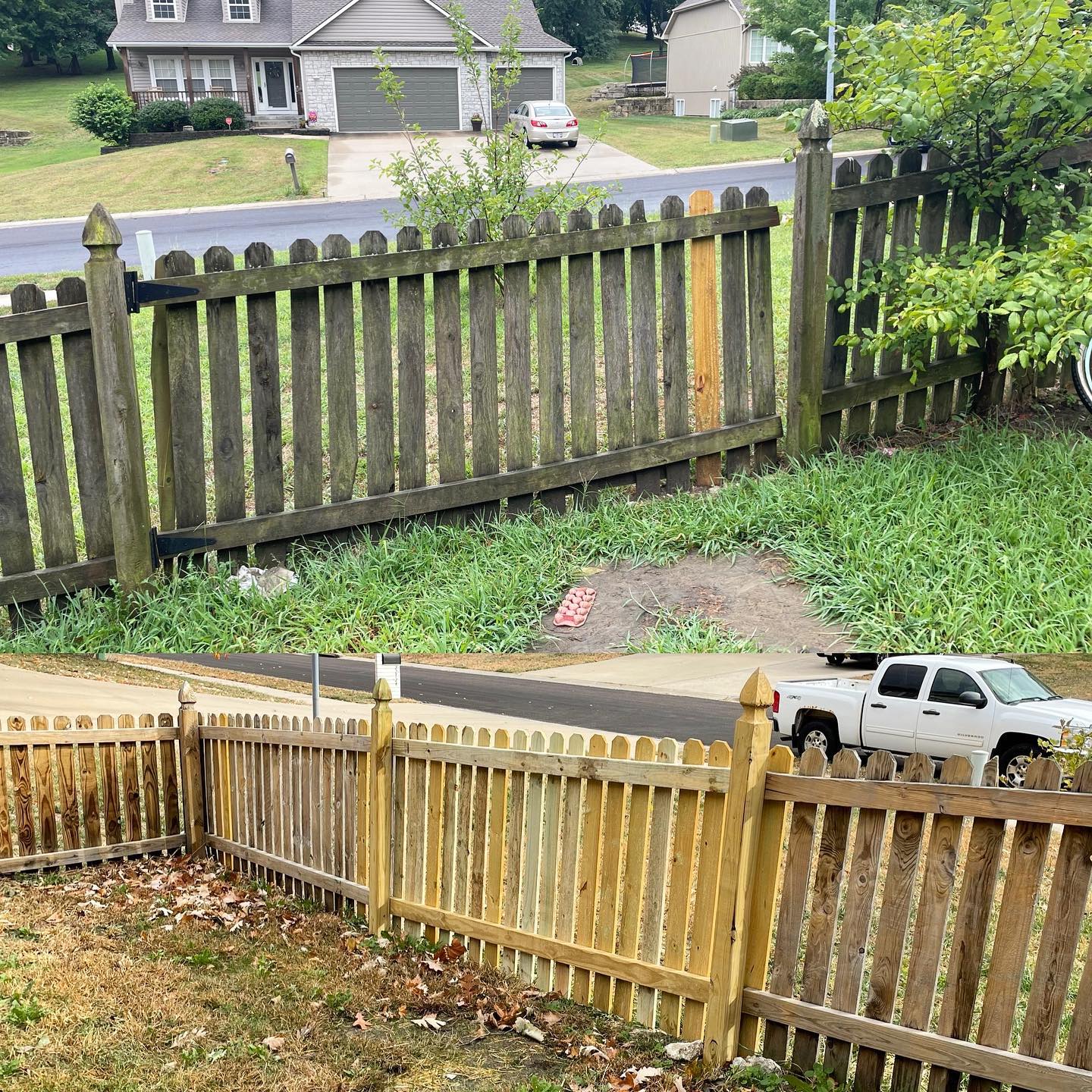
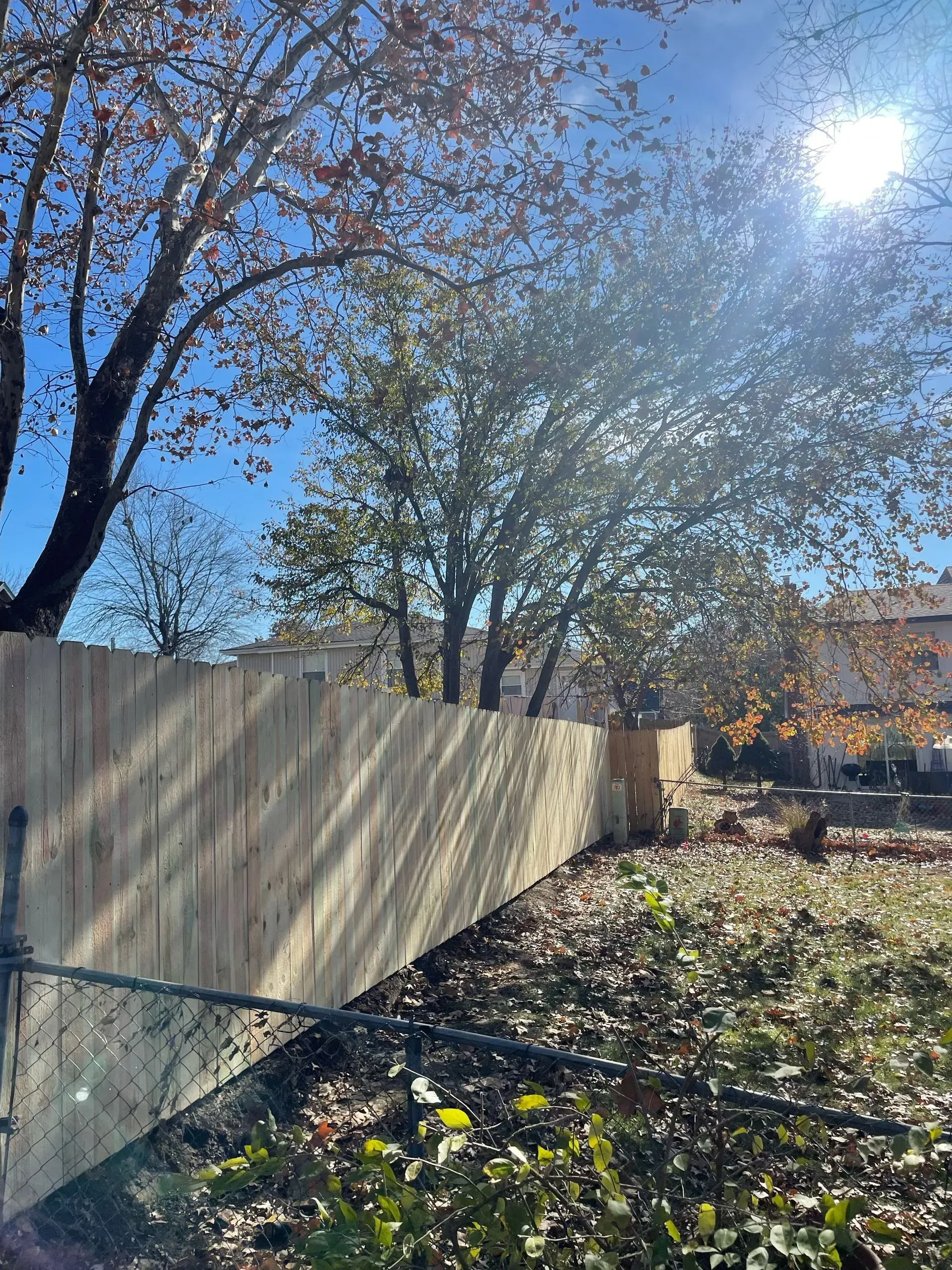
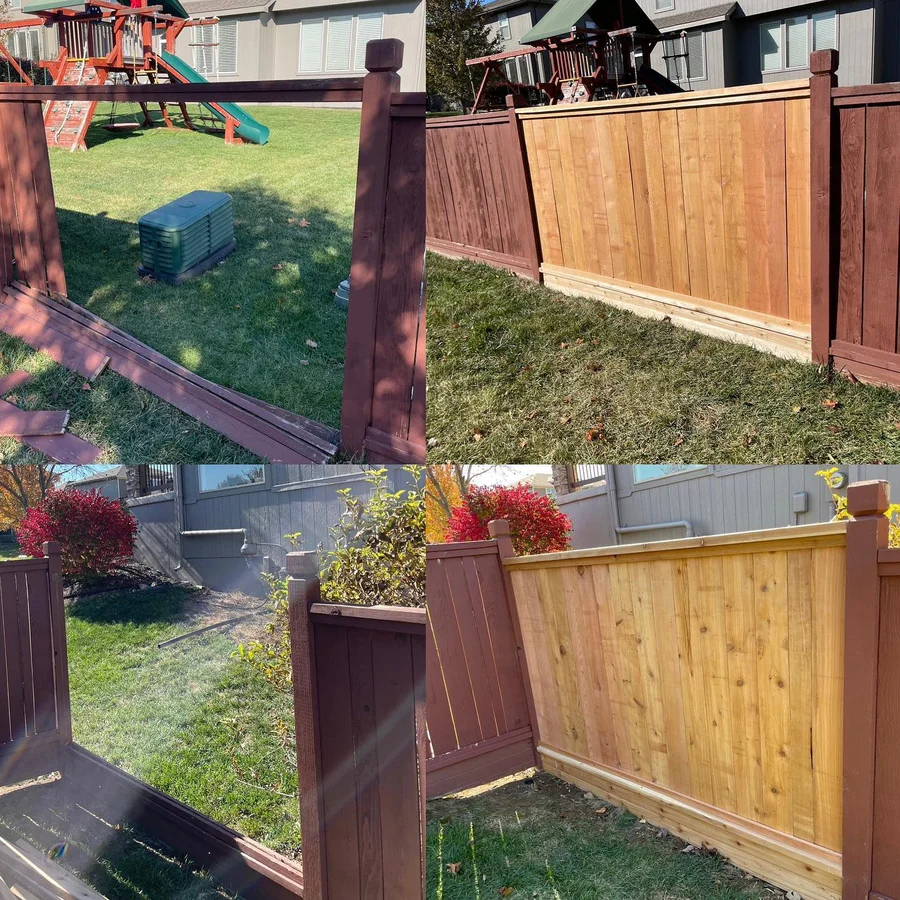
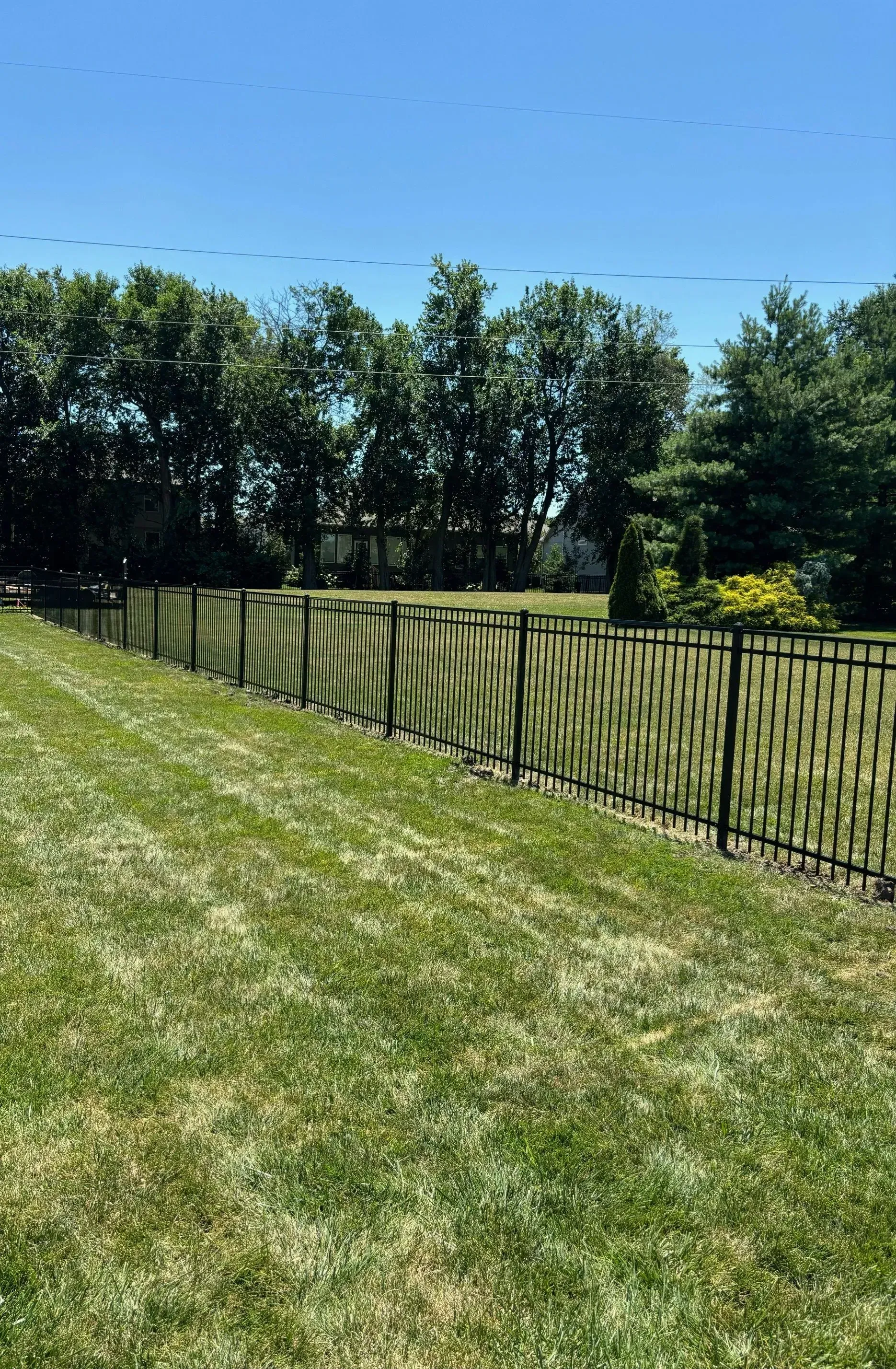
Every photo is a real RKC repair. Post-by-post resets, wind-section rebuilds, and material-matched panels — captioned by build type across the metro.

REVIEWS

What Kansas City Homeowners Say About RKC

4.9 ★ · 85 Google reviews

Every review is on our Google Business Profile — read them there, unedited.

Read all 85 reviews on Google

Kansas City fence repair questions

What KC Homeowners Ask Before a Repair

The questions that come up most on repair calls across the metro. If yours isn’t here, call (913) 286-1091 — Josh usually picks up.

How much does fence repair cost in Kansas City?
It depends on what failed, not on an hourly clock. A single post reset runs roughly $150–$300; a material-matched panel repair runs about $80–$180 per panel; a multi-section storm rebuild runs from several hundred dollars into the low thousands depending on linear footage and material. Every repair is scoped and itemized in writing before any work starts, so you see exactly what is being replaced and what is staying.
Can a leaning fence be repaired?
Usually, yes — a lean is almost always a post problem, not a whole-fence problem. If the panels and rails are sound and only the posts have moved, we pull and re-set the affected posts to 36 inches in fresh concrete and re-plumb the run. The exception is when most of the posts have gone at once, which tips the job from a repair toward a rebuild — the decision aid above walks that line.
Why is my fence leaning?
Almost always because the posts were set too shallow for Kansas City. The frost line here runs 30–36 inches, and a post set above it heaves 2–3 inches every freeze-thaw cycle — with 80+ cycles a winter, a shallow-set run walks out of plumb within a few seasons. Wet clay holding water against the base and wind load on a long privacy run accelerate it. The fix is depth: re-set the movers to 36 inches.
How do I know if my fence post is rotting?
Look and probe where the wood meets the ground — that soil-to-air line is where rot starts. Push a screwdriver into the post at the base: sound wood resists, rotted wood goes soft or crumbles. Grey surface weathering is cosmetic and can be cleaned and sealed. Soft through the body means the post's structure is gone and it needs replacing. We check every post this way on the diagnostic visit before quoting.
Does homeowners insurance cover fence damage?
Most homeowner policies cover sudden storm damage — wind, hail, a fallen tree, vehicle impact — under the "other structures" portion of the policy. Gradual wear, rot, rust, and frost heave are considered maintenance and are not covered. Deductibles often run $1,000–$2,500, so small repairs can fall below the deductible while a large storm event usually clears it. We document storm damage with dated photos, a cause-of-failure note, and an itemized scope you can hand to your adjuster.
What is the average cost to replace a fence panel?
A material-matched panel replacement typically runs about $80–$180 per panel installed, depending on the material and how much of the panel is involved — a few swapped pickets sit at the low end, a full panel with new rails at the high end. We source cedar, pressure-treated, vinyl, or chain-link stock to match your existing run and color so the repair blends in rather than reading as a patch.
How deep should fence posts be set in Kansas City's clay soils?
Thirty-six inches, in poured concrete with a bell-bottom footing. The KC frost line runs 30–36 inches, so anything shallower sits in the zone where freeze-thaw lifts it — and the metro's dense clay holds water against the base, which is exactly what rots and heaves a shallow post. Thirty-six inches puts the footing below the frost line and past the worst of the moisture. It is the single most important number in a repair that is meant to last.
How long does a wood fence last?
A cedar fence set on 36-inch posts and kept stained every 2–3 years runs 15–25 years in Kansas City. Pressure-treated pine runs 10–15. The biggest variable is post depth: a shallow-set fence cuts those numbers roughly in half because it heaves and the posts rot early. Keeping it on a stain cycle is the other half — unprotected cedar greys and checks years before its time. See fence staining and sealing for the maintenance side.

Two sides of the same lifecycle: when a repair becomes a rebuild, see wood fence installation; when the fence is sound but weathered, see fence staining and sealing.

Ready when you are

Get a free estimate — we usually respond the same day.

Call (913) 286-1091