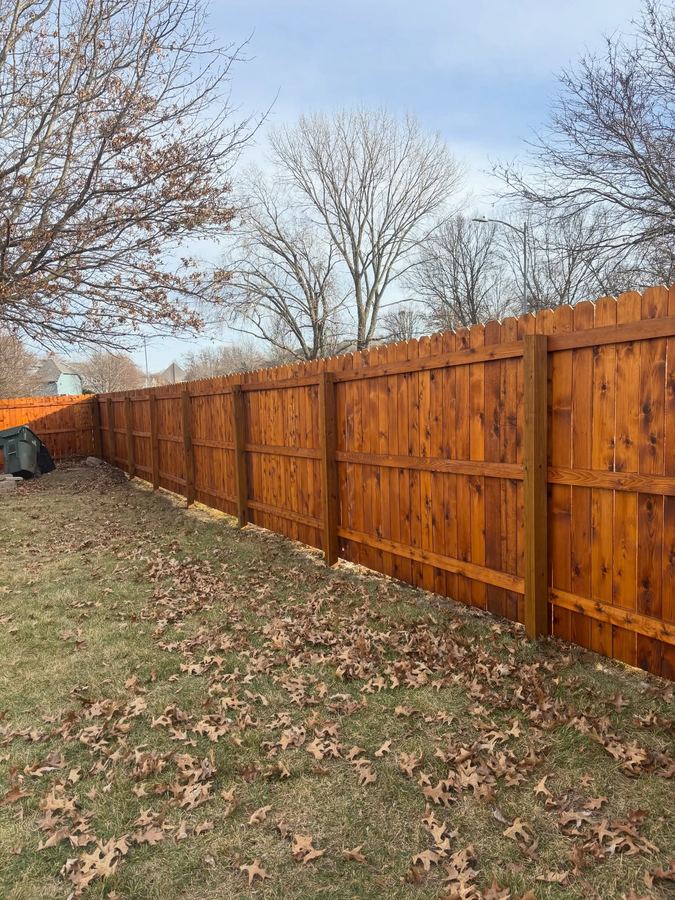
What is the cheapest privacy fence?
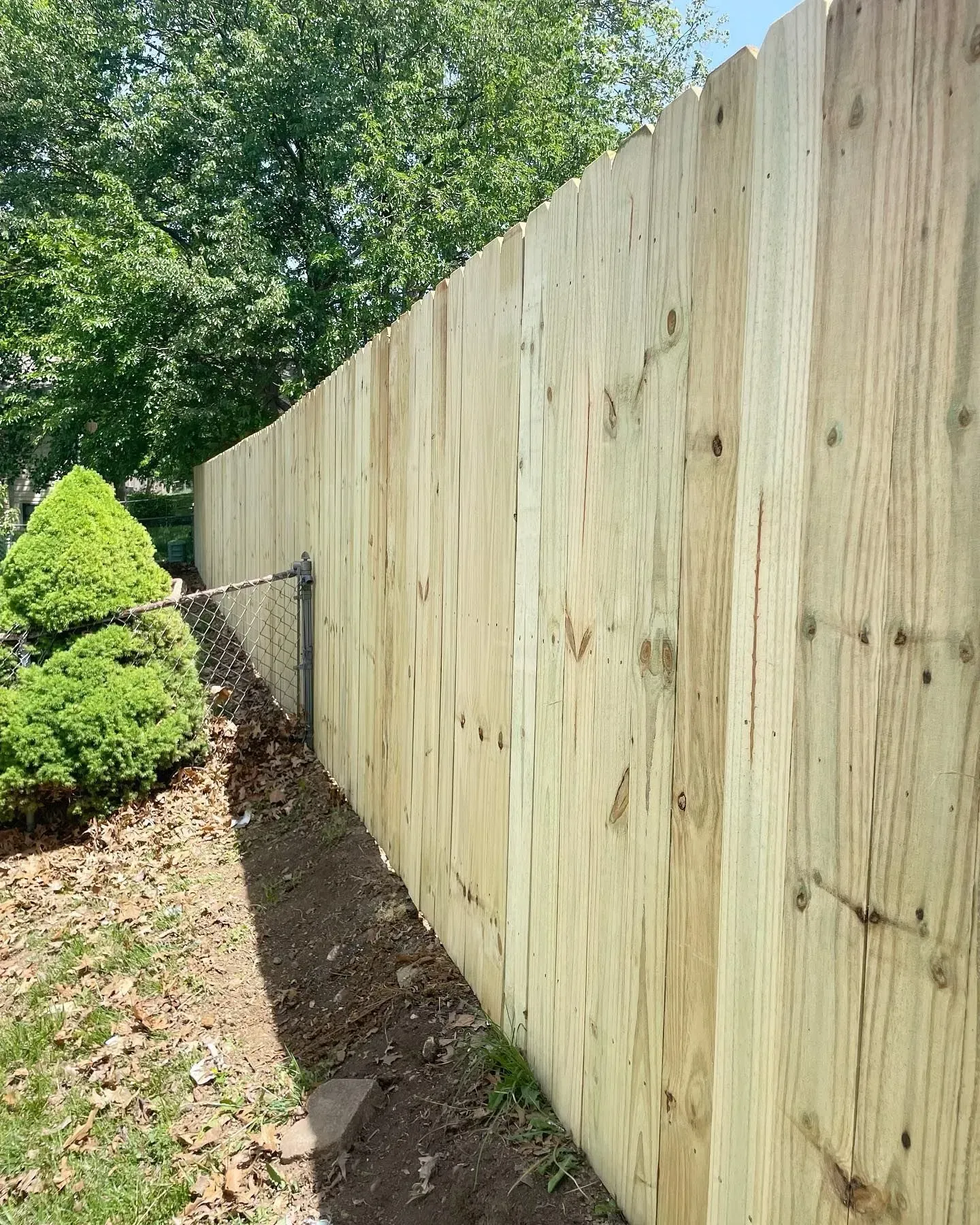
Pressure-treated pine is the cheapest full-privacy wood fence, typically around $18–$28 per linear foot installed — noticeably less than cedar while still giving you a solid six-foot run. Chain link with privacy slats is cheaper still per foot but only gives partial privacy. If "cheapest that lasts" is the real question, pine set 36 inches deep and kept on a stain cycle is the value answer; cedar costs more up front and lasts longer.
Who pays for a privacy fence between neighbors?
In most cases the homeowner who wants the fence and builds it on their own property pays for it — you are not obligated to split the cost, and your neighbor is not obligated to contribute. If the fence sits exactly on the shared property line it becomes a shared "boundary" fence, and some homeowners split those by agreement, but that requires both parties to agree in writing first. The simplest path is to set the fence just inside your own line, pay for it yourself, and own it outright. A good conversation with the neighbor beforehand still costs nothing and prevents most disputes.
Can you install a privacy fence on a slope?
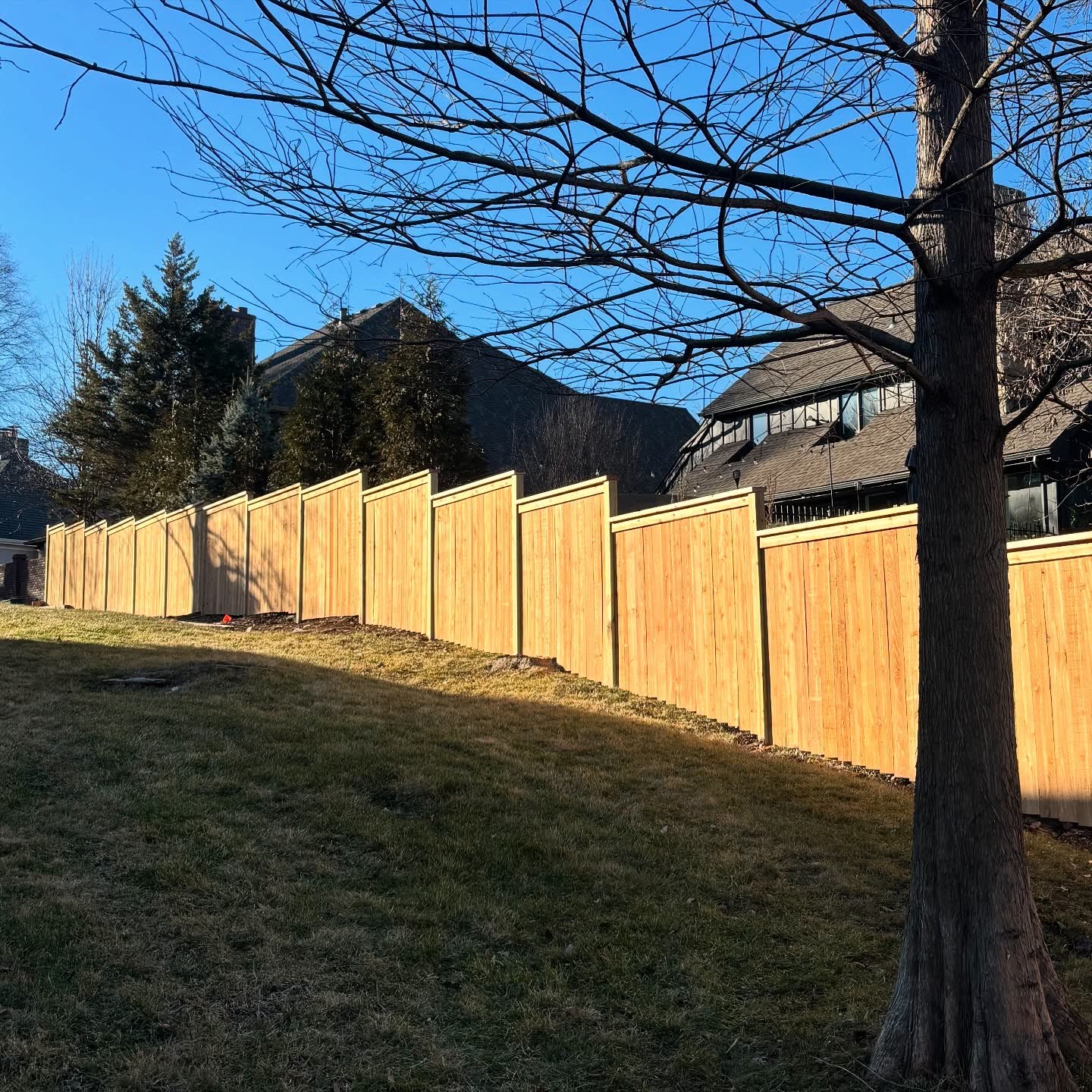
Yes — sloped and hilly lots are common across the metro, and there are two ways to handle the grade. Racking pivots each panel to follow the slope so the top line runs parallel to the ground with no gaps underneath; stepping keeps each panel level and steps them down the hill like a staircase, which suits certain materials and steeper falls. We measure the slope at the estimate and show you both options, because which one looks right depends on the material, the run length, and how the line reads from the street.
Vinyl vs. wood privacy fence?
For privacy specifically, both are fully solid — cedar board-on-board and vinyl tongue-and-groove each block the sightline completely, so neither wins on privacy alone. Cedar reads as warm natural wood and can be re-coloured over the years; vinyl is uniform and its colour is permanent. Cedar shrinks in its first summer (board-on-board covers that), while vinyl never moves. The privacy is a wash; the decision is really about look and upkeep, which the
vinyl page breaks down in full.
How much does a 6 ft privacy fence cost per foot in Kansas City?
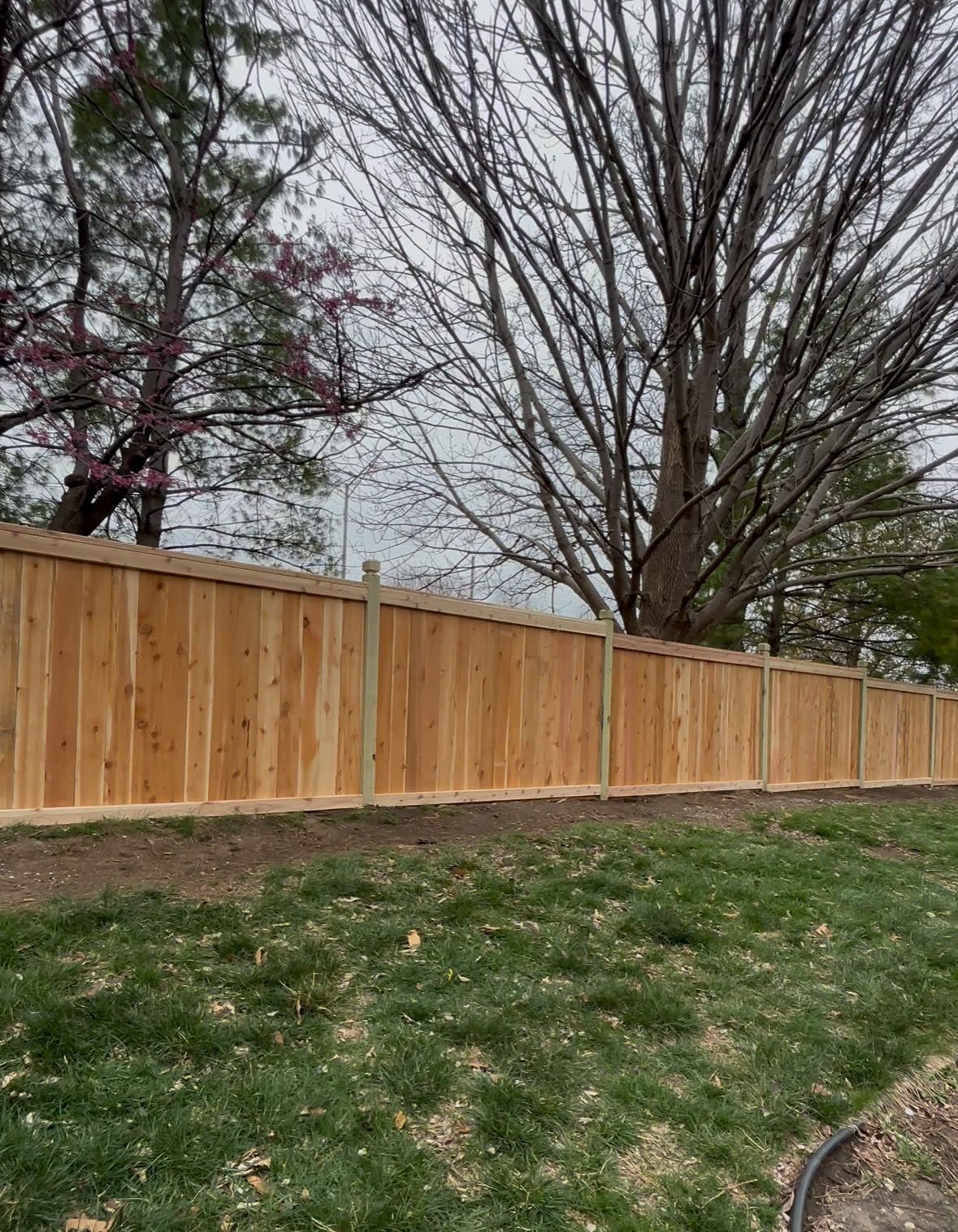
A six-foot cedar privacy fence runs about $25–$35 per linear foot installed in the KC metro, board-on-board around $28–$38, pressure-treated pine around $18–$28, and vinyl privacy around $28–$45. Most backyard runs of 150 to 200 feet come in around $3,750–$7,000 in cedar. Your per-foot figure shifts with the board pattern, gate count, slope, and any old-fence tear-out — all broken out on a written estimate.
Which wood fence style provides the best privacy?
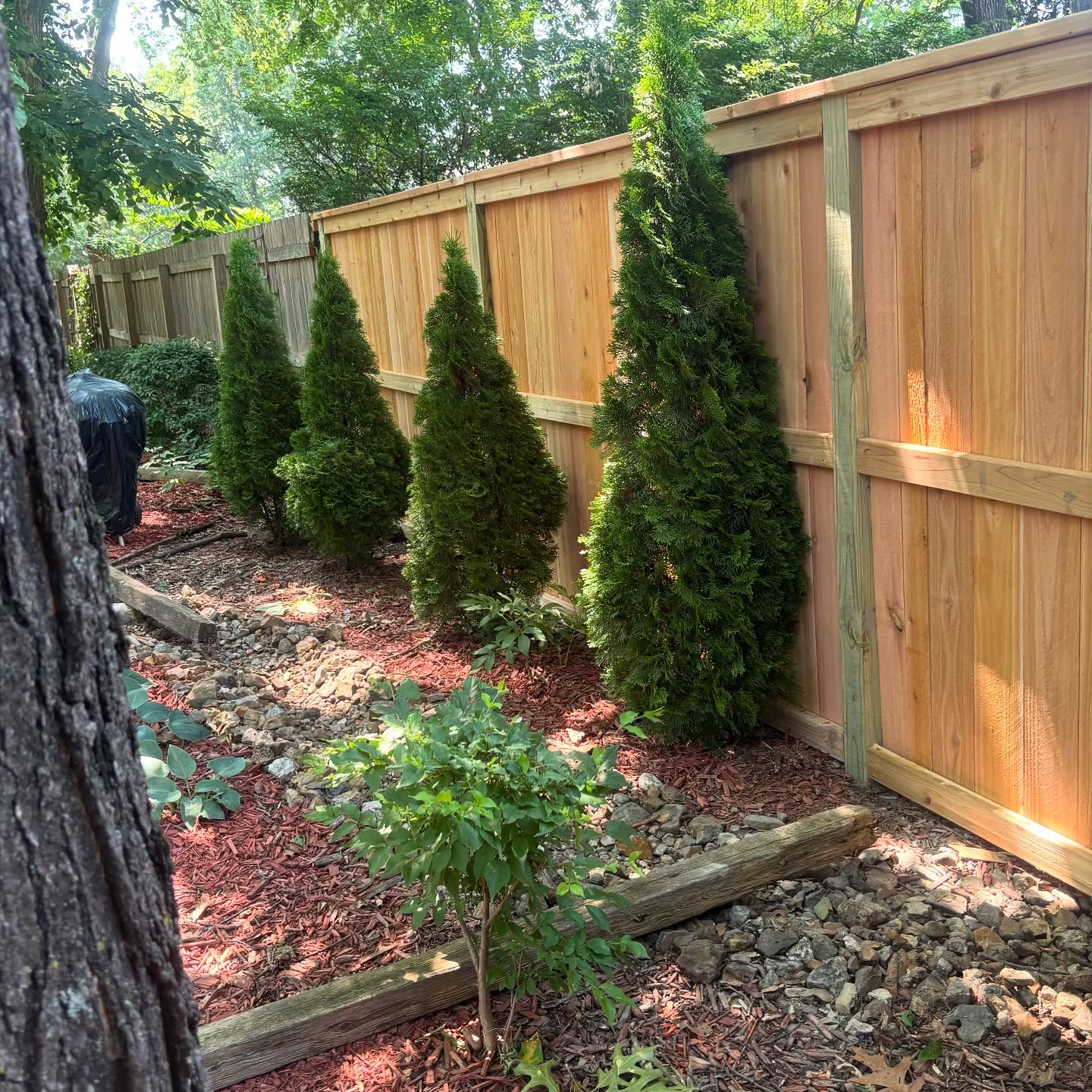
Board-on-board gives the best lasting privacy in wood. Its pickets overlap, so even after cedar shrinks in its first dry summer there are no gaps to see through — a plain solid-board fence can open small gaps as it dries, board-on-board never does. Shadowbox is about 90% private and finished on both sides, which trades a little privacy for wind relief and a neighbor-friendly look. For maximum solid privacy that stays solid, board-on-board is the answer.
What is the best type of fence for privacy?
For full visual privacy the real contenders are cedar (board-on-board or solid), vinyl (tongue-and-groove), and composite — all solid six-foot panels with no sightline through them. Cedar is the natural, cost-effective choice that needs staining; vinyl is the no-maintenance choice that costs more up front; composite is the premium low-maintenance option. Chain link, even with slats, only gives partial privacy. The best one for you comes down to budget, maintenance appetite, and whether you want the look of real wood.
How tall can a privacy fence typically be?
Six feet is the standard height for a residential rear-yard privacy fence across the Kansas City metro, and it is what most homeowners build. Height limits are set by your specific city and sometimes your HOA — rear yards are commonly allowed more height than front yards, and going taller than the standard usually requires a permit. Because those limits vary by municipality, we confirm the exact rule for your address as part of the estimate rather than assuming a single metro-wide number.