Skip to content
Fence Installation in St. Joseph, MO — Built for the Loess Bluffs and the River Humidity

Fence Installation in St. Joseph, MO — Built for the Loess Bluffs and the River Humidity

RKC Wood Care Pros is the fence contractor for the river city — Victorian-matched ornamental iron for Museum Hill and the historic north, 6-foot cedar for the Belt Highway developments, and galvanized runs for the southern industrial zones. Set extra-deep against loess-soil shift, sealed against Missouri River humidity. Installation, repair, and in-house staining from one crew, about 45 minutes north on I-29. 400+ fences since 2021. Free estimate.

★★★★★
4.9
from 85 reviews
Licensed
& Insured · KS + MO
400+
fences installed
A+ BBB Rated Licensed KS + MO Owner Walks Every Install Built for Loess & River Humidity
See the St. Joe hillside read ↓

WHY ST. JOSEPH HOMEOWNERS HIRE US

What Sets a Fence Built for St. Joseph Apart From a City-Swap Install

St. Joseph is a self-contained river city with loess bluffs, tiered Victorian hillsides, and Missouri River humidity all in play at once. A fence here needs footings sunk below the loess movement zone, a material spec that survives the near-river damp, and a build that respects the century-old look of the historic north. A generic template misses all three — here's what the St. Joe homeowners we build for tend to weigh.

1

Footings sunk below the loess movement zone

St. Joe's loess holds firm dry and slumps when it's saturated, and a shallow post rides right along with it. Every post we set goes 36 inches deep in wet-poured concrete with a bell-bottom footing, anchored below the active zone — the reason the old leaning fences on the bluffs almost always went in short.
2

A material spec matched to the river damp

Within a mile of the river the humidity rots untreated softwood at the groundline. We spec by distance to the water — pressure-treated posts inside cedar near the bluffs, vinyl or powder-coated aluminum where the look allows, and a tighter 2-year cedar stain cadence instead of the 3-year metro standard.

3

The historic-north look built to suit

Museum Hill and the Victorian north side want ornamental iron and steel that fit the century-old architecture, not a stock privacy panel. We size and mill the picket to the streetscape and step it down the tiered lots — the custom work a flat backyard doesn't call for.

4

One crew from the estimate through the stain

Most outfits hand you to a separate stain crew a couple of years later. We keep staining in-house, so the same crew that set your posts comes back to seal the cedar on the tighter near-river schedule. Owner-operated since 2021, and Josh walks the St. Joe job before the final invoice.

ST. JOSEPH CONDITIONS

How the Loess Soil, the Bluffs, and the River Damp Decide Every St. Joe Fence Install

Three things about the ground here settle more than the style catalog does — and they're the three we plan every St. Joseph install around. Miss any one and it's a leaned post, a rotted rail, or a run that wanders the tier. So we start with the soil and the slope, then get to the look.

1

Loess soil shifts when it saturates — so posts go deep and belled.

The Museum Hill slope, the river-bluff lots west of the Parkway, and the tiered north-side blocks all ride on wind-deposited loess that holds firm dry and slumps wet. A standard shallow post moves with it. We punch every hole to a full 36 inches, pour a bell-bottom footing that locks the post below the active movement zone, and drain the base so a saturated season can shift the surface without taking the fence.

2

The river humidity punishes untreated softwood.

Properties within a mile of the Missouri carry sustained humidity above the regional average, and it rots softwood at the groundline first. Our counter is in the spec, not the sales pitch: pressure-treated posts inside cedar-clad runs near the water, vinyl or aluminum where the aesthetic allows, gravel drainage at the base, and a tightened 2-year stain rotation so the cedar stays ahead of the moisture instead of graying and checking early.

3

The lots run from tiered Victorian hillsides to flat Belt Highway backyards.

St. Joseph is really several towns of housing stock at once — the historic north on its tiered Victorian hills, the newer eastern developments off the Belt Highway on flatter ground, and the industrial south. The north carries grade and a century-old look; the east carries straightforward cedar volume. We read which one you're on before quoting, because the dig, the footing, and the material all change with it.

FENCE AND GATE SERVICES IN ST. JOSEPH

The Full Lineup for St. Joseph, From One Local Contractor

RKC installs and repairs every type of fence — wood, vinyl, chain link, ornamental iron, aluminum, and commercial security — plus custom gates and in-house staining. Each service links to its Kansas City detail page for material options, pricing ranges, and technical specs — the same crew and the same 36-inch standard carry all of it up I-29 to St. Joseph.

Wood Fence Installation for St. Joseph, MO by RKC Wood Care Pros

Wood Fence Installation

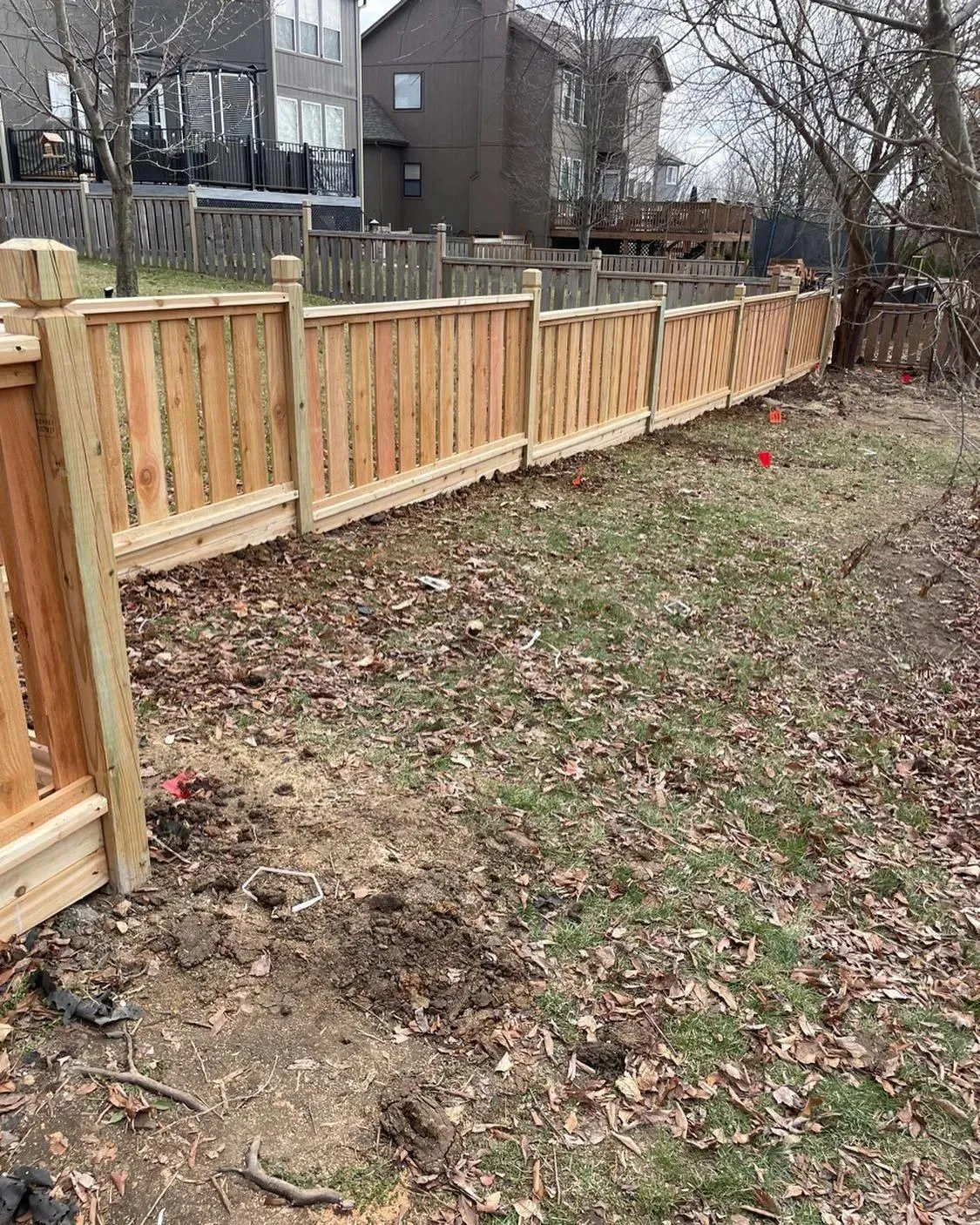
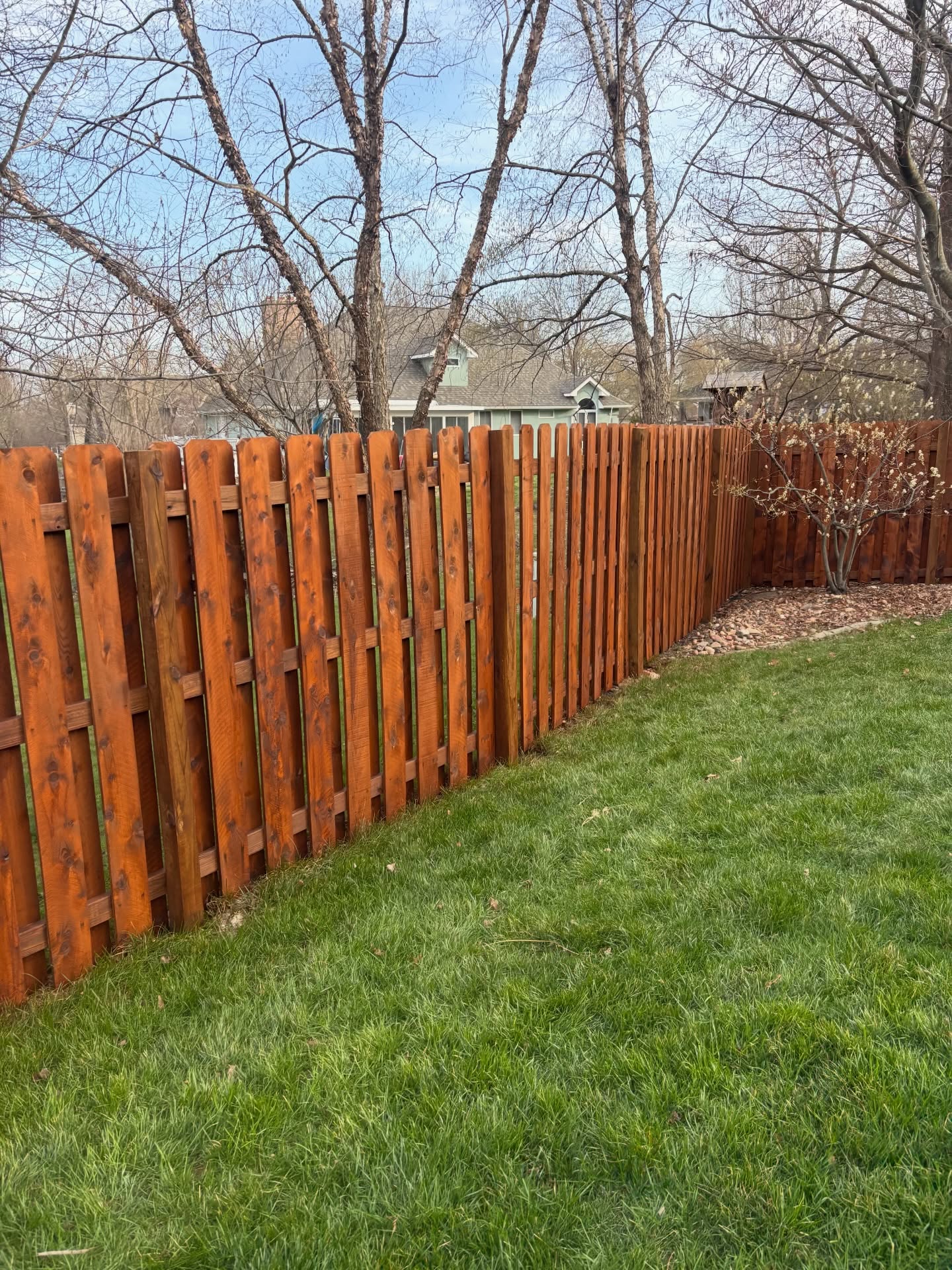
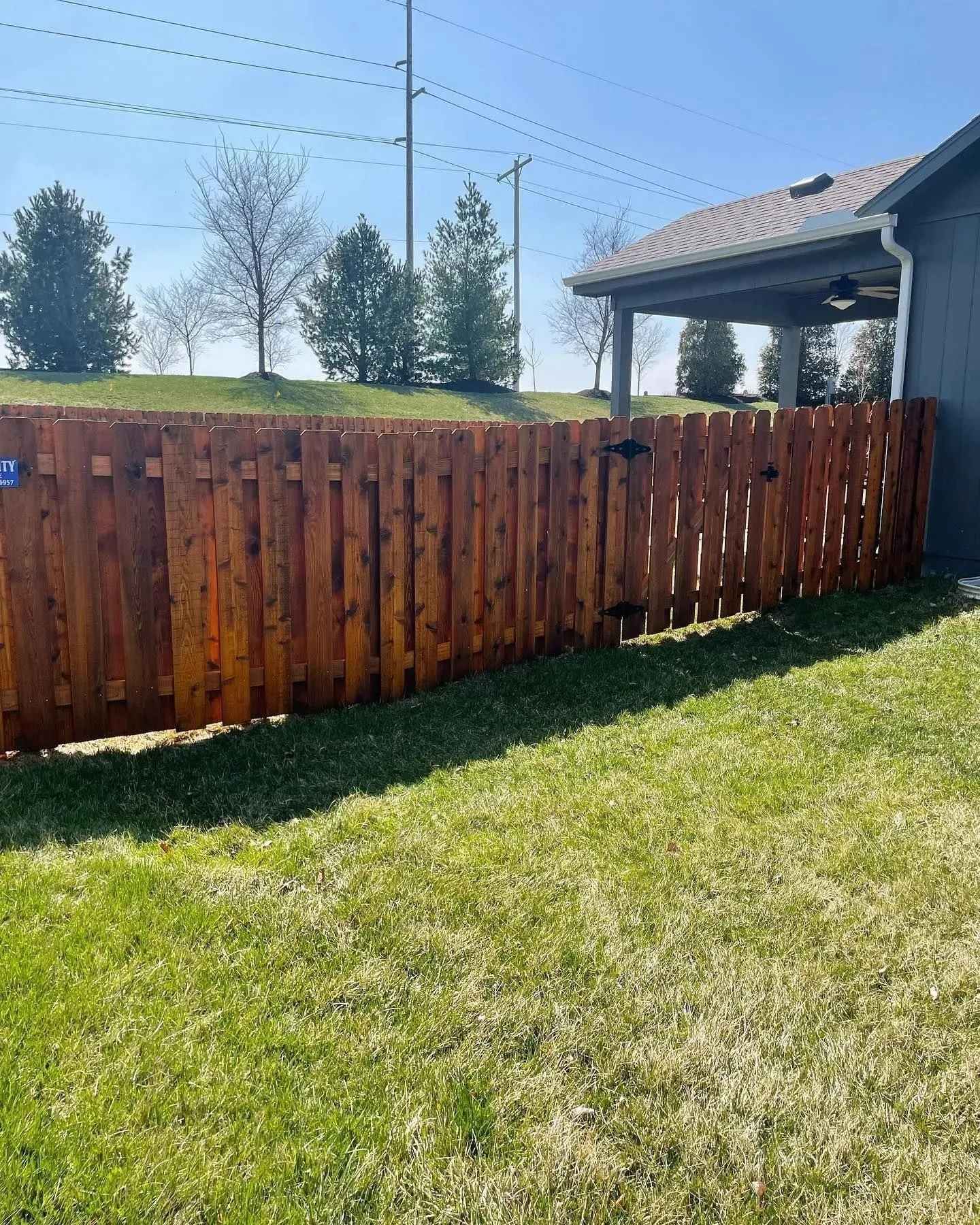
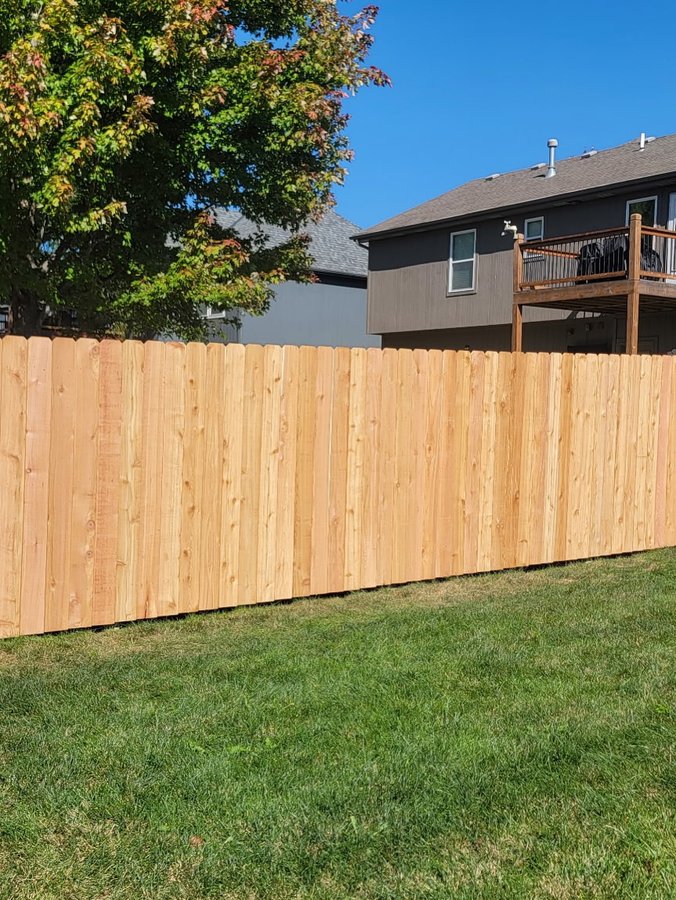
Western Red Cedar privacy and board-on-board across the Belt Highway developments and the older blocks east of the Parkway — set on extra-deep loess footings, with the first stain coat at 30 days because St. Joe humidity makes year-one sealing non-optional.

Service details
Vinyl Fence Installation for St. Joseph, MO by RKC Wood Care Pros

Vinyl Fence Installation

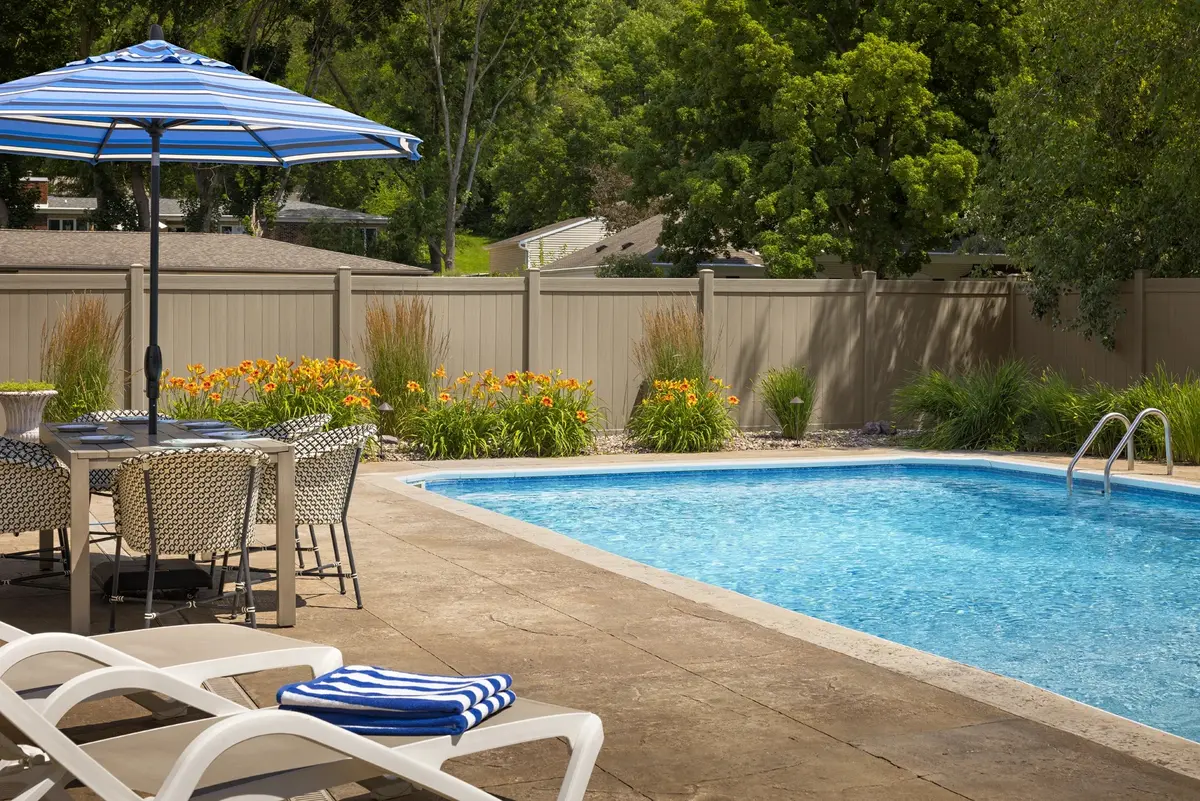
UV-stabilized vinyl with aluminum-insert reinforcement — the practical pick along the river bluffs, where the near-river humidity rots untreated softwood faster than anywhere else in the region and there's nothing to sand or restain.

Service details
Chain Link Fencing for St. Joseph, MO by RKC Wood Care Pros

Chain Link Fencing

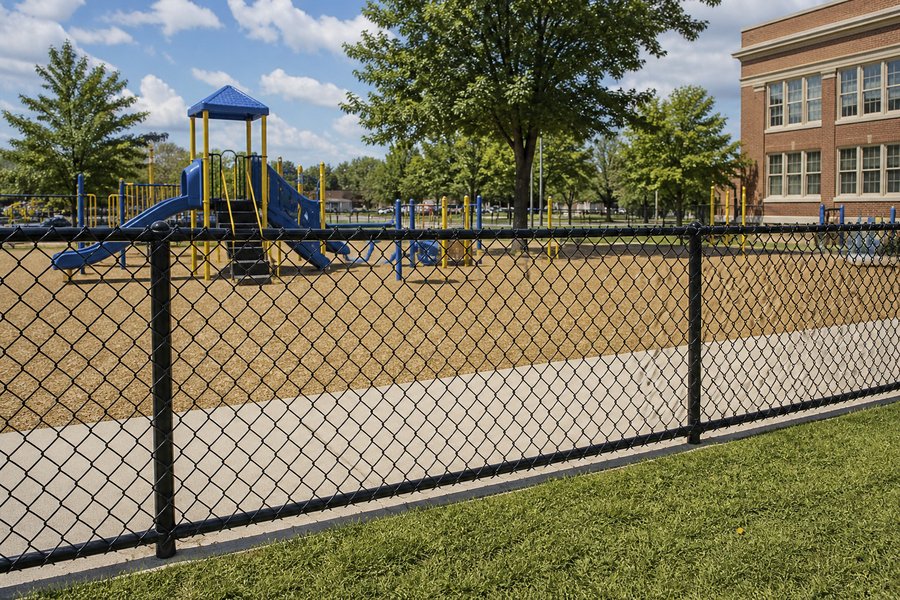
Galvanized 9-gauge mesh on the larger south-St.-Joe lots, the industrial perimeters near the Belt Highway, and rental-property work where a defined, hard-wearing line matters more than the look.

Service details
Ornamental Iron Fencing for St. Joseph, MO by RKC Wood Care Pros

Ornamental Iron Fencing

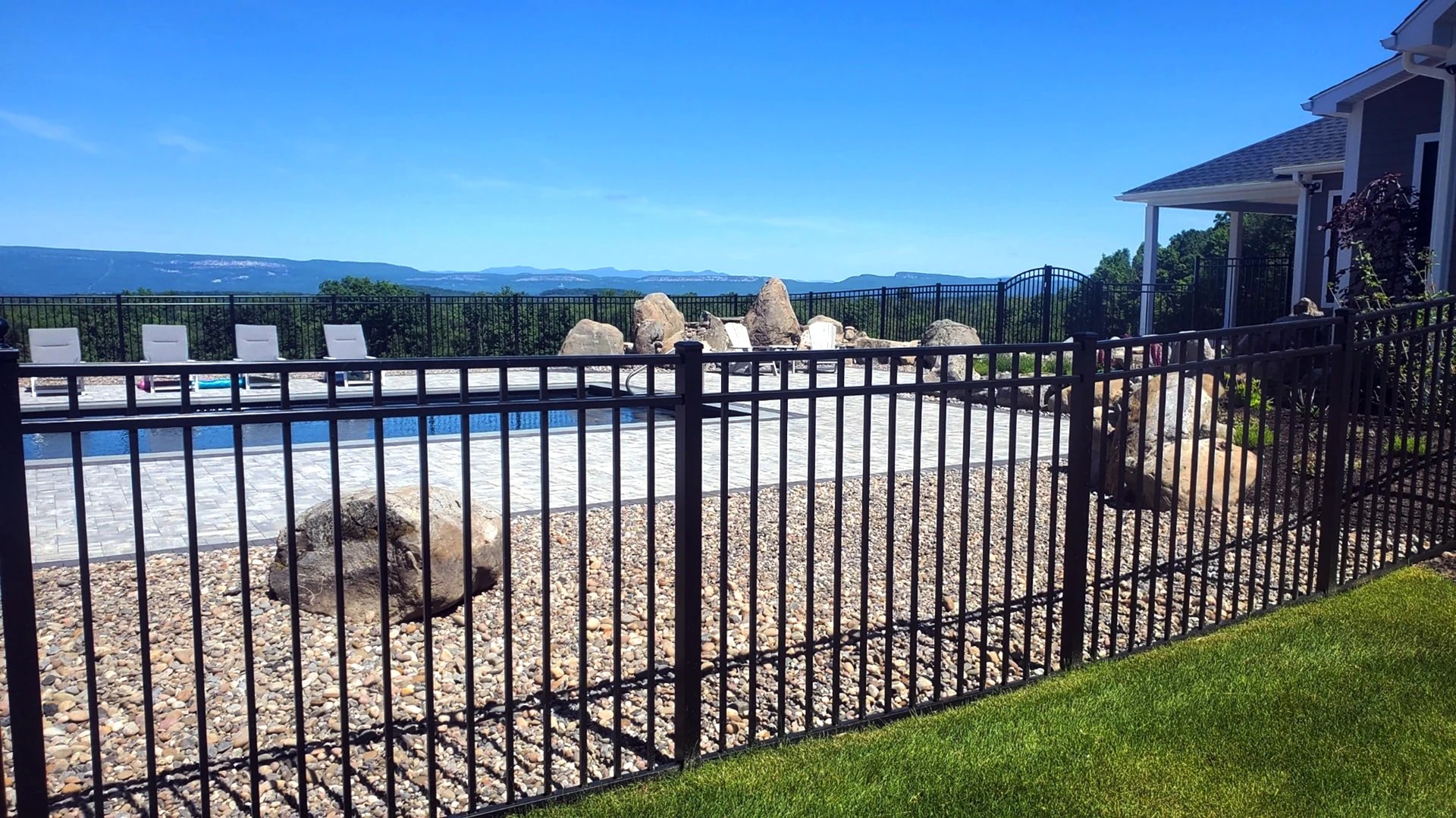
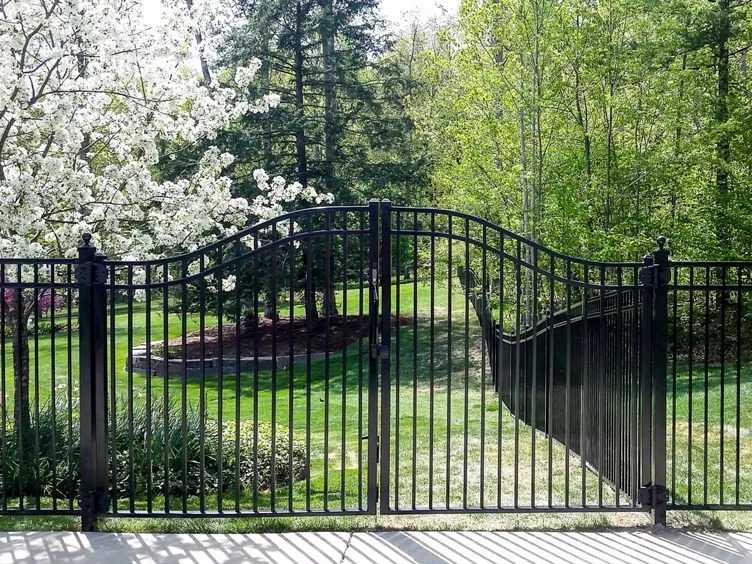
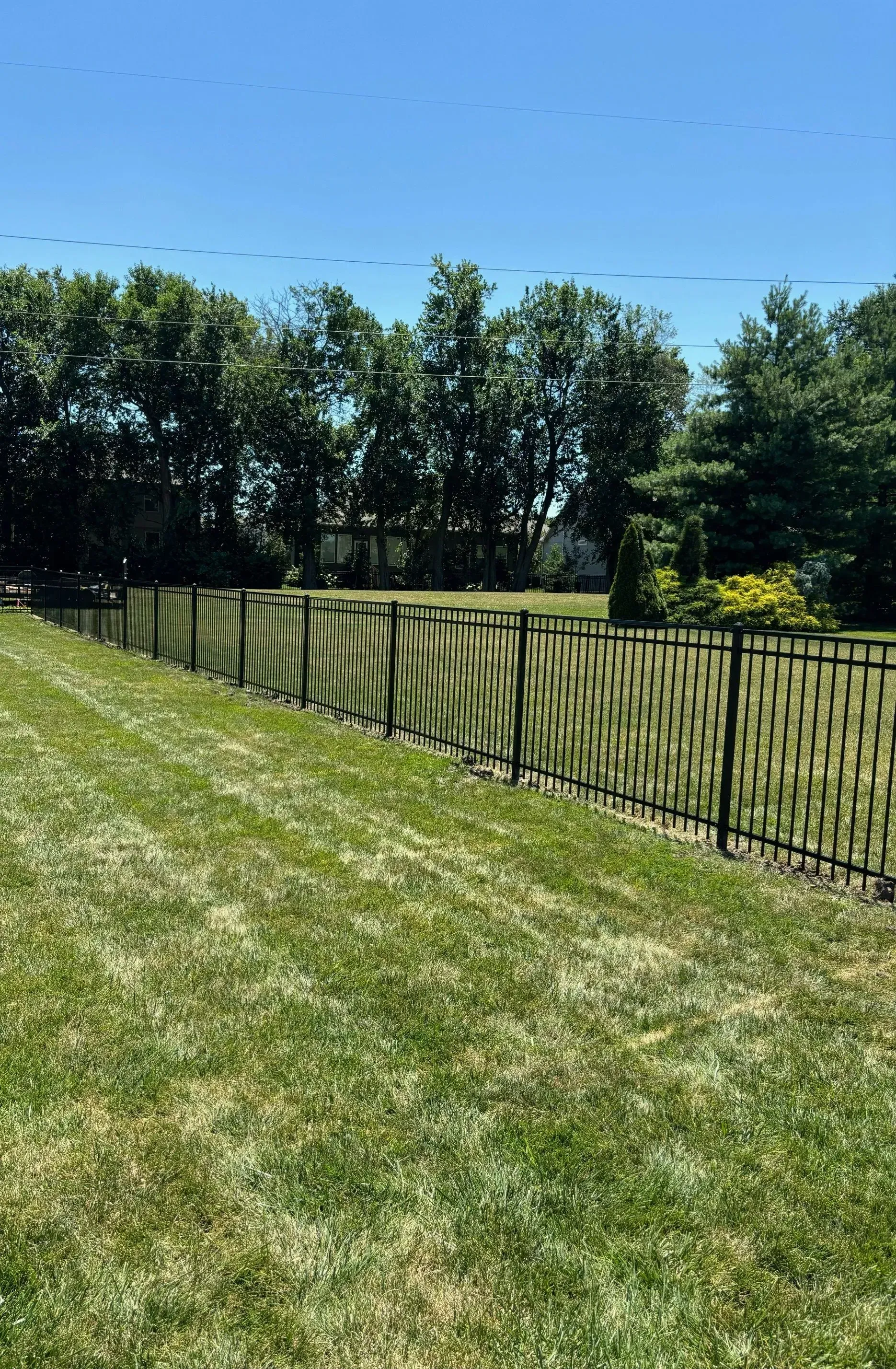
Powder-coated steel and aluminum picket sized to the Victorian architecture of Museum Hill and the historic north side — an e-coat under the powder coat to keep rust off the picket through St. Joe's humid summers.

Service details
Privacy Fence Installation for St. Joseph, MO by RKC Wood Care Pros

Privacy Fence Installation

Solid-panel cedar and vinyl runs built with extra-deep footings to ride out loess-soil shift and the steeper grades typical across St. Joseph — from a flat Belt Highway backyard to a tiered north-side hillside.

Service details
Gate Installation for St. Joseph, MO by RKC Wood Care Pros

Gate Installation

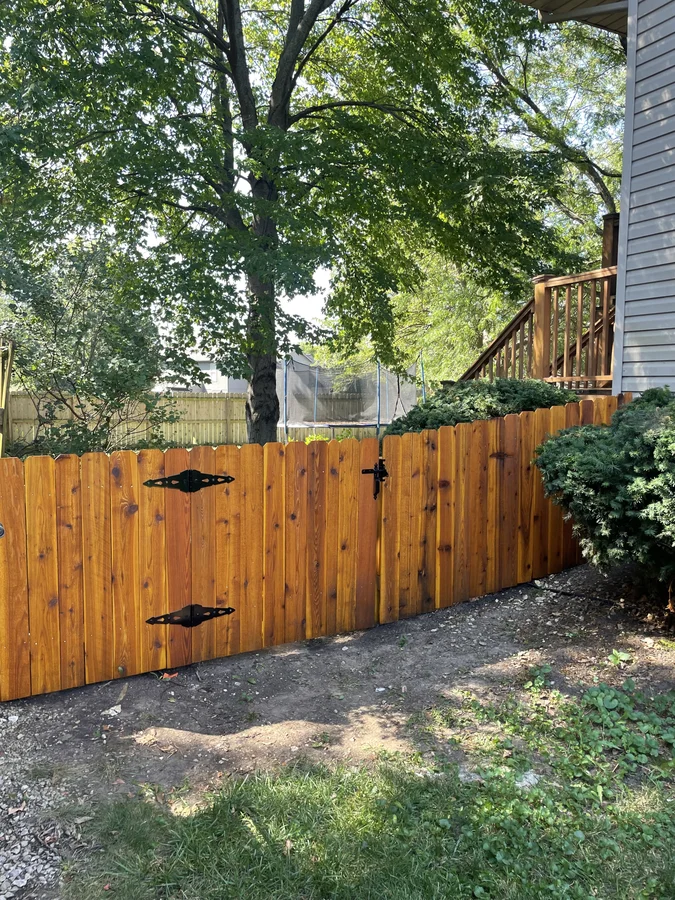
Walk, single-drive, and double-drive gates on welded steel frames with diagonal cross-bracing — hinge posts buried 36 inches deep in concrete, the spec that keeps a gate swinging true on the sloped Hyde Park and north-end lots.

Service details
Fence Repair for St. Joseph, MO by RKC Wood Care Pros

Fence Repair

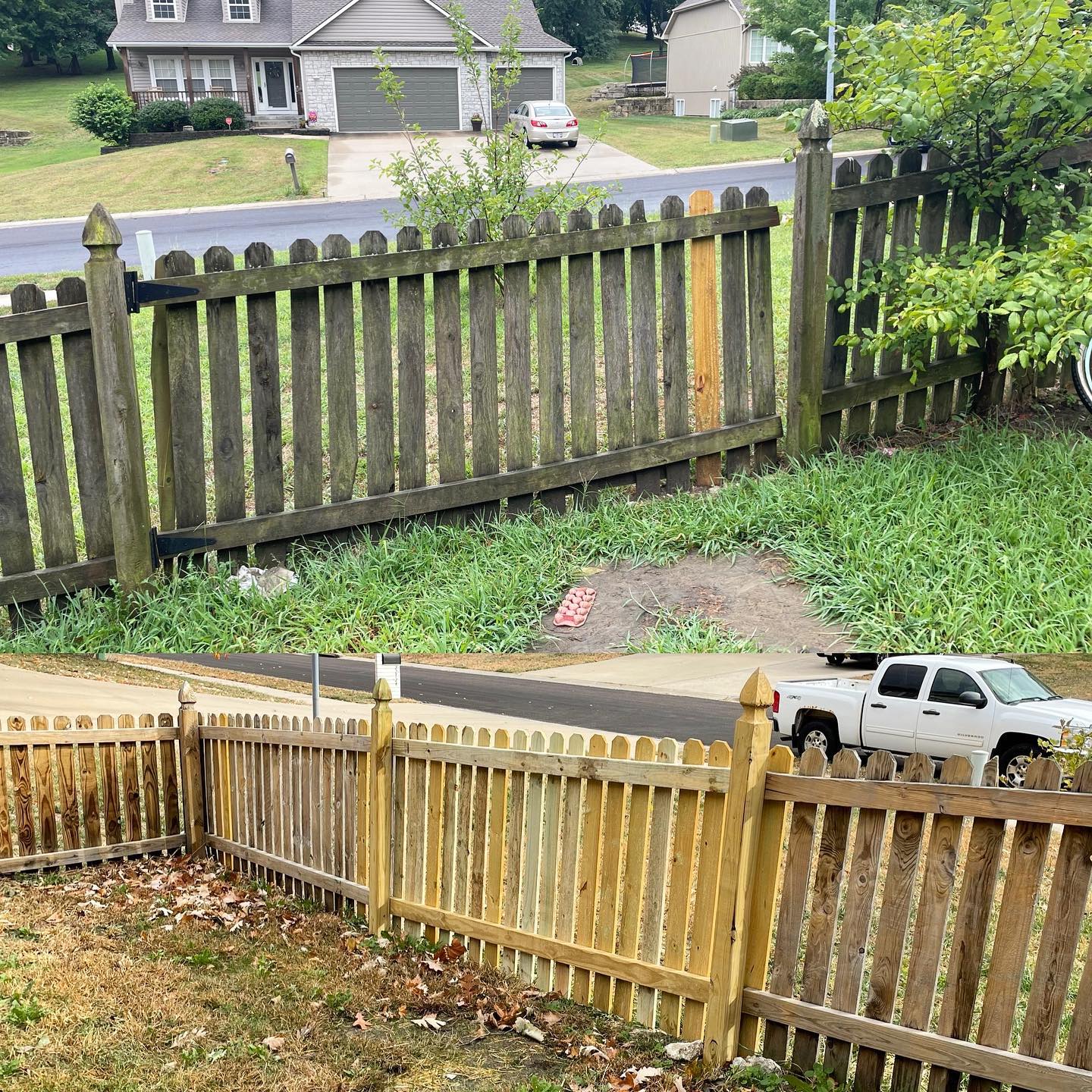
Post-lean on the river-bluff lots and bottom-rail rot from Missouri River humidity are St. Joe's two standing repair calls — we pull the post, dig fresh below the loess movement zone, re-pour the footing, and rebuild the section.

Service details
Staining & Sealing for St. Joseph, MO by RKC Wood Care Pros

Staining & Sealing

Spray-and-back-brush semi-transparent penetrating stain by the same crew that built the fence — a 2-year re-coat cadence near the river instead of the 3-year metro standard, because the sustained humidity works cedar harder here.

Service details

Also serving St. Joseph across the metro: we handle commercial and site-security fencing for the southern industrial zones and Missouri Western State University–area properties, plus aluminum, pool, and fencing styled for the far-east Belt Highway developments. Ask when you book your estimate.

THE ST. JOE HILLSIDE READ

Where the Lot Sits, and How It Changes the Build — Across St. Joe

In St. Joseph the fence question starts with the ground: how deep the loess shifts, how hard the hill falls, how close the river sits, and what look the block calls for. Consider this the working map — each part of the city, what our crews actually find on the ground, and the build call it forces.

Museum Hill & the historic north

A Victorian streetscape with a century-old look to match, on tiered lots that step down the hill

Milled ornamental steel or aluminum picket that suits the architecture, run in stepped level sections down the grade, on footings sunk extra-deep into the loess — with an e-coat under the powder coat so the humidity can't rust the picket.

The river-bluff lots west of the Parkway

Loess soil on a real slope, where post-lean is the classic St. Joe failure

Set the footings back from the bluff edge onto firmer ground, pour deep below the active loess movement zone, and drain the base so a saturated season can't pry a post off the bluff.

The tiered, terraced older backyards

Ground that falls in stages through the older city, not in one clean grade

Bench the run into level sections with a retaining course at the base rather than letting the fence wander down the slope — so the top line holds straight instead of sagging into a wave.

The eastern Belt Highway developments

Flatter, newer lots where standard 6-foot cedar privacy is the default

Loess-set 36-inch posts in poured concrete, a kickboard along the bottom to slow the rot and hold the dog, and the finished side turned to the neighbor.

The southern industrial zones

Security and perimeter come first; the look comes second

Galvanized 9-gauge chain link on long runs, heavier corner and gate posts, and drive gates built to take daily use — the workhorse spec for a south-side commercial or rental line.

The near-river humidity belt

Sustained humidity within a mile of the Missouri that rots softwood at the groundline

Gravel drainage at the post base, cedar or vinyl over untreated pine, the first stain coat at 30 days, and a tighter 2-year re-coat cadence to keep the wood ahead of the moisture.

Landmarks near the St. Joseph lots we fence: the Pony Express Museum, the Patee House, and Missouri Western State University — off I-29, US-36, and the Belt Highway, with the 26-mile Parkway trail threading the city. Our crews run I-29 north weekly, so whether you're on a tiered Museum Hill lot or a flat Belt Highway backyard, you're on the route.

St. Joseph and the towns next door: the same crew fences the corridor around it — Atchison and Platte City — and it all runs out of our Kansas City metro fence shop in Olathe.

ST. JOSEPH ESTIMATES · WHAT SHAPES THE NUMBER

What a St. Joseph Fence Project Typically Costs

A 6-foot cedar privacy fence in St. Joseph runs about $25 to $35 per linear foot installed — a typical 150-to-200-foot backyard lands in the $3,750 to $7,000 range at the metro market rate. What moves the number here is the ground, not the drive: tiered lots, stepped panels, and extra-deep loess footings on the bluffs all add scope. Vinyl sits a few dollars higher per foot with no stain cycle; ornamental aluminum for the historic-district look runs higher again; galvanized chain link runs well under. Every St. Joseph estimate is free, written, and line-itemized so you can see exactly what drove the scope.

Per linear foot, installed · 6-ft privacy unless noted
Cedar Privacy (board-on-board) $25–$35/LF The Belt Highway default
UV-Stabilized Vinyl $35–$50/LF No stain cycle · best near the river
Ornamental Steel / Aluminum $45–$65/LF Museum Hill · historic-north look
Chain Link (galvanized 9-ga) $10–$18/LF The industrial-south workhorse
Tiered / bluff loess footing work Add-on Stepped panels · extra-deep set · itemized

Free, written, line-itemized estimates — posts, concrete, hardware, slope/loess footing work, and cleanup each on their own line, so nothing shows up new at invoice. Tear-out and haul-off of an old fence is its own add-on line when you need it. See the full Kansas City pricing detail →

See full KC pricing FAQ →

REVIEWS

What Kansas City Homeowners Say About RKC

4.9 ★ · 85 Google reviews

Every review is on our Google Business Profile — read them there, unedited.

Read all 85 reviews on Google

ST. JOSEPH FENCE QUESTIONS

St. Joseph Homeowners Ask, We Answer

The questions we field most often on St. Joseph jobs. Don't see yours? Call (913) 286-1091 — Josh usually picks up.

St. Joe Ground & Install

Does St. Joseph's loess soil change how fences are installed?
Yes — it's the single biggest factor here. St. Joseph sits on wind-deposited loess soil that holds together firm when it's dry but shifts and slumps when it saturates, especially on the river bluffs and the tiered Museum Hill lots. A 24-inch post moves right along with the soil and starts leaning within a couple of seasons. Every post we set goes 36 inches deep in wet-poured concrete with a bell-bottom footing, anchored below the active movement zone so the ground can shift on the surface without taking the fence with it. It's the same reason the old St. Joe fences you see leaning almost always went in shallow.
How does the Missouri River humidity affect fence materials in St. Joseph?
Properties within about a mile of the river and the Parkway carry sustained humidity above the regional average, and it punishes untreated softwood — posts rot at the groundline faster and cedar wants a 2-year stain cadence here instead of the 3-year standard we run elsewhere in the metro. So we spec by how close the lot sits to the water: pressure-treated posts inside a cedar-clad run near the bluffs, vinyl or powder-coated aluminum where the look allows, and gravel drainage at every post base to move water away from the wood instead of trapping it against the concrete.
How do you build a fence on the tiered, hillside St. Joe backyards?
St. Joseph's older backyards rarely fall in one clean grade — they step down the hill in tiers, and a fence run has to be planned to that. On a gentle grade we rack the panel, letting it lean to follow the slope with the pickets kept plumb. On a sharper drop we bench instead, cutting the run into level sections with a retaining course at the base so the top line stays straight rather than sagging into a wave. Every one of those calls gets staked and walked on the lot before a number is written — you can't read a tiered St. Joe hillside from the driveway.
Why do so many St. Joseph fences lean on the river bluffs?
The bluff lots stack the two hardest St. Joe conditions on one property: loess soil and a real slope. When the loess saturates, a shallow post on a bluff has nothing firm to hold it and the whole run starts to lean downhill. Our fix is buried, not visible — we set the footings back from the bluff edge onto firmer ground, pour deep below the movement zone, and drain the base so water sheds away from the concrete. On a bluff lot that's the entire difference between a fence that holds its line and one that's racking toward the river by the second winter.

Historic St. Joe, Cost & Process

Can you match the ornamental-iron look in Museum Hill and the historic north?
Yes — the historic north is its own aesthetic, and we build to it rather than dropping a stock privacy panel where it doesn't belong. Museum Hill and the surrounding Victorian blocks lean on ornamental iron and steel picket to suit the century-old architecture, so we size and mill the picket to the streetscape and run it in stepped sections down the tiered lots. It's more custom work than a flat Belt Highway backyard, and it's a big part of why homeowners in the historic districts want a contractor who's actually built to that look before.
What does a fence cost in St. Joseph, MO?
A 6-foot cedar privacy fence in St. Joseph runs roughly $25 to $35 per linear foot installed — a typical 150-to-200-foot backyard lands in the $3,750 to $7,000 range at the metro market rate. Vinyl sits a few dollars higher per foot with no stain cycle; ornamental aluminum for the historic-district look runs higher again; galvanized chain link runs well under. What moves the St. Joe number is the ground: tiered lots, stepped panels, and extra-deep loess footings on the bluffs each add scope. Every estimate is free, written, and line-itemized so you can see exactly what drove it.
How far is St. Joseph from your Olathe base, and who walks the job?
About 45 minutes north on I-29, and we make the drive weekly — St. Joseph is a standing part of our northern rotation, not an outlier, and we batch jobs up here so the drive time doesn't land in your quote. Josh Rangel, the owner, walks every St. Joseph install personally before the final invoice clears. That's how the company has run since 2021 across 400+ fences and a 4.9-star average from 85 Google reviews. We respond the same business day to new St. Joseph estimate requests during business hours.

Ready to Plan Your St. Joseph Fence Project?

Free estimate, same-day response during business hours. Our crew drives I-29 to St. Joseph every week.

Call (913) 286-1091

Full Kansas City metro service area →

Ready when you are

Get a free estimate — we usually respond the same day.

Call (913) 286-1091