Skip to content
Commercial Fencing in Blue Springs, MO — Retail, Campus & Corridor Perimeters

Commercial Fencing in Blue Springs, MO — Retail, Campus & Corridor Perimeters

Blue Springs commercial fencing is a retail-and-campus job — the two-face perimeter at Adams Dairy Landing, the welcoming-but-controlled edge for a large church or school campus, and the growth-corridor site secured without shutting it down. RKC builds galvanized commercial-gauge chain link, ornamental public-face lines, screened service enclosures, and separated childcare and playground zones — phased so your site keeps operating, and licensed and insured in both Kansas and Missouri. Built for every storm.

★★★★★
4.9
from 85 reviews
Licensed
& Insured · KS + MO
400+
fences installed
Licensed & Insured — KS & MO W-9 + COI for Procurement 400+ Fences Installed Since 2021 Phased to Keep You Open

The short answer

In Blue Springs, commercial fencing is mostly two things: the retail around Adams Dairy Landing and the large church and school campuses. Retail fences two faces — a finished front and a screened service yard. A campus needs the opposite of a fortress — a welcoming public edge that still protects the childcare, playground, and parking zones inside. We scope which your site is before quoting, build the security where it's actually needed, and phase the install so an operating store, school, or campus never has to close.

RKC installs and repairs every type of fence — wood, vinyl, chain link, ornamental iron, aluminum, and commercial security — plus in-house staining. A licensed and insured commercial fence contractor, not a bonded public-works house. Weighing an ornamental public face? See ornamental iron. For the whole property, see the Blue Springs fence hub.

The part that decides it

What Kind of Commercial Fence a Blue Springs Site Needs — Retail, Campus, or Corridor

Blue Springs commercial work is a retail-and-campus market: the retail at Adams Dairy Landing, the large church and school campuses, and the newer sites out on the growth corridors toward Lee's Summit and Grain Valley. Each one fences a different problem — a retail front versus its service yard, a welcoming campus edge versus the childcare zone inside it, a workhorse corridor perimeter. Find your site below; the system and the reason sit beside it.

Your Blue Springs siteThe system that fitsWhy it's built this way here
A retail pad or strip at Adams Dairy LandingTwo-face build: a finished decorative street elevation, a screened service yard behindAdams Dairy Landing is where Blue Springs does its retail, and a retail site fences two completely different faces. Out front, the customer-facing elevation has to look finished — ornamental or a clean decorative line, nothing that reads as industrial at the door. Out back, the dumpster corral, the loading zone, and the mechanical run want a screened, durable enclosure that hides the working side and takes a beating from delivery trucks. We build the two faces to two specs on the same site, so the front sells and the back works
A large church or faith campusA welcoming ornamental public edge, a separated childcare/playground enclosure insideBlue Springs has several large church campuses, and a faith campus is the opposite of a fortress — it's open most of the week, packed on a Sunday, and the boundary has to say 'community,' not 'keep out.' We run a lower ornamental or decorative line at the public face that defines the property without walling it off, and inside the campus we build the parts that actually need security: a separated, see-over enclosure around the childcare and playground zone, and a defined edge along the parking that keeps kids in and traffic out. The campus stays welcoming; the vulnerable corner gets protected
A school campusA child-containment perimeter with staff sightline, controlled access at pickupA Blue Springs school campus is full of kids, and the fence has one non-negotiable job: keep them in and keep the sightline open so a supervising adult can see the whole yard at once. We run a perimeter with no toe-hold and no easy handhold where it's needed, kept low and open enough that staff aren't watching a blind wall, and we tighten the access at the pickup and drop-off edge where the surge happens. It's containment and supervision first — the security follows from getting those two right, not from making the place look like a compound
A childcare, playground, or memorial zone inside a campusA separated, no-toe-hold, self-latching enclosure a supervising adult sees overThe most protection-critical part of a campus is usually a small zone inside it — the childcare yard, the playground, a memorial garden. That enclosure has its own spec: a height and picket geometry with no foothold a small child can climb, a self-latching gate that closes on its own so it's never left open, and a see-over line so whoever is supervising has eyes on the whole space. We build that zone as its own enclosure inside the larger campus boundary, because the campus edge and the childcare edge are two different security problems
A growth-corridor site south toward Lee's Summit or east toward Grain ValleyA durable galvanized perimeter, phased around an operating or under-construction siteBlue Springs is growing south toward Lee's Summit and east into Grain Valley, and the new commercial and multi-tenant sites out on those edges want a workhorse perimeter, not a decorative one — galvanized commercial-gauge chain link that defines the property and secures equipment while the site is still filling in. We sequence the install so an operating or under-construction site keeps running: posts set and cured, line hung, gates and access last, and the perimeter never left open overnight during the work
A site that assumes a bonded, public-bid contractorHonestly — we're a fencing contractor, not a bonded public-works houseStraight answer, because it saves everyone time: RKC is a licensed and insured commercial fence contractor, not a bonded municipal public-works outfit. If your project needs performance-and-payment bonding, a public-bid process, or PE-stamped structural drawings, we're not the right fit and we'll say so up front. What we do carry is licensed-and-insured standing in both Kansas and Missouri, a W-9 and certificate of insurance for your procurement file, honest commercial gauges, and a phased sequence that keeps your site operating. For a retail, campus, or private commercial perimeter, that's the whole job

Whichever site is yours, two constants sit under the commercial jobs: honest commercial-gauge material set to a depth engineered for the load, and a phased sequence that keeps the property operating — the perimeter never left open overnight. Want a decorative public face on the campus or retail front? Weigh ornamental iron. Comparing the full system range? Start at the commercial fencing overview.

A town of campuses and retail

What Makes Commercial Fencing Different in Blue Springs

A commercial perimeter isn't a residential fence scaled up — and in Blue Springs, the signature job is the campus edge that has to welcome and control at the same time. Two things about the Blue Springs commercial market decide how the fence is built.

Adams Dairy retail sells a face

Retail at Adams Dairy Landing fences two faces on one site: a finished, customer-facing elevation out front that can't read as industrial, and a screened, truck-durable service enclosure out back for the dumpster and loading zone. We build the two to two specs — the front sells the store, the back hides the working side and takes the abuse.

The campuses want welcome, not fortress

Blue Springs has several large church and school campuses, and a campus is open to the public most of the time — the boundary has to say 'community,' not 'compound.' The move is a welcoming public edge that defines the property without walling it off, with the real security geometry saved for the zones that need it: the childcare yard, the playground, the parking edge.

The vulnerable zone is inside the campus

On a campus, the most protection-critical part is usually a small zone inside the perimeter — the childcare yard, the playground, a memorial garden. That gets its own enclosure: no foothold a child can climb, a self-latching gate, and a see-over line for supervision. The campus edge and the childcare edge are two different problems, and we build them as two fences.

The campus edge, done right

Securing a Blue Springs Campus Without Locking It Down

A church or school campus has to stay welcoming and open while still protecting the kids, the parking, and the peak-day traffic — four moves get both. Here's how the campus edge comes together.

1

Define the campus without walling it off

A faith or school campus is open to the public, so the public face gets a lower ornamental or decorative line that marks the property and channels where people enter — not a high solid wall. The boundary reads as an invitation with an edge: you know where the campus starts and where to come in, without the place feeling locked down. We keep the security geometry off the welcoming face and put it where it belongs, inside.

2

Protect the childcare and playground zone inside

The childcare yard, the playground, and any zone full of small kids gets its own enclosure inside the campus boundary — a picket geometry with no foothold to climb, a gate that self-latches so it's never left open, and a height and openness that let a supervising adult see over the whole space. It's the strict spec, applied only where it's actually needed, so the rest of the campus stays open and the one critical corner is genuinely secure.

3

Size the access to event day, not an average Tuesday

A campus fence is judged on its worst-case day — a Sunday service, a school pickup surge, a weeknight event — when a hundred cars and a crowd move through at once. We size and place the gates and access points for that peak, so the entrance is a traffic device that keeps the surge flowing instead of a bottleneck that backs it onto the road. Get the peak right and the ordinary day takes care of itself.

4

Phase around a campus that never really closes

A church has weekend services and weeknight events; a school runs a weekday calendar; a retail site never wants its entrance blocked. So we phase the install around the operation — posts set and cured, line hung, gates and access last — and the perimeter is never left open overnight. One owner-run crew plans the sequence around your schedule, and the same people who scope the job set the last post.

Recent commercial installs

Commercial Fencing We've Built Across Blue Springs and the Metro

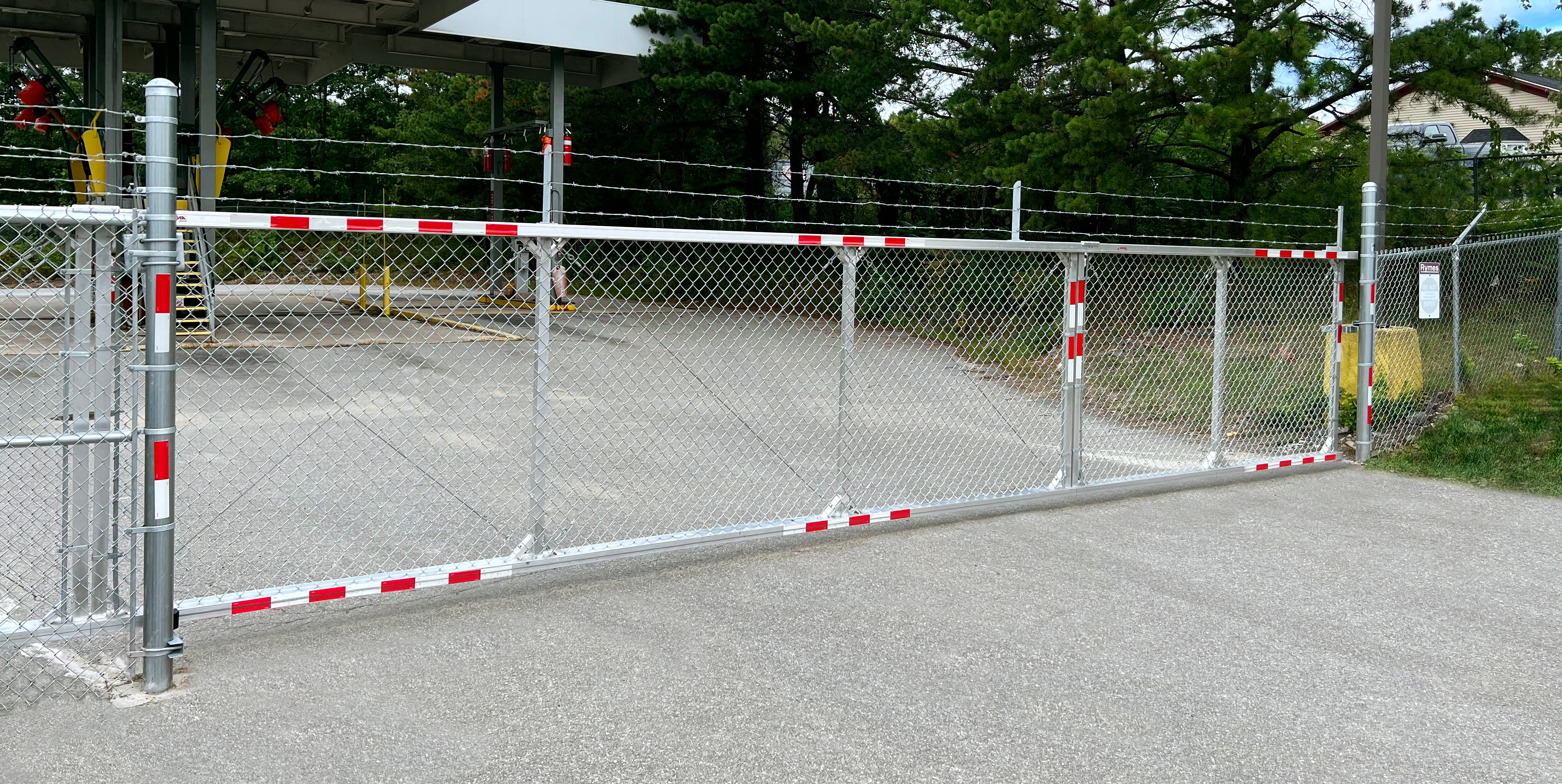
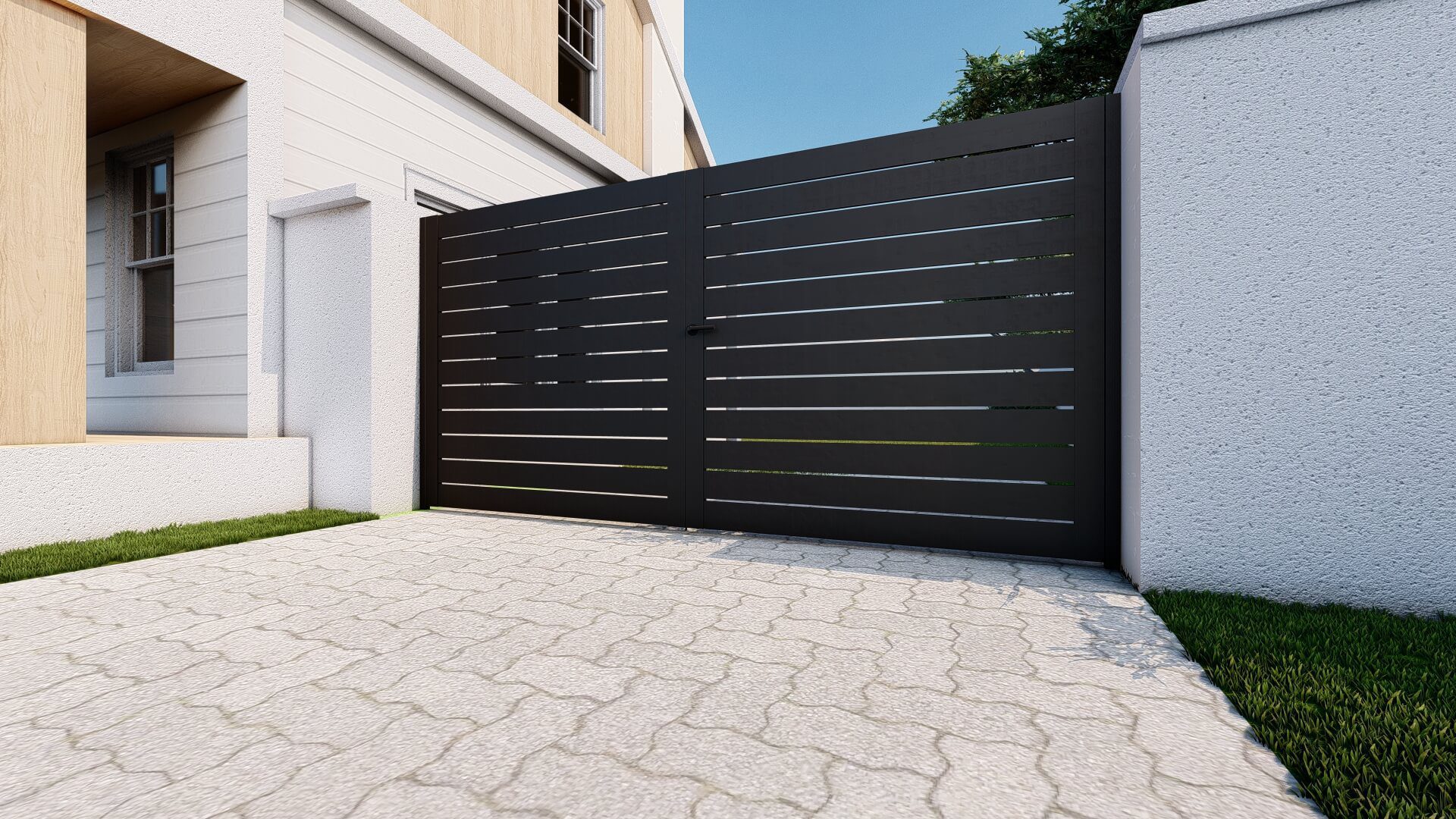
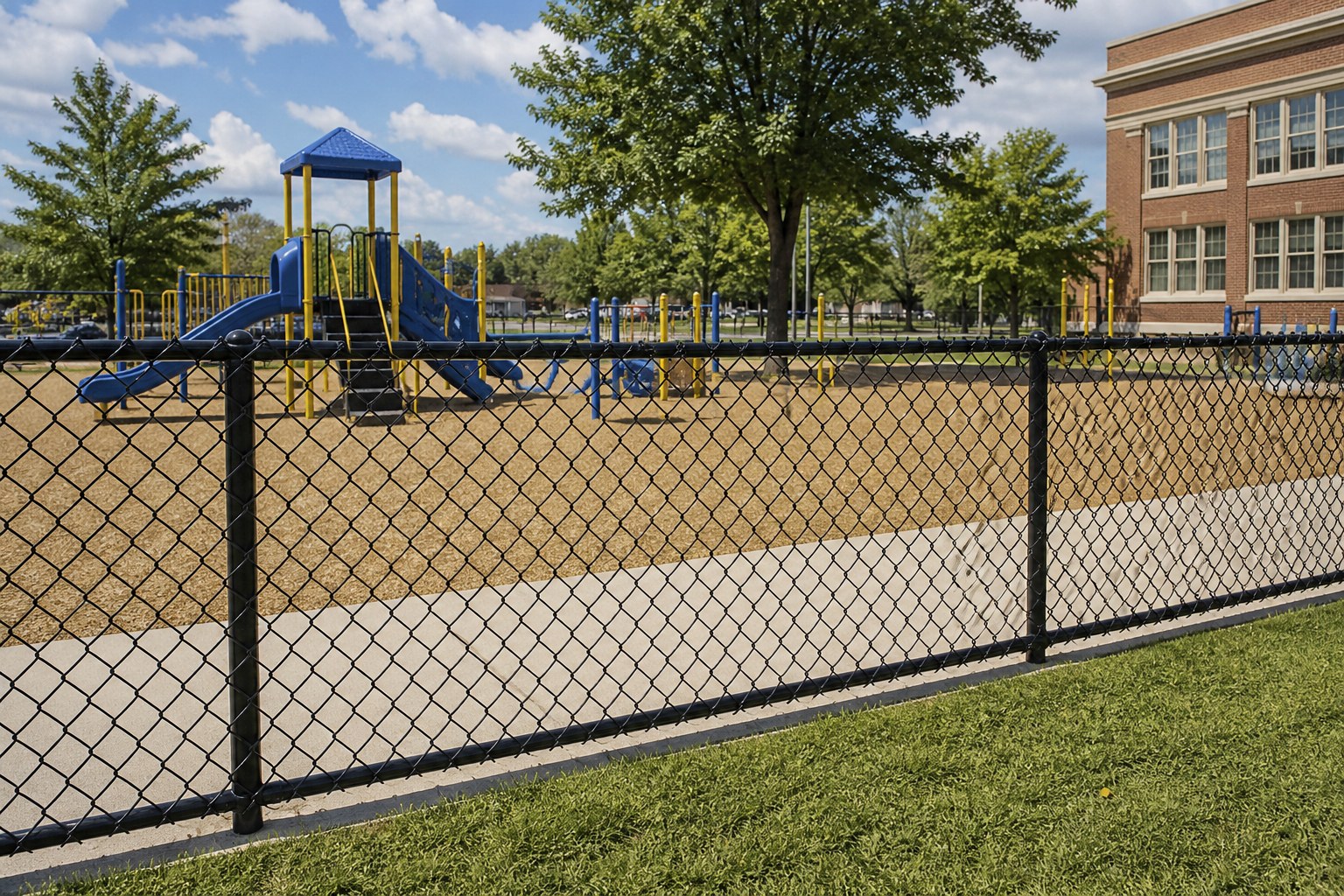
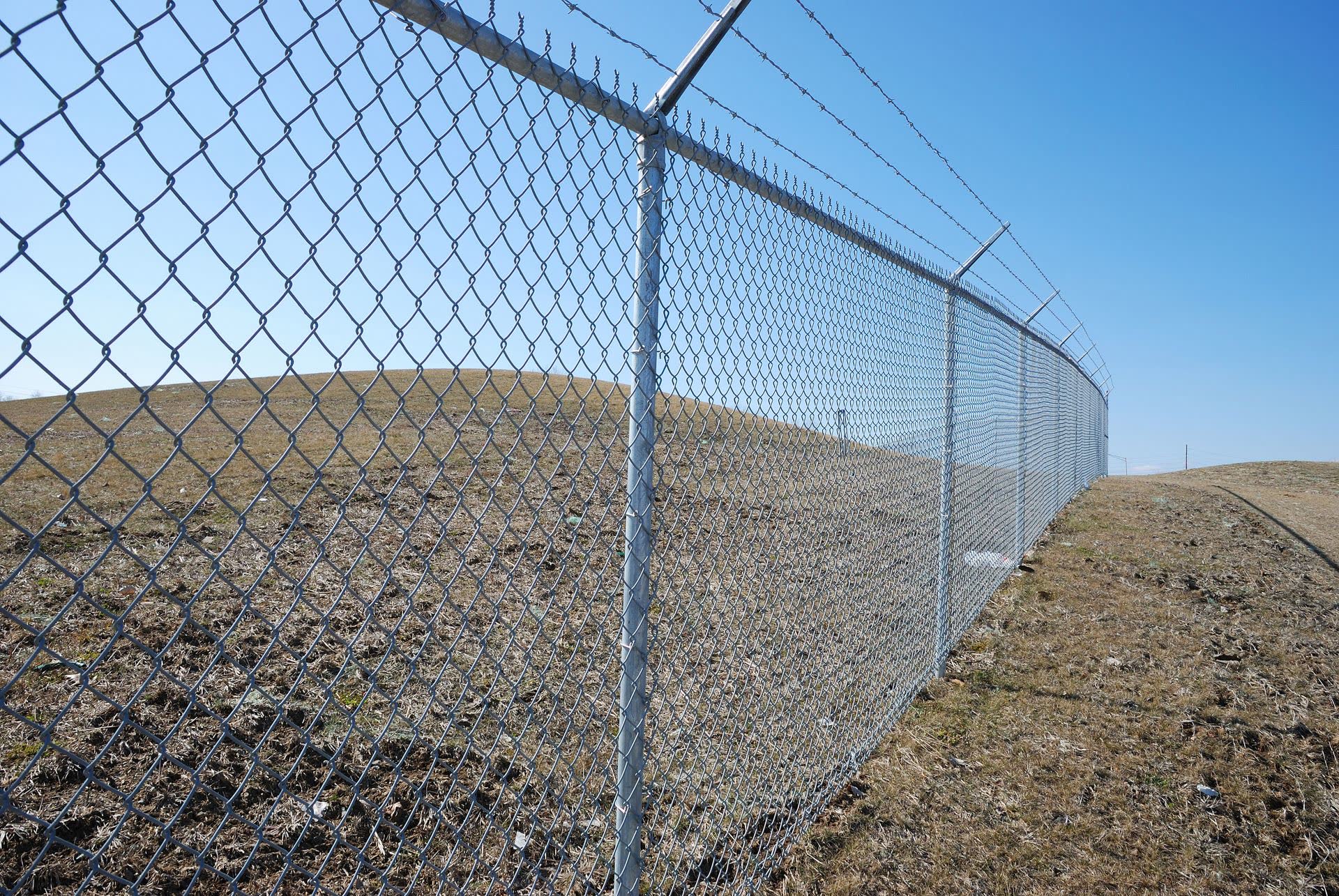
Every photo here is a real RKC commercial install. Cantilever gates, screened entries, campus perimeters, and galvanized runs across Blue Springs and the metro.

REVIEWS

What Kansas City Homeowners Say About RKC

4.9 ★ · 85 Google reviews

Every review is on our Google Business Profile — read them there, unedited.

Read all 85 reviews on Google

Blue Springs commercial questions

What Blue Springs Property Managers Ask About Commercial Fencing

The questions we field most on a Blue Springs commercial quote. Don't see yours? Get Josh on the line at (913) 286-1091.

What kind of commercial fencing do Blue Springs businesses and campuses actually need?
It splits by site. Blue Springs commercial work is mostly two things: the retail around Adams Dairy Landing, and the large church and school campuses. Retail fences two faces — a finished decorative elevation out front where customers see it, and a screened, durable service enclosure out back for dumpsters and loading. A campus is a different problem: a welcoming public edge that defines the property without walling it off, plus the protection-critical zones inside — the childcare yard, the playground, the parking edge. And out on the growth corridors toward Lee's Summit and Grain Valley, the new sites want a straightforward galvanized workhorse perimeter. We scope which of those your site is before we quote a foot of it.
Can a fence around a Blue Springs church or school still look welcoming instead of like a prison?
That's the whole design problem on a campus, and yes. A faith or school campus is open to the public most of the time — the boundary has to say 'community,' not 'compound.' We run a lower ornamental or decorative line at the public face that defines the property and controls where people enter without walling anything off, and we save the real security geometry — the no-toe-hold, the controlled access, the tighter enclosure — for the specific zones that need it: the childcare yard, the playground, the parking edge. Done that way, the campus reads as welcoming from the street while the vulnerable corners are genuinely protected. It's the reverse of fencing the whole place like a fortress.
How do you handle a childcare or playground area inside a campus?
As its own enclosure, separate from the campus perimeter, because it's a different security problem. A childcare or playground zone gets a height and picket geometry with no foothold a small child can climb, a gate that self-latches so it's never accidentally left open, and a see-over line so the supervising adult has eyes on the whole space at once. The larger campus boundary can be welcoming and open; the childcare edge inside it is where the strict spec goes. Separating the two is the point — you don't make the whole campus feel locked down to protect the one zone that actually needs it.
Can you keep our Blue Springs campus or retail site open while you install?
Yes — phased sequencing is standard on an operating site. We set and cure posts first, hang the line, then handle gates and controlled access last, and the perimeter is never left open overnight during the work. On a church campus we work around the service and event schedule; on a school we work around the calendar and the pickup windows; on a retail site we keep the customer entrance and the delivery access clear while the back-of-house goes in. The site keeps running the whole time — we plan the sequence around your operation, not the other way around.
Do you do bonded, public-bid municipal fencing in Blue Springs?
No, and we'll tell you that up front rather than waste your time. RKC is a licensed and insured commercial fence contractor, not a bonded public-works house — if your project requires performance-and-payment bonding, a formal public-bid process, or PE-stamped structural engineering, we're not the right contractor for it. What we do bring to a retail, campus, or private commercial job is licensed-and-insured standing in both Kansas and Missouri, a W-9 and certificate of insurance for your procurement file, honest commercial-gauge material, and a phased install that keeps your site operating. For most Blue Springs commercial perimeters, that's exactly the scope.
How much does a commercial fence cost in Blue Springs?
There's no honest per-foot number over the phone, because commercial pricing swings on things we have to see: the system (galvanized chain link versus ornamental versus a screened enclosure), the gauge and height, the gate count and how they're operated, the site access, and how much of the work has to be phased around an operating campus or store. We walk the site, scope it against what the property actually needs, and leave an itemized written estimate with every line broken out — perimeter, gates, enclosures, and any phasing. The estimate is free, and it's specific to your site rather than a number pulled off a rate sheet.

Weighing a decorative public face? See ornamental iron. Comparing the full commercial system range? Start at the commercial fencing overview.

Ready when you are

Get a free estimate — we usually respond the same day.

Call (913) 286-1091