Skip to content
Gate Installation in Blue Springs, MO — Dog-and-Kid, Drive & Conversion Gates Built for the Soft, Spring-Fed Ground

Gate Installation in Blue Springs, MO — Dog-and-Kid, Drive & Conversion Gates Built for the Soft, Spring-Fed Ground

In an active-family city named for its springs, a gate has two jobs: contain the dog and the kids, and stand up on soft, spring-fed ground that settles a shallow post. Every RKC gate here runs welded steel frames, self-closing family hardware, and hinge posts set 36 inches into wet-poured concrete on widened, gravel-drained footings — so the walk gate latches every time and the drive gate doesn't sink into the wet pocket the city is named for.

★★★★★
4.9
from 85 reviews
Licensed
& Insured · KS + MO
400+
fences installed
A+ BBB Rated 400+ Fences Installed Since 2021 Welded Gate Frames · Galvanized Hardware Free On-Site Estimates
See gate styles in our catalog ↓

WHY BLUE SPRINGS HOMEOWNERS INSTALL NEW GATES

Family-Grade & Soft-Ground Gate Installation in Blue Springs

In a city built for big dogs and busy kids on soft, spring-fed ground, a gate has to latch itself every time and stand on a footing that won't settle. The reason most Blue Springs homeowners call us about a gate is rarely "we need a latch that works." It's the walk gate the dog keeps beating, the drive gate that's started to drag as its post sinks into a wet spot, or the new cedar run that needs a gate to tie into the old chain link. The gate is the instrument. What you notice every day is everything downstream of it.

1

A walk gate the dog can't beat and the kids can't leave open

This is the gate an active-family city actually calls about. Ours self-close on tensioned hinges and self-latch high on the frame, with no gap at the bottom the dog noses through and no easy reach for a toddler. The dog stays in the yard, the gate shuts behind the kids on its own, and nobody's walking back to check it. It's the small detail most Blue Springs walk gates we're called to fix never had.
2

A driveway gate that doesn't settle into the wet spot

The failure that's specific to this city is a hinge post that slowly sinks into one of the soft, spring-fed pockets the place is named for, until the leaf drags and the latch won't meet. We beat it at the footing — over-dug, widened to bear on more ground, gravel-drained to pull water off the concrete, 36 inches deep. Years on, the gate still swings level instead of dropping into the soft ground.

3

A gate that finishes a chain-link-to-cedar conversion

Half the older Blue Springs backyards are mid-swap — old chain link coming down, 6-foot cedar going up. A new gate on its own dedicated hinge post, built square to the fresh cedar and matched to the run, closes that converted perimeter as one clean line instead of a patch over the seam where the two fences meet. The door disappears into the fence instead of announcing where the old one ended.

4

A double-drive that holds on the eastern-edge wind

On the open eastern edge toward Grain Valley there's nothing to slow the wind, and one wide leaf catches it like a sail until the hinges give up. A double gate answers that by cutting the opening into two, so no single hinge ever carries the whole span or the whole gust. Posts driven 36 inches into drained footings, a brace in each half, and room to spare for the boat or the RV — it stays true where a one-piece gate would rack.

LOCAL CONDITIONS FOR GATES

What the Springs and the Family Yard Mean for Your Blue Springs Gate

Gates are the single highest-stress component of any fence install — and in Blue Springs the stress comes from the ground and the daily use. A gate carries its own weight all day and cycles open-and-close thousands of times a year, and here it does it on soft, spring-fed ground that settles a shallow post, in yards where a big dog and busy kids work the latch a dozen times daily, on lines that are half-converted from old chain link. Those conditions — not generic clay — drive three specific decisions that separate a gate still swinging square in year ten from one dragging at year two. It comes down to these three on every RKC gate we install across Blue Springs.

1

Footing built for the soft, spring-fed ground — so the post can't settle

Blue Springs earned its name honestly: the water table runs high, and there are soft, spring-fed pockets across the city where the soil stays wet and a gate post slowly settles into it, dropping the leaf until it drags and the latch stops meeting. Depth alone doesn't beat it. In those wet spots we over-dig the hole, widen the footing base so it bears on more ground, and set a gravel drainage collar to move water away from the concrete — 36 inches deep in wet-poured concrete below the frost line. A shallow dry-set post in a Blue Springs soft spot is settling before the first winter's out.

2

Welded frames and heavy-use hardware for a family gate

In a city where the gate gets slammed a dozen times a day by kids and pushed open by a 70-pound dog, the frame and the hinges are what wear out first. Every gate we build in Blue Springs uses a welded steel square-tube frame — powder-coated on an ornamental gate, clad in cedar on a wood one — because a bolted frame flexes at the joints and racks out of square within two seasons of that kind of use. Hinges are spec'd to the leaf weight plus a 50% safety factor, hot-dip galvanized or stainless. Welded and over-built is what survives an active-family yard.

3

A gate that ties a converted fence line together

A lot of Blue Springs backyards in the 1980s neighborhoods are mid-conversion — old chain link coming down, 6-foot cedar going up a section at a time — so a new gate often has to tie a fresh cedar run into whatever's still standing. We build the gate square to the new line, set its own dedicated hinge post rather than hanging off a tired old fabric post, and match the leaf to the cedar so the finished perimeter reads as one fence with a door in it, not a patch over a seam.

Blue Springs neighborhoods we've installed gates across include Adams Dairy Landing, Chapman Farms, Copper Leaf, Brittany Ridge, plus infill lots across the rest of Blue Springs. Same engineering, same 36-inch posts, same welded frames on every one.

READ THE GROUND UNDER THE HINGE POST

Where Your Gate Lands — and What the Fence Is Doing — Decides the Build

In a city named for its springs, the first question on any gate isn't the gate — it's what the ground under the hinge post is going to do. Find the row that sounds like your yard. Whether the post lands in a soft, spring-fed pocket, whether the run is mid-conversion from chain link, and how wide the opening is together decide the footing and the frame — and that call, made before anything is dug, is what keeps the gate swinging level years on.

Your Blue Springs setup The material How we build it here
A yard with a soft, spring-fed wet pocket in it Cedar or ornamental on a drained footing The hinge-post hole is over-dug, the footing base widened to bear on more ground, and a gravel drainage collar set to pull water off the concrete — so the post bears instead of sinking into the saturated soil. This is the Blue Springs footing.
A flat 0.20–0.25-acre backyard for the dog and kids 6-ft cedar privacy, scalloped or arched top A self-closing, self-latching walk gate with no bottom gap the dog can nose through, plus a matching drive or double gate — the everyday active-family build the whole city runs on.
An 1980s neighborhood converting chain link to cedar Cedar tied to the remaining fabric A new gate square to the fresh cedar run, on its own dedicated hinge post rather than an old fabric post, so the converted perimeter closes as one line instead of a patched seam.
A 1990s cedar fence and gate reaching end-of-life Replacement cedar, matched to the run The sagging original usually failed at a shallow, under-set post — so the replacement gate gets a proper 36-inch drained footing and correctly-rated hinges, the two things the first build skipped.
An eastern-edge lot that catches the open-ground wind Cedar or ornamental double-drive The span is split into two braced leaves at a center drop rod so a gust can't load one long leaf like a sail, with heavier hinges and both posts 36 inches deep.
The boat, camper, or an Adams Dairy new-construction lot Cedar or vinyl double-drive A true 14-to-20-foot clear opening built to the vehicle, both leaves cross-braced — and on graded new-construction fill, the footing reaches past the loose fill into firm ground.

None of this is a menu you pick from cold. On the estimate visit Josh reads the ground where the hinge post will land and the fence line it ties into, then the footing and the gate follow from what he finds. Get the ground right and you get a gate that still latches on the first try after the springs have had ten winters to work on it.

GATE TYPES

Walk, Drive, Double & Slide — the Four Gates We Build in Blue Springs

Which gate is right comes down to how you use the opening and what the driveway will physically allow. These are the four we build across Blue Springs — the job each one does and honest pricing for it. The material is a swap inside any category (scalloped or arched cedar on most family lots, vinyl in the newer Adams Dairy streets, powder-coated ornamental on the higher-end lots); the welded frame and the 36-inch footing under it don't change.

Dog-and-Kid Walk Gate install by RKC Wood Care Pros in Blue Springs, MO

Dog-and-Kid Walk Gate — 3–4 ft wide

The gate this active-family city calls about most

Blue Springs fences get built for big dogs and busy kids, and the walk gate is the piece that actually does that job. Ours self-close on tensioned hinges and self-latch high on the frame, with no gap at the bottom the dog can nose through and no easy reach for a toddler. Welded square-tube frame clad in the 6-foot cedar the backyards here run, scalloped or arched top to match the run. The gate closes behind you every time so nobody's walking back to check it.

  • Price: $350–650
  • Typical use: Side-yard entry, backyard walk-through, dog and pet containment
Single-Drive Gate install by RKC Wood Care Pros in Blue Springs, MO

Single-Drive Gate — 10–14 ft wide

Standard Blue Springs driveway width

A single-leaf swing gate for a standard Blue Springs driveway. Welded steel frame, diagonal cross-brace from the bottom hinge corner to the top latch corner, and heavy-duty ball-bearing hinges rated above the leaf weight. The hinge post is the part that matters here: it goes 36 inches into wet-poured concrete on a widened, gravel-drained footing so it can't settle into the soft, spring-fed pockets that give this city its name and sink a shallow post.

  • Price: $700–1,300 (wood) · $950–1,900 (ornamental)
  • Typical use: Standard residential driveway, single-vehicle entry, cedar or ornamental finish
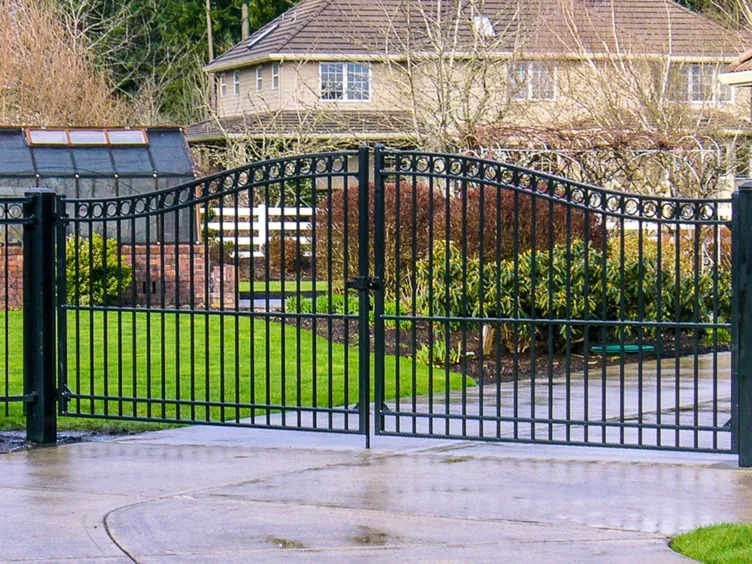
Double-Drive Gate install by RKC Wood Care Pros in Blue Springs, MO

Double-Drive Gate — 14–20 ft wide

Boats, trailers, and the eastern-edge wind

Two shorter leaves, each hung on its own post, closing to a center drop rod. The whole point is leverage: a 16-foot opening carried on one leaf hangs all its weight far out on a single hinge, but broken into two braced halves, each hinge only ever sees half the reach. That's what holds up on the open eastern side of town, where a long solo leaf catches the Grain-Valley wind like a sail and a paired one shrugs it off. It's the wide-lot answer — boat, camper, and trailer clearance — with both posts down 36 inches on drained footings and a diagonal brace worked into each leaf.

  • Price: +30–50% over single-drive
  • Typical use: Wider driveways, boat/RV access, wind-exposed eastern-edge lots
Sliding Gate install by RKC Wood Care Pros in Blue Springs, MO

Sliding Gate — 10–20 ft travel

For a soft-ground or tight-lot approach

A sliding gate rides a V-track or cantilevers on rollers to the side, needing zero swing clearance — the right call when a swing leaf would catch on a rising approach, when the lot is narrow, or when a soft, wet ground pocket at the swing arc won't reliably hold a swinging leaf level. Common on the larger lots converting from chain link, where the run sits tight to the driveway edge.

  • Price: +$400–900 over swing-gate pricing
  • Typical use: Tight lots, soft-ground approaches, chain-link conversions
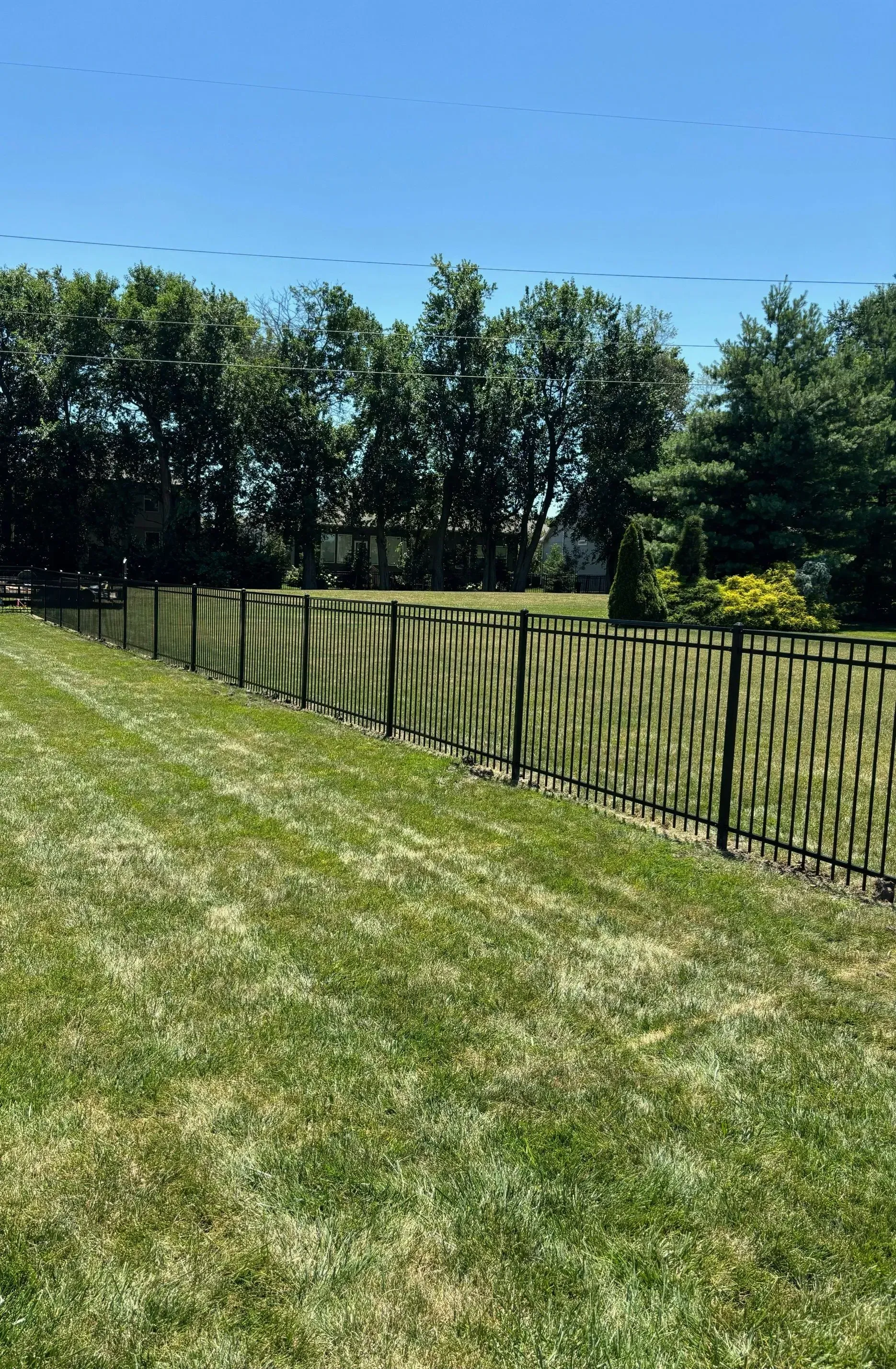
Powder-coated steel fence and gate line in Blue Springs, MO by RKC Wood Care Pros

BLUE SPRINGS GATE PRICING

What Gate Installation Costs in Blue Springs

Gate pricing in Blue Springs depends on gate type, material, size, and whether the hinge post lands in soft, spring-fed ground. Every quote includes welded steel frame construction, galvanized heavy-duty hardware, and a 36-inch hinge post set in wet-poured concrete — with a widened, gravel-drained footing where the ground calls for it. Below are the three configurations we quote most often for Blue Springs properties.

Dog-and-Kid Walk Gate

$350–650

installed

Cedar with scalloped or arched top. Welded frame, self-closing hinges, self-latch with no dog gap at the bottom.

Single-Drive Driveway Gate

$700–1,900

installed

Wood $700–1,300 · Ornamental $950–1,900. Welded frame, diagonal cross-brace, ball-bearing hinges, drained soft-ground footing.

Double-Drive / Custom Gates

+30–50%

over single-drive

Custom widths, matched finials, eastern-edge wind bracing, and conversion tie-in gates quoted on site.

The drained soft-ground footing is a modest add per affected post, quoted on site once Josh reads the ground — spec'd only where a wet, spring-fed pocket at the hinge post calls for it. Every Blue Springs gate estimate is free, written, and itemized — call (913) 286-1091 or request an on-site walkthrough.

OUR PROCESS

How a Gate Install in Blue Springs Actually Happens

From the first call to the first swing is four steps and, for most Blue Springs gates, one to three weeks. The on-site part is quick — a walk gate often goes in inside a day, a drive gate in one or two. What actually sets the calendar is the shop: the leaf is welded to your exact opening, and a poured footing has to take its set before it can carry a gate. Here's how each of the four steps runs on the ground in Blue Springs.

1

On-site measurement and specification

It starts with Josh on the lot, tape in hand. He gets the opening's real width — the figure in the homeowner's head is almost never the one the tape gives — and settles swing direction and clearance against how the drive and yard actually sit. Two Blue Springs calls get made right here: whether the hinge post is landing in a soft, spring-fed spot that changes the footing, and on a family lot whether the walk gate needs the self-close and tight-bottom latch a dog will otherwise beat. The written estimate follows the same week, itemized to the hinge brand, the post depth, and the frame steel — nothing left to figure out the day the crew shows up.

2

Read the ground and match the gate to the fence

Before anything is cut, we settle what actually decides the build here: whether the hinge post lands in one of the city's soft, spring-fed pockets (if so, the footing gets over-dug, widened, and gravel-drained), whether the gate ties a new cedar run into an old chain-link line, and what the fence run itself is made of. The gate is then fabricated to match that run — cedar with a scalloped or arched top, or powder-coated ornamental — so it reads as one continuous fence with a door in it.

3

Install — posts first, welded frame second, hardware on site

Day one is footings only: the hinge posts drop a true 36 inches into wet-poured concrete — over-dug and gravel-collared wherever the ground reads soft — and cure overnight before anything hangs off them. Day two the welded frame and cladding go up on the now-set footings, and the hinges get hung and dialed in right there on the lot instead of pre-set back at the shop, so the leaf finishes square to the real grade and the latch meets the real catch. A Blue Springs walk gate is usually a one-day job; a drive gate runs two.

4

Walkthrough, dog-latch check, and a 30-day return

Nothing gets signed off until the gate has been cycled hard in front of you — a dozen full swings while we watch each hinge take the load, and on a family gate a check that it closes and catches itself from wherever it's left standing. Anything that drags, scrapes, or misses the latch is corrected before we pull off the lot. Fresh footings take a set over the first few weeks, so a return at 30 days to re-true the latch is built into the price, and we'll walk you through the quarter-turn hinge adjustment to make yourself later — though most Blue Springs gates never ask for it.

RECENT BLUE SPRINGS GATE INSTALLS

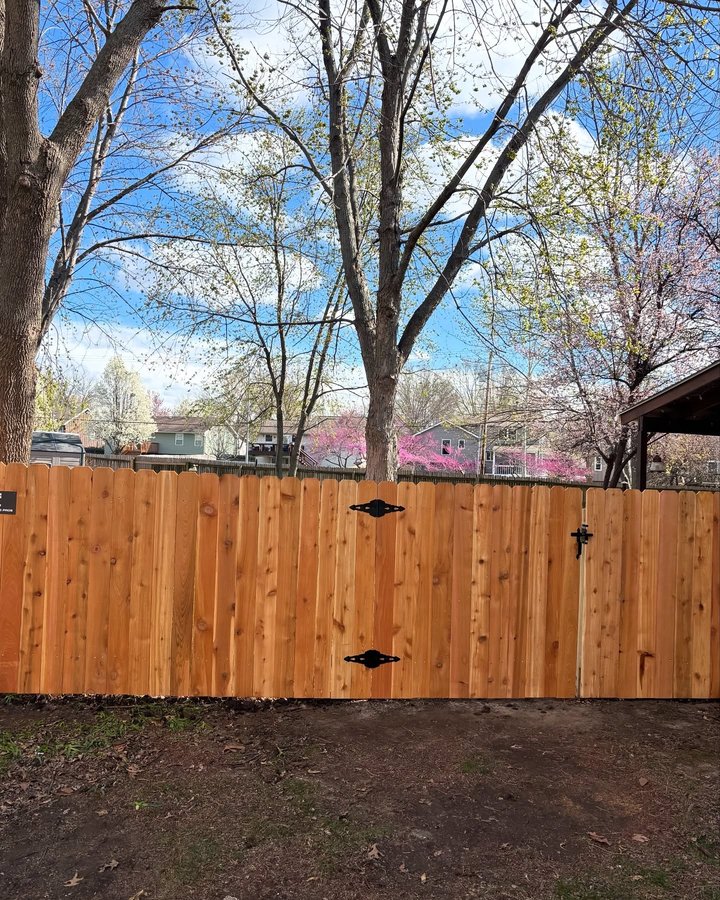
Cedar privacy walk gate install in Blue Springs, MO by RKC Wood Care Pros
Cedar Walk Gate · Blue Springs
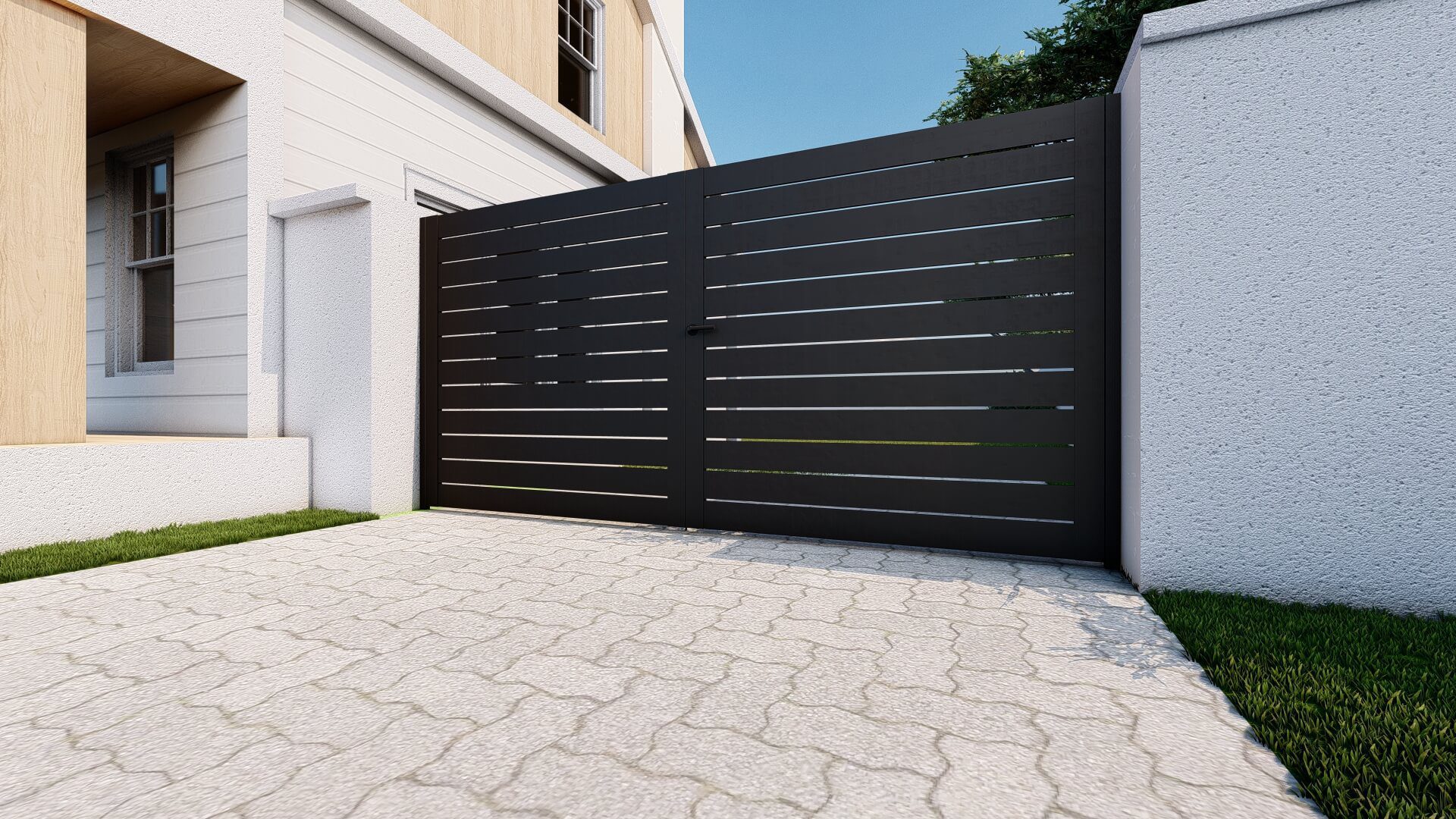
Horizontal-slat drive gate install in Blue Springs, MO by RKC Wood Care Pros
Horizontal-Slat Drive Gate · Blue Springs
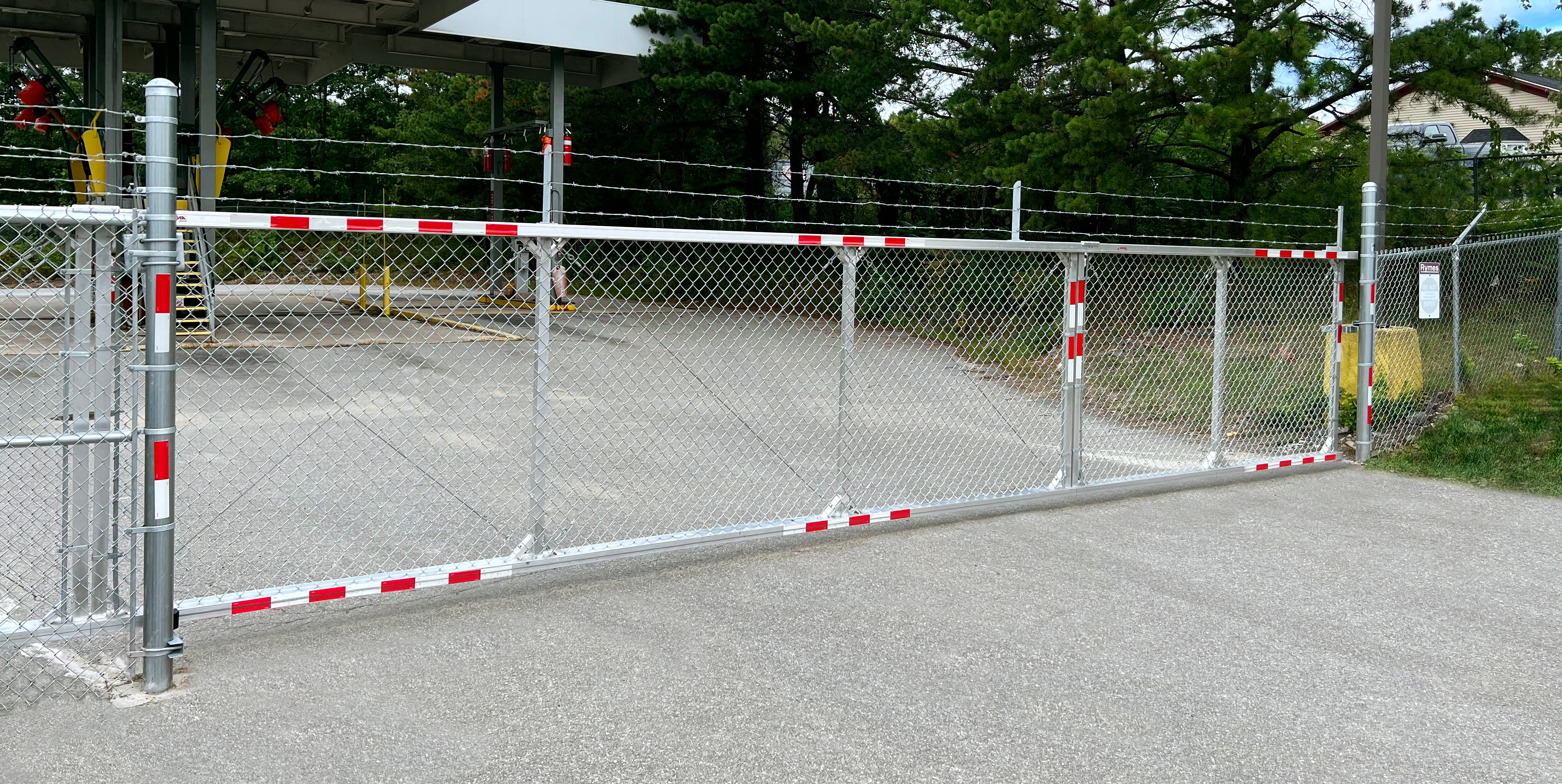
Cantilever chain-link slide gate install in Blue Springs, MO by RKC Wood Care Pros
Chain-Link Slide Gate · Blue Springs
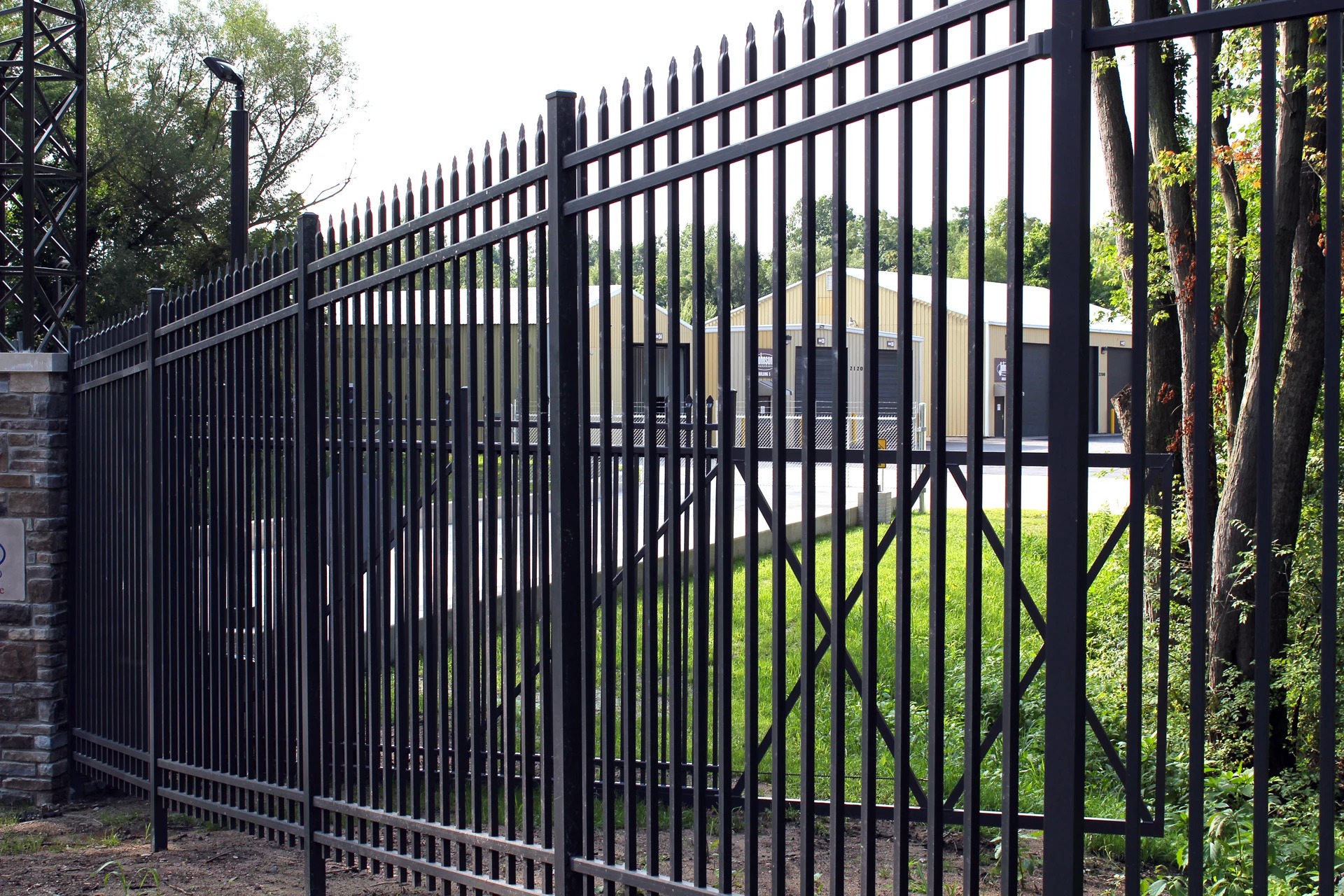
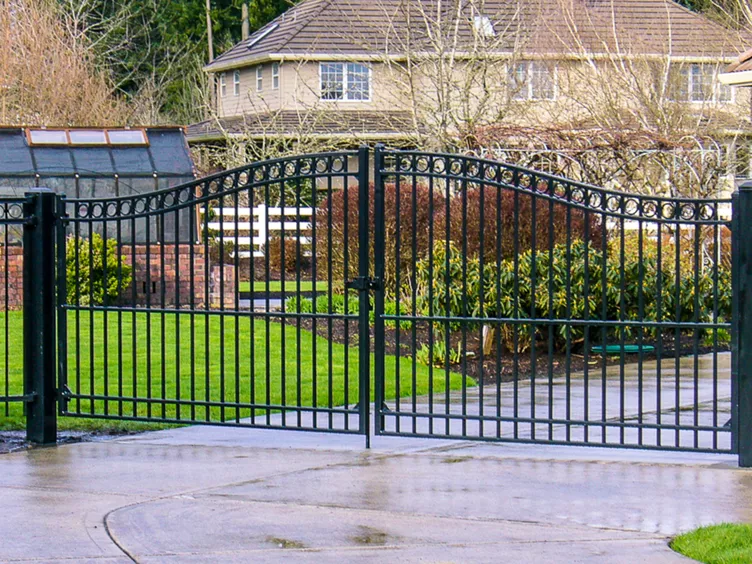
Ornamental iron fence and gate line on a sunny Blue Springs, MO lot by RKC Wood Care Pros
Ornamental Iron Line · Blue Springs

REVIEWS

What Kansas City Homeowners Say About RKC

4.9 ★ · 85 Google reviews

Every review is on our Google Business Profile — read them there, unedited.

Read all 85 reviews on Google

BLUE SPRINGS GATE QUESTIONS

Gate Questions Blue Springs Homeowners Ask Most

Gate installation in Blue Springs comes down to type and sizing, the ground under the hinge post, and hardware spec. Below are the questions Blue Springs homeowners actually ask during the estimate — grouped by topic, each answer specific to the soft, spring-fed ground, the active-family yards, and the chain-link-to-cedar conversions we see across the city. If your question isn't here, call (913) 286-1091 and ask.

Cedar single-drive gate install in Blue Springs, MO by RKC Wood Care Pros

Gate Types & Sizing

What's the right gate width for a residential driveway in Blue Springs?
Most Blue Springs driveways run 10 to 14 feet at the fence line, and 12 feet is the common single-drive width — a single welded, cross-braced leaf handles that fine. Past 14 feet we move to a double-drive, because a single 16-foot leaf puts too much lever arm on the hinges and, on the eastern edge where the open ground toward Grain Valley lets the wind build, sails hard enough to rack it. There's also a ground question at any width here: if the hinge post lands in a soft, spring-fed spot, the footing has to be widened and drained no matter how wide the gate is. Walk gates land at 3.5 to 4 feet.
Can a gate be added to my existing fence, or does the post need replacing?
The whole answer is the post you'd hang it on. One that's already 36 inches into concrete and still reads dead plumb — the norm on fences we built, less so on older ones — can often carry a new gate as it stands. In Blue Springs there's an extra check first, though: a post can look fine and still be quietly sinking into a soft, spring-fed pocket, so we test for that before trusting it. Anything shallow, surface-bolted, or leaning even a little comes out for a fresh drained 36-inch footing, and on the many chain-link-to-cedar conversions the gate gets its own dedicated post instead of a worn fabric one. It all gets read on the estimate visit, before a number goes on paper.
How long does a wood driveway gate last in Blue Springs?
Give a cedar single-drive gate the three things that actually decide it — a welded steel frame, hinges rated over the leaf weight, and a drained 36-inch hinge post — and it runs 15 to 20 years here, with the steel outlasting the wood. The cedar goes 15 to 25 on a two-year stain schedule, worth keeping up in a wet-winter climate, which is exactly why staining is such a common local add-on. What we actually get called out to fix is the opposite build: a shallow post that sank in a soft spot, or a bargain big-box hinge that stripped under everyday family use.
Swing gate or sliding gate for a Blue Springs driveway?
For most flat lots here, swing is the default and the cheaper build. A sliding gate — riding a V-track or cantilevering on rollers to the side, needing zero swing clearance — earns its $400-to-$900 premium when the approach rises and a swing leaf would catch on it, when the lot is narrow, or when a soft, wet pocket right at the swing arc won't reliably hold a swinging leaf level. On the larger conversion lots where the fence sits tight to the drive edge, a slide is often the cleaner answer.

Ground, Family & Conversion Specifics

Why do gates in Blue Springs settle and lean, and how do you stop it?
It's the thing the city is literally named for. The water table runs high, and there are soft, spring-fed pockets across town where the soil stays wet and a gate post slowly settles into it — the leaf drops, starts dragging, and the latch stops meeting. Depth alone doesn't fix a settling problem, so in those spots we over-dig the hole, widen the footing base so it bears on more ground, and set a gravel drainage collar to pull water away from the concrete, all at 36 inches deep below the frost line. That's the difference between a gate that still swings level in ten years and one that's sagging by its first winter.
We're replacing old chain link with cedar — can the gate tie into the part that's staying?
Yes, and it's one of the most common Blue Springs jobs there is — a lot of the 1980s neighborhoods are mid-conversion, cedar going up a section at a time. We build the new gate square to the fresh cedar run and set it on its own dedicated hinge post rather than hanging it off a tired old chain-link fabric post that won't hold plumb. Matched to the cedar and top-styled to the run, the finished perimeter closes as one clean line instead of a patch over the seam where the two fences meet.
Do you build the scalloped and arched-top gates common in Blue Springs subdivisions?
We do — the decorative scalloped and arched-top cedar look is popular across the newer Blue Springs backyards, and a gate has to carry that same top profile or it stands out as an obvious insert in the fence line. We cut the gate's top rail to match the run's scallop or arch, cap it to match, and hang it on a welded frame so the profile stays true as the gate cycles. It reads as part of the fence, not a plain rectangle dropped into a decorative line.

Pricing & Hardware

Why are welded gate frames more expensive than bolted?
The cost is shop labor: each corner gets cut to length, fit, tacked, welded all the way around, then cleaned up with a finish pass. What that buys is a frame that never loosens — which counts double on a Blue Springs family gate worked a dozen times a day. Bolted corners give a little at every joint under that kind of cycling, walk themselves out of true inside two seasons, and once the frame isn't square the latch quits lining up and the leaf starts to drag. The weld premium runs maybe 15 to 25 percent on the frame and buys out the year-five sag call. We don't build a bolted gate.
Does the drained footing for a soft-ground spot cost extra?
A little, and it's worth every dollar in the wet pockets. Over-digging the hole, widening the footing base, and setting a gravel drainage collar adds some labor and material over a standard post set — figure a modest add per affected post, quoted on site once Josh reads the ground. Not every Blue Springs lot needs it; the ones with a soft, spring-fed spot at the hinge post absolutely do, because the alternative is a gate that settles and drags within a year or two. We only spec it where the ground calls for it.
What's the warranty on gate hardware?
Two coverages stack on every gate. The hardware — hinges, latches, drop rods, cane bolts — rides its manufacturer terms, which usually run about ten years on a ball-bearing pivot and five to ten on strap hinges and latches. The welded frame is on us: rack it out of square, drop it at the latch corner, or pop a weld under ordinary use and we're back to set it right, no argument. And the 30-day return is standard rather than a favor — once the footings have taken their set we re-true the latch, take up any hinge drift, and on a family gate re-check that the self-close and the tight-bottom latch are still doing their job.

OTHER BLUE SPRINGS FENCE SERVICES

More Fence Services Available in Blue Springs

Every service below stays in Blue Springs — dedicated pages with local pricing, code considerations, and recent project photos specific to your city. If you're adding a gate to a new fence, converting an old chain-link line to cedar, or staining the run the gate ties into, here's where to go next.

Ready when you are

Get a free estimate — we usually respond the same day.

Call (913) 286-1091