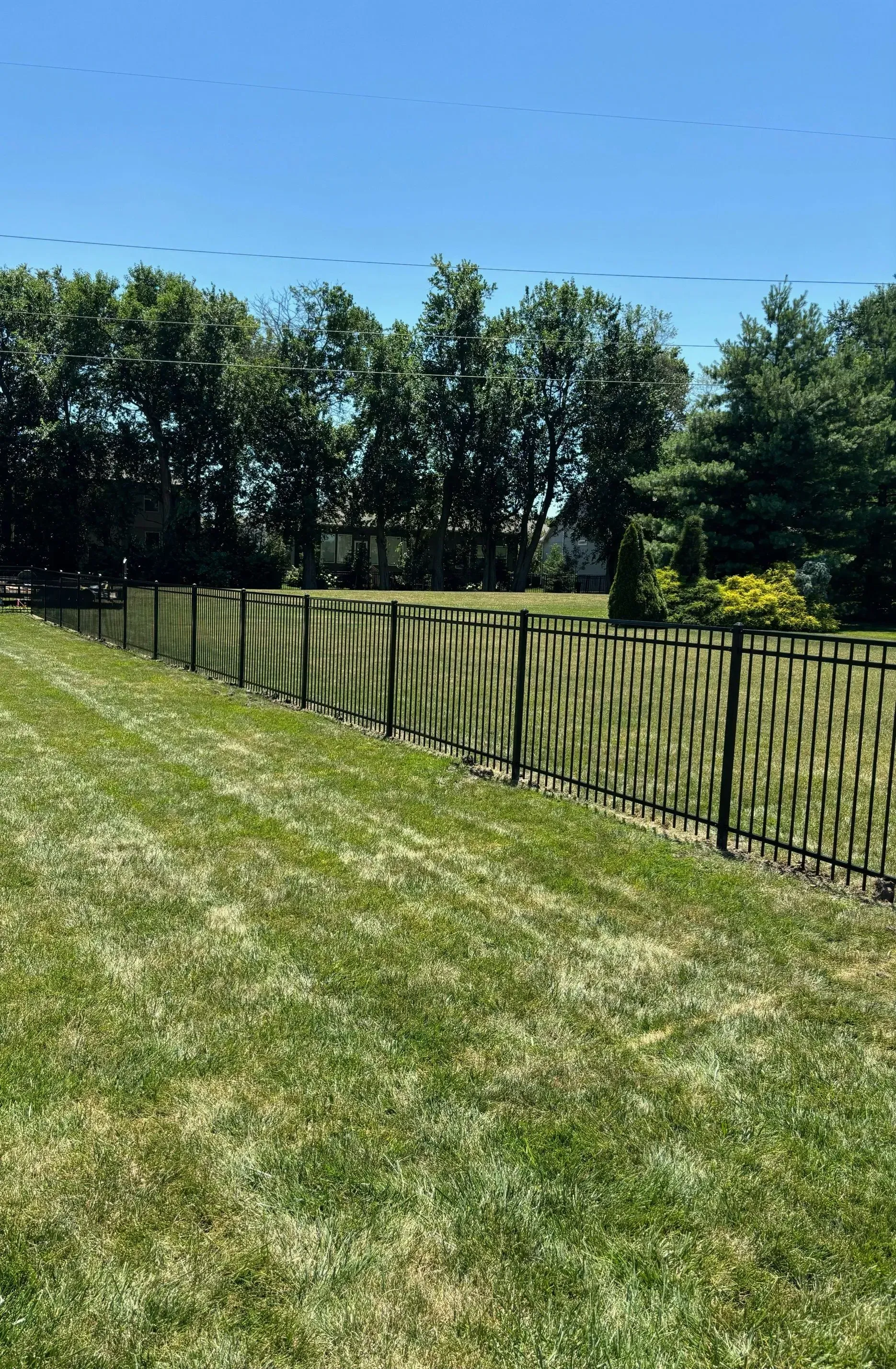
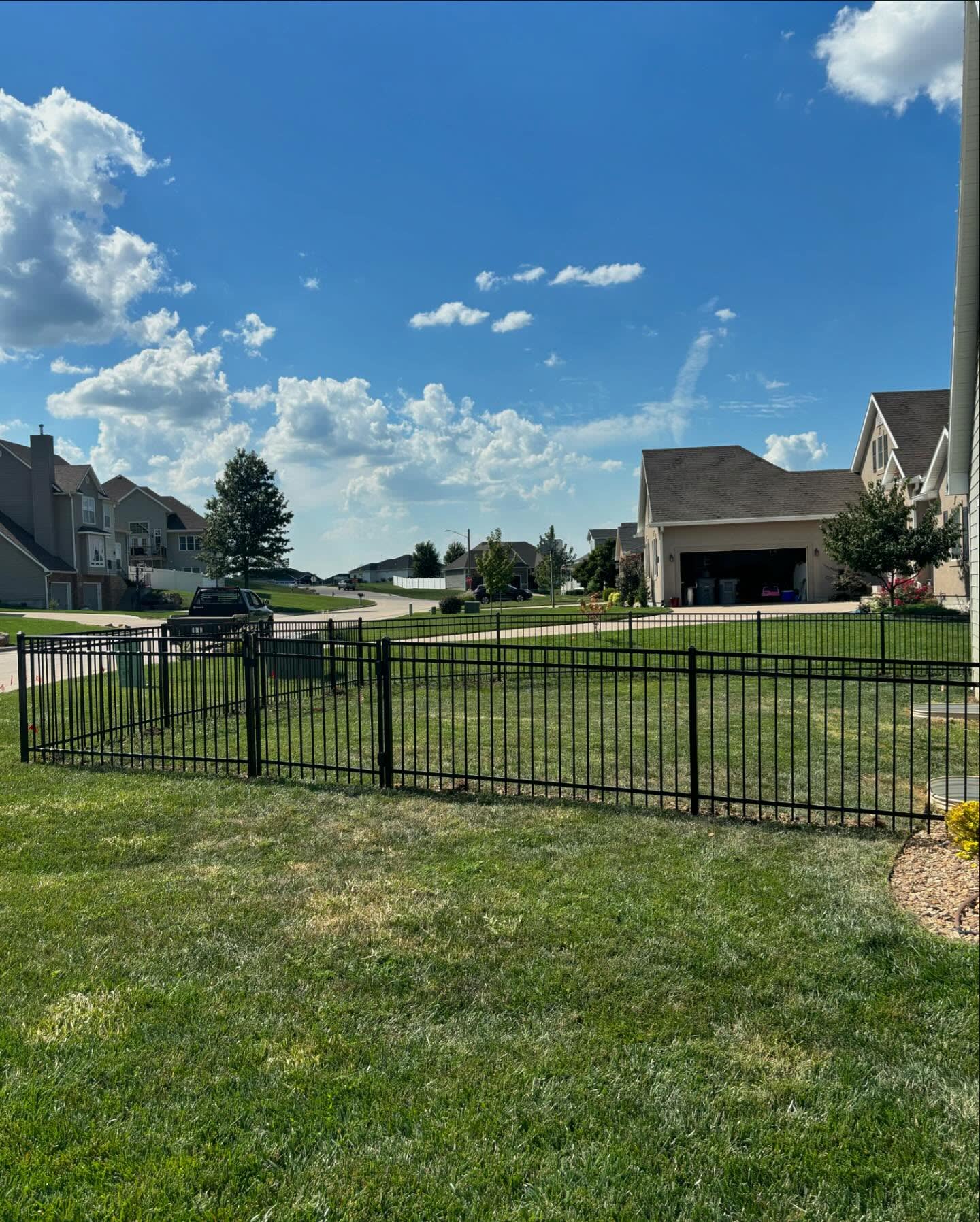
| A front-yard line on an Adams Dairy-corridor home | Welded 3-rail steel, spear-top or flat-top, matte black over E-coat | The Adams Dairy corridor is the one part of Blue Springs that genuinely reaches for iron over the town's cedar default, and it does it at the front where the street sees the house. Real welded steel has a mass a lighter fence can't fake — the sections read as permanent, the black powder-coat over the E-coat primer holds its color, and a spear- or flat-top front line gives a mid-market home an estate face against a block of backyard cedar. At the street, the weight is the whole point: it's the difference between a fence and a statement |
|---|
| A drive entrance or a hard corner that anchors the lot | Heavier section with a forged or decorative top on braced corner posts | A drive gate or a prominent corner is where a boundary either looks intentional or looks like it was priced by the foot. Welded steel is the material that carries a decorative top — a forged scroll, a pressed finial, a heavier top rail — without looking fussy, because the mass backs it up. We build the corner and gate posts oversized and cross-braced so the heaviest run on the lot stays dead-square, and the entrance reads as the front door of the property, not an afterthought bolted on at the end |
|---|
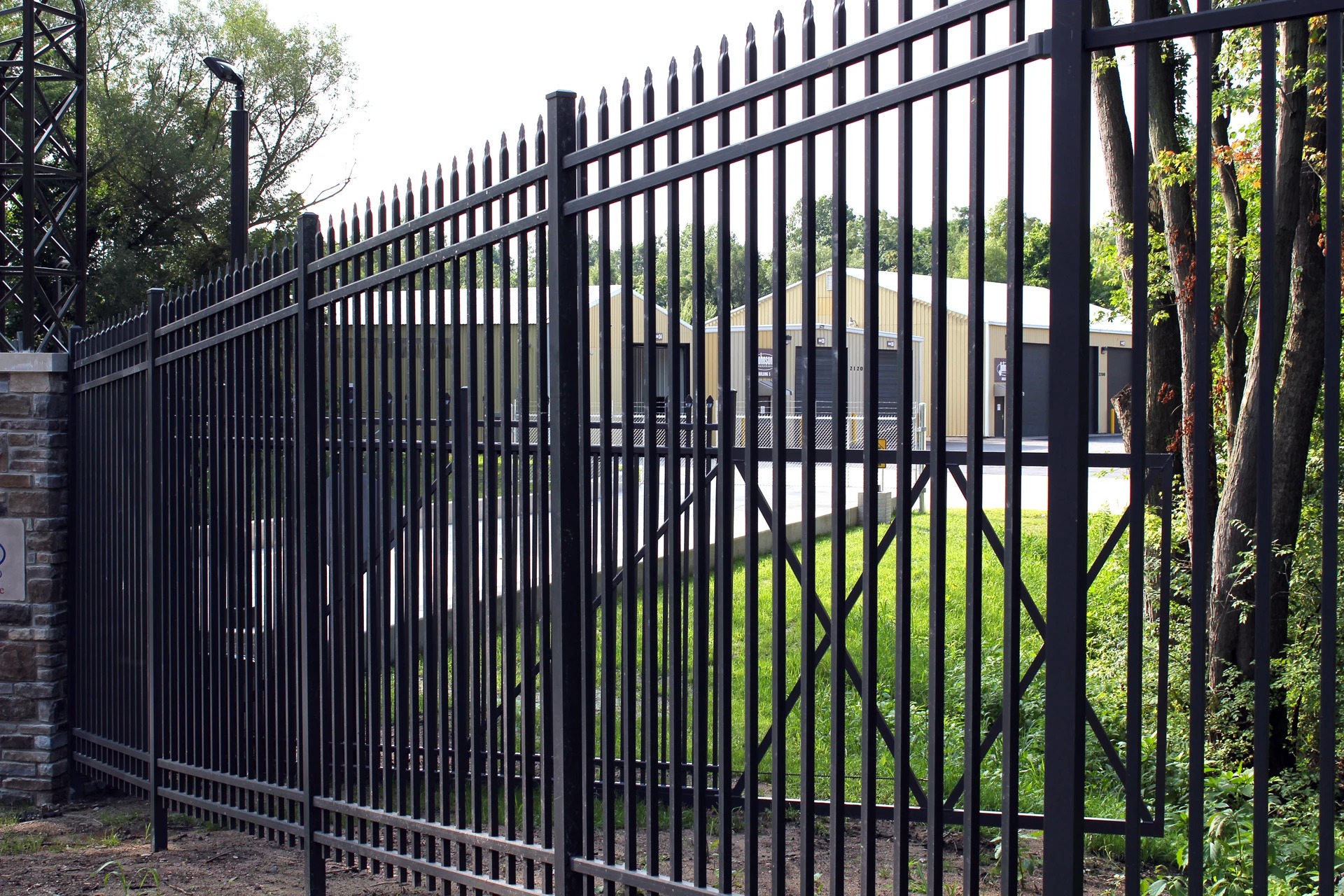
| A big dog you want contained without a solid backyard wall | Spear-top security line, lower picket course narrowed to the animal | This is a big-dog town, and the reflex is a 6-foot cedar wall — but where you'd rather keep the yard open, welded steel does containment with an edge cedar doesn't have. A spear- or pressed-top run gives a hard, hand-holdless line at the top, we tighten the lower picket course so a broad-shouldered breed can't push through, and because it's steel there's nothing down low a chewer works loose over the years. The dog stays in, the intruder gets a genuine deterrent, and you keep the sightline a solid wall would take |
|---|
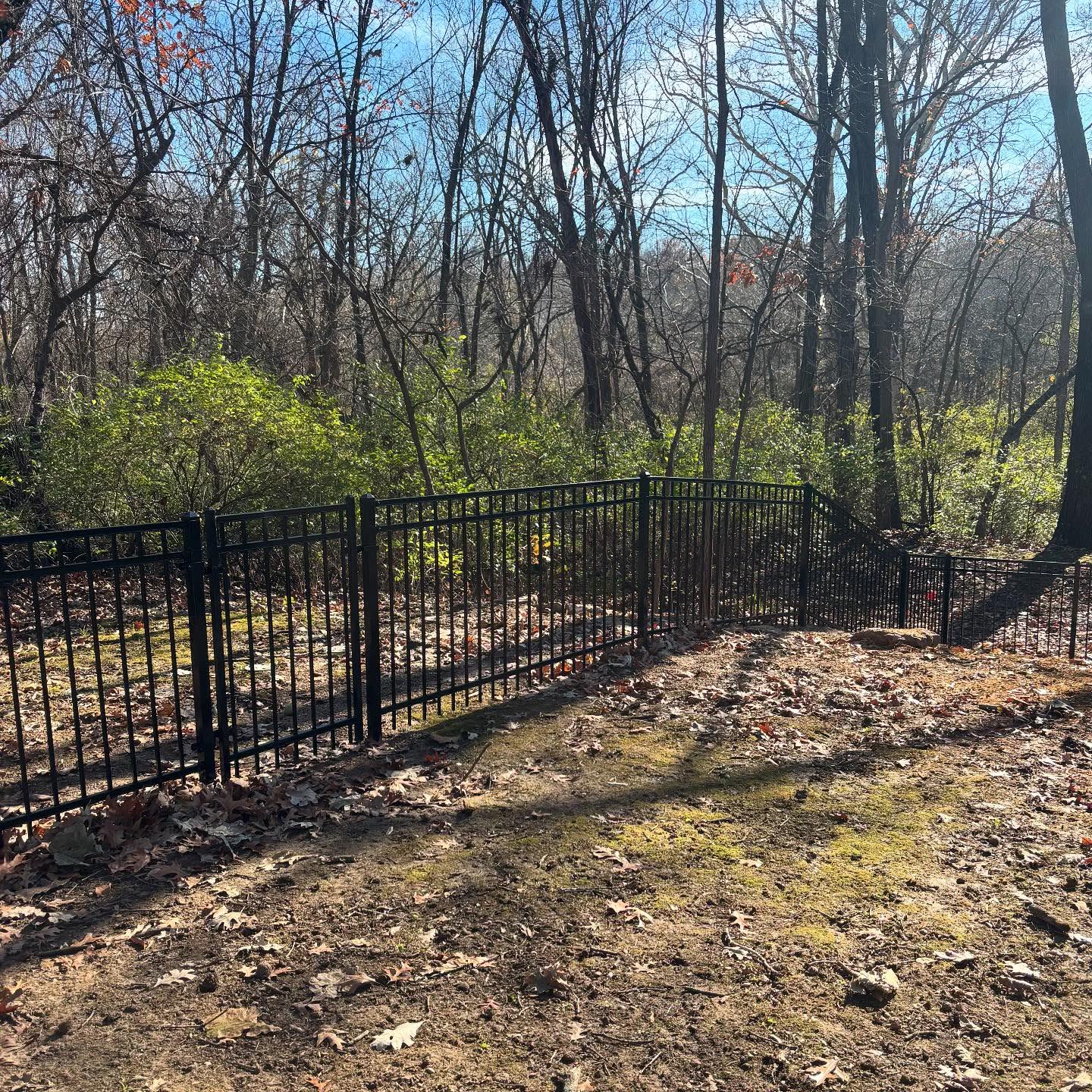
| A 'wet pocket' lot where the ground stays soft and posts settle | An oversized, deeper footing sized to iron's weight, not a light panel's | Parts of Blue Springs sit over shallow groundwater and soft spots where any post can settle — and here iron's own advantage becomes the thing to engineer around. A welded steel panel is heavier per foot than aluminum, so it loads the footing harder, and on soft, spring-fed ground that heavier load is exactly what tips a badly-set post into leaning. We answer it at the base: an oversized, deeper concrete footing that carries the weight without sinking. On a settling-prone lot, the footing has to be sized to the steel, and we scope it on site |
|---|
| A pool or water-feature barrier you want reading as premium | Flat-top steel barrier — no toe-hold, mass over aluminum's lightness | Where a barrier fence sits around a pool or a water feature and you want it to read as an architectural choice rather than a safety requirement, steel's heft does the work aluminum can't. A flat-top welded barrier gives the non-climbable, no-toe-hold geometry the job calls for while carrying enough visual weight to match a nice house and hardscape. It's the upgrade over a light aluminum barrier when the poolscape is the centerpiece and you want the fence to belong to it, not disappear at the edge |
|---|
| A private backyard where you just want a screen | Honestly — cedar or vinyl, not ornamental iron | Straight answer: an open steel picket hides nothing, so if the job is a private backyard the neighbors can't see into, iron is the wrong tool no matter how good it looks at the front. Blue Springs runs on 6-foot cedar for exactly this reason. We'll steer you to cedar — stained in-house — or vinyl for the screened backyard, and save the welded steel for the front line, the drive, and the security runs where its weight and its edge actually earn the spend. We'd rather build you the right two fences than the wrong one |
|---|