Skip to content
Fence Staining & Sealing in Prairie Village, KS — Gray Cedar Brought Back to One Fence

Fence Staining & Sealing in Prairie Village, KS — Gray Cedar Brought Back to One Fence

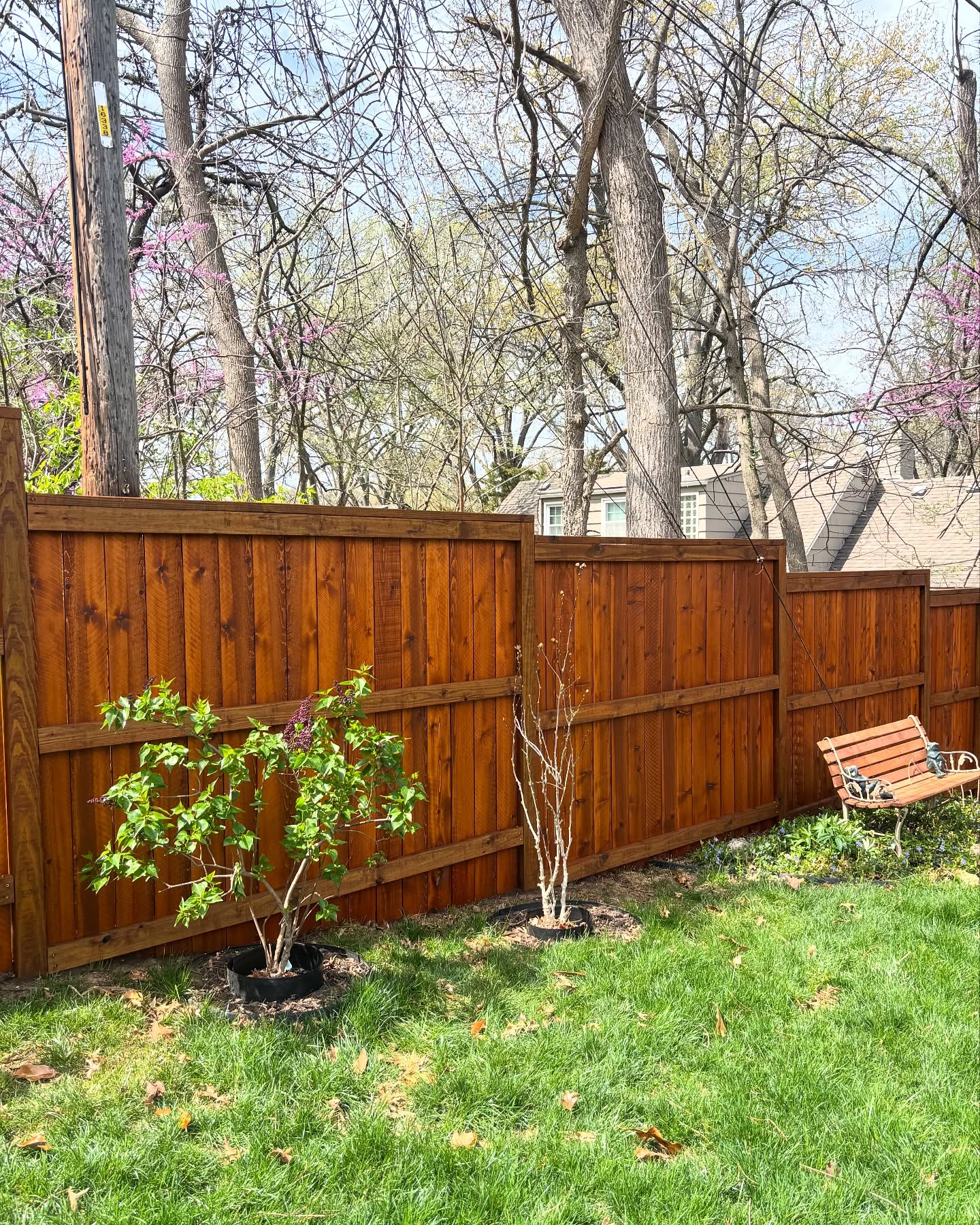
That gray, tree-shaded mid-century cedar in Prairie Village isn't spent — it's a restoration. The silver is a thin weathered skin over sound wood, and bringing it back is a sequence, not a single coat. RKC Wood Care Pros works the whole thing: probe for rot, strip any failed finish, oxalic-brighten the silver and the tannin streaks to one tone, wash and dry it hard, then lay one matched penetrating coat — restored gold or an updated caramel or espresso for a renovated home. A finish that fades instead of peeling, every coat logged and the re-coat date on your invoice so it never goes gray again. 4.9 stars from 85 Google reviews. Call (913) 286-1091 for a free walk and quote.

★★★★★
4.9
from 85 reviews
Licensed
& Insured · KS + MO
400+
fences installed
A+ BBB Rated Kansas City Fence Contractor Full Gray-Fence Restoration Sequence 2-Year Cedar / 3-Year PT Cycle
View stain options in our catalog ↓

WHY PRAIRIE VILLAGE HOMEOWNERS STAIN WITH RKC

The Gray Fence Is Almost Always Worth Saving

The reason a mid-century Prairie Village fence looks finished usually isn't that the wood gave out — it's decades of silvering under the tree canopy, a shallow weathered skin over cedar that's still sound. Bringing it back is a restoration sequence — probe, strip, brighten, wash, dry, then one matched coat — not a fresh coat over gray. Done in order it returns the fence to one deliberate run, in the original gold or an updated renovation tone, and puts it on a schedule so it never grays out again. Replacing a fence that only needed restoring is the expensive mistake we help homeowners avoid.

1

Gray is a skin, not the end

The silver on a 1950s Prairie Village cedar fence is a shallow oxidized layer over sound wood — not rot, not a spent fence. We probe first to be sure, then brighten it back. In almost every case the fence that looked ready for the dumpster restores beautifully, at a fraction of replacement, which is exactly the conversation we'd rather have than sell you a new fence you don't need.

2

Restoration is a sequence, in order

A coat laid straight over gray wood fails. Each stage of the restoration does a job — probe rules out rot, the strip reaches clean wood, the brightener evens the tone, the washes clear residue, the dry lets the wood take the finish. Run in order it lasts; skip a stage and the coat blotches or peels. The stain is just the last step of a prep that's most of the work.

3

The canopy is handled, not ignored

Prairie Village's mature maples and oaks feed mildew, drop grime, and stain cedar with tannin under the shade. A restoration that ignores that fails fast. We wash the canopy grime, brighten out the tannin and iron streaks, respect the longer dry window shade creates, and lean on a mildew-resistant pigment — so the shaded run comes back as clean as the sunny one.

4

Restored, then kept there

The point of the restoration is to get the fence onto a manageable two-year cycle so it never returns to gray. Once it's back, we log the product, tone, and next date, and the reminder comes from us. That turns the expensive one-time strip-and-restore into a routine wash-and-recoat from then on — the fence you brought back stays back.

PRAIRIE VILLAGE LOCAL CONDITIONS

Why Staining in Prairie Village Is Usually a Restoration

Three local factors shape stain work in Prairie Village: mid-century cedar that looks spent long before it is, a mature tree canopy that governs every fence's condition, and tight inner-ring lots in the middle of a luxury-renovation wave. This is a market where most calls are gray fences that need bringing back, not fresh runs that need a coat. Same crew, same standard: probe before you write off a fence, work the restoration sequence in order, and match the tone to a home that may have changed a lot since the fence went up.

1

Mid-century cedar looks spent long before it is

Prairie Village is full of 1950s and 60s ranches, and a lot of their cedar fences — spaced-picket, scalloped, cottage-style — have weathered to a deep silver under decades of tree cover. Owners see that gray and assume replacement. They're almost always wrong. The silver is a shallow oxidized layer over cedar that's still sound, and the whole restoration sequence exists to prove it: probe first to rule out rot, then strip, brighten, and coat the sound wood back to life. Replacing a mid-century fence that only needed restoring is one of the more expensive mistakes we talk homeowners out of here.

2

The tree canopy is the whole environment

The mature silver maples and oaks that make Prairie Village streets beautiful also define every fence's condition. Heavy shade keeps runs damp and grows mildew; leaf litter and pollen cake into the grain; the roots heave posts and the limbs come down in ice storms. All of it shapes a restoration: more washing to clear the canopy grime, a longer dry window on the shaded runs, a probe of the root-heaved posts, and sometimes a board replaced where an ice-storm limb cracked it. Reading the canopy is half of reading the fence — a sun-open run and a deep-shade run in the same yard restore differently.

3

Tight inner-ring lots and a renovation wave

Prairie Village lots are narrow, with the fence often close to both the neighbor's line and the house, and the town is deep in a luxury-renovation phase — teardowns and gut-remodels on old lots. Both shape the finish. The tight quarters mean careful, contained work with no overspray onto a neighbor's siding just feet away. The renovation wave means a lot of owners want the fence tone updated to match a modernized exterior — the deeper caramel and espresso tones against new grays and whites — rather than restored to its original gold. We handle the restoration and the tone update as one job.

The Prairie Village streets we've restored and stained run from the mid-century ranches of Corinth Hills and Indian Fields to the renovated homes near Meadowbrook Park, Corinth Square, and along Mission Road and Tomahawk Road — spaced-picket, scalloped cottage cedar, board-on-board, and privacy runs, most of them under a heavy canopy. Each gray one gets the same probe up front, the same strip-brighten-wash-dry sequence, and the same matched penetrating coat to close, in the original gold or an updated renovation tone. A fence another company built earns the identical treatment — sound cedar and an honest restoration have never cared whose truck showed up on install day.

HOW A GRAY FENCE COMES BACK

The Prairie Village Restoration Sequence — Stage by Stage

Before the color, the thing that decides whether a gray Prairie Village fence comes back for good is the sequence — six stages in order, each doing a job the coat can't do on its own. Here's exactly how we bring a silvered mid-century run back, what each stage accomplishes, and what goes wrong if it's skipped. The short version is that the stain is the last step of a prep that's most of the work — the fence in front of us decides how much of each stage it needs, which is why we probe and read it before quoting.

Restoration stage What happens What it does Skip it and…
1 · Assess & probe Grade how far the gray has gone and probe the ground line and root-heaved posts for soft, breaking-down fiber Separates a restorable fence from one that truly needs boards or posts replaced first You'd restore wood that's already failing — or replace a fence that only needed a coat
2 · Strip the failed finish Remove any peeling film or spent solid stain a prior owner left on the older cedar Gets down to clean, sound wood the new coat can actually key into The fresh coat bonds to a loose layer, not the wood, and re-peels within a season
3 · Oxalic brighten Neutralize the silver-gray, plus the tannin and iron staining common under old tree cover, to one even tone Reopens the weathered grain and gives the whole run a single baseline color The new color goes on blotchy over a patchwork of gray, dark streaks, and clean spots
4 · Multi-pass wash & rinse Clear mildew, leaf-litter grime from the mature canopy, and every trace of brightener residue Leaves a clean surface with nothing between the wood and the finish Residue and debris block penetration, so the coat sits thin and wears out early
5 · Hard dry & meter Let the run reach a true dry reading — longer on the shaded, tree-canopied Prairie Village lots Confirms the wood can accept a penetrating finish instead of beading it off A coat over damp restored wood flakes off and undoes the whole restoration
6 · Matched penetrating coat One tone driven into both faces with a spray-and-back-brush pair, sealed at the caps and ends Returns the restored run to reading as one deliberate fence, not a rescued one Uneven, starved, lap-marked — a coat that shows the fence was patched, not restored

The line that runs down the sequence: restoration is the prep, and the stain is only its last step — probe, strip, brighten, wash, and dry in order, or the coat blotches, re-peels, or flakes off. It's why a real gray-fence restoration costs more than a fresh coat and lasts many times longer. Want us to read whether your fence is a restore or a replace? A free staining walk probes it and brings the sample boards, or start with a new Prairie Village wood fence from the same crew that will finish it.

STAIN SERVICES

Restoration, Re-Stains & Renovation Tones — Every Prairie Village Scenario

The scope your Prairie Village fence lands in comes straight out of the probe — a gray mid-century run that needs the full restoration, a restored or maintained fence due for its two-year coat, a renovated home wanting an updated tone, or new cedar getting its first finish. Below are the four we run across Prairie Village, what each one suits, and honest per-foot numbers. Colors and tones are yours to choose; what stays fixed is the sequence — probe, restore, level the surface, lay a matched penetrating coat with a spray-and-back-brush pair, all by our own crew.

Gray-Fence Restoration by RKC Wood Care Pros in Prairie Village, KS

Gray-Fence Restoration

The Prairie Village specialty · mid-century cedar brought back

This is the heart of what we do in Prairie Village — a spaced-picket or scalloped cedar fence on a 1950s ranch that's gone silver under the maples and oaks, and looks spent but isn't. That gray is a thin weathered skin over sound cedar, and bringing it back is a sequence, not a single coat: probe for rot, strip any failed finish, oxalic-brighten the silver and the tannin streaks to one tone, wash and rinse clean, dry it hard, then one matched penetrating coat. The mature tree cover means more mildew and a longer dry window, and the ice-storm limb damage these lots see sometimes means a board or two gets replaced first — but the fence itself is almost always worth saving.

  • Price: $6–12 / LF · typically $900–1,800 per 150 LF
  • Typical use: Silver 1950s-60s cedar under mature trees, spaced-picket and scalloped runs, homes just bought in the renovation wave

Existing Cedar Re-Stain by RKC Wood Care Pros in Prairie Village, KS

Existing Cedar Re-Stain

The 2-year cycle · keeping it from graying again

Once a Prairie Village fence is back — or was never let go in the first place — the two-year re-coat is what keeps it there. On schedule it's a soft wash to lift oxidation and mildew, a meter check for the dry window on the shaded runs, then the matched color driven into both faces. We log your exact product and color the day we finish, so the re-coat pulls the same can and lands even. On the narrow inner-ring lots, where a fence sits close to the neighbor's and the house, that consistency is what keeps the cottage look intact. Your next date goes on the invoice.

  • Price: $4–8 / LF · typically $600–1,200 per 150 LF
  • Typical use: Restored runs kept on cycle, spaced-picket and cottage-style cedar, straight refreshes on the tight mid-century lots
Tone-Matched Renovation Finish by RKC Wood Care Pros in Prairie Village, KS

Tone-Matched Renovation Finish

For the teardown-rebuilds · caramel, espresso, walnut

The renovation wave rolling through Prairie Village — new high-end homes on old lots, and 1950s ranches gutted and modernized — wants a fence finish that reads with the updated exterior. That usually means a deeper, richer tone: caramel, espresso, or walnut against the modern grays and whites these remodels wear, rather than the orange-gold of an untended cedar. We prove the tone on a hidden board so you see it against your actual paint before the run goes on, then lay it as a penetrating coat that fades gracefully. It's the finish that makes a fence look like part of the renovation, not a leftover from before it.

  • Price: $4–7 / LF · typically $600–1,050 per 150 LF
  • Typical use: New builds and gut-renovated ranches, modern gray-and-white exteriors, owners matching the fence to an updated home
New-Install First-Coat Stain by RKC Wood Care Pros in Prairie Village, KS

New-Install First-Coat Stain

The opening system on every RKC Prairie Village build

The coat that keeps a new Prairie Village cedar fence from ever needing the restoration above. Fresh cedar needs roughly four weeks for the internal moisture to fall far enough that a penetrating finish keys into the grain instead of beading off. On these tight, tree-shaded lots we watch the dry window closely and match the tone to the home — often one of the deeper renovation tones. Get this coat on right and the fence starts its life protected, then rides the two-year schedule instead of drifting to gray. Plenty of our cedar packages carry this first coat inside the install price — worth asking Josh when he walks it.

  • Price: $3–6 / LF · typically $450–900 per 150 LF
  • Typical use: Fresh cedar on renovated lots, spaced-picket and privacy runs, locking the finish in from week one
Gray-fence restoration and cedar stain pricing — Prairie Village, KS — RKC Wood Care Pros

PRAIRIE VILLAGE STAIN PRICING

What Fence Staining Costs in Prairie Village

What a Prairie Village job costs rides on how far the fence has grayed — a full restoration of a silvered mid-century run runs a multiple of a routine re-coat, because the restoration is the whole strip-brighten-wash-dry sequence, not just the color. Each quote folds in the probe, the strip and brighten where the wood's grayed, the multi-pass wash, the metered dry window on the shaded runs, the matched penetrating coat by our own two-person crew, and a written date for the next one. The three setups we price most often for Prairie Village homes are below.

Gray-Fence Restoration

$6–12 / LF

probe · strip · brighten · stain

The full sequence: a rot probe, failed finish stripped, silver and tannin brightened to one tone, multiple washes, a hard dry, then a matched penetrating coat. A weathered 150 LF Prairie Village run is usually $900–1,800, quoted from how far the gray has gone.

Cedar Re-Stain

$4–8 / LF

wash + penetrating stain

The two-year coat that keeps a restored run from graying again — soft wash, a meter check on the shaded runs, the matched family into both faces, and your next date in writing. Most 150 LF Prairie Village runs settle near $600–1,200.

Tone-Matched Renovation Finish

$4–7 / LF

tone-proofed penetrating coat

A deeper caramel, espresso, or walnut proofed on a hidden board against your updated exterior, then laid as a penetrating coat. A 150 LF renovated Prairie Village run generally lands at $600–1,050.

A restoration number comes only after an on-site probe of how far the gray has gone and whether any boards or root-heaved posts need work first — that look is exactly what stops you paying restoration rates on a fence that only wanted a routine coat, or replacing one that only needed restoring. Every Prairie Village estimate is free, written, and itemized — call (913) 286-1091 or set up a walk. While the crew's on site they can flag any Prairie Village fence repair — an ice-cracked board, a root-heaved post — the restoration needs first — one trip, same hands.

OUR STAIN PROCESS

How a Prairie Village Stain Job Comes Together

Four steps from the phone call to the final walk. A Prairie Village restoration usually spans 3 to 5 days — because the restoration sequence, not the coat, is most of the work. The stain itself is a single day at the end. The rest of the clock is the probe, the strip-brighten-wash cycle, and the dry window the shaded runs stretch out. Here's what each step looks like on a Prairie Village fence.

1

Walk it, probe for rot, read the canopy

Step one on a gray Prairie Village fence is deciding whether it's a restoration or a replacement — and it's almost always the former. Josh or a lead measures the footage, grades how far the silver has gone, and probes the ground line and any root-heaved posts for soft fiber, because the tree cover and tight lots here produce the rot that decides it. We read the canopy too: which runs sit in deep shade and will dry slow, which took ice-storm limb damage. Estimate's free and itemized, and we brush a tone sample on a hidden board so you judge the color — restored gold or an updated renovation tone — on your own wood.

2

Strip, brighten, wash, and dry the sequence out

This is the restoration itself, and it runs in order for a reason. Any failed film gets stripped to clean wood; an oxalic brightener neutralizes the silver and the tannin and iron streaks that old tree cover leaves, bringing the whole run to one baseline tone; multiple washes clear the canopy grime and the brightener residue. Then, because the shaded Prairie Village runs dry slowest, the meter goes on the wettest section and nothing opens until it reads ready. Skip or rush any stage — as the sequence table shows — and the coat either blotches, re-peels, or flakes off damp wood.

3

Lay one matched tone, spray and back-brush

Surface restored and dry, we load the matched family — the original gold or a deeper renovation tone — and put it on the one way that works: a sprayer moving the finish, a second hand right behind back-brushing it into the reopened grain before it sets. On the narrow inner-ring lots that pairing also lets us keep the work contained and controlled, no overspray onto a neighbor's siding feet away, and on a spaced-picket run it works the finish onto every edge and gap the cottage profile leaves exposed. The restored fence reads as one deliberate run, not a rescue.

4

Walk it together, then log the schedule

Last is your eyes alongside ours — a full pass catching any board that reads thin or skipped, touched in on the spot before we sign off. Then the finish lands on your file: the date, the product family, the exact tone, the footage, and when the next coat is due. That record is what keeps a just-restored Prairie Village fence from ever going back to gray — it goes onto the two-year schedule, the reminder comes from us, and the expensive restoration you just paid for becomes a routine re-coat from here on.

RECENT PRAIRIE VILLAGE STAIN JOBS

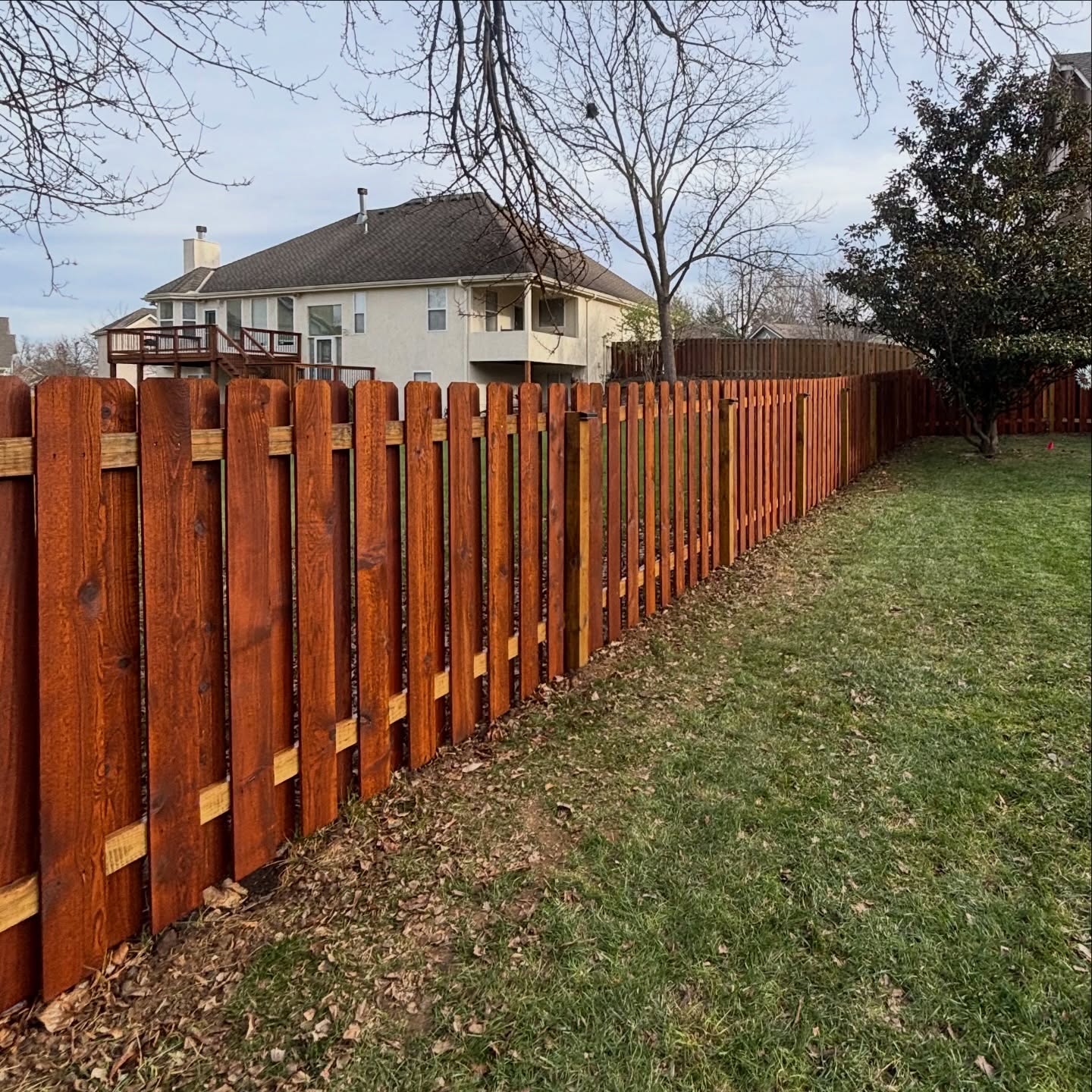
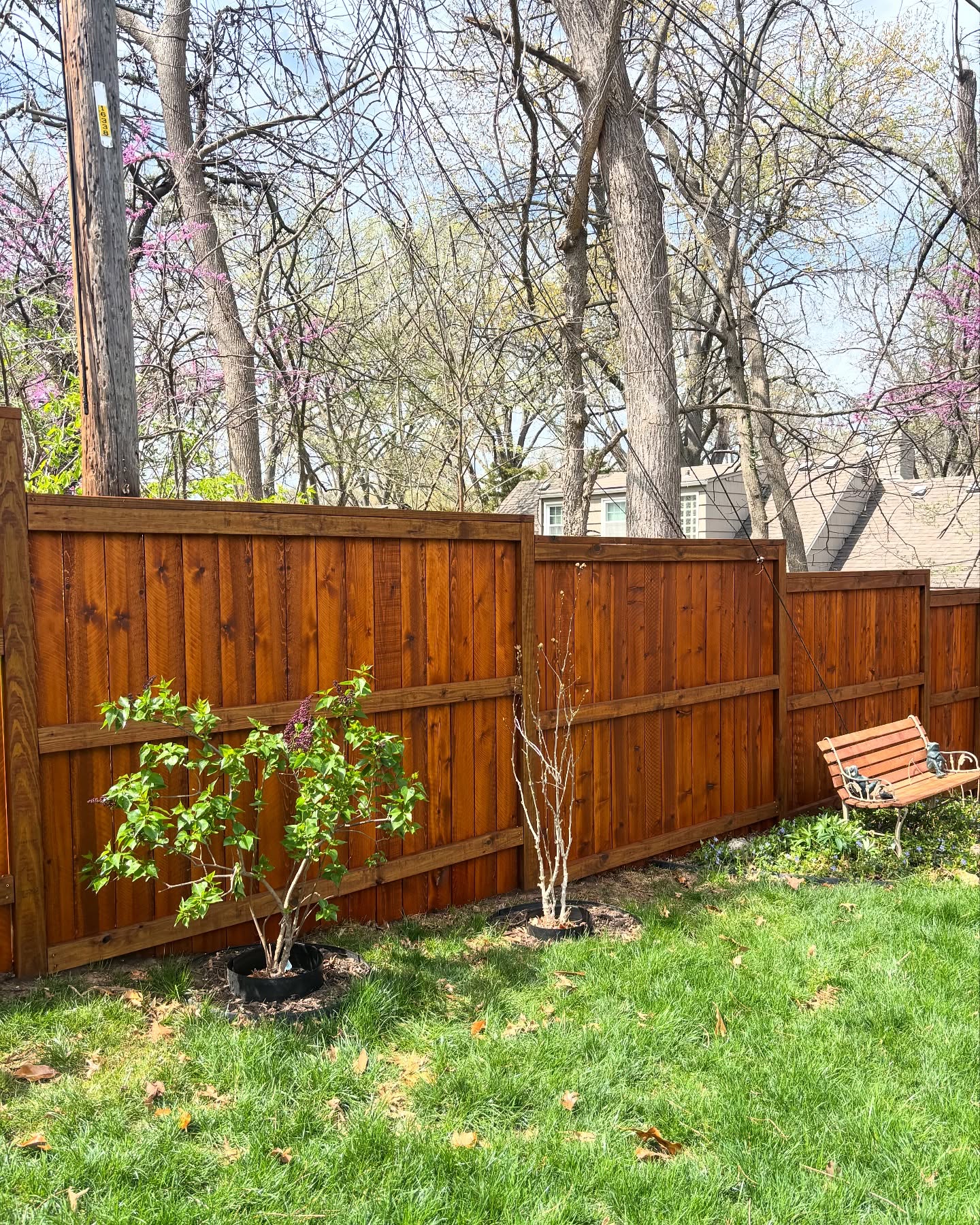
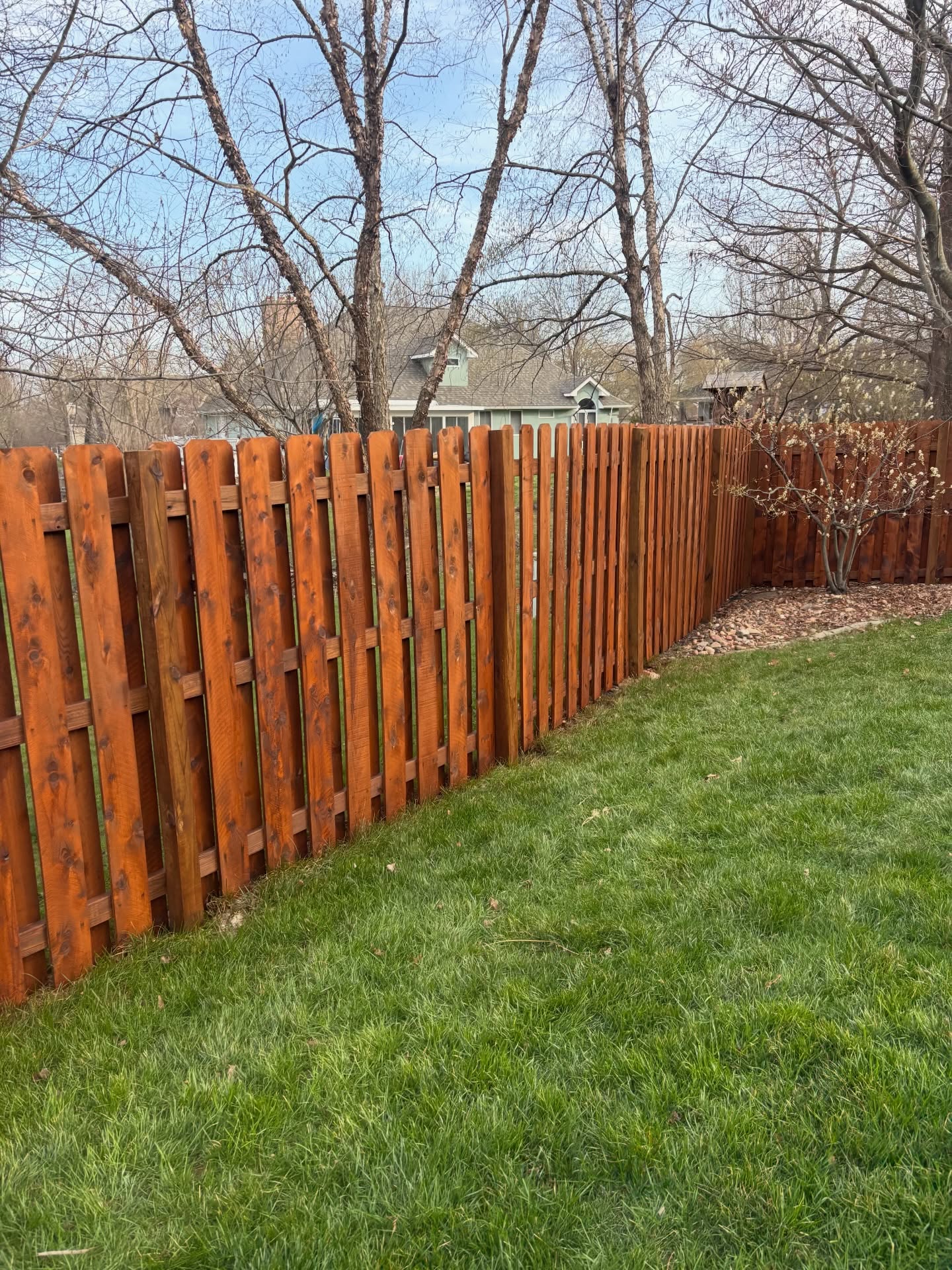
Spaced-picket cedar restored to a golden finish in Prairie Village, KS by RKC Wood Care Pros
Restored Spaced-Picket · Prairie Village
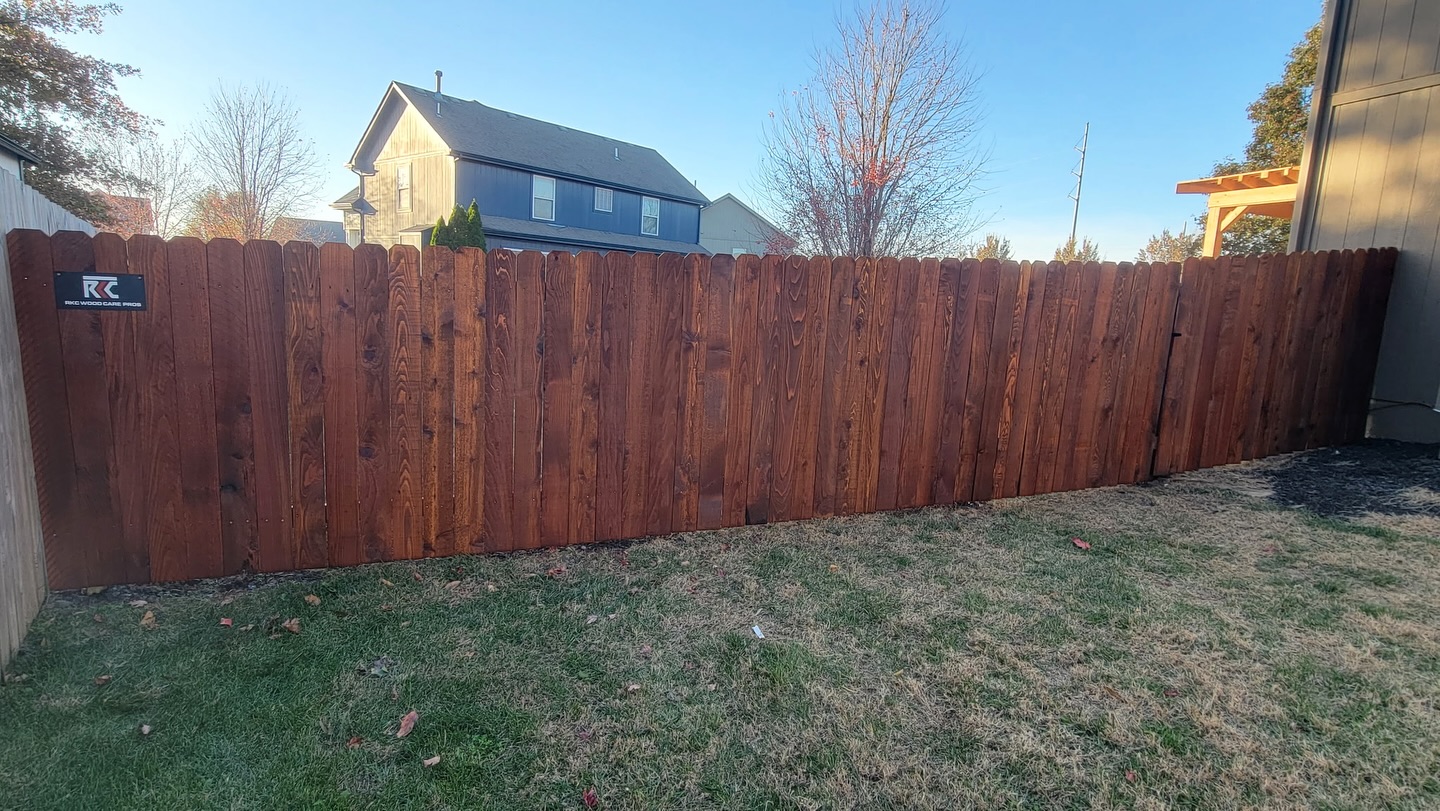
Cedar fence staining project underway in Prairie Village, KS
Restoration Underway · Prairie Village
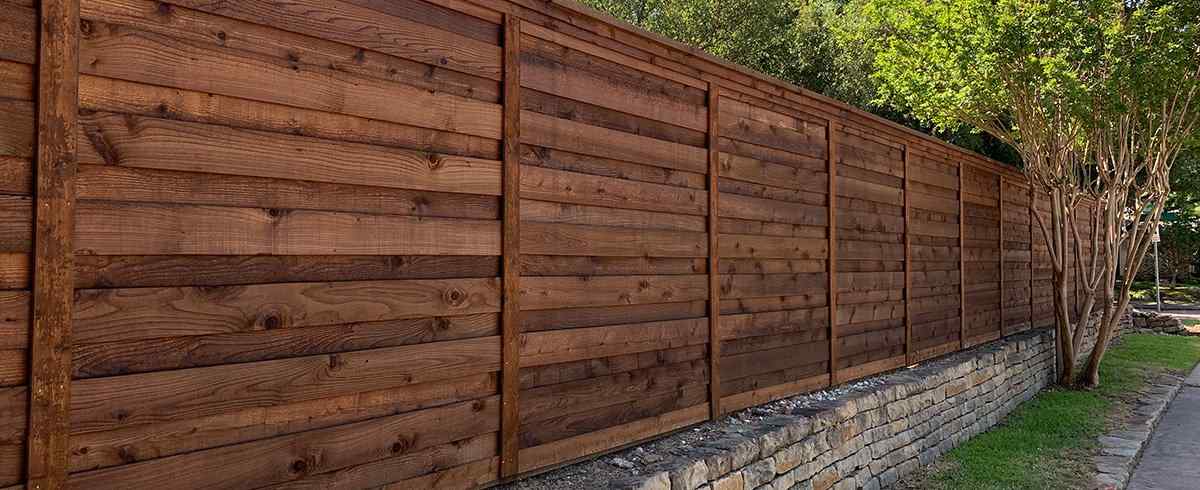
Renovation-tone cedar finish in Prairie Village, KS
Renovation Tone · Prairie Village
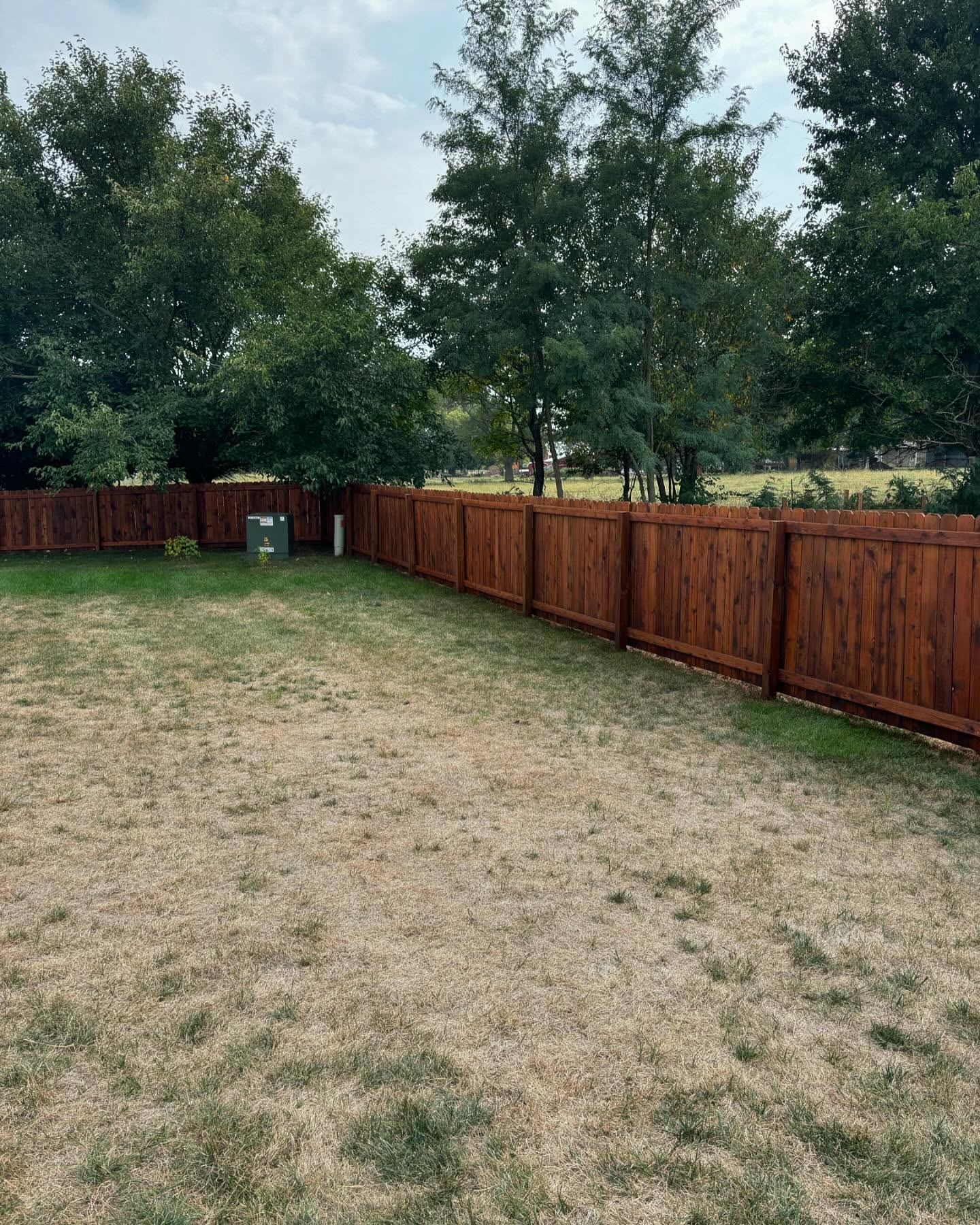
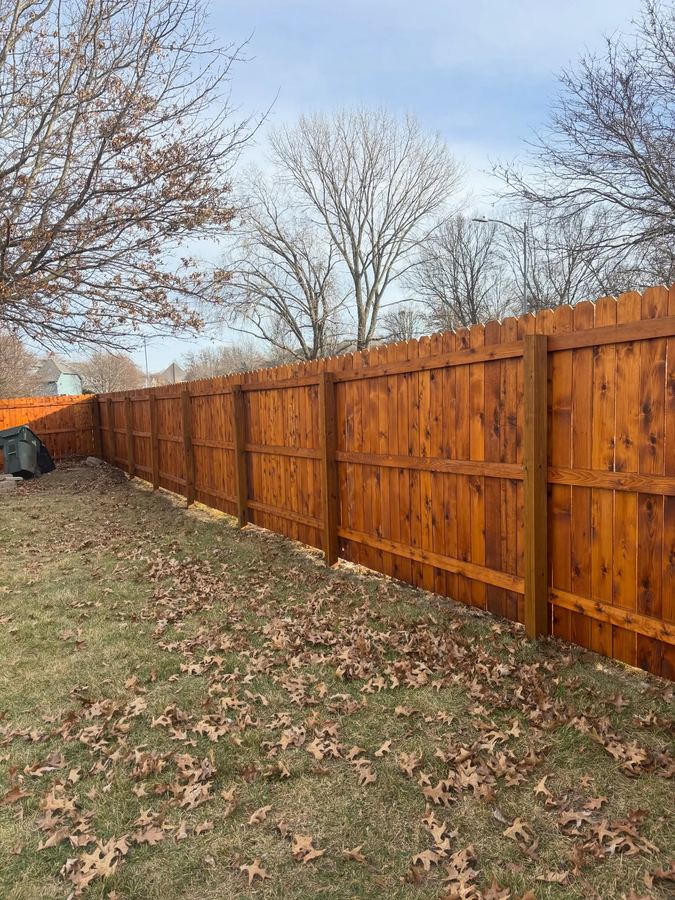
Cedar fence after full restoration and staining in Prairie Village, KS
Restored & Sealed · Prairie Village

REVIEWS

What Kansas City Homeowners Say About RKC

4.9 ★ · 85 Google reviews

Every review is on our Google Business Profile — read them there, unedited.

Read all 85 reviews on Google

PRAIRIE VILLAGE STAIN QUESTIONS

Stain Questions Prairie Village Homeowners Ask Most

Three questions decide most Prairie Village stain jobs: whether a gray mid-century fence is worth restoring, how to match a fence to a renovated home, and how the tree canopy changes the work. These are the ones Prairie Village homeowners raise at the walk — sorted by topic, each answer tied to the restoration sequence, the renovation tones, and the shade the mature canopy throws. Don't see yours? Call (913) 286-1091 and ask.

Prairie Village, KS fence restoration and staining by RKC Wood Care Pros

Gray-Fence Restoration

My mid-century fence is completely gray — is it worth restoring or should I replace it?
Restore it, in almost every case — replacing a mid-century Prairie Village fence that only needed restoration is one of the more expensive mistakes we help owners avoid. The gray on a 1950s or 60s cedar run is a thin weathered skin over wood that's still sound; the restoration sequence above brings it back: we probe first to rule out rot, then strip any failed finish, oxalic-brighten the silver to one tone, wash and dry it, and lay a matched coat. The only time we recommend replacing boards or posts is where a probe finds soft, breaking-down fiber — often a root-heaved post — and even then it's usually a few boards, not the whole fence.
Why is restoration a whole sequence and not just a fresh coat of stain?
Because a coat laid straight over gray wood fails — and the sequence is what makes it last. Each stage does a specific job: the probe rules out rot so you don't finish a failing fence; the strip gets to clean wood so the coat bonds; the oxalic brightener neutralizes the silver and the tannin streaks so the color lands even instead of blotchy; the washes clear residue; the hard dry lets the wood accept the finish. Skip any one — as the sequence table lays out — and you get a coat that re-peels, blotches, or flakes off. Restoration is the prep; the stain is just the last step of it.
There are dark streaks and stains on my cedar under the trees — can those come out?
Usually, yes. Cedar under a heavy Prairie Village canopy tends to develop two kinds of dark marks: tannin bleed from the wood itself, and iron staining where old nails or hardware have rusted. Both respond to the oxalic brightener that's already part of the restoration — it neutralizes the tannin discoloration across the run and we spot-treat the iron points at their source. The heavy mildew that shade produces washes off in the same prep. What you're left with after brightening is one even, clean tone ready to take a coat, instead of the streaked patchwork you started with.

Tone & Renovation Matching

Can you match the fence to my renovated home's modern colors?
That's a common ask here, given how many Prairie Village homes are being gutted and modernized. Instead of restoring an old cedar fence to its original orange-gold, a lot of owners want a deeper tone — caramel, espresso, or walnut — that reads with the modern grays and whites a renovation wears. We can do either: bring it back to the classic look, or update the tone as part of the restoration. Either way we prove the color on a hidden test board against your actual exterior before committing the run, because a tone that looks right on a chip can read completely different next to your siding.
Will a spaced-picket or scalloped fence take stain the same as a solid one?
It takes the same finish, but it asks for more careful application, which suits how we work here. A spaced-picket or scalloped cottage fence — the Prairie Village signature — has far more exposed edges, gaps, and end-grain than a solid privacy run, and every one of those surfaces needs the finish worked into it or it'll gray there first. The spray-and-back-brush pairing is what gets the coat onto all those faces and edges evenly. It's a bit more labor per foot than a flat solid run, but it's the only way a picket fence comes out looking uniformly finished rather than coated only on the easy faces.

Timing, Trees & Schedule

My fence is under heavy shade — does that change the staining?
It does, and most Prairie Village fences are shaded to some degree by the mature canopy. Shade means slower drying, so we watch the meter more closely and won't rush a coat onto a run that hasn't dried through — a coat over damp shaded wood flakes off. Shade also means more mildew, so the prep is more thorough and we lean on a mildew-resistant pigment. A deep-shade run will generally want its cleaning a touch more often than a sun-open one, but it stains and holds fine — the key is respecting the longer dry window rather than working to a fixed calendar.
How often will a Prairie Village fence need re-staining once it's restored?
Figure roughly every 2 years for cedar, with the shaded runs favoring the shorter end because of the mildew the canopy feeds. The whole point of the restoration is to get the fence back onto that manageable cycle — a two-year wash-and-recoat is a fraction of the effort and cost of the full strip-brighten-restore sequence you needed to recover it from gray. Your next date goes on the invoice, and we're the ones who circle back when it arrives, so the fence you just brought back never drifts to silver again. Staying on schedule is what keeps restoration a one-time event.

OTHER PRAIRIE VILLAGE FENCE SERVICES

More Fence Services Available in Prairie Village

Each link below keeps you in Prairie Village — its own page, with pricing, conditions, and recent job photos tied to this city rather than the metro at large. Weighing a fresh install, a repair, a gate, or one specific material alongside the staining? Here's where each of those picks up.

Prairie Village Fence Installation

Cedar spaced-picket, scalloped, and privacy fences built across Prairie Village's tight inner-ring lots, every post concreted three feet down and one in-house crew from estimate through the last board.

Prairie Village Fence Installation →

Fence Repair in Prairie Village

Ice-storm limb-damage rebuilds, root-heaved post resets, rotted-board swaps, and gate-pinch fixes as the old soil shifts — the structural work that sometimes comes before a gray fence can be restored.

Fence Repair in Prairie Village →

Gate Installation in Prairie Village

Walk and drive gates sized for narrow mid-century lots, on welded frames and concreted posts, finished to the same restored or renovation tone as the run they hang on.

Gate Installation in Prairie Village →

Prairie Village Wood Fence Installation

Cedar spaced-picket, scalloped cottage, board-on-board, and privacy — installed by the same crew that returns to key that first penetrating coat into the grain.

Prairie Village Wood Fence Installation →

Prairie Village Privacy Fence Installation

Solid and board-on-board cedar privacy screens that keep the classic look on close inner-ring lots — the wood ones folded straight into the re-coat schedule we track.

Prairie Village Privacy Fence Installation →

Prairie Village Fence Installation Hub

The full Prairie Village overview — every material, from the mid-century ranch streets to the gut-renovated homes where we've installed and restored cedar fences.

Prairie Village Fence Installation Hub →

Ready when you are

Get a free estimate — we usually respond the same day.

Call (913) 286-1091