Skip to content
Fence Staining & Sealing in Mission, KS — Making a Patched Fence Read as One

Fence Staining & Sealing in Mission, KS — Making a Patched Fence Read as One

Mission is a repair-and-replace town — decades of patch jobs, cedar spliced into old runs, one-side-yours-one-side-the-neighbor's. So the real staining problem here isn't a clean uniform run; it's making a fence that isn't uniform read as one. RKC Wood Care Pros brightens the whole run to a single baseline, then blends the coat board by board — a hair more pigment where new wood would stand out, the right product where pine meets cedar, both faces leveled where the tree canopy weathered them differently. Sealed in-house, every coat logged so the blend holds. 4.9 stars from 85 Google reviews. Call (913) 286-1091 for a free walk and quote.

★★★★★
4.9
from 85 reviews
Licensed
& Insured · KS + MO
400+
fences installed
A+ BBB Rated Kansas City Fence Contractor Blend-and-Match Coats Sealed In-House, Logged & Scheduled
View stain options in our catalog ↓

WHY MISSION HOMEOWNERS STAIN WITH RKC

Making the Pieces Read as One

Most Mission fences weren't built all at once. They're patched, spliced, upgraded a section at a time, weathered darker on the shady side than the sunny one. So a good coat here does more than protect the wood — it blends a fence that isn't uniform back into one even, intentional run. We brighten the whole thing to a single baseline, then match the finish board by board — more pigment where new wood would stand out, the right product where two woods meet, both faces leveled. A penetrating finish that fades instead of peeling, every coat logged so the blend holds.

1

The patch disappears

A repaired section is fresh and thirsty; the old wood around it is weathered and sealed-out, so one coat lands two colors and the patch reads as a bright rectangle. We brighten the whole run to one baseline, then carry a hair more pigment on the new boards so they drink down to match. Done right, you can't find where the repair was.

2

The two-tone weathering evens out

Mission's tree canopy silvers the shaded, damp faces while the sunny gaps bleach — the same fence aging at two rates. We brighten both to one tone, kill the mildew on the shaded side, then weight pigment to the sun face so both reach the next coat together. The fence reads one even color instead of dark-on-one-side, faded-on-the-other.

3

Two woods, one fence

Pine and cedar take stain differently — pine skins over a waterborne, cedar drinks it — so a single product across a mixed run reads uneven. We match the product to each wood and blend the tone across the seam. A pine repair on a cedar run, or a mixed-material line, ends up looking like one fence rather than two bolted together.

4

A finish that fades, never peels

Blending only holds if the coat wears evenly, so we lay penetrating finishes that soak into the grain and fade rather than film-forming ones that peel — worse on the damp shaded faces Mission's canopy creates. Re-coating is a wash and a fresh matched coat, not a scrape. That's what keeps a blended fence reading as one over the years instead of drifting back apart.

MISSION LOCAL CONDITIONS

Why Staining in Mission Is a Blending Job

Three local factors shape stain work in Mission: a repair-and-replace history that fills the city with patched, mixed fences, the tree canopy that weathers a single fence at two rates, and the low-HOA freedom that fills the streets with custom mixed-lumber builds. This is an established inner-ring city where almost no fence is a clean uniform run. Same crew, same standard: map what needs blending, brighten to one baseline, match the coat board by board, and log the schedule so the blend holds.

1

A repair-and-replace town of patched, mixed fences

Mission is an established, gentrifying inner-ring city built out in the 1940s and 50s, and its fences show it — decades of patch jobs, cedar sections spliced into older runs, chain-link lines upgraded one stretch at a time, and plenty of mixed fencing where one side is your wood and the other is the neighbor's. That history is what makes staining here its own problem: the run in front of us is rarely uniform. So the craft here is less about laying a coat than blending — brightening to one baseline and adjusting the finish board by board so a fence that was built in pieces reads as a single, intentional whole.

2

The tree canopy weathers a fence unevenly

Mission's mature 1940s and 50s tree canopy is the thing that keeps soil damp and post bases rotting years early — and it does the same to the finish. A shaded, damp north or east face silvers and grows mildew while a sunny gap in the same fence bleaches out, so even a single-age run ages at two different rates. That means blending isn't only for patched fences; almost every Mission re-stain has to reconcile a dark, mildewed side with a faded one. We brighten both to one tone and weight the pigment to the sun face so the whole fence reaches its next coat together, reading one color.

3

Low-HOA freedom means custom, mixed builds

Mission has few HOAs, which gives the city its eclectic character — lots of horizontal-slat, taller, and mixed-material fences that you don't see in the covenant-run suburbs. Those design-forward builds are great, but they often mix board stock within a run, and each variation takes stain a little differently. So we sample on the actual boards, adjust the coat rate across them, and back-brush every one, so a custom horizontal or a taller privacy build reads consistent end to end. The freedom that makes Mission fences interesting is also why matching the finish across them takes a careful hand.

The Mission fences we've stained and blended back run from the close-set 1940s and 50s streets around Countryside and Mission Hill Acres to the gentrifying blocks near Johnson Drive, Metcalf, and Shawnee Mission Parkway — patched cedar runs, chain-link upgrades gone up next to older fences, mixed pine-and-cedar lines, and canopy-shaded runs weathered dark on one face. Each one gets the mismatch mapped up front, the whole run brightened to one baseline, the coat matched board by board, and the posts probed where the shade keeps them damp. A fence built in pieces by a dozen different hands earns the same result — one that finally reads as a single fence.

MATCHING A MISMATCHED FENCE

The Blend-and-Match Matrix — Making Six Mismatches Read as One

On a Mission fence the hard part usually isn't the coat itself — it's blending a run that was built, repaired, and weathered in pieces so it reads as a single fence. Here are the six mismatch situations we handle most across Mission: what each one is, why it fights a single even look, how we blend it, and the result. The through-line is the same every time — brighten to one baseline, then adjust the coat board by board so the seam, the patch, or the two-tone weathering disappears.

The mismatch Why it fights a single look How we blend it The result
New boards spliced into an old run A repaired section is fresh, light, and thirsty; the old wood around it is weathered and sealed-out — one coat lands two different colors We brighten the whole run to one baseline, then carry a hair more pigment on the new boards so they drink down to match the old The patch disappears into the run instead of standing out as a bright rectangle
A cedar upgrade beside a weathered neighbor's fence Your new run reads bright against an older, grayer fence a few feet away, and the eye jumps to the contrast We pick a tone that sits comfortably next to the neighbor's weathering and pre-stain the new cedar so it isn't glaring day one The two fences read as neighbors, not as a before-and-after
One fence, a shaded side and a sunny side Mission's tree canopy silvers the damp shaded face while the sunny gap bleaches — the same fence ages at two rates We brighten both to one tone, then weight pigment to the sun face so both sides reach the next coat together The fence reads one even color instead of dark-on-one-side, faded-on-the-other
Two woods on the same fence A pine repair on a cedar run, or a mixed-material line, takes stain differently — pine skins, cedar drinks — so a single product reads uneven We match the product to each wood (oil on the pine, the right family on the cedar) and blend the tone across the seam The fence looks like one fence, not a cedar section bolted to a pine one
A custom or horizontal build with mixed lumber Mission's low-HOA freedom means lots of custom horizontal and taller builds where board stock varies within the run We sample on the actual boards, adjust the coat rate board by board, and back-brush every one so the grain reads consistent A design-forward fence that looks intentional end to end, not stitched together
A gate that never matched the run Gates are often a different age or wood than the fence and end up a shade off, which the eye catches first We fold the gate into the same brighten-and-coat pass, matching its tone to the run it hangs on The gate reads as part of the fence, the way it should

The line that runs down the matrix: a Mission fence rarely starts uniform, so the coat's real job is to reconcile the pieces — bright new wood, weathered old wood, two woods, two faces — into one even finish. Want us to map what your run needs blended? A free staining walk does exactly that, or pair it with Mission fence repair so the patched-in boards get folded straight into the matched coat.

STAIN SERVICES

Blends, Re-Stains & Restoration — Every Mission Scenario

The scope your Mission fence lands in comes straight out of the read — a blend-and-match coat on a patched or mixed run, a straight re-stain that levels the shade-and-sun weathering, a cure-timed first coat on new or converted cedar, or a brighten-and-restore on a silvered, mildew-blotched run. Below are the four we run across Mission, what each one suits, and honest per-foot numbers. Colors are yours to choose; what stays fixed is the sequence — brighten to one baseline, meter for dry wood, match the coat board by board with a spray-and-back-brush pair, all by our own crew.

Blend-and-Match Coat by RKC Wood Care Pros in Mission, KS

Blend-and-Match Coat

The Mission specialty · making a patched fence read as one

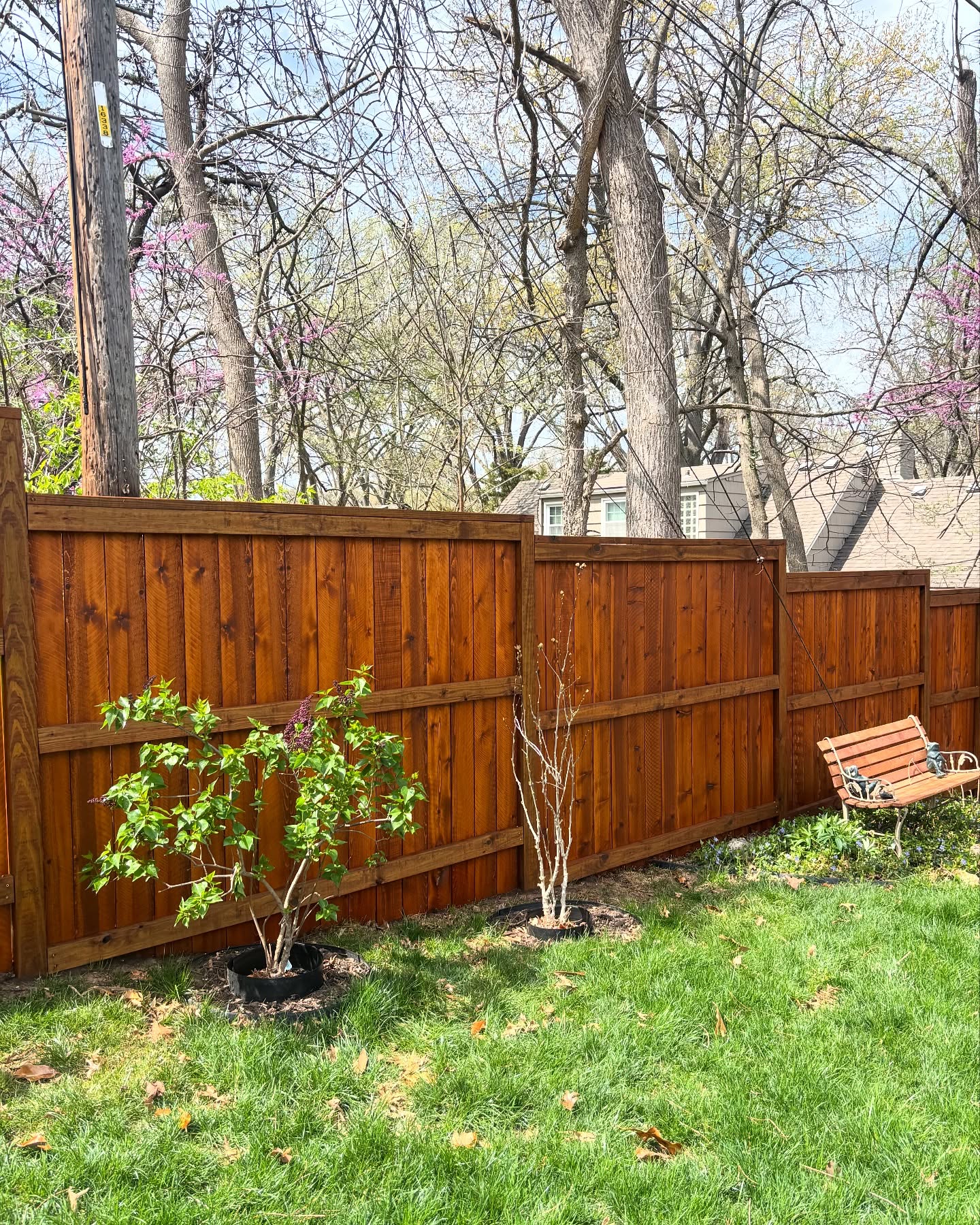
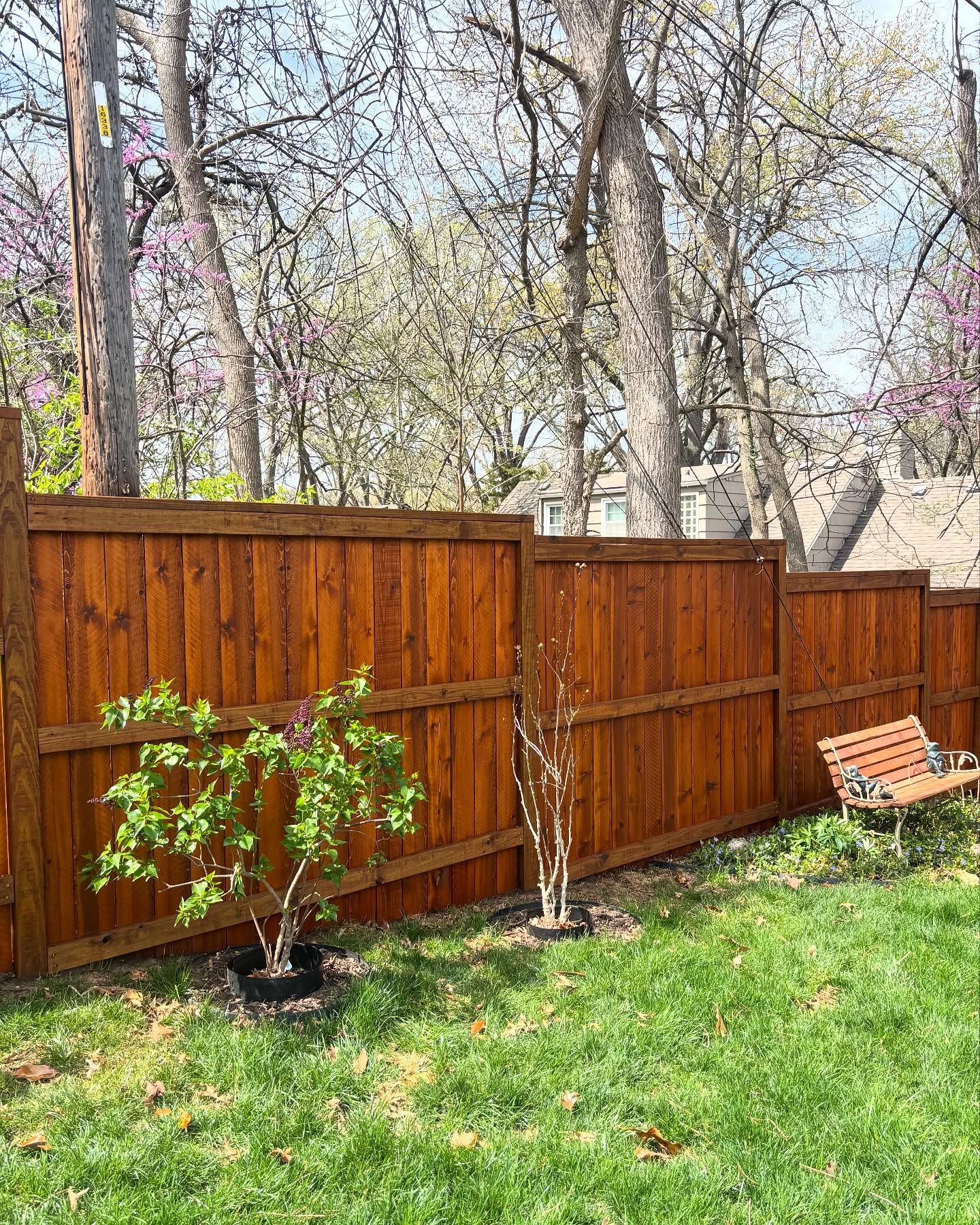
Mission is a repair-and-replace town — decades of patch jobs, cedar sections spliced into older runs, one-side-wood-one-side-the-neighbor's fences. So the staining problem here is rarely a clean uniform run; it's making a fence that isn't uniform read as one. We brighten the whole thing to a single baseline, then adjust the coat board by board — a hair more pigment where new wood would otherwise stand out bright, the right product where a pine repair meets cedar — so the patch, the seam, and the two-tone weathering all disappear into one even finish. It's the coat that turns a mismatched fence back into a single fence.

  • Price: $5–9 / LF · typically $750–1,350 per 150 LF
  • Typical use: Patched runs, new-in-old repairs, mixed-wood lines, and fences that upgraded one section at a time
Cedar Re-Stain by RKC Wood Care Pros in Mission, KS

Cedar Re-Stain

The 2-year cycle on a dense Mission lot

A cedar fence on its cycle needs a coat about every two years to keep reading like cedar instead of drifting to silver. On Mission's close-set, canopy-shaded lots the catch is uneven weathering: the shaded, damp faces silver and grow mildew faster than the sunny gaps, so a straight re-coat has to level that out. On the day it's a soft wash to lift the mildew and oxidation, a meter check for the dry window, then the matched color driven into both faces — weighted to bring the two rates back together. We log your product and color so the next coat matches board for board.

  • Price: $4–8 / LF · typically $600–1,200 per 150 LF
  • Typical use: Cedar dog-ear, shadowbox, and privacy runs across Mission's shaded 1940s and 50s lots
New-Cedar & Conversion First Coat by RKC Wood Care Pros in Mission, KS

New-Cedar & Conversion First Coat

Fresh cedar and chain-link upgrades · timed to the cure

A lot of Mission's new cedar goes up as an upgrade — replacing old chain link, or trading a tired fence for a solid one. That new run reads bright against the weathered fences around it, so the first coat is partly a blending job: we time it to the wood's cure (about a month for cedar so a penetrating finish keys in), then pick a tone that sits comfortably next to the neighbor's older fence instead of glaring. Many owners pre-stain the new cedar so it's never bright-and-bare next to an aged run. We log it so the re-coat two years out matches.

  • Price: $3–6 / LF · typically $450–900 per 150 LF
  • Typical use: Fresh cedar replacing old chain link, the opening coat after any RKC install, tone-set to sit in the block
Gray-Fence Restoration by RKC Wood Care Pros in Mission, KS

Gray-Fence Restoration

Bringing a weathered Mission run back

A Mission cedar fence left unsealed under the tree canopy goes silver and mildew-blotched, often unevenly — dark on the shaded, damp faces, faded on the sunny gaps. That gray is a thin weathered skin over sound wood, but the restoration has to bring the whole run back to one tone before a fresh coat can look even. We strip any failed finish, kill the mildew, brighten with an oxalic treatment to a single baseline, wash and hard-dry, then lay one penetrating coat. Where the shade has kept a post base wet, we probe it first — stain never goes over soft, rotting fiber.

  • Price: $6–12 / LF · typically $900–1,800 per 150 LF
  • Typical use: Silvered mildew-blotched cedar under the canopy, homes just changed hands, fences never sealed

Cedar fence blend-and-match stain pricing — Mission, KS — RKC Wood Care Pros

MISSION STAIN PRICING

What Fence Staining Costs in Mission

What a Mission job costs rides on how much blending the run needs — a straight re-stain on a uniform fence is one number, a patched, mixed-wood, or two-tone run that has to be brought to one baseline and matched board by board runs a little more. Each quote folds in the mismatch map, the wash, the mildew kill and brighten to one baseline, the metered dry window, the matched penetrating family blended across the run, the spray-and-back-brush pass by our own two-person crew, and a written next date. The three setups we price most often for Mission homes are below.

Blend-and-Match Coat

$5–9 / LF

brighten + matched penetrating stain

The Mission specialty — the whole run brightened to one baseline, then the coat adjusted board by board so patches, seams, and two-tone weathering disappear. Most 150 LF mixed runs settle near $750–1,350.

Cedar Re-Stain

$4–8 / LF

wash + penetrating stain

The 2-year coat that levels the shade-and-sun weathering — soft wash, mildew lift, meter check, matched color into both faces, and your next date in writing. Most 150 LF Mission cedar runs land at $600–1,200.

Gray-Fence Restoration

$6–12 / LF

strip · brighten · stain

Failed finish stripped, mildew killed, the run brightened to one tone, washes, a shaded-post check, then a penetrating coat. A weathered 150 LF Mission run is usually $900–1,800.

A blend-and-match number comes only after an on-site look at how mismatched the run actually is and whether the shade has left any post base or bottom board soft — that check is what stops you paying to blend a fence that only wanted a routine coat, or coating over rot. Every Mission estimate is free, written, and itemized — call (913) 286-1091 or set up a walk. While the crew's on site they can fold any Mission fence repair — a shade-rotted board or post — straight into the matched coat — one trip, same hands.

OUR STAIN PROCESS

How a Mission Stain Job Comes Together

Four steps from the phone call to the final walk. Most Mission stain jobs span 2 to 4 days — and the blending, mapped first and matched last, is what makes the run read as one. The coat itself is usually a single day on site for a standard run. The rest of the clock is the mismatch map, the brighten-to-one-baseline cycle, and the metered dry window the shaded lots complicate. Here's what each step looks like on a Mission fence.

1

Walk it and map what needs blending

Step one on a Mission fence is a read that most companies skip: where the run isn't uniform. Josh or a lead measures the footage, identifies the wood — often more than one on a patched run — takes a moisture reading, notes which faces the canopy has shaded and which the sun has bleached, and probes the post bases the shade keeps damp. We flag the patches, the seams, the mismatched gate, the two-tone weathering. That map is what the whole job is built around, because on a Mission fence the goal is a coat that makes the pieces read as one. The estimate's free, itemized, and sampled on a hidden board.

2

Brighten the whole run to one baseline

Before any color goes on, we bring the entire run to a single starting tone — this is the step that makes blending possible. A soft wash lifts the mildew the canopy grows and the oxidation on the weathered boards; an oxalic brightener neutralizes the gray, dark on the shaded faces and light on the sunny ones, down to one baseline; any failed film gets stripped. Then the meter goes on the wood, because Mission's shaded lots hold moisture unevenly and a damp board reads dry on the surface. Only once the whole run is at one tone and truly dry does the finish go on — otherwise the mismatch you started with shows right through the coat.

3

Lay the coat and match it board by board

With the run at one baseline, we load the matched family and blend it on: a sprayer moving the finish, a second hand back-brushing it into the grain. Where a repaired section is fresh and thirsty, we carry a hair more pigment so it drinks down to the old wood's tone instead of standing out bright. Where a pine repair meets cedar, we match the product to each. On the shaded-and-sunny faces we weight pigment to the sun side so both reach the next coat together. Board by board, the patch, the seam, and the two-tone weathering blend into one even finish — the whole point of a Mission coat.

4

Walk it together, then log the finish

Last is your eyes alongside ours — a full pass along the run looking specifically for any spot where the blend didn't take, a patch reading a shade bright or a seam still showing, touched in on the spot before we sign off. Then the finish lands on your file: the date, the woods, the product family or families, the exact color, the footage, and when the next coat is due — two years for cedar. That record is what lets the re-coat hold the blend you paid for, and why the reminder comes from us. On a fence built in pieces, a logged, matched coat is what keeps it reading as one fence over the years.

RECENT MISSION STAIN JOBS

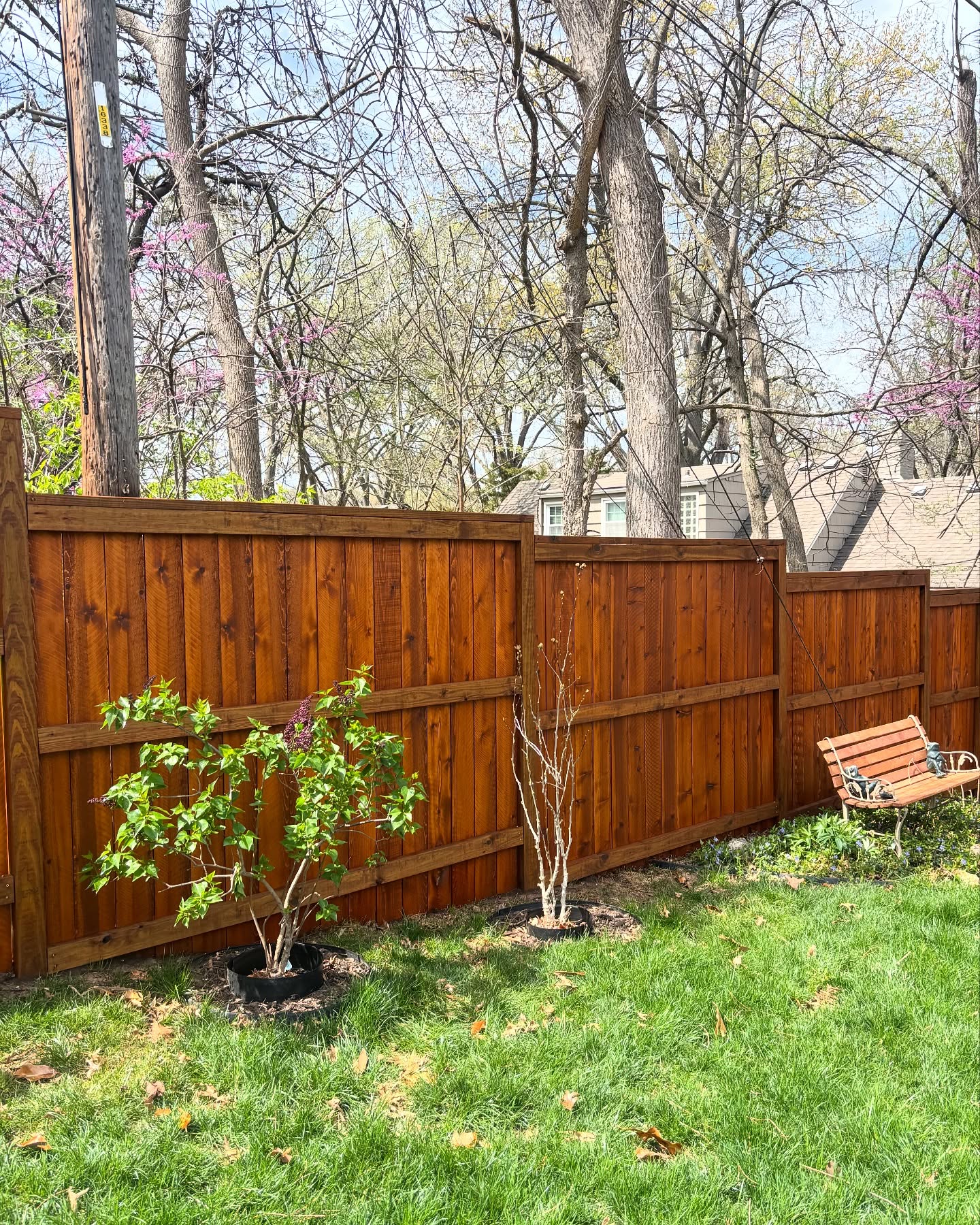
Walnut stain blended across a privacy fence in Mission, KS by RKC Wood Care Pros
Blend-and-Match · Mission
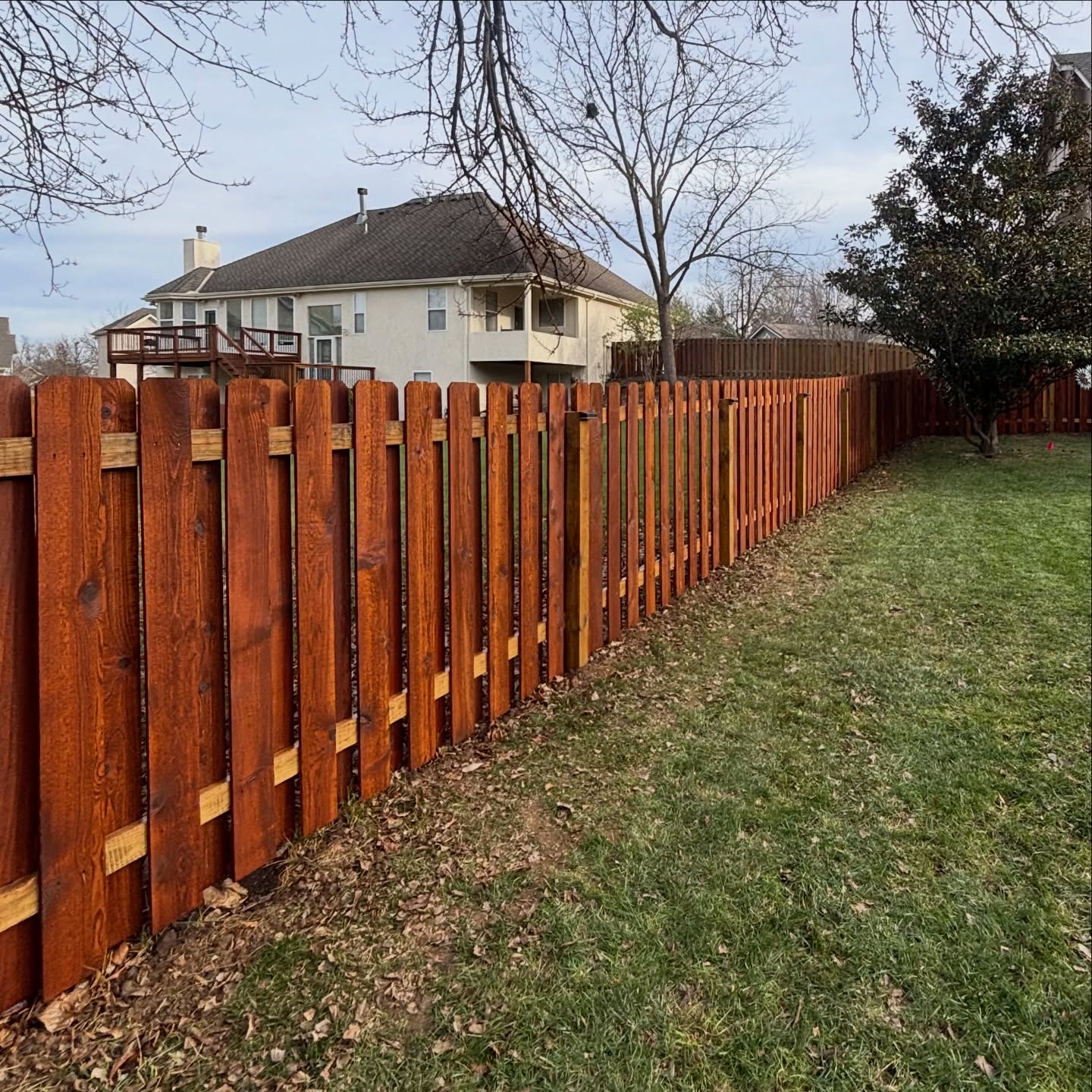
Golden stain on a cedar picket fence in Mission, KS
Cedar Re-Stain · Mission
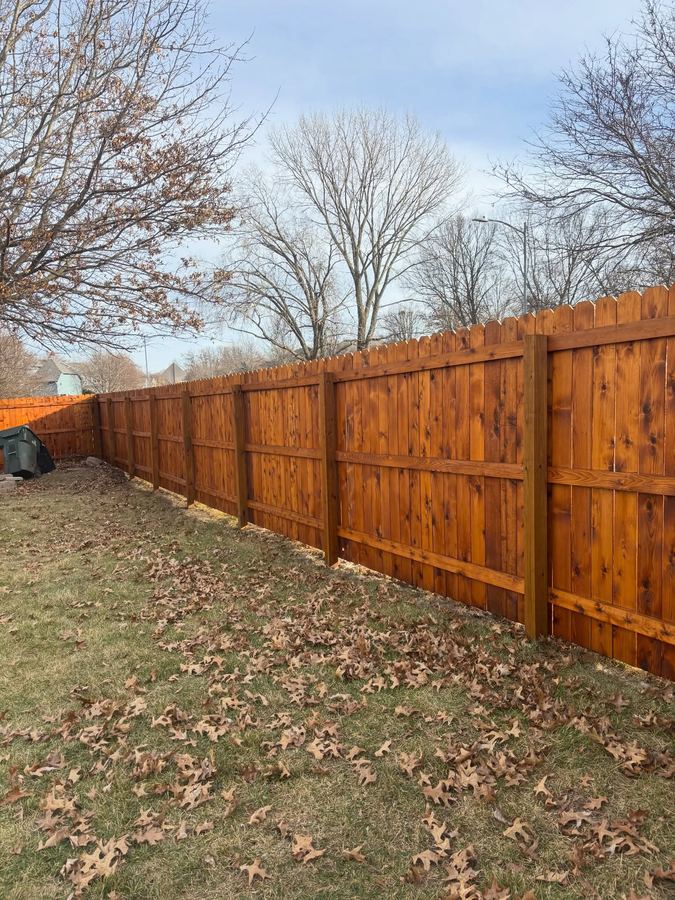
Fresh first-coat stain on new cedar in Mission, KS
New-Cedar Coat · Mission
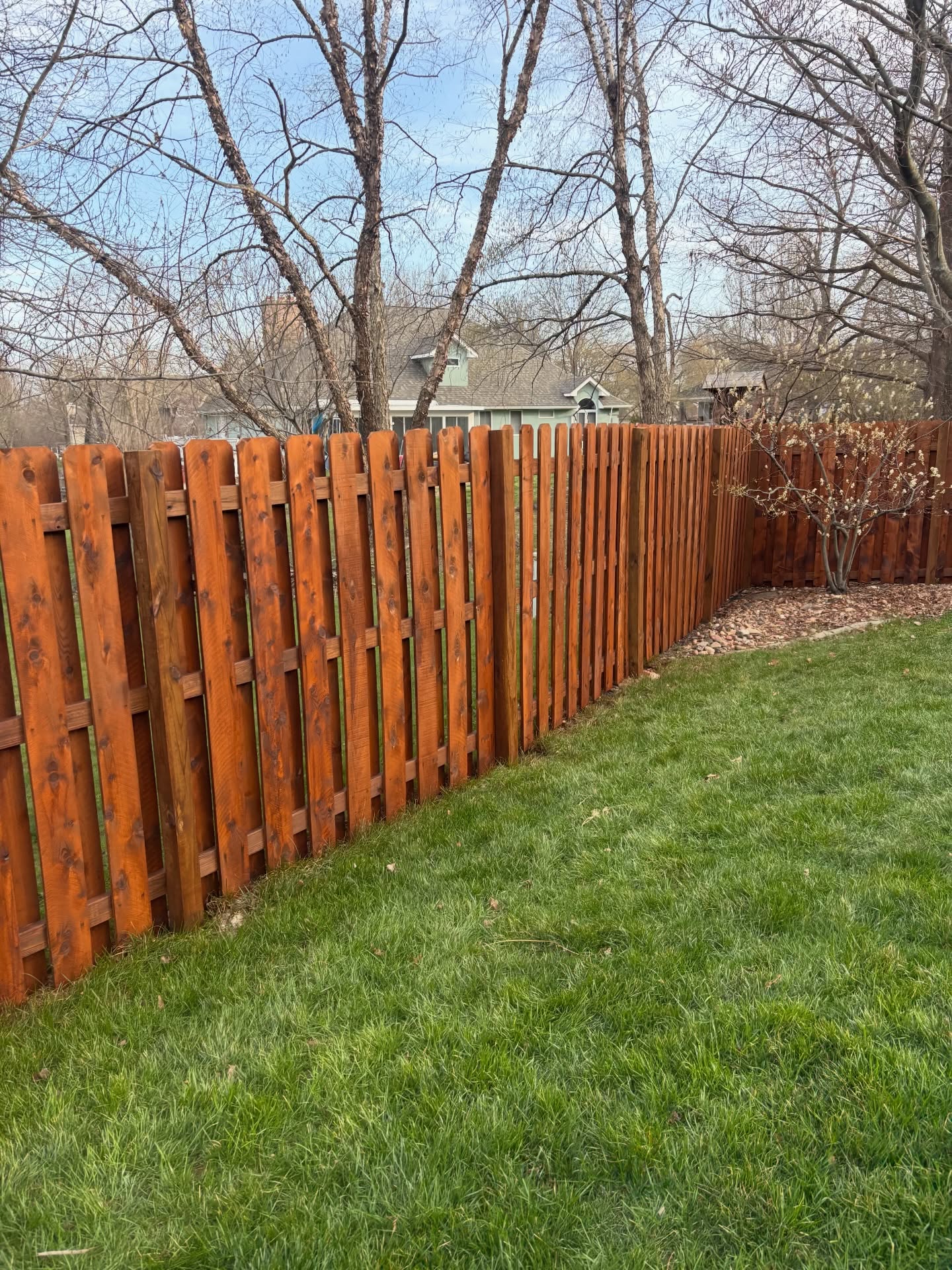
Evenly stained cedar fence under the tree canopy in Mission, KS
Canopy-Shaded Run · Mission

REVIEWS

What Kansas City Homeowners Say About RKC

4.9 ★ · 85 Google reviews

Every review is on our Google Business Profile — read them there, unedited.

Read all 85 reviews on Google

MISSION STAIN QUESTIONS

Stain Questions Mission Homeowners Ask Most

Three questions decide most Mission stain jobs: how to make a patched or mixed run match, what the tree canopy's shade and mildew do to the finish, and how a custom or newly-converted fence should be coated. These are the ones Mission homeowners raise at the estimate — sorted by topic, each answer tied to the blend-and-match work, the canopy dampness, and the city's custom builds. Don't see yours? Call (913) 286-1091 and ask.

Mission, KS fence staining by RKC Wood Care Pros

Matching & Blending

I had a section of my Mission fence repaired and the new boards are bright — can you make them match?
Yes, and it's one of the most common calls we get here. A repaired section is fresh, light, and thirsty, while the old wood around it is weathered and partly sealed-out, so a single coat lands as two different colors — the reason a patch stands out as a bright rectangle. We brighten the whole run to one baseline first, then carry a hair more pigment on the new boards so they drink down to the old wood's tone instead of sitting proud of it. Done right, the patch disappears into the run. The blend-and-match matrix above lays out this and the other mismatch situations we handle on Mission fences.
My fence is dark on the shady side and faded on the sunny side — can staining even that out?
That's the Mission canopy at work, and yes, evening it out is a big part of what a re-stain does here. The mature tree cover keeps the shaded faces damp, so they silver and grow mildew, while a sunny gap in the same fence bleaches — the same run aging at two rates. We brighten both sides to one baseline tone, kill the mildew on the shaded face, then weight a little more pigment onto the sun side as we coat, so both reach the next re-coat together instead of drifting apart again. The result is a fence that reads one even color rather than dark-on-one-side and faded-on-the-other.
Part of my fence is pine and part is cedar — will one stain work on both?
Not the same product, no — and that's exactly the kind of mixed run Mission is full of. Pine and cedar take stain differently: pine is dense and an oil-based stain penetrates it while a waterborne skins over, whereas cedar drinks the right family readily. Lay one product across both and you get an uneven, two-tone result. We match the product to each wood — oil on the pine sections, the right family on the cedar — and blend the tone across the seam so the fence reads as one fence, not a cedar run bolted to a pine one. It's a board-by-board job, which is why we sample first.

Shade, Mildew & Dampness

My shaded fence keeps growing mildew — will stain stop it?
The right coat, laid over the right prep, slows it a lot — but the prep is the key, not the stain alone. Mission's tree canopy keeps shaded faces damp, which feeds the mildew and algae that grow on the surface. If you stain over living green growth, it flakes in a season no matter the product. So we kill and wash the mildew off first, brighten the wood, and only then coat — a penetrating finish that sheds water rather than trapping it. On heavily shaded runs we'll often suggest a slightly deeper pigment, which resists the return of mildew better than a bare or clear-only surface. Staying on schedule keeps it from ever getting a foothold again.
The bottom of my fence looks soft where it's always shaded — should I still stain it?
Check the wood first — that's why we probe the post bases and bottom boards on every shaded Mission run before quoting a coat. The mature canopy keeps the ground-line damp, and years of that can rot a post base or a bottom board even while the rest of the fence is sound. There's no return on staining over soft, rotting fiber. Where a probe finds the wood is still solid, we seal it and it has years left. Where it finds rot, we replace the board or reset the post first, then fold that fresh wood into the same blend-and-coat pass so it matches the rest of the run.

Custom Builds & New Cedar

I have a custom horizontal fence — does staining it work differently?
A little, and Mission has more of these than most cities thanks to its low-HOA, design-forward streak. Horizontal and custom builds often mix board stock within a run, and wider boards show more face and grain, so an uneven coat is more visible on them. We sample on the actual boards, adjust the coat rate across them, and back-brush every board so the grain reads consistent end to end. The finish also matters more on a design-forward fence — it's meant to be seen — so we treat tone selection as part of the look, not an afterthought. Done right, a custom fence reads intentional the whole length rather than stitched together.
I'm replacing my old chain link with cedar — should I stain the new fence right away?
Give new cedar about 30 days to cure first, so a penetrating finish keys into the grain instead of beading off. But there's a blending angle unique to Mission: your bright new cedar will go up next to weathered fences all around it, so it reads glaring day one. Many owners here pre-stain the new run — or coat it after the cure with a tone chosen to sit comfortably in the block — so it doesn't stand out as brand-new against the neighbors' aged fences. We time the coat to the cure, pick a tone that fits the street, and log it so the re-coat matches. On our own installs it's often folded into the price.

OTHER MISSION FENCE SERVICES

More Fence Services Available in Mission

Each link below keeps you in Mission — its own page, with pricing, conditions, and recent job photos tied to this city rather than the metro at large. Weighing a fresh install, a repair, a gate, or one specific material alongside the staining? Here's where each of those picks up.

Ready when you are

Get a free estimate — we usually respond the same day.

Call (913) 286-1091