Skip to content
Fence Staining & Sealing in Shawnee, KS — The Coat Is Only as Good as the Prep

Fence Staining & Sealing in Shawnee, KS — The Coat Is Only as Good as the Prep

A Shawnee stain job lives or dies on the prep. The shaded wooded runs near Turkey Creek grow mildew and algae, and a coat laid over living green growth flakes off within a season no matter how good the stain is. RKC Wood Care Pros reads the surface run by run — a sodium-percarbonate kill on the green mildew, an oxalic brighten on the silvered cedar, a treatment for tannin and rust streaks, a proper rinse for tree debris — then coats clean, sound wood. Penetrating stain that fades instead of peeling, mildew-resistant pigment on the shaded runs, every coat logged, the re-coat date on your invoice. 4.9 stars from 85 Google reviews. Call (913) 286-1091 for a free walk and quote.

★★★★★
4.9
from 85 reviews
Licensed
& Insured · KS + MO
400+
fences installed
A+ BBB Rated Kansas City Fence Contractor Mildew-Kill Prep · Spray + Back-Brush 2-Year Cedar / 3-Year PT Cycle
View stain options in our catalog ↓

WHY SHAWNEE HOMEOWNERS STAIN WITH RKC

A Coat That Actually Bonds

The reason a Shawnee stain job fails early usually isn't the stain — it's a coat laid over mildew, chalk, or damp wood that never got a chance to bond in the first place. On the shaded wooded lots and the damp ground near Turkey Creek, green growth is the norm, and it's the prep — not the product — that decides whether a coat lasts two years or two months. Read the surface, clean it to its condition, then lay a penetrating finish that wears by fading, so the next coat is a wash-and-recoat rather than a scrape-and-start-over.

1

Mildew comes off before color goes on

The biggest single reason Shawnee coats fail is stain laid over living mildew on the shaded runs. It can't bond to growth — it flakes within a season and the green spreads underneath. We kill it with a sodium-percarbonate wash down to clean wood first, every time, then coat with a mildew-resistant pigment. It's the step a rush job skips and the reason ours hold.

2

Prep matched to the surface, not by rote

A Shawnee fence rarely has one problem — a shaded run is green, a sun face is chalked, an unsealed stretch is silver, a new section is glazed. Cleaning all of that the same way leaves half the fence unready. We grade the surface run by run and match the prep to each condition, which is why an RKC coat lands on clean, sound, open-grained wood across the whole fence.

3

A finish that fades, never peels

The product choice is penetrating versus film. A penetrating semi-transparent soaks into the grain and wears by fading, so re-coating is a wash and a fresh coat. A solid film sits on top, looks sharp a season, then peels under freeze-thaw and has to be scraped — and on a damp shaded run it lifts even faster. Everything we lay in Shawnee penetrates, so the fence never reaches the scrape-it-off stage.

4

One town, two prep problems

East Shawnee is tree-canopied, flat, and shaded — so debris and mildew drive the prep. West Shawnee sits up on the high ground, open and sun-exposed — so UV fade and chalking do. We read which Shawnee your fence is in and prep to match, because coating a shaded east-side run the same as a sun-struck western one is how a job fails on one end. Same crew, two different answers.

SHAWNEE LOCAL CONDITIONS

Why Staining in Shawnee Comes Down to the Prep

Three local factors shape stain work in Shawnee: the Turkey Creek humidity that feeds mildew on shaded runs, the heavy tree canopy that throws debris and shade, and the east-west split that gives the town two different surface problems. This is a market where the green shaded fence and the chalked sunny one need opposite prep, and where coating over living growth is the fastest way to waste a good stain. Same crew, same standard: read the surface, clean it to its condition, level the wood, then coat.

1

Turkey Creek humidity feeds the mildew

The low ground around Turkey Creek and the wooded western lots keep a lot of Shawnee fences damp and shaded — and damp, shaded wood grows mildew and algae. That green-black film is the single most common surface problem we see here, and it's also the one that quietly ruins a stain job when a crew coats right over it. Living growth won't let a finish bond; the coat flakes within a season and the mildew keeps spreading underneath. So the prep on a shaded Shawnee run isn't optional decoration — a sodium-percarbonate wash to kill the growth down to clean wood is the difference between a coat that lasts and one you redo next spring.

2

A tree-canopied town throws debris and shade

Older Shawnee neighborhoods carry heavy tree cover — great for the yard, hard on a fence. Limbs drop in the ice storms and pile organic litter along the runs, pollen and leaf grime cake into the grain, and the canopy keeps whole faces in shade where mildew thrives. All of it has to come off before a coat goes on, because debris trapped under stain leaves bumps and starves the finish of contact with clean wood. Reading which runs are canopied and grimed versus which are open and sun-faded is half of what the estimate is for — the prep changes accordingly.

3

East and west Shawnee weather differently

Shawnee's split personality shows up in its fences. The established eastern neighborhoods have flat lots, mature trees, and more budget-conscious treated pine, so we see shade, debris, and mildew there; the dramatic western elevation carries newer cedar on open, wind-swept, sun-exposed runs, so out there it's UV fade and chalking that drive the prep. One town, two different surface problems — and coating both the same way is how you get a job that fails on one end. We grade which Shawnee you're in and prep to match before a drop of stain goes on.

The Shawnee streets we've stained and brought fences back on run from the tree-canopied older neighborhoods near Old Shawnee Town and Nieman Road out to the higher western subdivisions off K-7 and toward Shawnee Mission Park — cedar dog-ear, board-on-board, treated pine on the east side, mixed material near Clear Creek and the wooded lots. Each one gets the surface graded up front, the mildew killed where it's grown, the silver brightened where it's oxidized, and the same matched penetrating coat to close. A fence another company built earns the identical treatment — clean, sound wood and the right prep have never cared whose truck showed up on install day.

READING THE SURFACE

The Shawnee Prep Guide — What Each Surface Needs

Before the color, the thing that decides whether a Shawnee coat lasts is the prep — and the prep depends entirely on what's on the boards, from green mildew to silver oxidation to mill glaze. Here's how we read each surface condition we see across Shawnee, the cleaning method it calls for, and why coating over it un-prepped fails. The short version is that clean, sound, open-grained wood is the only thing a stain bonds to — the surface in front of us decides how we get there, run by run.

Surface condition What it is Prep method Why it matters
Green & black mildew, algae film Living growth, thickest on the shaded wooded runs and the low, damp Turkey Creek bottoms — Shawnee's most common surface problem Sodium-percarbonate mildew-kill wash Stain laid over living mildew never bonds — it flakes in a season and the growth spreads underneath
Silver-gray oxidation The weathered surface layer on cedar that's gone unsealed — bare, dulled, and closed-off to a finish Oxalic wood brightener Neutralizes the gray to a true tone and reopens the grain so the coat can key in
Chalking or a failed old coat A spent finish gone powdery on the sun-struck faces, or a film that's begun to peel and lift Soft wash; strip where it filmed A new coat over a spent or peeling one can't bond to the wood — you're painting over a loose layer
Mill glaze on new cedar The slick, mill-planed sheen on brand-new boards that hasn't weathered off yet Light screen, or a short weathering wait Glaze repels a penetrating stain — coat over it and the finish sits on top and sheds
Tannin bleed & rust streaks Dark streaks from the wood's own tannins and rust weeping from nails or hardware, common on older runs Oxalic brighten + spot treatment Left untreated the streaks telegraph straight through a fresh coat and read as stains
Ground-in dirt, pollen, tree debris The grime and organic litter that collects in older tree-shaded Shawnee neighborhoods after limb-heavy seasons Pressure-appropriate rinse Debris trapped under a coat leaves bumps and starves the finish of contact with clean wood

The line that runs down the guide: stain bonds only to clean, sound, open-grained wood — so the prep changes with the surface, and the shaded mildew-green runs need the most of it. Most Shawnee stain failures trace straight back to a coat laid over growth or grime that was never cleared. Want us to read your fence surface by surface? A free staining walk grades every run and brings the sample boards, or start with a new Shawnee wood fence from the same crew that will finish it.

STAIN SERVICES

Re-Stains, Mildew Wash-and-Recoats & First Coats — Every Shawnee Scenario

The scope your Shawnee fence lands in comes straight out of the read — cedar due for a matched re-coat, a shaded mildew-green run that needs a kill-and-recoat, raw new wood awaiting its opening system, or cured pine on the east side ready for its oil. Below are the four we run across Shawnee, what each one suits, and honest per-foot numbers. You can swap colors inside any scope; what stays fixed is the sequence — read the surface, clean it to its condition, lay a matched penetrating coat with a spray-and-back-brush pair, all by our own crew.

Existing Cedar Re-Stain by RKC Wood Care Pros in Shawnee, KS

Existing Cedar Re-Stain

The 2-year cycle · the everyday Shawnee call

Cedar is king in Shawnee, and it keeps reading like cedar instead of drifting to silver when it's kept on a two-year rhythm — but only if the prep is right. On schedule it's a mildew-killing wash on the shaded runs, an oxalic brighten where the wood's grayed, a meter check for the dry window, then the matched color driven back into both faces. Because we log your exact product and color the day we finish, the re-coat pulls the same can off the shelf and lands as one tone. Your next date goes on the invoice before the crew rolls out.

  • Price: $4–8 / LF · typically $600–1,200 per 150 LF
  • Typical use: Cedar dog-ear and privacy runs across east and west Shawnee, straight color refreshes, evening out a run gone mildew-green on the shaded side
Mildew & Restoration Wash-and-Recoat by RKC Wood Care Pros in Shawnee, KS

Mildew & Restoration Wash-and-Recoat

The Shawnee specialty · shaded, wooded, damp runs

This is the call that comes off the wooded lots and the low ground near Turkey Creek — a fence gone green and black on the shaded side, slick with algae, that a fresh coat would just flake off of. The work is in the prep: a sodium-percarbonate wash to kill the growth down to clean wood, an oxalic brighten to neutralize the gray, repeated rinses, then a hard dry before a single penetrating coat with a mildew-resistant pigment. Done in that order the coat bonds properly and the growth is slow to come back. Skipped, it's a coat you redo next spring.

  • Price: $5–10 / LF · typically $750–1,500 per 150 LF
  • Typical use: Shaded runs on the wooded western lots, damp Turkey Creek bottoms, north-facing fences gone green, tree-canopied older east-side yards

New-Install First-Coat Stain by RKC Wood Care Pros in Shawnee, KS

New-Install First-Coat Stain

The opening system on every RKC Shawnee build

The coat that sets how a Shawnee fence ages before its first summer hits it. Fresh cedar carries a mill glaze that has to weather off and internal moisture that has to fall — roughly four weeks — before a penetrating finish keys in rather than beading off; treated pine on the older east side needs closer to a season for the factory chemistry to cure. Which family goes on gets decided at install week and staged before the crew arrives. Plenty of our cedar packages carry this first coat inside the install price — worth asking Josh when he walks it.

  • Price: $3–6 / LF · typically $450–900 per 150 LF
  • Typical use: Fresh cedar in the western subdivisions and the Nieman Road renovations, the opening coat after any RKC build, locking the finish in from week one
Pressure-Treated Pine Re-Stain by RKC Wood Care Pros in Shawnee, KS

Pressure-Treated Pine Re-Stain

90-day first coat, 3-year cycle after

Treated pine turns up more on the budget-conscious older east side of Shawnee, and it runs on its own clock and its own product. The factory treatment has to fully cure before a finish will bite — about three months out from a new install — and then it calls for an oil-based semi-transparent that penetrates the dense treated fiber where a waterborne would only skin over. Any board still tinged green or blackened gets a brightener first so the color doesn't blotch. On the damp east-side lots the mildew prep matters here as much as on cedar.

  • Price: $3–7 / LF · typically $450–1,050 per 150 LF
  • Typical use: Treated-pine runs on the older eastern neighborhoods, budget boundary lines, economy installs carried over from other builders
Prep-first cedar fence stain pricing — Shawnee, KS — RKC Wood Care Pros

SHAWNEE STAIN PRICING

What Fence Staining Costs in Shawnee

What a Shawnee job costs rides on the prep, not the product — a sun-open cedar run caught on its cycle runs a fraction of a shaded, mildew-green one that has to be killed, brightened, and dried before a drop of stain goes on. Each quote folds in the surface-matched cleaning, the mildew kill on the shaded runs, the metered dry window, the matched penetrating family, the spray-and-back-brush pass by our own two-person crew, and a written date for the next coat. The three setups we price most often for Shawnee homes are below.

Cedar Re-Stain

$4–8 / LF

wash + penetrating stain

Mildew-kill wash on the shaded runs, a meter check to catch the dry window, the matched family driven into both faces, a shared walk, and your next date in writing. Most 150 LF Shawnee cedar privacy runs settle near $600–1,200.

Mildew Wash-and-Recoat

$5–10 / LF

kill · brighten · stain

Sodium-percarbonate kill to clear the green and black, an oxalic brighten, repeated rinses, a hard dry, then a mildew-resistant penetrating coat. A shaded 150 LF Shawnee run usually lands at $750–1,500 depending on how far the growth has gone.

Pressure-Treated Re-Stain

$3–7 / LF

brighten + oil stain

Wash, brightener on the green and blackened patches, then the oil-based semi-transparent that bites into treated fiber, with the 3-year mark logged. A 150 LF Shawnee pine run generally lands at $450–1,050.

A mildew wash-and-recoat (sodium-percarbonate kill + oxalic brighten + repeated rinses + a mildew-resistant coat) gets its number after an on-site look at how far the growth has gone — that look is exactly what stops you paying for a full restoration when a shaded run only needs a kill and a fresh coat. Every Shawnee estimate is free, written, and itemized — call (913) 286-1091 or set up a walk. While the crew's on site they can flag any Shawnee fence repair the damp or tree-battered runs need before staining earns its keep — one trip, same hands.

OUR STAIN PROCESS

How a Shawnee Stain Job Comes Together

Four steps from the phone call to the final walk. Most Shawnee stain jobs span 2 to 4 days — but only one of them is stain day. The stain itself is usually a single day on site for a standard run. The rest of the clock is the surface read, the condition-matched cleaning, and the dry window that the shaded runs stretch out. Here's what each step looks like on a Shawnee fence.

1

Walk it, read the surface, meter it

Step one on a Shawnee fence is reading exactly what's on the boards — green mildew on the shaded runs, silver oxidation on the unsealed cedar, chalk on the sun faces, mill glaze on new wood, debris under the tree canopy — because each one calls for a different prep. Josh or a lead measures the footage, grades the surface condition run by run, and takes a moisture reading. That read is what decides the cleaning method before any product gets picked. Estimate's free and broken out line by line, and we brush a tone sample on a hidden board so you judge color on your own wood.

2

Clean it to the condition, not by rote

This is the stage that makes or breaks a Shawnee coat, and it's the one most crews do the same way every time. We don't. A mildew-green run gets a sodium-percarbonate kill to clear the growth to clean wood; a silvered run gets an oxalic brightener; a chalked or filmed face gets washed or stripped; a debris-caked run gets a proper rinse first. Then, because the shaded and wooded runs dry slowest, the meter goes back on the wettest section and nothing opens until it reads ready. A coat won't hold over living mildew, loose chalk, or damp wood — the matrix above is the whole reason we prep to the condition.

3

Match the finish, spray and back-brush

Surface clean and dry, we load the matched family — a mildew-resistant pigment weighted onto the shaded runs, deeper pigment onto the sun-beaten western faces — and put it on the one way that works: a sprayer moving the finish, a second hand right behind back-brushing it into the grain before it sets. On Shawnee's split of shaded east and sun-struck west, that pairing is what holds an even tone across both, exactly where a solo sprayer would flake off the green side and starve the bleached one.

4

Walk it together, then log the coat

Last is your eyes alongside ours — a full pass catching any board that reads thin or skipped, touched in on the spot before we sign off. Then the finish lands on your file: the date, the product family, the exact color, the footage, the prep the shaded runs took, and when the next coat is due — two years for cedar, three for pine. That record is why your re-coat matches instead of going patchy, and why the reminder comes from us when the mildew starts creeping back rather than slipping your mind.

RECENT SHAWNEE STAIN JOBS

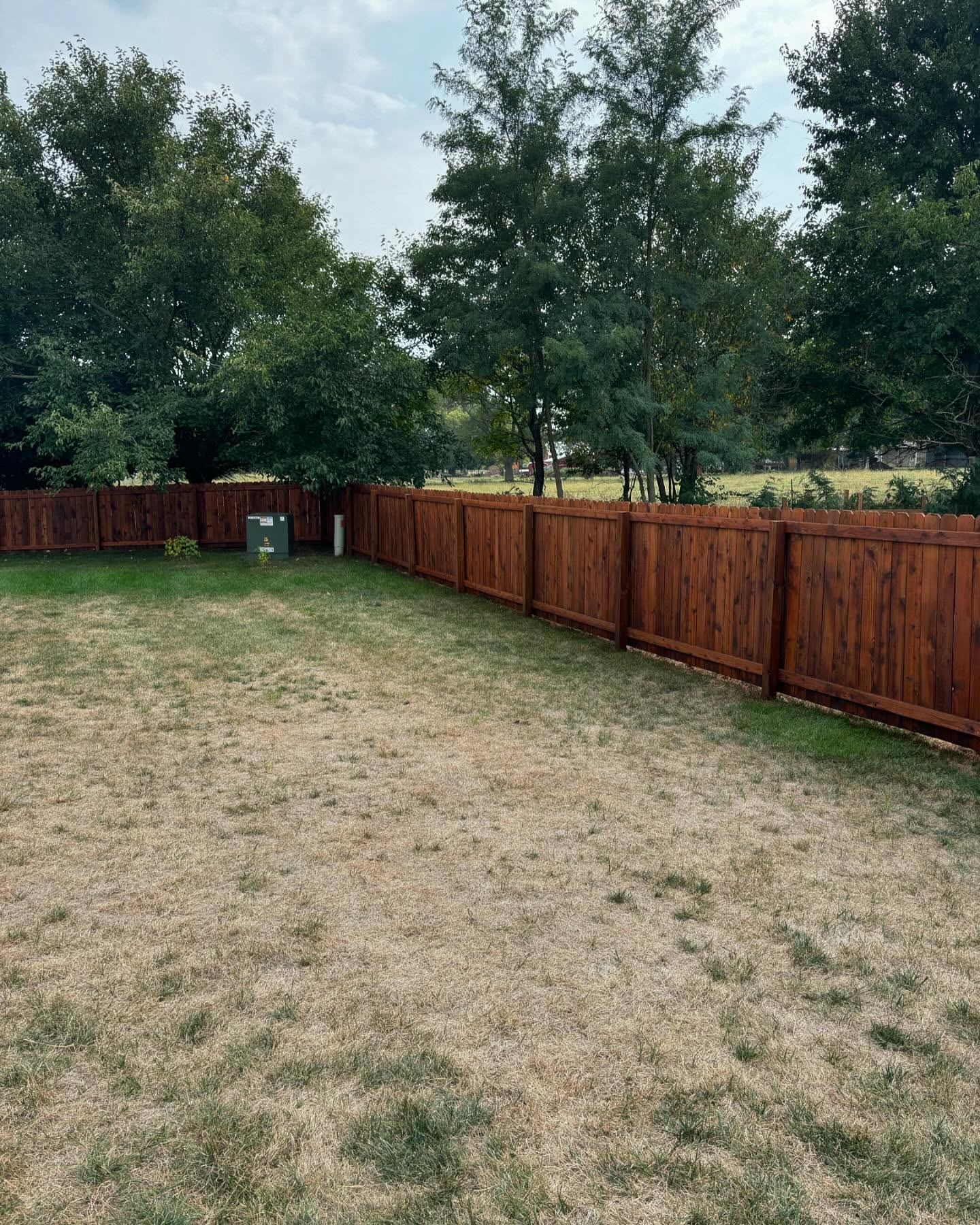
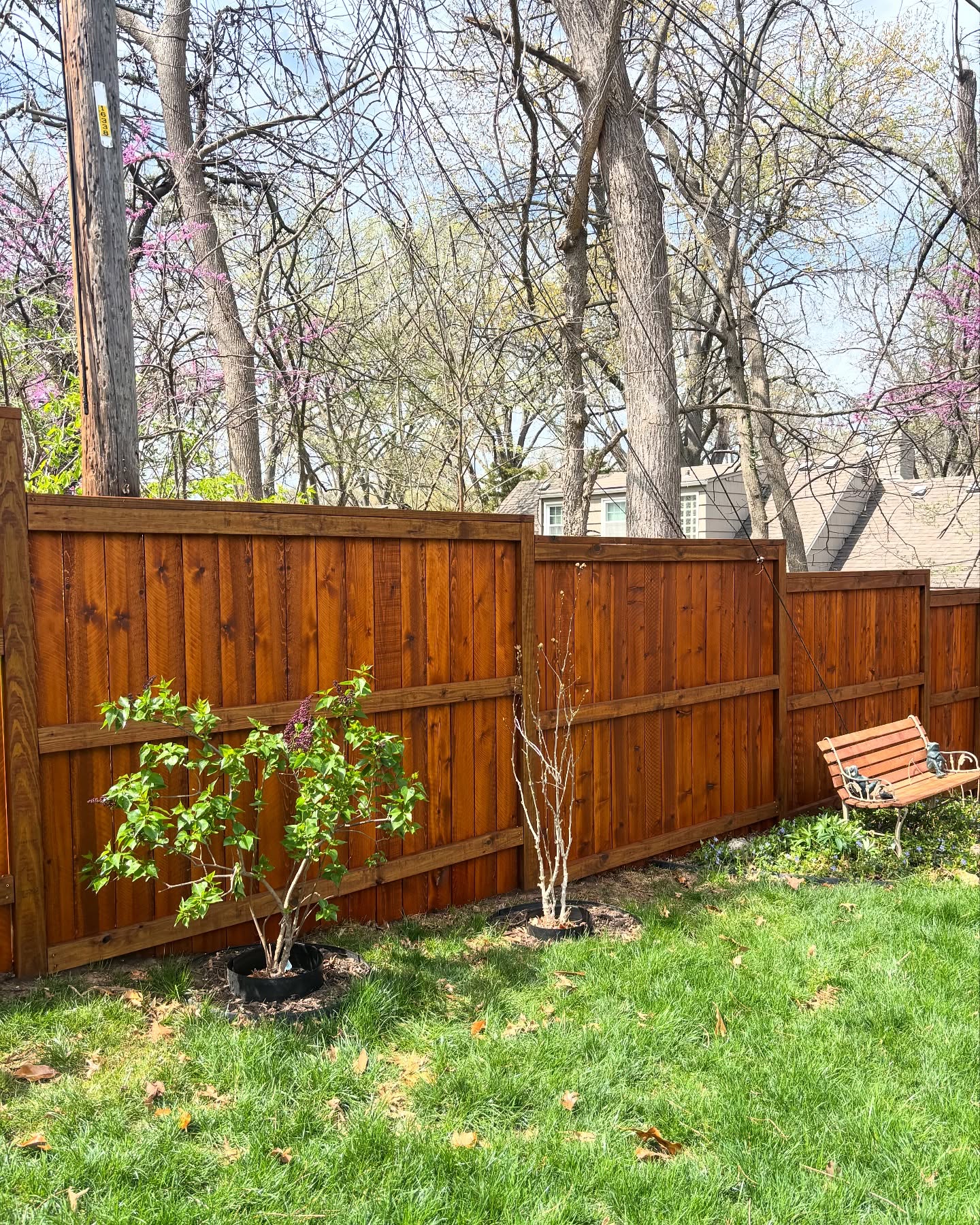
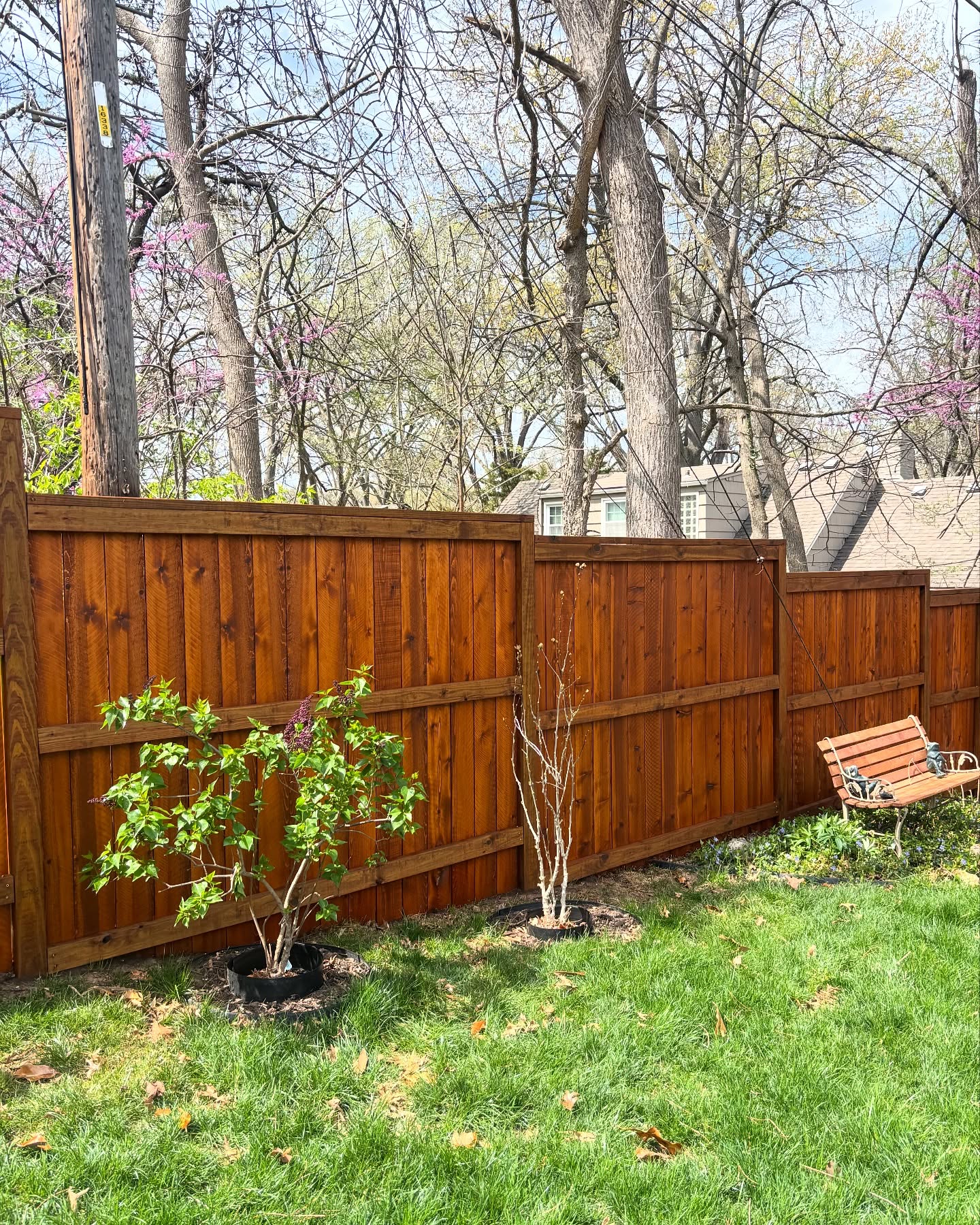
Cedar re-stain in golden honey in Shawnee, KS by RKC Wood Care Pros
Cedar Re-Stain · Shawnee
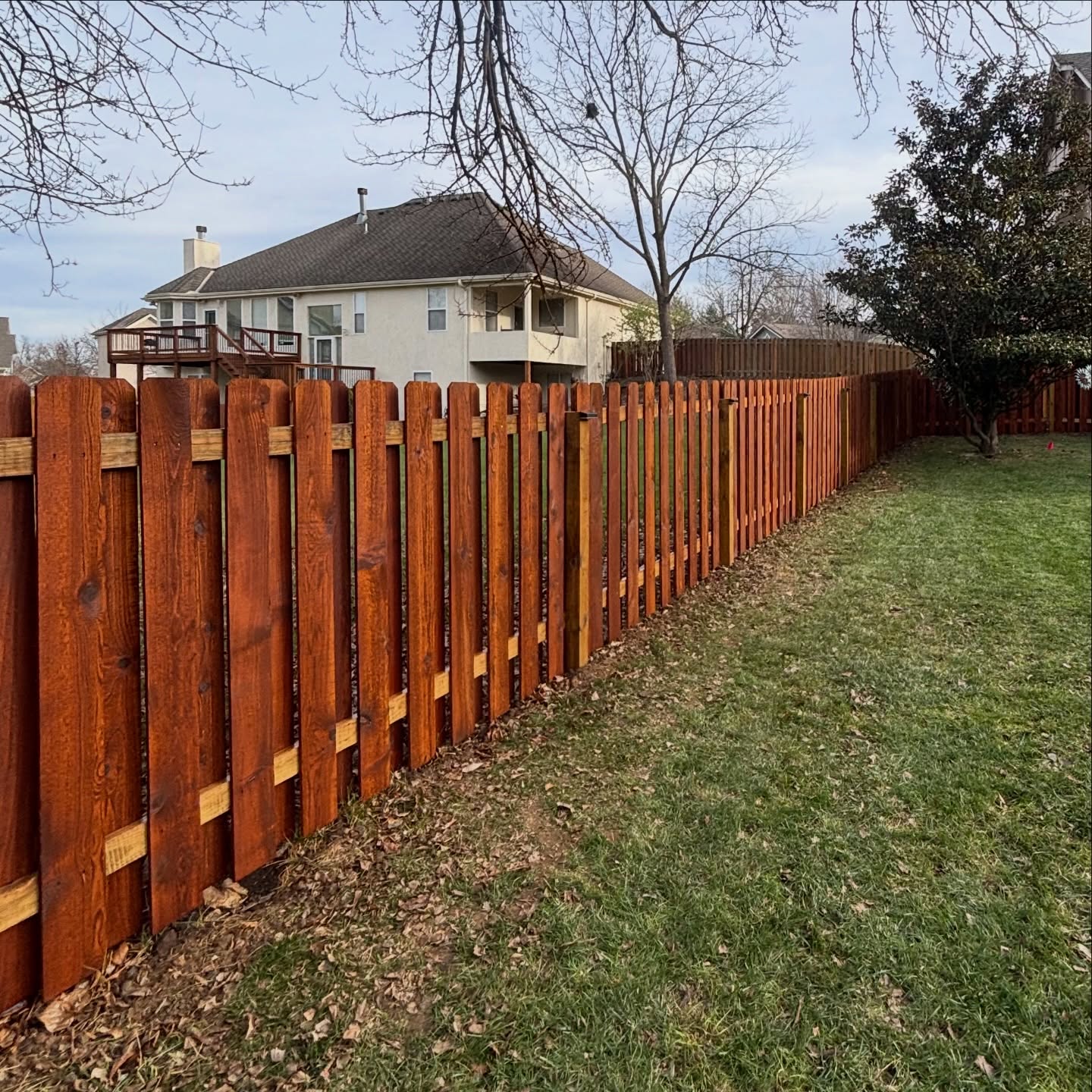
Fence staining in progress in Shawnee, KS
Prep & Coat · Shawnee
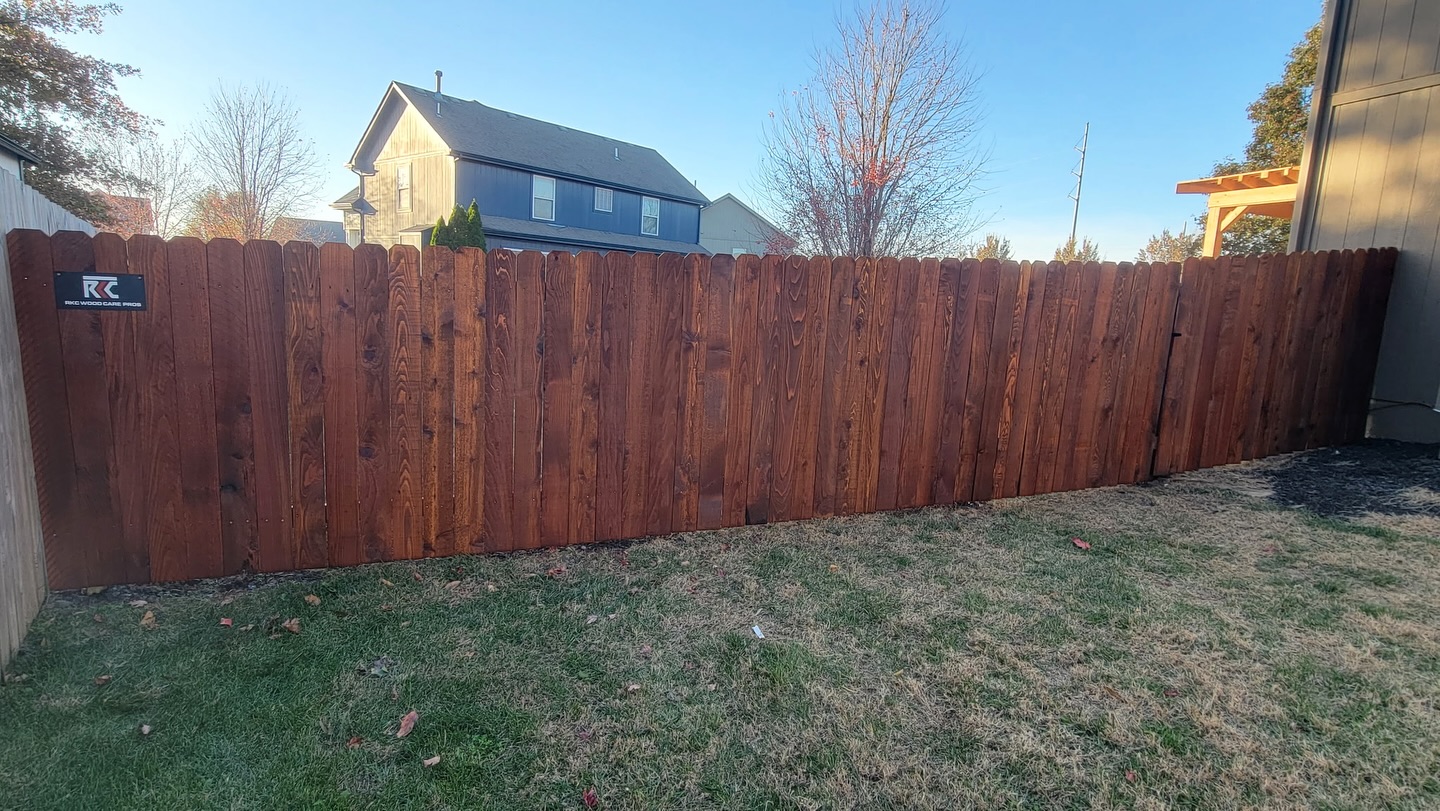
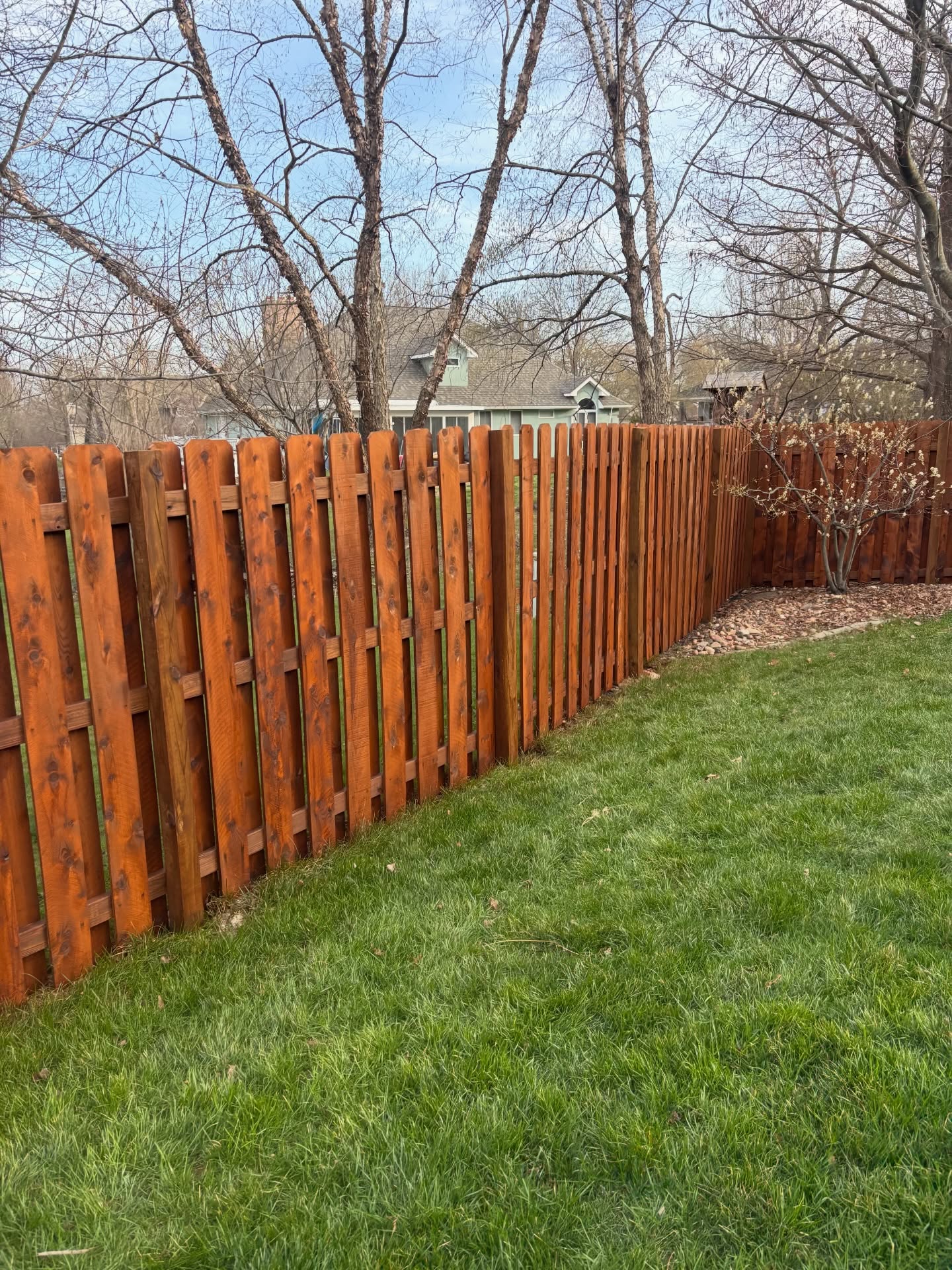
Pressure-treated pine re-stain in Shawnee, KS
PT Re-Stain · Shawnee
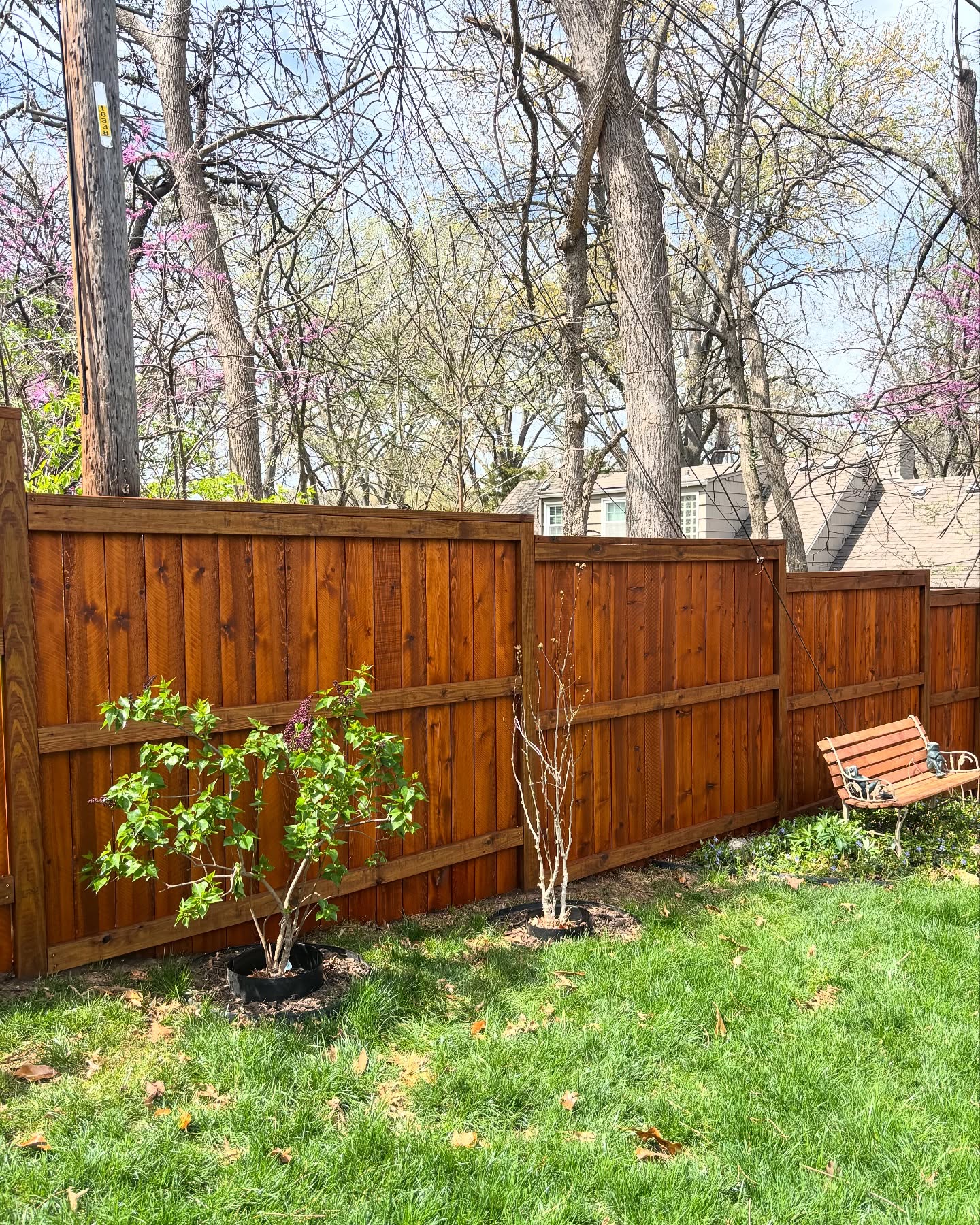
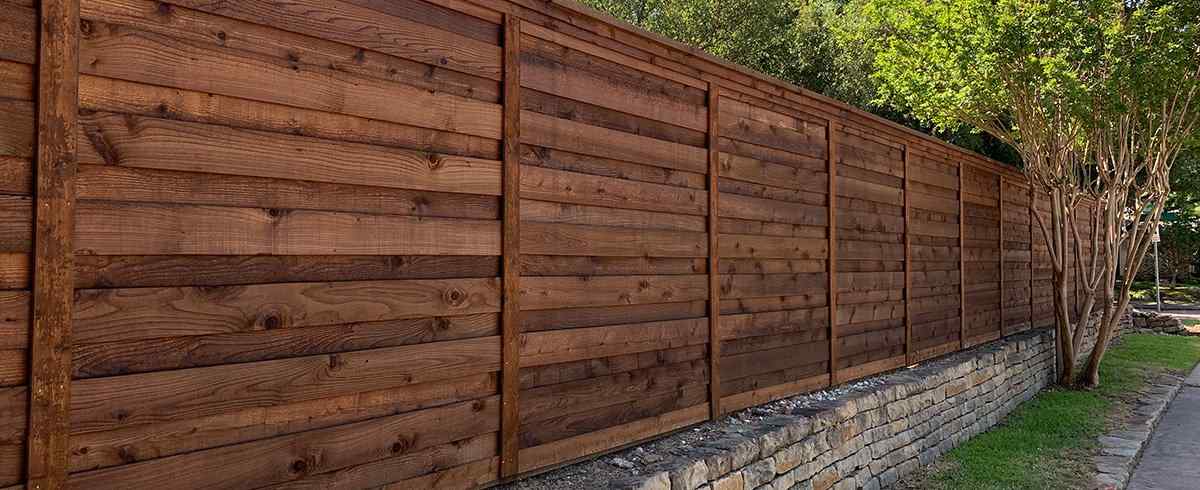
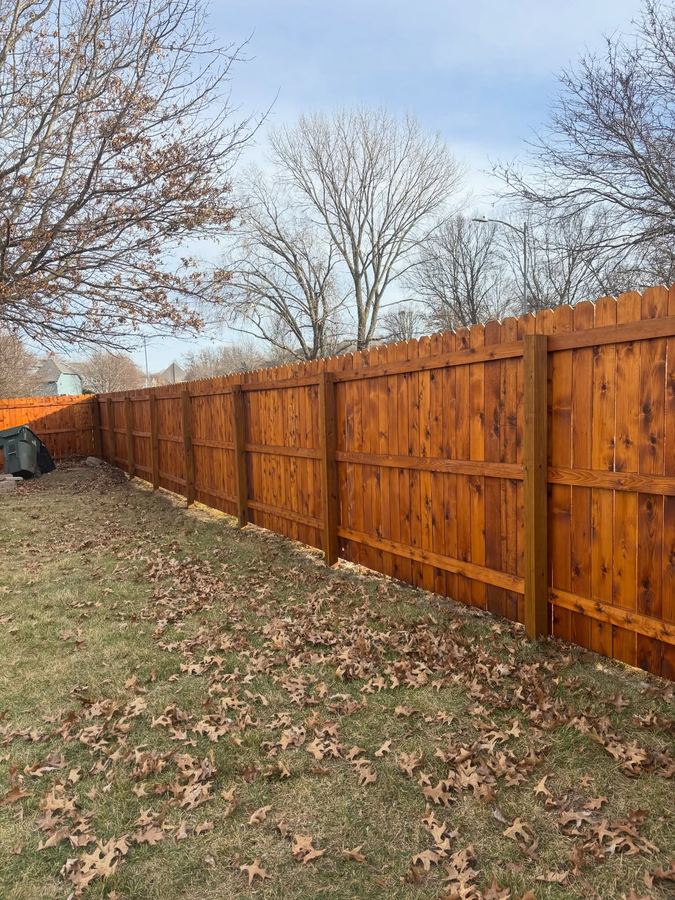
Wide view of a finished cedar fence stain in Shawnee, KS
Finished Run · Shawnee

REVIEWS

What Kansas City Homeowners Say About RKC

4.9 ★ · 85 Google reviews

Every review is on our Google Business Profile — read them there, unedited.

Read all 85 reviews on Google

SHAWNEE STAIN QUESTIONS

Stain Questions Shawnee Homeowners Ask Most

Three questions decide most Shawnee stain jobs: how to deal with the mildew on the shaded runs, when the coat should go on, and whether a gray, green, rough-looking fence can be saved instead of torn out. These are the ones Shawnee homeowners raise at the estimate — sorted by topic, each answer tied to the Turkey Creek mildew, the surface-matched prep, and the tree-shaded runs. Don't see yours? Call (913) 286-1091 and ask.

Shawnee, KS fence staining by RKC Wood Care Pros

Prep, Mildew & Cleaning

The shaded side of my Shawnee fence is green — can you just stain over it?
No — and this is the single most important thing to get right on a Shawnee fence. That green is mildew and algae living on the surface, thickest on the shaded wooded runs and the damp Turkey Creek bottoms. Stain laid over living growth doesn't bond; it flakes off within a season and the mildew keeps spreading underneath the coat. The fix is a sodium-percarbonate wash first to kill the growth down to clean wood, a full dry, then a penetrating coat with a mildew-resistant pigment that slows the regrowth. The prep matrix above lays out how we read and clean each surface. Skip that step and it's a job you'll be redoing next spring.
Do you pressure-wash the fence before staining?
Sometimes, but carefully, and it depends on the surface — which is exactly the point. A high-pressure blast on soft or older cedar splinters and furs the wood, which actually makes a stain job worse. So we match the cleaning to the condition: a chemical mildew-kill wash on the green runs, an oxalic brightener on the silvered ones, a gentle rinse for debris and pollen, and pressure only where and at the level the wood can take. The goal is clean, sound wood with an open grain — not a wood surface torn up by too much pressure. The method changes run by run, and reading which is which is half of what the estimate covers.
My cedar has dark rust-colored streaks running down it — will stain hide them?
Not on its own — those streaks need treating before the coat, or they telegraph straight through. They come from two things common on Shawnee cedar: the wood's own tannins bleeding, and rust weeping from nails or hardware. An oxalic brightener neutralizes the tannin staining across the run, and we spot-treat the rust points at their source. Only then does a fresh coat land clean. Laying stain over untreated streaks just seals them in where they show as dark marks — which is why the streak treatment is part of the prep, not an upcharge afterthought.

Timing & Schedule

How often does a Shawnee fence need re-staining?
Figure a cedar coat roughly every 2 years and treated pine every 3. But the shaded, wooded runs here have a second clock: mildew. Even a well-sealed fence on a damp, canopied lot near Turkey Creek can start showing green regrowth before the color itself is due, and a quick wash keeps it in check between full re-coats. On the open, sun-struck western runs it's UV fade that sets the pace instead. Your next date goes on the invoice, and for the mildew-prone runs we'll flag whether a maintenance wash mid-cycle is worth it — we're the ones who circle back when either clock comes due.
When's the best time of year to stain in Shawnee?
A dry stretch in late spring through early fall, when the wood can actually reach and hold a low moisture reading — but the calendar matters less than the moisture and the shade. The wooded and low-lying runs here dry slowest, so we meter the wettest section and stain when it reads ready rather than on a fixed date. We won't coat over a fence still holding water from a recent rain, and we won't rush a shaded run that hasn't dried through, whatever the season says. Getting the timing right on the damp runs is a big part of why the coat holds.

Gray Fences & Restoration

My fence is gray, green, and looks rough — is it too far gone to stain?
Usually not. On a shaded Shawnee lot a fence can look genuinely rough — silver on the unsealed faces, green with mildew in the canopy shade — and still be sound cedar underneath. That combination is a prep job, not a replacement: a mildew kill to clear the growth, an oxalic brighten to neutralize the gray, repeated rinses, a hard dry, then one penetrating coat that pulls it back to looking like one fence. The exception is real rot, which the wooded damp lots can produce down at the ground line — we probe for it and call it honestly before you spend a dollar on finish.
Can you save a fence under heavy tree cover, or is the shade a lost cause?
We can, and heavily shaded runs are a lot of what we stain here — it just takes the right prep and the right pigment. Shade means slower drying and more mildew, so the cleaning is more thorough and the dry window is watched more closely, and we lean on a mildew-resistant pigment that holds up better under a canopy. A shaded fence will generally want its cleaning a touch more often than a sun-open one, but it's far from a lost cause. What loses a shaded fence is coating it without the mildew prep — do that and the shade wins. Do the prep and it holds.

OTHER SHAWNEE FENCE SERVICES

More Fence Services Available in Shawnee

Each link below keeps you in Shawnee — its own page, with pricing, conditions, and recent job photos tied to this city rather than the metro at large. Weighing a fresh install, a repair, a gate, or one specific material alongside the staining? Here's where each of those picks up.

Ready when you are

Get a free estimate — we usually respond the same day.

Call (913) 286-1091