Skip to content
Gate Installation in Shawnee, KS — Walk, Drive & Slide Gates for Both Sides of I-435, from the Bemis Park Ranch Runs to the K-7 Hillsides

Gate Installation in Shawnee, KS — Walk, Drive & Slide Gates for Both Sides of I-435, from the Bemis Park Ranch Runs to the K-7 Hillsides

Shawnee is really two towns for a gate — flat, tree-shaded east-side lots with settled 1970s fence runs, and the rocky, grade-dropping west side toward K-7 — and which side you're on sets the build before the material does. We install walk, single-drive, double-drive, and cantilever slide gates across town, each on a welded square-tube frame over a 36-inch footing: augered through the western rock or set in the softer creek-bottom soil east of the highway, and raked to the fall on a hillside drive. Rated A+ by the BBB, 4.9 stars over 85 Google reviews, past 400 fences and gates in the ground. Call (913) 286-1091 to set up a free on-site walkthrough.

★★★★★
4.9
from 85 reviews
Licensed
& Insured · KS + MO
400+
fences installed
A+ BBB Rated 400+ Fences Installed Since 2021 Welded Gate Frames · Galvanized Hardware Free On-Site Estimates
See gate styles in our catalog ↓

WHAT A NEW GATE DOES FOR A SHAWNEE YARD

Why Shawnee Homeowners Replace a Tired Gate

The gate that fits the old fence, seals behind the dog on a slope, clears the boat, and still holds square a decade into the clay cycle — that's what a Shawnee homeowner is actually buying. Shawnee's split personality — historic east-side runs on one side of I-435, steep new-build hillsides on the other — asks different things of a gate depending on where you stand. Below is what a gate built right buys you day to day, before we get into how the frame and the footing make it possible.

1

It fits the old fence instead of fighting it

Most east-side Shawnee gate calls aren't new fences — they're a tired gate at the end of a settled ranch run that's given up. We match a new leaf to what's already there, cedar to the weathered stain or a clean tie into a half-converted chain-link line, and stand it on its own fresh footing so it swings true even though the fence beside it is forty. The gate ends up the one square, working thing on an aging line — not another sag.
2

The dog stays in, uphill or on the flat

Shawnee runs big-dog yards, and a walk gate only earns its place if it seals itself shut every time — which is harder on a west-side slope than most installs account for. Set the spring hinge to the leaf's weight and the latch to catch on its own, tune it to the grade, and the gate closes behind you whether your hands are full or you're chasing a kid up the hill. No paver holding it open, no walking back to check.

3

Wide enough for the boat, level enough for the hill

The deep lots pushing west toward K-7 and the new De Soto growth carry real equipment — a fishing boat, a fifth-wheel, a trailer — and a two-leaf drive gate opens wide enough to swallow it without a three-point turn. On a graded approach we rake both leaves to the fall so the pair still clears the climb. Out here a double gate isn't a luxury; a drive that wide and that steep won't close clean on one leaf.

4

It holds square through the Shawnee freeze-thaw

Most Shawnee gate failures show up at the hinge after one season of the clay cycle working a shallow post. A welded frame that can't twist, a footing keyed into west-side rock or driven into east-side creek soil, and hinges rated past the leaf keep the latch lining up at year five and year ten. The build outlasts the stain schedule — which is the whole point of doing the footing and the frame right the first time.

BUILDING FOR BOTH SIDES OF SHAWNEE

Why the Ground on Your Side of I-435 Decides How a Shawnee Gate Gets Built

Nothing on a fence works as hard as a gate — a fixed panel just stands there, while a gate carries a swinging load into a single footing thousands of times — and in Shawnee the ground under that footing changes the moment you cross the highway. Rocky clay and dramatic grade on the west, softer soil and settled old lines on the east, freeze-thaw riding behind both. What keeps a gate plumb a decade on versus limping by its second winter comes down to three choices — and every gate we hang in Shawnee answers all three to the ground it's actually standing in.

1

Two Shawnees, two soils — the gate spec starts with which side of I-435 you're on

Shawnee is really two towns for a post-hole. East of I-435 the lots are flatter and the soil is softer creek-bottom ground; west of it, toward K-7 and De Soto, the clay is rocky enough that hand-digging a hole is a genuine fight. A gate footing carries the whole leaf plus the jolt of every swing, so it can't split the difference — the east-side post goes 36 inches into stable creek-bottom soil, the west-side post gets augered through rock and keyed against it. Both land below the Kansas City frost line, because 80-plus freeze-thaw cycles a winter will heave a shallow one either side of the highway.

2

On a west-Shawnee hillside, the grade across the opening sets the gate before the material does

Western Shawnee is defined by dramatic elevation change — it's why fence panels out here get stair-stepped or racked down a slope instead of running level. A gate can't be stair-stepped; it's one rigid leaf that has to swing over ground that isn't flat. Level it to the high side and it drags dirt on the low; level it low and it gaps daylight a dog walks under. So on a graded opening we rake the bottom rail to the fall of the land and set the hinge post to the arc, so the leaf holds a clean clearance through its whole swing. It's the single call that separates a west-side gate that works from one that scrapes.

3

Welded and over-hinged, with the finished side facing the street

A bolted frame keeps a hair of play at every corner, and daily swing works it loose until the leaf racks and the latch stops finding its keeper. We weld all four corners into one piece that has nothing to loosen, then clad it in cedar or powder-coat it in iron — and we hang it finished-side-out, so the clean face is what the neighbor and the street see. The hinges get sized past the leaf weight with a fifty-percent margin and specified in hot-dip galvanized or stainless, because the cheap zinc-plated hardware weeps a rust streak down a new cedar gate inside one humid Kansas City summer.

Shawnee neighborhoods we've hung gates across run from the flat east-side lines in Bemis Park and Kessler Island to the west-side hillsides of Grey Oaks and Clear Creek and out toward the K-7 and De Soto growth. Same welded frames, footings matched to each side's soil. We also hang gates next door in Lenexa, Overland Park, and Bonner Springs.

START WITH THE SPOT

Where Your Opening Sits in Shawnee Picks the Gate

Before material, before style, the gate is decided by the ground — which side of I-435, how the drive falls, and what an old fence line left behind. Find the row that matches your opening below to see what that spot does to a gate and the build that answers it. A settled east-side retrofit and a graded west-side hillside are two different gates wearing the same name.

Your opening in Shawnee What that spot does to a gate The build that answers it
East of I-435 — a flat lot behind a settled 1970s ranch run (Bemis Park, off Nieman) Forty winters have heaved and racked that old line. Hang a new gate off a tired line post and it sags with the fence, not on its own hinge. We drop a fresh, independent hinge post 36 inches into the softer creek-bottom soil rather than trust the existing one — the gate stands on its own footing, square to today's grade, not 1975's.
An east-side chain-link line being converted to wood or vinyl Half the run is old galvanized mesh, half is new cedar or panel — a gate that splits the difference looks bolted on and latches to nothing true. We build the gate to the new material and tie it clean where the two runs meet, so the opening reads as one finished line instead of a patch.
West of I-435 — a hillside lot where the grade falls across the opening (Grey Oaks, Clear Creek) A leaf that clears the dirt on the high hinge side drags on the low side — or gaps a foot of daylight if you level it low. It's the same fall that forces stair-stepped panels out here. We rake the bottom rail to the pitch of the land and set the hinge-post height to the swing arc, so the leaf clears the climb through the whole sweep instead of catching the rise.
Rocky western clay, anywhere toward K-7 and the De Soto line The clay out here is shot through with rock — the reason a post-hole is a genuine fight — but that same rock is an anchor once you're keyed into it. Carbide auger through the rock, a 36-inch footing keyed against it and crowned to shed water. A gate post set in west-Shawnee rock doesn't move once it cures.
Low ground near Turkey Creek, where the spring runoff sits Saturated soil in the wet months won't grip a footing, and a post set down in the flood pocket works itself loose the first spring. We pull the footing deeper, crown the concrete above grade so water runs off it, and keep the hinge post up out of the standing-water line where the ground actually holds.
A warehouse or shop drive on the I-435 / K-7 industrial corridor A wide commercial opening needs vehicle clearance and a gate that takes daily traffic without a swing arc eating half the yard. A cantilever slide on a steel frame rolls clear of the drive, carries the width, and shrugs off the truck traffic those corridors run — no arc, no drag on the ground.

What every row shares is the read: before we quote a Shawnee gate, Josh stands at the opening and clocks which side of I-435 you're on, how the ground falls, and what the old line left behind. Any local worth the name knows the Shawnee Slump on the Parkway — the same eye for how this town's ground actually sits is what matches a footing and a rail rake to the exact spot your gate has to hold. That call gets made in your driveway, not over the phone.

GATES WE BUILD IN SHAWNEE

Walk, Drive, Double & Slide — Matched to Your Lot and Its Grade

The right gate depends on how you use the property and what the drive geometry allows — flat or falling, tight or deep. Here are the four gate types we install across Shawnee, what each one fits, and real pricing for each. Materials — cedar, vinyl, powder-coated iron and aluminum — swap within each category; the welded frame and the footing engineering stay the same.

Walk Gate install by RKC Wood Care Pros in Shawnee, KS

Walk Gate — 3–4 ft wide

The one the dog tests every day

The side-yard gate that gets used ten times a day and noticed only when it quits shutting. We hang it on a welded square-tube frame so it never twists out of true, run galvanized strap hinges, and add a self-catching latch anywhere a dog or a pool sits behind it — and in Shawnee, with the big-dog yards this town runs, that latch earns its keep. Cedar matched to a weathered east-side privacy run, or powder-coated iron on the west-side view lots.

  • Price: $300–600 (wood) · $450–850 (iron)
  • Typical use: Side-yard and backyard access for pets, kids, mower and trash runs
Single-Drive Gate install by RKC Wood Care Pros in Shawnee, KS

Single-Drive Gate — 8–14 ft wide

One leaf, hung to the ground it actually swings over

A single leaf across a standard Shawnee drive. The welded frame carries a diagonal brace from the low hinge corner to the high latch corner, so the leaf's own weight loads that member in compression instead of drooping. On a west-side hillside the bottom rail gets raked to the fall of the drive and the hinge post set to the arc; on a flat east-side lot it hangs level. Either way the footing goes 36 inches into the ground, past the Kansas City frost line.

  • Price: $650–1,200 (wood) · $900–1,800 (iron)
  • Typical use: A standard one-car drive, level or graded, toned to its fence
Double-Drive Gate install by RKC Wood Care Pros in Shawnee, KS

Double-Drive Gate — 14–20 ft wide

Two leaves for the deep western lots

Two leaves swing from opposite posts and meet over a center drop rod. Past 14 feet a single leaf is too long a lever for one hinge to hold, and halving the span fixes that — which is why the deeper lots out toward K-7 and the De Soto line, the ones parking a boat or a landscape trailer, run a pair. Both posts go 36 inches down against the rocky west clay, both leaves carry a brace, and the caps and rails are matched so the two read as one gate.

  • Price: $950–2,800 installed
  • Typical use: Deep west-Shawnee drives with a boat, camper, or trailer
Cantilever Slide Gate install by RKC Wood Care Pros in Shawnee, KS

Cantilever Slide Gate — 10–20 ft travel

For climbing drives and the corridor shops

When the drive rises into the opening, a retaining wall blocks the arc, or a warehouse gate on the I-435 corridor has to take truck traffic, the gate rolls instead of swings — carried sideways on a cantilever that touches nothing on the ground. It needs zero swing clearance, which is exactly what the graded west-Shawnee hillsides and the tight infill lots near Nieman Road can't spare. Built on steel for the residential slopes and heavier still for the commercial corridors.

  • Price: $1,200–2,400 installed
  • Typical use: Graded west-side approaches, boxed-in lots, and corridor commercial drives
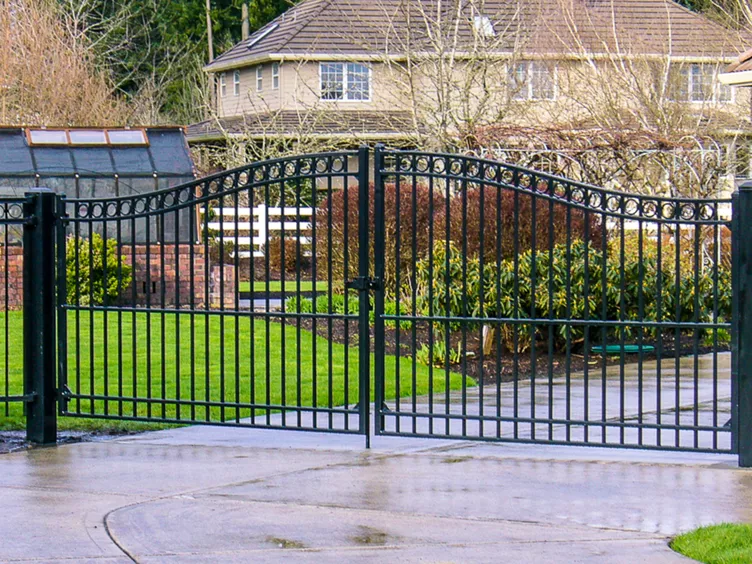
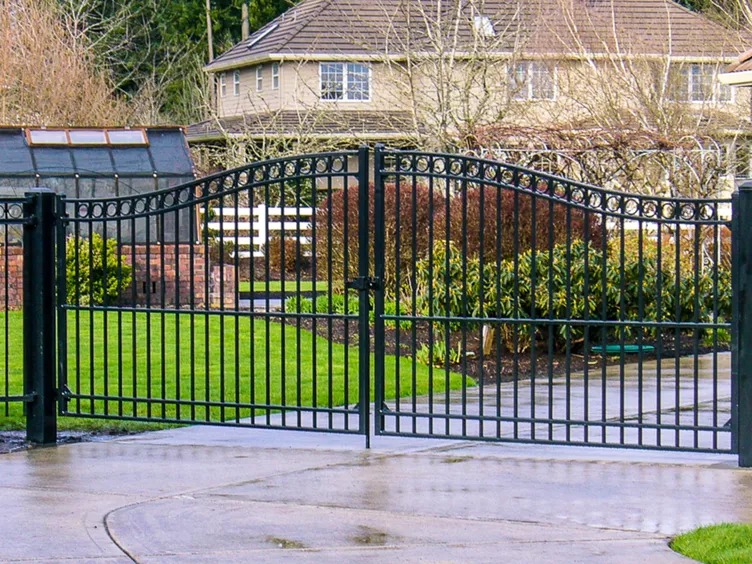
Ornamental iron spear-top double drive gate cost — Shawnee, KS — RKC Wood Care Pros

SHAWNEE GATE PRICING

What Gate Installation Costs in Shawnee

Gate pricing in Shawnee tracks gate type, material, size, and whether the west-side grade calls for a slide instead of a swing. Every quote includes the welded steel frame, galvanized heavy-duty hardware, and a 36-inch footing set to the soil on your side of I-435. Below are the three configurations we quote most often for Shawnee properties.

Wood Walk Gate

$300–600

installed

Cedar or treated pine on a welded frame, galvanized straps, a self-catching latch, over a 36-inch footing set to the soil on your side of I-435.

Single-Drive Driveway Gate

$650–1,800

installed

Cedar $650–1,200 · ornamental iron $900–1,800. Includes the diagonal brace, ball-bearing pivots, and — on a west-side slope — the bottom rail raked to the grade.

Double-Drive & Cantilever Slide

$950–2,800

installed

Priced on width plus swing or slide hardware. Center drop rod, roller carriage, matched caps and rails quoted at the on-site walkthrough.

Every Shawnee gate estimate is free, written, and itemized — the hinge rating, the footing depth, and the frame material are all on the page before you decide. Call (913) 286-1091 or request an on-site walkthrough and we'll read the opening with you.

OUR PROCESS

How a Gate Install in Shawnee Actually Happens

Four steps from the phone call to the first swing. Install days are short — walk gates often same-day, drive gates one to two. The part that sets a Shawnee gate apart isn't the calendar; it's the read at the opening — the side of I-435, the fall of the drive, the state of the old line — and the fabrication that follows from it. Here's what each step looks like on the ground.

1

The estimate — Josh reads the ground and the old line

Josh comes out himself and measures the opening for real, but the walk is as much about the ground as the width: which side of I-435 you're on, how hard the drive falls across the opening, and what a forty-year-old fence line left behind if there's one to tie into. A flat Bemis Park retrofit and a west-side hillside drive are different gates, and that call gets made standing in your driveway, not guessed over the phone. You leave knowing the gate type and swing-or-slide direction; the itemized written quote follows inside the week.

2

Spec'ing the post, hinge, and rail to the leaf and the grade

Between the estimate and setting day we size the hinge post and hardware to what the leaf actually carries, and — if the opening is graded — set the bottom-rail rake to the fall we measured. A 4-foot cedar walk gate and a 16-foot double-drive never share a post; the wide one gets a fatter post buried deeper and a heavier pivot. We lock the hinge and latch ratings, decide on a drop rod, cane bolt, or cantilever roller set, and put the welded frame into fabrication while the concrete schedule gets set.

3

Posts in first, welded frame on top, hardware set on your lot

Setting day starts underground: hinge posts down 36 inches in poured concrete — augered through rock on the west side, set in creek-bottom soil on the east — crowned to drain and left to cure overnight so nothing creeps under load later. The frame and infill hang the next day once the footings are hard. We fit the hinges and latch on your lot, not on a shop bench, so the leaf hangs true to the real pitch of the yard. Budget a day on site for a walk gate, one to two for a drive gate.

4

Ten swings to sign off, then back at 30 days

Nothing gets paid until the gate runs ten full open-and-close cycles with a set of eyes on every hinge under load — a drag, a scrape, a latch off by a hair gets sorted while we're standing there. Then a 30-day return goes on the calendar, because a new footing settles a sliver in the first month and a sliver is enough to miss a catch. That trip — re-square the latch, take up any hinge drift, reset the self-close — is already inside the price you agreed to.

RECENT SHAWNEE GATE INSTALLS

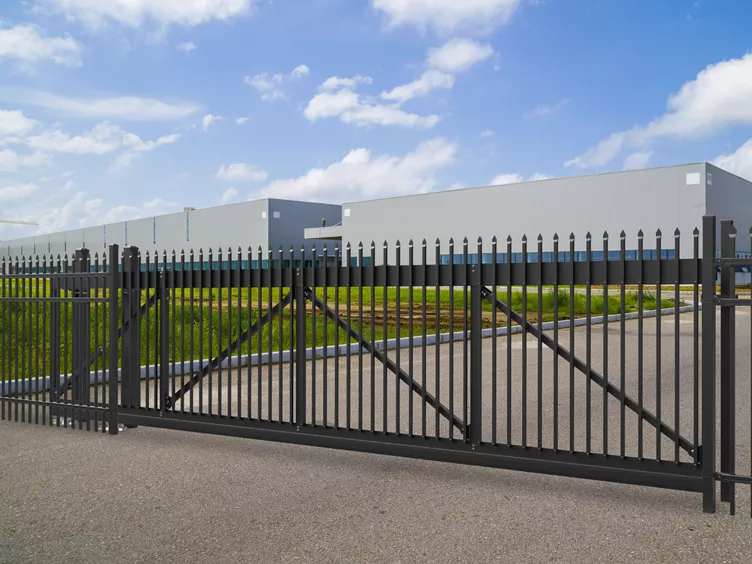
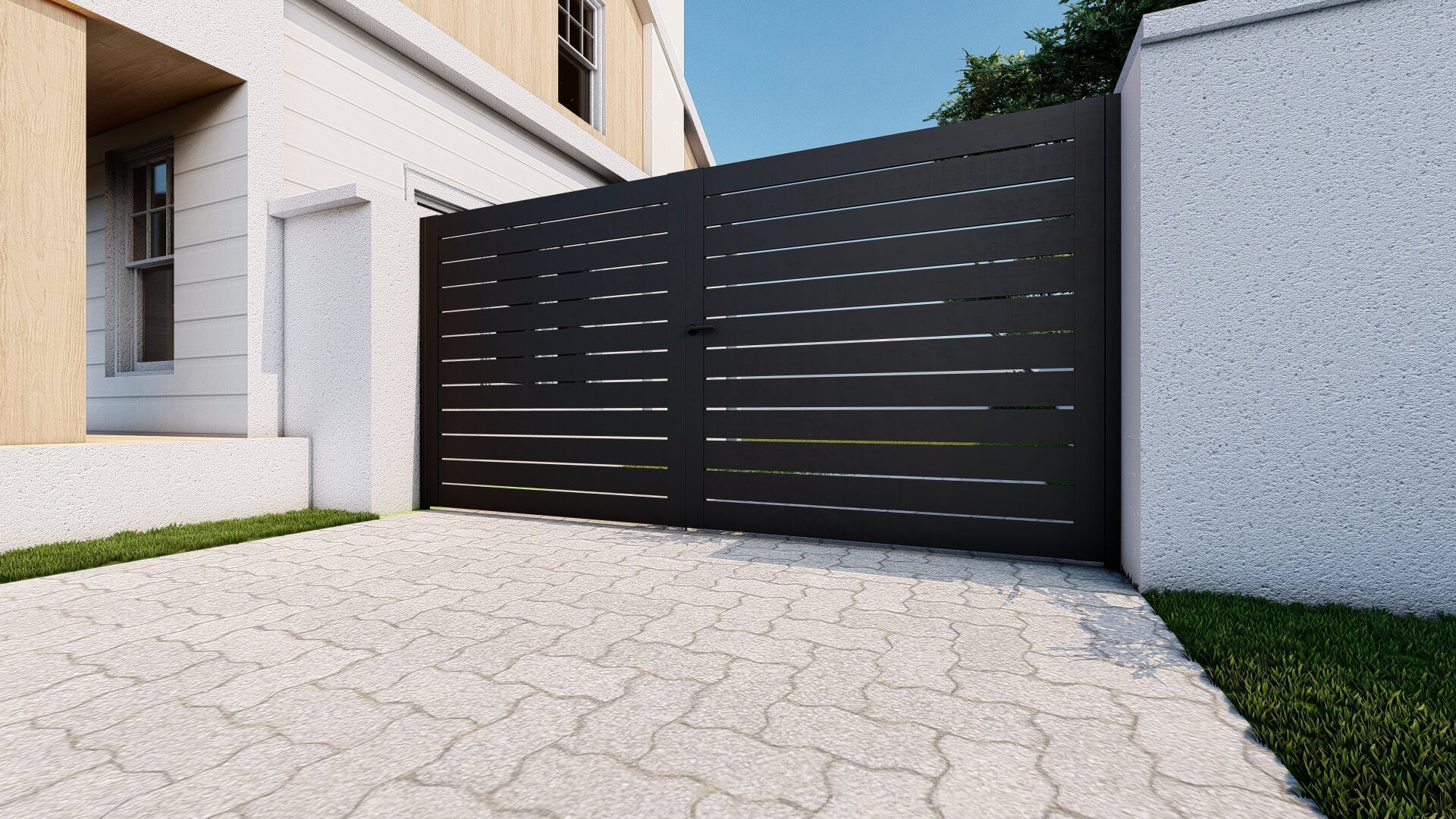
Black horizontal-slat driveway gate installed in Shawnee, KS by RKC Wood Care Pros
Horizontal-Slat Drive Gate · Shawnee
Cedar privacy double-drive gate install in Shawnee, KS by RKC Wood Care Pros
Cedar Double-Drive · Shawnee
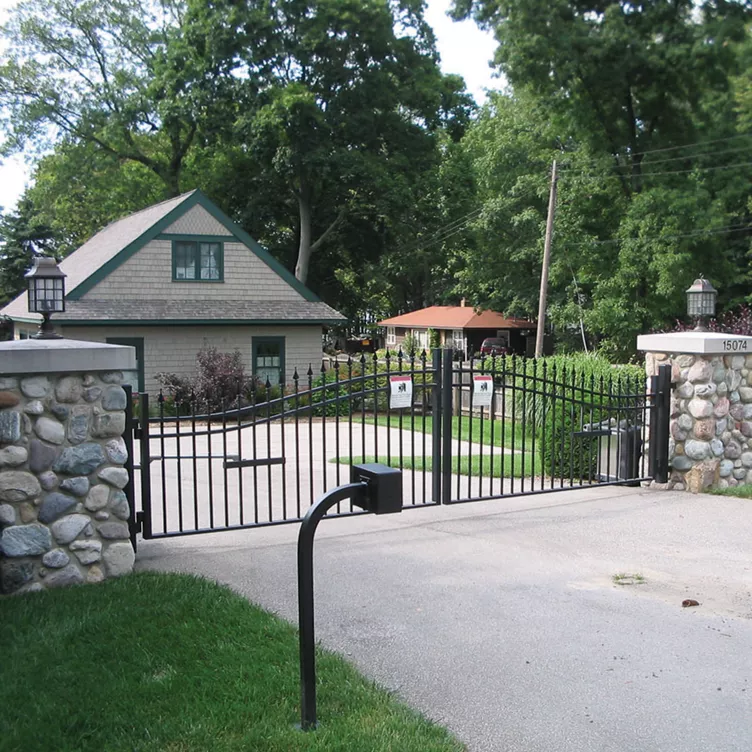
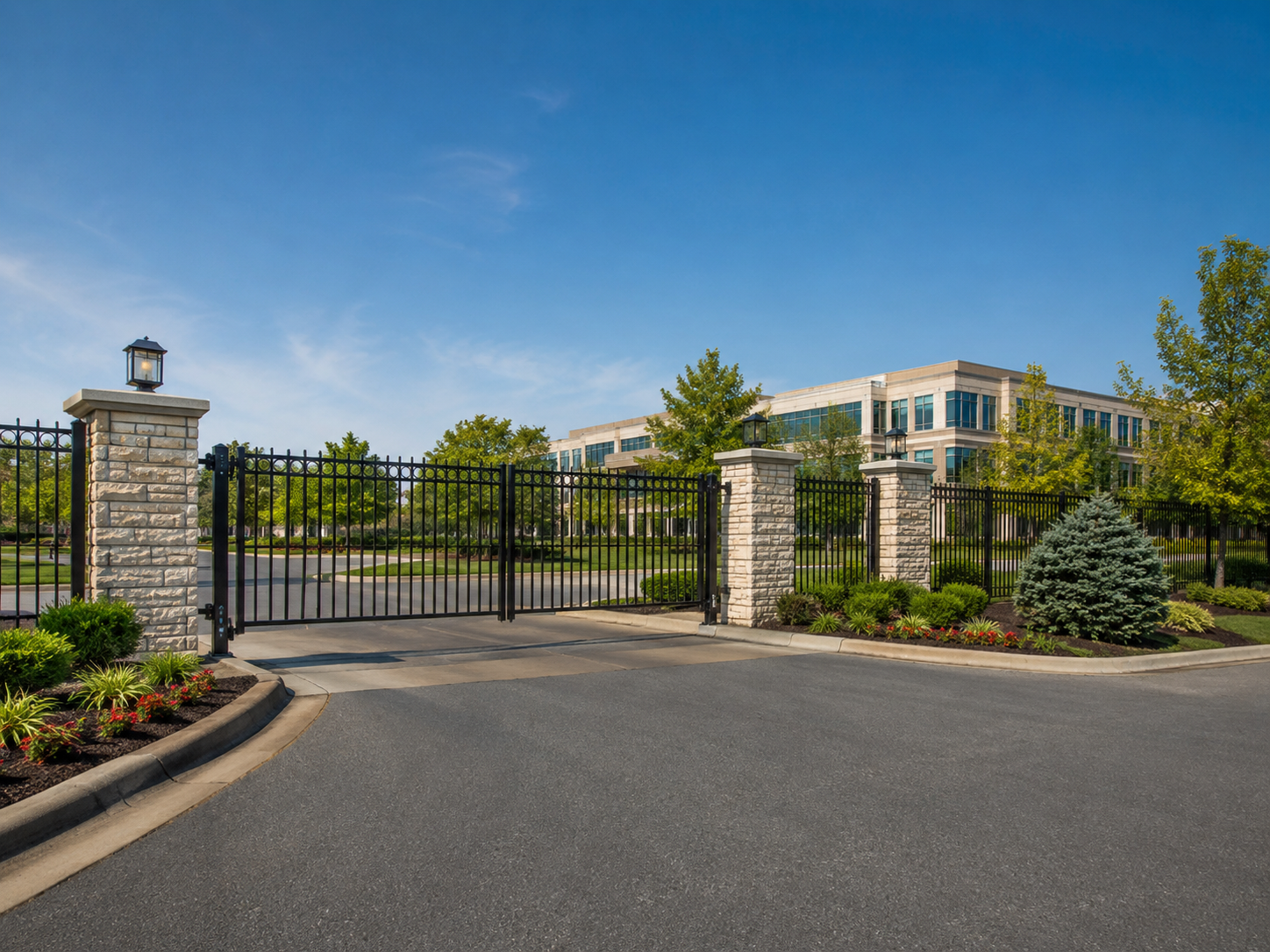
Black ornamental iron gate on stone columns in Shawnee, KS by RKC Wood Care Pros
Iron & Stone-Column Gate · Shawnee
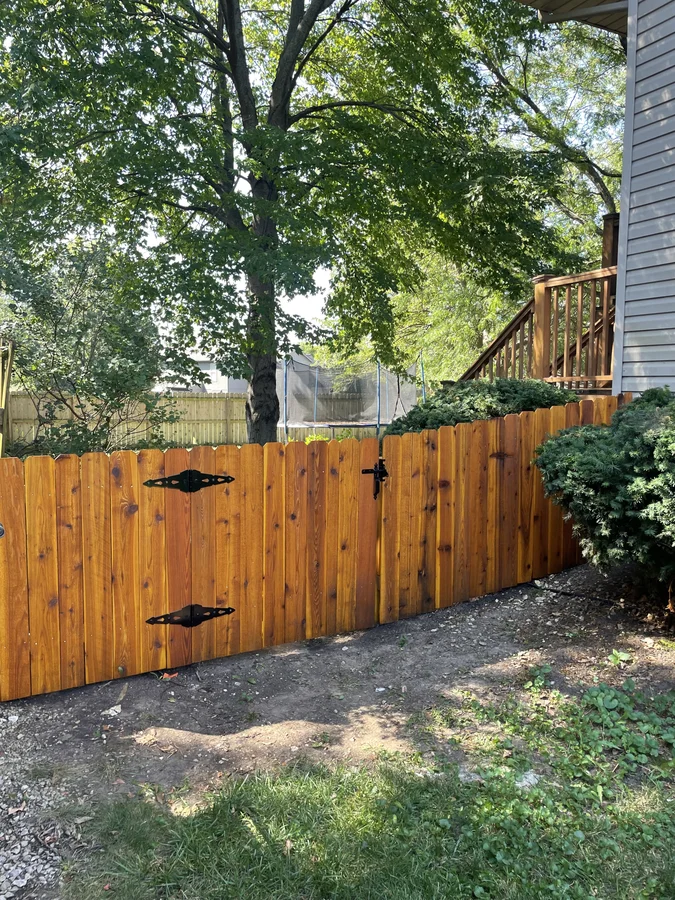
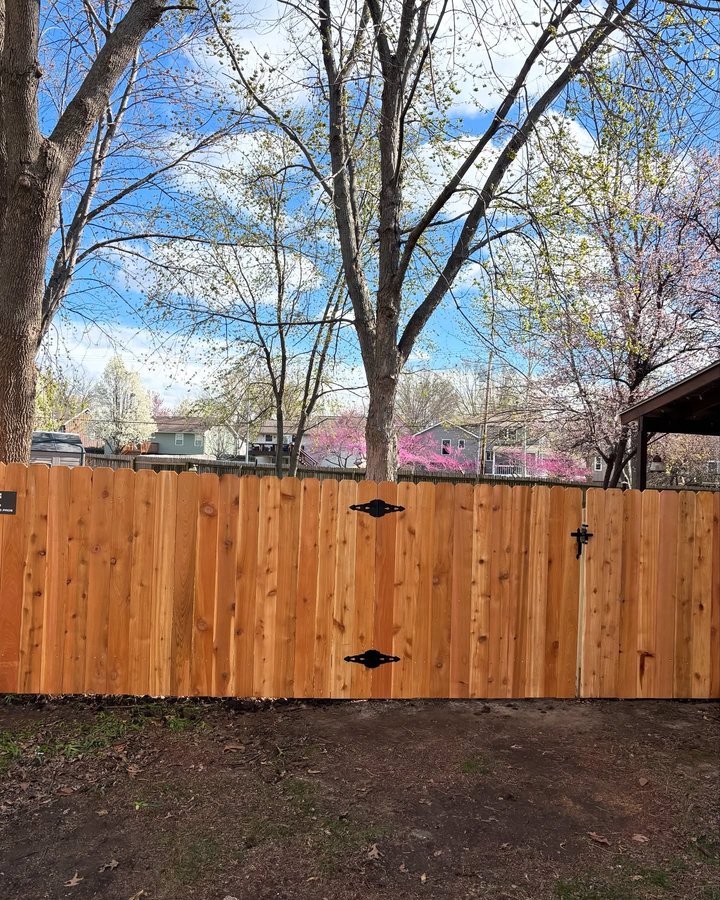
Residential cedar privacy fence with matched walk gate in Shawnee, KS by RKC Wood Care Pros
Privacy Fence & Walk Gate · Shawnee

REVIEWS

What Kansas City Homeowners Say About RKC

4.9 ★ · 85 Google reviews

Every review is on our Google Business Profile — read them there, unedited.

Read all 85 reviews on Google

SHAWNEE GATE QUESTIONS

Gate Questions Shawnee Homeowners Ask Most

Gate installation in Shawnee comes down to sizing to your lot, matching the grade and the old line, and specifying hardware that lasts. Below are the questions Shawnee homeowners actually ask during the estimate — grouped by topic, each answer specific to this town's east/west split and local conditions. If your question isn't here, call (913) 286-1091 and ask.

Residential driveway gate install in Shawnee, KS by RKC Wood Care Pros

Sizing & Your Shawnee Lot

What's the right gate width for a driveway in Shawnee?
Most single-car Shawnee drives run 10 to 12 feet between the pillars, and one leaf carries that fine on a welded, cross-braced frame. Push a single leaf past 14 feet, though, and it becomes too long a lever for one hinge — so we split it into a double-drive, two leaves of roughly 7 to 10 feet meeting at a center drop rod. Walk gates land at 3.5 to 4 feet, wide enough for a mower or wheelbarrow. On a graded west-side opening the width conversation always comes paired with the fall of the drive, since that sets how the leaf has to be raked.
Can a gate go on my existing fence, or do the posts need replacing?
It comes down to how the current hinge post was set — and on the older east-Shawnee lines, that's usually the catch. If the post goes 36 inches into poured concrete and still stands plumb, we can often hang a new gate off it. But a settled 1970s ranch run has usually heaved or leaned, and a gate is only ever as straight as the post it hangs from, so a tired post comes out and a fresh 36-inch footing goes in beside it. We check post depth and plumb on the estimate before we quote the gate.
Swing gate or cantilever slide — which does my west-Shawnee hillside drive need?
It depends on whether the drive is level at the opening. On the flatter east-side lots a swing gate wins on simplicity and cost. But western Shawnee's dramatic grade change is exactly the case a swing gate struggles with — where the drive climbs into the opening, a swing leaf catches the rising concrete before it's half open. There a cantilever slide that rolls sideways on rollers is the answer, since it needs no arc at all. Josh reads the pitch at the opening before either gets recommended.
How long does a wood driveway gate last in Shawnee?
Give a cedar single-drive a welded frame, ball-bearing pivots, and a 36-inch footing keyed to the soil on your side of I-435, and you're looking at 15 to 20 years of service here. The cedar itself runs 15 to 25 on a stain every two or three years, the steel frame outlasts the wood, and rated hinges clear 15. What kills the average Shawnee gate early is the pair we design out: a shallow post the freeze-thaw heaves, and zinc big-box hinges that rust away in a humid KC year.

East Side, West Side

My west-Shawnee lot slopes hard toward the back — how do you keep the gate from dragging?
That slope is the defining western-Shawnee build problem — it's why the panels out here get stair-stepped down the grade. A gate can't be stepped, so we handle the fall a different way: the bottom rail gets raked to match the pitch of the ground, and the hinge post is set so the swing arc holds a consistent clearance from high side to low. Done right, the leaf clears the climb through its entire swing instead of scraping the high point or gapping the low one. It's measured at the opening on the estimate, not assumed.
The clay on my west-side lot is full of rock — does that change the install?
It changes the dig, not the depth. West-Shawnee clay is genuinely rocky, which is why a post-hole out here is slow, hand-brutal work — but that same rock is an advantage once you're through it, because a footing keyed against rock doesn't budge. We auger through with carbide, set the post 36 inches down, and crown the concrete to shed water. The rock that makes the dig a fight is the reason a properly set west-side gate post is some of the most stable ground we work in.
I'm converting an old chain-link line to wood — can you match a gate to it?
Yes, and in the older neighborhoods east of I-435 that's a common job, since a lot of that original galvanized chain link is being traded up for cedar or vinyl a run at a time. The trick is the transition: we build the gate to the new material and tie it in cleanly where the new run meets whatever chain link is staying, so the opening reads as one finished line instead of a patched-together seam. If the whole line is coming out, the gate simply gets built into the new fence from the start.

Pricing & Hardware

Is a welded frame really worth the extra over a bolted one?
It comes down to what daily use does to a joint. A bolted corner starts with a little tolerance, and every open-and-close works it looser until the leaf sits out of square and the latch no longer finds its keeper — usually within a couple of Shawnee seasons. Welding fuses the four corners into one member with nothing to loosen. It runs maybe a fifth to a quarter more on the frame, and what you're buying is never getting the year-five sag call. We don't send a bolted gate out the door here, full stop.
Do you match the gate finish to the fence it hangs on?
Always — a gate that doesn't match the fence is the tell that a job got rushed, and in Shawnee that matters both ways across I-435. On the east-side cedar runs we tone the leaf to the weathered stain so it disappears into the line; on the west-side view lots we powder-coat iron to the same black and match the picket spacing so the sightline stays open. We also hang every gate finished-side-out, so the clean face is what the street and the neighbor see, not the rail-and-brace side.
What's the warranty on the gate and its hardware?
Two separate coverages. The moving hardware — hinges, latches, drop rods, cane bolts — carries the manufacturer's terms, typically around a decade on ball-bearing pivots and five to ten years on straps and latches. The gate itself falls under our workmanship warranty: if it racks, sags at the latch, or pops a weld in normal use, we come back and correct it. And the small first-month settle every new footing does is exactly what the complimentary 30-day return visit exists to tune out.

OTHER SHAWNEE FENCE SERVICES

More Fence Services Available in Shawnee

Every service below stays in Shawnee — dedicated pages with local conditions and recent project photos specific to your city. If you're adding a gate to a new fence, matching one to an old line, or repairing an older install, here's where to go next.

Ready when you are

Get a free estimate — we usually respond the same day.

Call (913) 286-1091