Why is ornamental iron so common in Western Shawnee?
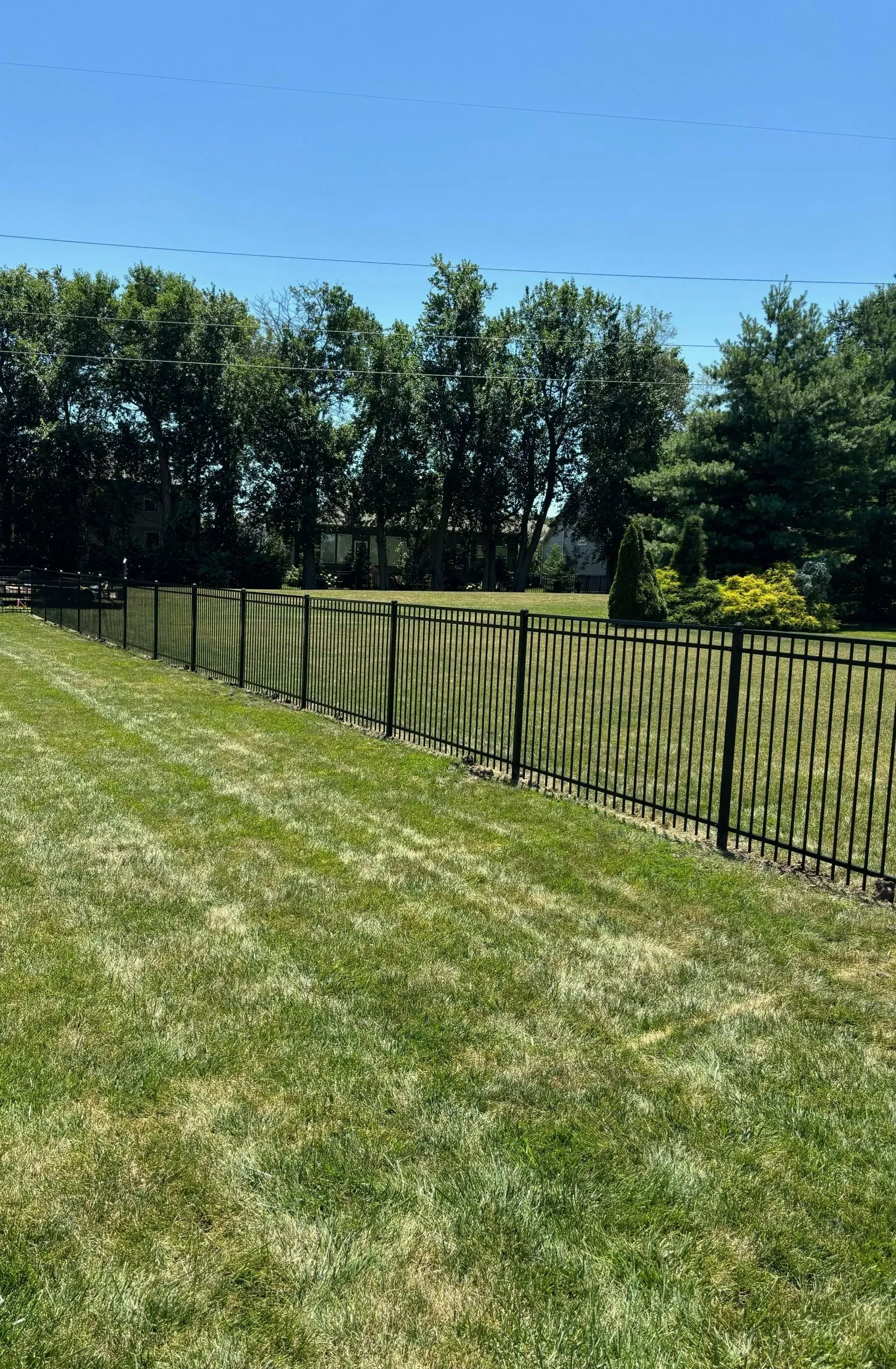
It comes down to the land. Western Shawnee sits on real hills, and a hill gives a lot a view — over the valley, out toward the Lake Quivira treeline — that a homeowner pays to keep. A solid board wall would erase that outlook, so the west turned to open metal, and heavy ornamental steel does the job with a presence the neighborhood likes: the mass reads permanent and frames the slope like part of the house. It's less a fashion than a fit for the terrain, which is why you see far more of it west of the interstate than east of it.
How do you build ornamental steel on a steep Shawnee slope?
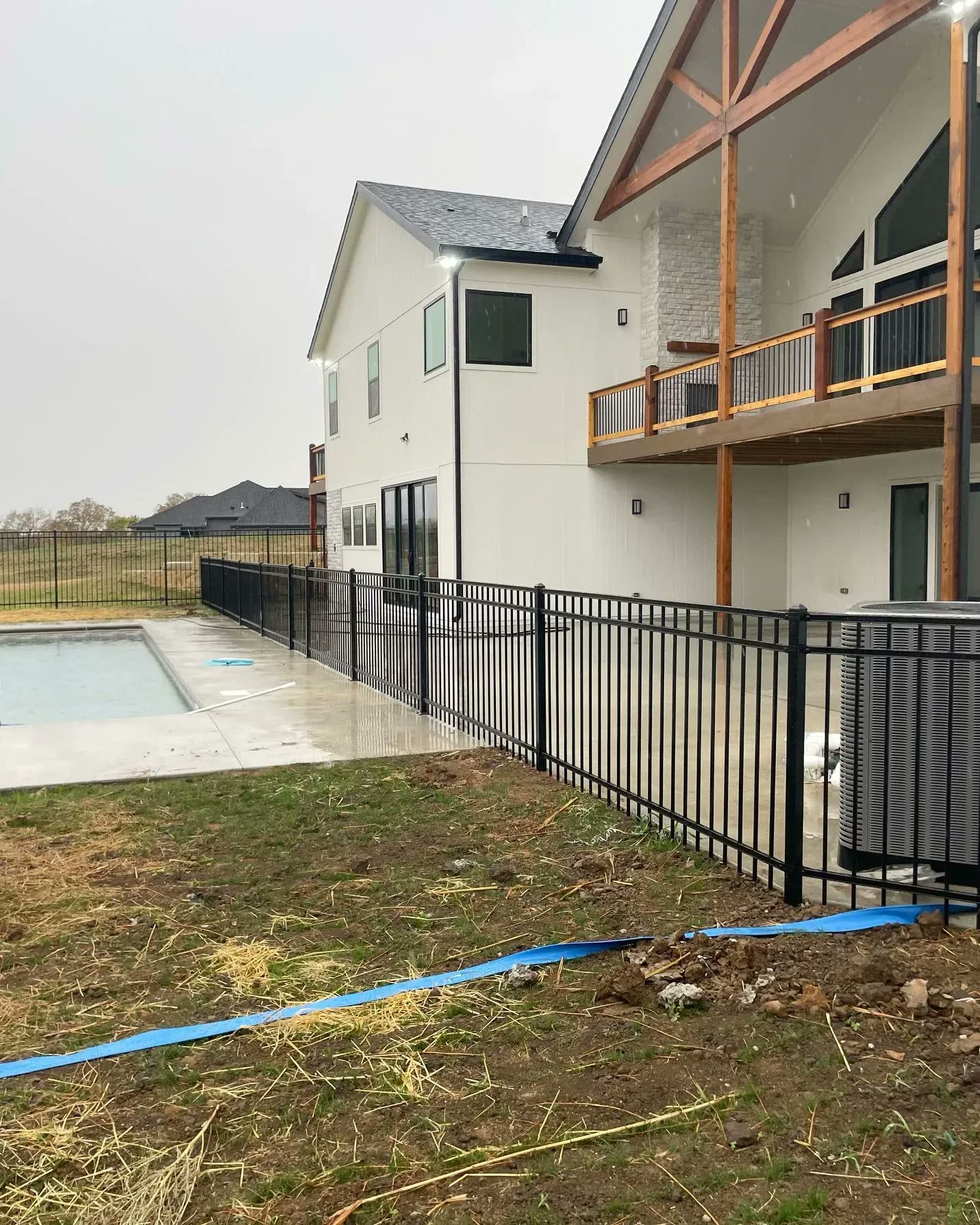
We terrace it. Steel bays are welded solid, so they won't bend to follow a grade — and rather than force them, we plan the run at the estimate to step down the hill in level sections. On a sharp drop each bay sits true and square, and the next picks up below it, so the fence descends in deliberate stages the way a stone garden wall does. The weight of the steel is what sells the look: a stepped iron run reads as intentional terracing, where a flimsier material stepped the same way would just look unfinished. The staging gets drawn with the slope in front of us, not guessed from the street.
Will the metal rust down in the Turkey Creek bottomland?
Not if the coating is built for it, and ours is. The low ground by the creek floods for a spell every spring, and water standing against a post base is exactly what finds a weak spot in a finish. The safeguard is the primer that goes on before the color: it's drawn electrically into the weld seams and up inside the hollow pickets — the very places a sprayed coat skips and rust starts — then locked under the powder. Sealed that way, a run can sit in soaked bottomland through the wet weeks and come through it clean. The footing helps too: bored to full depth in the rock-laced clay so it won't shift when the ground swells.
Can the fence match an older home on the east side?
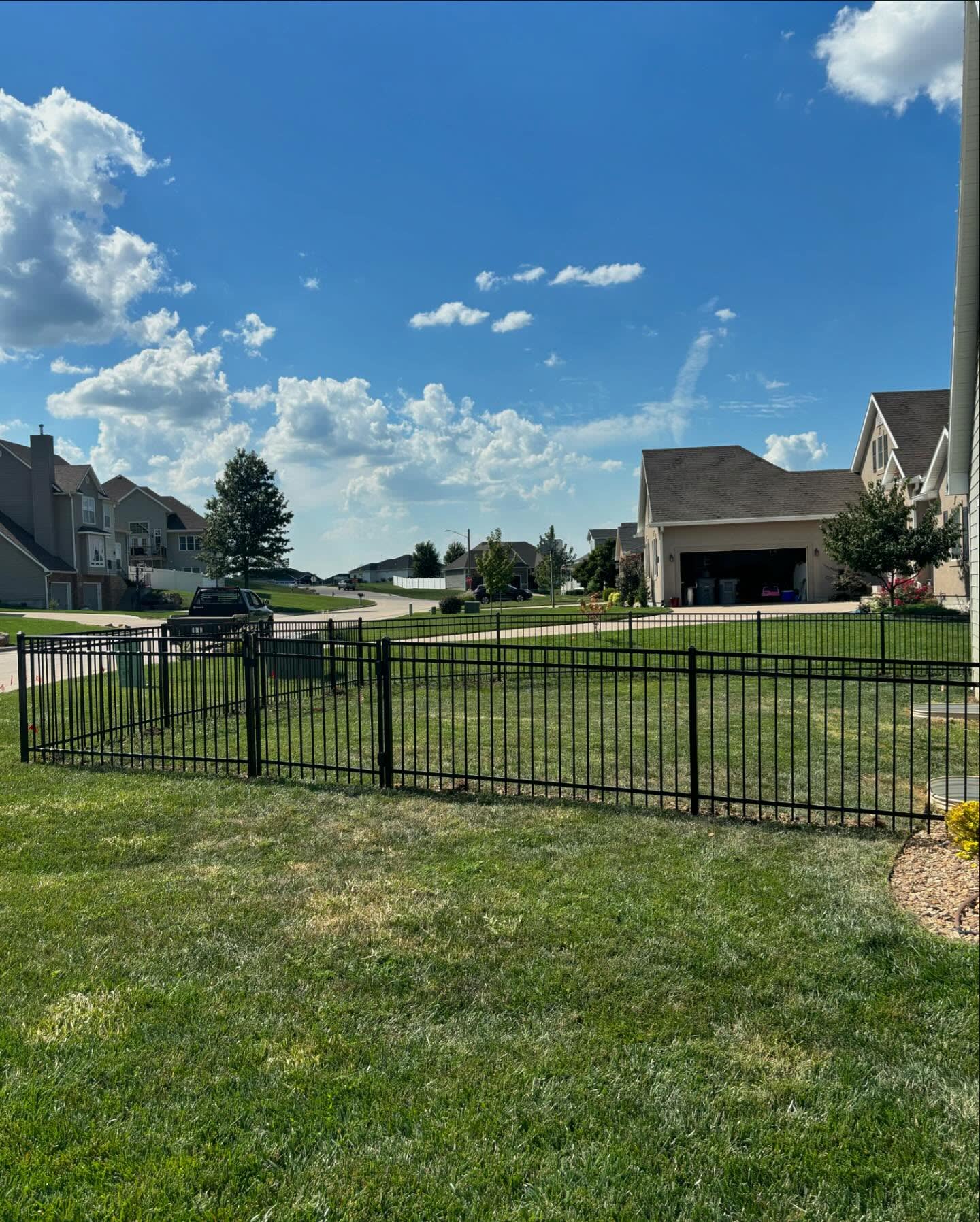
That's one of the things forged steel does that a stock panel can't. The east-of-435 neighborhoods are the older, established side of town — ranch-era streets and the pre-war blocks near the original town square — and those homes carry a decorative feel the newer western tracts don't. We cut and weld the run in our own shop, so a scroll pattern or a scalloped top can be shaped to answer a particular porch line or roof pitch. It's a courtesy paid to the era of the house, and it only comes from metal that's genuinely worked by hand rather than pressed out by the thousand.
Does an open steel fence really hold up to Shawnee's wind?
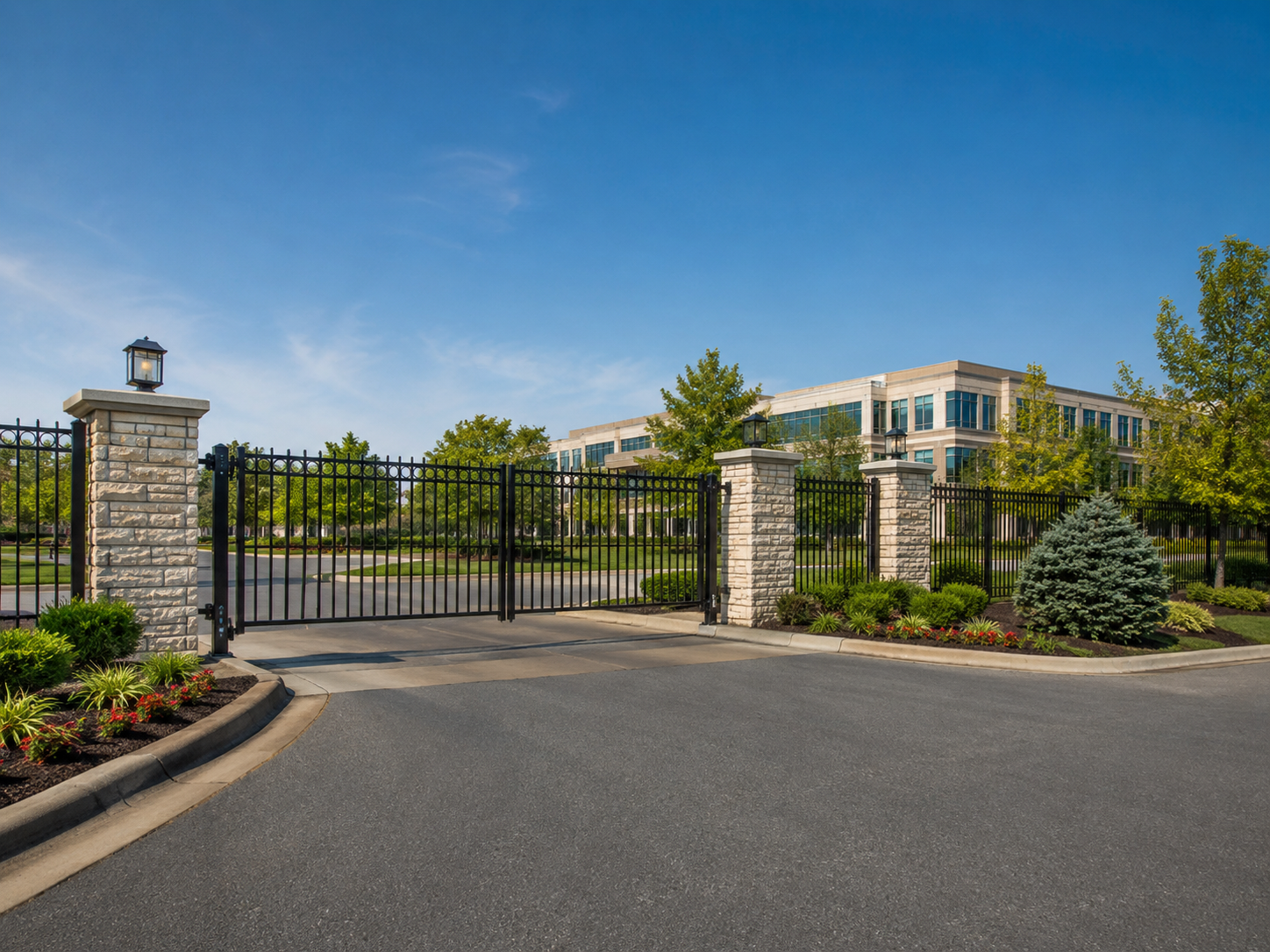
Better than a solid one, which is the whole reason the windy western builds favor it. A see-through picket line hands the wind almost nothing to push against — the air slides between the bars instead of loading the fence like a sign board, so there's no broad face for a gust to lean on. The spot that does take the beating is the gate, and there we weld the frame into a single stiff triangle that can't rack out of square, then hang it on hinge posts set extra deep and cross-braced. Handle the gate right and a stiff Shawnee blow stops being what wears the fence down.
What goes into the price of an ornamental fence in Shawnee?
Every yard is different, so there's no honest number to give over the phone. What moves it is the run length, the picket profile and top you choose, how much of a western grade has to be terraced into stepped bays, whether there's forged scroll or scalloped work involved, the count and width of the gates, and how hard the rock in the clay fights the auger on your particular lot. We come out, measure it, and hand back an itemized written estimate with each of those on its own line, so you can see where the money actually goes. The visit and the quote are free.