Is aluminum the right fence for a hilly Western Shawnee lot?
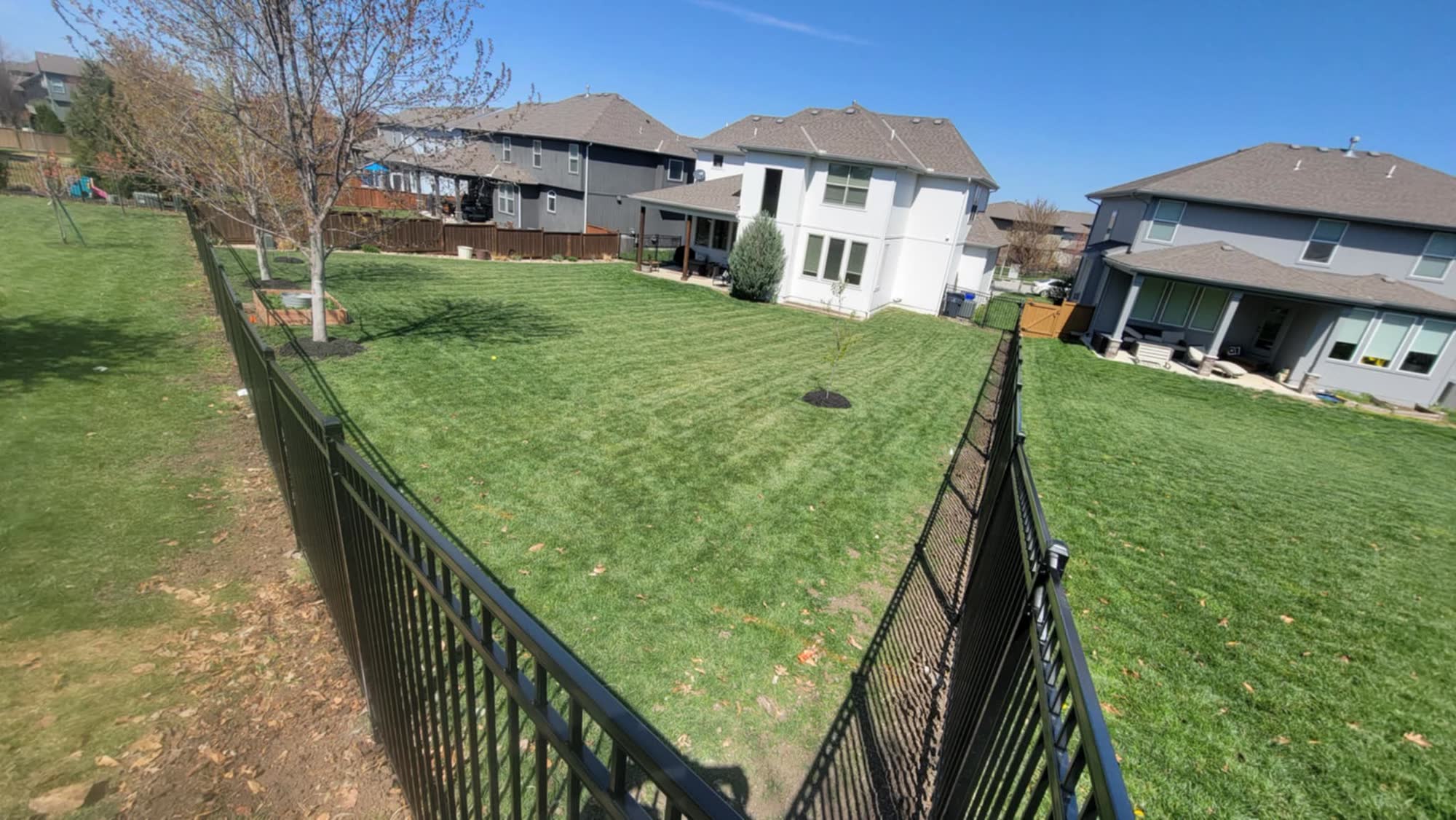
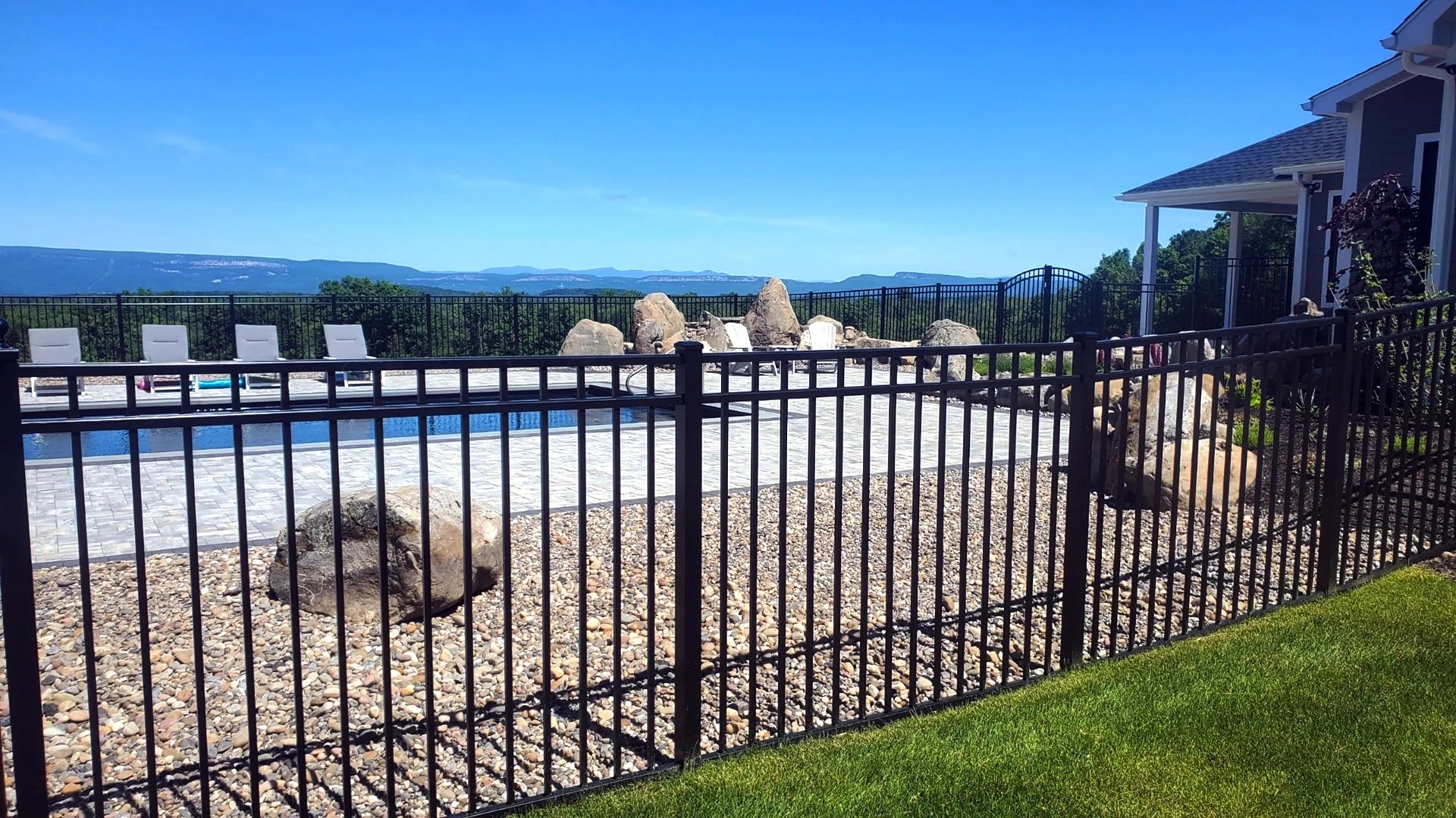
For a lot with a view, it's often the best answer. Western Shawnee's draw is the elevation and the scenic sightlines, and a solid privacy wall throws that away — an open aluminum picket marks the property and holds a dog while leaving the slope and the valley in full view. Just as important on ground that steep is that aluminum panels rack: they hinge at each picket to follow the fall of the hill in one clean line, where a rigid panel would stair-step down the grade and leave a row of gaps under the bottom rail. You keep the view and get a fence that actually fits the hillside.
How does an aluminum fence handle Shawnee's dramatic slopes?
By racking to the grade instead of stepping down it. On the dramatic elevation changes across Western Shawnee, a rigid pre-welded panel has only one option — stair-step down the hill, which leaves a sawtooth of triangular gaps beneath the bottom rail that a dog slips through and the eye catches immediately. A rackable aluminum panel is built to hinge at every picket, so it racks to follow the slope in a single continuous line with the bottom rail parallel to the ground the whole way down. On a steep Shawnee lot, rackability is the difference between a fence built for the hill and one fought onto it.
Will Shawnee's rocky clay or the Turkey Creek flooding be a problem for aluminum posts?
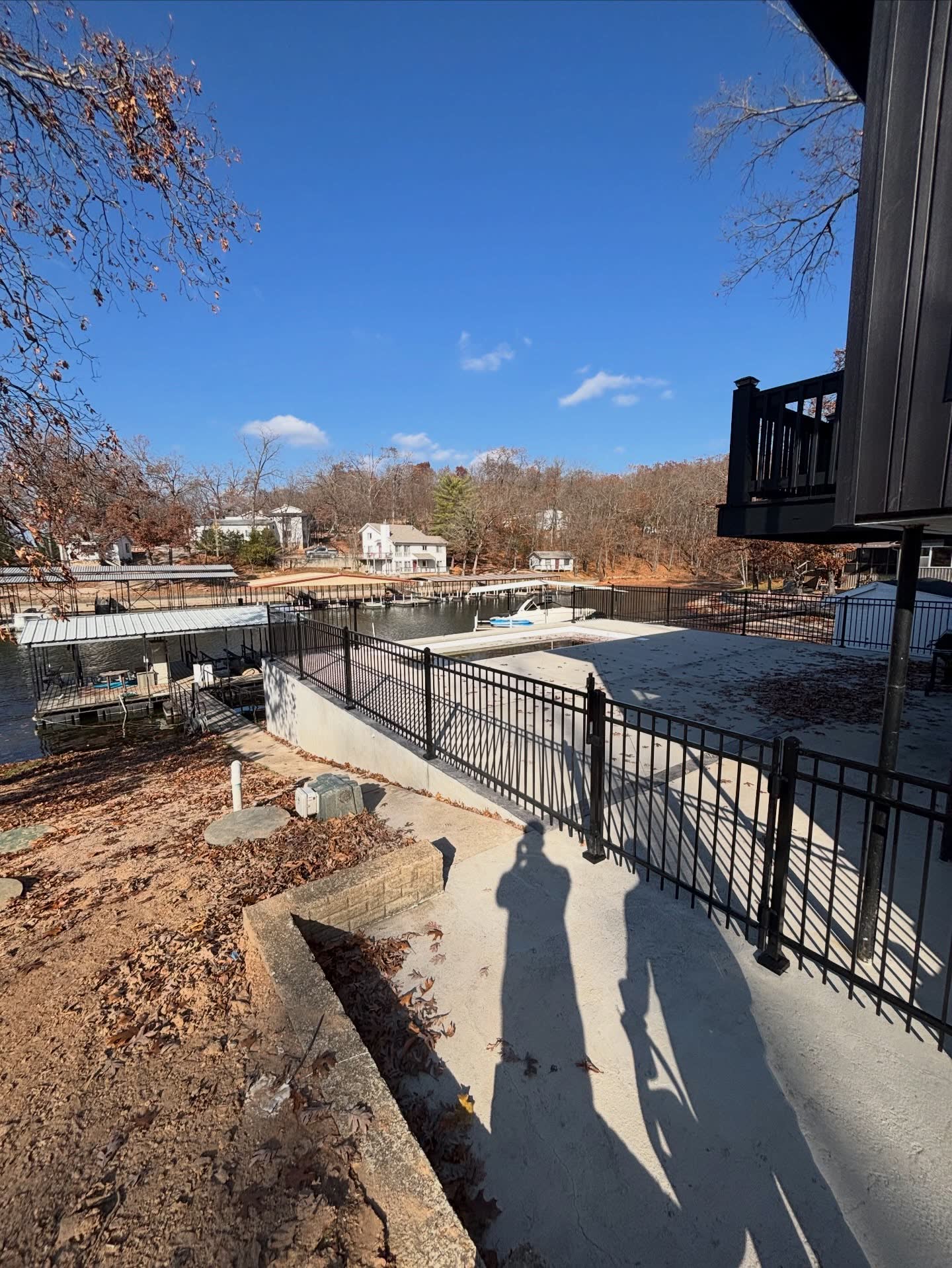
Both are handled at the footing, and aluminum has one built-in edge. The western clay is rocky enough to make hand-digging a real chore, so we power-auger through the rock pockets to reach full 36-inch depth in concrete rather than setting a post shallow on the first stone. Down in the low ground near Turkey Creek, spring flooding saturates the soil and undermines a shaky footing — we set the concrete deep for that wet-bottom ground, and because aluminum has no wood anywhere near the grade line, the repeated soaking that would rot a wood post over a few seasons has nothing to work on. The metal doesn't care how wet the spring is.
I have old chain link in Eastern Shawnee — is aluminum worth the upgrade?
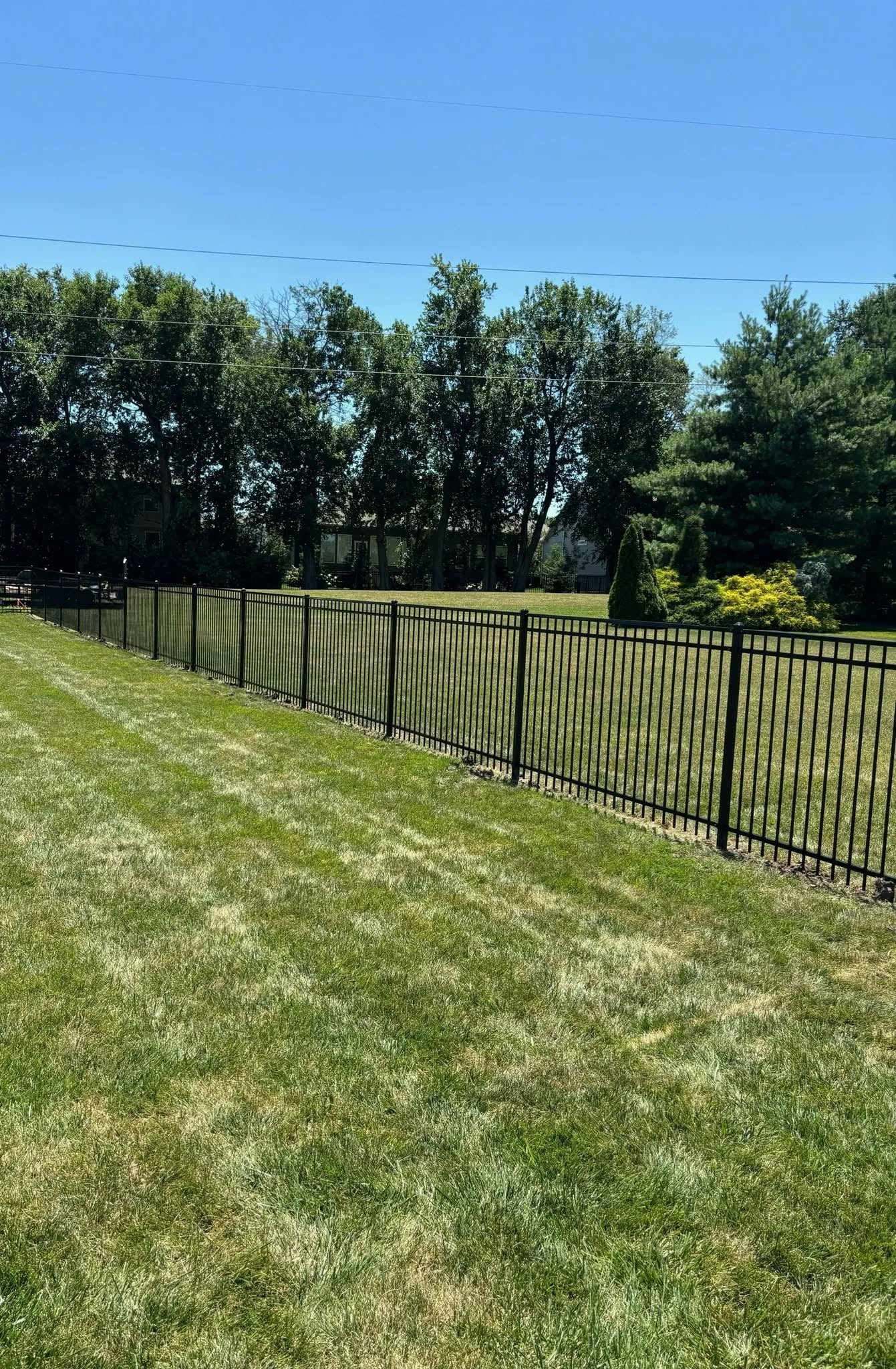
It's the most common move we see in the older east-side neighborhoods, where a lot of tired chain link is being converted to something finished. Aluminum is the natural step up: it sets in the same property line the chain link held, so the footprint doesn't change, but it reads as ornamental iron from the street instead of utility mesh, holds the dog the same way, and never needs the repainting or the constant patching an aging chain-link run demands. You're not just replacing the fence — you're retiring the maintenance that came with it.
Does an open aluminum picket fence contain a large dog?
It does, and in a town with Shawnee's dog-owning numbers that's the question we hear most on a view lot. We narrow the picket spacing to match the animal, so a determined mid-size or large breed can't force a shoulder through, and since every part is metal there's no board along the bottom to gnaw or claw the way a dog eventually defeats a wood fence. A committed jumper gets a taller line. The real win is that on a hillside with a view, the open picket contains the dog without forcing you into a solid privacy wall that would blank out the slope you fence to see.
How much does an aluminum fence cost in Shawnee?
Aluminum runs above wood or chain link at the start, and the trade is thirty to fifty years of service on nothing more than an occasional rinse — no staining, no rust, no repainting the way an old chain-link run needs. Where a quote lands depends on the footage, the picket profile, the number of gates, how much a steep Western Shawnee lot needs racked to the grade, and how hard the rocky clay fights the auger — variables no one can price honestly over the phone. We measure on site and leave an itemized written sheet with every line broken out. The estimate is free.