Skip to content
Fence Staining & Sealing in Lenexa, KS — The Honest Upkeep Math on Cedar

Fence Staining & Sealing in Lenexa, KS — The Honest Upkeep Math on Cedar

Weighing composite so you never have to stain again? The real upkeep on a cedar fence is smaller than the 'never stain again' pitch makes it sound — one day on site about every two years, and it looks new for its whole life. RKC Wood Care Pros lays out the honest math: what cedar, composite, and vinyl each actually ask of you and cost over fifteen years, so the choice isn't fear-driven. Then we stain yours — a penetrating finish that fades instead of peeling, wide-board attention on the horizontal modern runs Lenexa loves, every coat logged and the re-coat date on your invoice so 'I'll seal it later' never becomes a gray fence. 4.9 stars from 85 Google reviews. Call (913) 286-1091 for a free walk and quote.

★★★★★
4.9
from 85 reviews
Licensed
& Insured · KS + MO
400+
fences installed
A+ BBB Rated Kansas City Fence Contractor One-Day Re-Coat on a Tracked 2-Year Cycle Spray + Back-Brush · Penetrating Finish
View stain options in our catalog ↓

WHY LENEXA HOMEOWNERS STAIN WITH RKC

Lower Maintenance Than You Think

The reason so many Lenexa homeowners reach for composite is a bad number — the belief that staining cedar is a constant chore. On a tracked schedule, it isn't. A cedar re-coat is one day on site about every two years, and it keeps a warm real-wood fence looking new for its whole life — at a fraction of composite's up-front cost, with a tone you can change whenever you like. We lay out the honest math on every material, then keep your cedar on a schedule so it never grays out and never needs the restoration you were trying to avoid.

1

The real cedar chore is one day, every two years

Kept on our schedule, staining cedar is a single day on site roughly every two years — we do the wash, the meter check, and the coat; you don't touch it. That's the number the 'never stain again' pitch leaves out. Weighed against composite at two to three times the price, cedar-on-a-schedule is far closer to low-maintenance than most people assume.

2

A finish that fades, never peels

Why the cedar chore stays small comes down to the product: a penetrating semi-transparent soaks into the grain and wears by fading, so re-coating is a wash and a fresh coat. A solid film sits on top, looks bold a season, then peels under freeze-thaw and has to be scraped — a genuinely bigger job. Everything we lay in Lenexa penetrates, which is exactly what keeps the upkeep light.

3

The modern look holds — if it's finished

Lenexa runs more horizontal-slat and black-framed cedar than anywhere in the metro. Those wide flat boards are stunning kept on cycle, but they cup and gray faster than pickets when left bare, because the broad faces hold water. We finish them edge to edge and seal the end-grain, so the City Center look stays crisp instead of warping — the profile that punishes a skipped coat hardest.

4

The schedule is what makes it low-maintenance

Cedar becomes a chore only when it's forgotten — left bare, grayed out, and needing a full restoration to recover. The fix is a logged schedule: your product, color, and next date on file, with the reminder coming from us. That's what turns 'I'll get to it eventually' into a scheduled one-day visit, and it's the difference between low-maintenance cedar and the fence people fear.

LENEXA LOCAL CONDITIONS

Why Staining in Lenexa Is a Maintenance Conversation

Three local factors shape stain work in Lenexa: the low-maintenance instinct that pushes homeowners toward composite, the wide horizontal boards that raise the stakes on finish, and the heavy clay and fast-development drainage that decide how a coat holds. This is the metro's most maintenance-conscious market and its most modern one — a place where the honest upkeep math matters as much as the coat itself. Same crew, same standard: read the fence, read the drainage, lay out the real numbers, then finish it right.

1

The low-maintenance question, answered honestly

Lenexa homeowners want low maintenance more than almost anywhere in the metro — it's why composite and high-end vinyl sell better here than in Olathe. That's a fair instinct, but it's usually working off a bad number: the belief that staining cedar is a constant chore. It isn't. A cedar re-coat is one day on site about every two years, and it keeps the fence looking new for its whole life. Weigh that against composite at two or three times the up-front cost and a look you can never change, and the math is a lot closer than the 'never stain again' pitch suggests. We lay the real numbers out so the choice is honest, not fear-driven.

2

Wide horizontal boards raise the stakes on finish

The modern horizontal-slat and black-framed cedar that Lenexa loves — the City Center look — behaves differently than a traditional picket fence when it comes to finish. Broad, flat, horizontally-run boards hold water on their upper faces and at the end-grain longer than a vertical picket sheds it, so left bare they cup, check, and gray noticeably faster. The designer look that drew you to the fence is also the profile that punishes a skipped coat hardest. On these runs the penetrating finish and the on-cycle re-coat aren't optional polish — they're what keeps the modern lines crisp instead of warped.

3

Heavy clay and fast development mean drainage matters

Lenexa sits on classic heavy Kansas City clay, and the rapid build-out west along K-10 has left plenty of yards with the poor drainage that comes from disturbed, compacted development soil. Water that pools instead of draining keeps the bottom of a fence damp, which slows the dry window before a coat and speeds mildew and ground-line wear after one. So on a Lenexa fence we read the drainage as part of the estimate — metering the slow-drying low runs, and sealing the ground line well where water lingers — because a finish is only as durable as the moisture conditions it's laid into.

The Lenexa streets we've stained and brought fences back on run from the aging 1980s cedar in Oak Park and Brookwood out to the modern master-planned runs near Lenexa City Center and along the 87th Street Parkway and K-10 corridor — traditional cedar privacy, horizontal-slat modern, board-on-board, and the composite and vinyl this market favors. Each cedar and pine run gets the same honest maintenance read up front, the same drainage-aware prep, and the same matched penetrating coat to close. A fence another company built earns the identical treatment — a schedule and the right finish have never cared whose truck showed up on install day.

THE REAL UPKEEP MATH

The Lenexa Maintenance Guide — What Each Choice Asks of You

Before you decide between cedar-on-a-schedule and 'never stain again,' it's worth seeing what each material and finish actually asks of you — up front, year to year, and across fifteen years. Here's the honest side-by-side we walk Lenexa homeowners through: the real commitment behind each choice, not the sales-sheet version. The short answer is that cedar-on-a-schedule is a smaller job than most people fear and composite a bigger up-front bet — but your fence and your priorities decide it, which is why we lay it all out at the estimate.

Material / finish choice Up-front feel What it asks of you The honest 15-year picture
Cedar + penetrating semi-transparent (our standard) Warm, real-wood look at a mid price A wash and a re-coat about every 2 years — one day on site Holds rich color for the life of the fence when it's kept on cycle; ages gracefully
Cedar left unfinished ('I'll seal it later') Cheapest on day one Nothing — until it grays, and gray doesn't wash off Silver within a year, and recovering the color then means a full restoration, not a re-coat
Cedar + solid / opaque film stain The most color and coverage day one A scrape-and-recoat, not a wash-and-recoat The film peels under freeze-thaw, so every renewal is high-labor and the cost climbs over time
Composite (Trex-style) No staining ever, modern look — but 2–3× the up-front cost An occasional wash for mildew and pollen; it never takes color Holds its shape and never grays, but fades to a flatter tone you can't refresh or change
Vinyl privacy No staining, wipe-clean, uniform A rinse now and then; you can't restain or recolor it Stays uniform but reads plasticky; a cracked panel in deep cold is a replacement, not a repair
Horizontal modern cedar (the Lenexa look) The designer profile everyone near City Center wants The same 2-year re-coat as any cedar — and the wide flat boards need it more Stunning kept on cycle; unfinished, the broad horizontal boards cup and gray faster than pickets

The line that runs down the guide: cedar-on-a-schedule is a one-day, every-two-year commitment that keeps a real-wood fence looking new — a smaller job than the 'never stain again' pitch implies, and a fraction of composite's up-front cost. For some Lenexa homeowners composite still wins; for many, honest math tips it back to cedar. Want the numbers on your own fence? A free staining walk lays out the comparison and brings the sample boards, or start with a new Lenexa wood fence from the same crew that will finish it.

STAIN SERVICES

Re-Stains, Modern-Board Finishes & Restoration — Every Lenexa Scenario

The scope your Lenexa fence lands in comes straight out of the read — cedar due for its routine one-day re-coat, a wide horizontal modern run that needs edge-to-edge finishing, raw new wood awaiting its opening system, or a run left unsealed too long that needs bringing back. Below are the four we run across Lenexa, what each one suits, and honest per-foot numbers. You can swap colors inside any scope; what stays fixed is the sequence — read the fence and the drainage, level the surface, lay a matched penetrating coat with a spray-and-back-brush pair, all by our own crew.

Existing Cedar Re-Stain by RKC Wood Care Pros in Lenexa, KS

Existing Cedar Re-Stain

The 2-year cycle · the everyday Lenexa call

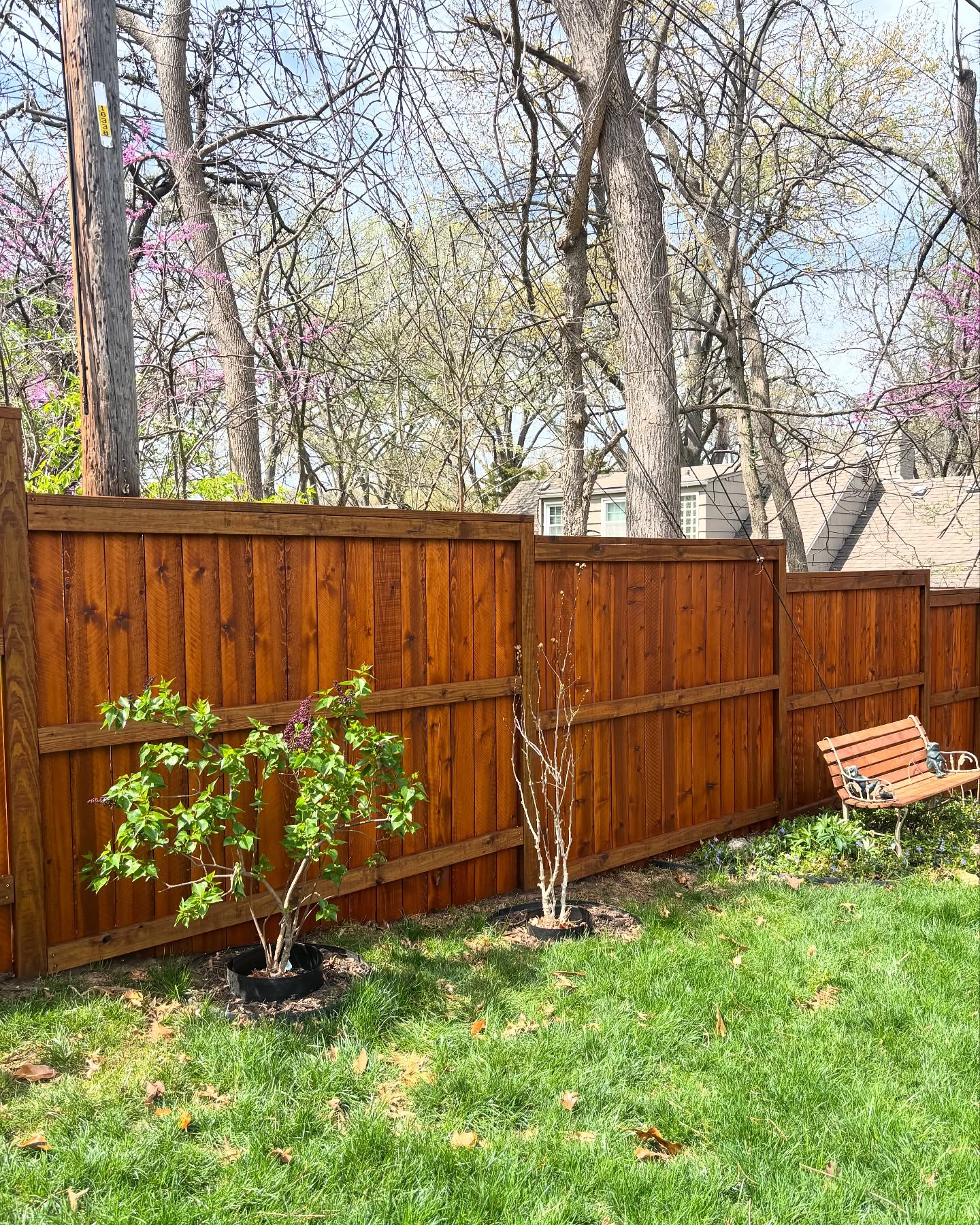
This is the coat that makes the whole maintenance math work in cedar's favor — and it's a smaller commitment than most Lenexa homeowners expect. On schedule it's a soft wash to lift oxidation and mildew, a meter check for the dry window, then the matched color driven back into both faces, all in a single day on site. Because we log your exact product and color the day we finish, the re-coat pulls the same can off the shelf — no two-tone patch where a different crew guessed. Your next date goes on the invoice, and the reminder comes from us, so 'I'll seal it later' never turns into a gray fence.

  • Price: $4–8 / LF · typically $600–1,200 per 150 LF
  • Typical use: Aging 1980s cedar across the established neighborhoods, straight color refreshes, keeping a run on cycle so it never needs restoration
Horizontal & Modern Cedar Finish by RKC Wood Care Pros in Lenexa, KS

Horizontal & Modern Cedar Finish

The City Center look · wide-board discipline

Lenexa runs more horizontal-slat and black-framed modern cedar than anywhere in the metro, especially near City Center — and those wide, flat boards want their finish more than a traditional picket does. Broad horizontal faces hold water longer and cup faster when they're left bare, so the penetrating coat and the two-year rhythm matter even more here. We finish the wide boards edge to edge, seal the exposed end-grain that a horizontal design leaves facing the weather, and match a tone that reads with the modern grays and whites these homes wear. Kept on cycle, the look holds; skipped, it's the profile that shows neglect fastest.

  • Price: $5–9 / LF · typically $750–1,350 per 150 LF
  • Typical use: Horizontal-slat cedar, black-framed modern runs, contemporary master-planned communities near City Center
New-Install First-Coat Stain by RKC Wood Care Pros in Lenexa, KS

New-Install First-Coat Stain

The opening system on every RKC Lenexa build

The coat that starts the maintenance clock on the right foot. Fresh cedar needs roughly four weeks for the internal moisture to fall far enough that a penetrating finish keys into the grain instead of beading off; treated pine needs closer to a season for the factory chemistry to cure. Get this coat on at the right moment and the whole low-maintenance case for cedar holds up — the fence never grays, so it never needs a restoration, just the routine re-coats. Plenty of our cedar packages carry this first coat inside the install price — worth asking Josh when he walks it.

  • Price: $3–6 / LF · typically $450–900 per 150 LF
  • Typical use: Fresh cedar in the newer master-planned communities, the opening coat after any RKC build, locking the finish in from week one
Gray-Fence Restoration by RKC Wood Care Pros in Lenexa, KS

Gray-Fence Restoration

For the fence that went 'I'll seal it later' too long

This is the call from the homeowner who meant to seal the fence and never did — the 1980s cedar that's gone full silver, or a newer run left bare through a couple of summers. That gray is usually a thin weathered skin over sound wood, not a spent fence, but it's exactly the outcome the routine re-coat is designed to prevent. Failed finish gets stripped rather than painted over; the whole run takes an oxalic brightener to a single even tone, several wash passes, a hard dry, a meter check, then one penetrating coat. Once it's back, we put it on the two-year schedule so it never gets here again.

  • Price: $6–12 / LF · typically $900–1,800 per 150 LF
  • Typical use: Silvered 1980s cedar, newer runs left unsealed too long, homes just changed hands, restoration back onto a maintained cycle

Cedar fence stain pricing on a tracked maintenance cycle — Lenexa, KS — RKC Wood Care Pros

LENEXA STAIN PRICING

What Fence Staining Costs in Lenexa

What a Lenexa job costs rides on whether the fence stayed on schedule — a run caught on its two-year cycle is a routine one-day coat, while one left bare for years and grayed out costs a restoration multiple of that. Each quote folds in the wash, the metered dry window on the slow-draining low runs, the matched penetrating family, the spray-and-back-brush pass by our own two-person crew, and a written date for the next coat. The three setups we price most often for Lenexa homes are below — and staying on the first one is what keeps you off the third.

Cedar Re-Stain

$4–8 / LF

wash + penetrating stain

The one-day, every-two-years coat that keeps cedar's low-maintenance case honest — soft wash, meter check, the matched family driven into both faces, and your next date in writing. Most 150 LF Lenexa cedar privacy runs settle near $600–1,200.

Horizontal / Modern Finish

$5–9 / LF

wide-board penetrating coat

Edge-to-edge finish on the wide horizontal faces, sealed end-grain, and a tone matched to the modern exterior — the coat these City Center runs need more than a picket does. A 150 LF horizontal Lenexa run usually lands at $750–1,350.

Gray-Fence Restoration

$6–12 / LF

strip · brighten · stain

For the run that went unsealed too long: failed finish taken off, silvered boards leveled with an oxalic brightener, repeated wash passes, then a single penetrating coat — and back onto the two-year schedule. A weathered 150 LF Lenexa run is usually $900–1,800.

The whole cost case for cedar is in staying on the first card and never reaching the third — a tracked re-coat is a fraction of a restoration, which is exactly why we log the schedule and send the reminder. Every Lenexa estimate is free, written, and itemized — call (913) 286-1091 or set up a walk. While the crew's on site they can flag any Lenexa fence repair the drainage-worn or cupped runs need before staining earns its keep — one trip, same hands.

OUR STAIN PROCESS

How a Lenexa Stain Job Comes Together

Four steps from the phone call to the final walk. Most Lenexa stain jobs span 2 to 4 days — but the coat itself is a single day, which is the whole low-maintenance point. The stain is usually one day on site for a standard run. The rest of the clock is the maintenance read, the wash-brighten-dry cycle, and the drainage check on the slow-draining low runs. Here's what each step looks like on a Lenexa fence.

1

Walk it, meter it, read the drainage

Step one is the honest read — where the fence stands on its maintenance clock, whether the wide horizontal runs have started to cup, and how the yard drains, because Lenexa's heavy clay and fast-development soil decide how a coat holds. Josh or a lead measures the footage, takes moisture readings on the slow-drying low runs, and grades the finish. If you're weighing cedar against composite or vinyl, this is when we lay out the real upkeep math rather than a sales pitch. Estimate's free and itemized, and we brush a tone sample on a hidden board so you judge the color on your own wood.

2

Wash, brighten, and let the low runs dry

This is the stage that keeps the coat honest. A run due on schedule gets a soft wash to lift oxidation and mildew; a run left bare too long takes an oxalic brightener back to a true tone; any failed film gets stripped rather than buried. Because the poorly-drained low spots common in newer Lenexa yards dry slowest, the meter goes back on the wettest section and nothing opens until it reads ready. On horizontal runs we pay special attention to the flat upper faces and end-grain where water lingers. A coat won't hold over damp wood or a spent finish.

3

Lay the finish, spray and back-brush

Surface level and dry, we load the matched family and put it on the one way that works: a sprayer moving the finish, a second hand right behind back-brushing it into the grain before it sets. On traditional pickets that pairing holds an even tone top to bottom; on the wide horizontal boards Lenexa favors, the back-brush is what drives the finish into the broad flat faces and the exposed end-grain that a sprayer alone would leave thin — exactly the spots that cup and gray first when they're starved.

4

Walk it together, then log the schedule

Last is your eyes alongside ours — a full pass catching any board that reads thin or skipped, touched in on the spot before we sign off. Then the finish lands on your file: the date, the product family, the exact color, the footage, and when the next coat is due — two years for cedar, three for pine. That record is the whole point of the low-maintenance case: it's what turns 'I'll get to it eventually' into a scheduled one-day visit, so the fence never grays out and never needs the restoration you were trying to avoid.

RECENT LENEXA STAIN JOBS

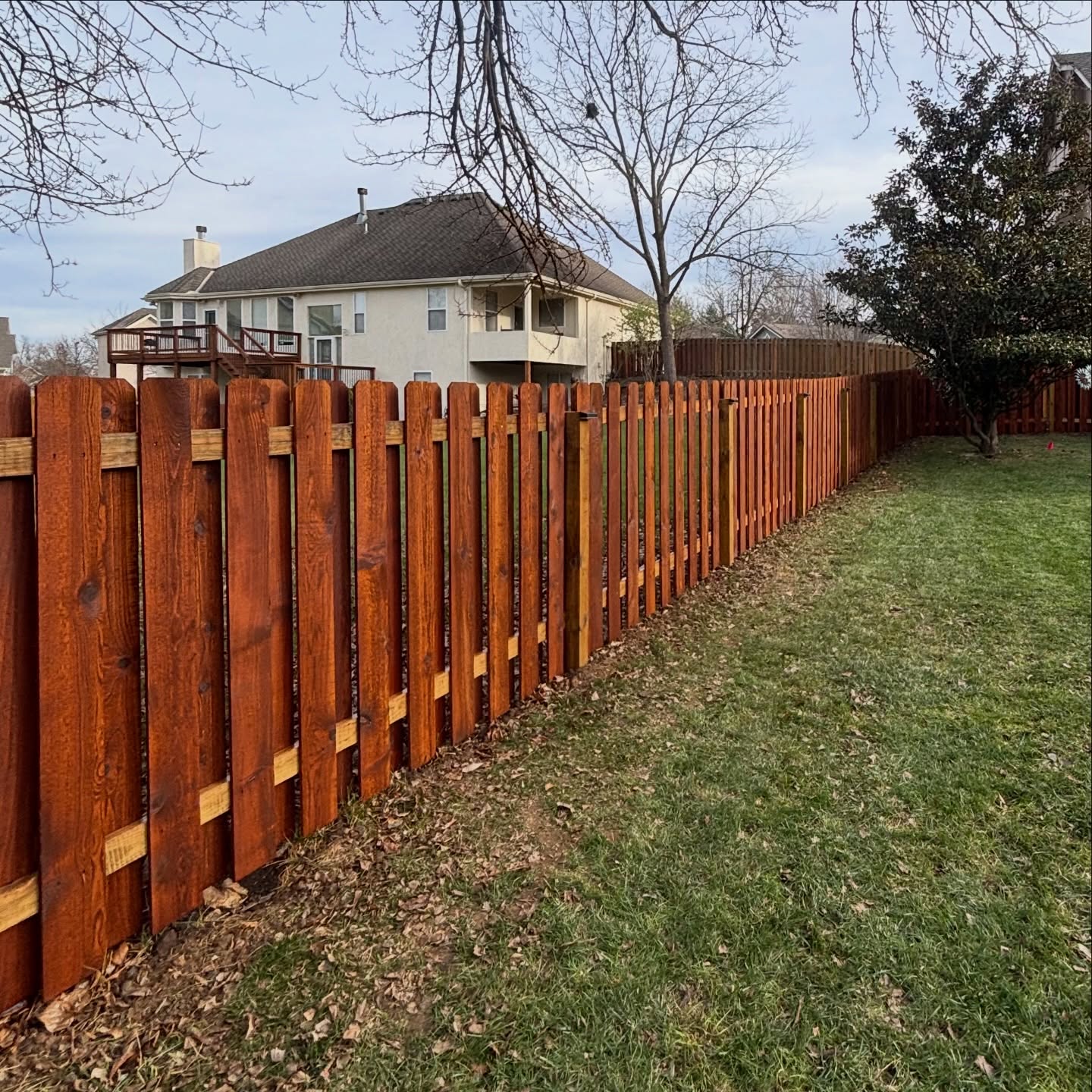
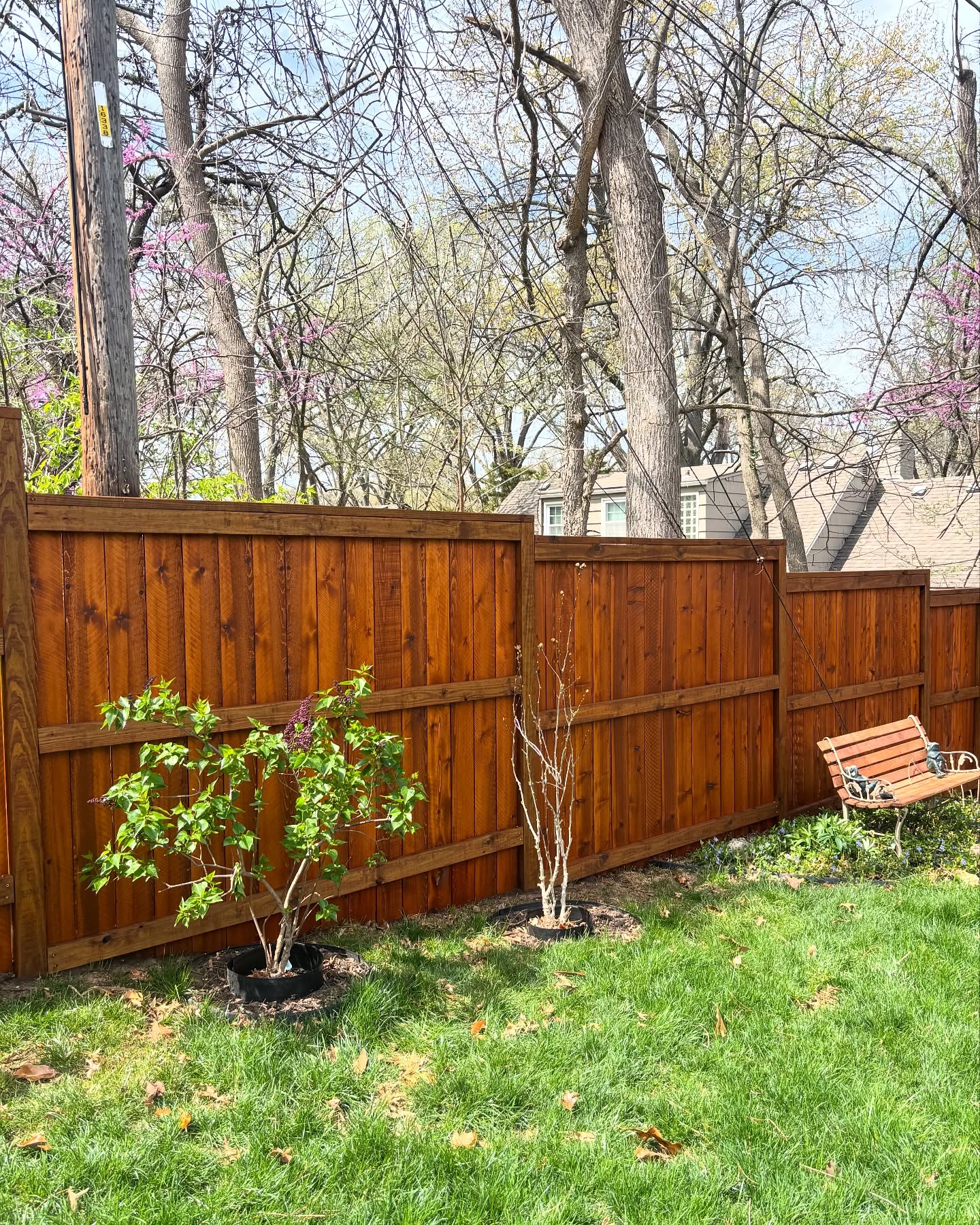
Cedar re-stain in golden honey in Lenexa, KS by RKC Wood Care Pros
Cedar Re-Stain · Lenexa
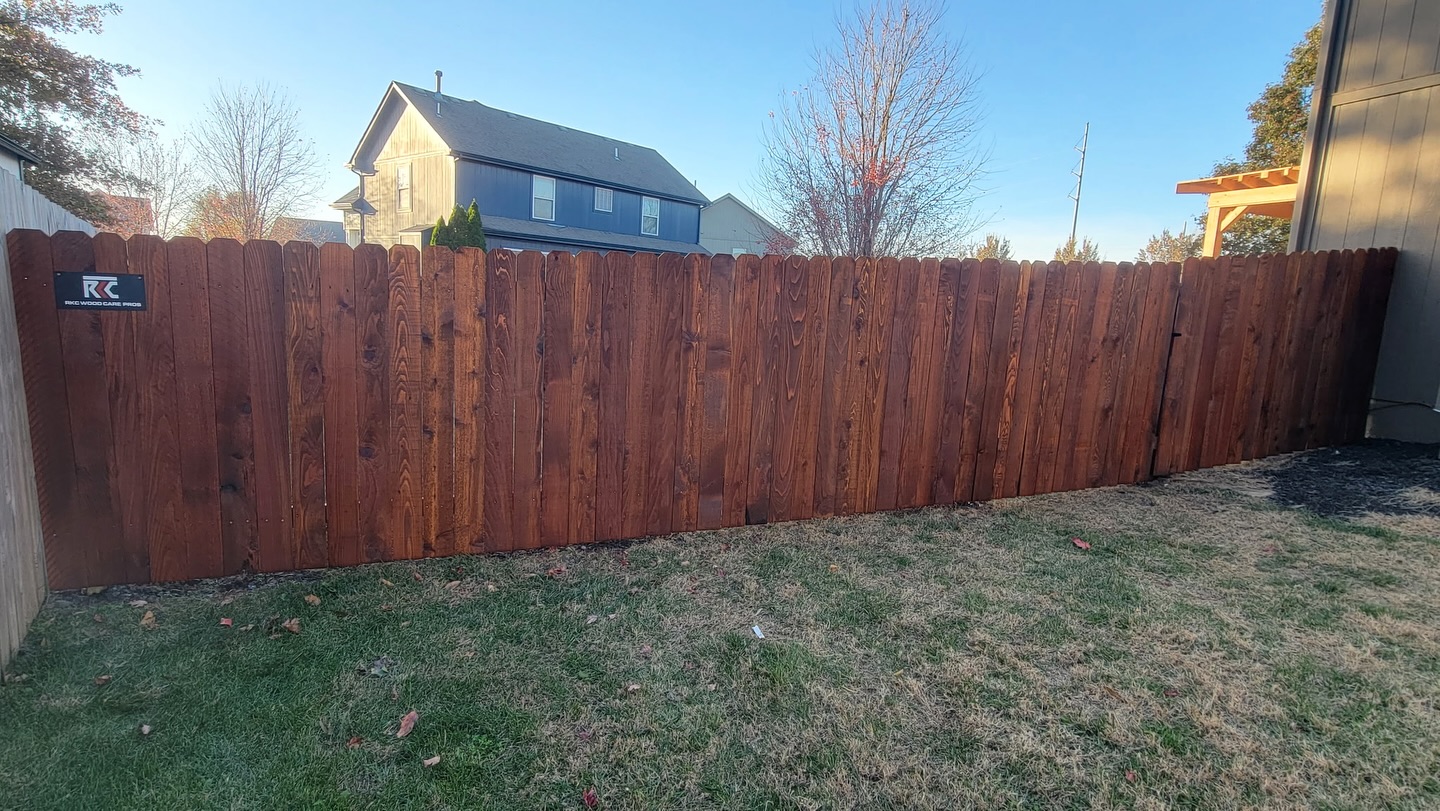
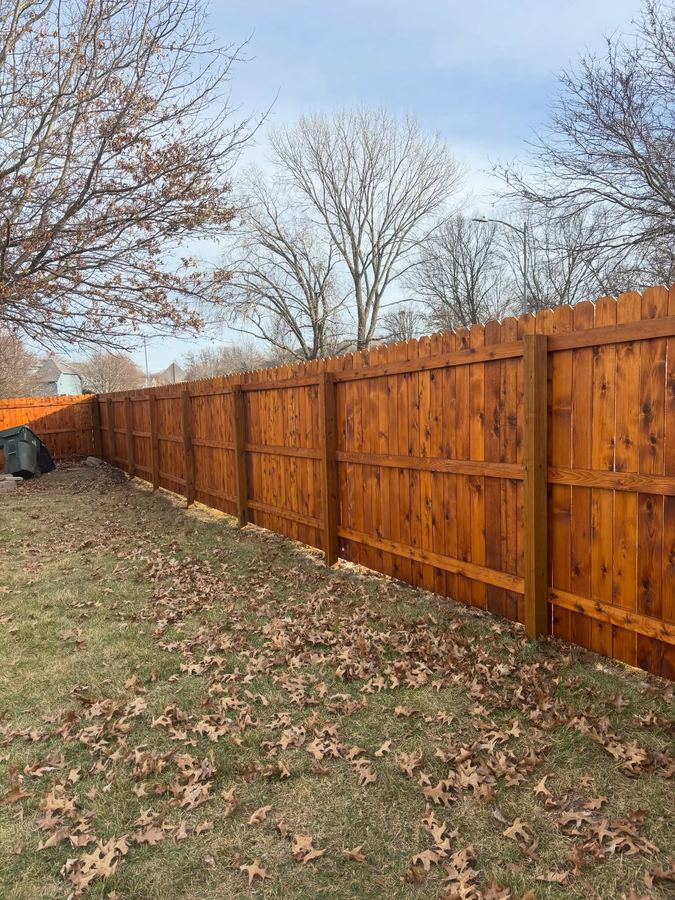
Freshly stained cedar fence in Lenexa, KS
First Coat · Lenexa
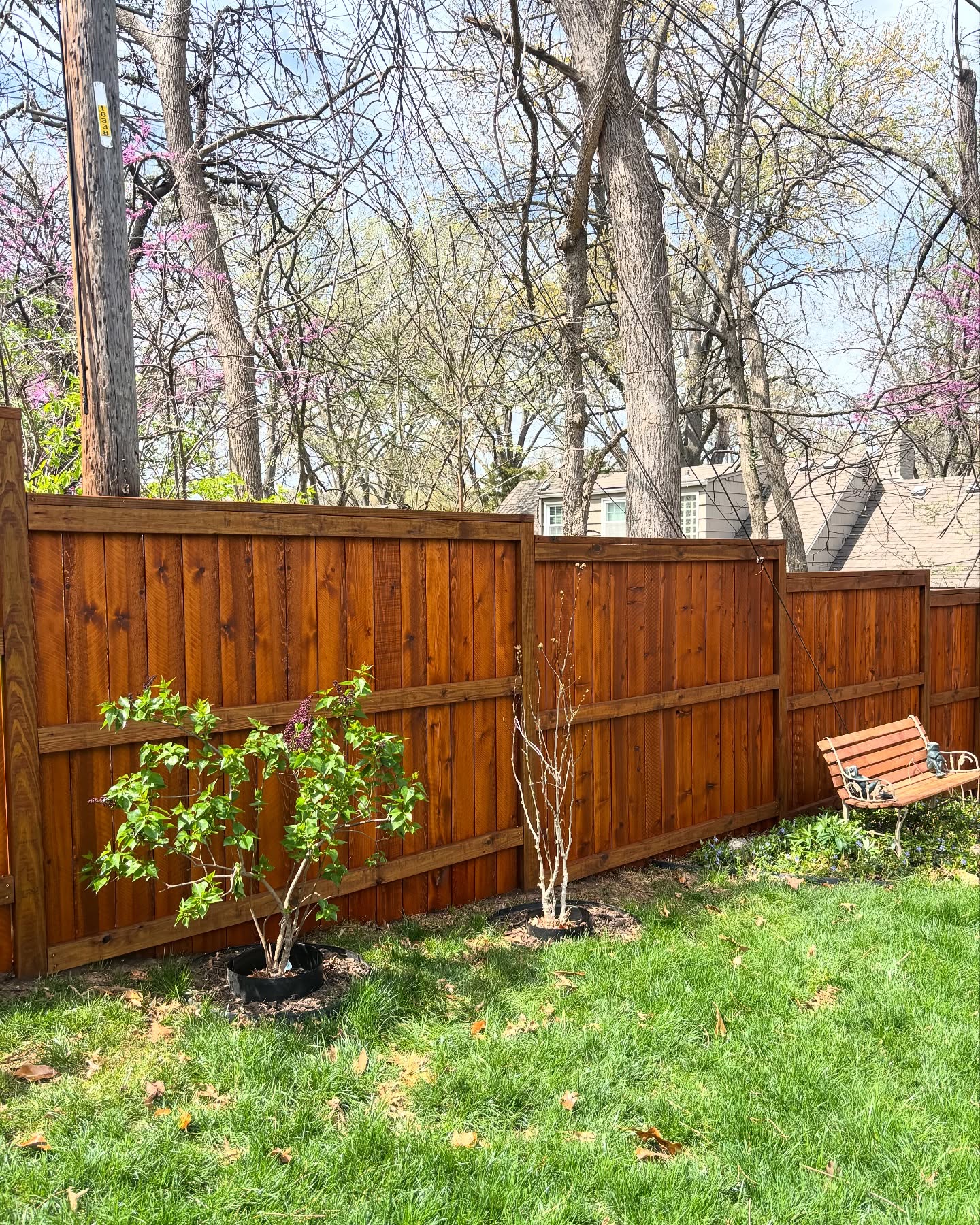
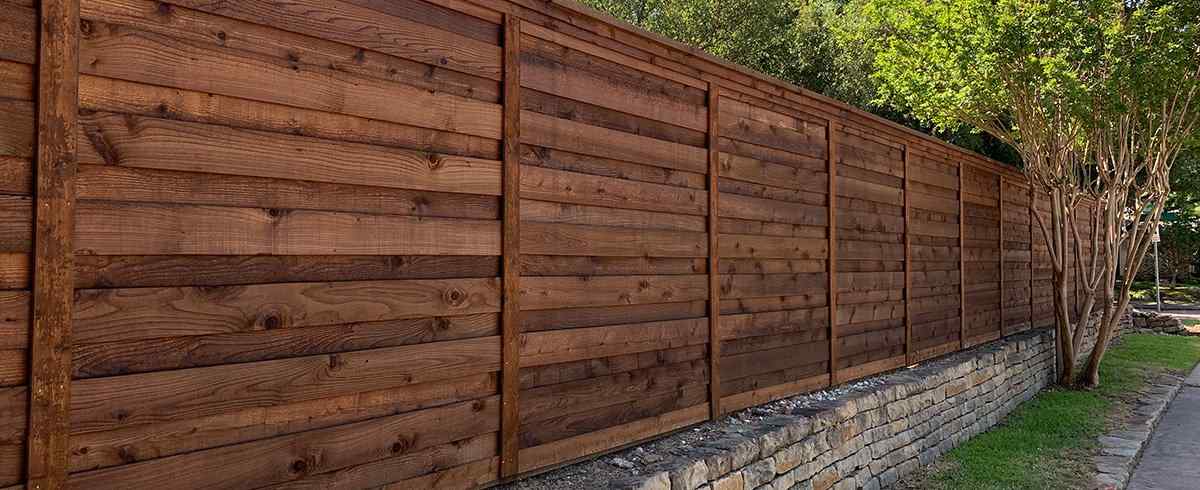
Pressure-treated pine re-stain in Lenexa, KS
PT Re-Stain · Lenexa
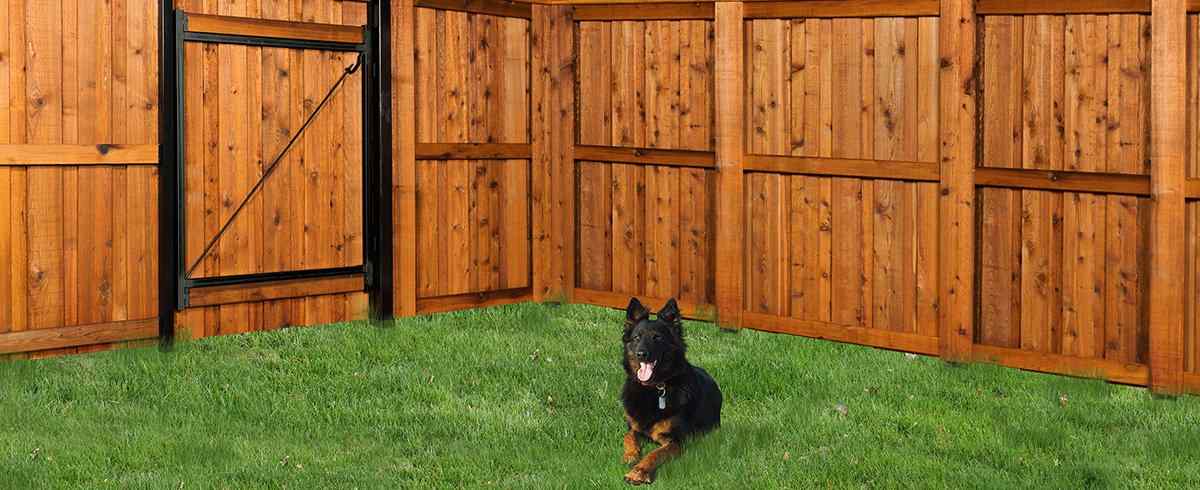
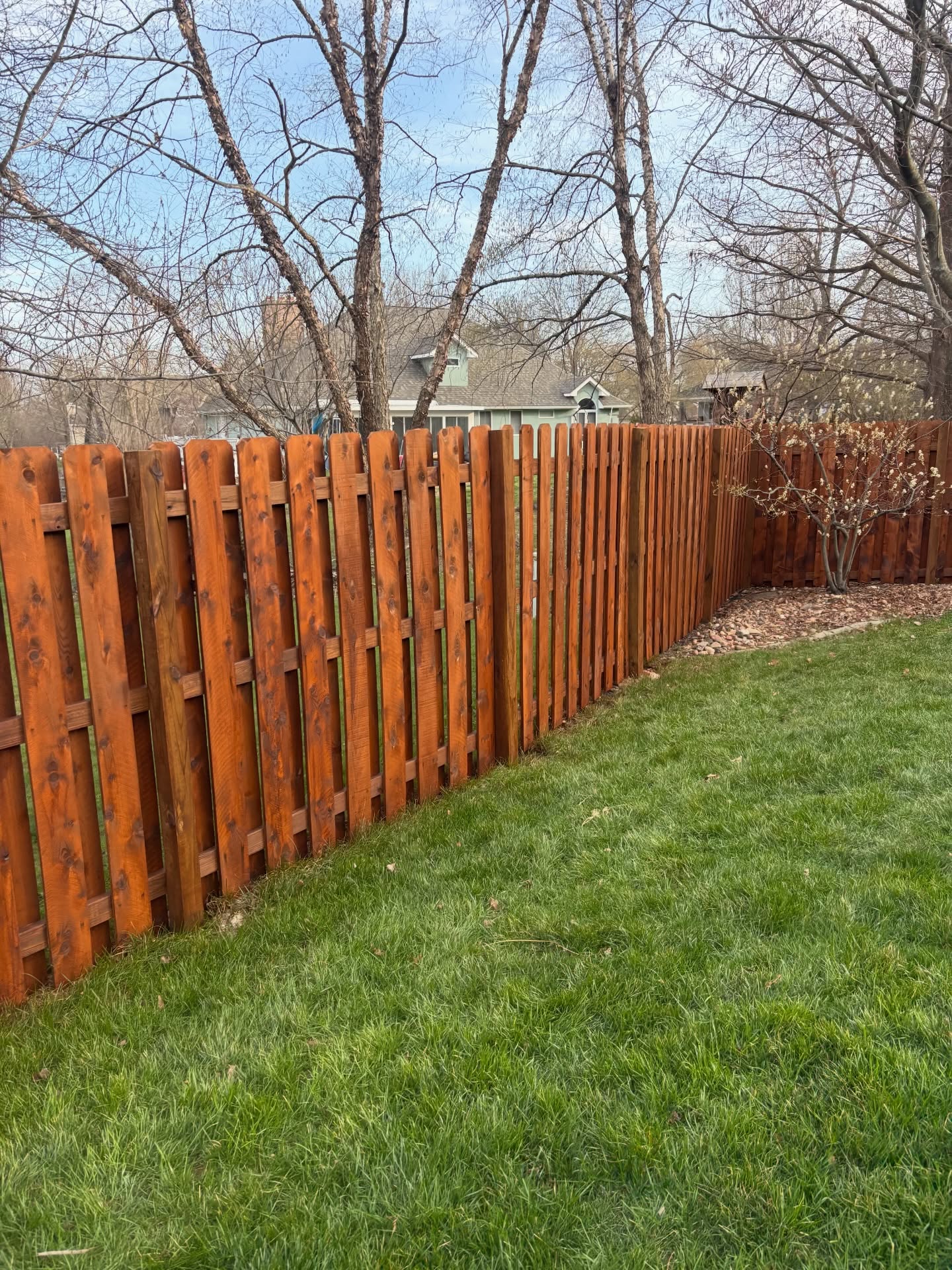
Completed cedar fence stain project in Lenexa, KS
Completed Run · Lenexa

REVIEWS

What Kansas City Homeowners Say About RKC

4.9 ★ · 85 Google reviews

Every review is on our Google Business Profile — read them there, unedited.

Read all 85 reviews on Google

LENEXA STAIN QUESTIONS

Stain Questions Lenexa Homeowners Ask Most

Three questions decide most Lenexa stain jobs: whether composite really beats cedar-on-a-schedule, how the drainage in a newer development affects a coat, and whether a fence left gray too long can come back. These are the ones Lenexa homeowners raise at the estimate — sorted by topic, each answer tied to the real upkeep math, the heavy-clay drainage, and the wide modern boards. Don't see yours? Call (913) 286-1091 and ask.

Lenexa, KS fence staining by RKC Wood Care Pros

Upkeep, Cost & Materials

Should I just get composite so I never have to stain?
It's worth doing the real math before you decide, because the 'never stain again' pitch usually overstates the cedar chore and understates the composite trade-offs. Staining cedar is one day on site about every two years — not a constant job — and it keeps a warm, real-wood fence looking new for its whole life, with a tone you can change whenever you want. Composite costs two to three times as much up front, never grays, but also never takes color and slowly fades to a flatter tone you can't refresh. The upkeep schedule above lays both out side by side. For plenty of Lenexa homeowners cedar-on-a-schedule wins once the numbers are honest; for some, composite's right. We'll give you the straight comparison, not a one-material answer.
How much work is keeping a cedar fence stained, really?
Less than most people expect. On our schedule it's a single day on site roughly every two years — we do the wash, the meter check, and the coat; you don't touch it. Between visits there's nothing to do but enjoy it. The reason it feels like a bigger commitment than it is comes from fences that were left unsealed, grayed out, and then needed a full restoration to recover — that's the expensive, high-effort path, and it's exactly what the routine re-coat prevents. Stay on the cycle and cedar is genuinely low-maintenance; fall off it and it becomes the chore people fear.
Is a solid stain more low-maintenance since it lasts longer?
It's actually the opposite over the life of the fence, which surprises people. A solid or opaque film does carry more color and can look great for a season or two, but it builds a skin on top of the wood — and under Kansas City freeze-thaw that skin cracks and peels, so renewing it means scraping the whole run back to bare wood first. A penetrating semi-transparent wears by fading instead, so its re-coat is just wash-and-reapply. Over ten years the penetrating finish is far less labor and cost, which is why it's what we run in Lenexa even though the solid looks bolder on day one.

Timing & Schedule

How often does a Lenexa cedar fence need re-staining?
Figure a cedar coat roughly every 2 years and treated pine every 3 — and the horizontal modern runs favor the shorter end of that, because their wide flat boards weather faster than pickets. Between the heavy KC clay, the freeze-thaw swings, and the poor drainage in some of the fast-developed western yards, a Lenexa fence chews through finish about on that schedule. The key is not letting it drift: a coat laid on time is a wash-and-reapply, while one skipped by a couple years lets the fence gray and turns the next job into a restoration. Your next date goes on the invoice, and we're the ones who circle back when it arrives.
My new development yard doesn't drain well — does that affect staining?
It does, and it's worth flagging on a lot of the newer Lenexa builds where development left the soil compacted and the grading imperfect. Water that pools keeps the bottom of the fence damp, which slows the dry window we need before coating and speeds up mildew and ground-line wear afterward. We handle it by metering the slow-drying low runs and waiting until they actually read dry rather than going by the calendar, and by sealing the ground line well where water lingers. If the drainage is bad enough to be rotting posts, we'll say so — a finish can't fix standing water, and that's a grading conversation, not a stain one.

Gray Fences & Restoration

My cedar went gray because I never sealed it — is it ruined?
Almost certainly not — this is the most common restoration call in Lenexa, and it's usually a good-news answer. The gray on an unsealed 1980s or newer cedar fence is a thin weathered skin over wood that's still sound underneath, not rot. We strip any failed finish, brighten the whole run with oxalic back to a true tone, wash and dry it hard, then lay one penetrating coat that pulls it back to looking like a real fence. Then we put it on the two-year schedule so it never gets back to gray. The only wood we can't recover is wood that's actually broken down, which we probe for before quoting.
Can you refresh a horizontal modern fence that's started to look tired?
Yes, and it's increasingly common as the first wave of horizontal-slat fences around City Center hits its first real re-coat. A tired modern run usually shows it first on the wide upper board faces and the end-grain, where water sits — those go dull and start to cup before the rest. We brighten the whole run to a common tone, pay particular attention to sealing those flat faces and exposed ends, and match a color that works with the home's modern grays and whites. Caught before the boards cup badly, a horizontal fence refreshes beautifully; left too long, some boards may need replacing first, which we'll call honestly.

OTHER LENEXA FENCE SERVICES

More Fence Services Available in Lenexa

Each link below keeps you in Lenexa — its own page, with pricing, conditions, and recent job photos tied to this city rather than the metro at large. Weighing a fresh install, a repair, a gate, or one specific material alongside the staining? Here's where each of those picks up.

Ready when you are

Get a free estimate — we usually respond the same day.

Call (913) 286-1091