Skip to content
Gate Installation in Mission, KS — Walk & Drive Gates Tied Into the Cedar Line Replacing the Old Chain Link

Gate Installation in Mission, KS — Walk & Drive Gates Tied Into the Cedar Line Replacing the Old Chain Link

A gate in Mission is a tie-in job — most yards here run new 6-foot cedar on one side and the neighbor's older 4-foot chain link on the other. Every RKC gate across Mission, from the side-yard walk gate that dog-proofs a small Countryside or Mission Hill Acres backyard to the occasional drive gate, is built on a welded steel frame with a hinge post set 36 inches deep in poured concrete — pulled up out of the shade-damp soil that rots the shallow posts on these tree-canopied lots.

★★★★★
4.9
from 85 reviews
Licensed
& Insured · KS + MO
400+
fences installed
A+ BBB Rated 400+ Fences Installed Since 2021 Welded Gate Frames · Galvanized Hardware Free On-Site Estimates
See gate styles in our catalog ↓

WHY MISSION HOMEOWNERS FINISH A FENCE WITH A REAL GATE

The Walk Gate That Finishes a Mission Conversion

On these dense, tree-shaded lots the gate isn't a grand entrance — it's the piece that finally makes a half-converted fence line do its job. Mission is a swap-out town: the old 4-foot chain link is coming down, new 6-foot cedar is going up, and the last thing standing between a private, dog-proof backyard and an open one is usually the gate. Get that one piece right and the whole yard changes. Here's what a Mission homeowner actually notices once it's done.

1

The walk gate is the whole project

On a Mission lot the gate people call about isn't a grand driveway entry — it's the side-yard walk gate. The one you carry a mower or a trash bin through, and the one that keeps the dog in a backyard the size of a patio. Get that gate right — welded frame, tuned hinges, a latch that closes behind you every time — and the fence finally does its job.
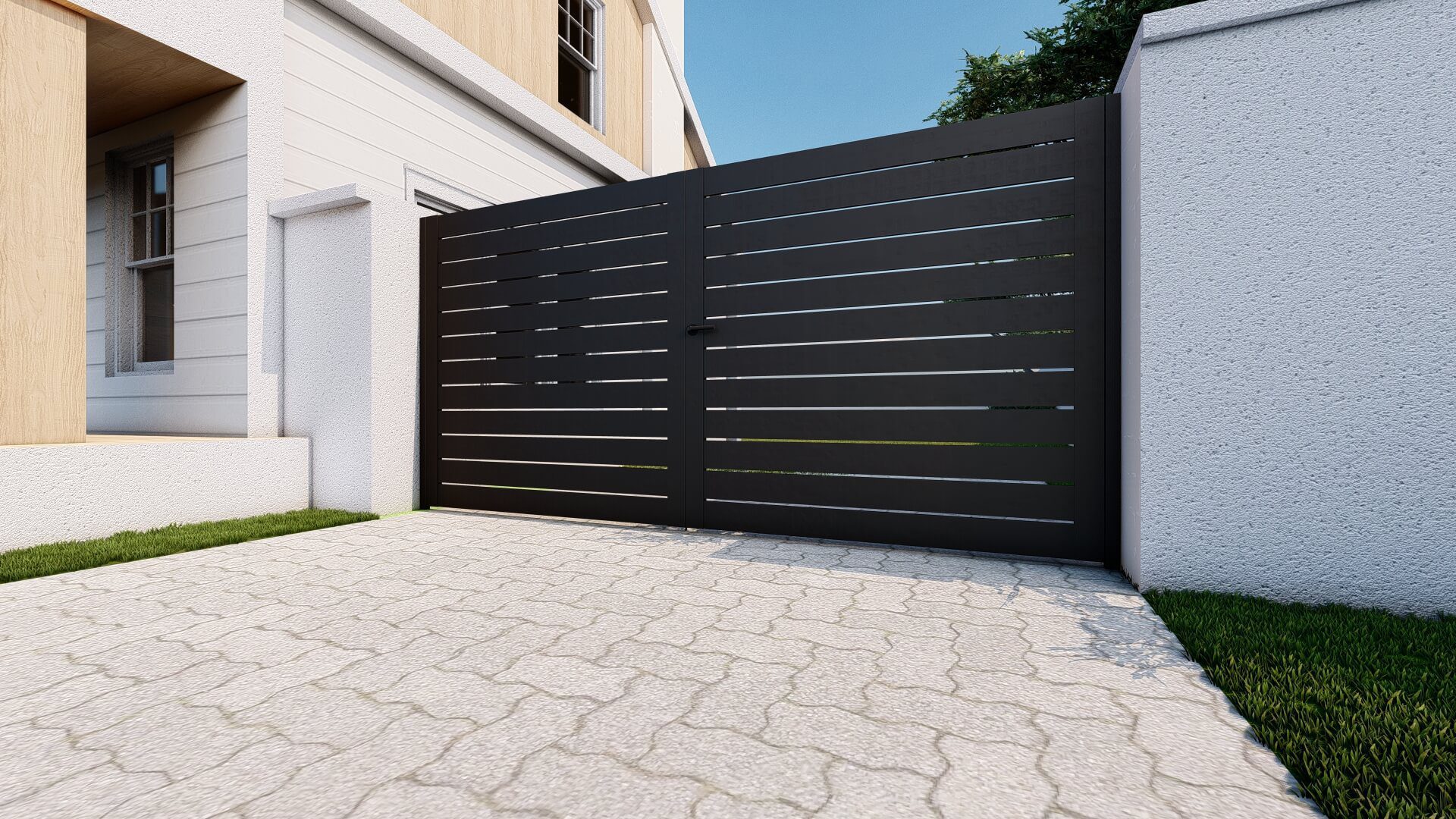
2

A clean seam where new cedar meets old chain link

Most Mission yards are mid-conversion: new 6-foot cedar going up on your side while the neighbor's older 4-foot chain link stays put. The gate is the seam where those two lines meet. We build the leaf and set the hinge post to close that seam cleanly — no ragged gap, no low spot a dog slips through — instead of the patched-together opening most conversions end up with.

3

A latch that still lines up under the maples

The mature trees that make these older streets worth living on also keep the ground damp, and damp ground rots shallow posts and heaves the hinge out of plumb. A 36-inch concrete footing pulled up out of the wet is why the gate still swings square and catches on the first try at year five and year ten — not just the week it's installed.

4

Privacy from a house that's fifteen feet away

On a 0.10-to-0.20-acre lot the neighbor is close, and street noise off the busier roads carries. A solid cedar privacy gate closes the last gap in the screen so the backyard is actually private — not private-except-for-the-gate. It's the most common reason a Mission fence line gets finished with a real gate instead of a leftover chain-link one.

LOCAL CONDITIONS FOR GATES

What a Tree-Shaded, Half-Converted Mission Lot Does to a Gate

A gate is the highest-stress piece of any fence — and on a Mission lot it's also the trickiest, because it sits at the seam between an old fence line and a new one. The leaf carries its own weight and cycles open-and-closed thousands of times a year, on soil the mature canopy keeps damp and along a fence line that has shifted over decades of DIY repair. Three decisions — depth, the true line, and the frame — separate a gate that still swings square in year ten from one that binds and sags by year two. Every Mission gate we build comes down to these three.

1

Post depth — 36 inches, pulled up out of the shade-damp soil

The reason old gate posts fail in Mission isn't dramatic weather — it's the mature-tree canopy over these older streets. Shade keeps the soil damp long after an open suburban yard has dried out, and damp ground plus 80+ freeze-thaw cycles a winter is exactly what rots a shallow post and heaves the hinge out of plumb. Every gate post we set in Mission goes 36 inches into wet-poured concrete, below the frost line and crowned to shed water, so the wet that took the last post doesn't take this one.

2

Setting the hinge post to a line that has crept

On a Mission block that's been patched and rebuilt for seventy years, the fence line has 'crept' — nudged a few inches this way or that over decades of DIY repairs — so the old fence and the real property line rarely agree. A gate hung off a crept line either opens onto the neighbor's ground or binds against a post that's out of position. We find the actual line before the hinge post goes in, so the gate swings on your property and stays a gate instead of becoming a dispute.

3

A welded frame that finishes the chain-link seam

In a Mission yard the gate is usually where two fence systems meet: your new cedar on one run, an older neighbor's chain link on the other. A welded steel square-tube frame — clad in cedar for a wood gate, or powder-coated for iron — stays dead square where a bolted frame racks loose, and it's what lets us close the height and gap difference between the two lines cleanly instead of leaving the ragged opening most conversions get stuck with.

Mission neighborhoods we've built gates across include Mission Hill Acres, Countryside, Milhaven, Highland Crest, and Beverly Hills, plus the close-set lots off Johnson Drive and Metcalf. Same 36-inch crowned footings, same welded frames, same read of the real line on every one.

THE MISSION CONVERSION PLAYBOOK

How We Tie a Gate Into a Mid-Conversion Mission Fence Line

On a Mission lot the gate question is rarely "what style" — it's "how does this gate meet the mismatched fence line already in the yard, on soil that keeps moving." These are the six situations a Mission yard actually hands a gate install — the seam between new cedar and old chain link, a post that keeps rotting in the shade, a line that has crept off the boundary. Find the row that sounds like your property; most Mission lots hit two or three of these at once.

The Mission situation What it means for the gate How we build it on your lot
New 6-ft cedar on your side, the neighbor's older 4-ft chain link on the other Hang the gate off the taller line The leaf hangs from your new cedar-clad post, and we step or panel the height down where it meets the chain link so the seam has no gap and no trip point — the single most common gate situation on a Mission block.
A 4-ft chain-link walk gate you're finally replacing Size up to a solid cedar walk gate A 6-ft cedar walk gate on a welded frame drops into the existing opening — dog-height solid instead of see-through — with a self-latching catch the old chain-link hardware never had.
The hinge post has to land where a mature tree shades the ground A footing built for soil that stays damp Shade keeps that ground wet long after an open yard has dried, and wet ground is what rotted the last post; the 36-inch concrete footing is pulled up out of the wet and crowned to shed water.
The old fence has 'crept' off the property line over years of DIY fixes Find the real line before the post goes in We locate the actual line rather than trusting the crept fence, then set the hinge post to it — so the gate opens on your ground and doesn't reopen an old disagreement with the neighbor.
A narrow side yard between two close-set houses, no room for a leaf to arc Swing it the way the gap allows We measure the real clearance and hang the leaf to out-swing or in-swing into whatever room the side yard gives; where nothing fits, a compact slide needs no arc at all.
A low pocket that holds water between the property lines Keep the gate out of the puddle The opening and footing get sited on the high side of the drainage pocket and the bottom rail is held off grade, so the leaf never drags through mud and the post never sits in standing water.

None of this comes off a catalog. On the estimate visit Josh reads the lot first — which side is new cedar and which is old chain link, where the shade sits, where the real line runs, where water pools — and the gate is built to fit what's actually in your yard, not a standard doorway.

GATE TYPES

Walk, Drive, Double & Sliding — Weighted to How Mission Actually Builds

On Mission's small lots the walk gate does most of the work; the drive gates are the exception, not the rule. Here are the four gate types we build across Mission, what each one actually fits on a dense inner-ring lot, and real pricing for each. Materials — cedar for the privacy conversions, iron where an open look is wanted, vinyl for the low-maintenance holdouts — swap within each type; the welded frame and the 36-inch crowned footing stay the same on all of them.

Walk Gate install by RKC Wood Care Pros in Mission, KS

Walk Gate — 3.5–4 ft wide

The gate most Mission projects are actually about

On Mission's small, close-packed lots the side-yard walk gate is usually the whole job. It's the one you carry a mower or a trash bin through, and the one that has to keep the dog in a backyard the size of a patio. We build it on a welded square-tube frame — clad in cedar to finish the privacy run — with strap hinges and a self-latching catch the old chain-link gate it's replacing never had.

  • Price: $300–600 (cedar) · $450–850 (iron)
  • Typical use: Side-yard entry, backyard dog-gate, the seam where new cedar meets old chain link
Single-Drive Gate install by RKC Wood Care Pros in Mission, KS

Single-Drive Gate — 10–14 ft wide

For the wider corner and boulevard lots

A single-leaf swing gate for the deeper Mission driveways — more common on the corner lots and the older boulevards than on a standard interior lot. Welded steel frame, a diagonal cross-brace running from the bottom hinge corner up to the latch corner, and ball-bearing hinges rated well above the leaf weight. The hinge post goes 36 inches into wet-poured concrete and gets crowned to drain, because Mission's tree-shaded soil stays damp and takes shallow posts down fast.

  • Price: $650–1,200 (cedar) · $900–1,800 (iron)
  • Typical use: Deeper driveways and corner lots, single-vehicle entry, cedar or powder-coated iron
Double-Drive Gate install by RKC Wood Care Pros in Mission, KS

Double-Drive Gate — 14–20 ft wide

Rare here — for the deep corner lot or a shared alley

Two leaves swinging from opposite hinge posts and meeting at a center drop rod. It halves the lever arm compared with one long leaf, so the gate stays square instead of dropping at the latch. On Mission's compact lots the double-drive shows up mostly on a deep corner property or across a shared rear alley where a run of privacy fence needs a full opening. Both hinge posts set 36 inches deep, both leaves cross-braced.

  • Price: +30–50% over single-drive
  • Typical use: Deep corner lots, rear-alley openings, occasional trailer or work-vehicle access
Sliding Gate install by RKC Wood Care Pros in Mission, KS

Sliding Gate — 10–20 ft travel

When a wet pocket or a tight approach blocks a swing

When there's no room for a leaf to arc — a narrow lot, a fence line sitting right at the driveway edge, or one of the low pockets that hold water between Mission's close property lines — a sliding gate cantilevers to the side on rollers instead. No swing clearance, and nothing that has to drag through a wet spot to open. It's the exception on flat Mission lots, not the default, but it's the answer when the geometry rules a swing out.

  • Price: +$400–900 over an equivalent swing gate
  • Typical use: Narrow lots, fence lines at the drive edge, low spots that stay wet
Cedar fence and gate install in Mission, KS by RKC Wood Care Pros

MISSION GATE PRICING

What a Gate Costs on a Mission Lot

Gate pricing in Mission comes down to type, material, size, and whether a height step-down is needed where a new run meets old chain link. Every quote includes a welded steel frame, heavy-duty galvanized hardware, and a 36-inch hinge post set in wet-poured concrete and crowned to drain. Because the walk gate carries most Mission jobs, that's the number most homeowners here actually need. Below are the three we quote most often.

Cedar Walk Gate

$300–600

installed

Mission's default gate. Cedar-clad welded frame, strap hinges, and a self-latching catch where a dog sits behind it.

Single-Drive Gate

$650–1,800

installed

Cedar $650–1,200 · Iron $900–1,800. Welded frame, diagonal cross-brace, ball-bearing hinges, 36-inch crowned footing.

Double-Drive / Custom Gates

+30–50%

over single-drive

Custom widths, height step-downs where a new run meets old chain link, matched hardware — quoted on site.

Every Mission gate estimate is free, written, and itemized — it lists the hinge brand, the post depth, and the frame material before any work starts. For the full gate-type scope across the metro, see the Kansas City gate installation hub, or call (913) 286-1091 to set up an on-site walkthrough in Mission.

OUR PROCESS

How a Gate Install in Mission Actually Happens

Four steps from the phone call to the first swing. Most Mission gate projects run 1 to 3 weeks start to finish. Install days themselves are short — a walk gate is often same-day, a drive gate one to two days. The longer stretch is concrete cure and the custom fabrication of a leaf built to your fence line. Here's what each step actually looks like on a Mission gate install.

1

On-site measurement and a read of the fence line

Josh walks the property, measures the actual opening (rarely the number the homeowner remembers), and — because this is Mission — reads where the old fence line sits against the real property line, and what's on each side of the gate: new cedar, old chain link, or both. We confirm gate type, swing direction, and hardware, then put together a written estimate the same week that lists the hinge brand, the post depth, and the frame material. No verbal quotes, nothing figured out on install day.

2

Planning the gate around a mid-conversion fence line

Before anything is fabricated we settle how the gate meets what's already there. Which side is your new 6-foot cedar and which is the neighbor's older chain link, how the two heights reconcile at the seam, whether a narrow side yard lets the leaf out-swing or in-swing, and where the drainage pockets sit. The leaf and the hinge post are then built to that plan — to your lot and your fence line — instead of to a standard doorway that ignores the yard you actually have.

3

Install — posts first, welded frame second, hardware on site

Hinge posts go in on day one, 36 inches deep in wet-poured concrete, crowned to drain, left to cure overnight. The welded frame and panels install on day two once the footings are set. Strap or ball-bearing hinges are mounted and adjusted on site — not pre-set at the shop — so the gate swings square against the actual ground and latches cleanly to the actual catch. Most Mission walk gates are a single day; the occasional drive gate takes two.

4

Walkthrough, adjustment guide, and a 30-day check

Before we take final payment, we swing the gate open and closed ten times and watch every hinge under load. Any drag, any scrape, any latch miss — adjusted on the spot. Because new concrete footings settle slightly in the first month, we come back at 30 days for a free adjustment pass, and we show you how to take up any hinge drift yourself with a quarter-turn later. Most Mission homeowners never need to — but you'll know how.

RECENT MISSION GATE INSTALLS

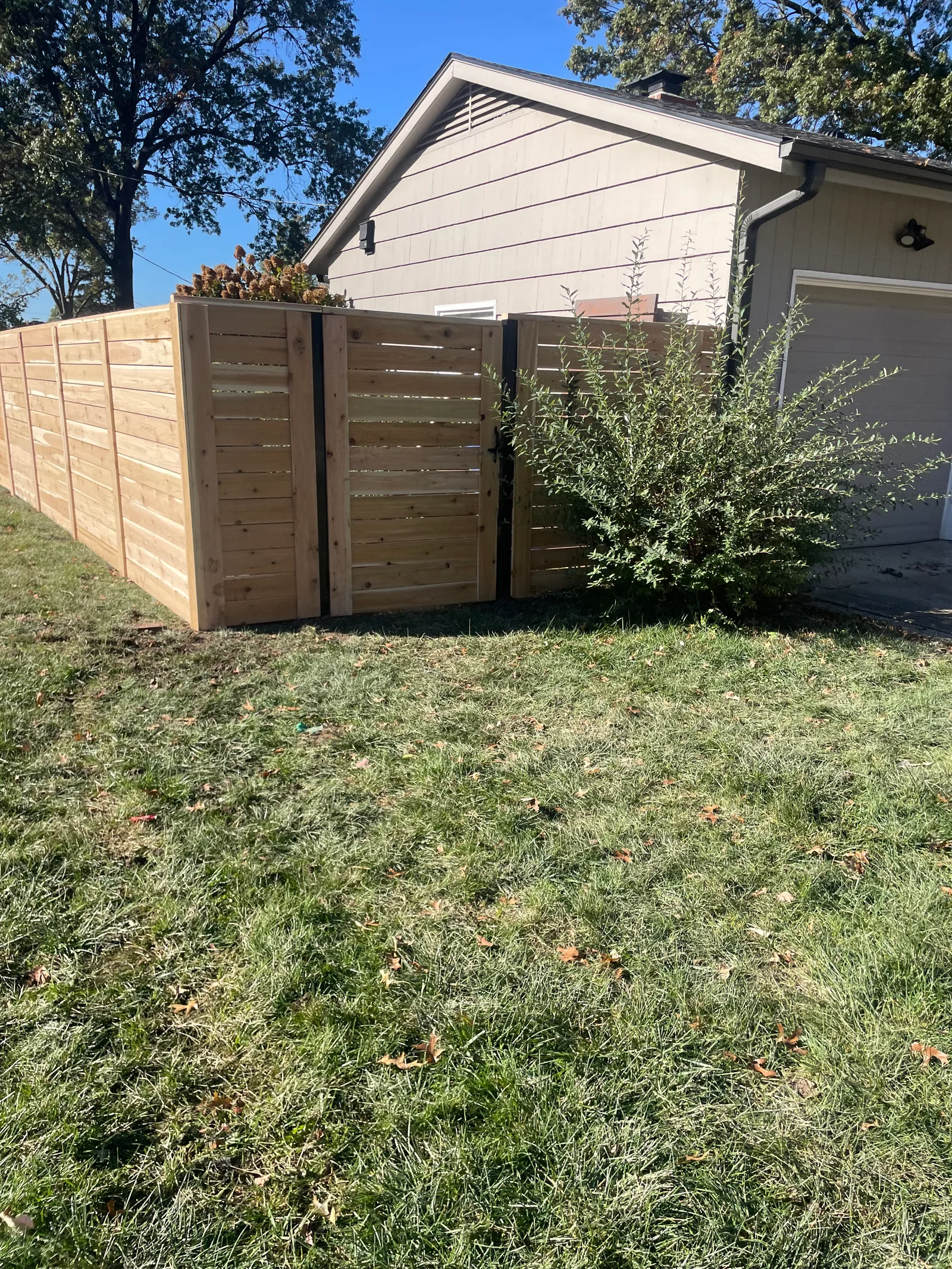
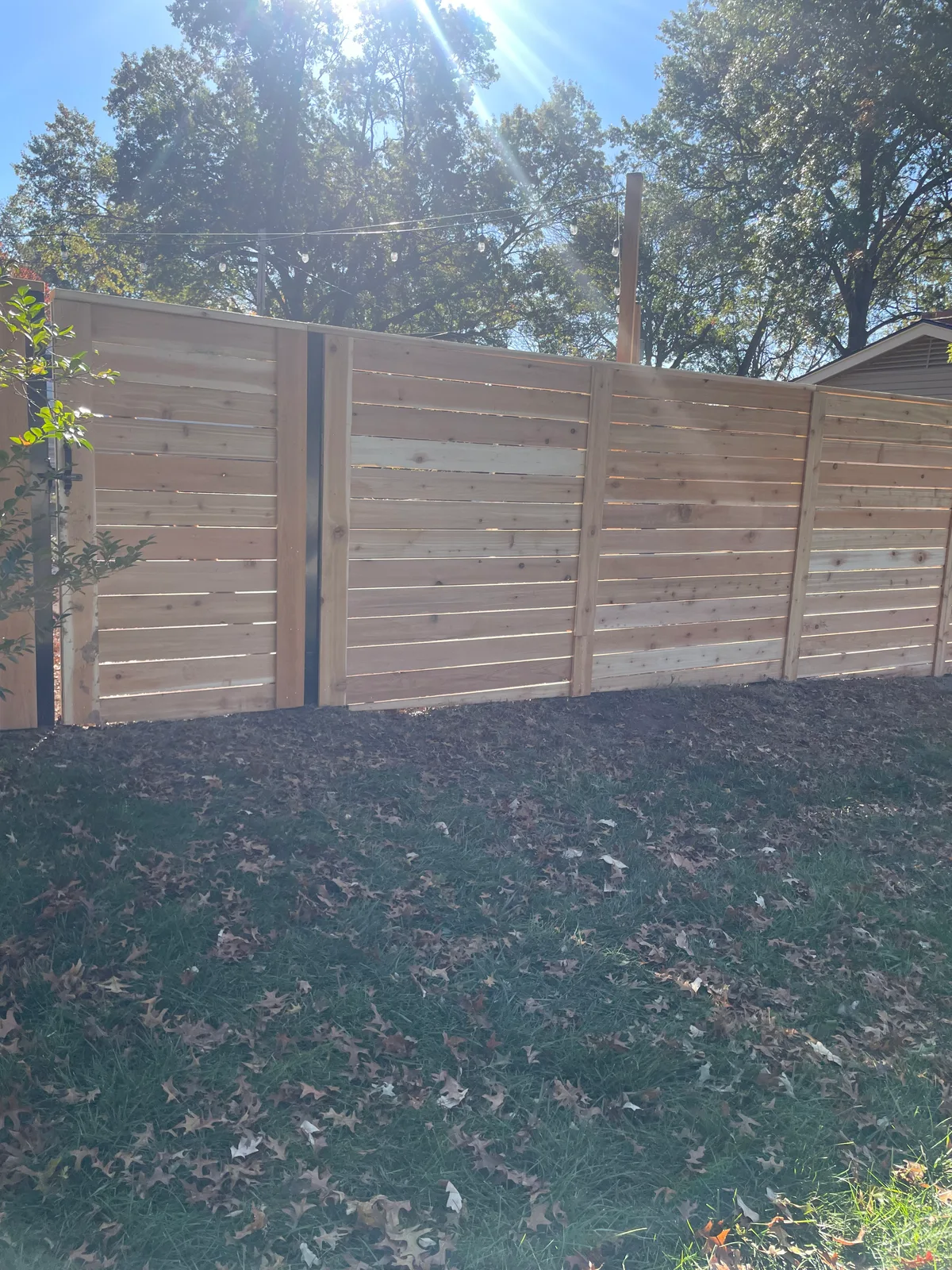
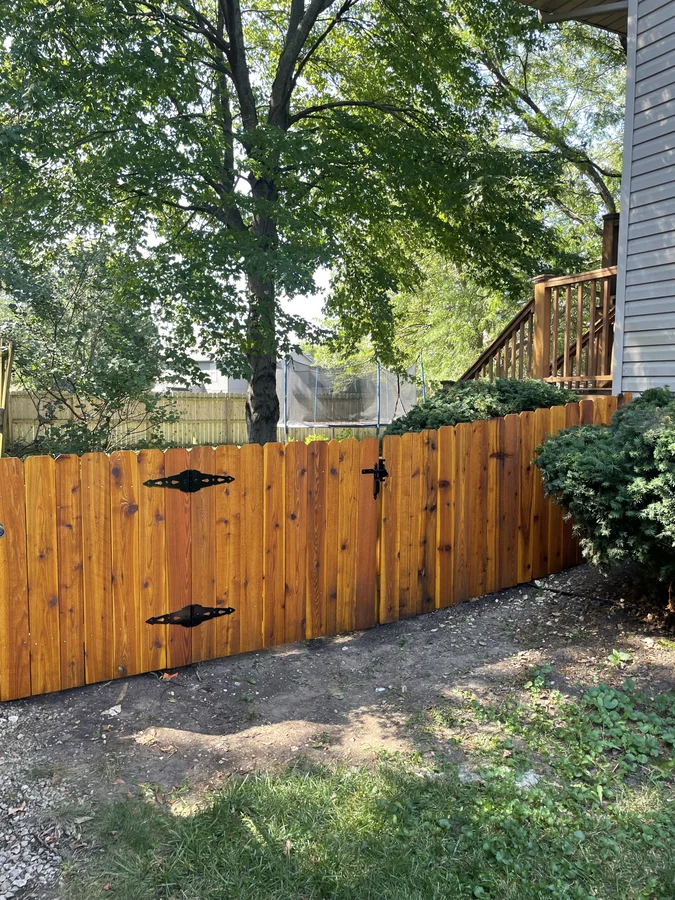
New cedar fence with a walk-through gate in Mission, KS by RKC Wood Care Pros
Cedar Walk-Through Gate · Mission
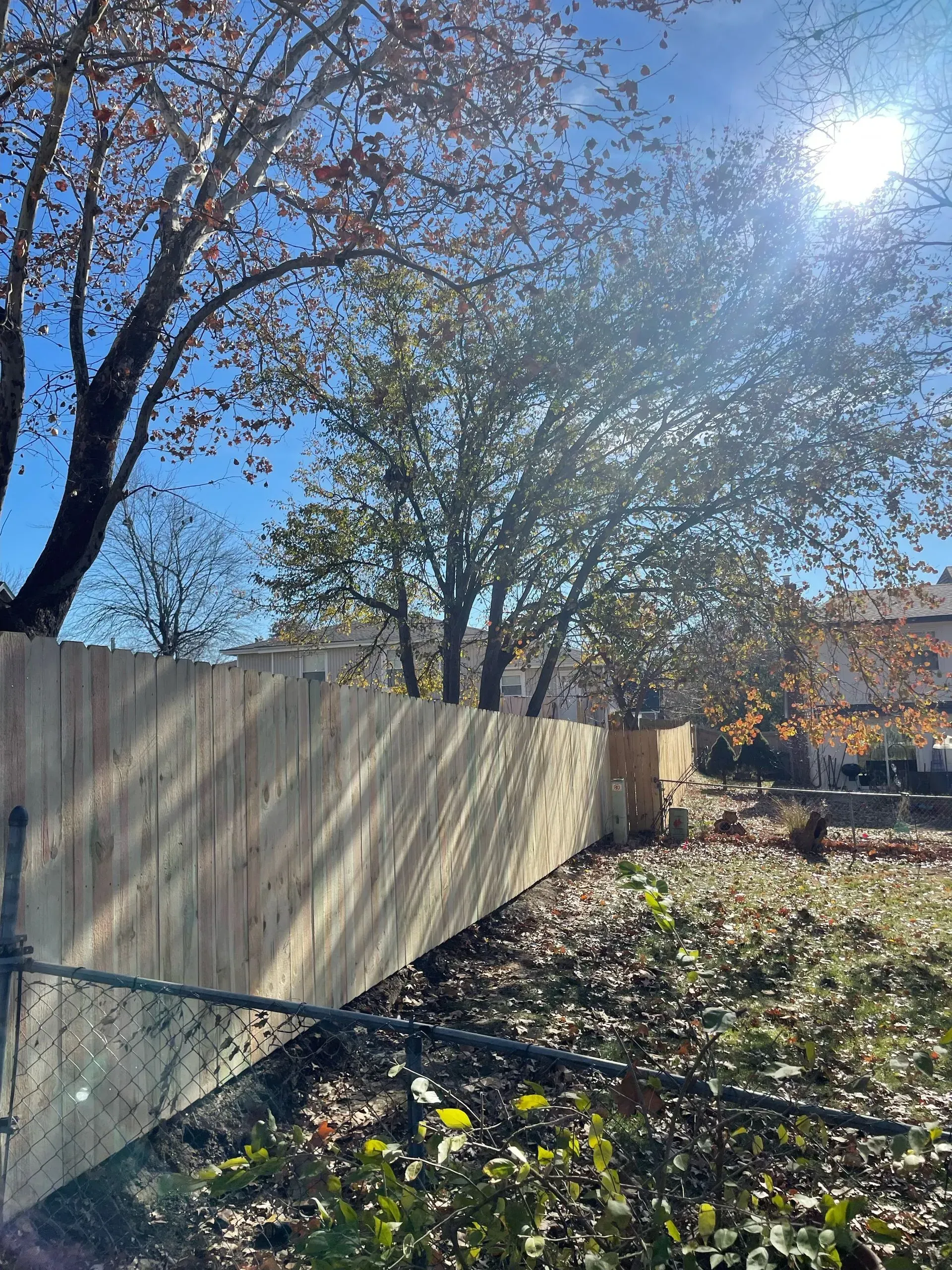
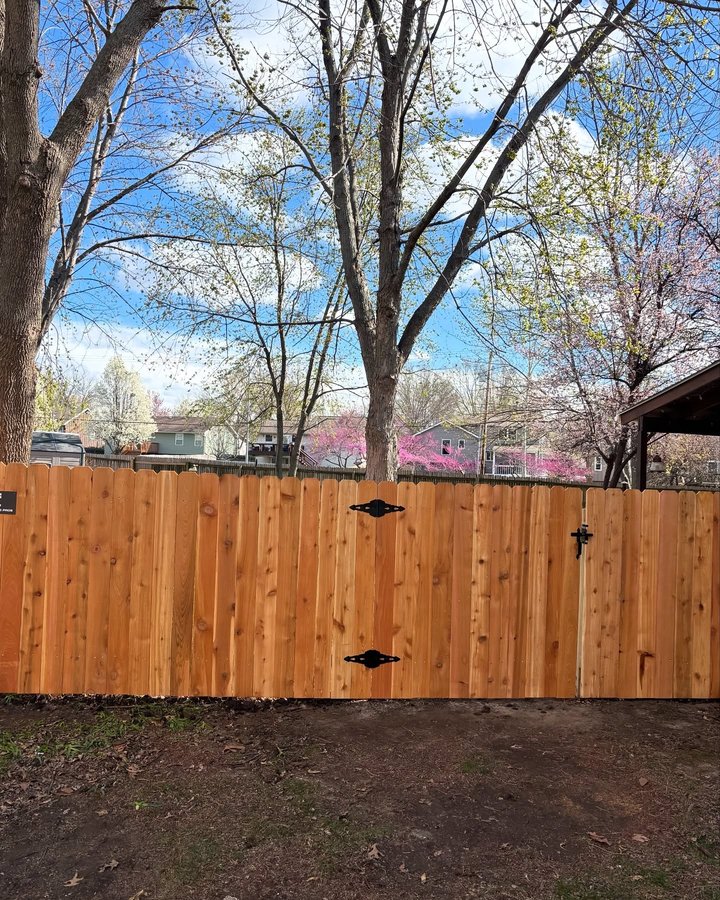
Dog-ear cedar backyard fence and gate in Mission, KS by RKC Wood Care Pros
Dog-Ear Cedar Backyard · Mission
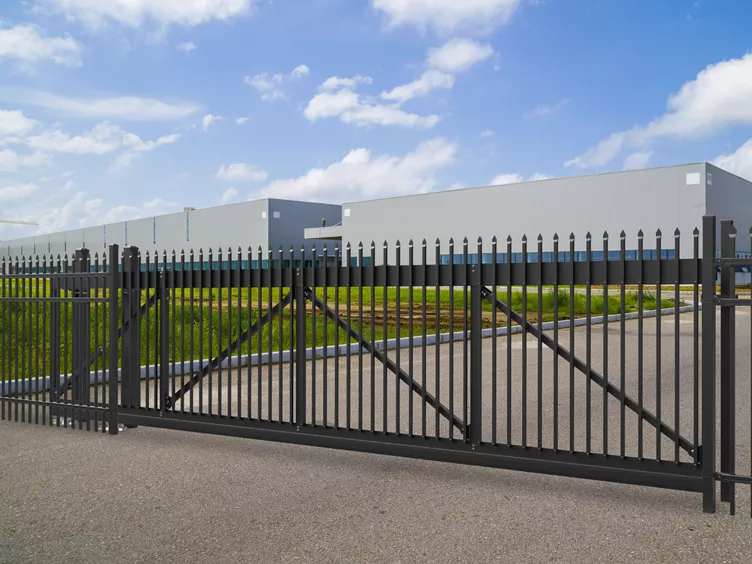
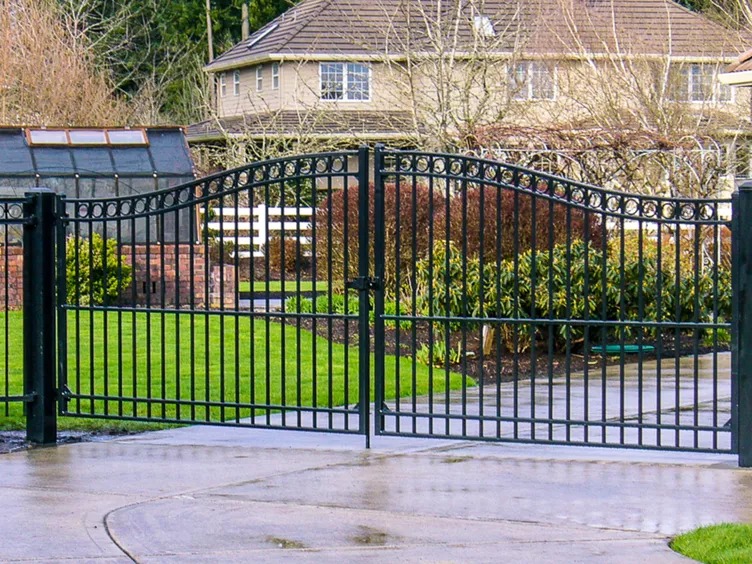
Custom aluminum driveway gate in Mission, KS by RKC Wood Care Pros
Custom Aluminum Drive Gate · Mission
Black wrought-iron-style fence and gate in Mission, KS by RKC Wood Care Pros
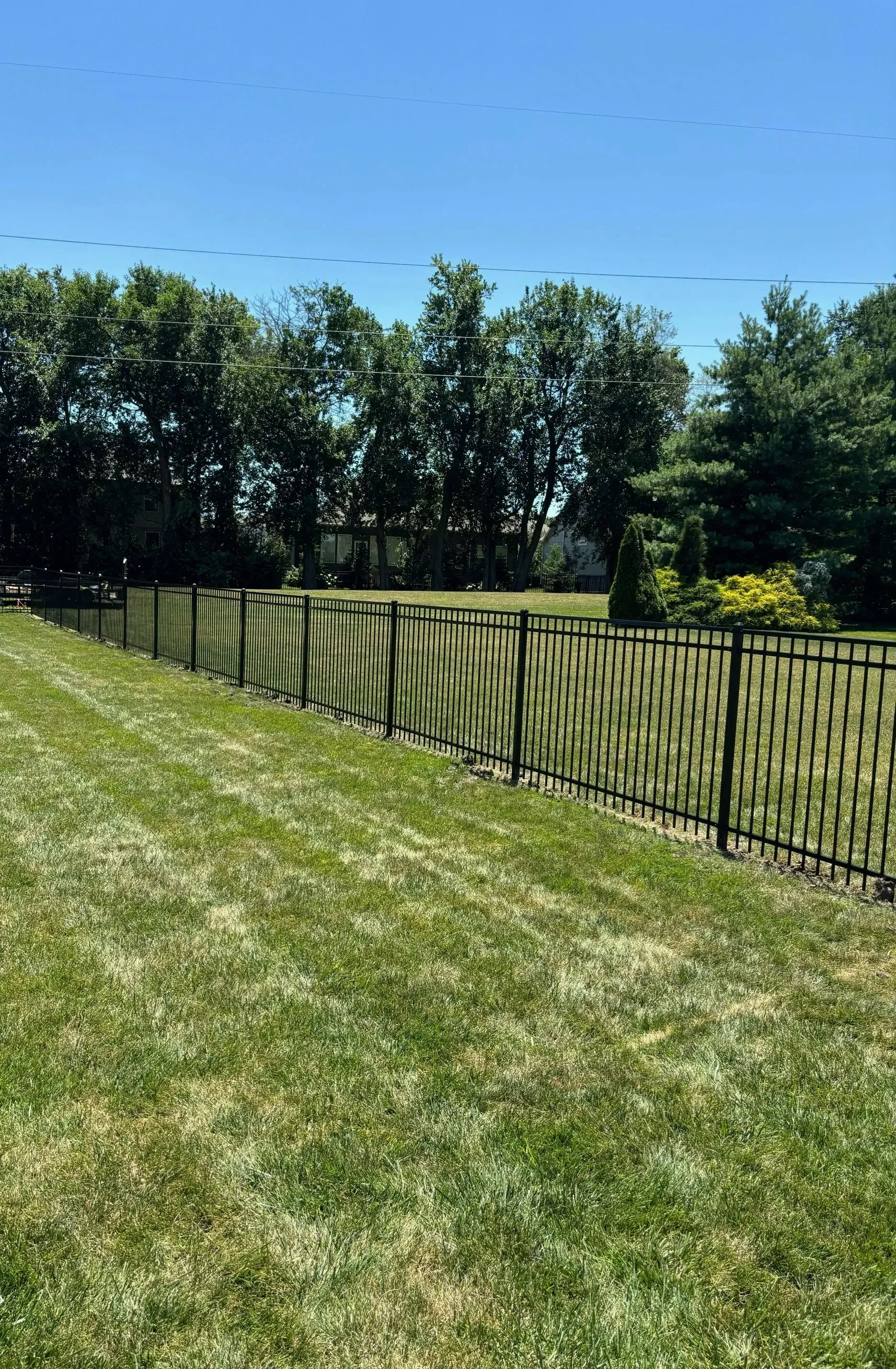
Wrought-Iron-Style Gate · Mission

REVIEWS

What Kansas City Homeowners Say About RKC

4.9 ★ · 85 Google reviews

Every review is on our Google Business Profile — read them there, unedited.

Read all 85 reviews on Google

MISSION GATE QUESTIONS

Gate Questions Mission Homeowners Ask Most

Gate installation in Mission comes down to type and sizing, tying into a mid-conversion fence line, and how the shade-damp soil and a crept line get handled. Below are the questions Mission homeowners actually ask during the estimate — grouped by topic, each answer specific to these dense, tree-shaded lots and the chain-link-to-cedar swap-out most of them are in the middle of. If your question isn't here, call (913) 286-1091 and ask.

Gate installation service in Mission, KS by RKC Wood Care Pros

Gate Types & Sizing

What size gate do most Mission homes actually need?
For most Mission properties the answer is a walk gate, not a driveway gate — 3.5 to 4 feet wide, enough for a mower or a trash bin, on a single pair of strap hinges. The lots here are small and close-packed, so the side-yard walk gate is the workhorse. Where a drive gate does come up — usually a deeper corner lot or an older boulevard property — 10 to 14 feet is the common single-leaf span; past 14 feet we go to a double-drive so no single leaf carries too much lever arm and starts dropping at the latch.
Can you add a gate to my existing fence, or do the posts have to be replaced?
It depends entirely on the post the gate would hang from. If that post is set 36 inches into concrete and still plumb — rare on the older Mission fences, standard on anything RKC has built — we can often hang a new leaf off it. But most gate posts on Mission's aging installs are shallow, or already leaning from years in the shade-damp soil, and a gate is only ever as straight as the post it hangs on. If the post is short or moving, it comes out and a new 36-inch concrete-set post goes in. We check depth and plumb on the estimate before quoting.
What's the difference between a swing gate and a sliding gate?
A swing gate pivots on hinges at one post (single-drive) or two (double-drive) and needs open room to arc. It's simpler and cheaper, and it's the default on Mission's flat lots. A sliding gate cantilevers to the side on rollers and needs no swing clearance — the right call when the lot is narrow, the fence line sits right at the driveway edge, or one of Mission's low wet pockets sits where a swinging leaf would have to drag through it. Slide hardware runs $400 to $900 over an equivalent swing gate, so we only reach for it when the geometry rules a swing out.

Mission Conversions & Local Conditions

Can you tie a new cedar gate into my neighbor's old chain link?
Yes — it's the single most common gate job on a Mission block. Your side of the yard is getting new 6-foot cedar while the neighbor's older 4-foot chain link stays where it is, and the gate is the seam where those two lines meet. We hang the leaf off your new cedar-clad hinge post and step or panel the height down where it reaches the chain link, so the transition is clean and there's no gap or trip point at the bottom. You end up with a finished opening instead of the patched-together look most half-converted yards get stuck with.
Why does my old gate post keep rotting when a friend's across town doesn't?
It's the trees. Mission's older streets sit under a mature canopy, and that shade keeps the soil damp for days after an open, sunny yard has dried out. Damp ground is what rots a wood post at the ground line and, combined with 80-plus freeze-thaw cycles a winter, heaves a shallow one out of plumb. It's the top fence-and-gate failure we see here. The fix is depth and drainage: a 36-inch concrete footing pulled up out of the wet and crowned so water sheds off it instead of pooling around the post.
My fence has drifted off the line over the years — can you still hang a gate straight?
We see this constantly in Mission, where fences have been patched and rebuilt for decades and the line has 'crept' a few inches off the true property boundary. A gate hung off a crept line either swings onto the neighbor's ground or binds against a post that's out of position. So before the hinge post goes in, we locate the actual property line and set the post to it — not to the old fence. The gate then opens on your ground and stays a working gate instead of becoming a boundary argument down the road.
How long does a gate install take in Mission?
A walk gate — the typical Mission project — is usually a single day on site, and one to two weeks start to finish once you approve the estimate, with the wait being concrete cure and any hardware lead time. A single-drive gate runs one to two days on site and two to three weeks of lead time for the custom leaf. A double-drive adds a few days of fabrication. Sliding-gate hardware adds about a week. We give you the real date range on the estimate, not a vague 'few weeks.'

Pricing & Hardware

Why do welded gate frames cost more than bolted ones?
A welded frame takes more shop time — every corner is cut, fit, tacked, and fully welded with a finish pass — but it stays square for the life of the gate. A bolted frame flexes at every joint under daily load, racks out of square within a couple of seasons, and then the latch stops lining up and the leaf drags the catch. Welding adds roughly 15 to 25 percent to the frame cost and saves you a sag call down the line. Every gate RKC builds in Mission is welded at every corner — bolted frames are mostly what we get called out to replace.
How long does a cedar walk gate last in Mission?
A cedar walk gate on a welded frame, quality strap hinges, and a 36-inch concrete-set post runs 15 to 20 years on a Mission lot. The cedar itself goes 15 to 25 years on a two-year stain schedule; the welded frame lasts the life of the gate; the hinges hold 15-plus years when they're rated above the leaf weight. What actually kills gates here is the two things we build against — a shallow post rotting in the shade-damp soil, and undersized big-box hinges stripping out under daily use. Neither is how we build one.
What's the warranty on the gate and its hardware?
The hinges, latches, and drop rods we install carry the manufacturer's warranty — typically 10 years on ball-bearing hinges and 5 to 10 years on strap hinges and latches. The welded frame is covered by our own workmanship warranty: if it racks out of square, sags at the latch corner, or a weld fails under normal use, we come back and make it right. On top of that, every Mission gate gets a free 30-day adjustment pass once the footings have fully settled — we realign the latch, take up any hinge drift, and confirm the self-close timing on gates that have it.

OTHER MISSION FENCE SERVICES

More Fence Services Available in Mission

Every service below stays in Mission — dedicated pages with local pricing and recent project photos specific to your city. If your gate is going in with a new cedar run, replacing an old chain-link line, or your existing fence needs the posts reset first, here's where to go next.

Ready when you are

Get a free estimate — we usually respond the same day.

Call (913) 286-1091