Skip to content
Vinyl Fence Installation in Mission, KS — No Shade Rot, No Repainting, Built for a Small Inner-Ring Lot

Vinyl Fence Installation in Mission, KS — No Shade Rot, No Repainting, Built for a Small Inner-Ring Lot

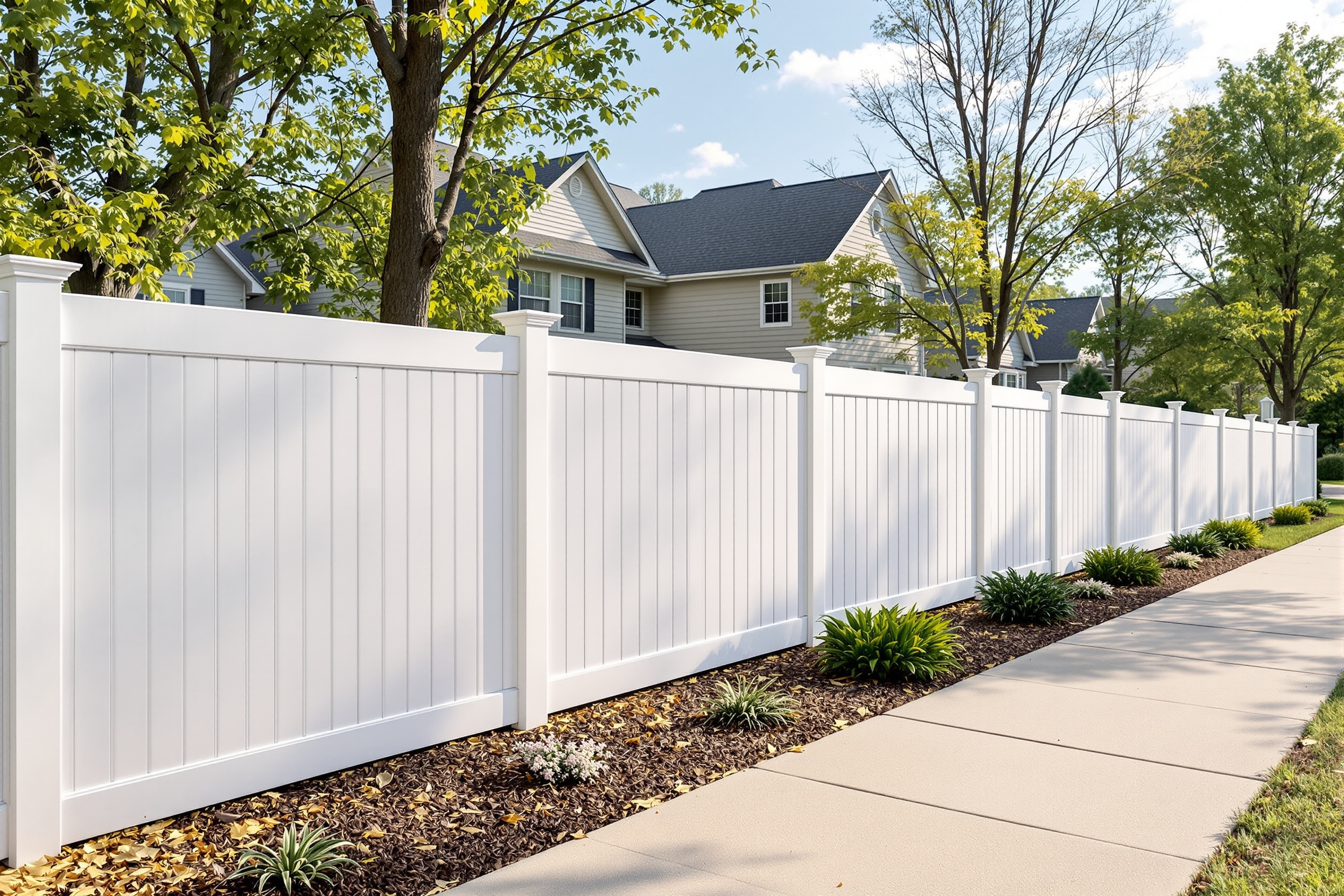
The same mature trees that make a Mission street worth living on keep its soil damp — and damp soil rots a wood post through at the ground line, which is the failure we get called out for more than any other here. Vinyl closes that door: nothing wood at grade to rot, no coat to keep reapplying, and a capped panel that pens a dog and reads clean from both yards across a boundary that sits only feet away. Since shade-held moisture and frost heave are the two things that really bring a small Johnson County fence down, everything starts underground — each post in concrete around a galvanized steel core, a genuine 36 inches below the frost line, bedded on drained stone wherever the lot holds water. Above it sits capped, co-extruded PVC — white, sand, or woodgrain — from CertainTeed, Veka, and Bufftech, running along a steel-reinforced rail. One owner-run crew handles it end to end: the estimate, hauling out the old chain link or spent cedar, the install, and any warranty call that comes years later.

★★★★★
4.9
from 85 reviews
Licensed
& Insured · KS + MO
400+
fences installed
A+ BBB Rating 400+ Fences Installed Since 2021 Owner-Operated Free On-Site Estimates
Browse vinyl options ↓

WHY MISSION HOMEOWNERS CHOOSE VINYL

Mission Hill Acres to Johnson Drive — Vinyl for a Small Mission Lot

The number on the estimate is the smallest part of the story. What lands in your yard is a fence with no post to rot in the tree shade, no coat to reapply, and a clean line the neighbor sees the same as you — built for a close-set inner-ring lot, not stamped off a spec sheet. Mission is a repair-and-replace town: most calls are an old 4-foot chain-link line ready to become a 6-foot privacy wall. Cedar is the usual upgrade, and it's an honest one — but on a shaded lot it rots and it stains. As the Kansas City vinyl fence contractor handling install, repair, and staining under one roof, we build the version you don't replace in fifteen years.

1

No post rot in the tree shade

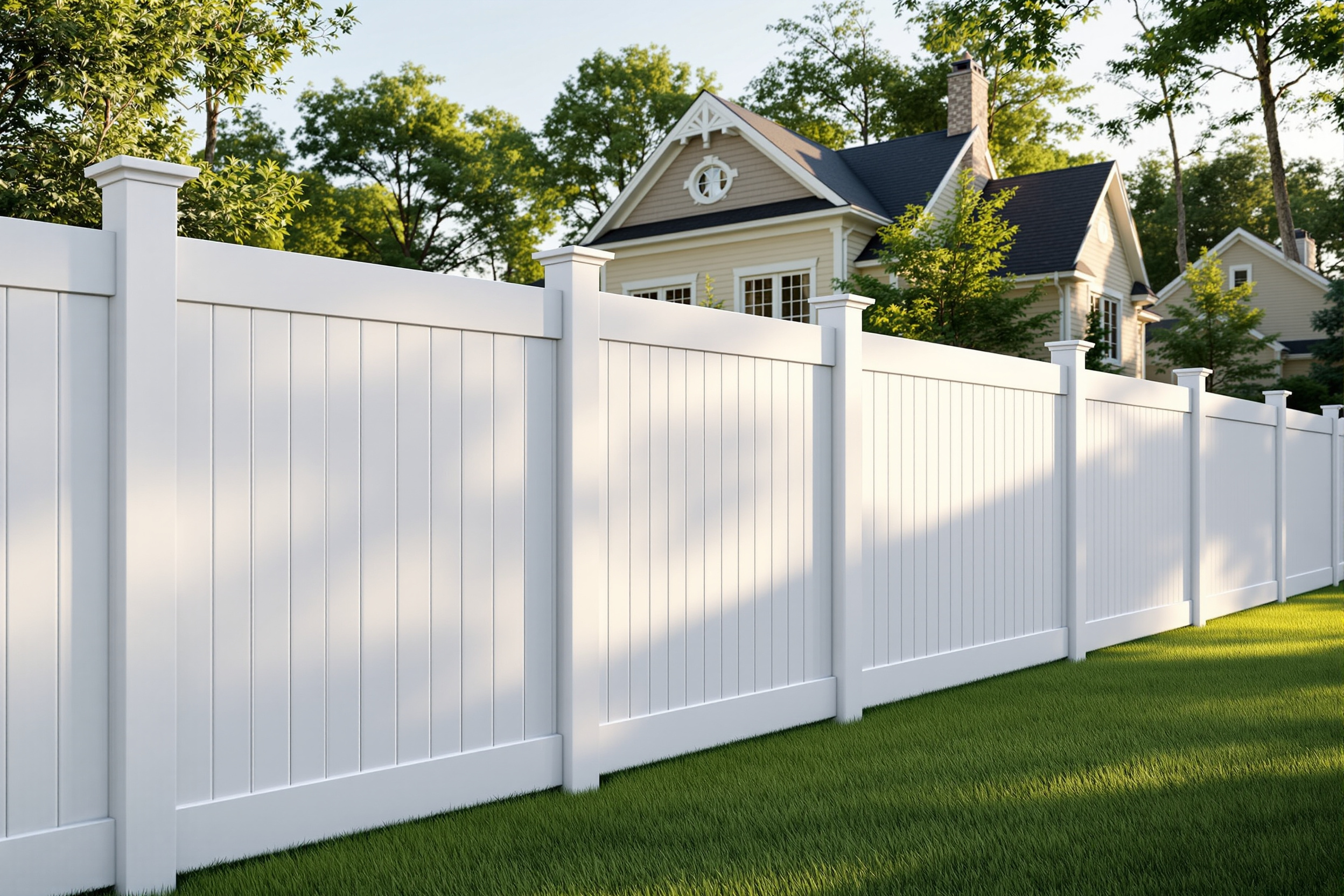
The repair we answer most in Mission is a wood post gone soft at the ground line — the mature trees that make these blocks nice also keep the soil damp long after an open suburb has dried out, and damp soil rots cedar. Vinyl removes the failure point outright: the load-bearing post is set in concrete with a galvanized steel core, and there's no wood at grade for the shade-held moisture to work on. It's the one Mission problem that vinyl simply doesn't have.
2

A Saturday you get back — right outside the window

On a small Mission lot the fence sits feet from the kitchen window and the patio, so a graying, peeling wood run is something you look at every day. Vinyl ends the re-stain calendar cold — a rinse with the garden hose is the whole program. That reclaimed weekend is the actual reason most owners we quote on vinyl pick it, and on a dense lot the payoff is right in front of you all season.

3

One honest step past the cedar everyone's upgrading to

Mission is a repair-and-replace town, and the standard move is trading a tired 4-foot chain-link line for a 6-foot cedar privacy wall. Vinyl is simply the do-it-once version of that same upgrade — same privacy, same dog-height wall, without the stain rhythm or the shade rot that comes for the cedar in fifteen years. If you're already spending to replace the chain link, it's worth seeing both numbers side by side.

4

A clean line on both sides of a shared boundary

Set feet from the neighbor, a Mission fence is seen from both yards at once — and the 'mixed' look, your good side facing in and their old chain link facing out, is everywhere here. A finished-neutral vinyl panel reads the same to you and to them, so a shared line looks intentional from either side. It's a small thing that matters a lot when the two houses are close enough to wave from the windows.

LOCAL CONDITIONS · MISSION

Shade, Clay, Tight Lots & a Crept Line — What Shapes a Mission Fence

A Mission install turns on four local realities: the mature-tree shade that keeps soil damp and rots wood posts, the Johnson County clay that heaves under a freeze, the small close-set lots that make privacy the whole job, and the old property lines that have crept over decades of DIY repair. Ignore any one of them and a fence that looked square on day one is leaning, rotting, or crowding the neighbor by its third year. We take each on by name below — a shaded quarter-lot on an inner-ring block gets its own plan, never a spec copied off some open subdivision out west.

1

Shade-damp soil that rots wood posts early

Mission's mature trees are half of why the older blocks are worth living on — and they're also why wood fences fail here faster than in the open suburbs. The canopy keeps small backyards shaded, the soil stays damp long after a sunnier lot has dried, and a cedar or pine post sitting in that moisture rots at the ground line sooner than the wood was ever rated for. It's this city's number-one fence repair. Vinyl sidesteps it whole: the post is concrete-set with a steel core, and nothing organic touches the ground.

2

Dense clay that heaves every winter

Under Mission is the thick Kansas City clay that runs through all of Johnson County — a soil that puffs up wet and pulls tight dry, working through that cycle with every freeze and thaw the season throws at it. Give it a shallow post and it will walk that post loose inside a few winters. Depth is the only real counter: sink the footing a full three feet below where the frost reaches and it sits still while the ground above it moves. That's why the dig doesn't get trimmed, even on a compact lot where it'd be easy to.

3

Small, close-set lots and short shared runs

A Mission lot runs a tenth to a fifth of an acre, with houses close enough that privacy is the whole point of the fence. That density shapes the install: panels get hand-carried through narrow side yards, runs are short and neighborly, and the line sits inches off the boundary. We plan the access before the day, set a finished-neutral panel that looks right from both sides, and lay a drained crushed-stone base in the poor-drainage pockets that collect between narrow property lines.

4

Fence-line creep from decades of DIY repair

An inner-ring lot has usually seen a fence or two, each patched and re-set by whoever owned the place, and over the decades the line drifts — a few inches here, a post relocated there, until nobody's sure where the boundary actually runs. Building a straight new fence on a crept old line starts an argument with the neighbor. We re-shoot the true property line before a single post goes in the ground, so the new fence lands where it legally belongs.

THE FIFTEEN-YEAR NUMBER, NOT THE STICKER

Vinyl or Cedar for a Shaded Mission Yard? Run the Long Number

Cedar is the upgrade most Mission owners already reach for when the old chain link comes down, and up front it's the cheaper privacy wall — no argument. But the fence that actually costs less isn't decided on install day; it's decided by what it draws out of your wallet across the years you own a shaded inner-ring lot. Cedar wants a seal coat every couple of years — faster here, because the trees keep it damp — and a post reset when the shade rot finally wins; vinyl is one heavier check that then goes silent. The figures below run against a 150-foot backyard — the length we quote most in Mission — with old-fence teardown counted into both columns.

Over 15 years6-ft cedarVinyl
Day-one install, ~150-ft small-lot runAbout $4,800 raises a 6-foot cedar privacy wall — the very upgrade most Mission owners already choose when the old chain link comes downAbout $7,200, steel-reinforced rail and old-fence haul-off already in the number
The upkeep tab across fifteen shaded yearsRoughly $2,400 in stain and lost Saturdays — a shaded lot needs a fresh coat every two or three years just to hold off the grayZero. A garden hose on a warm afternoon is the entire maintenance plan
How the damp, shaded ground treats the baseThe canopy keeps the soil wet, and a cedar post sitting in it softens at grade years early — this is the repair the phone rings for mostNothing to soften; a steel-cored, concrete-set post carries the PVC and the moisture never reaches wood
Years it stays standing and straightFifteen to twenty in a shaded yard before the base gives and the boards cup, and then it's a tear-outThirty-plus, with the manufacturer coverage riding along to whoever buys the house next
Where the running total lands at year fifteenWell north of $7,000 after the coats and a rot-driven post reset — and a full rebuild waiting right behind itRight around the original $7,200, with no back end owed and none pending
Whose backyard each one really suitsThe owner set on the wood look and the lower opening price, who'll keep to the stain schedule a shaded lot forcesThe household finished with fence chores on a small, tree-shaded lot — settle it once and forget it

So it comes down to how long you're staying. Want the wood grain and a move somewhere down the road? Cedar's a straight answer, and the Mission wood page spells out the sealing rhythm a shaded lot needs to keep it from graying out early. Planning to stay put? Vinyl earns the gap back by leaving your weekends alone and by never rotting where a shaded cedar post reliably does. Hand us the lot and we'll price both, totals lined up next to each other, and let the numbers argue it out.

THE MISSION COLD-AND-DAMP QUESTION

Will the Cold or the Damp Crack Vinyl in Mission? Only the Cheap Kind

Fair thing to ask on a shaded, tree-sheltered lot, and the answer splits clean: a capped panel on a deep-set post takes the freeze and ignores the damp, while the bargain board on a shallow post is the one that gives. Cold does stiffen PVC, and Mission's shade keeps a yard cool and damp longer than an open one — so a thin, under-built board really can fail here. But wind, the thing that cracks fences out in the open suburbs, is rarely the threat on a close-set Mission lot. The four build decisions below are what keep cracking off the fences we set.

Grade matters more than the material name

Not all vinyl is one thing. The panels worth buying are co-extruded — an outer skin loaded with UV and impact additives, chemically fused over the core, and that skin is doing the real work. Cut-rate single-wall stock, the kind a flip crew grabs to close a job cheap, has no such skin; it chalks pale and goes brittle within a season or two. Every profile on our trucks is the capped kind, and that one specification is what separates a panel that laughs off a freeze from one that webs with cracks.

Here, the cold decides it — the wind doesn't

Push west into the open subdivisions and wind is the fence-killer. On a tight, tree-hemmed lot it barely registers; the run is short and something is always breaking the gust. What actually tests a panel here is a hard January freeze, which draws the stiffness out of PVC. Thin hollow board on a shallow post is what snaps under that — a capped panel anchored deep in concrete rides it out unbothered. So we put the money into depth and material grade rather than bracing against a wind a sheltered backyard won't feel.

Rot is a wood problem; PVC opts out of it

Everything that shortens a fence's life on these shaded blocks comes back to moisture in the wood — the damp soil under the canopy working a cedar post soft at the base. Vinyl has no part in that story. There's simply no fiber for the wet to rot, so the fastest-acting killer of a fence on a shaded lot skips vinyl entirely. That's the plain reason a steady stream of owners here quit re-buying cedar and make the switch for good.

It's the dog and the mower that test it, not the sky

A small yard hands its fence abuse from the inside: a hundred-pound dog throwing weight at the line, a trimmer whipping the base, a mower deck catching the bottom rail. Impact-modified capped panels take that punishment without a dent or a split. And we build a deliberate breathing gap into every joint — PVC grows a touch in the July heat and pulls back in the deep cold, and a run torqued down solid has nowhere to put that motion, so eventually it tears. Ours has room to move.

WHAT WE INSTALL MOST

The Vinyl Mission Homeowners Order Most

Most vinyl orders in Mission settle onto this short list — each paired with a straight price, the service life you can count on, and the almost-nothing upkeep it asks. The right pick tracks your lot — a dog-and-kids backyard, a warm-toned run for an older brick block, a front picket by Johnson Drive, or a lattice-crowned wall that keeps light in a shaded yard — and how it should read against the house. Samples ride out to the estimate, so you choose against your own siding, not a chip in a binder.

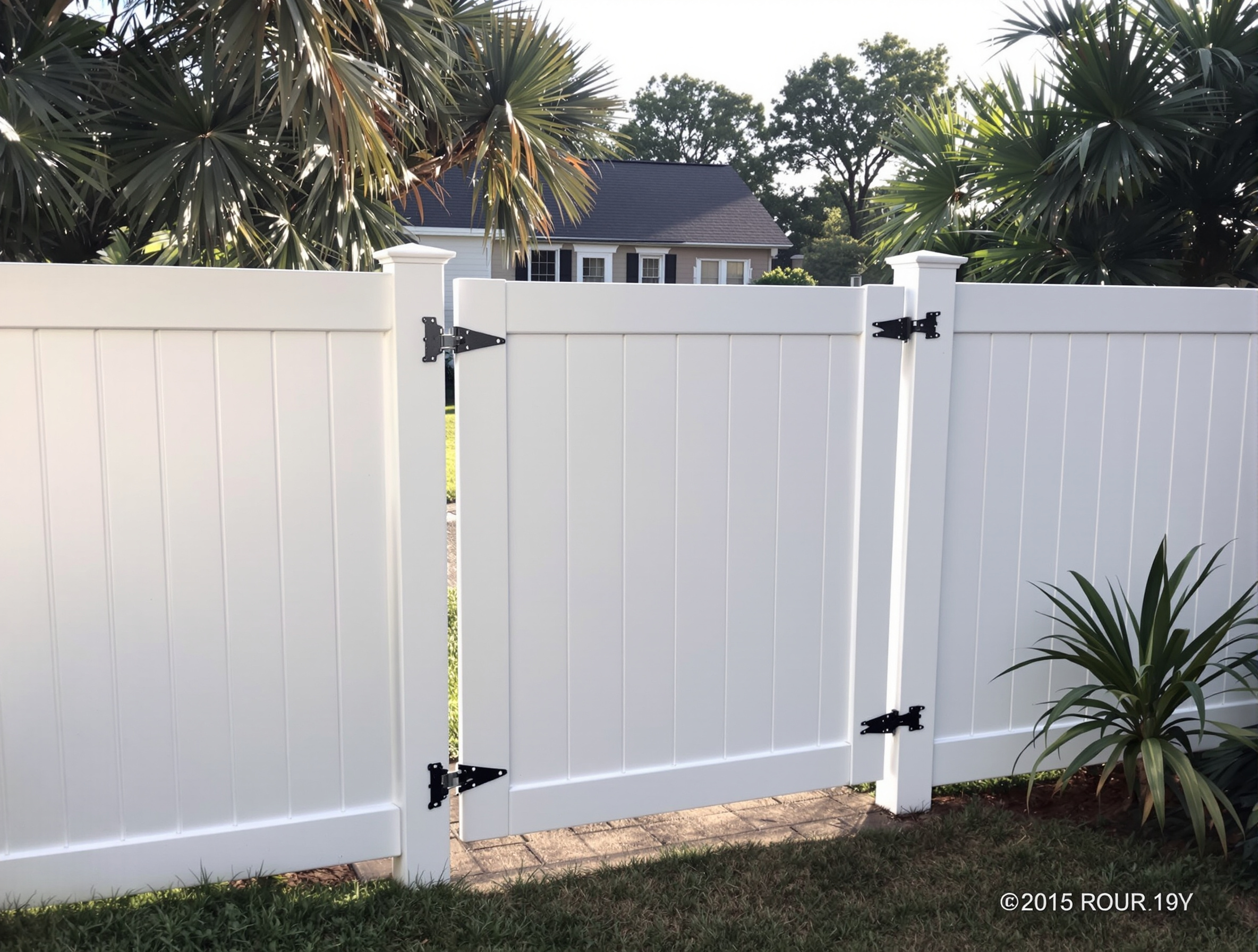
White Privacy — 6 ft vinyl fence by RKC Wood Care Pros in Mission, KS

White Privacy — 6 ft

The dense-lot privacy staple

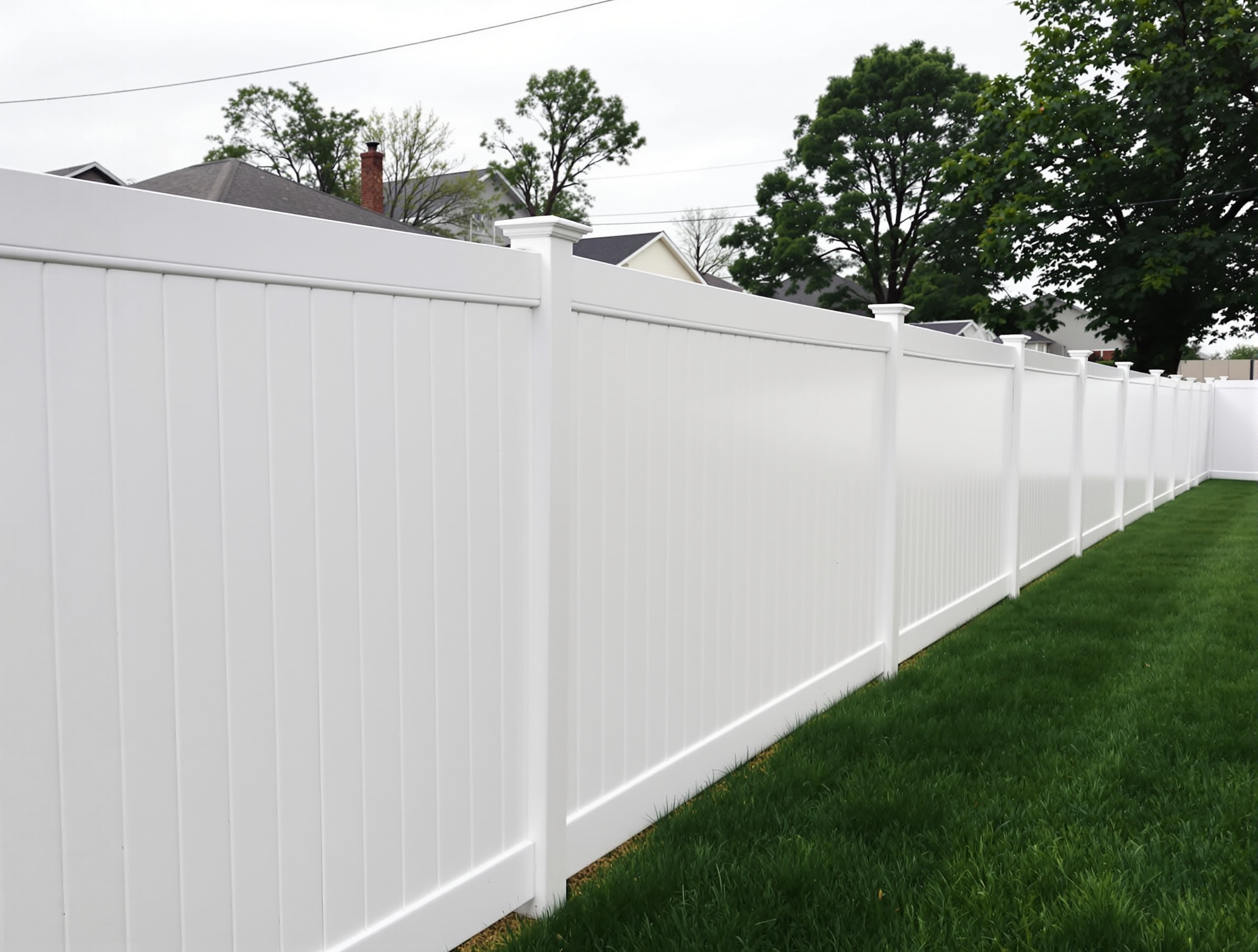
By a wide margin the most-requested build in town: a solid six-foot white wall that keeps the dog in, softens the traffic hum off Shawnee Mission Parkway, and wraps a small lot in a day or two. The boards knit tongue-in-groove in UV-rated PVC, and a galvanized steel channel stiffens the rail underneath. It usually goes up where an old 4-foot chain-link line or a base-rotted cedar run came down — and this time there's no wood in the dirt to give out when the ground stays damp.

  • Price: $40–55/LF installed
  • Lifespan: 30+ years
  • Maintenance: A yearly hose-down
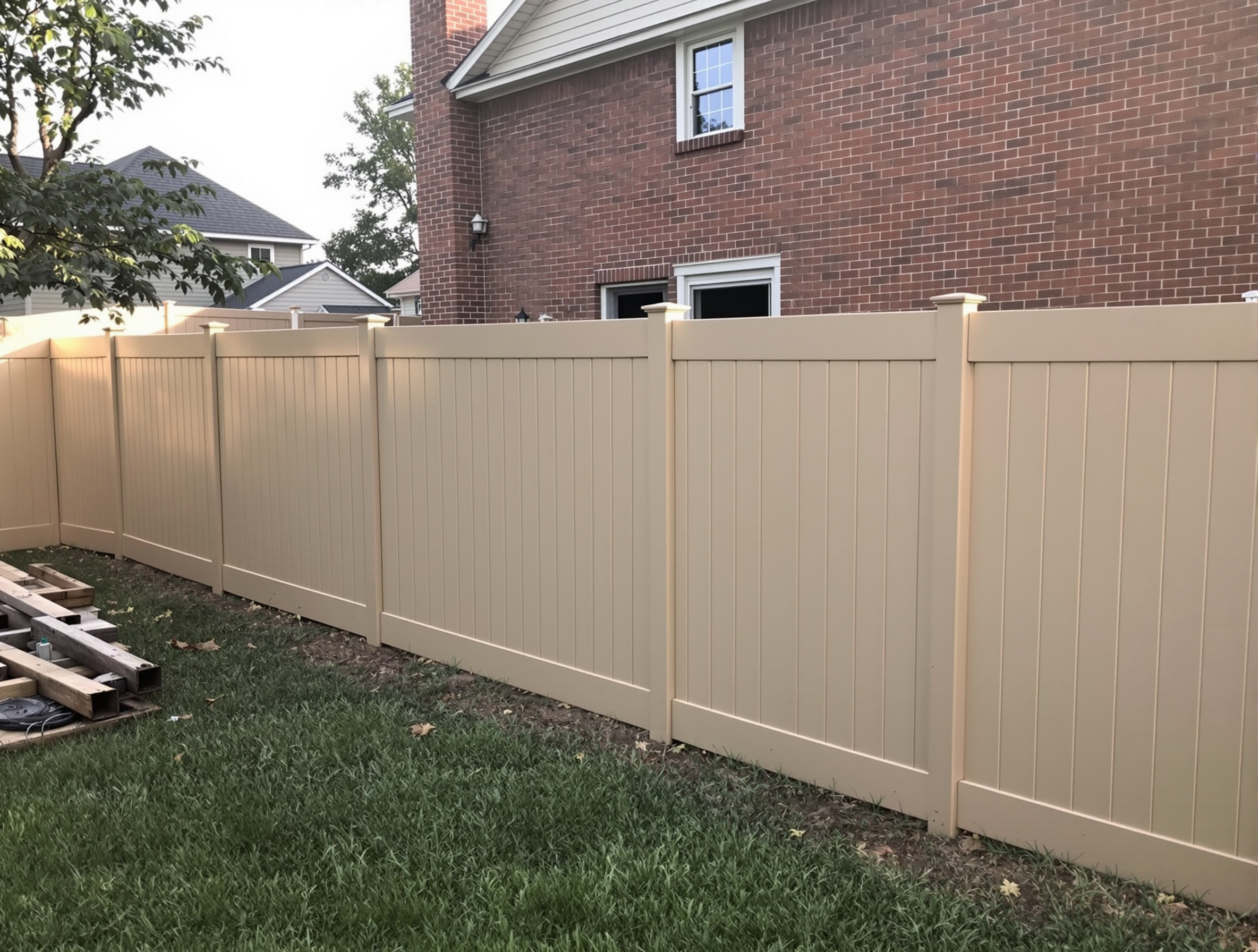
Sand / Woodgrain Privacy — 6 ft vinyl fence by RKC Wood Care Pros in Mission, KS

Sand / Woodgrain Privacy — 6 ft

Warm tone for a 1950s Mission block

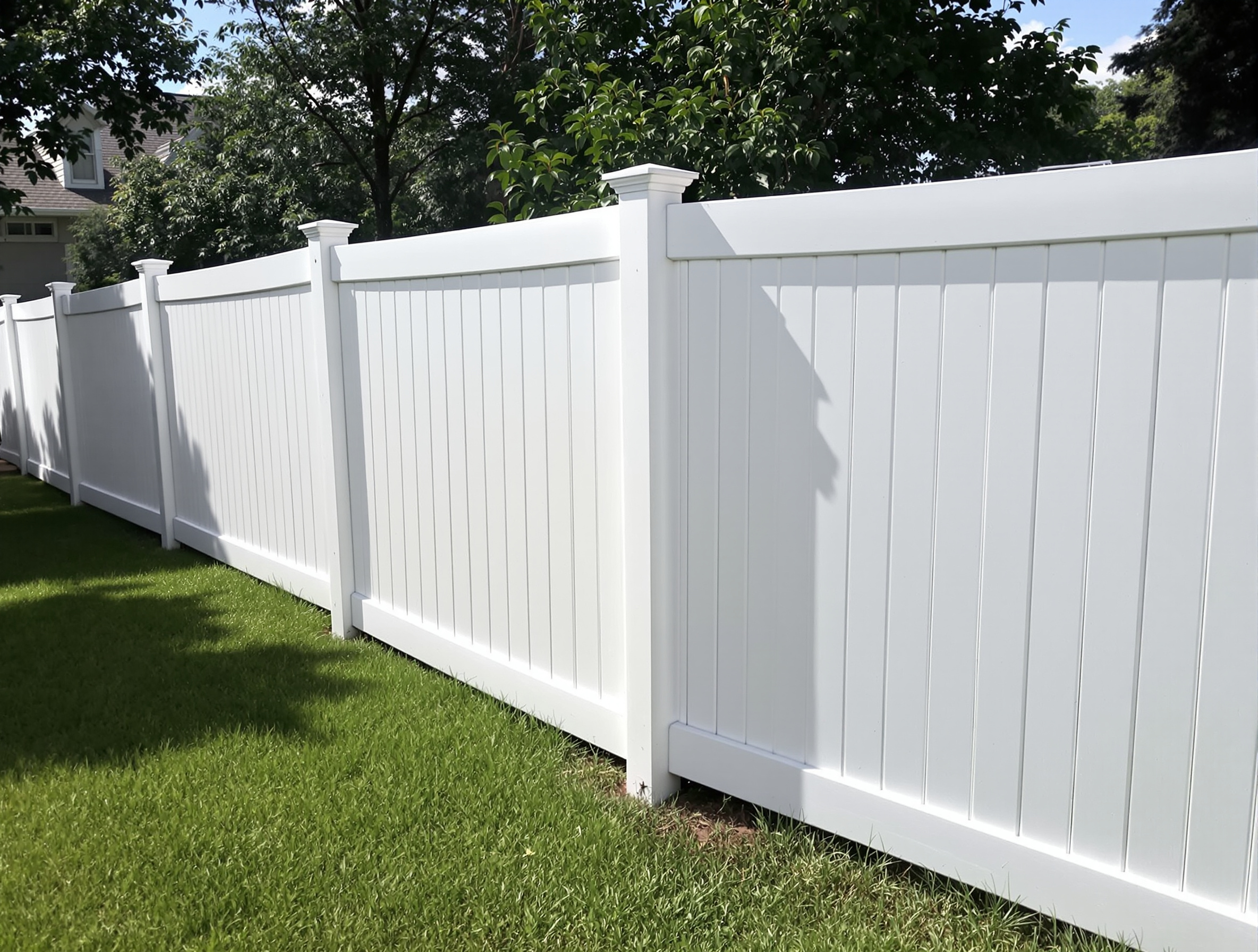
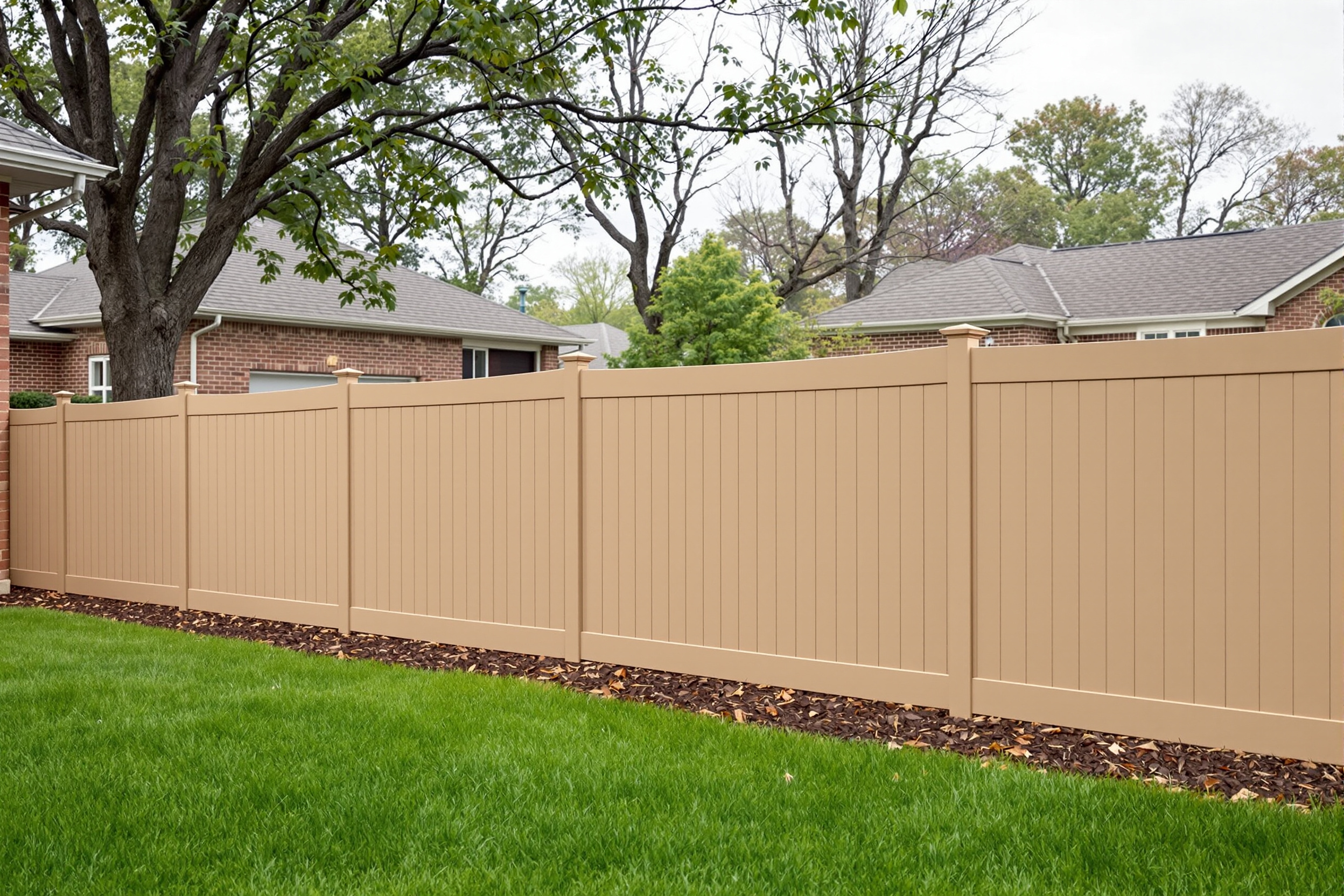
The older streets around Mission Hill Acres and Countryside wear a lot of brick and weathered cedar, and a stark-white panel can sit hard against them. A sand tone or an embossed woodgrain face keeps vinyl's no-upkeep case while reading closer to the wood the block already has. Same steel-reinforced rail underneath, same three-decade panel — just a mellower color at a property line that's only feet from the neighbor's.

  • Price: $42–58/LF installed
  • Lifespan: 30+ years
  • Maintenance: An occasional soapy rinse
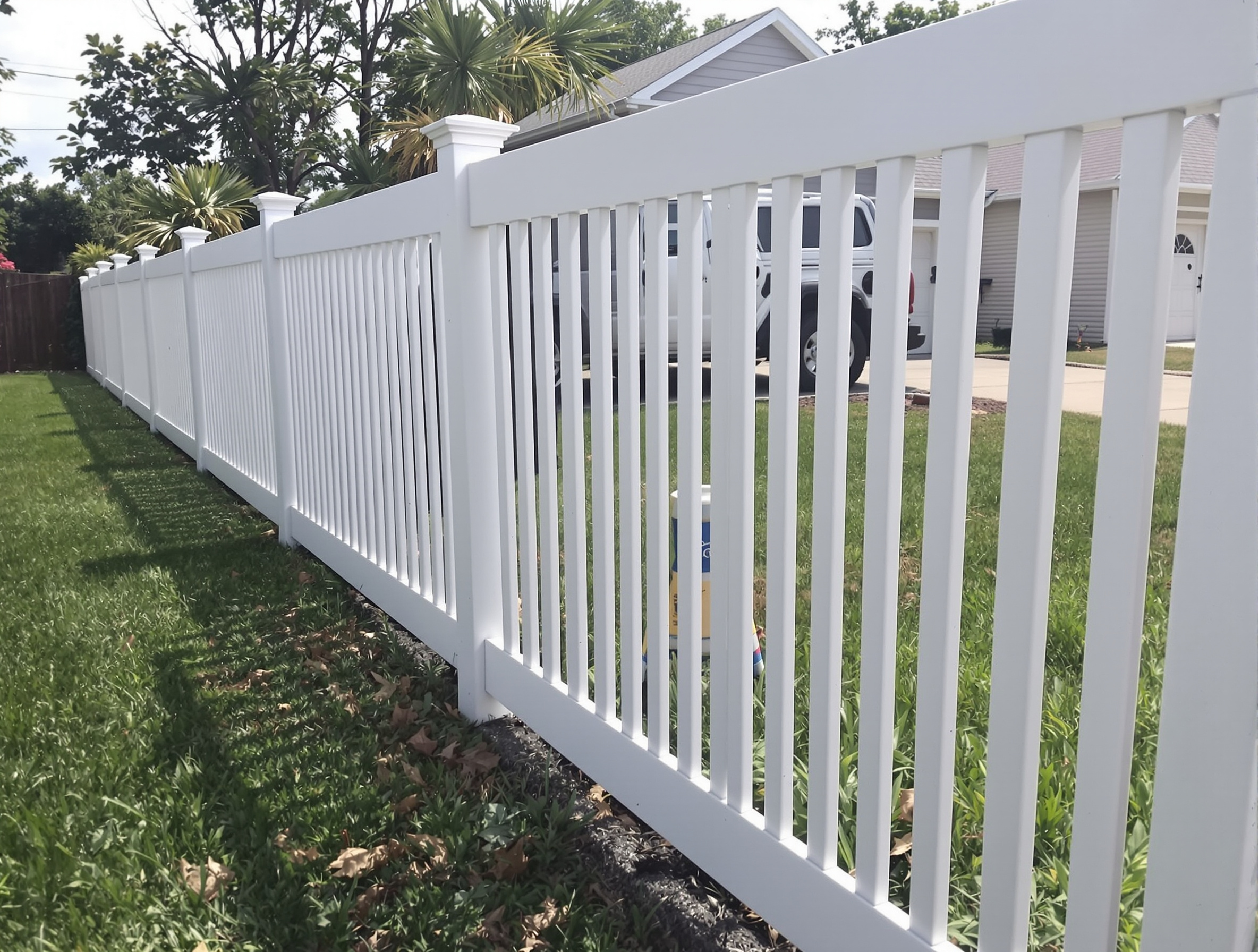
White Picket — 4 ft vinyl fence by RKC Wood Care Pros in Mission, KS

White Picket — 4 ft

A front yard off Johnson Drive

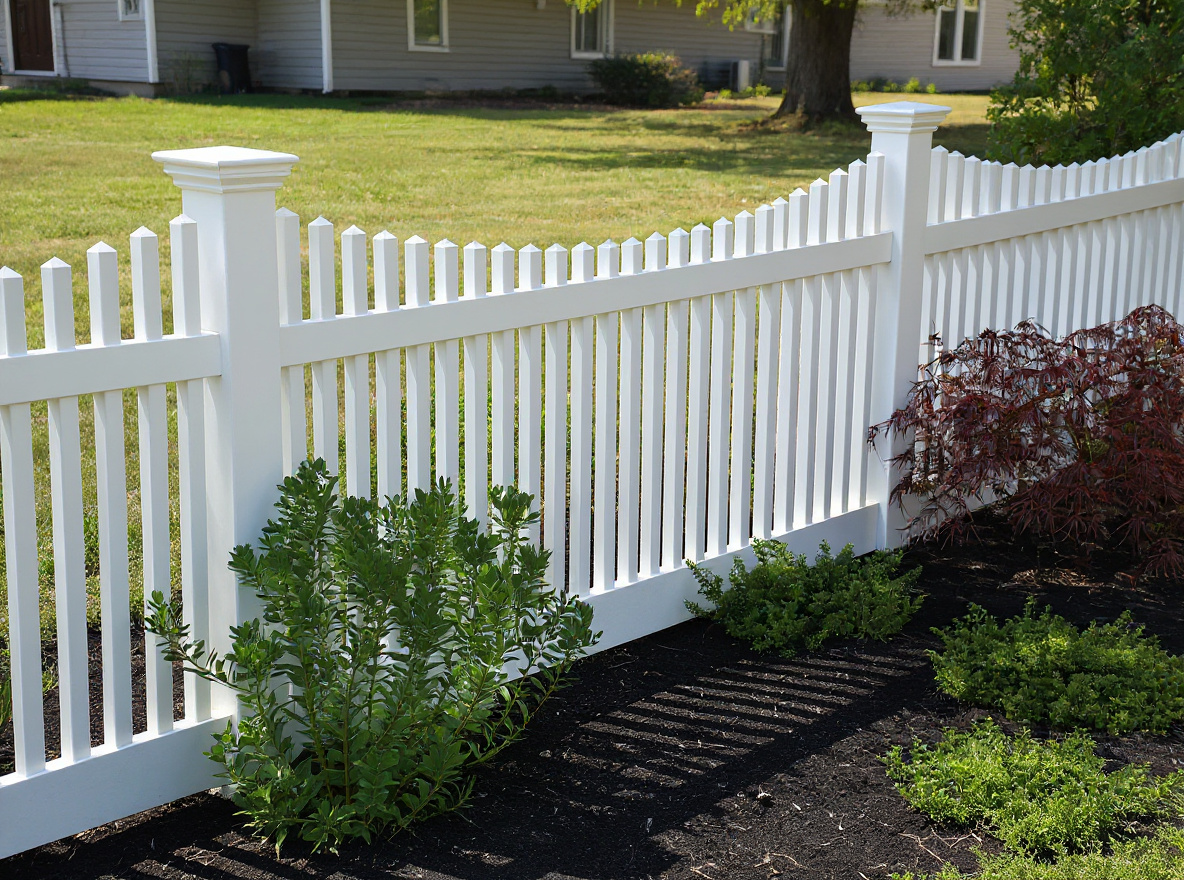
On the walkable blocks near Johnson Drive and Broadmoor Park, a four-foot picket frames the front and still keeps a small dog in without walling the yard off from a street people actually walk. The vinyl version holds that crisp white line without the scrape-and-repaint a wood picket begs for every couple of summers. Most owners run it across the front and step up to six-foot privacy where the yard turns back.

  • Price: $30–44/LF installed
  • Lifespan: 30+ years
  • Maintenance: Little more than a rinse
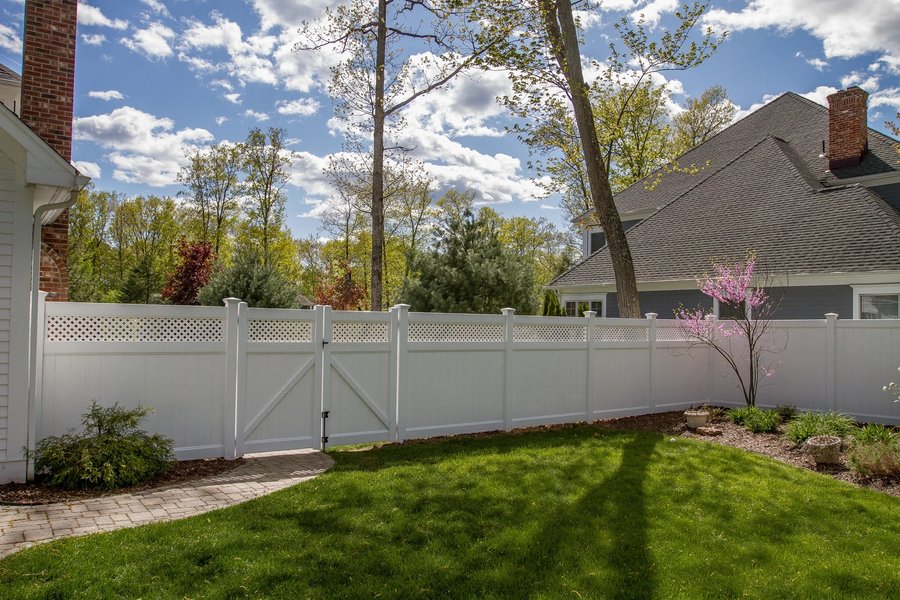
Lattice-Top Privacy — 6 ft vinyl fence by RKC Wood Care Pros in Mission, KS

Lattice-Top Privacy — 6 ft

Lifts light into a shaded backyard

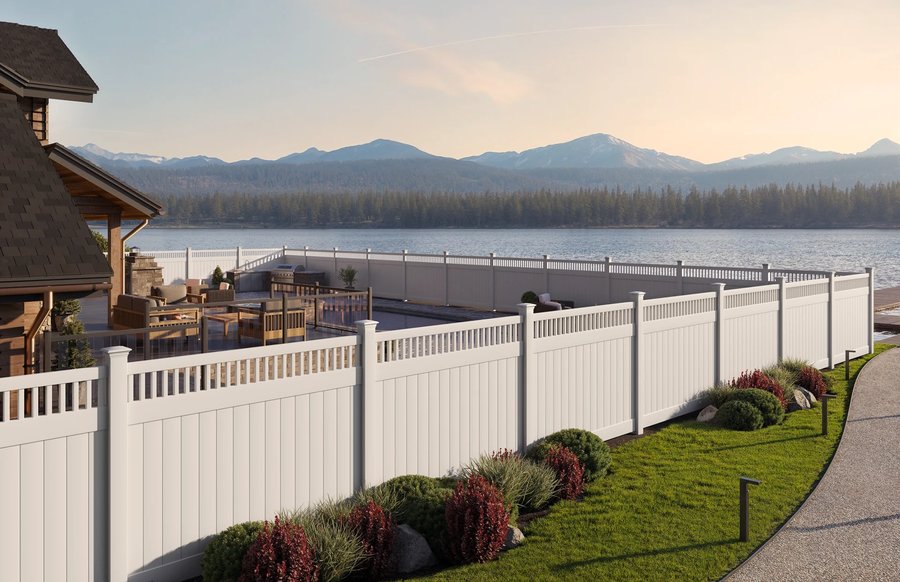
Six feet of solid privacy below, an open lattice crown up top — the profile that keeps the wall but lets light down into a small backyard that Mission's mature trees already keep in shade. On a 0.15-acre lot boxed by close-set houses, that top course is the difference between a private yard and a dark one. Same UV-rated PVC, same steel rail, a little more finish for the money.

  • Price: $44–58/LF installed
  • Lifespan: 30+ years
  • Maintenance: A rinse now and then
White vinyl privacy fence pricing — Mission, KS — RKC Wood Care Pros

PRICING A MISSION VINYL FENCE

What a Vinyl Fence in Mission Costs, Broken Down

Expect $30 to $60 a foot in Mission, the spread driven by profile and run length — and the cost of pulling the old fence, usually a chain-link line or a cedar run rotted at the base, carries its own line so it never lands as a surprise on the final bill. The three builds below are the ones we quote most across the city. Reckon on roughly 150 feet for an average backyard here. A gate, the teardown, a jump up to the lattice-topped profile — every one of those is priced separately and in the open. You'll have the whole thing on paper and itemized before a single crew member arrives: nothing quoted from the hip, nothing sprung mid-job.

White Privacy — 6 ft

$40–55

per linear foot installed

The build we bid most — dog-height family privacy on a steel-reinforced rail, with teardown of the old chain link or cedar priced on its own line.

Sand / Woodgrain — 6 ft

$42–58

per linear foot installed

A warm tone that settles into the older brick-and-cedar streets around Mission Hill Acres and Countryside.

Picket or Lattice-Top

$30–58

per linear foot installed

A four-foot front picket by Johnson Drive, or a lattice-crowned privacy run that lets light into a shaded lot — quoted to the length that's actually there.

Tearing out an old chain-link or cedar run, adding a gate, stepping up to a lattice-topped profile — each rides its own line on the estimate, nothing buried — reach us at (913) 286-1091 or set up an on-site walk-through.

OUR PROCESS

How We Build a Mission Vinyl Fence

A project here moves through four stages, from the first call to a fence you can lean on — and two of them happen before a panel ever goes up, because pulling the old fence, re-shooting the line, and setting the posts deep is what decides whether the new one lasts. The building days are quick — one to two on site for most small Mission backyards. It's the groundwork before them, tearing out the rotted posts and digging past the frost line onto a drained base, that separates a fence that stands for thirty years from one that leans in three.

1

The walk-through — the old fence and the real boundary

First visit, we pace your lot and tape out the short runs a Mission yard is built from. We size up what has to go — typically a tired 4-foot chain-link line or a cedar run gone soft, and often that 'mixed' patchwork where your side is wood and the neighbor's is chain link. We flag the shaded stretches where the ground stays wet, spot the low pockets that pond between close property lines, and shoot the true boundary fresh, since a generation of piecemeal DIY fixes tends to nudge an old line off course. You get the estimate back on paper: footage, gates, teardown, your chosen profile, and every bit of concrete and steel going in the ground.

2

Locate, color, and clearing the old line out

Nothing gets dug until the 811 locate is on the calendar. Meanwhile you lock the look — crisp white, a warm sand or woodgrain, a front-yard picket, a lattice crown — and we place the panel order. Install morning starts with demolition: the old fence comes out whole, posts included, and any concrete slug left from a chain-link or cedar run from years back gets excavated rather than worked around, so the new posts land in clean ground.

3

Three feet of footing over a drained base, then panels up

Every post drops a true 36 inches — well under the Kansas City frost line — into poured concrete on a belled base, the reach heavy Johnson County clay demands before it will stop shoving a footing around each freeze. Where a lot holds those shaded wet pockets, we bed the footing on crushed stone so water drains off instead of pooling at the post. The ground here is mostly level and the runs are short, so once the concrete kicks the line reads straight — plan on one to two days on site for a typical backyard.

4

The final pass and your warranty logged

We walk the completed run together and swing each gate to be sure it seats and latches true. Your CertainTeed, Veka, or Bufftech coverage goes on file under your name, paperwork in your hand — no re-seal date on the calendar, no shaded post quietly rotting toward a callback. Should anything shift in that first year, the same crew that set it comes back and trues it up.

VINYL WE'VE RAISED · KC METRO

Vinyl fence installation by RKC Wood Care Pros, Kansas City metro
Vinyl install · KC metro
Vinyl fence installation by RKC Wood Care Pros, Kansas City metro
Vinyl install · KC metro
Vinyl fence installation by RKC Wood Care Pros, Kansas City metro
Vinyl install · KC metro
Vinyl fence installation by RKC Wood Care Pros, Kansas City metro
Vinyl install · KC metro

REVIEWS

What Kansas City Homeowners Say About RKC

4.9 ★ · 85 Google reviews

Every review is on our Google Business Profile — read them there, unedited.

Read all 85 reviews on Google

MISSION VINYL FENCE QUESTIONS

What to Ask Before You Fence a Yard in Mission

The questions homeowners raise while we're standing in the yard writing the estimate — grouped by topic, every answer tied to real local pricing, the shade-damp rot we replace most, the small close-set lots, and the honest place vinyl holds next to the cedar upgrade. Yours not here? Call (913) 286-1091 and ask it.

Vinyl fence installation in Mission, KS by RKC Wood Care Pros

Vinyl Materials & Lifespan

How long does a vinyl fence last in Mission?
Thirty years is a safe number, and what decides it isn't the panel — it's the post under it. A capped, UV-rated board on a steel-reinforced rail will outlast most of what's around it, provided the base is done right, and in Mission 'right' means answering the two things that kill fences here: shade-held dampness and frost heave. Ours go into concrete over a steel core, a full 36 inches down past the frost line, so the tree shade that quietly rots a cedar post finds nothing to work on. The warranty from CertainTeed, Veka, or Bufftech guards the panel against fade, crack, peel, and chalk — and it carries over to the buyer when you sell.
How is vinyl different from the cedar most Mission owners upgrade to?
In Mission the standard move is replacing an old 4-foot chain-link line with a 6-foot cedar privacy wall, so cedar is the fair thing to compare against — not the cheapest board. Cedar costs less up front and looks warm on day one, but on a shaded Mission lot it wants a seal coat every couple of years and its posts rot at the ground line sooner than in an open yard. Vinyl costs more to install and then goes quiet — no coat, no rot, thirty-plus years, warranty in hand. On a fifteen-year view, a typical small-lot backyard usually lands vinyl ahead once the stain cycles and a shade-rot post repair are counted. If you want the wood look and don't mind the upkeep, cedar's honest; if you're staying in the house, vinyl is the cheaper fence over time.
Does Mission's shade and cold hurt vinyl?
Neither one touches a quality panel. The shade-held dampness that rots a cedar post has no organic material to work on in PVC, so the thing that ages wood fences fastest here is a non-issue for vinyl. Cold does stiffen PVC, but the panels we install are impact-modified and co-extruded — the toughness is in a thick outer cap fused over the core, and most profiles carry a class-4 impact rating. It's the single-wall bargain stock that gets brittle and cracks in a freeze, and we don't stock it. Because Mission lots are small and tree-sheltered, wind is rarely the threat it is out in the open suburbs.
We just want to dog-proof a small backyard — what's the right pick?
It's the reason the phone rings more than any other in Mission, so it's a fair thing to sort out. On most of these lots the answer is a six-foot solid white privacy panel — over a dog's sightline, and it hands you neighbor privacy in the bargain on a boundary that's basically arm's reach away. If a backyard the canopy already darkens needs to keep what light it has, a lattice-crowned run gives you the solid wall down low and an open weave up top. Both stand up in a day or two, dodge the rusty sag an aging chain-link line settles into, and never soften the way a shaded cedar post eventually will.

Pricing & Warranty

What does a vinyl fence cost in Mission?
For six-foot white privacy with the steel-reinforced rail included, figure $40–$55 a foot. Lots here are compact — call it 150 feet of run for an average backyard — so most privacy jobs settle between $6,000 and $8,500. Step to a warm sand or woodgrain and it's $42–$58; a four-foot front picket sits below that and a lattice-crowned run just above, landing the pair at $30–$58. Tearing out and hauling the old fence — a chain-link line or a base-rotted cedar run, most of the time — shows up as its own entry, never a tack-on at the end. Every quote is free, printed, and broken out item by item before we set a post.
Is the warranty real, and does it transfer if we sell?
Real on both counts — and the transfer pulls its weight on inner-ring blocks that change hands as houses get fixed up. Each of CertainTeed, Veka, and Bufftech backs the panel for life against fade, crack, peel, and chalk, then rolls into prorated coverage for whoever buys next. The day we wrap, it's filed under your name and the paperwork is in your hand. When you go to sell, a fence still on warranty quietly works in your favor — and a brand unwilling to commit that coverage to paper isn't one we'll put in your yard.
Is vinyl worth the extra over just replacing the chain link with cedar?
For a lot of Mission owners it comes down to how long they're staying. If you're a few years from moving, cedar gets you the privacy wall for less today. If you're settling in, vinyl is usually the cheaper fence across the time you own the house — no seal coats on a schedule the shade only speeds up, and no post rot to reset in fifteen years. Give us the lot and we'll quote both, the cedar upgrade and the vinyl, totals side by side, so the choice is yours to make on real numbers instead of a guess.

OTHER MISSION FENCE OPTIONS

Mission Fence and Gate Services

Vinyl isn't the only option — RKC installs and repairs every type of fence in Mission: wood, vinyl, chain link, ornamental iron, aluminum, and commercial security, plus gates and in-house staining. Every card below leads to its own Mission page — the pricing, the ground it's built into, and shots from jobs around town.

Ready when you are

Get a free estimate — we usually respond the same day.

Call (913) 286-1091