Skip to content
Gate Installation in Prairie Village, KS — Walk, Drive, Double & Sliding Gates

Gate Installation in Prairie Village, KS — Walk, Drive, Double & Sliding Gates

A gate in Prairie Village goes into an inner-ring lot — narrow, close-set 1950s streets shaded by established silver maples and oaks, where the hinge post has to be threaded past massive roots by hand and set 36 inches deep against soil that never quite stops shifting. Every RKC gate here — walk, single-drive, double-drive, and sliding — is a surgical install: welded frame, adjustable hinges tuned to the settle, and both faces finished for the neighbor three feet away.

★★★★★
4.9
from 85 reviews
Licensed
& Insured · KS + MO
400+
fences installed
A+ BBB Rated 400+ Fences Installed Since 2021 Welded Gate Frames · Galvanized Hardware Free On-Site Estimates
See gate styles in our catalog ↓

WHY PRAIRIE VILLAGE HOMEOWNERS ADD A GATE

A Gate That Threads a Tight Prairie Village Lot — and Still Latches in Year Ten

Prairie Village is the metro's inner-ring infill market — narrow 1950s lots being renovated and rebuilt, houses close together, and a canopy of mature silver maples and oaks over Corinth Hills, Meadowbrook, and the streets off Mission Rd. Almost nobody calls us saying "I need a latch." They say the side yard is still open to the neighbor, the walk gate has to thread past a big maple, or the old gate binds every fall. The gate is the instrument; what you feel every day is everything on the other side of it. Here's what a Prairie Village lot gets out of one built right for the ground it sits on.

1

Real privacy from the neighbor three feet away

On an inner-ring lot the houses sit close, and the number-one thing Prairie Village homeowners ask a fence and gate to do is close the last open gap in the side yard. A full-height cedar or iron gate that latches clean turns a shared, exposed run into a private backyard — the whole reason most people on these streets call in the first place.
2

A walk gate that clears the roots and still swings true

Threading a gate down a narrow side yard past a mature maple takes more than screwing hinges to a post. We read where the roots run, set the footing where it can go 36 inches deep without cutting the tree, and hang the leaf to open the way the tight gap allows. It swings clean on day one and stays square on a lot where a careless post would have leaned by spring.

3

No more 'gate pinch' by the end of summer

Homes this age sit on soil that keeps shifting, and a gate that hung perfectly in April starts binding on the latch by September. We build the tolerance in — a wider hinge-side gap, adjustable hardware, a latch tuned to the real ground — so the block can move again and the gate still opens with one finger. It's the fix most Prairie Village gate repairs we get called out on never had.

4

A gate that shrugs off the falling limb

The mature canopy that makes these streets beautiful is also the top cause of fence repairs here — ice-storm limbs, not wind. A welded frame with galvanized hardware takes the hit and stays serviceable, and because the same crew that built it handles repairs, a limb-struck leaf is a panel swap done in an afternoon, not a full replacement. Square at year five, square at year ten.

LOCAL CONDITIONS FOR GATES

What Prairie Village's Tight Lots and Mature Trees Mean for Your Gate

A gate is the hardest-working, highest-stress component on any fence line — and an inner-ring Prairie Village lot hands it a set of problems a wide-open suburban lot never has. The post line runs straight through established tree roots, the houses sit close enough that both faces of the gate are on show, and the 1950s soil underneath won't hold still. Layer the freeze-thaw cycle of every Kansas City winter on top, and it comes down to three build decisions that separate a gate still swinging clean in year ten from one that's bound up by year two.

1

The hinge post goes 36 inches — hand-dug around the roots, not through them

A gate post does a job a fence post never does: it bears the whole weight of the leaf plus the leverage of every swing, over and over, all year long. On a Prairie Village lot the hole itself is the fight — a 1950s driveway or side yard almost always falls inside the root plate of an established silver maple or oak, and slicing a major structural root to force an auger through both weakens the tree and leaves the post sitting in loose backfill. So we dig by hand, nudge the post over a few inches where we must, work the footing past the big roots, and pour it 36 inches down below the Kansas City frost line. That depth stays under the freeze-thaw heave the old block still rides through every winter.

2

Built for 'gate pinch' — adjustable hardware because the old soil never sits still

The single most Prairie Village-specific gate problem is what homeowners here call gate pinch: on homes this age the soil keeps shifting under a settled foundation, and a gate that hung fine in spring starts binding on the latch post by fall. We build the tolerance in from the start — the hinge-side gap is set a touch wider, the hinges are the adjustable kind, and the latch is tuned to where the ground actually is, not where a level says it should be. When the block moves again, the gate gets a quarter-turn tweak instead of a callback, and we show you how to make it.

3

Welded frame, both sides finished — for the neighbor who's three feet away

On these close-set blocks your gate has an audience: two households look at it every day, one from each yard. So two things get built in. First, every corner of the frame is welded solid rather than bolted — bolted joints work loose and let the leaf rack until the latch drifts off the catch, and a gate this visible can't be allowed to sag. Second, the leaf is finished on both faces, with no raw bracing aimed across the property line. The hardware runs hot-dip galvanized or stainless to beat KC humidity, and it's sized past the leaf's weight so daily swinging on a tight lot never pulls it out of plumb.

We've hung gates and reset leaning posts across Corinth Hills, Prairie Fields, Indian Fields, and Meadowbrook, on the streets off Mission Rd, Roe Ave, and Tomahawk Rd — including plenty near the old Meadowbrook golf course that's a park now. Same 36-inch root-threaded posts, same welded frames, whether it's a teardown-rebuild off 75th Street or a walk gate on a classic ranch.

THE TIGHT-LOT PLAYBOOK

The Prairie Village Tight-Lot Gate Playbook

On an inner-ring lot the gate question is rarely "what style" — it's "how do we get a square, lasting gate into a spot this tight, past these roots, on soil that keeps moving." These are the six obstacles a Prairie Village lot actually throws at a gate install, what each one does, and how we build around it. Find the row that sounds like your property — most lots here hit two or three of them at once.

The Prairie Village obstacle The build answer How we handle it on your lot
A mature silver maple or oak sits right where the hinge post has to go Hand-dig and thread the footing We hand-dig around the structural roots — sometimes shifting the post a few inches or hanging off a bracket — rather than augering through them; the 36-inch concrete footing is threaded past the root plate so the tree and the post both survive.
A narrow side yard between close-set houses, too tight for a leaf to arc Out-swing, in-swing, or a slide We measure the actual clearance and hang the leaf to open the way the gap allows; where even that won't fit, a cantilever slide rides to the side on rollers and needs no swing room at all.
'Gate pinch' — a gate that binds by fall on a settling 1950s block Adjustable hinges, wider set gap The hinge-side gap is set a touch wide and the hinges are the adjustable type, so when the old soil shifts again the gate takes a quarter-turn tweak instead of dragging the post — a fix you can do yourself.
Houses close on both sides, the gate seen from two yards Both-sides-finished welded frame Every corner welded for a leaf that stays square, and the frame built so both faces read clean — no raw bracing aimed at the neighbor, which is just how a close-packed inner-ring street expects a fence to be built.
Mature canopy overhead — ice-storm limb fall, the top local repair cause Impact-minded, repairable build Wind isn't the enemy here, falling limbs are; we build the gate frame to shrug off a hit and stay serviceable, and because the same crew handles repairs, a limb-damaged leaf is a panel swap, not a teardown.
A teardown-rebuild or luxury renovation getting a high-end new fence Gate fabricated to the new line Whether the rebuild runs scalloped cedar or the modern horizontal slat spreading across the renovated ranches, the leaf is built to the same board, cap, and stain color so it reads as one continuous line with a door in it.

None of this gets decided from a catalog. On the estimate visit Josh reads the lot first — where the roots run, how much room the side yard gives a leaf, how the block has settled — and the gate is built to fit what's actually there, not to a standard doorway.

GATE TYPES

Walk, Single-Drive, Double & Slide — the Four We Build in Prairie Village

Which one you need comes down to what has to pass through it — and, on a lot this tight, what the roots and the clearance will physically allow. Below are the four we build across Prairie Village, each with real pricing. The cladding — spaced-picket cedar, black iron, a modern horizontal slat — changes to suit your fence, while the bones underneath don't: the same welded frame and the same root-threaded 36-inch footing carry every one.

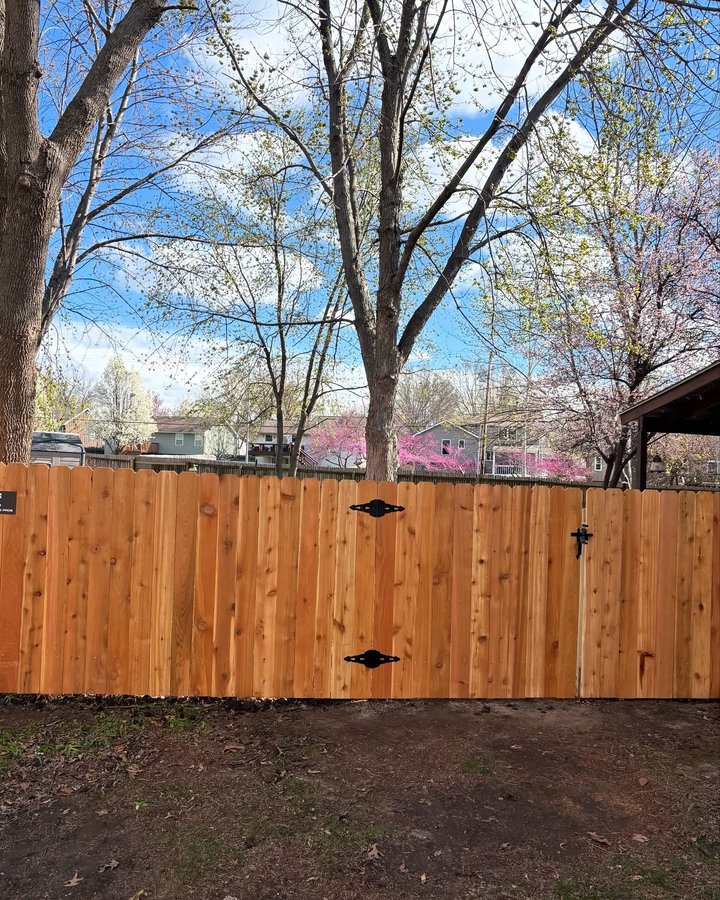
Cedar walk gate on a privacy run installed by RKC Wood Care Pros in Prairie Village, KS

Walk Gate — 3–4 ft wide

The gate most Prairie Village side yards ask for first

The pedestrian door threaded down the narrow side yard between two close-set houses — sized for a mower, a trash cart, or a kid on your hip, and often the only clear path to the backyard on an inner-ring lot. We check the swing arc against how tight the gap is and hang it to open the way the space allows, out or in. Welded square-tube frame clad in spaced-picket or scalloped-top cedar to match the cottage line the street already reads as, self-latching hardware the moment a dog is behind it.

  • Price: $300–600 (cedar) · $450–850 (iron)
  • Typical use: Narrow side-yard runs, backyard walk-through, close-neighbor lots in Meadowbrook and Indian Fields
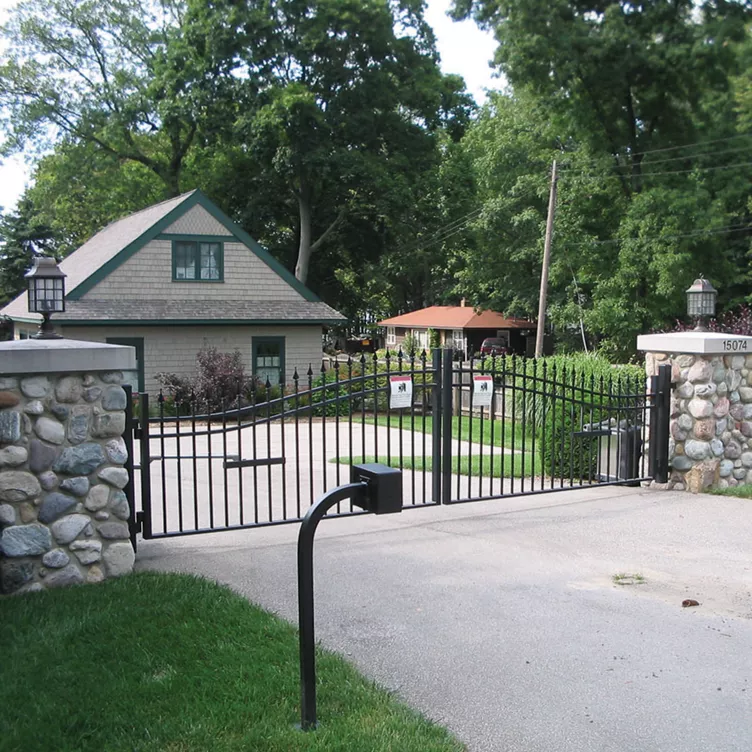
Custom single-drive gate project by RKC Wood Care Pros in Prairie Village, KS

Single-Drive Gate — 10–14 ft wide

The common width off a Prairie Village drive

One leaf swinging off a single hinge post across a standard inner-ring driveway. It gets a welded frame, a corner brace set diagonally from the hinge foot to the latch head, and J-bolt or ball-bearing hinges rated well past what the leaf actually weighs. The real catch on a Prairie Village lot is the hole itself: a 1950s driveway edge usually sits within reach of a mature silver maple or oak, so the footing is hand-dug and threaded past the structural roots — never augered straight through them — before it's poured 36 inches deep against soil that keeps shifting under the old block.

  • Price: $650–1,200 (cedar) · $900–1,800 (iron)
  • Typical use: Standard residential driveways, cedar or black-iron finish on a renovated ranch
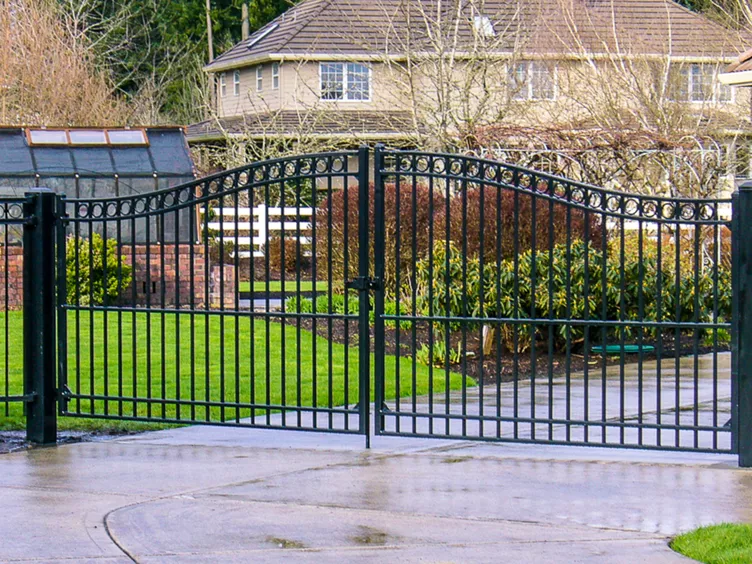
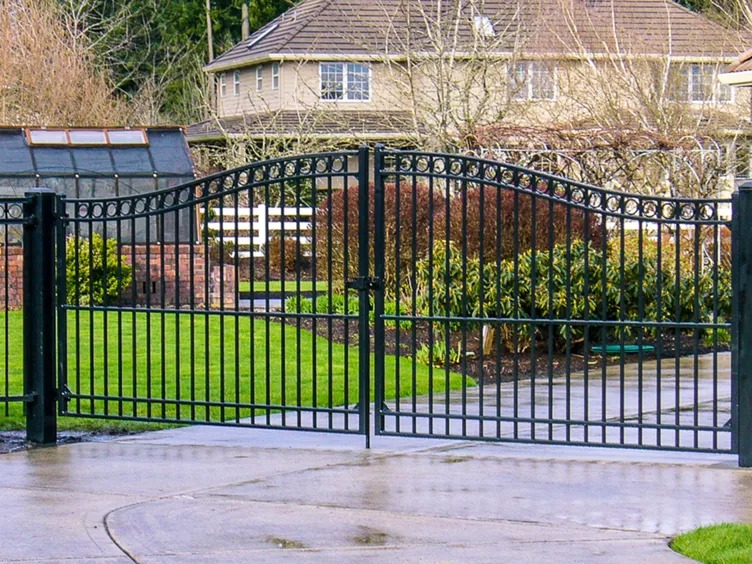
Ornamental iron double-drive gate installed by RKC Wood Care Pros

Double-Drive Gate — 14–20 ft wide

For the wider teardown-rebuild drives

A pair of leaves, each hung on its own post, closing to a drop rod at the center. Because the span is shared between two shorter leaves, each hinge only sees half the lever arm a single wide leaf would throw at it. On a Prairie Village street that's usually a teardown-and-rebuild lot where the new drive runs wider than the 1950s original, or an estate approach that needs clear width for a trailer. Each hinge post is threaded past the roots and poured 36 inches down, and each leaf gets its own diagonal brace so neither one racks with age.

  • Price: +30–50% over single-drive
  • Typical use: Wider rebuilt driveways and estate entries on Corinth Hills and Prairie Fields lots
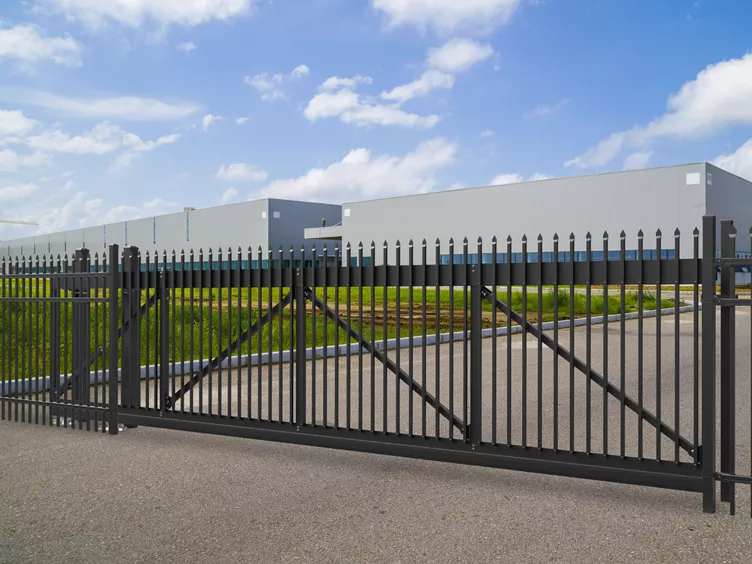
Steel cantilever sliding gate installed by RKC Wood Care Pros

Sliding Gate — 10–20 ft travel

When a tight lot leaves no room to swing

The answer when the side yard is too narrow for a leaf to arc, or a fence line sits so close to the driveway edge that a swing gate would foul the parking pad — both common problems on Prairie Village's close-packed infill blocks. A cantilever rides rollers to the side and needs zero swing clearance. It costs more than a comparable swing gate, but on a lot where the geometry simply won't give a swing gate room, it's the only clean way through.

  • Price: +$400–900 over swing-gate pricing
  • Typical use: Narrow side yards, fence lines tight to the drive, retaining-wall approaches
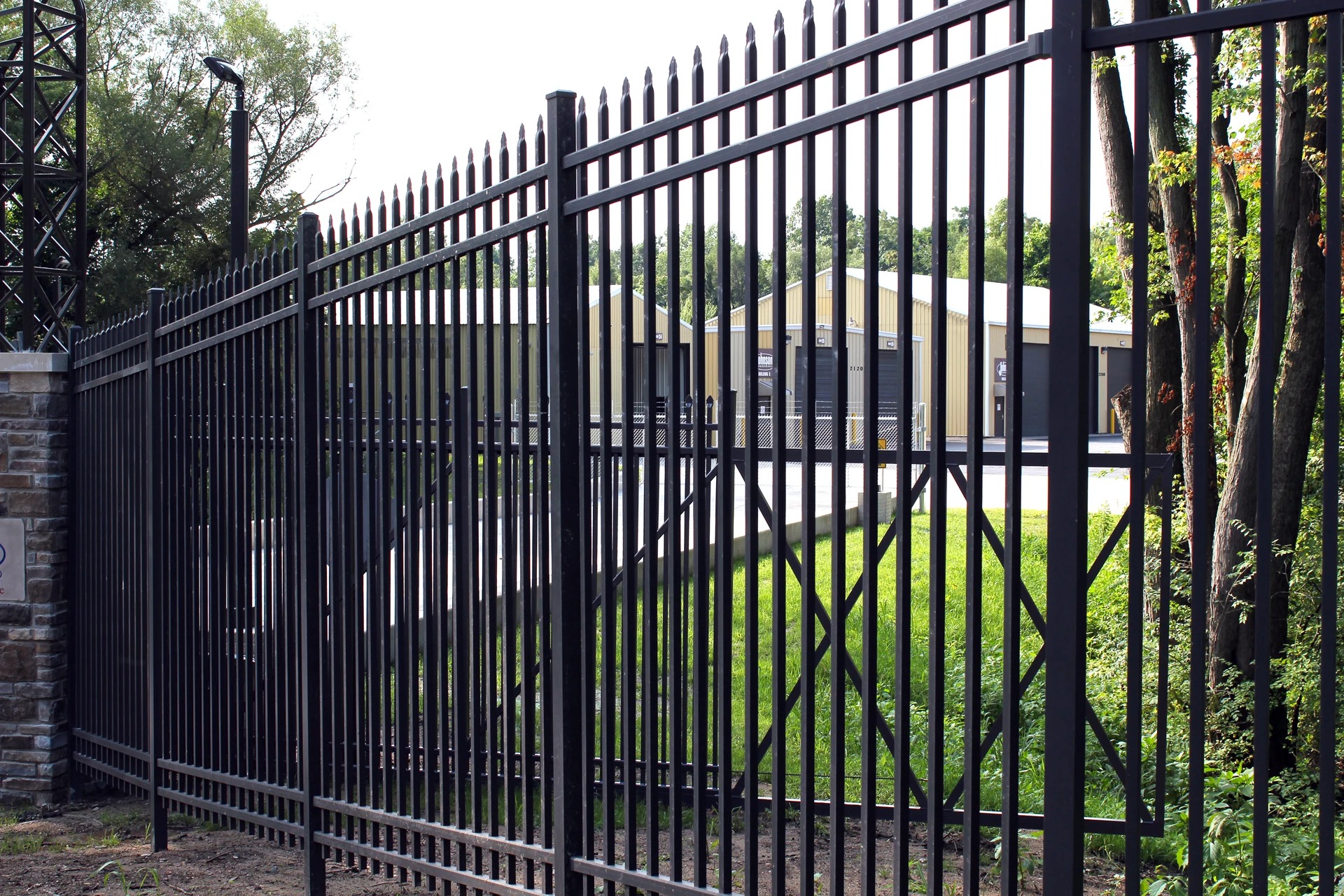
Ornamental iron spear-top double drive gate cost — Prairie Village, KS — RKC Wood Care Pros

PRAIRIE VILLAGE GATE PRICING

What a Gate Costs in Prairie Village

Price tracks gate type, material, and size — plus the extra labor a tight lot adds when a footing has to thread tree roots or a slide has to fit where nothing can swing. Whatever the number, it always includes a welded frame, adjustable galvanized hardware, and a hinge post poured 36 inches deep in wet concrete. The three build-outs below are the ones we quote most often here.

Walk Gate

$300–850

installed

Spaced-picket cedar, scalloped-top, or black iron matched to your fence. Self-latching hardware where a dog or pool sits behind it, on a welded frame.

Single-Drive Gate

$650–1,800

installed

Cedar $650–1,200 · ornamental iron $900–1,800. Root-threaded 36-inch footing, welded frame with a diagonal brace, ball-bearing hinges.

Double-Drive / Custom

+30–50%

over single-drive

Wider rebuilt driveways, matched finials, or a cantilever slide where the lot won't allow a swing — each one priced on site.

Because a tight-lot gate can carry extra labor, every Prairie Village estimate is settled on site rather than over the phone — free, written, and itemized down to the hinge and post depth. Call (913) 286-1091 or request an on-site walkthrough, or compare the full gate-type range at the metro Kansas City gate installation hub.

OUR PROCESS

From the Call to the First Swing — Four Steps in Prairie Village

Start to finish, most gate projects here land inside one to three weeks — and the on-site install is the quick part. A walk gate is frequently done in a day on site and a drive gate in one or two; what stretches the calendar is concrete cure and any custom fabrication. The planning step is where a tight inner-ring lot earns its keep — that's where we solve the roots and the clearance before a shovel goes in the ground.

1

On-site measurement — and a read of the roots and the gap

Josh walks the property, tapes the real opening — rarely the number the homeowner had in mind — and confirms gate type, swing direction, and clearance. On a Prairie Village lot he also reads the two things that decide the build: where the mature tree roots run relative to the hinge-post line, and how much room a narrow side yard actually gives a leaf to swing. You get a free, itemized written estimate the same week naming the frame material, the hinge, and the post depth. No verbal quotes.

2

Plan the opening around the roots, the neighbor line, and the fence

This is where a tight inner-ring lot earns its planning. We lay out exactly where the footings go to thread the root plate, decide out-swing versus in-swing against the actual clearance, and pin the leaf to the same board, cap, and color as the fence run so the gate reads as part of the line — scalloped cedar on a classic street, modern horizontal on a renovated ranch. We lock the hardware here too: adjustable hinges for the settle, latch style, and whether a self-close spring goes on for the dog.

3

Install — footings first, welded frame second, hinges dialed on site

Day one is footings: the hinge posts get hand-dug past the roots and poured 36 inches into wet concrete, then left to cure overnight before anything hangs on them. Day two, the welded frame and panels go up on the set footings. We fasten and adjust the hinges right there, against the ground as it actually lies rather than on a shop bench, so the leaf tracks the real slope and closes square on the latch with the pinch gap already dialed in. A walk gate is usually a one-day job; a drive gate tends to take the two.

4

Load-test, walkthrough, and a free 30-day settle check

We don't take final payment until the gate has run ten full open-and-shut cycles with someone watching each hinge under load — any drag, scrape, or missed latch is set right before we pack up. Because fresh footings take a small set in the first month and an old block keeps drifting, a return trip at the 30-day mark is built into the job, no charge, to re-true the latch and clear any hinge movement. We also hand you the single quarter-turn hinge move that answers gate pinch, so a future bind is a two-minute fix you own.

RECENT PRAIRIE VILLAGE INSTALLS

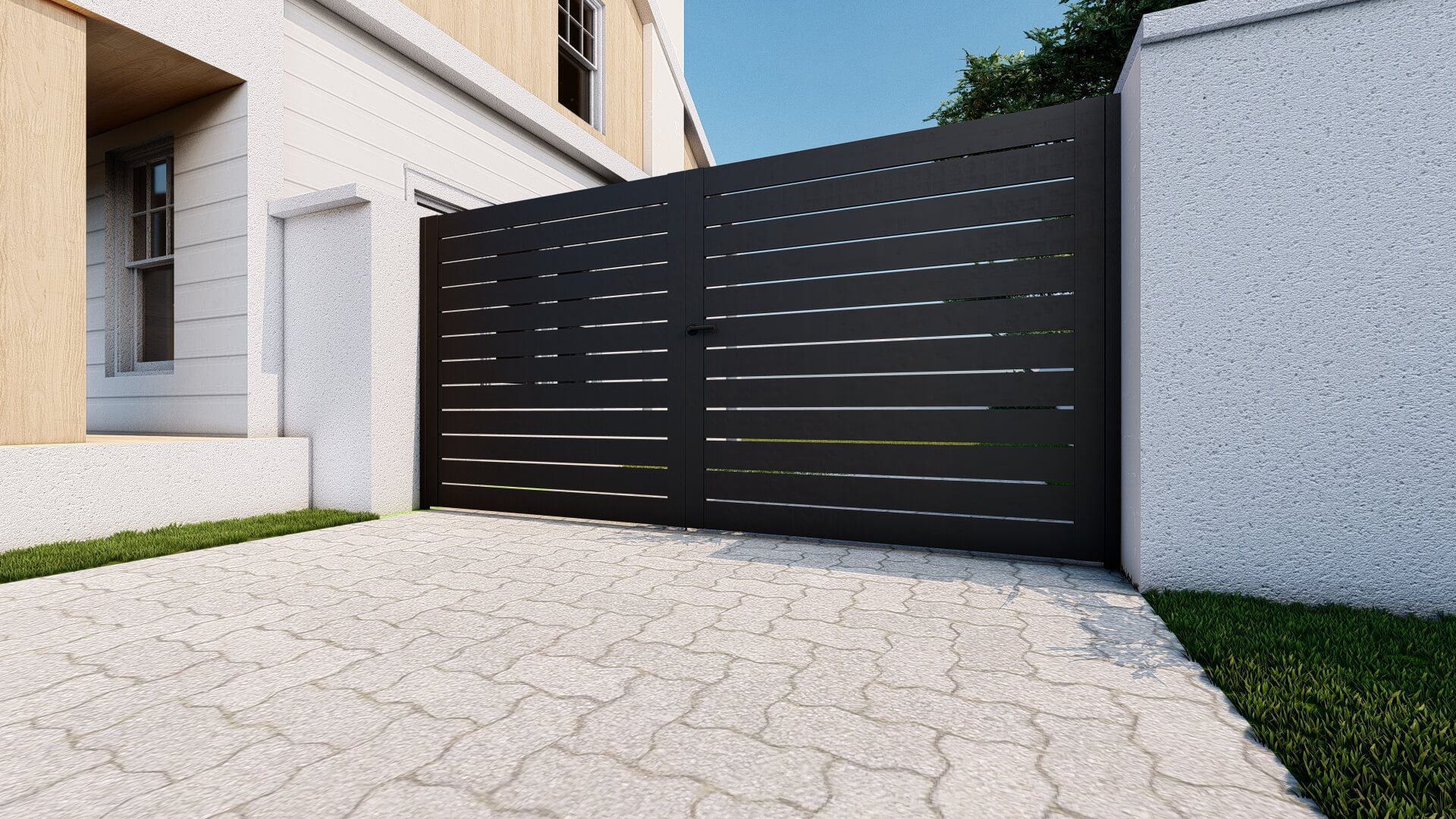
Horizontal-slat entry gate install in Prairie Village, KS by RKC Wood Care Pros
Horizontal-Slat Entry Gate · Prairie Village
Cedar fence and walk gate install in Prairie Village, KS by RKC Wood Care Pros
Cedar Fence & Gate · Prairie Village
Black iron front-yard fence install in Prairie Village, KS by RKC Wood Care Pros
Black Iron Front-Yard Line · Prairie Village
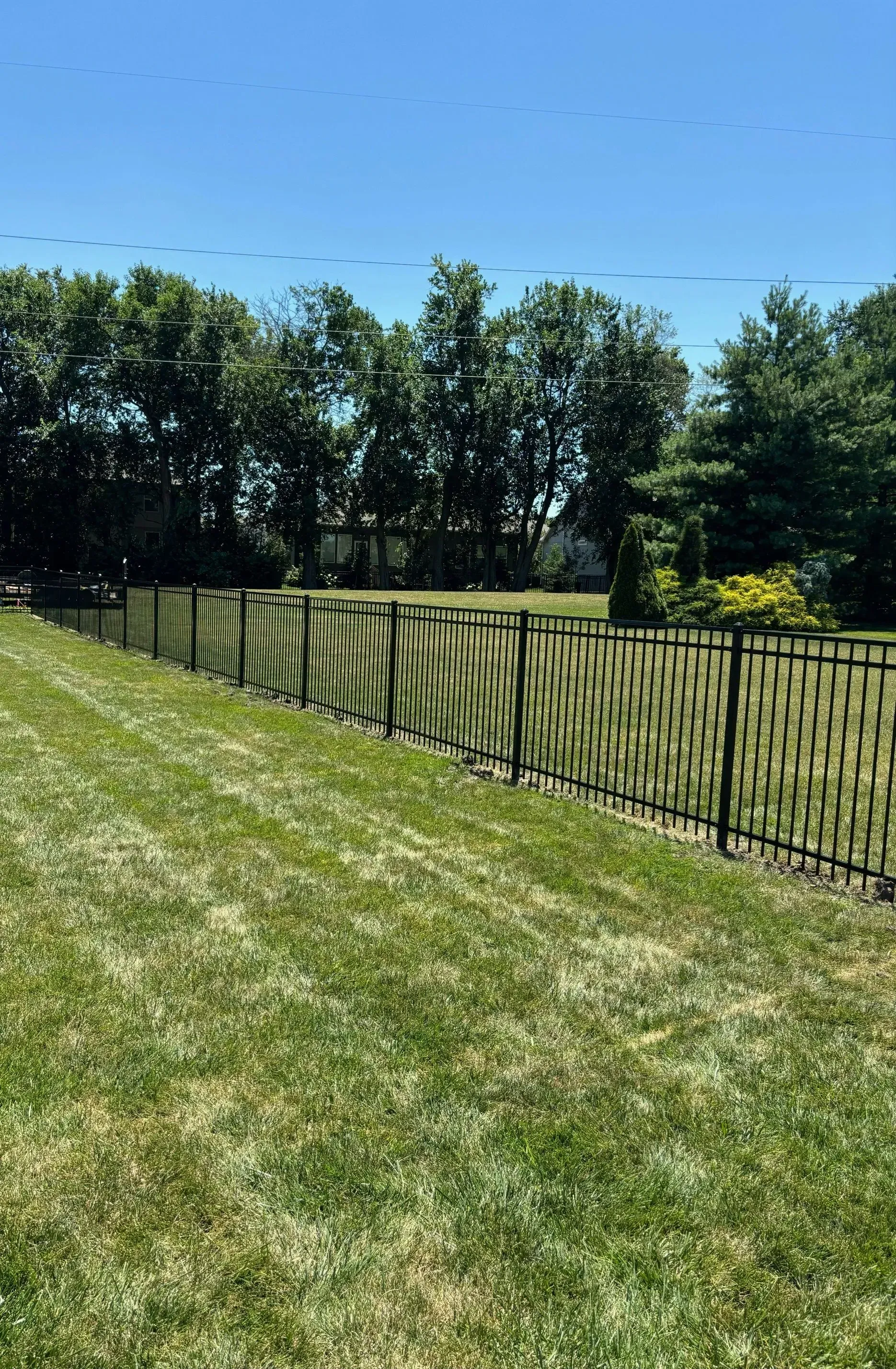
Black steel perimeter fence install in Prairie Village, KS by RKC Wood Care Pros
Black Steel Perimeter · Prairie Village

REVIEWS

What Kansas City Homeowners Say About RKC

4.9 ★ · 85 Google reviews

Every review is on our Google Business Profile — read them there, unedited.

Read all 85 reviews on Google

PRAIRIE VILLAGE GATE QUESTIONS

Gate Questions Prairie Village Homeowners Ask Most

A Prairie Village gate really comes down to three things: type and sizing, building it for a tight, tree-shaded, still-settling lot, and the pricing and hardware. Below are the ones that actually come up while we're standing in the yard writing the estimate, sorted by topic. Don't see yours? Call (913) 286-1091 and put it to Josh directly.

Custom gate project in Prairie Village, KS by RKC Wood Care Pros

Gate Types & Sizing

What gate width fits a typical Prairie Village driveway?
Widths here fall into three buckets. A walk gate runs 3.5 to 4 feet — enough for a mower or wheelbarrow down a tight side yard, carried on a single pair of strap hinges. A single-drive covers the usual inner-ring driveway, 10 to 14 feet, with 12 the width we hang most often on a braced, welded leaf. The step up to a double-drive comes when a rebuilt drive pushes past 14 feet: rather than swing one long leaf and load every hinge with that leverage, we split the span into two shorter leaves that close at a center drop rod.
There's a big maple right where the gate post needs to go — is that a problem?
It's the most common Prairie Village gate question, and the answer is no — as long as it's built for it. We hand-dig the footing and thread it past the structural roots rather than augering straight through them, which would weaken the tree and leave the post in loose fill. Sometimes we shift the post a few inches or hang off a bracket to clear the root plate. Either way the hinge post still lands 36 inches deep in concrete. Cutting a major root to save digging time is exactly what leaves a gate leaning a season later.
Swing gate or sliding gate on a narrow lot?
Start with the swing gate — it pivots on its hinge post (or two, for a double-drive), asks only for room to arc open, and keeps both the hardware and the price simple. The reason to switch to a cantilever slide is space: it travels sideways on rollers with no arc at all, which is the fix when a Prairie Village side yard is too pinched to swing a leaf or the fence runs right up against the drive. Figure the slide hardware to add $400 to $900 over the same-size swing, so we only point you there when the lot leaves no room to swing.
Can a gate be added to a fence that's already standing?
That comes down to one thing — the post it would hang on. A post already sunk 36 inches in concrete and standing dead plumb can usually take a new leaf as it is. But a shallow post, a surface-mounted one, or anything with a lean in it — which describes plenty of the older runs on these blocks — has to be pulled and replaced with a fresh root-threaded footing first. No gate outlasts the post under it, so we read depth and plumb on the estimate before a gate ever gets quoted.

Building for Prairie Village's Tight Lots

Why do gates on older Prairie Village homes start to bind after a year?
Homeowners here call it gate pinch, and it comes from the soil under these 1950s blocks never fully settling — the ground keeps shifting a little, and a gate that hung clean in spring starts catching the latch post by fall. It isn't the gate failing; it's the earth moving under it. We build for that reality from the start: a slightly wider hinge-side gap, adjustable hinges, and a latch set to where the ground actually is. When the block moves again, the fix is a quarter-turn tweak you can do yourself.
How deep do the posts go, and why 36 inches on a lot like this?
Every gate hinge post we set here goes 36 inches into wet-poured concrete. That depth clears the Kansas City frost line so freeze-thaw can't heave it, and it anchors the post below the loose, shifting upper soil of an old inner-ring lot. The extra wrinkle in Prairie Village is the trees — we thread that 36-inch footing past the roots of established maples and oaks by hand-digging, so the post gets its full depth without cutting into the root plate that keeps the tree standing.
What's the biggest threat to a gate in Prairie Village — is it the wind?
It's not wind, it's the canopy. The mature trees that shade these streets are the number-one cause of fence and gate repair calls here — ice-storm limbs coming down, not gusts blowing things over. So we build the opposite way from an open, exposed lot: the priority is a welded frame that takes an impact and stays serviceable, with galvanized hardware that won't rust. And because the same crew handles repairs, a limb-struck leaf is usually a panel swap rather than a full gate replacement.

Pricing, Hardware & Timeline

Why does a welded gate frame cost more than a bolted one?
It's the welding labor. Building a welded frame means cutting, fitting, tacking, and finish-welding all four corners — hours a bolt-together kit skips — and that labor is exactly what keeps the frame square for as long as the gate stands. Bolt the corners instead and each joint has a little give; a season or two of daily swing works them loose, the frame goes out of true, and the latch stops meeting the catch. On a tight lot where the gate faces two yards and the ground keeps moving under it, a frame that holds its shape matters double, and that's worth the roughly 15 to 25% the welding adds. The bolted ones are what we come back to replace.
What does gate installation actually cost in Prairie Village?
A walk gate lands at $300 to $850 by material, a single-drive at $650 to $1,800 across cedar and ornamental iron, and a double-drive at 30 to 50% above the single-drive for the second leaf and its hardware. Working a footing around tree roots, or fitting a slide where the lot's too tight to swing, adds labor — which is why we settle every figure standing in the yard rather than over the phone. Each estimate comes free, written, and itemized right down to the hinge and the post depth, with nothing left to sort out on install day.
What's the warranty, and what happens at the 30-day check?
Two warranties cover it. The hardware — hinges, latches, drop rods — rides on the manufacturer's terms, usually a decade on ball-bearing hinges and five to ten years on strap hinges and latches. The welded frame is on us: if it ever racks, drops at the latch corner, or pops a weld under normal use, we come back and fix it. And baked into every job is a no-charge visit at 30 days, once the footings have taken their set, to true up the latch and pull out any hinge drift — worth having in writing on an inner-ring lot that never quite stops settling.

OTHER PRAIRIE VILLAGE FENCE SERVICES

More Fence Services Available in Prairie Village

Every service below stays in Prairie Village — its own page with local pricing, real project photos, and the same crew. Since a gate usually goes in with a fence — often a teardown-rebuild or a renovation of a 1950s ranch — most people land here to settle the fence itself, or to keep an older tree-shaded run going with repair and staining.

Ready when you are

Get a free estimate — we usually respond the same day.

Call (913) 286-1091