Skip to content
Vinyl Fence Installation in Prairie Village, KS — Maintenance-Free Privacy for a Close-Set Inner-Ring Lot

Vinyl Fence Installation in Prairie Village, KS — Maintenance-Free Privacy for a Close-Set Inner-Ring Lot

In the Village a fence is a surgical job — narrow lots, mature tree roots, and a neighbor close by. We reach a full 36 inches around the old maples, then hand you a fence that shows a clean finished face both ways and never needs a re-seal. Most Prairie Village lots are tight, tree-shaded, and close to the house next door, so privacy is the whole point and the dig is the hard part. Our panels are co-extruded PVC — white, warm sand, or a modern gray woodgrain from Bufftech, CertainTeed, or Veka — stiffened by a steel channel seated inside the rail and worked in around the established roots instead of through them. Nothing to stain, nothing to rot at the ground line, no spring weekend surrendered to a brush. And the same owner-run crew that measures your lot is the one that answers a warranty call years later.

★★★★★
4.9
from 85 reviews
Licensed
& Insured · KS + MO
400+
fences installed
A+ BBB Rating 400+ Fences Installed Since 2021 Owner-Operated Free On-Site Estimates
Browse vinyl options ↓

WHY PRAIRIE VILLAGE HOMEOWNERS GO VINYL

Corinth Hills to Meadowbrook — Vinyl for a Close-Set Village Lot

A quote is a number on paper. What you actually take home in the Village is a private backyard on a lot where the neighbor sits close — one that flatters the renovation, keeps clear of the old trees, and never once wants a weekend from you. People don't pick a Village home for its fence line — they call once they're in and the narrow lot, the near neighbor, and the freshly renovated ranch all start asking for one. Privacy up close, a look that suits the remodel, an end to the re-seal chore under the maples: those are the real reasons. We're the Kansas City vinyl fence contractor that installs, repairs, and stains in-house, and we shape each Village job around the lot and the trees it has to live with.

1

Privacy from a neighbor who's close by

Village lots are narrow and the houses sit close — privacy from the neighbors is the single most common reason people here call about a fence. A solid vinyl privacy run closes the yard in completely and shows a clean, finished face on both sides, so the fence you share with a neighbor twenty feet away looks right from their yard as well as yours. On a tight inner-ring lot, that matters more than it does out in the open suburbs.
2

A material that suits the renovation, not the teardown it replaced

The Village is deep in a renovation wave — young professionals buying up 1950s ranches and reworking them in modern grays and whites. A gray-woodgrain or crisp-white vinyl line reads with that new look and, unlike cedar, doesn't silver out a season after the house is repainted. For a home you just poured money into, a fence that holds its finish for decades is the one that keeps looking intentional.

3

No re-seal weekend, ever — even under the shade

The Village tree canopy is beautiful and it's hard on wood: damp, north-facing cedar runs under the maples green up and demand scrubbing and sealing sooner than a sunny lot would. Vinyl takes that off your calendar entirely. Shade and damp don't feed anything on it — a rinse and the occasional soft-brush pass is the whole of it, however much canopy hangs over the yard.

4

An installer who works around your trees, not through them

The mature maples and oaks that make the Village what it is turn a fence dig into careful work — massive root systems, tight clearances, sixty-year-old trees you don't want scarred. Josh walks each Village lot himself and the crew hand-digs around roots or shifts a post rather than trench straight through one. Building here well means respecting the trees that are half the reason people live in the Village at all.

LOCAL CONDITIONS · PRAIRIE VILLAGE

Narrow Lots, Old Roots & Ice-Storm Limbs — What a Village Install Involves

Four things shape a Village fence job that don't come up in the open suburbs: tight lot access, the root systems of mature trees, the heavy KC clay underneath, and the ice-storm limbs the canopy drops. Miss any one and you either lose a tree, leave a fence that leans, or field a repair call the first hard winter. We take each on directly in the four points below — a close-set inner-ring lot under a mature canopy earns its own plan, not a template lifted from an open subdivision.

1

Narrow lots and tight access change how the job runs

The Village is an in-fill market — small, close-set lots with a house on either side and not much room between them. That turns a fence install into a surgical operation: panels carried in by hand down a six-foot side yard, no space to swing big equipment, and a plan made before the first post so the work doesn't tear up your yard or the neighbor's. It's a different job than an open suburban lot, and we bid it as one.

2

Old tree roots the posts have to work around

Under the Village's tree-lined streets sit the root systems of established silver maples and oaks, and a 36-inch post hole runs straight into them. We won't sacrifice a sixty-year-old tree for a fence line — the crew hand-digs around the big roots or nudges a post a few inches to clear one, then still reaches full depth in the clay. It runs slower than an open dig, and it's what separates a fence that stands from a tree that quietly dies.

3

The same clay under the lawns, and it never sits still

Under the Village's lawns is the heavy Kansas City clay the whole metro is built on — it puffs up wet and pulls back dry, and one freeze-thaw winter after another that motion levers a shallow post off plumb. Sink the footing the full three feet onto a belled base and the clay has something to hold rather than something to shove. It's the same soil movement that starts the old Village gates pinching as the years pass — which we correct as we hang the new ones.

4

Ice-storm limbs are the Village's real fence hazard

It isn't open wind that takes fences down in the Village — the canopy blocks most of that — it's the limbs. A heavy ice storm drops big branches off the old maples, and that falling-limb load is the top repair call we get here. A steel-stiffened rail shrugs off the everyday knocks and holds its span; a full limb down is a repair either way, and because we install, repair, and stain in-house, the same crew handles it without a runaround.

THE COST OVER YEARS, NOT AT INSTALL

Cedar or Vinyl for a Village Lot? The Fifteen-Year Ledger

Cedar is the Village default, and against a Cape Cod or a scalloped cottage line it's the handsomer board — no argument there. But the figure that really settles it isn't what you pay at install; it's the slow cost the fence adds up over the years you own it, and the Village canopy nudges that total higher for wood. Cedar asks for a re-seal every couple of seasons — and faster on the shady north runs the maples throw — with a full rebuild waiting at the end. Vinyl is one larger payment and then it stops asking. Below, real numbers run against a 150-foot narrow Village lot, rounded to nobody's advantage.

Over 15 yearsCedar (wood)Vinyl
Up-front install (≈150 ft of 6-ft privacy)Around $5,200 for a spaced-picket or solid cedar run — the classic Village lookAround $7,200, with the rail stiffener and finished-both-sides face already built in
Refinishing across 15 yearsSix or seven re-seals at roughly $3,200 all told, just to hold the tone against the sunNothing — a bucket of soapy water once a year is the entire program
The tree-shade catchDamp, north-facing runs under the Village maples green up and want scrubbing soonerShade and damp feed nothing on it; a rinse takes the film right off
Service life on the lotFifteen to twenty years before the boards check and a rebuild comes duePast thirty years, with coverage that follows the house if you sell
The fifteen-year totalNorth of $8,400 once the re-seals are added upBarely above the $7,200 you paid to begin with
The honest fitThe owner who wants real wood and keeps the finish on schedule — still the Village majorityThe owner renovating for zero upkeep, or fencing tight against a close neighbor

Put simply: those who want real timber and will keep up the sealing — and in the Village that's plenty of people — get the classic board, walked through on the Village wood page. Those who'd rather buy it once and take their canopy weekends back let vinyl repay the higher sticker by vanishing from the chore list. Ask us to quote both on your own yard and lay the totals next to each other.

THE VILLAGE COLD-AND-ICE QUESTION

Does Vinyl Crack in a Kansas Winter? Only the Hollow Kind

It's a fair thing to ask under a Village canopy that glazes over most winters, and the split is stark — the panel built right shrugs the cold off, while the cut-rate one is what fills the cracked-fence photos online. Cold genuinely stiffens PVC, and a damp, shaded lot treats a cheap panel no more gently than a sunny one does. The four build choices below are what hold the cracking off your line — followed by the honest word on what a downed limb still costs.

A capped panel carries its cold protection on the outside

The good panels are co-extruded — a dense, additive-loaded skin is bonded over the core, and that skin is what holds both the color against the sun and the flex against the cold. Drop to a single-wall board and there's no skin at all; the same additives get stretched thin through one hollow layer, which is the panel that goes chalky and brittle a winter or two in. We only bid capped stock, full stop.

Heft is the tell no spec sheet gives you

Set a real panel beside a cut-rate one and your hands know at once — the cheap board weighs almost nothing and bends when you press it. On a close Village lot where kids and a dog treat the fence like a backstop, that thin panel is the one that gives way on impact, and a deep freeze leaves it even less willing to bend. Wall thickness never makes it onto a label, so we put both samples in your hands and let the weight settle the argument.

A stiffened rail for the shaded run and the snow load

The big silver maples shed limbs in every ice storm, and around here that's what sends most fences to the repair list. A stiffened rail takes the routine load — a resting branch, a wet snow — where a hollow one only shivers and splits by a post. Every long run we build gets a galvanized stiffener threaded through the rail, top and bottom on the six-foot panels, so the span holds honest. A whole limb coming down is still a repair, granted — and that's work our own crew does.

The install leaves the panel room to move

PVC stretches a touch in high summer and draws back in a hard freeze — not much, but enough to matter. Screw the rails down rigid and all that motion piles into a single joint until it fractures; build in the small clearance we leave at each connection and the whole run eases in and out with the weather, unmarked. It's a minor step that quietly buys a fence years a bargain build never reaches.

WHAT WE INSTALL MOST

The Vinyl Builds Prairie Village Homeowners Choose

These four builds account for most of the vinyl we raise in the Village — each listed with an honest price, the years it actually lasts, and the upkeep it truly asks. Which fits comes down to whether you're closing in a full backyard against a close neighbor or defining a cottage front line, and how warm or modern you want it to read against your house. Samples ride along to every estimate, so the choice happens against your own facade rather than a catalog swatch.

White Privacy — 6 ft vinyl fence by RKC Wood Care Pros in Prairie Village, KS

White Privacy — 6 ft

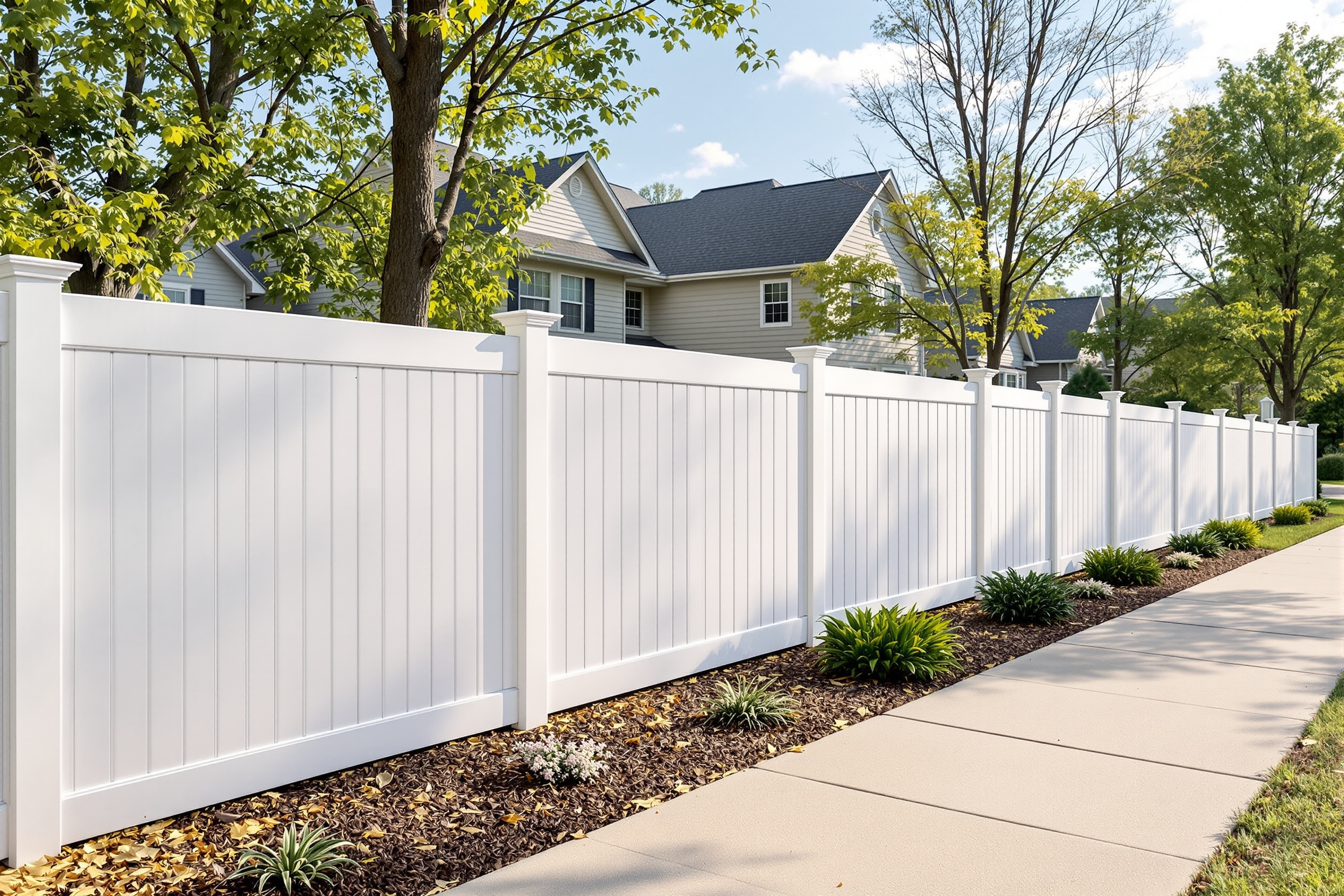
The close-neighbor privacy default

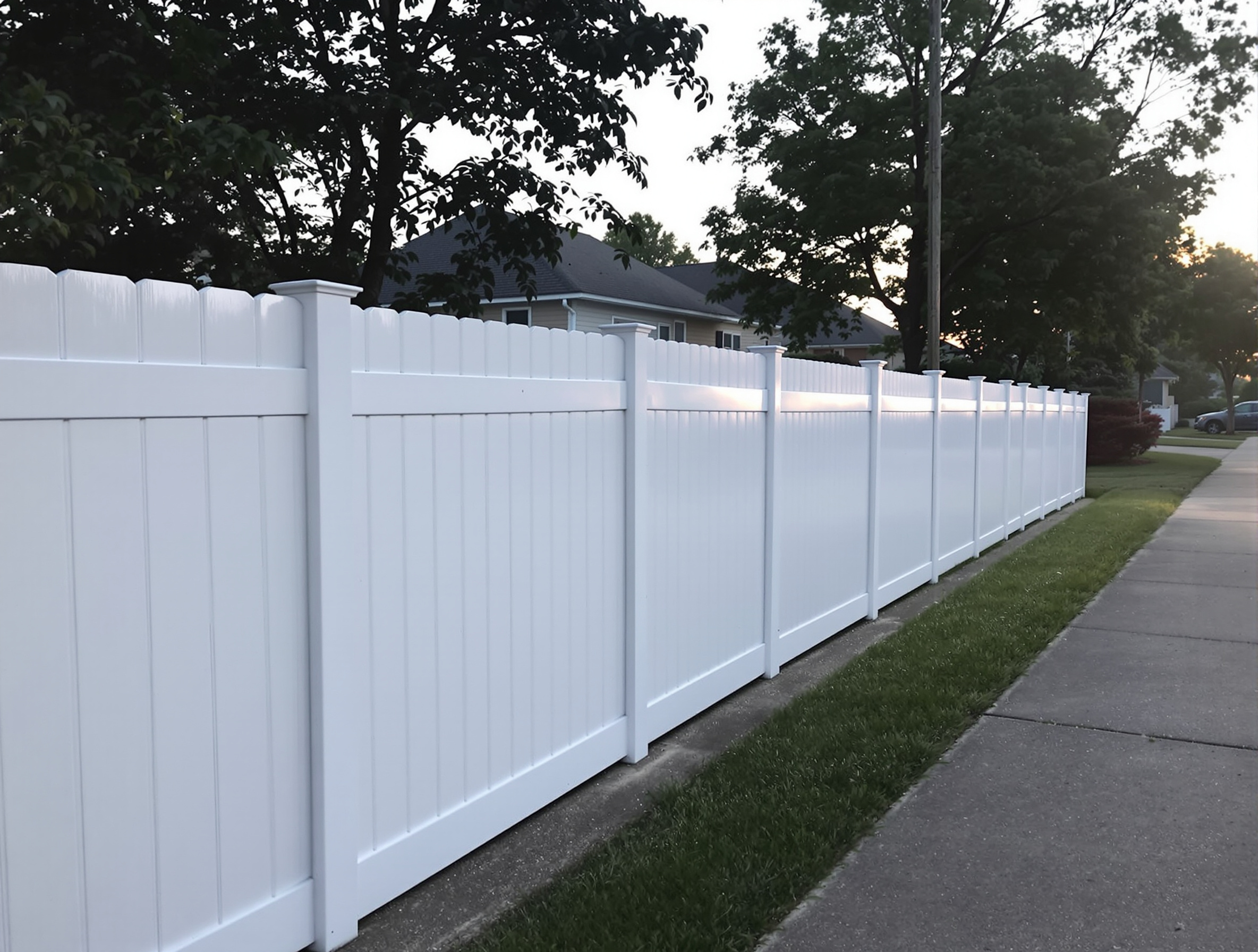
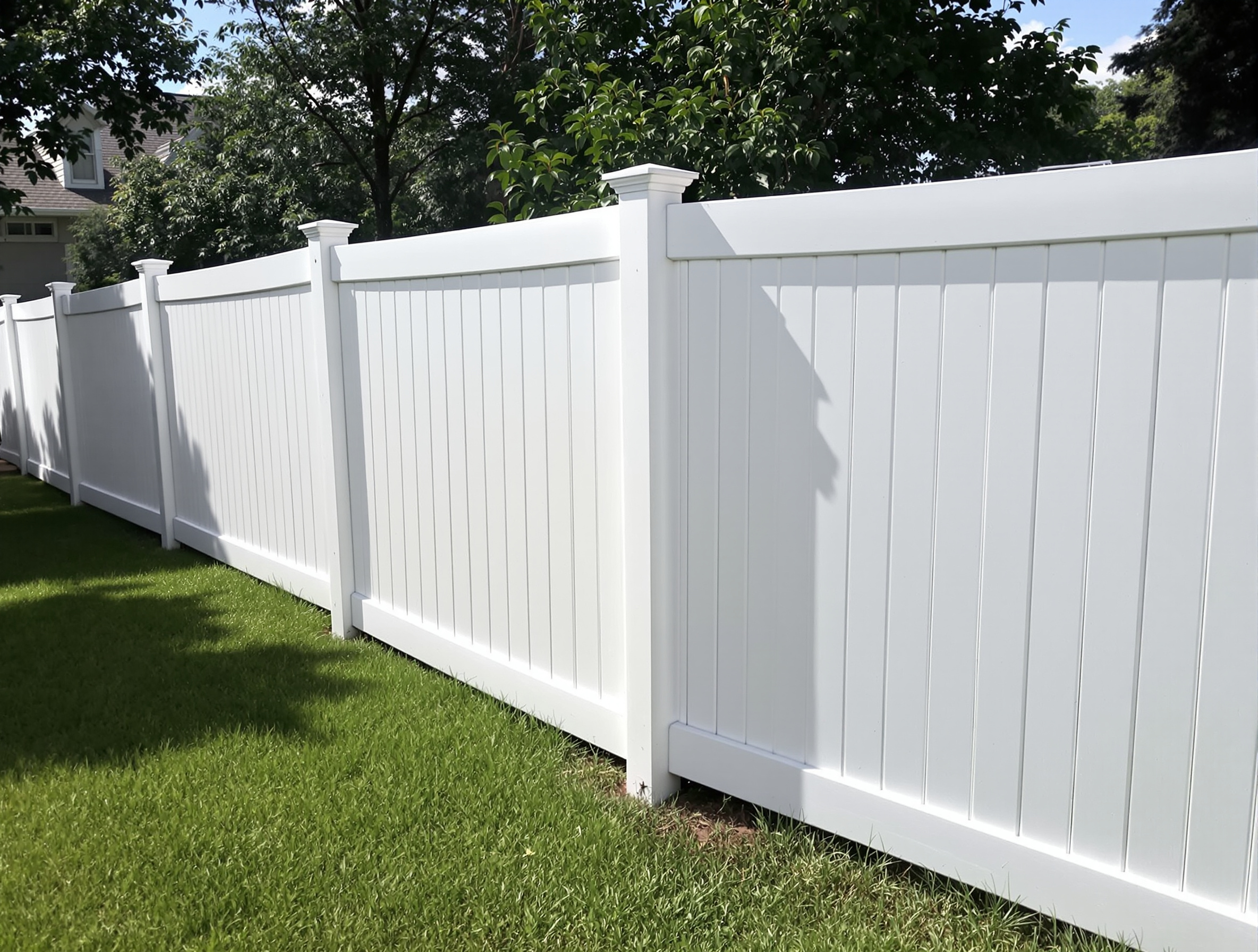
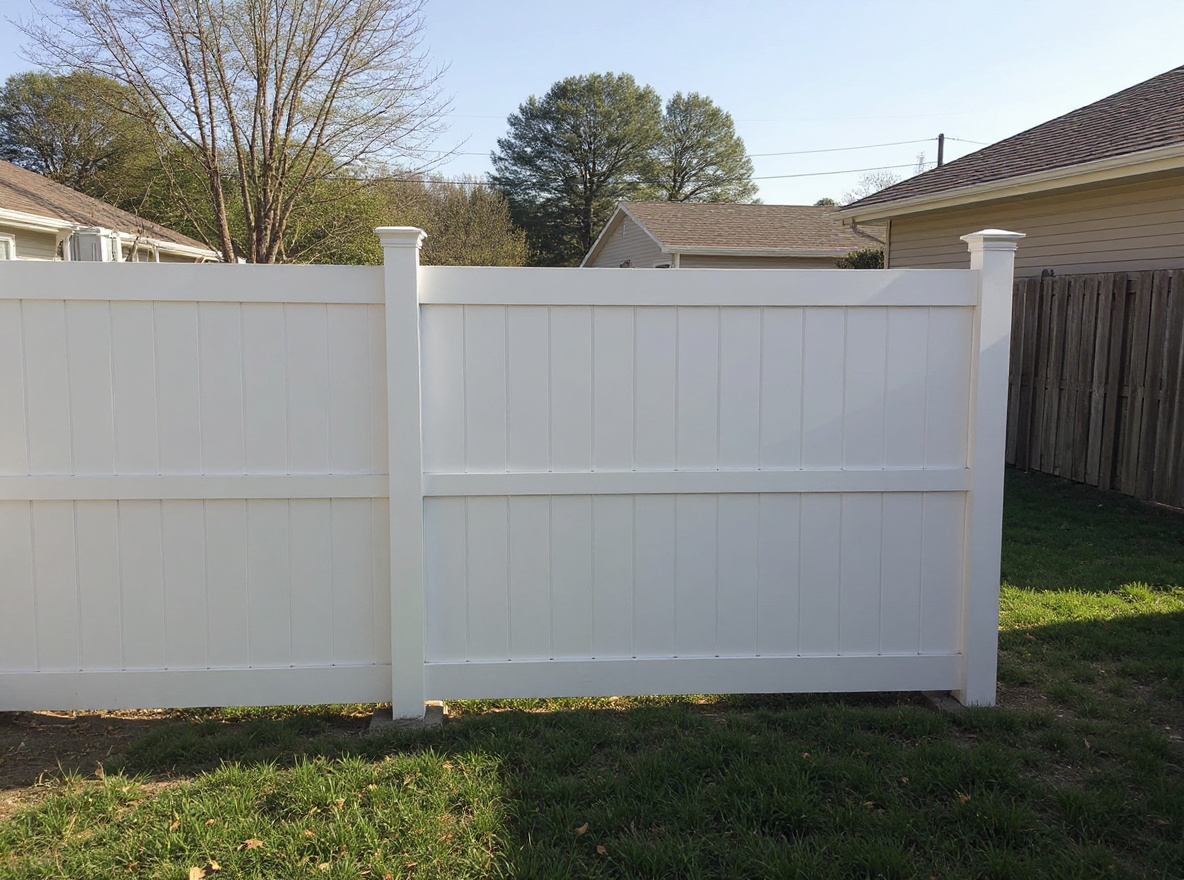
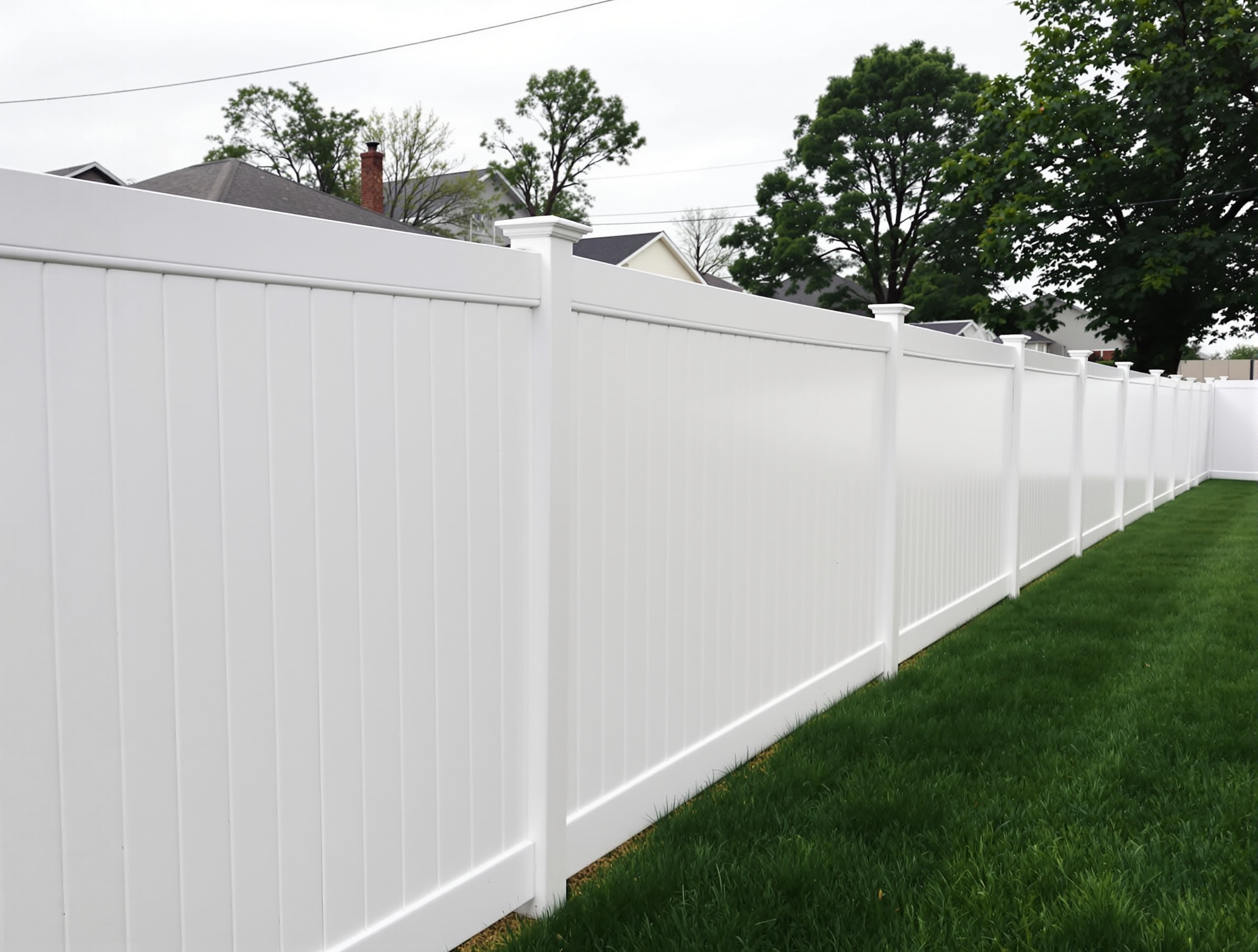
On a narrow Village lot the neighbor's window is often twenty feet from your patio, and privacy is the reason most people call. A solid tongue-and-groove run in bright white PVC closes the yard in cleanly and shows the same finished face on both sides — so the neighbor whose window looks at it sees the same clean panel you do. No good-side/bad-side conversation over a property line you share up close.

  • Price: $40–55/LF installed
  • Lifespan: 30+ years
  • Maintenance: A yearly rinse with the hose
Sand / Caramel Privacy — 6 ft vinyl fence by RKC Wood Care Pros in Prairie Village, KS

Sand / Caramel Privacy — 6 ft

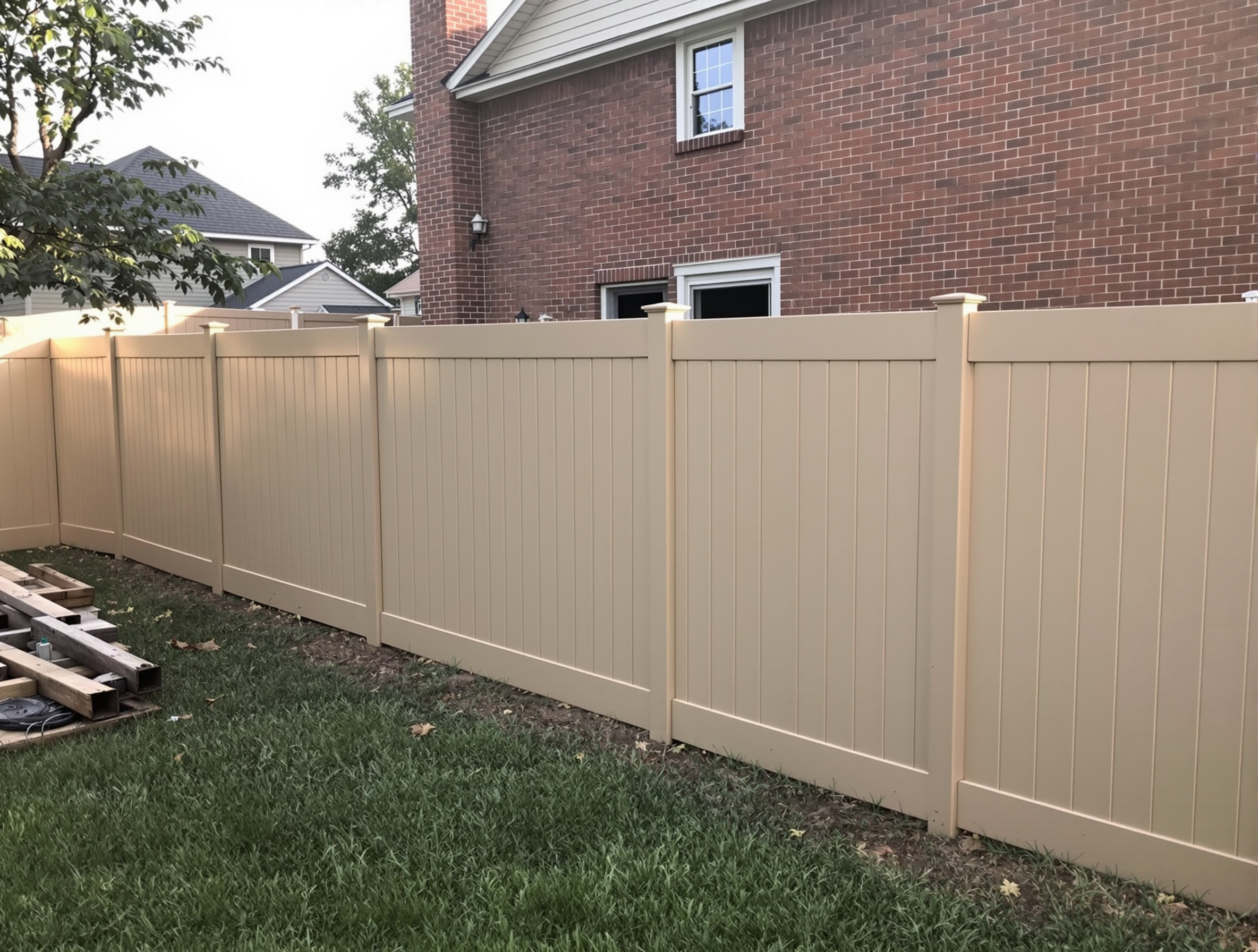
Warmer against a Cape Cod facade

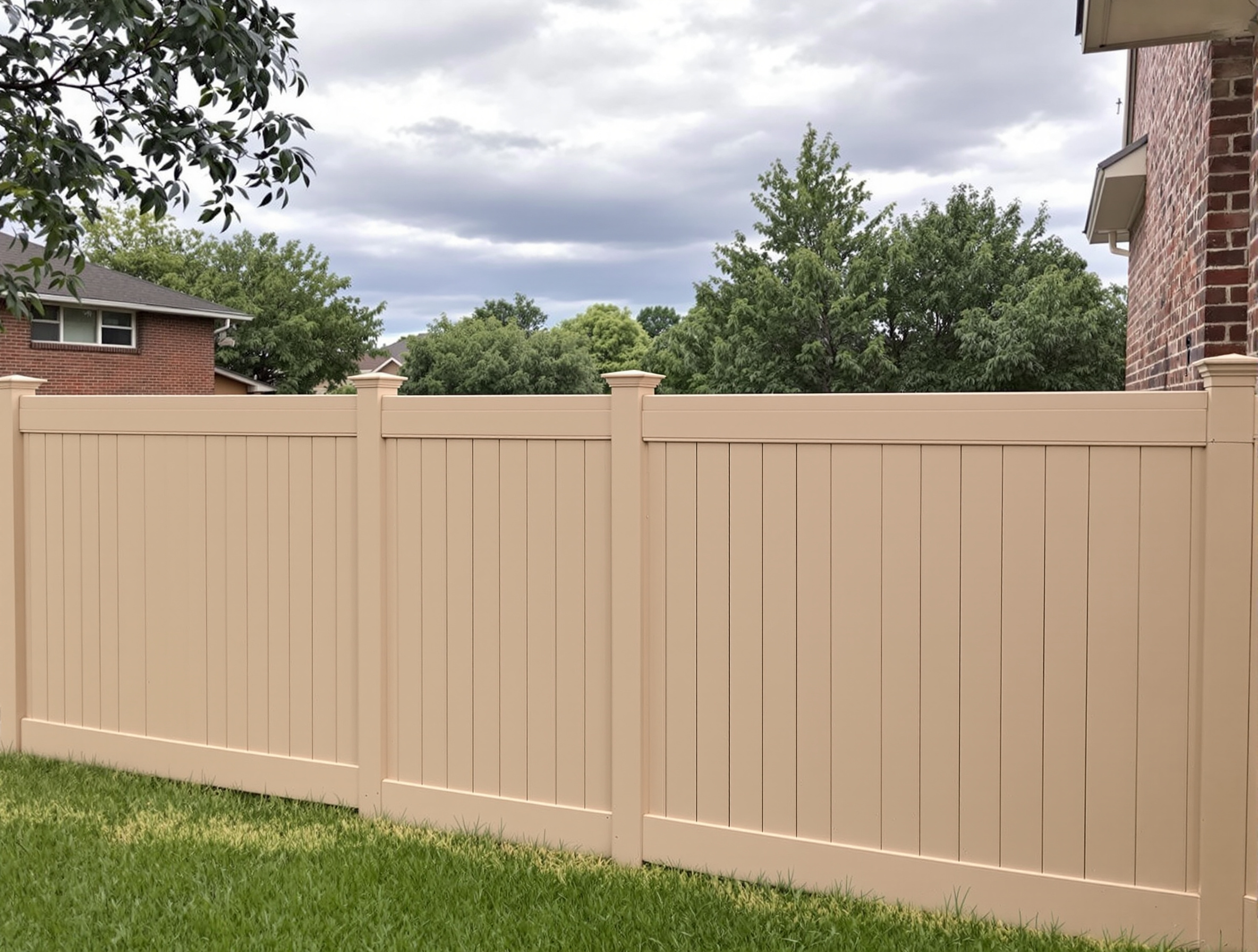
Prairie Village runs to Cape Cod and ranch homes in warm brick and painted trim, and stark white can read cold against them. A sand or caramel tone leans toward the pre-stained cedar look the Village favors — the same warmth without the re-seal calendar. Same reinforced rail and same lifetime coverage as the white panel; just a softer face on a tree-lined street.

  • Price: $42–58/LF installed
  • Lifespan: 30+ years
  • Maintenance: A soft wash now and then
Gray Woodgrain — Modern Horizontal vinyl fence by RKC Wood Care Pros in Prairie Village, KS

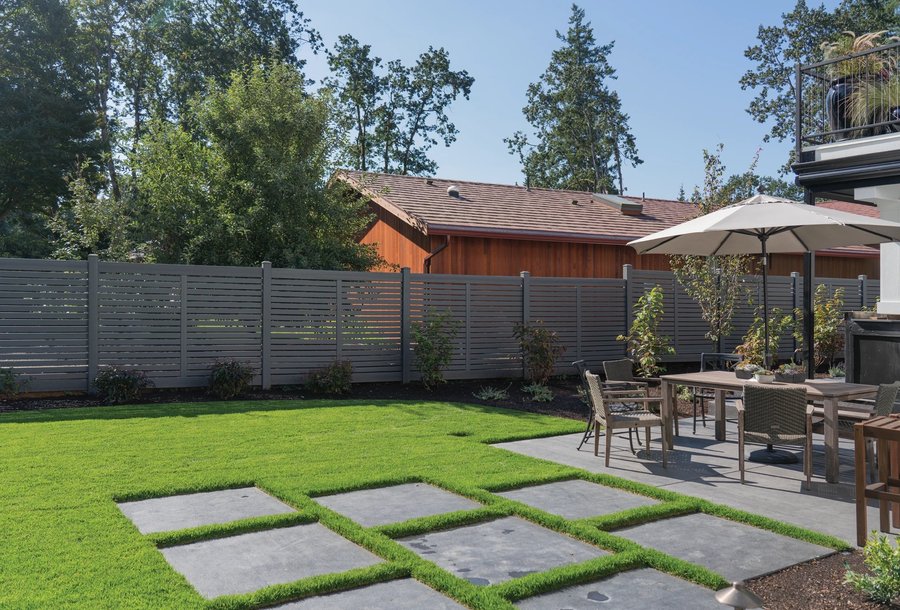
Gray Woodgrain — Modern Horizontal

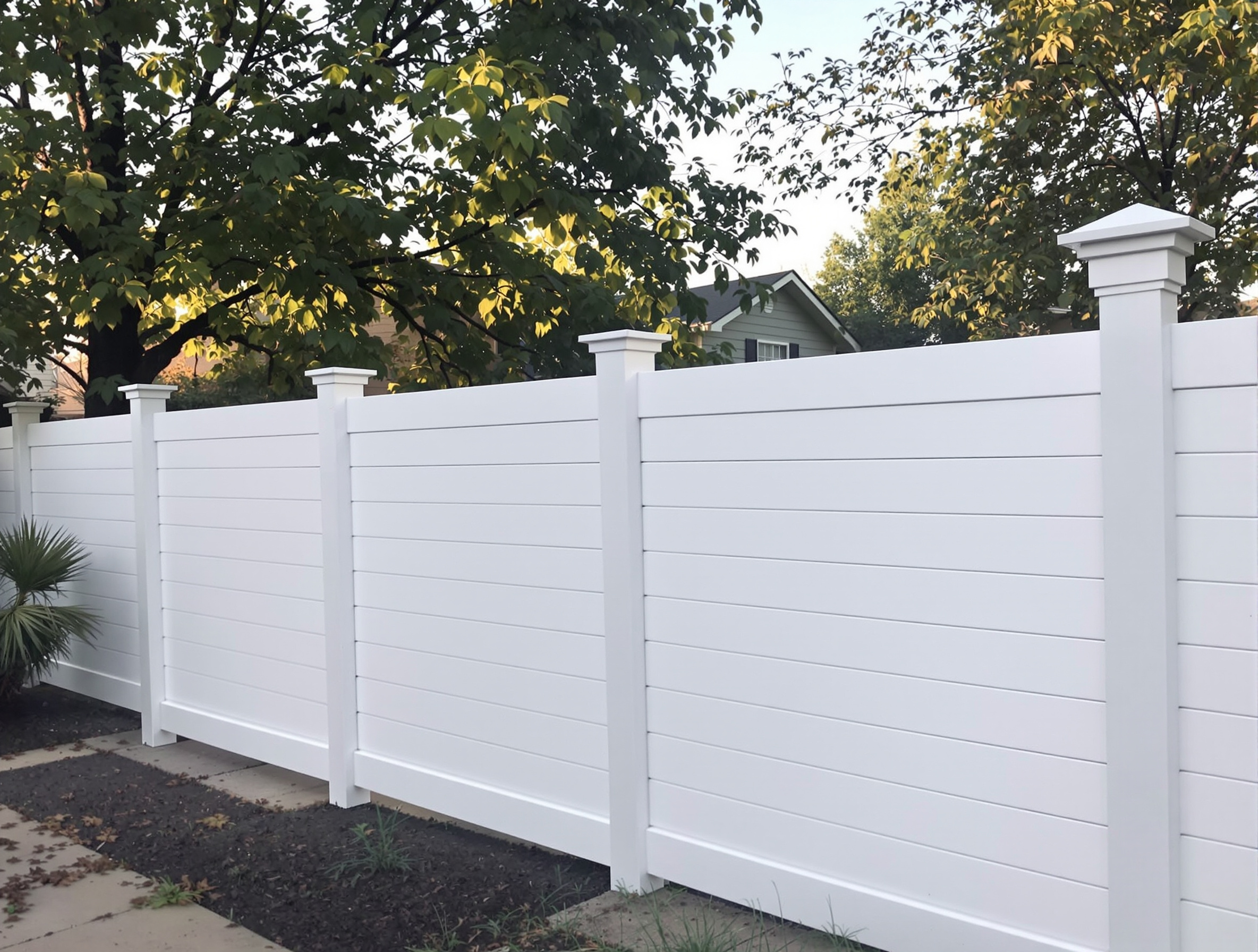
For the renovated 1950s ranch

The Village is mid-renovation — young families gutting 1950s ranches and repainting them in modern grays and whites — and a horizontal, gray-woodgrain vinyl line sits right with that look where a traditional dog-ear would fight it. It reads contemporary from the curb and holds that tone for decades instead of silvering out a season after the house is repainted.

  • Price: $48–64/LF installed
  • Lifespan: 30+ years
  • Maintenance: Rinse when it needs it
Scalloped Spaced Picket — 4 ft vinyl fence by RKC Wood Care Pros in Prairie Village, KS

Scalloped Spaced Picket — 4 ft

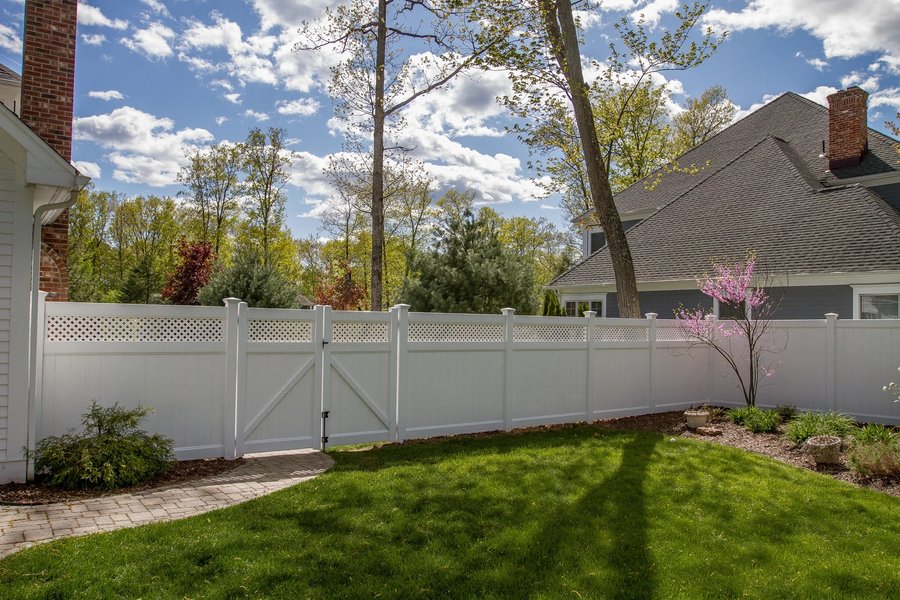
The cottage look, no upkeep

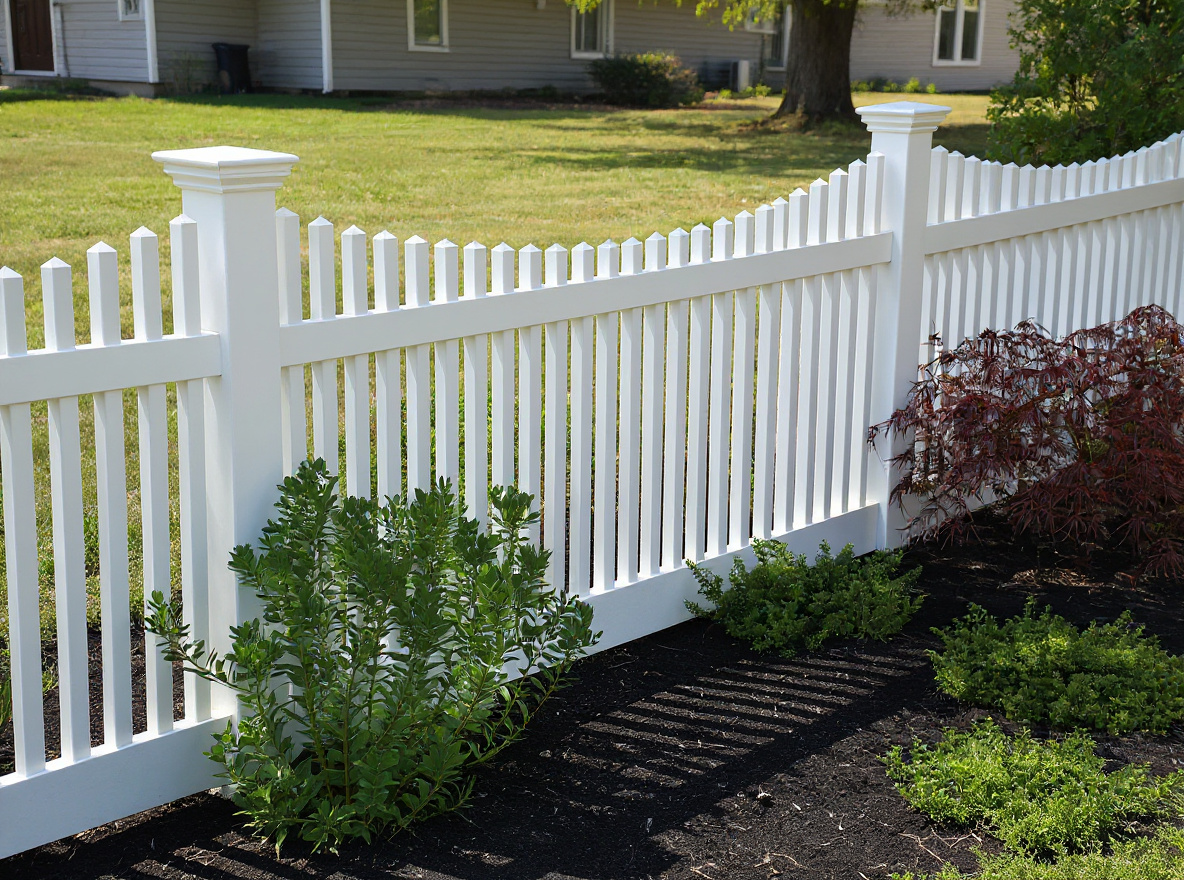
The low scalloped and spaced-picket line is part of the Village's cottage character, and vinyl carries that profile without the front-yard fence ever needing a coat. It defines a yard and holds a dog without walling the street off, and it stays crisp white through the summers — a common pick for a front or side line that ties into a taller privacy run out back.

  • Price: $32–46/LF installed
  • Lifespan: 30+ years
  • Maintenance: Little beyond a rinse
White vinyl privacy fence pricing — Prairie Village, KS — RKC Wood Care Pros

PRAIRIE VILLAGE VINYL FENCE PRICING

What to Budget for a Village Vinyl Fence

Vinyl lands between $32 and $64 a foot in the Village, set by the profile you pick and how the run is configured — with the tight access and root-work flagged up front rather than sprung on you later. The three below are the builds we bid most often around the Village. A typical narrow lot works out to roughly 150 feet of fence. Old-fence removal, gates, and a step up in profile each carry their own line. The whole quote comes to you on paper, itemized, before the crew shows up — no verbal guess, no surprise partway through.

White Privacy — 6 ft

$40–55

per linear foot installed

The most-quoted Village build — solid privacy against a close neighbor, aluminum rail stiffener and finished-both-sides face included.

Sand / Gray Woodgrain — 6 ft

$42–64

per linear foot installed

A warm caramel for a Cape Cod facade or a modern gray horizontal for a renovated ranch.

Scalloped Picket — 4 ft

$32–46

per linear foot installed

The cottage front-line look; ties into a 6-foot privacy run on the sides.

An old cedar fence to pull from the roots, a gate or two, a step up in profile — each shows on its own line of a Village estimate, nothing buried — call (913) 286-1091 or book an on-site walkthrough.

OUR PROCESS

A Prairie Village Vinyl Install, Step by Step

Four stages carry a Village project from the first call to a finished fence — and on a tight, tree-heavy lot the careful part is the dig, so that's the part we won't rush. The install days themselves are short — most Village backyards run one to three days on site. The planning around the trees and the tight access is what keeps a close-quarters job from tearing up your yard.

1

The estimate visit — reading a tight, tree-heavy lot

The Village install is a surgical one, so this visit matters more than most. We measure the run, mark the utilities, confirm the line against your stakes, and — the part that's specific to here — probe for the big maple and oak roots and the pinch points between houses where a panel has to be carried in by hand. The quote comes back clean and itemized: footage, gate count, the profile you chose, and the concrete and steel that go underground.

2

Locate call, profile choice, and a plan for the tight access

First the 811 utility locate goes in. Then you settle the color and style — bright white, a warm sand, a modern gray woodgrain, or the low scalloped picket — and we order the panels. Because Village lots run narrow with mature trees, we plan the material staging and the dig route before the crew arrives, so a close-quarters job runs clean instead of chewing up your side yard.

3

Digging past the roots and standing the panels

This is where a Village lot earns its reputation. The auger sinks a full 36 inches into the clay wherever it can, and where an old root system is in the way we hand-dig around it or shift a post a few inches rather than butcher a tree that's been there sixty years. Concrete sets around each sleeved post on a widened base; once it firms up — a day or so, longer if it's cold or wet — the panels go on. Most Village backyards run one to three days on site.

4

The walkthrough and your warranty paperwork

We finish by walking the line with you and swinging each gate to be sure it latches square — worth a close look on a Village lot, since the old soil here shifts and a gate that binds now is one nobody set right. The CertainTeed, Bufftech, or Veka coverage gets filed in your name and the paperwork is yours. Nothing to re-seal on a calendar. If a post or panel moves in the first year, the same crew that built it is back to set it right.

VINYL WE'VE RAISED · KC METRO

Vinyl fence installation by RKC Wood Care Pros, Kansas City metro
Vinyl install · KC metro
Vinyl fence installation by RKC Wood Care Pros, Kansas City metro
Vinyl install · KC metro
Vinyl fence installation by RKC Wood Care Pros, Kansas City metro
Vinyl install · KC metro
Vinyl fence installation by RKC Wood Care Pros, Kansas City metro
Vinyl install · KC metro

REVIEWS

What Kansas City Homeowners Say About RKC

4.9 ★ · 85 Google reviews

Every review is on our Google Business Profile — read them there, unedited.

Read all 85 reviews on Google

PRAIRIE VILLAGE VINYL FENCE QUESTIONS

What Prairie Village Homeowners Ask Before They Book

The questions that come up on a Village estimate — sorted by subject, each answer tied to local prices, the narrow tree-heavy lots, and the honest place vinyl holds in a cedar neighborhood. Don't see yours? Call (913) 286-1091 and ask.

Vinyl fence installation in Prairie Village, KS by RKC Wood Care Pros

Vinyl Materials & Lifespan

How long does a vinyl fence last in Prairie Village?
Thirty years is the floor. What buys it is a capped, UV-rated panel, a galvanized channel stiffening the rail, and posts reaching a full 36 inches into the clay — set carefully around the old tree roots that run under most Village lots. CertainTeed, Bufftech, and Veka all cover the panel against fading, cracking, peeling, and chalking, and that coverage carries to the next owner if you sell. Depth and root-work are the variables here: reach full depth and the fence stands for decades; go shallow, or trench through a maple root and lose the tree, and you've traded one problem for another. And there's no wood at the ground line to rot the way the cedar it replaces does.
Is vinyl even right for Prairie Village, or is this cedar country?
Honestly, cedar is still the Village majority — the spaced-picket and scalloped-top look is part of the neighborhood's character, and plenty of people rightly want real wood. Vinyl earns its place in two situations here. One is the renovation: a 1950s ranch redone in modern grays reads better behind a clean gray-woodgrain or white vinyl line than a traditional dog-ear. The other is close-neighbor privacy: a solid vinyl run shows a finished face both ways and never needs a re-seal, which matters on a narrow lot you share up close. We install both and we'll tell you straight which fits your house.
Cedar or vinyl for a Village home — how do I choose?
It comes down to how much upkeep you want and how long you'll own the house. Cedar is the warmer, more traditional board and it's what most of the Village runs, but it commits you to re-sealing every couple of years — sooner on the shaded runs under the maples — and a rebuild eventually. Vinyl is a bigger check once, then decades of a hose-down and nothing else. For an owner staying put or renovating for low maintenance, the long math tends to favor vinyl. We're glad to write both quotes on the same yard so you can weigh them.
Will the shade and the winter crack a vinyl panel?
Not a well-built one. The brands we hang bake UV inhibitors into the outer cap, so the shade-and-sun mix on a Village lot doesn't fade it, and the cracking people worry about is really a thin, unbraced panel flexing loose at the post until a cold snap finishes it. That's why a galvanized channel goes into every long rail we set. What actually splits in the cold is the hollow, single-wall warehouse panel — we don't carry it. A big ice-storm limb is a different story, and that's a repair we handle in-house rather than a flaw in the panel.

Pricing & Warranty

What does a vinyl fence cost in Prairie Village?
Figure $40–$55 a foot for 6-foot white privacy with the rail stiffener built in, which puts a typical narrow-lot Village backyard — around 150 feet — roughly in the $6,000 to $8,500 range. A warm sand or a modern gray woodgrain runs a bit higher at $42–$64, and a 4-foot scalloped picket lands lower at $32–$46. One thing that's specific to the Village: the tight access and the hand-digging around tree roots can add a little labor a wide-open lot wouldn't — we flag that on the estimate rather than spring it later. Every quote is free, written, and itemized before we set a post.
Is the warranty real, and does it transfer if we sell?
Both. CertainTeed, Bufftech, and Veka each back their panels for life against fading, cracking, peeling, and chalking, and each rolls into prorated coverage for the next owner at closing. In a market like the Village — where homes turn over and get renovated — a fence still under warranty is a small point in your favor when you list. We register the coverage in your name the day we finish and hand you the paperwork. A maker that won't put that in writing doesn't get installed on your lot.
The old fence and the tree roots — how does removal work here?
Old-fence removal is its own line on the estimate, and on a Village lot it's rarely just a pull-and-haul: an aging cedar fence often has posts set in concrete tangled up with tree roots, and getting them out cleanly without harming a mature tree is careful work we price honestly rather than guess at. We haul the old material off, backfill the holes, and leave the side yards the way we found them. Nothing about the teardown gets buried in the number — you see every piece of it before we start.

OTHER PRAIRIE VILLAGE FENCE OPTIONS

Every Fence Material and Service in Prairie Village

Vinyl isn't the only option — RKC installs and repairs every type of fence in Prairie Village: wood, vinyl, chain link, ornamental iron, aluminum, and commercial security, plus gates and in-house staining. Each card here opens a dedicated Village page — local pricing, the ground it's built on, and photos from around your city.

Wood Fence

Western Red Cedar spaced-picket and scalloped-top — still the Village classic — with the sealing kept in-house.

Explore Wood Fence in Prairie Village →

Chain Link Fence

Galvanized or vinyl-coated mesh for a back-lot dog run or a utility line where looks take a back seat.

Explore Chain Link Fence in Prairie Village →

Ornamental Iron

Powder-coated steel for a front-yard accent or a garden enclosure that suits a traditional Village home.

Explore Ornamental Iron in Prairie Village →

Aluminum Fence

Rust-free ornamental aluminum, lighter than steel — a clean line for a Village front yard or pond frontage.

Explore Aluminum Fence in Prairie Village →

Privacy Fence (Material-Agnostic)

Privacy from a close neighbor the deciding factor? Line cedar up against vinyl for a narrow Village lot here.

Explore Privacy Fence (Material-Agnostic) in Prairie Village →

HOA-Friendly Fencing

Material, color, and height picked to sit right on an established Village Homes Association street.

Explore HOA-Friendly Fencing in Prairie Village →

Fence Repair in Prairie Village

Ice-storm limb damage, leaning-post correction, and gate re-hangs across the Village — cedar and vinyl alike.

Fence Repair in Prairie Village →

Fence Staining in Prairie Village

We seal the cedar we install in our own shop — the upkeep wood needs under the Village canopy. Vinyl needs none of it.

Fence Staining in Prairie Village →

Gate Installation in Prairie Village

Walk gates and drive gates hung to latch square on old Village soil that likes to shift and pinch.

Gate Installation in Prairie Village →

Ready when you are

Get a free estimate — we usually respond the same day.

Call (913) 286-1091