
Transparent / clear
Shows the most wood and the least protection. Little pigment means little UV defence, so it fades fastest in KC sun and wants recoating soonest. Fine on a covered or shaded run; underpowered on an exposed one.
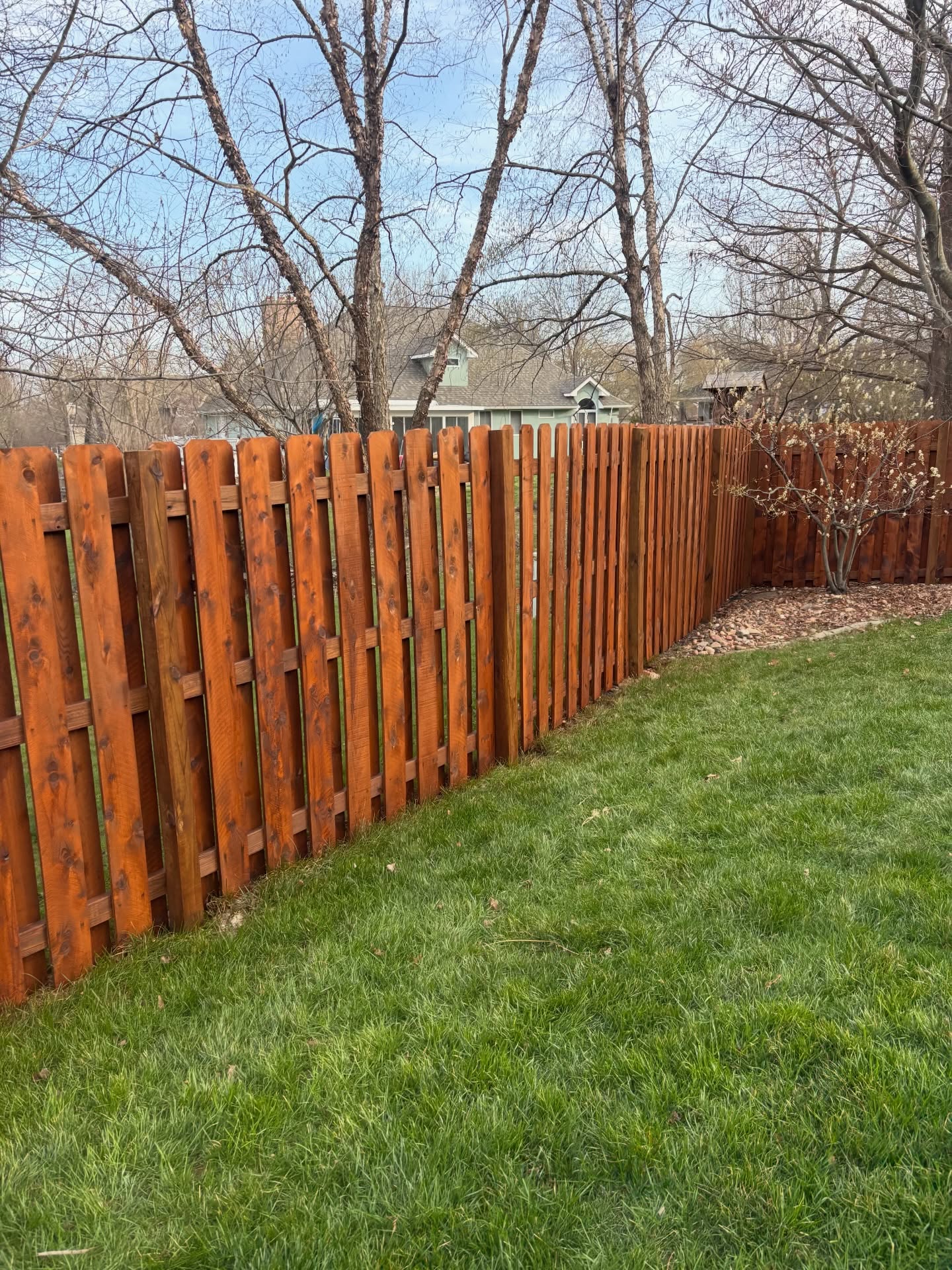
Cedar does not fail on a schedule you choose — it greys in 12 to 18 months and checks not long after if nothing protects it. RKC stains, seals, and restores fences across Kansas City in-house: pressure-wash prep, a moisture-meter reading before a drop goes on, then a semi-transparent penetrating stain applied spray-and-back-brush so it lands in the grain. New-cedar cure window, a 2–3 year recoat cycle we track, and grey-fence restoration that brings a silvered run back — the same company that installs and repairs the fence.
The short answer
Staining is where RKC's lifecycle shows — because the same company installs, stains, restores, and repairs the fence. We time the first coat to a new fence's 30-day cure window, recoat cedar on a 2–3 year cycle, meter the moisture before every application, and restore a grey, weathered run rather than replace it. Kansas City's UV, rain, and freeze-thaw make that cycle the difference between a 10-year fence and a 25-year one.
RKC installs and repairs every type of fence — wood, vinyl, chain link, ornamental iron, aluminum, and commercial security — plus staining kept in-house. Building new? See wood fence installation. Boards past saving rather than past due? That is fence repair.
The lifecycle no competitor owns
A stain job is decided by timing and moisture more than by product, and almost nobody publishes the actual schedule. Here it is, from a brand-new fence through every recoat — the reason the crew that installs and repairs your fence is also the one that should stain it.
| Stage | Timing | The rule | Why it matters |
|---|---|---|---|
| New cedar, before the first coat | Wait ~30 days after install | Moisture meter under ~15%; mill glaze weathered off | Fresh cedar is too wet and too slick to accept a penetrating stain — apply it early and it sits on top and wears off in a season |
| Prep, every time | Pressure-wash, then dry 24–48 hours | Grey fibre and mildew washed back; re-meter before spraying | Stain bonds to clean, dry wood — not to weathered surface fibre or a damp face after a wet week |
| The first coat | Day 30 on a new fence | Semi-transparent penetrating stain, sprayed and back-brushed | Back-brushing works the stain into the grain instead of leaving it on the surface, which is what makes it last |
| After rain | Hold until the wood reads dry | Meter below threshold before any product goes on | Sealing moisture into the boards is exactly how a three-year finish becomes a one-year one |
| The recoat cycle | Every 2–3 years | Re-coat before the finish wears to bare grey | Semi-transparent wears back gradually rather than peeling; recoat on schedule and you never strip back to raw wood |
| After a repair | Once new boards have cured | Condition and blend new lumber to the weathered run | New wood takes stain darker than old — matching it is what makes a repaired section read as one fence |
The rule under every row: the wood has to be dry, and we meter it rather than guess. This is the whole argument for one company across the lifecycle — the crew that set your posts to 36 inches and knows when the fence went up is the crew timing its first coat, its recoats, and the blend after a repair. New cedar starts on the wood fence installation page.
Restoration, not replacement
Grey is surface weathering, not the end of the fence — and washing it back to fresh cedar tone is one of the most satisfying jobs we do. Most homeowners assume a silvered fence is done. Under the grey, oxidized surface fibre the cedar is usually sound; the restoration is prep, dry, and a semi-transparent coat that brings the colour back.
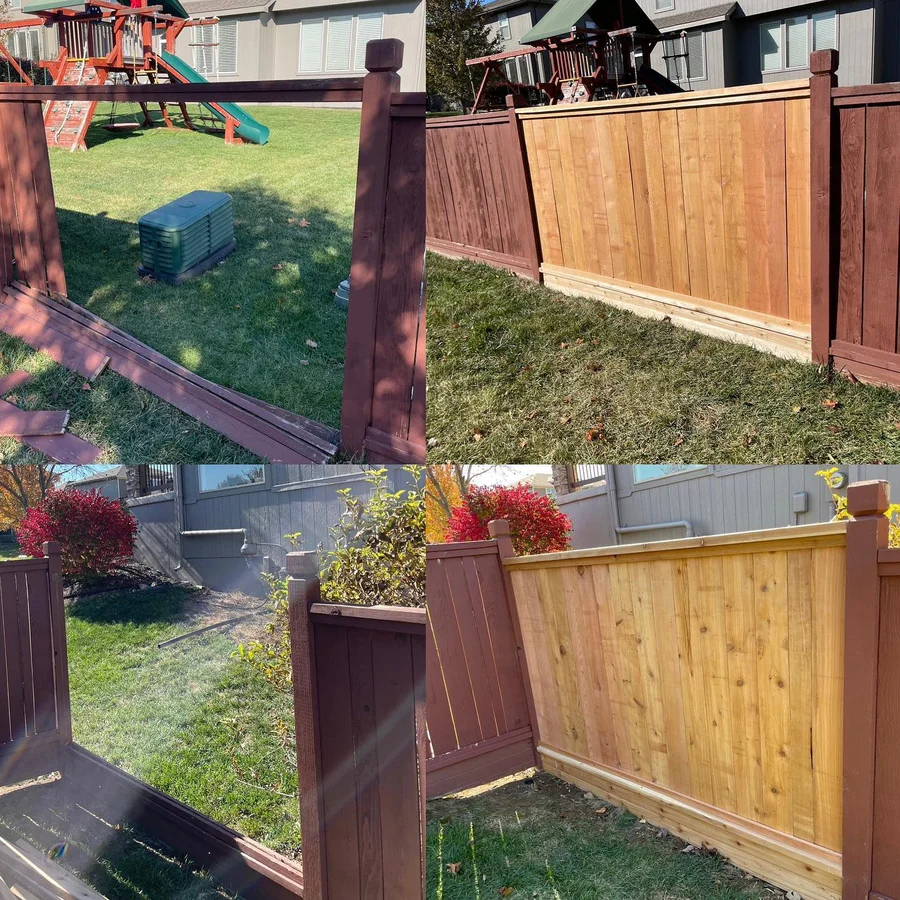
A pressure-wash strips back the oxidized surface fibre and any mildew, exposing the sound cedar underneath. This is what a fresh coat has to bond to — stain over grey fibre never takes properly.
The wood has to come back down to a proper moisture reading after the wash — usually a day or two. We meter it rather than assume, because sealing wash-water into the boards fails the finish.
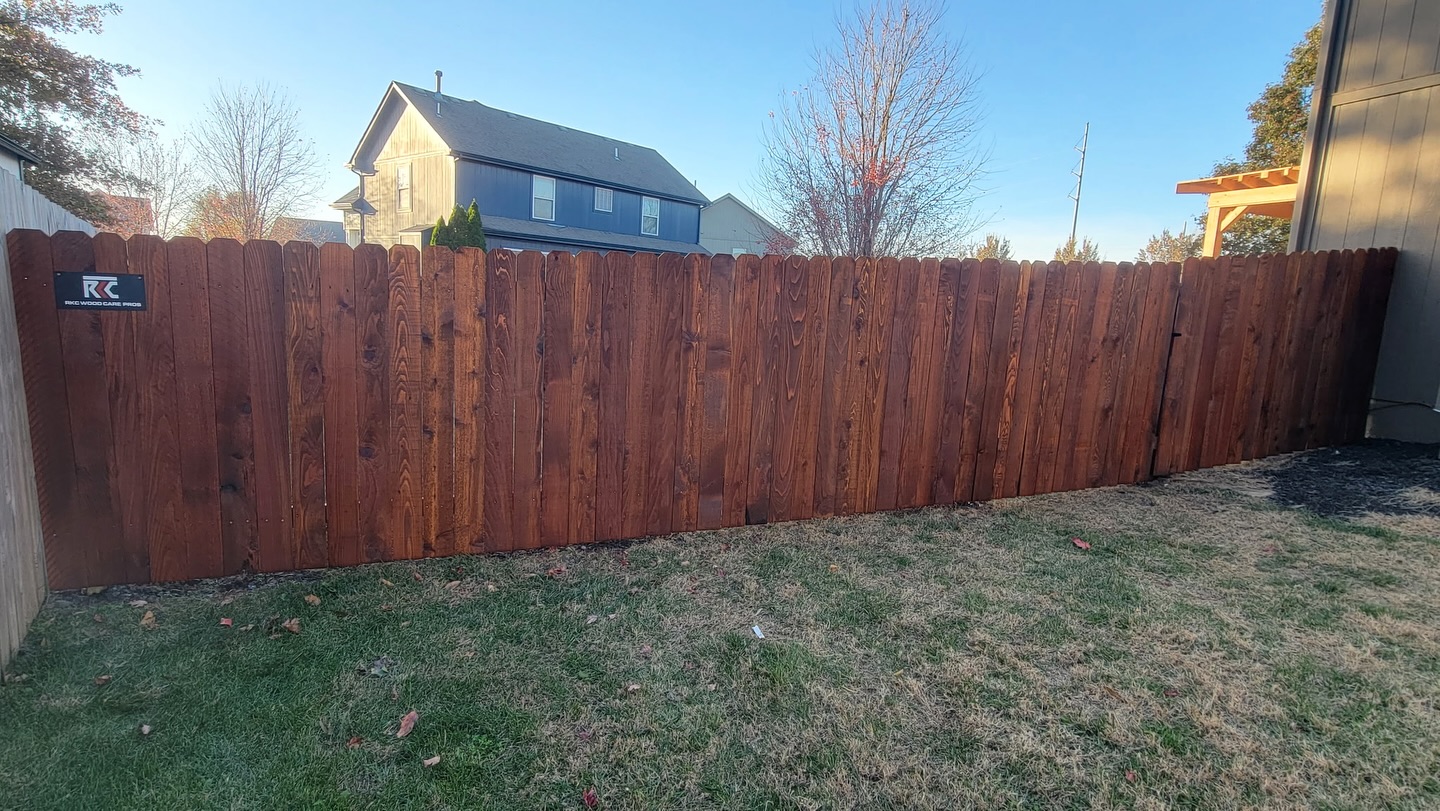
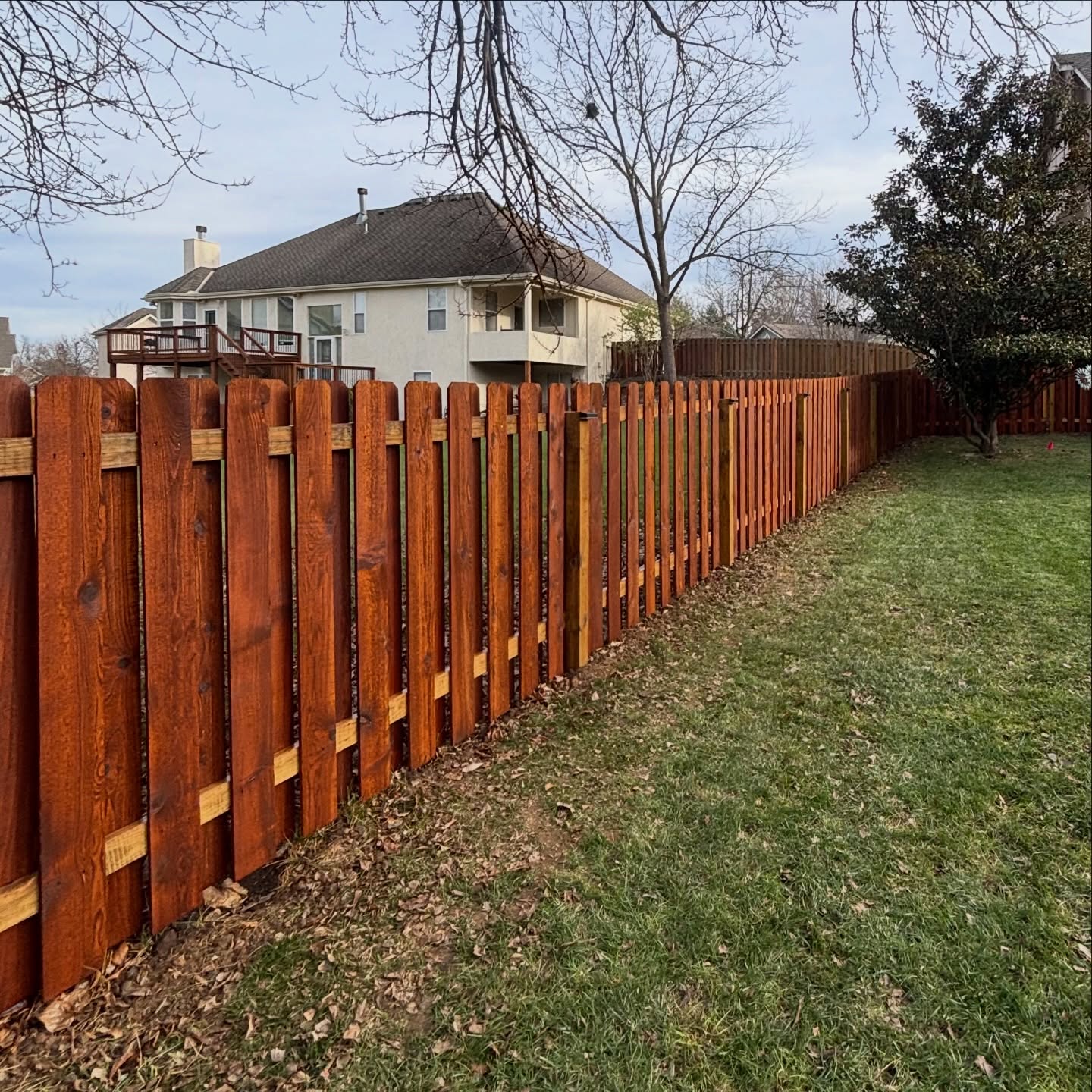
A semi-transparent penetrating stain, sprayed and back-brushed, restores the cedar tone and the UV protection in one pass. A genuinely silvered fence often looks close to new — and it goes on our recoat calendar so it never greys out again.
Choosing a finish
The finish is a trade between how much grain shows and how much UV it blocks. On a cedar fence in Kansas City sun, semi-transparent is almost always the answer — here is why, and where the oil-versus-water choice lands.
Shows the most wood and the least protection. Little pigment means little UV defence, so it fades fastest in KC sun and wants recoating soonest. Fine on a covered or shaded run; underpowered on an exposed one.
The right balance for cedar here. Enough pigment to block real UV, still open enough to let the grain and colour show. It wears back gradually rather than peeling, so recoats never require stripping. This is what we recommend on nearly every cedar fence.
Maximum UV protection, but it hides the grain and behaves like paint — it films over the wood and eventually peels rather than wearing back. It has a place on old, mismatched, or heavily weathered wood, but it gives up the reason you bought cedar.
Oil-based penetrates deep and feeds the wood, and is the traditional cedar choice; water-based dries faster, cleans up easier, and holds colour well. Both work in this climate. We match the product to the wood's condition and your recoat preference rather than defaulting to one.
How we stain
A stain that lasts its full cycle is built on what happens before the sprayer comes out. Same company that installs and repairs your fence — no handoff to a separate stain contractor a year later.
If the kickboard or a bottom rail has gone soft, staining over it is money wasted. We check before quoting the finish, even when it turns a stain job into a small repair plus a stain job.
Mildew on the shaded side and greyed fibre on the sunny side need different attention, so we wash the fence as two surfaces rather than one.
A reading after the wash, before any product. High reading, we reschedule. This is the step most crews skip and the one that decides whether your finish makes its full cycle.
One person sprays for even coverage, the other follows within seconds with a brush to work it into the grain. Spraying alone leaves drip lines; brushing alone leaves streaks. Together they get penetration without runs.
Your next window goes on our record, not your to-do list. We reach out when it opens — typically two to three years out, sooner on a full-sun run.
What staining costs
Staining is quoted by the linear foot, but the number moves on condition, not just length. A fence washed last year and one with five years of mildew are not the same job at the same footage.
A straightforward wash and a semi-transparent coat sits at the lower end per linear foot — the prep is light and the stain goes on clean.
A silvered fence needs heavier pressure-wash prep and dry time before the coat, which is where the hours go. It prices above a routine recoat and well below a replacement.
Doing the neighbour-facing side as well roughly doubles the surface. On a shared line it is usually worth it — the side you skip is the side that weathers first and works back toward you.
Unstained cedar greys inside 12–18 months and then loses surface fibre. Across the 20-plus years a well-built cedar fence should give you, holding the recoat cycle is far cheaper than shortening the fence's life.
Every staining estimate is free, written, and itemized, and the recoat window goes on our calendar when the job closes. If you would rather never have this conversation again, vinyl is the material that removes it entirely.
REVIEWS
4.9 ★ · 85 Google reviews
Every review is on our Google Business Profile — read them there, unedited.
Read all 85 reviews on GoogleKansas City fence staining questions
The questions that come up most on staining and restoration estimates across the metro. If yours isn’t here, call (913) 286-1091 — Josh usually picks up.
The rest of the lifecycle: wood fence installation is what gets stained; fence repair is where staining and structural work happen together.
Ready when you are