Skip to content
Vinyl Fence Installation in Bonner Springs, KS — No Ladder-Up-the-Slope Re-Stain, No Wash Underneath, Built for a Hilly Wooded Lot

Vinyl Fence Installation in Bonner Springs, KS — No Ladder-Up-the-Slope Re-Stain, No Wash Underneath, Built for a Hilly Wooded Lot

Bonner Springs is the metro's topography test — steep, timbered lots with limestone shelf inches beneath the surface and storm runoff that scours the base from under a fence on a grade. Cedar along the ridge means a stain ladder carried up a wooded pitch every second summer and a bottom board that rots wherever the water cuts. Vinyl answers both — the ridge look with nothing to re-coat and a steel-cored post the frost can't lift. Since the shelf rock and the fall of the land are what actually put fences down here, the whole job is decided underground. The dig meets rock — expected in this town — so we bore through the limestone and bed each post a full 36 inches in concrete, locked into the shelf beneath the frost line. On top rides capped, co-extruded PVC in white, sand, or woodgrain from CertainTeed, Bufftech, and Veka, carried on a steel-backed rail, with every panel set snug to the fall so nothing opens up below. One owner-run crew reads the hill, builds it, and picks up the phone on any warranty question years later.

★★★★★
4.9
from 85 reviews
Licensed
& Insured · KS + MO
400+
fences installed
A+ BBB Rating 400+ Fences Installed Since 2021 Owner-Operated Free On-Site Estimates
Browse vinyl options ↓

WHY BONNER SPRINGS HOMEOWNERS CHOOSE VINYL

Valley to Ridge — Vinyl for a Hilly, Wooded Bonner Springs Lot

The quote figure is the least of what you're buying. What actually goes on your lot is a fence that steps cleanly down the fall, stays put when the shelf heaves in a freeze, and doesn't undercut itself in a ridge-top storm — engineered to the terrain, not pulled off a spec sheet. This town runs a genuine mix — split rail on the acreage, chain link in the valley, cedar along the ridges — and that's fair. Vinyl earns its keep on the larger wooded, pitched lots where wood is the real chore. As the Kansas City vinyl fence contractor covering install, repair, and staining in-house, we build the one you only deal with once.

1

The ridge look, minus the stain-ladder Saturday

Owners up on the hills want a fence that reads like the cedar their neighbors run. Vinyl hands you that same clean line — white, sand, or woodgrain — and quietly retires the chore the slope makes worst: lugging a ladder and a stain tray up a graded, timbered yard every second summer. On a big wooded parcel, that's the upkeep nobody grieves losing.
2

No rot in the damp pockets under the trees

The mature timber that makes a lot here worth owning also holds moisture in the low spots long after the bare ridges have dried out — exactly where a wood post gives way at grade. A steel-cored vinyl post in a rock-keyed footing puts no wood in the ground at all, so a shaded corner that would chew through cedar inside a decade leaves it untouched.

3

A whole big parcel, dealt with a single time

These larger, steeper lots add up to serious footage, and in wood every one of those feet is a board to re-coat off a ladder, keep an eye on, and eventually re-plumb where the shelf shifts it. Vinyl collapses the entire parcel into one job done — a bigger check up front, then years of nothing more owed across a line long enough that the maintenance you dodged amounts to a whole season of climbing, not a spare afternoon.

4

Set tight to the fall so nothing slips beneath

On a grade, the real trouble is the gap that opens along the bottom — runoff strips the soil and, before long, the dog's crawling under. We seat each panel snug to the ground and place the footings so the line tracks the hill rather than hovering a wedge of daylight over it. The fence keeps the boundary the full length of the drop, not just on the level stretches.

LOCAL CONDITIONS · BONNER SPRINGS

Shelf Rock, Slope, Wash & Timber — What Shapes a Bonner Springs Fence

Four things drive an install out here: the limestone shelf the dig strikes every time, the steep pitches a fence has to walk down, the runoff that undercuts the base of a line, and the mature timber on lots that are seldom square. Overlook any one and a line that stood true in April is heaved, gapped, or scoured by its second season. Each gets addressed by name below — a timbered lot up on a ridge earns its own plan, not a template lifted off some flat in-town yard.

1

Limestone shelf a few inches down — the dig hits rock every time

Bonner Springs sits on limestone shelf rock that's often only inches below the surface, and hitting it on the dig is close to guaranteed anywhere in town. An auger that stops on rock leaves you two bad options: a shallow post, or a wide, sloppy hole. We bring a rock drill and core down through the shelf so every post still lands a full 36 inches in concrete, keyed into the rock rather than perched on top of it. It's slower than augering clay, and it's the single thing that keeps a fence plumb on ground this hard.

2

Stepping and racking the panels down the grade

The steep, irregular lots here are why fencing Bonner Springs is a topography job first. Vinyl doesn't bend to a hill the way a loose wood picket does, so on a gentle grade we run a rackable profile that leans with the slope, and on a steep one we stair-step rigid panels down the drop in even increments to keep a clean top line. Either way the rail carries a steel channel so the run stays straight between posts. Done right, a fence steps down a Bonner Springs hillside looking deliberate — not like it's sliding downhill.

3

Erosion wash under the bottom rail

On a graded lot, stormwater runs down the fence line and scours the soil out from under it — the 'erosion wash' that opens a gap a dog or a critter walks straight under, even when the posts are dead solid. It's the repair Bonner Springs calls us back for more than any other. The fix starts at install: we step the panels tight to the ground so there's no floating gap to begin with, set footings that anchor the low points, and lay gravel or regrade where the water clearly tracks, so the wash has nowhere to cut.

4

Mature timber and odd-shaped wooded lots

A lot of Bonner Springs runs thread through mature trees on lots that are anything but square. That means dodging big roots on the dig, plotting a line around timber instead of straight down a plat, and reading which shaded pockets stay wet. We walk the trees and the grade before we stake, set the line to work with the lot rather than fight it, and use a material that doesn't care how damp the shaded low corner gets.

THE LONG-RUN NUMBER, NOT THE STICKER

Vinyl or Cedar Up on a Bonner Springs Hill? Do the Fifteen-Year Math

Cedar is the ridge's look, and the day it goes up it's the cheaper privacy wall — no argument there. But on a wooded, pitched lot the fence that ends up costing less comes down to two things the hill makes harder: how tough the cedar is to keep sealed, and what runoff does to a wood base on a slope. Cedar asks for a ladder-borne re-stain on a two-year cycle plus a section reset when the wash rots out the bottom board; vinyl is one larger outlay that then falls silent. The numbers below run a 150-foot ridge-top backyard — a realistic run for this town — with the stepping labor and the gates carried in both columns.

Over 15 years6-ft cedarVinyl
The check you write on install dayRight around $4,800 stands up a 6-foot cedar privacy line — the ridge's default look, and a handsome one the afternoon it's finishedNearer $7,200, with the steel-backed rail and the follow-grade stepping already folded into the figure
Keeping cedar coated on a wooded slopeHere's where the hill bites: every couple of summers means a ladder and a stain tray dragged up a graded, timbered yard, and the total clears $3,000 in product and lost Saturdays once you tally the cyclesZero — a garden hose on a dry afternoon is the whole routine, and the ladder never leaves the garage
What a hillside storm does underneathRunoff tracks down the line, undercuts the soil below a wood fence, and rots the bottom board right where the water cuts — the callback that fills our repair calendar on the hillsStepped tight to grade over a rock-keyed footing, there's no gap for the wash to open and no low wood to rot when a shaded corner stays wet
Surviving the rock and the grade for the long haulMaybe ten to eighteen years on a slope before the posts loosen in the shelf and the coated boards let go, and then you're rebuilding on hard groundPast thirty, with the manufacturer's coverage riding along to whoever owns the place after you
Where the fifteen-year tally landsWell over $8,000 once the ladder-coats and a wash-rotted section reset are counted — and a full rebuild is already queued behind itRoughly the same $7,200 you started with; nothing due later and nothing waiting to fail
The homeowner each one actually suitsSomeone who loves the cedar grain, shrugs at the climb, and will keep to the stain schedule a wooded slope enforcesThe ridge-top owner with a big timbered lot who'd rather deal with it once — no ladder, no wash, no rebuild on the calendar

It hinges on the lot and how long you plan to stay. Love the cedar grain and shrug at the climb? Wood's a fair fence, and the Bonner Springs wood page walks through the sealing cadence a wooded slope requires. Settling in on a large, pitched, timbered lot? Vinyl wins the difference back — no ladder coats, no wash-rotted board to swap out. Bring us the pitch and we'll cost both out, total against total, straight numbers only.

THE BONNER SPRINGS SLOPE-AND-ROCK QUESTION

Will the Grade or the Shelf Rock Crack Vinyl? Only the Cheap Kind

Reasonable worry on a steep, rocky lot, and the answer sorts itself out fast: a capped panel racked or stepped to the fall, riding a steel-backed rail over a rock-keyed footing, shrugs off the hill and the freeze alike — while a cut-rate board wrestled down a slope on a hollow rail is the one that lets go. The real stressor here isn't open wind — it's the pitch and the ground beneath it. A stiff panel forced down a hill strains at the corner; a shallow post gets shouldered up by the shelf. The four build choices below are what keep both problems off the fences we raise here.

The cap layer is the whole ballgame

Not all vinyl is the same product. The stuff worth hanging is co-extruded: a tough outer skin, dosed with UV blockers and impact modifiers, bonded onto the structural core — and that skin carries the durability. Cut-rate single-wall panels leave it off, and up on an exposed ridge they're the ones that fade chalky and grow brittle first. We only run the capped profiles, which is why a valley hailstorm or a deep freeze passes over them without spidering the surface into cracks.

The slope is the crack risk here, far more than wind

In Bonner Springs the thing that stresses a fence isn't an open-field gust — it's the drop of the land. Push a rigid panel to chase a steep grade and it strains at the corner where the angle works against it. So we either run a rackable profile that leans down the slope with the ground, or step rigid panels down in tidy increments, and either way a galvanized channel inside every rail holds the line straight between posts rather than letting it flex at each change of grade. Set up like that, a run stepping down one of these hills carries no stress into its joints.

A post keyed into the shelf won't heave

The ground gremlin here is limestone shelf sitting only inches down, and it shifts through the eighty-plus freeze-thaw swings a winter throws at it. A shallow post rides that motion and tilts; a steel-cored vinyl post sunk 36 inches in concrete and locked into the rock gives the frost nothing to grab. The footing holds fast in the shelf while the loose topsoil moves around it — and with no wood underground, the damp shaded low corners have nothing to rot.

Every joint is built with room to breathe

PVC expands a touch under July valley heat and pulls back when a January cold front drops in — genuine movement over a long run in a place whose temperature swings hard between the river bottoms and the bare ridges. Clamp a run rigid and that travel has nowhere to release until something at a joint gives out. We leave the small designed play the material needs at each connection, so a run out here rides the seasons loose instead of straining against them.

WHAT WE INSTALL MOST

The Vinyl Bonner Springs Homeowners Order Most

Most orders here land on this short list — each with a plain price, a service life you can bank on, and the next-to-nothing upkeep it asks of you. The right one follows your lot — a full privacy run to echo the ridge, a warm tone against the timber, a ranch rail for the acreage, or a picket for a downtown cottage — and how it ought to read against the house and the trees. We bring samples to the estimate, so you're judging against your own siding and your own slope, not a color chip in a binder.

White Privacy — 6 ft vinyl fence by RKC Wood Care Pros in Bonner Springs, KS

White Privacy — 6 ft

The hilltop privacy standard

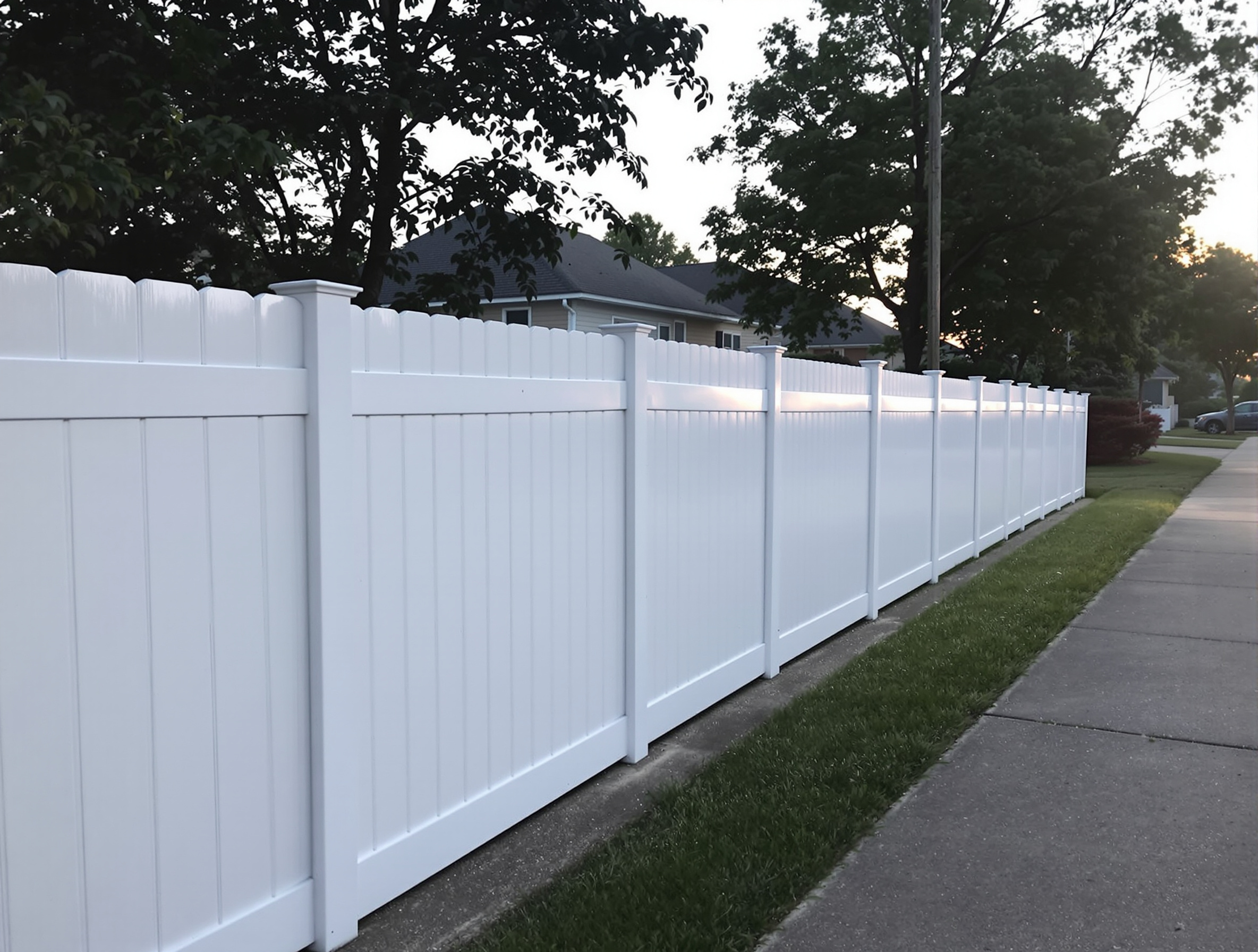
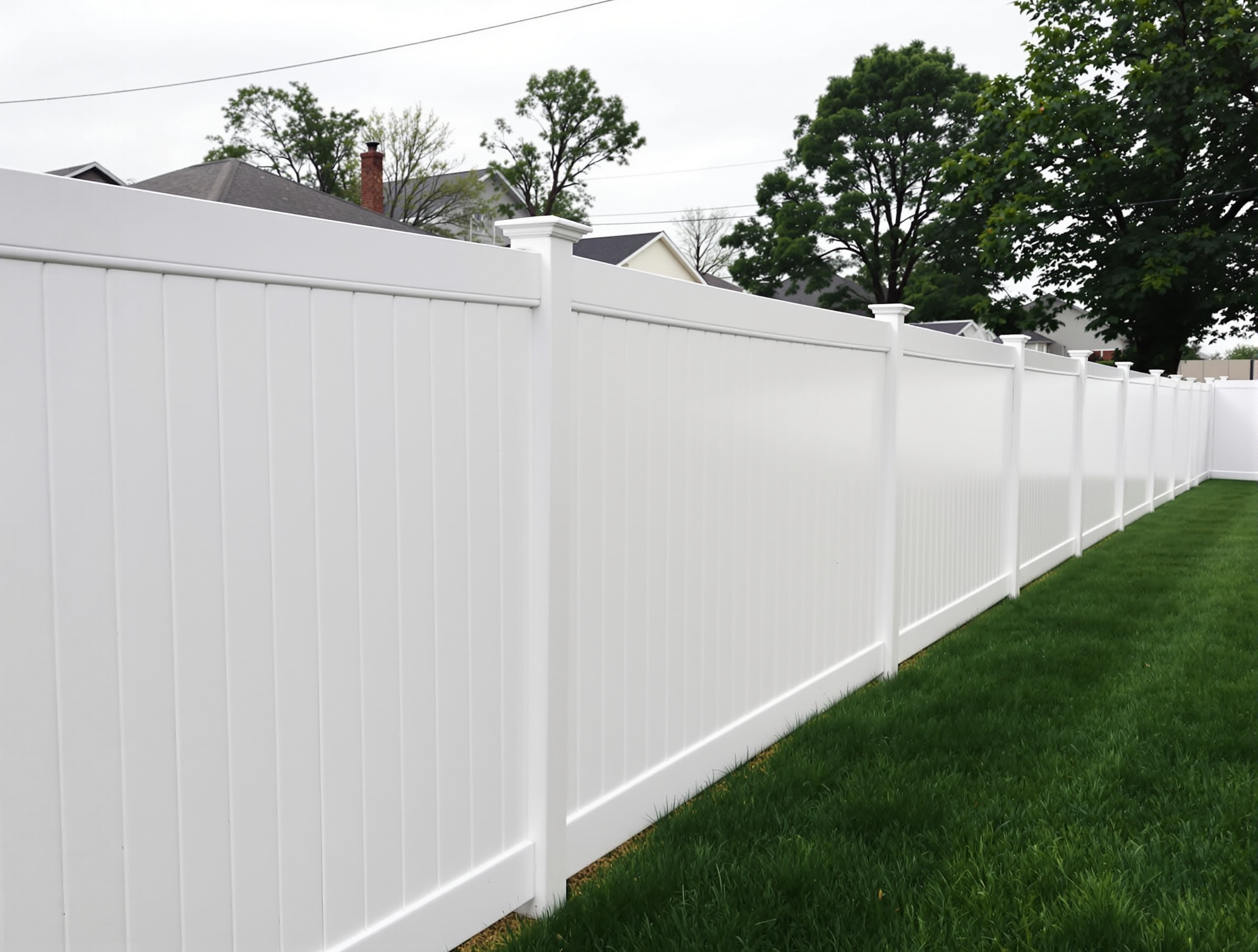
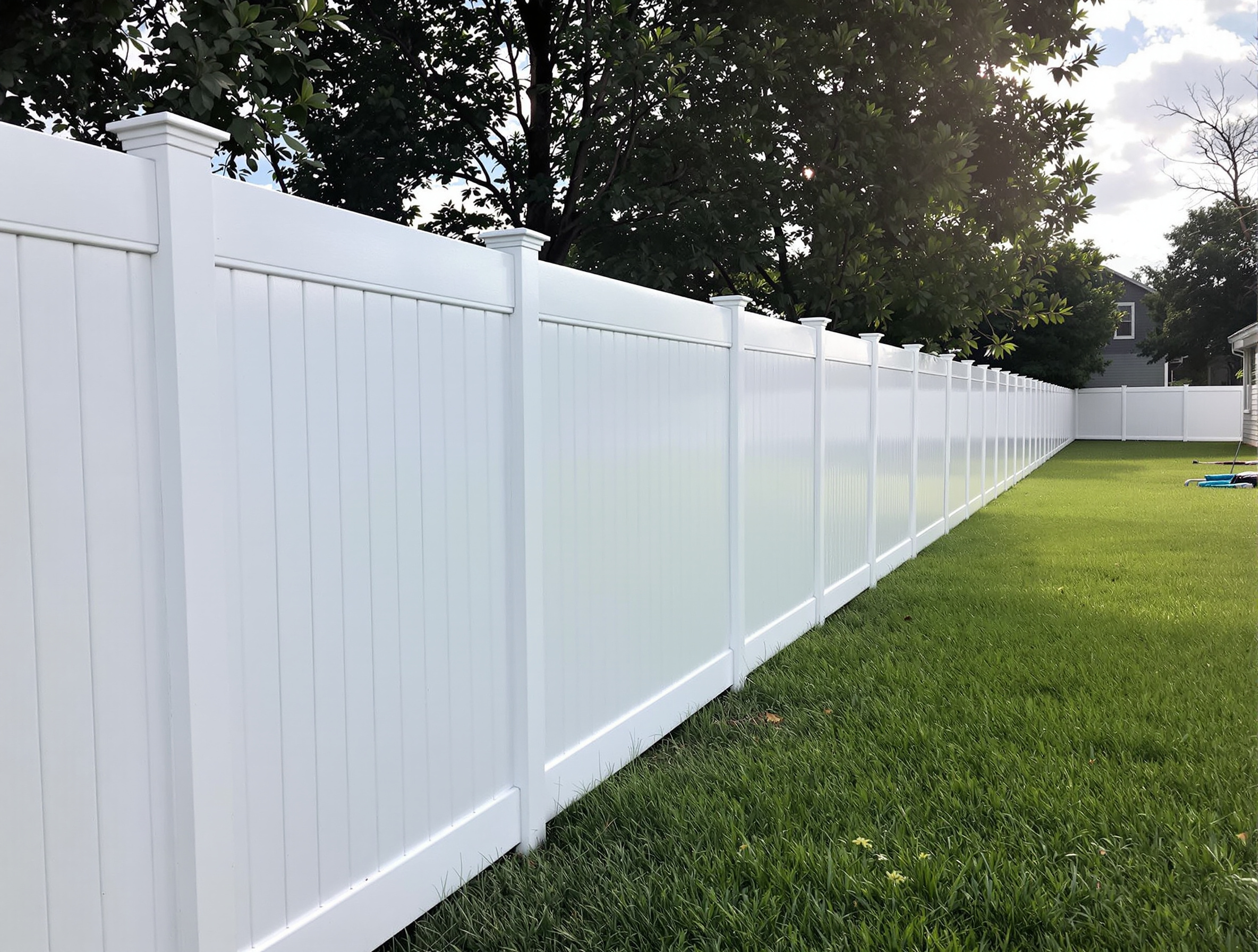
This is what most ridge-top homes here end up ordering. Solid tongue-and-groove panels, UV-rated PVC, and a galvanized channel dropped inside the rail for stiffness — the same crisp six-foot wall the cedar up the street gives you, without hauling a stain tray up a graded, wooded yard every second summer. On the bigger hilltop backyards, ducking that annual climb is what closes the deal.

  • Price: $40–55/LF installed
  • Lifespan: 30+ years
  • Maintenance: One yearly rinse
Sand / Woodgrain Privacy — 6 ft vinyl fence by RKC Wood Care Pros in Bonner Springs, KS

Sand / Woodgrain Privacy — 6 ft

Warmer against the timber and stone

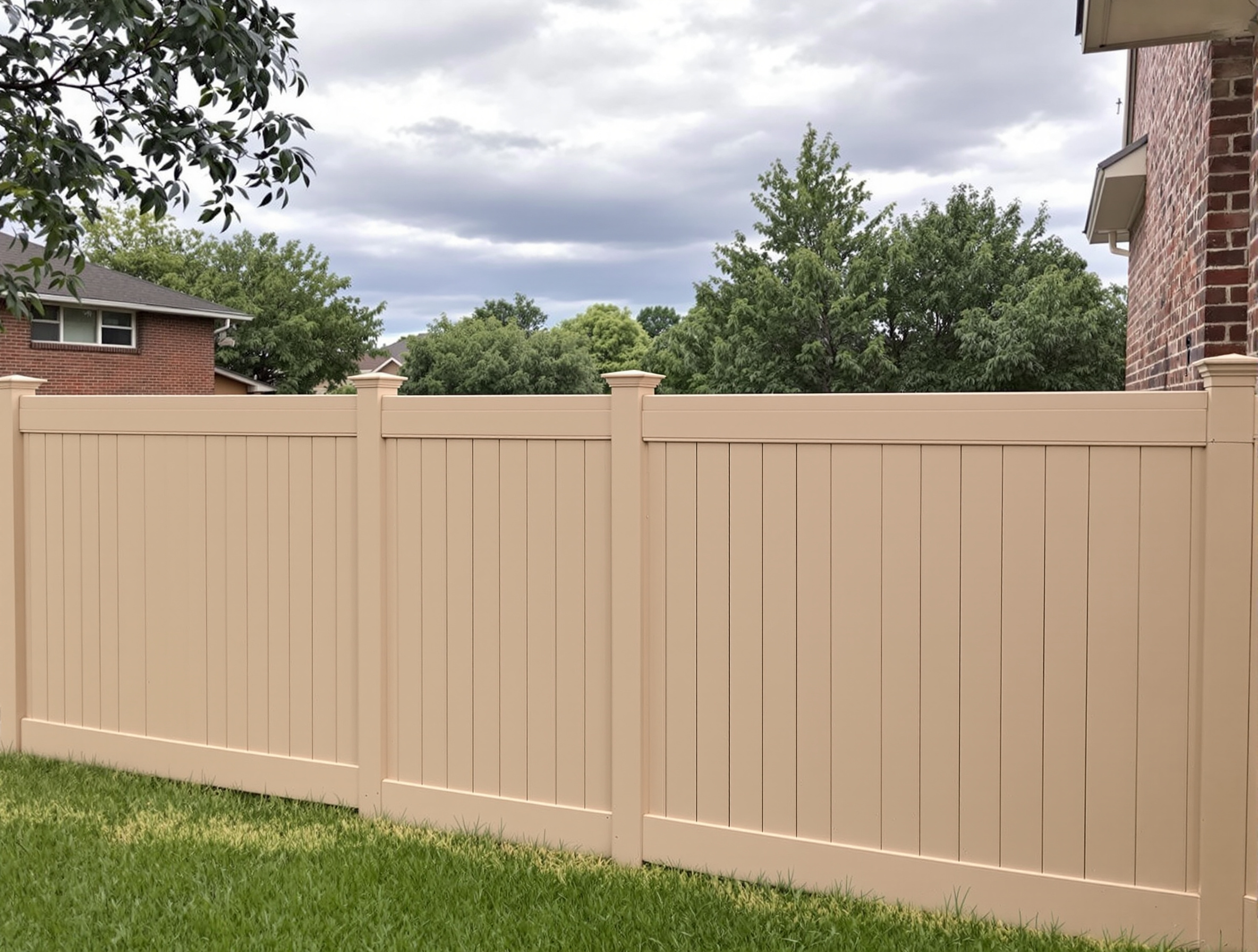
Plenty of homes here sit against mature trees and wear stone or earthy brick, and a stark-white panel can fight all of it. Shift to a sand hue or an embossed woodgrain face and the line reads warmer against the timber, nearer the cedar the older blocks favor — no upkeep given up in the trade. The steel-backed rail and the thirty-year panel don't change; the color just lets the fence sit inside a wooded backyard rather than shout across it.

  • Price: $42–58/LF installed
  • Lifespan: 30+ years
  • Maintenance: A soapy wash now and then
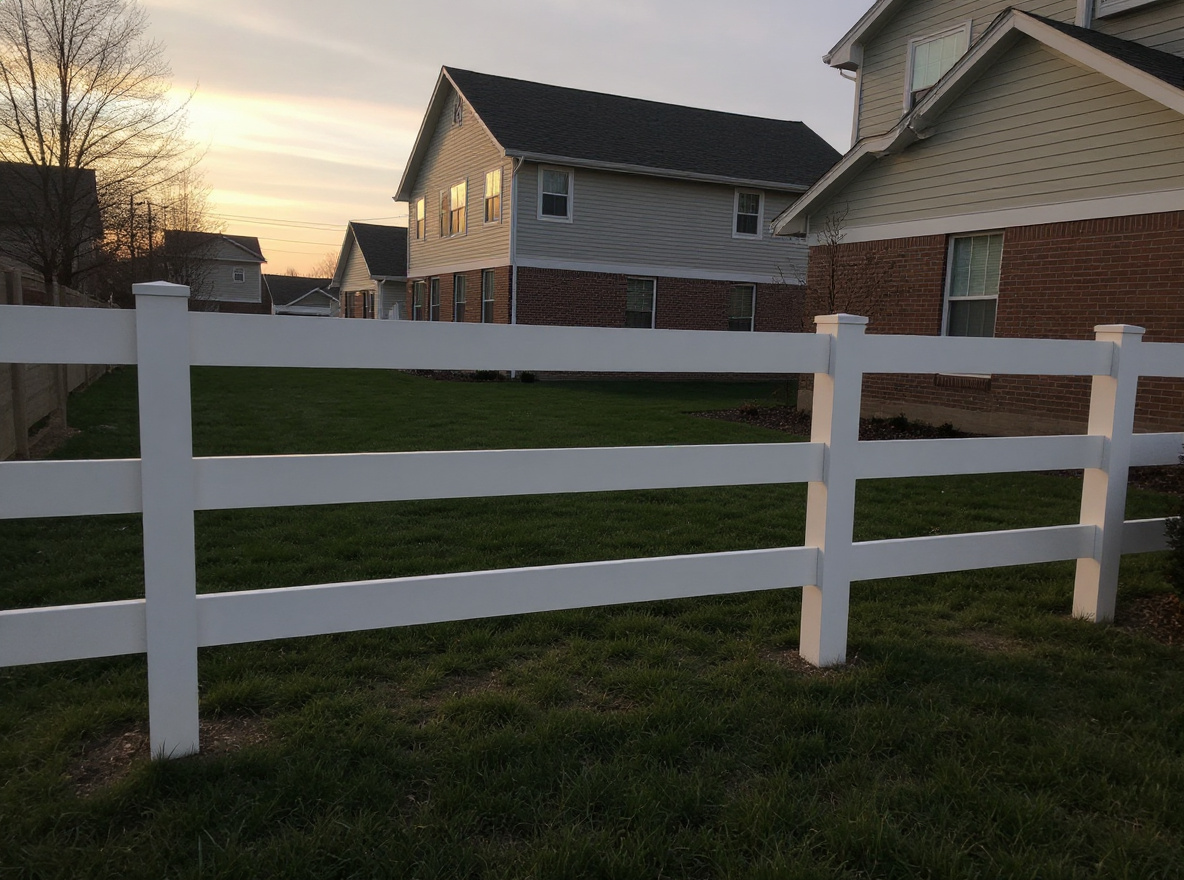
White Ranch Rail — 3-rail vinyl fence by RKC Wood Care Pros in Bonner Springs, KS

White Ranch Rail — 3-rail

For the split-rail acreage

There's still a good deal of old farm-style split rail on the larger parcels out here, and many lots are wooded acreage where a full privacy wall is more than the yard calls for. A three-rail vinyl line draws that kind of boundary the way the split rail always has, pens a dog across a wide lot when you back it with welded wire, and skips the sanding and repainting an exposed wood rail on a slope always demands. It leaves the open, river-town breathing room the acreage was bought for.

  • Price: $28–42/LF installed
  • Lifespan: 30+ years
  • Maintenance: Barely any
White Picket — 4 ft vinyl fence by RKC Wood Care Pros in Bonner Springs, KS

White Picket — 4 ft

A Historic Downtown cottage front or garden accent

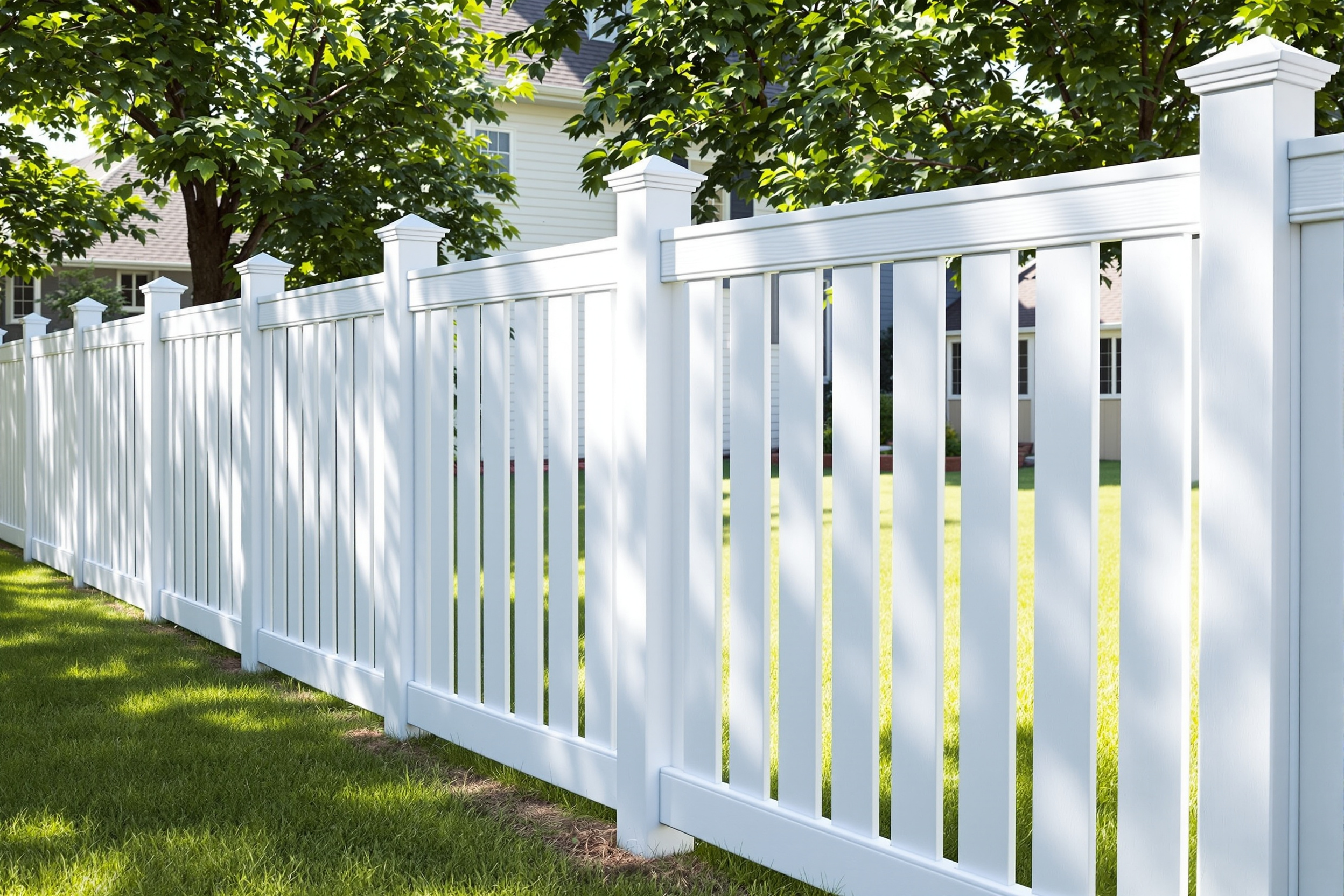
The older cottages down around Historic Downtown carry a four-foot picket beautifully, and the same line frames a garden bed, a patio edge, or a smaller dog anywhere else in town. In vinyl it keeps that sharp white face through valley humidity and open-hill sun with none of the every-year repainting a wood picket asks, and it drops in neatly ahead of a taller privacy run set along the back boundary.

  • Price: $30–44/LF installed
  • Lifespan: 30+ years
  • Maintenance: A rinse, not much else
White vinyl privacy fence pricing — Bonner Springs, KS — RKC Wood Care Pros

PRICING A BONNER SPRINGS VINYL FENCE

What a Vinyl Fence in Bonner Springs Costs, Broken Down

Vinyl lands between $28 and $60 a foot here, driven by profile and length — but on these lots the ground moves the estimate as much as the footage does, with the rock, the pitch, and each gate written on separate lines. The three builds below are our most-quoted around town. A run over shallow shelf, or a steep fall that needs stepping, takes more labor than a flat, easy-digging yard — we gauge that on the walk and commit it to paper. Pulling out an old split-rail or wood line, added gates, a bump up to a woodgrain face — each shows on its own line. The complete quote arrives printed and itemized before any crew turns up.

White Privacy — 6 ft

$40–55

per linear foot installed

Our most-bid Bonner Springs build — solid privacy on a steel-backed rail, stepped to follow your slope, with gate work quoted separately.

Sand / Woodgrain — 6 ft

$42–58

per linear foot installed

The warmer face, chosen most on the wooded, brick-and-stone homes up in Cedar Brooke, Oak Creek, and the newer ridge streets.

Ranch Rail or Picket

$28–44

per linear foot installed

Three-rail for a wide wooded parcel, or a four-foot picket for a downtown cottage or a garden edge — quoted to the footage the lot actually has.

Boring through shelf rock, walking a steep pitch, hauling off an old split-rail line, moving up to a woodgrain face — every one shows on its own line of the estimate, nothing tucked away — call us at (913) 286-1091 or book an on-site walk-through.

OUR PROCESS

How We Build a Bonner Springs Vinyl Fence on a Grade

A build here runs through four stages, from the first phone call to a line that'll hold — and the grade-reading and rock-coring done before any panel goes up are what settle whether a hillside run stays true or slides by its second season. The panel days are fast — one to three on the lot, depending how much rock and how much fall it carries. It's the grade work, the cored footings, and the snug-to-the-ground stepping ahead of them that divide a fence lasting thirty years from one gone by spring.

1

Walking the lot and reading the drop

Almost no yard here is level, so step one is understanding the fall of the land. We cover the whole line with you, take the measurements, and flag where the grade pitches hardest, where a section has to step versus rack, and where water runs across the slope in a storm. We note the mature trees and roots to route around, find where the shelf rock rides shallow, and locate the utilities and the corner pins on lots that are usually anything but rectangular. What you get back is a line-by-line quote — footage, gate work, your chosen profile, and the rock-cored footings and steel that go in the ground.

2

Utility locate, color choice, and laying out the line down the hill

First thing on the schedule is the 811 locate. Meanwhile you lock in the look — plain white, a warm sand or woodgrain, a ranch rail for the acreage, a picket for a cottage front — and we get the panels on order and mark the line down the grade so the stepping is visible before a shovel moves. If an old split-rail or a leaning wood fence stands in the path, we pull it out cleanly first and haul it off before any new post is set.

3

Coring the shelf for 36-inch footings

The dig will hit rock — in Bonner Springs that's expected, not a hiccup. When the auger meets the limestone shelf, we switch to a rock drill and core down through it, then bed every post a full 36 inches in poured concrete tied into the rock itself, under the frost line and braced against the freeze-thaw heave a shelf lot delivers. Working the grade, we keep each post true and set the panels down tight to the ground so no daylight opens beneath. Plan on one to three days on the lot, depending how much rock and how steep the fall.

4

Final pass and your paperwork filed

We cover the finished line on foot and work every gate, confirming each one hangs plumb and latches clean even on the slope. Your CertainTeed, Bufftech, or Veka registration is filed in your name and the documents go home with you — nothing to re-stain on a schedule, no post loosening in the shelf come next winter. Should the ground wash or anything move inside that first year, the crew that raised it returns and sets it right.

VINYL WE'VE RAISED · KC METRO

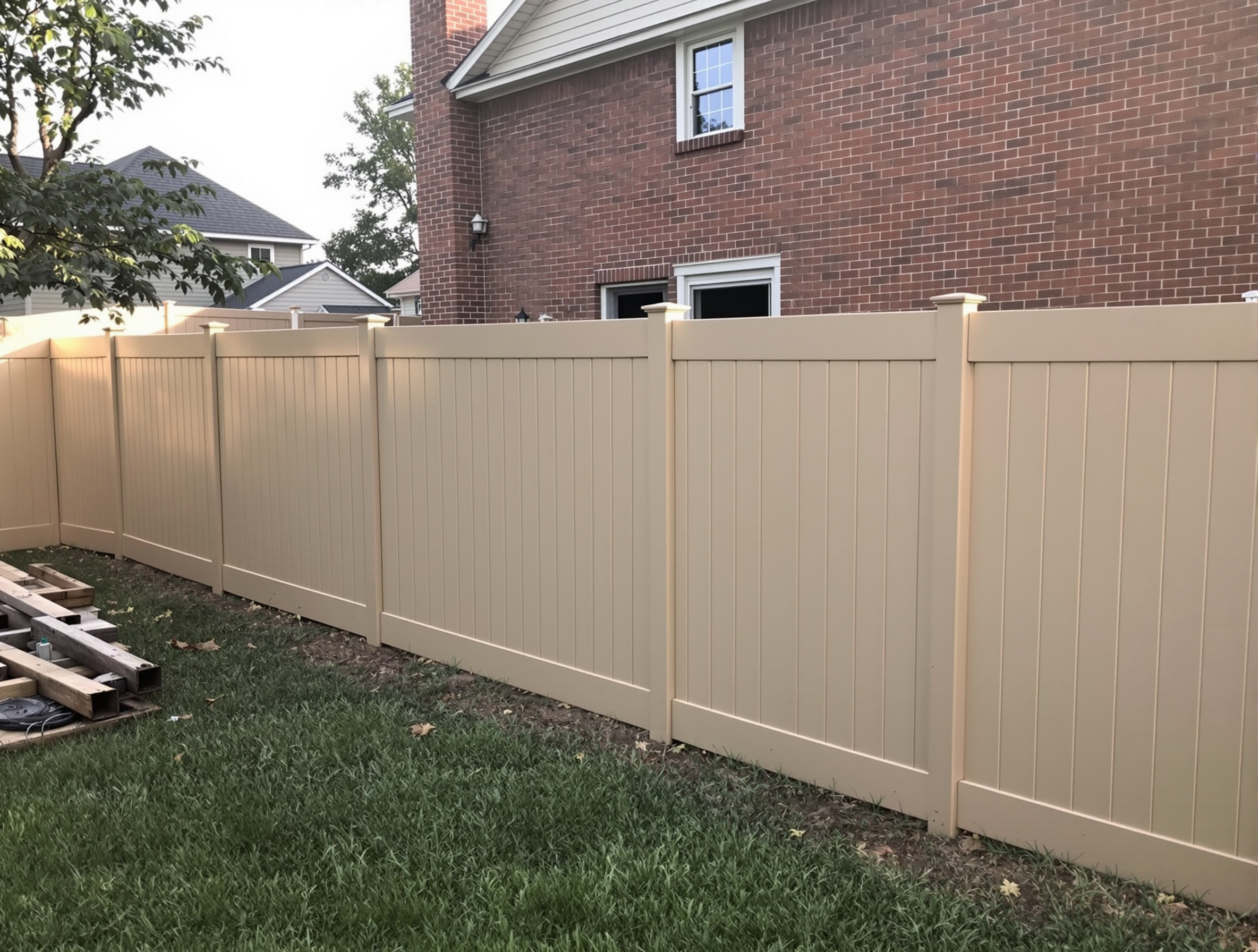
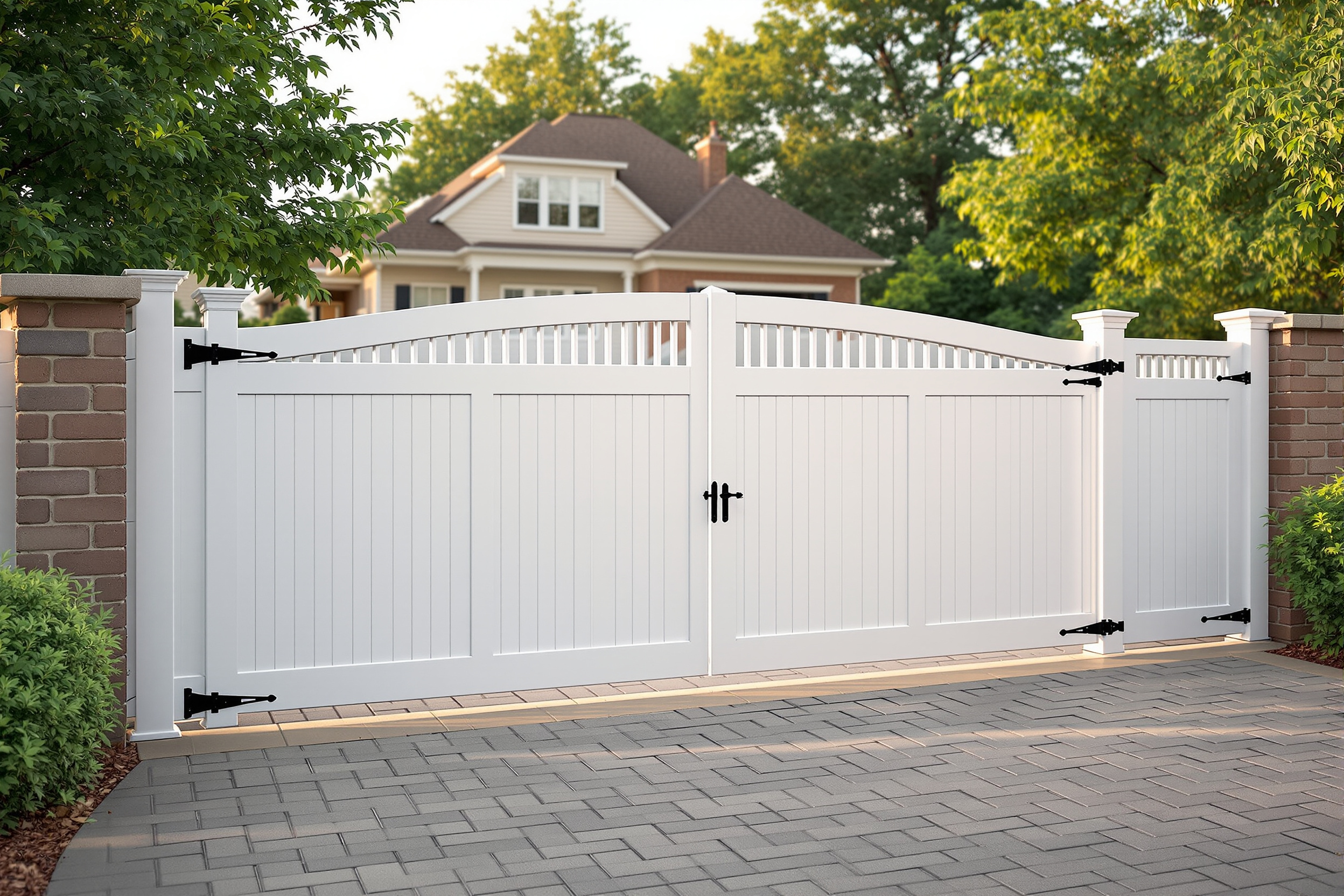
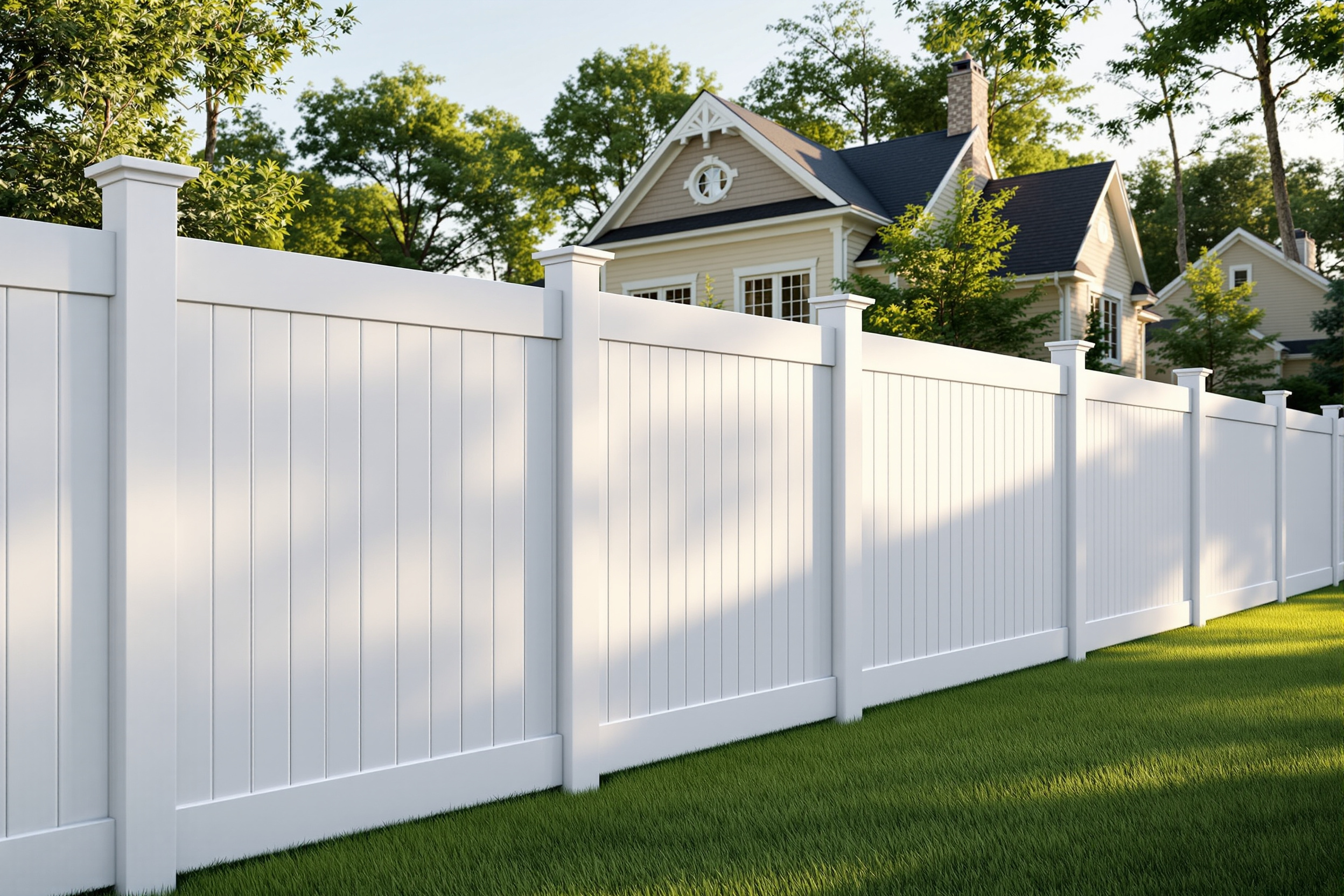
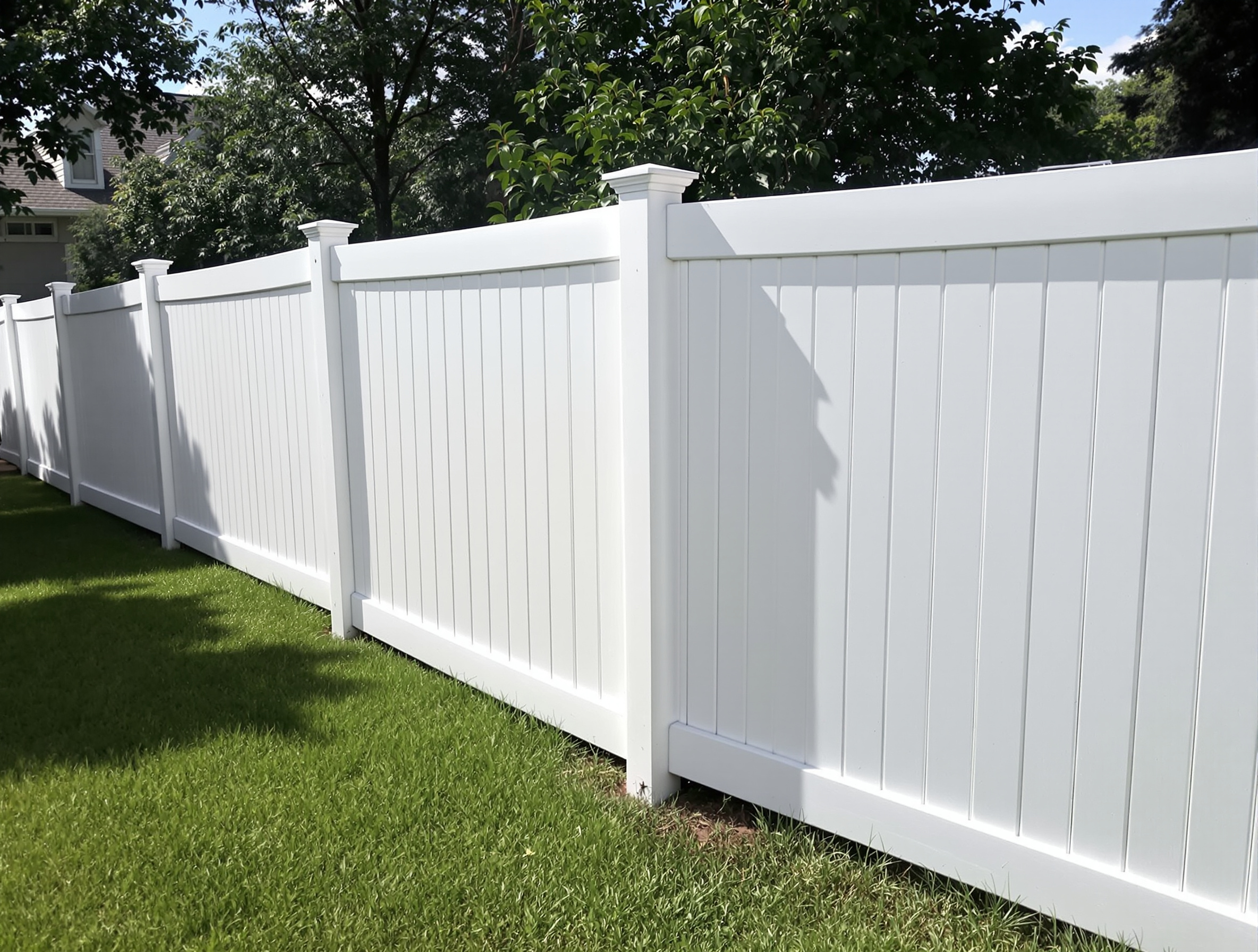
Vinyl fence installation by RKC Wood Care Pros, Kansas City metro
Vinyl install · KC metro
Vinyl fence installation by RKC Wood Care Pros, Kansas City metro
Vinyl install · KC metro
Vinyl fence installation by RKC Wood Care Pros, Kansas City metro
Vinyl install · KC metro
Vinyl fence installation by RKC Wood Care Pros, Kansas City metro
Vinyl install · KC metro

REVIEWS

What Kansas City Homeowners Say About RKC

4.9 ★ · 85 Google reviews

Every review is on our Google Business Profile — read them there, unedited.

Read all 85 reviews on Google

BONNER SPRINGS VINYL FENCE QUESTIONS

What to Ask Before You Fence a Hill in Bonner Springs

The things owners bring up while we're gauging the pitch and drafting the estimate — sorted by topic, each answer grounded in real local pricing, the shelf we bore through, the fall we step, the wash we guard against, and the honest spot vinyl holds among the mix of fence this town runs. Don't see yours? Ring (913) 286-1091 and put it to us.

Vinyl fence installation in Bonner Springs, KS by RKC Wood Care Pros

Vinyl Materials & Lifespan

How long does a vinyl fence last in Bonner Springs?
Three decades is a fair floor, and on a lot like this the footing is what buys those years. A capped, UV-rated panel on a steel-backed rail will outlive most things in the yard — provided the post under it is done properly, and here that means defeating the two hazards that drop fences on hilly, wooded shelf ground: the freeze-thaw that shoulders a shallow post up out of the limestone, and the storm runoff that scours the base from beneath a fence on a slope. We drill every hole through the rock, bed the posts a full 36 inches in concrete, and set the panels snug to the fall so nothing opens up below. CertainTeed, Bufftech, and Veka each stand behind the panel against fading, cracking, peeling, and chalking, and that protection carries over to whoever buys the house next.
Fences here are a real mix — why go vinyl on a hilly lot?
Honest question, because this isn't a one-material town. There's split rail on the acreage, chain link down in the valley, cedar along the ridges — each a fair pick for the right yard. Where vinyl pulls ahead is the bigger, sloped, tree-covered lots specifically, since those are where wood is the biggest chore: coating cedar means a ladder up a graded, timbered yard on a two-year cycle, and a post tucked in a shaded low corner rots quicker than one out on flat, open ground. Vinyl matches the ridge look and drops all of that — no climb, no rot, thirty-plus years, coverage in writing. Love the grain and don't mind the ladder? Wood's a reasonable call. Want the wooded lot squared away for good? Vinyl's the better long-game value.
Can you actually run vinyl down a slope this steep?
Yes — it's the bulk of what we do out here, and there's a correct way to pull it off. On a gentle fall we run a rackable profile, so the panel tilts down the grade while the posts stay plumb. On a sharp drop we stair-step rigid panels down in even bays, so the top edge reads as crisp deliberate steps instead of a fence sliding off the hill. A galvanized channel inside each rail keeps the run dead-straight between posts, and at every level we press the panel tight to the ground so there's no wedge of daylight for a dog to duck through. Done this way, a stepped run down one of these hills looks purposeful and lasts decades.
How do you keep a fence from washing out underneath on a hill?
That erosion gap along the bottom rail is our single most common callback on the slopes, so we design against it from day one. Panels sit tight to the grade rather than floating above it, which leaves runoff no gap to pry open. Footings key into the shelf rock right at the low points where water gathers hardest. And wherever a storm clearly channels across the line, we drop gravel or re-cut the swale so the flow passes through without carving the dirt out from under the fence. That's the line between a fence that holds the boundary the whole length of the slope and one the dog's beneath by spring.

Pricing & Warranty

What does a vinyl fence cost in Bonner Springs?
Figure $40–$55 a foot for six-foot white privacy with the steel-backed rail built in. Warm sand or woodgrain sits at $42–$58; a three-rail line for the acreage or a cottage-front picket runs lower, $28–$44. What swings a number here more than the profile does is the dirt — a lot thick with shelf rock and pitched on a steep grade takes more labor to core and step than a flat run, and you'll hear that on the walk-through, not on the invoice. Gate work is written on its own lines, never folded in. Every estimate is free, on paper, and spelled out before a single post is set.
Does the rock and the slope add to the price?
It can, and we'd rather flag it plainly up front than spring it on you afterward. Most lots here strike limestone shelf on the dig, and boring through rock is slower going than augering clay — where the shelf runs shallow across the whole line, that lands as a modest labor line on the quote. A steep fall that demands a lot of stepping and grade-following work can nudge it up as well. We size up both on the site visit and write them into the fixed quote, so the figure you sign is the figure you pay. An easy-digging level lot comes in near the bottom of the range; a rocky, steep one rides higher.
Is the warranty real, and does it transfer when we sell?
Genuine on both fronts, and that hand-off carries real dollars. CertainTeed, Bufftech, and Veka all warrant the panel for life against fading, cracking, peeling, and chalking, then shift to prorated coverage for the next owner when the house changes hands. We register it in your name the day the crew wraps and leave the documents with you. On a lot a buyer already knows is a pain to fence — the rock, the pitch, the timber — a fence still under active warranty reads as a real plus, and any brand unwilling to commit that coverage to paper doesn't earn a spot in your yard.

OTHER BONNER SPRINGS FENCE OPTIONS

Bonner Springs Fence and Gate Services

Vinyl isn't the only option — RKC installs and repairs every type of fence in Bonner Springs: wood, vinyl, chain link, ornamental iron, aluminum, and commercial security, plus gates and in-house staining. Each card here opens its own Bonner Springs page — what it costs, the terrain it's built for, and photos from work around the area.

Ready when you are

Get a free estimate — we usually respond the same day.

Call (913) 286-1091