Skip to content
Fence Installation in Buckner, MO — Eastern-Edge Yards, Set Deeper Than the Last Guy Dug

Fence Installation in Buckner, MO — Eastern-Edge Yards, Set Deeper Than the Last Guy Dug

RKC Wood Care Pros is the fence contractor for the eastern edge of Jackson County — cedar and farm-style fencing for the roomy, country-suburban Buckner yards, set 36 inches deep in poured concrete where the shallow-set weekend project gave out, and braced for the open-plains wind. Built to contain the dog and stay square. Installation, repair, and in-house staining from one crew. 400+ fences since 2021. Free estimate.

★★★★★
4.9
from 85 reviews
Licensed
& Insured · KS + MO
400+
fences installed
A+ BBB Rated Licensed KS + MO Owner Walks Every Install A True 36 Inches, Every Post
See the Buckner DIY-failure map ↓

BUCKNER CONDITIONS

In Buckner, the Difference Is the Part You Can't See — the Depth

Buckner is a roomy, country-suburban town on the eastern edge of Jackson County, and its two most common fence problems tell the whole story: DIY builds failing from shallow post holes, and the open-plains wind. Both come down to what's underground. Build the depth right and the fence stands square for decades; skip it and it leans by the second winter.

1

Shallow post holes are why the weekend project failed.

A fence dug with a hand digger or a light rental auger rarely gets a post near the depth it needs. A post that never reached the frost line gets walked loose by freeze-thaw, and then it leans, the gate drags, and the run starts to go. It's the most common thing we're called out for here. Our answer is a true 36 inches in poured concrete — the depth that gives the fence something to hold onto, and the one thing you can't add later without pulling the post.

2

The open eastern plains push hard on a fence.

Buckner sits where the metro gives way to open country, and the wind runs a long way with little to break it. A lightly-set fence racks with it. We build against it structurally — 36-inch poured footings, tighter post spacing and ring-shank fastening on the exposed runs, and shadowbox or spaced pickets that let a gust pass instead of catching a solid wall. On the big perimeters, farm-style wire sidesteps the wind load entirely.

3

The yards are big, and the job is containment.

Most Buckner lots are flat, formerly-agricultural ground running a third of an acre or more, and with very few HOAs in the way, the fence is really about keeping the dog and the kids in. We plan the run to the grade with no gaps at the bottom, add a dig guard where a dog works the line, and hang self-closing gates. On a roomy country-suburban yard, a fence that actually contains is the whole point.

THE BUCKNER DIY-FAILURE MAP

What Your Failing Fence Is Telling You, and the Fix That Lasts

Nearly every failing fence in Buckner traces back to one thing — a shallow post hole — and shows it in a handful of familiar ways. Here's the working map: the symptom you're looking at, why a shortcut build caused it, and the done-right fix that keeps it from coming back.

The leaning post

A post tilting a few years in — the classic DIY tell

Shallow-set posts that never reached the frost line get walked loose by freeze-thaw. The fix isn't a brace — it's pulling the post and re-setting it a true 36 inches in poured concrete so it can't tilt again.
The heaved corner

A corner or end post pushed up and out of line

Corners take the most pull and are where a too-shallow hole shows first. We re-dig deep, set a heavier corner footing, and brace it properly, because a fence is only as square as its corners are anchored.

The sagging gate

A gate dragging the ground or won't latch

The single thing a DIY build gets wrong most: a gate on a shallow hinge post and an un-braced frame. We set the hinge post deep and heavy and weld a diagonal brace into the frame so the gate swings true and latches clean.

The wind-racked run

A whole section leaning in one direction

The open eastern plains push a long run hard, and a lightly-set fence racks with it. We anchor 36 inches deep, tighten the post spacing on the exposed stretches, and fasten with ring-shank nails so boards don't work loose.

The rotted-out base

A post soft or crumbling where it meets the dirt

A post dry-set without concrete or drainage sits wet and rots at grade. The redo goes in with a gravel drainage base, a poured collar, and ground-rated wood — so the new post doesn't fail at the base like the old one.

The gap the dog found

A low spot where a dog digs out or squeezes under

On roomy Buckner yards, containment is the whole point. We plan the run to the grade with no gaps at the bottom, add a dig guard where a dog works the line, and hang self-closing gates — a fence that actually keeps the dog in.

Landmarks near the Buckner lots we fence: Buckner City Park, the Fort Osage High School area, and the historic Sibley and Fort Osage country just east — off US-24, Buckner Tarsney Road, and M-BB. Our crews run the US-24 eastern corridor, so out on the Jackson County edge, you're on the route.

Buckner and the towns next door: the same crew fences the eastern-Jackson-County towns around it — Blue Springs and Grain Valley — and it all runs out of our Kansas City metro fence shop in Olathe.

WHY BUCKNER HOMEOWNERS HIRE US

What Buckner Homeowners Weigh When They Pick a Kansas City Fence Contractor

In a town where the most common fence problem is a DIY build that gave out, the reason to hire it done is simple: get the depth right so you never do it twice. Here's what the locals we build for actually weigh.

1

A true 36 inches, every post

The depth a shortcut build skips and the one thing that decides whether a fence stands or leans. Every post goes 36 inches into poured concrete, below the frost line, with heavier footings on the corners and gates that take the most force.

2

Gates that swing true

The thing a DIY build gets wrong most. We set the hinge post deep and heavy and weld a diagonal brace into every gate frame, so it latches clean and doesn't drag the ground by the second season — the fix people call us for after doing it themselves.

3

Built to actually contain

On roomy Buckner yards with few HOAs, the fence is about keeping the dog and kids in. We plan the run to the grade with no bottom gaps, add a dig guard where needed, and hang self-closing gates — a fence that does the one job you put it up for.

4

One contractor, estimate through stain

Owner-run since 2021, with the finish kept in-house. The crew that set your posts is the one that returns to seal the cedar against the open-edge sun and wind — never a handoff to some other outfit a month on.

FENCE AND GATE SERVICES IN BUCKNER

The Full Lineup for Buckner, From One Local Contractor

RKC installs and repairs every type of fence — wood, vinyl, chain link, ornamental iron, aluminum, and commercial security — plus custom gates and in-house staining. Open any card for its Kansas City detail page — options, specs, price bands. All of it comes to Buckner on one crew and goes in at the full 36-inch depth, backyard to acreage.

Wood Fence Installation for Buckner, MO by RKC Wood Care Pros

Wood Fence Installation

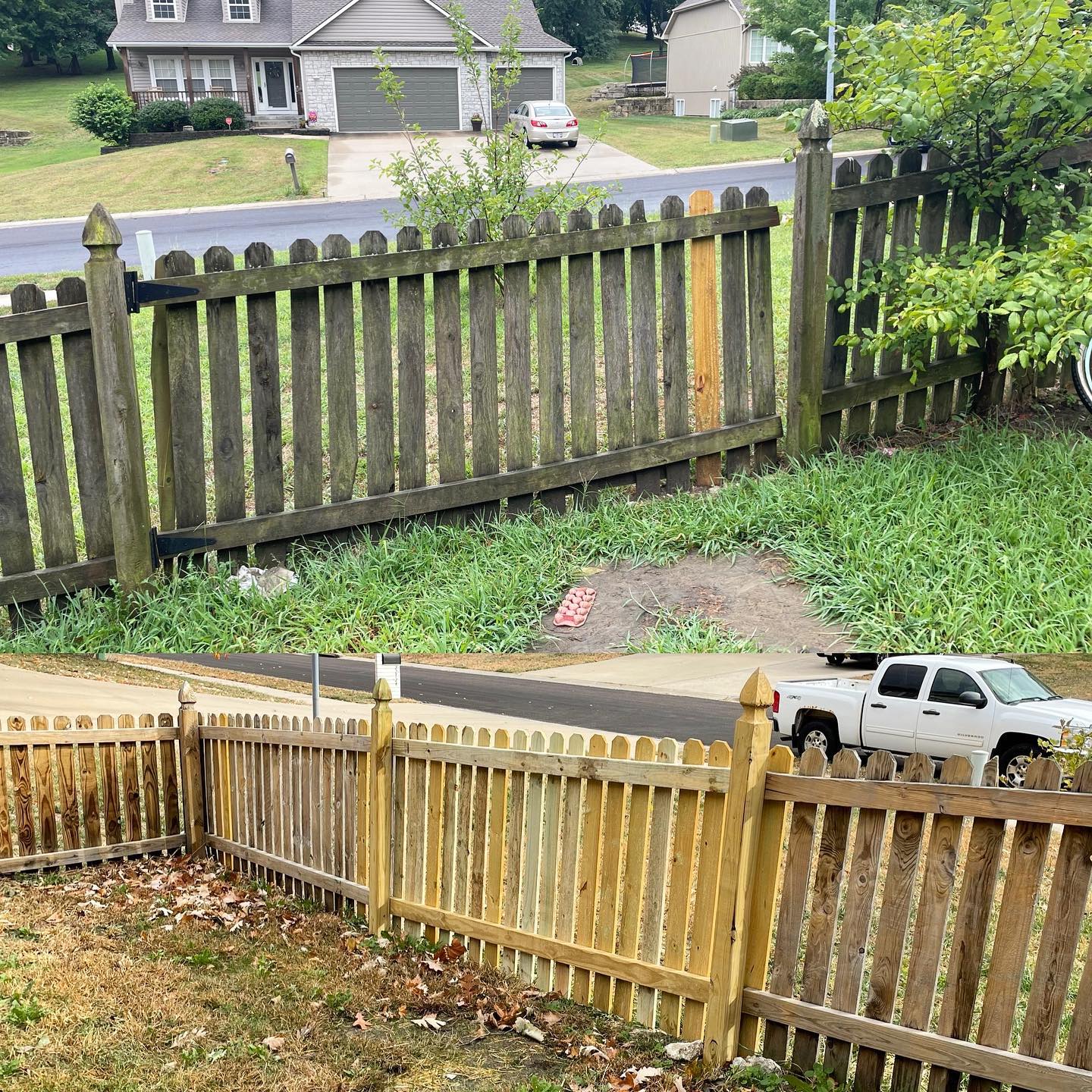
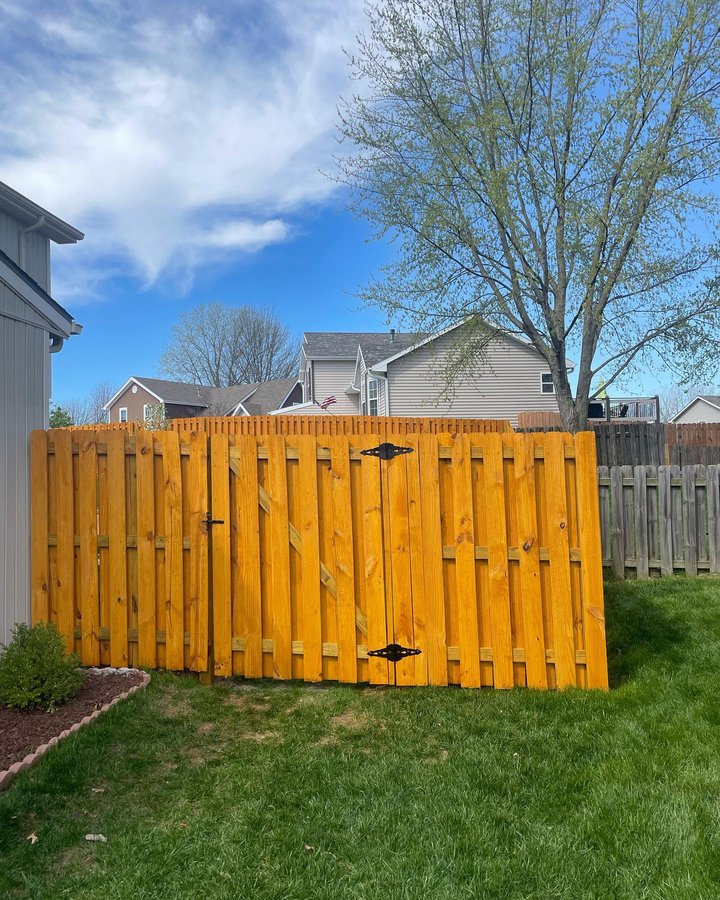
Cedar and treated-pine privacy, the Buckner default for a roomy eastern-edge yard — hung on galvanized ring-shank nails and set 36 inches deep in poured concrete, the depth a weekend post-hole digger never reaches.

Service details
Privacy Fence Installation for Buckner, MO by RKC Wood Care Pros

Privacy Fence Installation

Solid 6-foot cedar and vinyl for a closed-off backyard on the bigger Buckner lots — built with the wind bracing the open eastern plains demand and the containment layout a family with a dog needs.

Service details
Chain Link Fencing for Buckner, MO by RKC Wood Care Pros

Chain Link Fencing

Galvanized chain link and farm-style wire for the larger outskirts lots — the affordable, see-through pick for containment and a defined boundary across a big country-suburban yard.

Service details
Fence Repair for Buckner, MO by RKC Wood Care Pros

Fence Repair

Redoing a shallow-set DIY fence is Buckner's most common call — a weekend project that leaned or racked within a couple of winters. We pull the shallow posts and re-set to 36 inches so the redo actually holds.

Service details
Gate Installation for Buckner, MO by RKC Wood Care Pros

Gate Installation

Walk gates for the pet yards and wide farm-style drive gates for the acreage, on welded frames with diagonal bracing and hinge posts set deep — the part a DIY build almost always gets wrong, hung to swing true.

Service details
Vinyl Fence Installation for Buckner, MO by RKC Wood Care Pros

Vinyl Fence Installation

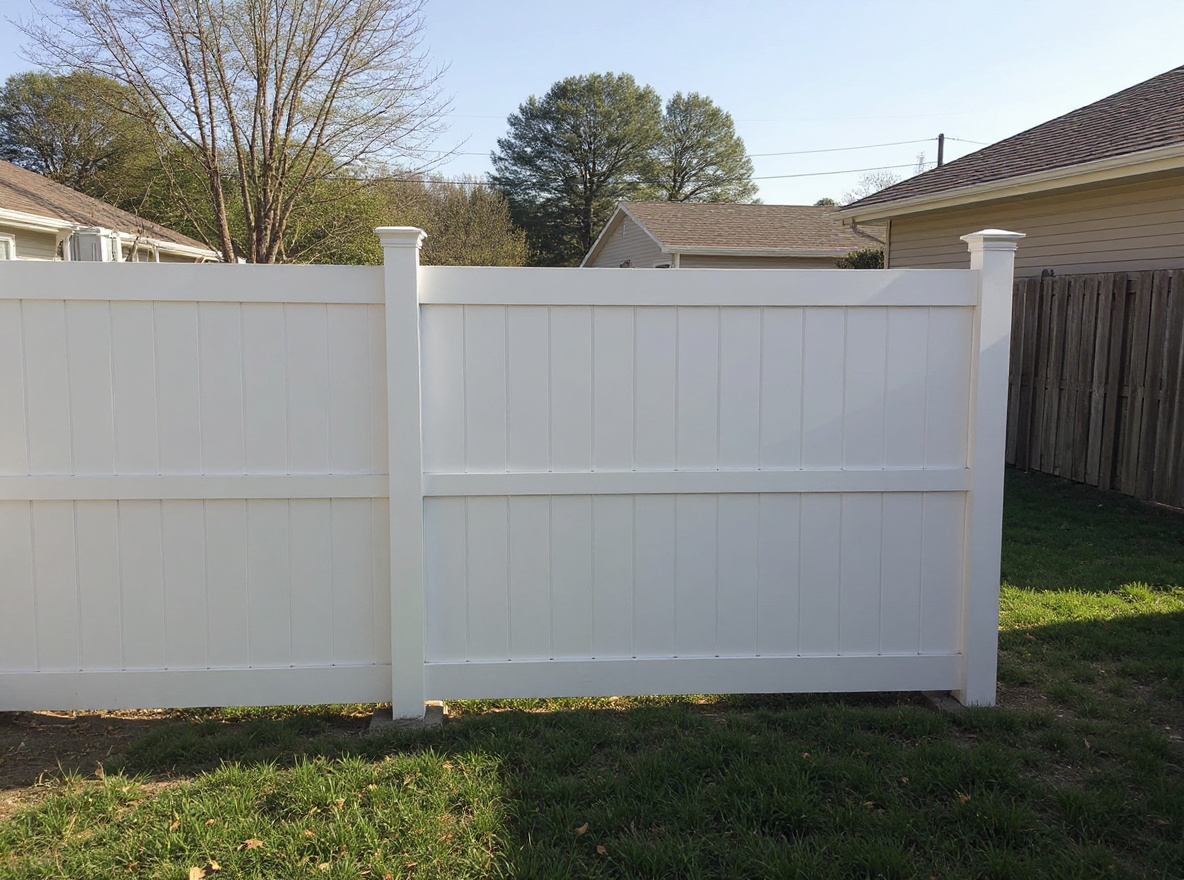
Zero-maintenance vinyl for the homeowner who wants it done once and never touched again — no restaining, no rot, set on the same 36-inch footing so it stands up to the open-plains wind.

Service details
Staining & Sealing for Buckner, MO by RKC Wood Care Pros

Staining & Sealing

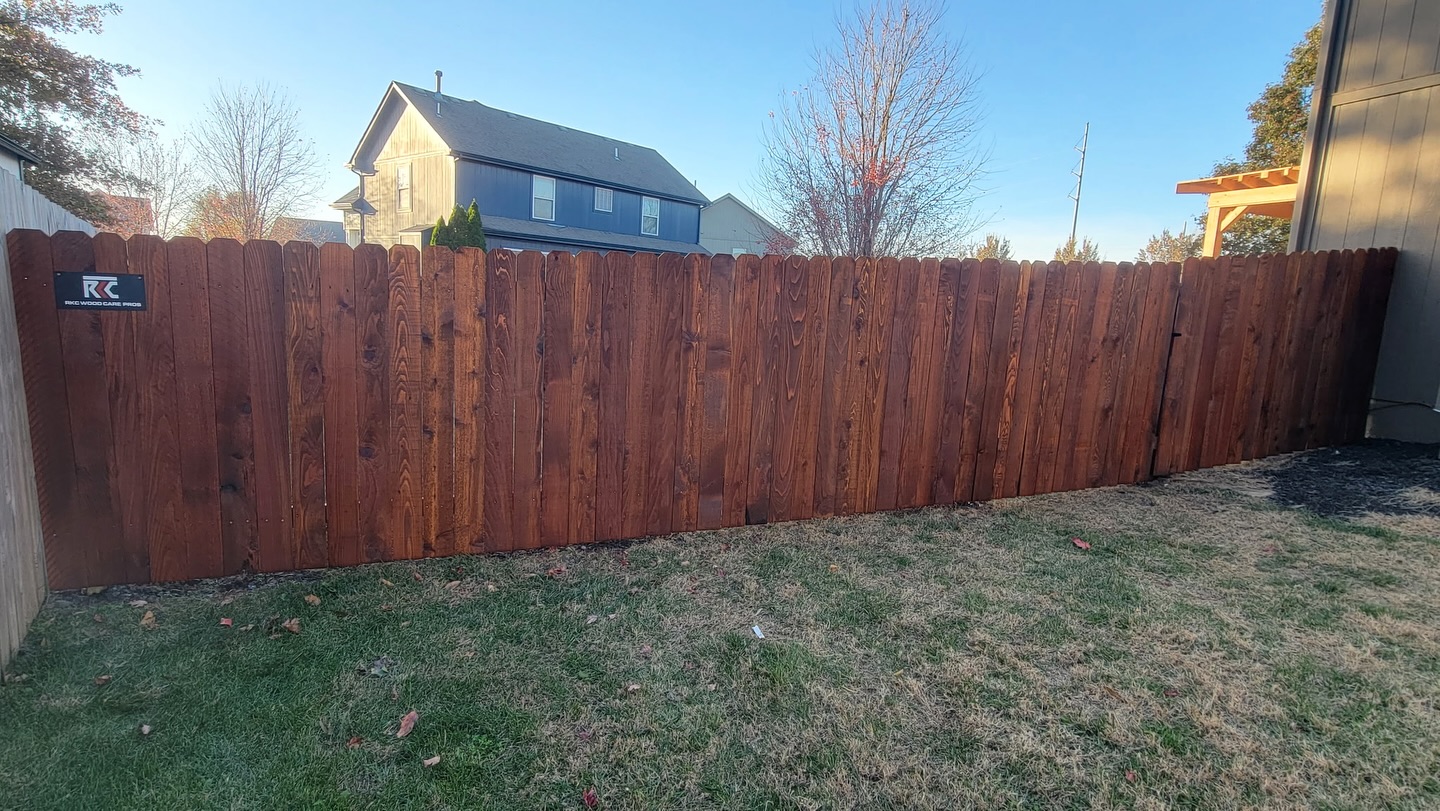
Semi-transparent penetrating stain, applied by the same crew that built the fence — the coat that keeps a cedar fence from graying out in the open eastern-edge sun and wind the way an unsealed DIY build does.

Service details
Ornamental Iron Fencing for Buckner, MO by RKC Wood Care Pros

Ornamental Iron Fencing

Powder-coated steel picket for a formal accent or a front line — an open, long-lasting look set on proper 36-inch footings, with a factory finish that shrugs off the sun and wind.

Service details

Also serving Buckner across the metro: we install aluminum, pool, and commercial security fencing, plus fencing for managed properties. Ask when you book your estimate.

BUCKNER ESTIMATES · WHAT SHAPES THE NUMBER

What a Buckner Fence Project Typically Costs

A 6-foot cedar privacy fence in Buckner runs about $25 to $35 per linear foot installed, treated pine a little under. On the bigger outskirts lots, farm-style wire and split rail cost less per foot but cover more ground, so the length of the perimeter drives the total. Vinyl runs a few dollars over cedar with no upkeep. What you're really paying for over a DIY build is the depth — 36-inch poured footings, proper corners, and braced gates — the exact things a shortcut skips and the reason it lasts. The quote comes free and broken out line by line, so you can see the depth and the bracing you're actually paying for.

Per linear foot, installed · done-right depth
Cedar Privacy (dog-ear) $25–$35/LF The Buckner backyard default
Dog-Ear Wood (treated pine) $22–$30/LF Value privacy, same 36" footing
Farm-Style Wire / Split Rail $12–$24/LF Big outskirts perimeter, by the foot
UV-Stabilized Vinyl $28–$45/LF No upkeep, done once
DIY Post Re-Set (redo) quoted per run Pull shallow posts, re-set to 36"

Posts, concrete, hardware, the wind bracing, cleanup — each on its own line, so the invoice reads like the quote. Salvageable boards reused from a failed DIY run get credited on their own line when we can. See the full Kansas City pricing detail →

See full KC pricing FAQ →

REVIEWS

What Kansas City Homeowners Say About RKC

4.9 ★ · 85 Google reviews

Every review is on our Google Business Profile — read them there, unedited.

Read all 85 reviews on Google

BUCKNER FENCE QUESTIONS

Buckner Homeowners Ask, We Answer

The questions we field most often on Buckner jobs. Yours not here? Ring (913) 286-1091 and ask — the owner tends to answer himself.

Buckner Ground & Install

Why do so many DIY fences fail in Buckner?
It almost always comes down to one thing: shallow post holes. A weekend project dug with a hand post-hole digger or a small rental auger rarely gets a post anywhere near the depth it needs, and a post that never reached the frost line gets walked loose by a couple of winters of freeze-thaw — then it leans, the gate sags, and the whole run starts to go. Add the open eastern-plains wind pushing on a lightly-set fence and it fails faster. It's the single most common problem we're called out for here, and the fix isn't patchwork — it's re-setting the posts to a true 36 inches in poured concrete so the fence has something to actually hold onto. Done right the first time, it doesn't come back.
How deep should a fence post really go in Buckner?
A true 36 inches, set in poured concrete — that's our standard on every job, and it's the number a DIY build almost never hits. Thirty-six inches gets the post below the frost line so seasonal freeze-thaw can't lever it loose, and poured concrete bonds the footing instead of leaving the post to slip in a dry-set hole. On the corners and gate posts we go heavier still, because those take the most force. It's more digging and more concrete than a shortcut build, and it's the entire reason our fences stand straight while the shallow-set ones around them lean. Depth is the part you can't see and the part that decides everything.
Can you fix or redo a fence I built myself?
All the time — it's one of our most common Buckner calls. If the boards and rails are still good and only the posts failed, we can often pull and re-set the shallow posts to 36 inches and save the rest of your material. If the fence has gone too far — rotted bases, racked sections, a sagging gate on a bad post — we'll lay out an honest redo and reuse what's salvageable. Either way we'll tell you straight what caused it to fail and what it takes to make the fix permanent. No judgment on the DIY; we just build it so you're not out there re-bracing it every spring.
How do you handle the open-plains wind and the bigger yards?
Buckner's flat, formerly-agricultural lots run larger than a typical suburban yard — often a third of an acre or more — and the open eastern plains give the wind a long, unbroken run at a fence. We build for both: posts 36 inches deep in poured concrete, tighter post spacing and ring-shank fastening on the exposed runs, and shadowbox or spaced pickets where the wind is worst so a gust passes through instead of catching a solid wall. On the bigger perimeters, farm-style wire and split rail sidestep the wind load and cover more ground affordably. We read the lot and quote the run to its length and exposure.

Eastern Edge · Cost & Process

How much does a fence cost in Buckner?
A 6-foot cedar privacy fence runs roughly $25 to $35 a linear foot installed, and treated pine a little under. On the bigger outskirts lots, farm-style wire and split rail cost less per foot but cover more ground, so the length of the perimeter drives the total. Vinyl runs a few dollars over cedar with no upkeep. What you're really paying for over a DIY build is the depth — 36-inch poured footings, proper corners, and braced gates — which is exactly what a shortcut skips and exactly why it lasts. Every Buckner estimate is free, written, and line-itemized so you can see what goes into it.
How far is Buckner from your Olathe base?
Buckner is out on the eastern edge of Jackson County along US-24, past Blue Springs and Grain Valley toward Fort Osage country, and that corridor is a regular route — a standing part of the rotation, not a one-off trip. We run the full metro and its eastern edge from an Olathe home base. The owner is on the finished Buckner job before you're billed, and the record behind that — more than 400 builds since 2021 and a review average to match — is what stands behind the work.
What does the install standard look like on a Buckner job?
The standard is the depth a DIY build skips: 36 inches of poured-concrete footing, heavier corner and gate footings, wind bracing on the exposed runs, ground-rated wood at grade, and every gate welded and diagonally braced to swing true. On the roomy yards the containment layout is planned so there's no gap for a dog to slip. The owner puts eyes on the finished run himself — exactly what you want when the whole reason to hire it out instead of doing it yourself is that it's done right and stays that way.

Ready to Plan Your Buckner Fence Project?

Free estimate, same-day response during business hours. Set 36 inches deep and braced for the wind — done right the first time, so you don't do it twice.

Call (913) 286-1091

Full Kansas City metro service area →

Ready when you are

Get a free estimate — we usually respond the same day.

Call (913) 286-1091