Skip to content
Wood Fence Installation in Grandview, MO — Durable, Value-Priced, Built to Last

Wood Fence Installation in Grandview, MO — Durable, Value-Priced, Built to Last

Grandview asks a fence to be practical: tough enough for a rental, priced so the numbers work, and solid enough to buffer the I-49 road noise. We build to that bar — and set the posts deep so it lasts.RKC Wood Care Pros installs 6-foot cedar dog-ear, pressure-treated pine, shadow-box, and composite from $20 to $56 a linear foot — posts set 36 inches deep against the post rot that ended the old 1960s fences, chain-link tear-outs handled in one job, and the first stain coat brushed in-house. 4.9 stars across 85 Google reviews, 400-plus fences around the metro since 2021.

★★★★★
4.9
from 85 reviews
Licensed
& Insured · KS + MO
400+
fences installed
A+ BBB Rated 400+ Fences Installed Since 2021 In-House Stain Crew Free On-Site Estimates
Browse wood options ↓

WHY GRANDVIEW HOMEOWNERS CHOOSE WOOD

Practical Privacy — Durable, Affordable, and Set Deep to Last

1

Durable enough for a rental, priced to do more than one

A lot of Grandview is single-family rentals, and the fences that work here have to clear a specific bar: tough enough to shrug off a few tenant turnovers, and priced so an owner can fence a whole property — or several — without it breaking the math. We build 6-foot dog-ear cedar and pressure-treated pine to that standard: solid, low-drama, and honest about cost. It's the practical privacy fence this value-minded market actually asks for, not an upsell.
2

A taller solid fence to knock down the I-49 noise

As I-49 (the old US-71) has gotten busier, more Grandview homeowners near the corridor want a fence that does more than mark the line — they want it to buffer the road noise. A tall, solid privacy panel with no gaps does exactly that, and the taller and more solid it is, the more wind and sound it catches — which means the posts have to be set for it. We build the sound-buffer runs on deep footings so a fence working that hard stays put.

3

Trading out the old Belaire chain link

Areas like Belaire still carry a lot of 4-foot chain link from decades back, and it's prime for an upgrade to real wood privacy — for the dog, for the kids, for the look. We pull the old fabric and posts, and because Grandview's soil is heavy clay but generally without the severe rock you hit up north in Liberty, the new post holes usually dig cleanly to full depth. One crew handles the tear-out and the new build so it's a single, clean job.

4

Low-HOA freedom, and an in-house crew to finish it

Grandview has very few active HOAs, which is genuinely freeing — it opens the door to non-standard heights and mixed-material 'modern' looks without an architectural committee to clear. What still matters is building it right and keeping it: the old 1960s fences here rotted out at the 30-year mark, so we set posts deep against that, and we stain in-house on the two-year cycle so the new one doesn't gray out early. 4.9 stars across 85 Google reviews.

WHERE A VALUE FENCE EARNS ITS KEEP

Why a Grandview Post Beats the Rot, the Noise & the Years

Where What we build there What it does in Grandview
The solid panel A full, gapless privacy panel on posts set for the load The I-49 road noise a homeowner wants buffered — a taller, more solid fence catches more sound and more wind
0 – 36 inches Every post three feet down in poured concrete The post rot that ended the 1960s-subdivision fences at their 30-year limit — and frost heave besides
At the groundline A gravel drainage bed under a footing in heavy clay Water sitting against the post in Grandview's clay — dug cleanly here, without the severe rock found up in Liberty
The gate Braced gate posts and proper, sized hardware The gate-hardware failure that plagues the older, heavy DIY fences all over town

A value fence isn't a cheap fence — it's one that holds up so you're not paying twice. Depth against the rot, solid panels for the noise, clean footings in the clay, and gate hardware that doesn't quit are what make a Grandview fence last. For the full run of species, grades, and the 36-inch standard across the metro, see our Kansas City wood fence installation page; this is the version built for Grandview's value and durability.

PICK YOUR BOARD

Cedar Dog-Ear, Pine, Shadow-Box & Composite — for the Grandview Yard

6-Foot Cedar Dog-Ear Privacy by RKC Wood Care Pros in Grandview, MO

6-Foot Cedar Dog-Ear Privacy

The Grandview volume run

Six-foot dog-ear cedar is the workhorse here — full privacy, a clean solid line, and cedar's own oils fighting rot without chemicals. It's durable enough to survive a rental and handsome enough for an owner-occupied yard, which is why it's the volume leader in Grandview. Solid and gapless, it also does real work buffering road noise for the homes near the I-49 corridor.

  • Price: $25–34/LF installed
  • Lifespan: 15–25 years
  • Maintenance: Re-stain every 2 years
Pressure-Treated Pine by RKC Wood Care Pros in Grandview, MO

Pressure-Treated Pine

The affordability leader

Kiln-dried southern yellow pine, pressure-treated against rot and insects, and popular in Grandview precisely because the number works — for a rental refresh, a starter home, or a long back run. It does the job at the lowest entry price of the wood options. One note: give the treatment about 90 days to cure before the first stain so the finish soaks in rather than beading off.

  • Price: $20–27/LF installed
  • Lifespan: 10–15 years
  • Maintenance: Re-stain every 3 years (first coat at 90 days)
Cedar Shadow-Box by RKC Wood Care Pros in Grandview, MO

Cedar Shadow-Box

Both faces finished · shared lines

Pickets alternate across the rail so the fence shows a finished face to both yards — a courteous pick for a shared property line, and common in the older established neighborhoods. It still screens well enough to help against road noise, and the small gaps let wind slip through rather than leaning the whole run. A mid-tier step between pine and a solid cedar privacy wall.

  • Price: $27–36/LF installed
  • Lifespan: 15–25 years
  • Maintenance: Re-stain every 2 years
Composite (Trex / TimberTech) by RKC Wood Care Pros in Grandview, MO

Composite (Trex / TimberTech)

No stain, ever · long-hold home

Recycled wood-polymer boards that pass for stained cedar and never take a brush — the pick for an owner staying put who's done with the maintenance calendar. It's the highest up-front number of the group, but over a long hold the skipped two-year staining adds up in money and hassle avoided. Manufacturer-warrantied for 25 years.

  • Price: $40–56/LF installed
  • Lifespan: 25–30 years
  • Maintenance: No staining — soap-and-water rinse

MATCHING WOOD TO THE BUDGET

Cedar, Pine, or Composite — What Fits the Grandview Job

Material Installed Lifespan Stain cycle Best for
Cedar Dog-Ear Privacy $25–34 / LF 15–25 yrs Recoat every 2 yrs · first at 30 days The durable step-up — the 6 ft volume run for an owner-occupied home or a rental worth holding long-term
Pressure-Treated Pine $20–27 / LF 10–15 yrs Recoat every 3 yrs · first at 90 days The affordability leader — fencing a rental portfolio or a first home where the number has to work
Cedar Shadow-Box $27–36 / LF 15–25 yrs Recoat every 2 yrs · first at 30 days Finished both faces — good for a shared line, and it still screens well as an I-49 sound buffer
Composite (Trex / TimberTech) $40–56 / LF 25–30 yrs None — just a soap-and-water rinse The long-hold owner done with maintenance — highest up-front, zero stain calls, warrantied 25 years

In a value market the honest advice is match the wood to how long you'll hold the property. Pine wins on entry price for a rental or a first home; cedar dog-ear is the durable long-hold pick and the volume leader; shadow-box suits a shared line; and composite is for the owner who wants to stop staining altogether. Tell us the property and the plan and we'll price the pair you're weighing.

Cedar fence cost guide — Grandview, MO — RKC Wood Care Pros

GRANDVIEW WOOD FENCE PRICING

What Wood Fence Installation Costs in Grandview

Cedar Dog-Ear Privacy — 6 ft

$25–34

per linear foot installed

The durable volume run — owner-occupied yards and long-hold rentals.

Pressure-Treated Pine — 6 ft

$20–27

per linear foot installed

The lowest entry price — rental refreshes and first homes.

Cedar Shadow-Box — 6 ft

$27–36

per linear foot installed

Finished both faces for a shared line; still screens road noise.

Composite runs $40–56 per linear foot with no stain schedule. Old-fence tear-out, wide gates, and taller I-49 sound-buffer runs are each their own line on every Grandview estimate — call (913) 286-1091 or set up an on-site walkthrough.

FROM ESTIMATE TO FINAL COAT

A Grandview Wood Fence Install, Step by Step

1

On-site estimate and property walkthrough

We come out and read the job — whether it's a rental refresh, a chain-link swap in an older area, or a taller sound-buffer run near I-49 — and check any old fence that's coming out. What comes back is a written, itemized quote: footage, cedar or pine, gates, concrete, tear-out, and the first stain coat. For an owner running numbers across a portfolio, that clear per-foot pricing is the whole point, so nothing is quoted off the cuff.

2

Layout, tear-out, and utility locates

We snap the line and, where old 4-foot chain link is coming out, pull the fabric and posts first. We call the 811 locate and stage the wood to acclimate. Grandview's flat 1950s-to-70s lots make layout straightforward, and the heavy clay — without the severe rock found further north — usually lets the holes dig cleanly to full depth, which keeps the schedule and the price predictable.

3

Install — posts 36 inches deep, hardware that lasts

Every post drops three feet into a full concrete collar over a gravel drainage bed — the depth that beats the post rot that ended the old 1960s fences, plus frost heave. On a solid sound-buffer run near the highway, that footing carries the extra wind and sound load. Rails and pickets go on with ring-shank galvanized nails, and gates get braced posts and properly sized hardware — the fix for the gate failures so common on older DIY fences here.

4

First stain coat — in-house, before the fade

Cedar needs about a month to dry down before it'll hold a stain; treated pine wants closer to 90 days while the chemistry cures. Then our own crew brushes on a penetrating semi-transparent coat — mahogany, walnut, or a warm golden tone — and logs the job for the two-year recoat. Keeping the finish up is what separates a fence that still looks sharp at year ten from one that grayed out and got neglected, which matters double on a rental you want to keep leasing.

RECENT GRANDVIEW WOOD INSTALLS

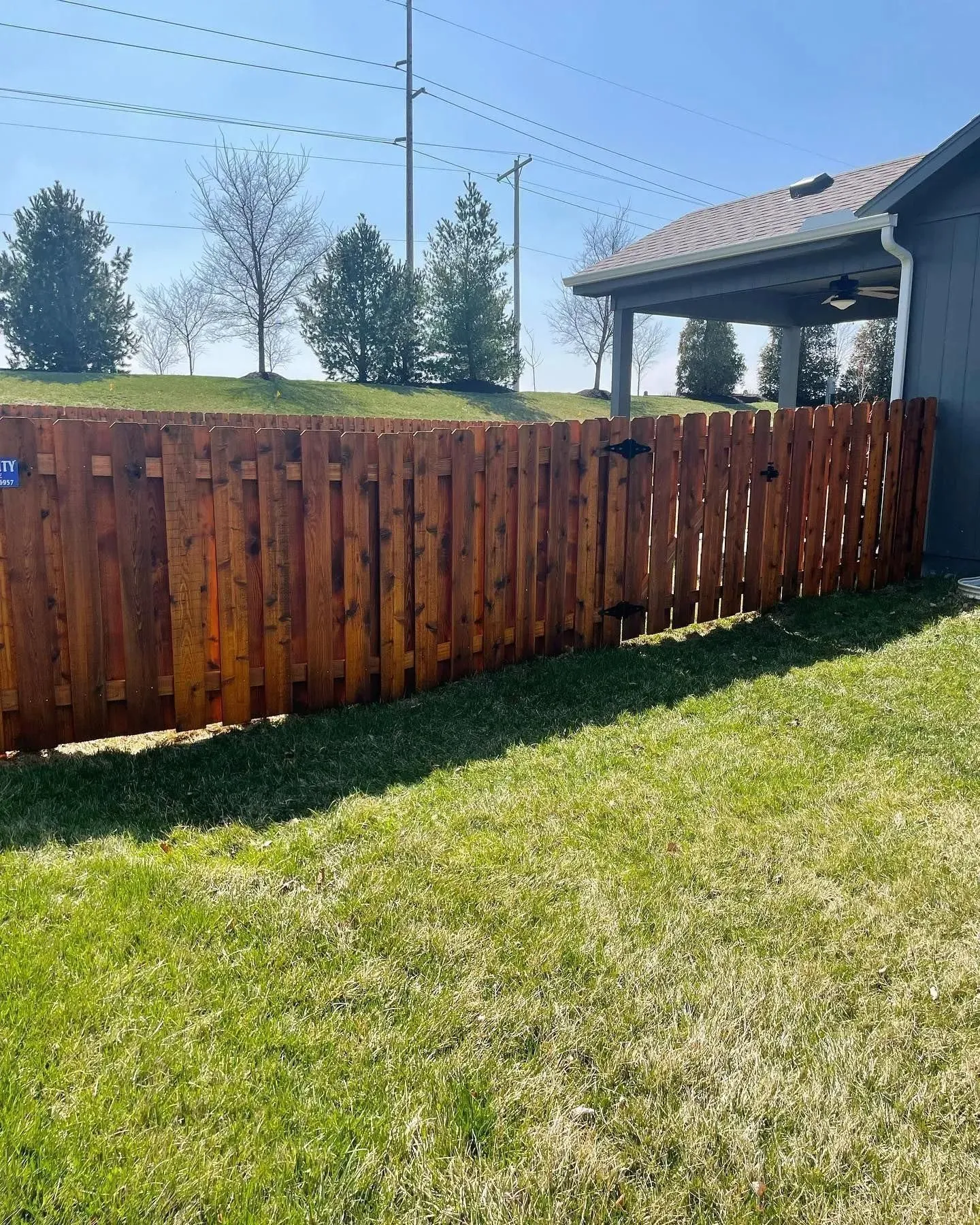
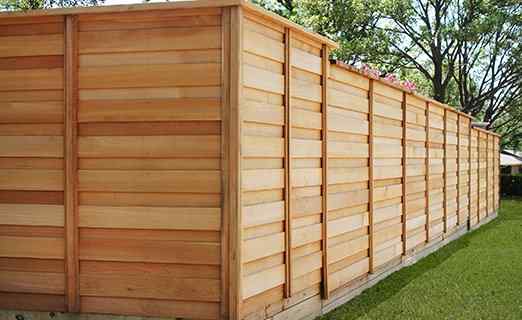
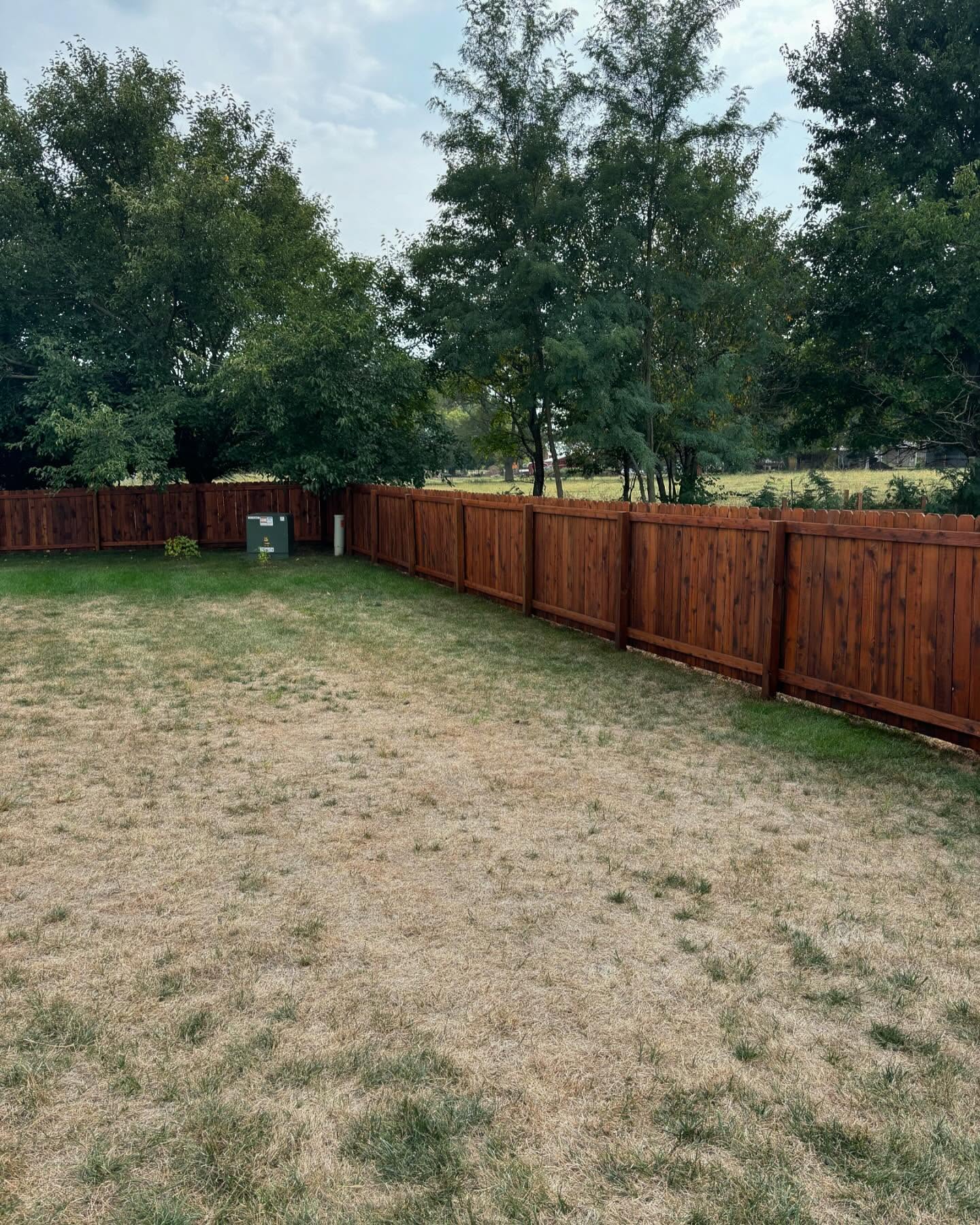
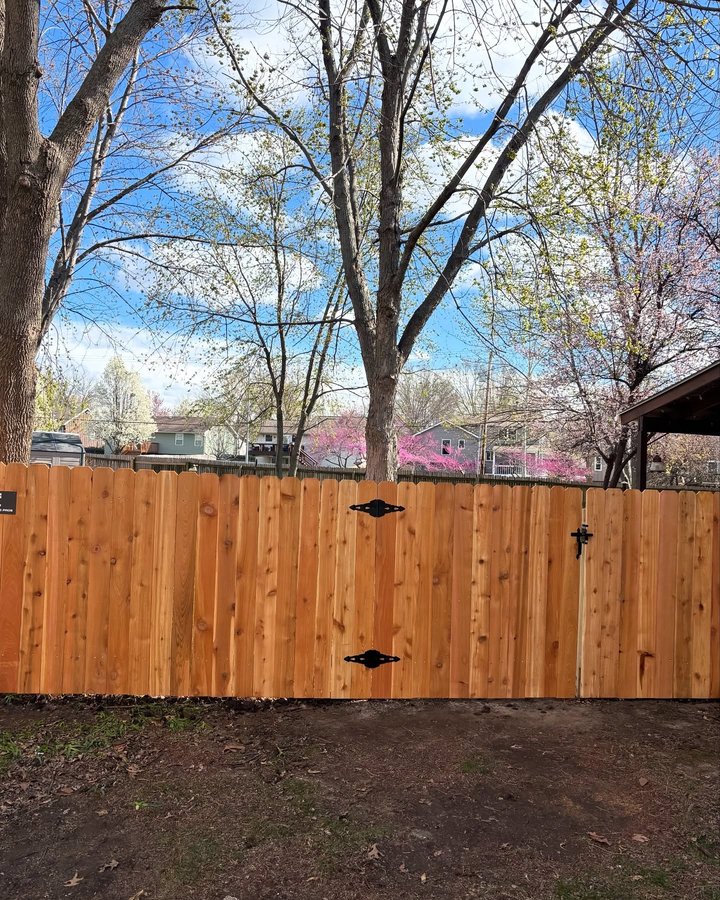
Cedar board-on-board fence in Grandview, MO by RKC Wood Care Pros
Cedar Privacy · Grandview
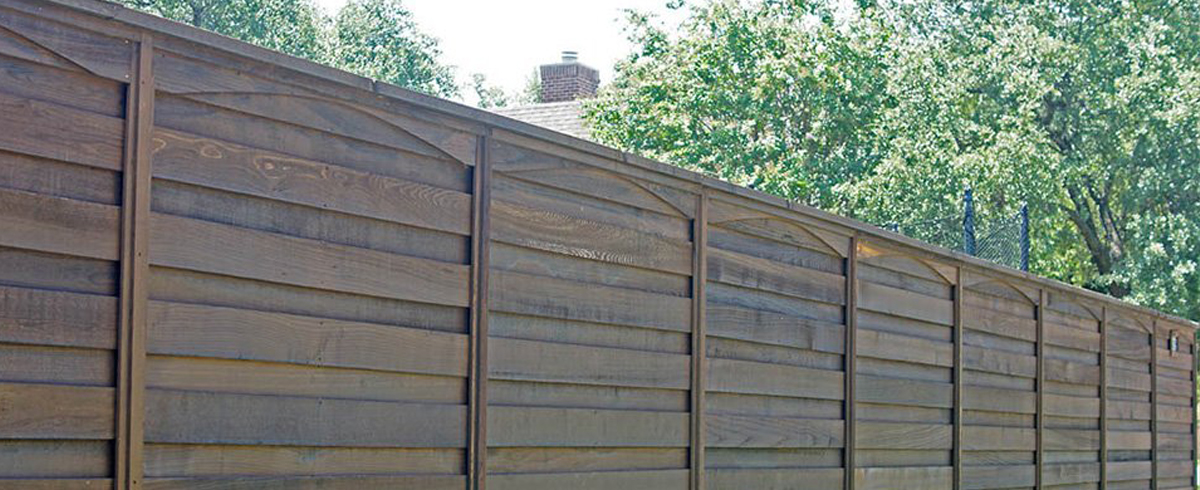
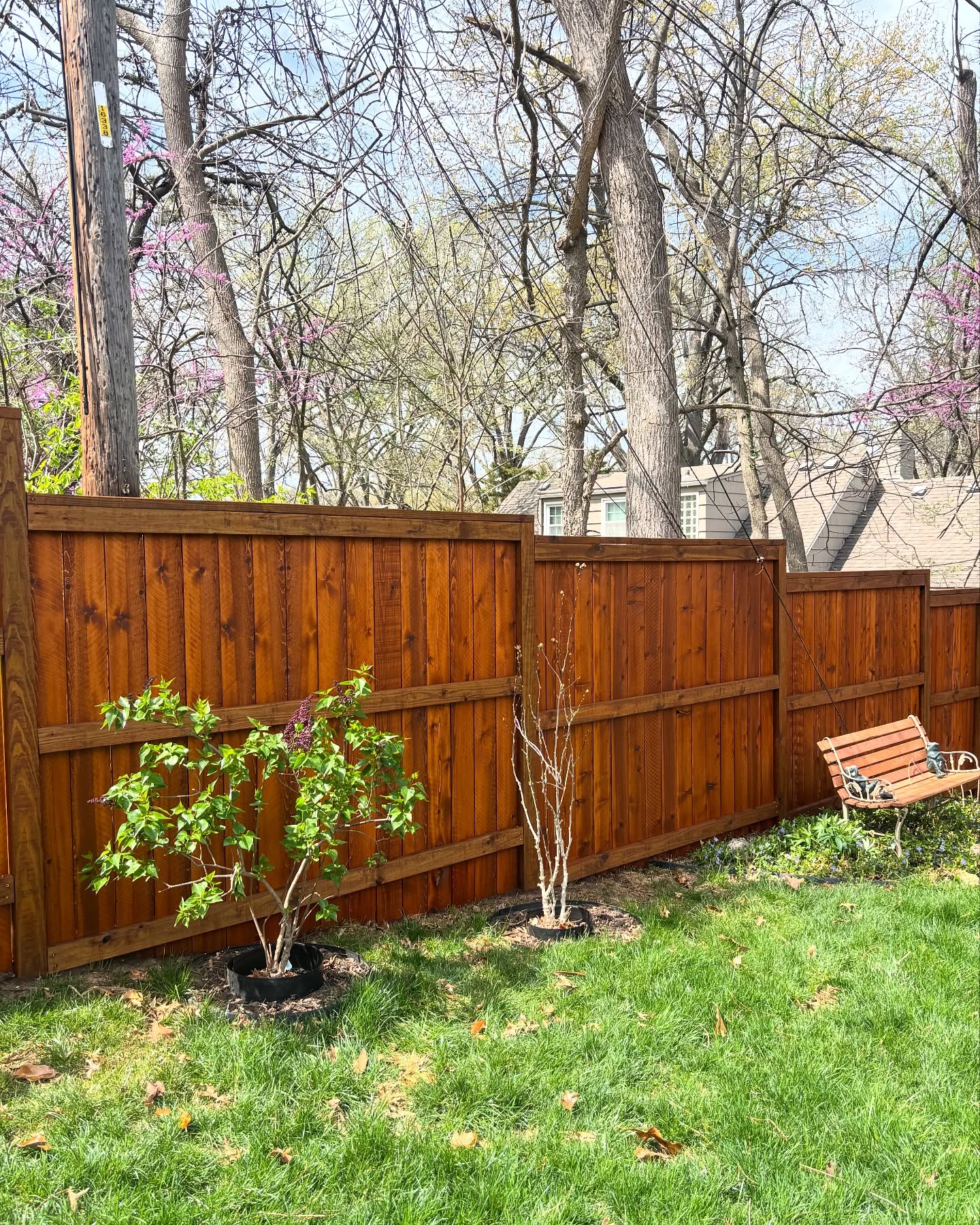
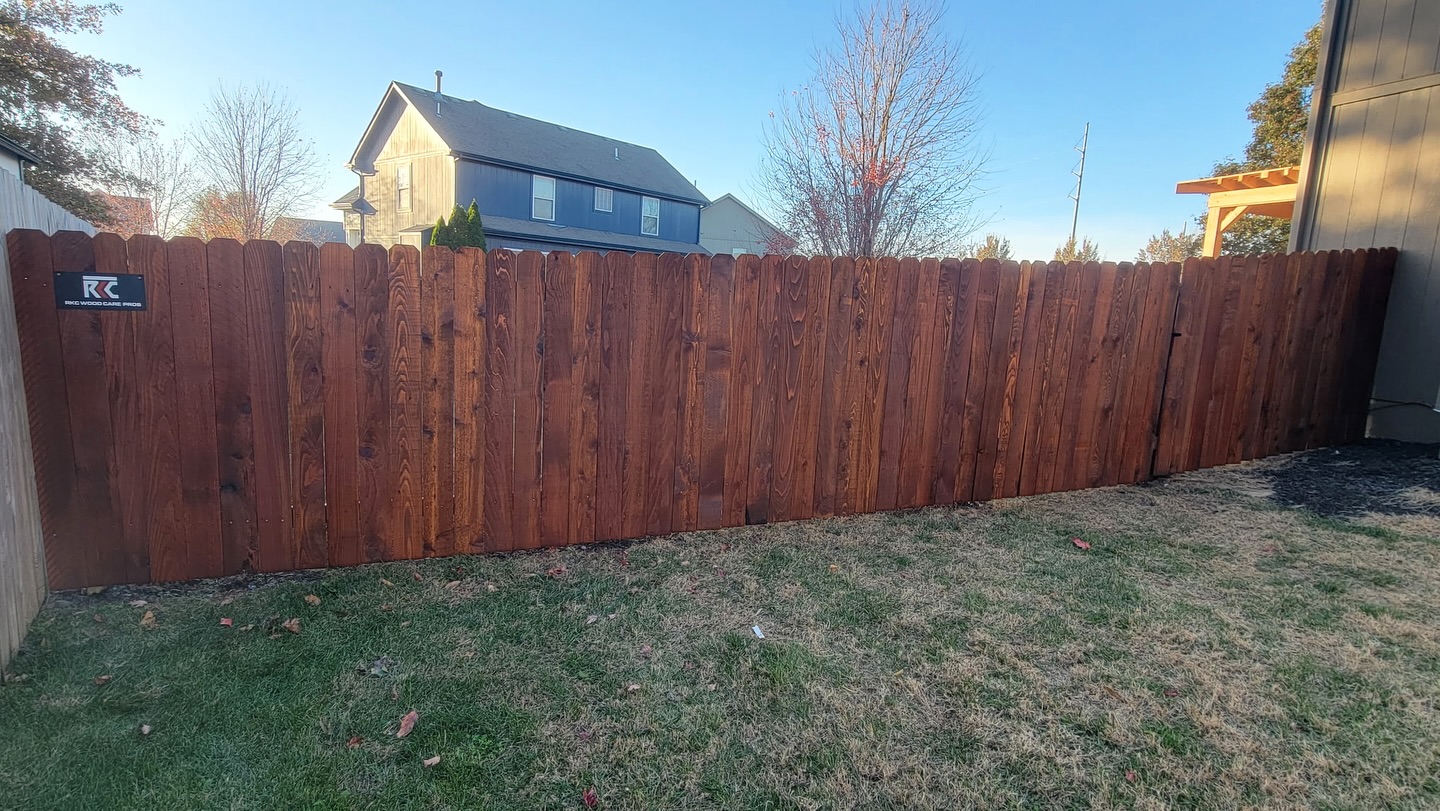
Deep walnut-stained cedar fence in Grandview, MO by RKC Wood Care Pros
Walnut Finish · Grandview
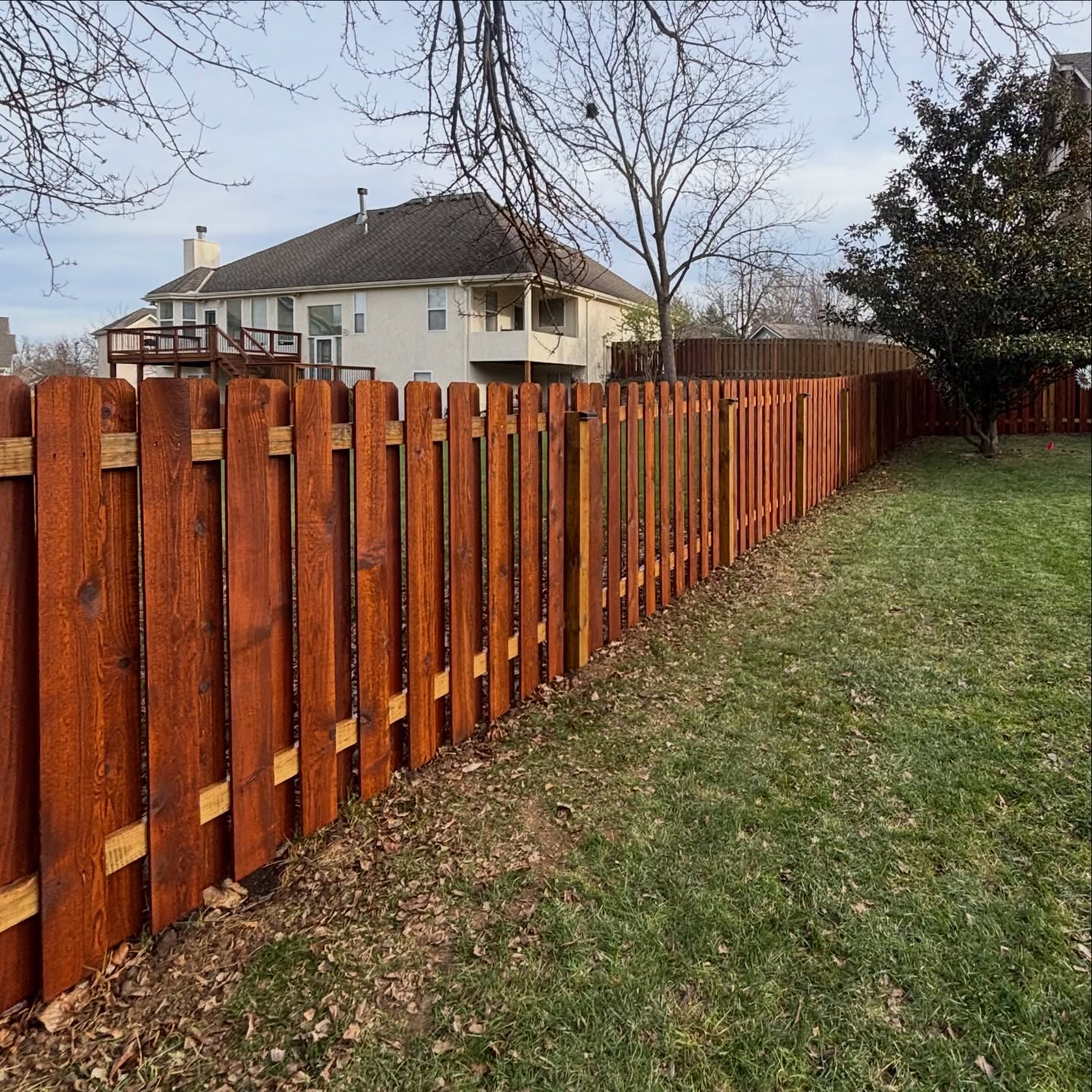
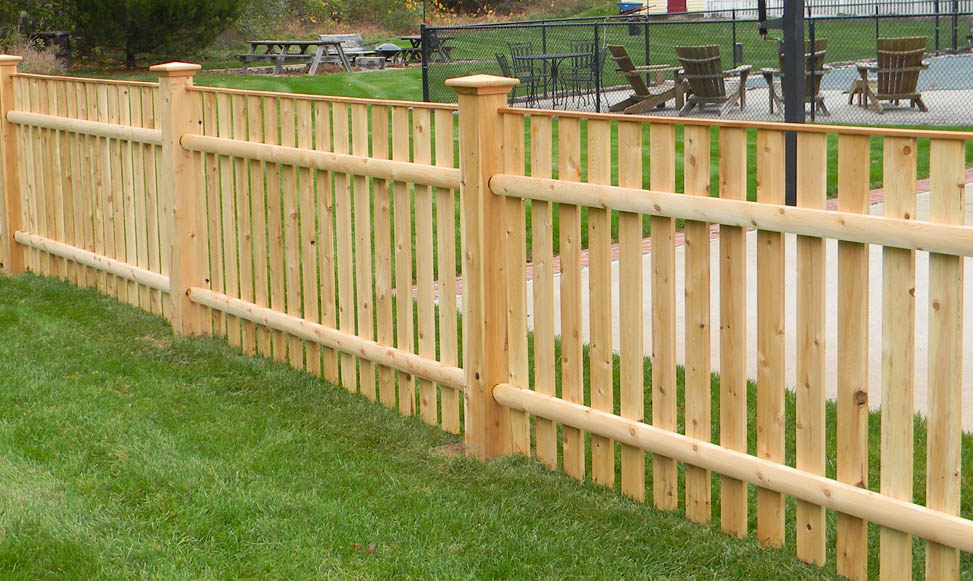
Golden-finish spaced-picket cedar fence in Grandview, MO by RKC Wood Care Pros
Golden Picket · Grandview
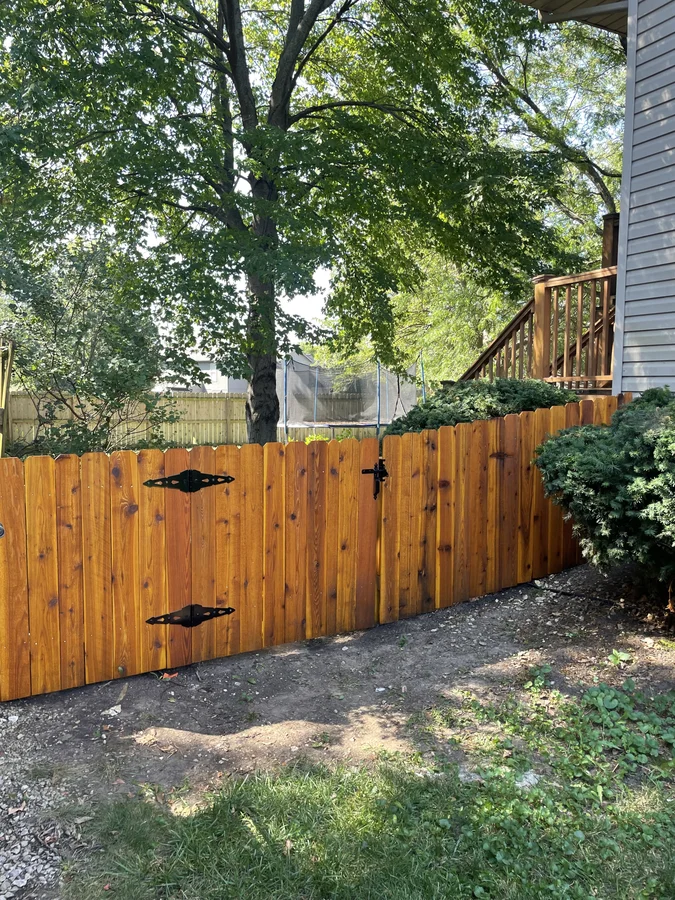
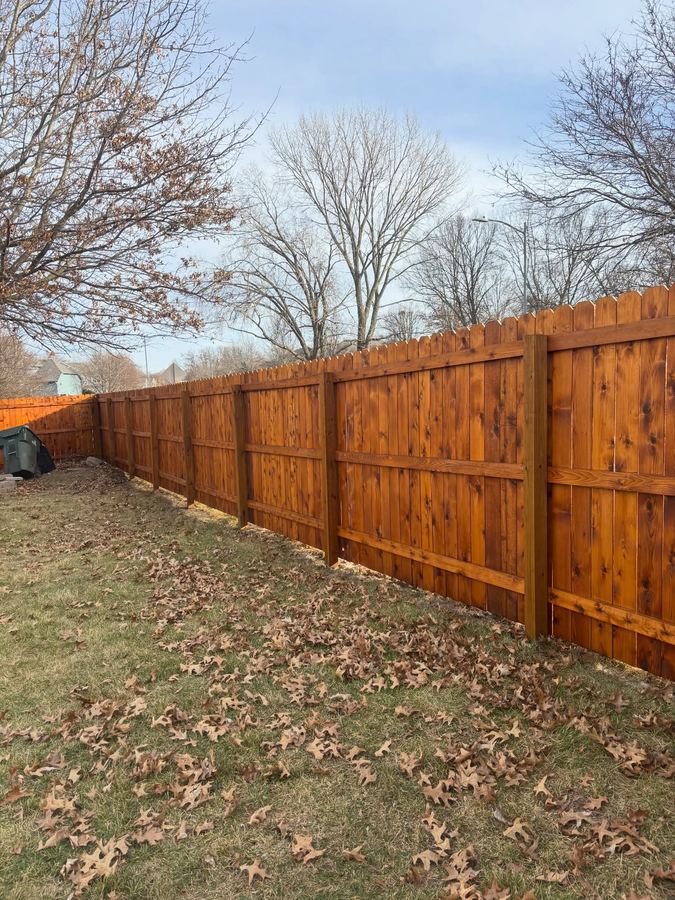
Cedar fence after in-house staining in Grandview, MO by RKC Wood Care Pros
After Staining · Grandview

REVIEWS

What Kansas City Homeowners Say About RKC

4.9 ★ · 85 Google reviews

Every review is on our Google Business Profile — read them there, unedited.

Read all 85 reviews on Google

GRANDVIEW WOOD FENCE QUESTIONS

Wood Fence Installation Questions Grandview Homeowners Ask Most

Cedar fence after in-house stain job in Grandview, MO by RKC Wood Care Pros

Wood Materials & Lifespan

I own rentals in Grandview — what's the smart fence to put up?
For most rentals the answer is 6-foot dog-ear cedar or pressure-treated pine. Pine is the lowest entry price and fine for a straightforward privacy line, especially if you're fencing several properties and the numbers have to scale; cedar costs a bit more up front but lasts longer and needs less babysitting between tenants, so it's the better long-hold value. Either way we set the posts a full 36 inches so the fence survives turnovers and the years, and we can hand you clear per-foot pricing to plan a whole portfolio.
Can a wood fence actually help with the I-49 road noise?
It helps, and the key is solid and tall. A tall, gapless privacy panel — solid cedar dog-ear is ideal — breaks up and absorbs a meaningful amount of road noise, where a spaced-picket or chain link does almost nothing. It won't make the highway disappear, but homeowners near the corridor notice a real difference in their backyard. The catch is that a taller, more solid fence catches more wind too, so the posts have to be set deep and solid to hold it — which is how we build the sound-buffer runs.
We still have old chain link — can you replace it with wood?
Absolutely, and it's a common Grandview job, especially in areas like Belaire where a lot of 4-foot chain link is due for an upgrade. We pull the old fabric and posts, then set new wood in fresh holes. The good news locally is that Grandview's soil, while heavy clay, generally lacks the severe rock you run into up north in Liberty, so the new post holes usually dig cleanly to a full 36 inches. One crew does the tear-out and the new build in a single job.
How long does a wood fence last in Grandview?
Cedar runs 15 to 25 years, pressure-treated pine 10 to 15, composite 25 to 30. The thing that shortens it here is what killed the old 1960s fences: shallow posts that rotted out around the 30-year mark. We beat that by setting every post a full three feet in concrete over a gravel bed, so water drains away instead of sitting against the wood. Keep the stain up on schedule and cedar reliably clears twenty years even on a hard-used lot.

Pricing & Stain Schedule

What does a wood fence cost in Grandview?
Pressure-treated pine runs $20 to $27 a linear foot installed, 6-foot cedar dog-ear $25 to $34, cedar shadow-box $27 to $36, and composite $40 to $56. A typical Grandview yard fences out to 150 to 200 feet, which puts most pine jobs around $3,000 to $5,400 and cedar a step above. Old-fence tear-out, wide gates, and taller sound-buffer runs are each their own line. Every estimate is free, written, and itemized — and for portfolio owners we keep the per-foot pricing consistent property to property.
Does pressure-treated pine need to be stained?
It should be, yes — pine will last longer and look far better with a finish, but it needs to cure first. Fresh treated pine is still full of the treatment chemistry and won't take a stain for roughly 90 days; brush it on too early and it beads off instead of soaking in. So we let it weather that first season, then apply a penetrating coat and put it on the same recoat schedule as cedar, about every three years for pine. Skipping stain entirely is what leaves a pine fence looking gray and tired fast.
How often does a Grandview wood fence need re-staining?
Cedar about every two years, pressure-treated pine about every three, composite never. Missouri sun and the freeze-thaw swings wear a coat down faster than most owners expect. On a rental especially it pays to stay ahead of it — a fresh-looking fence helps a property lease and shows you maintain the place. We keep records on every Grandview install and reach out when the recoat window opens, so the finish never gets away from you.

OTHER GRANDVIEW FENCE OPTIONS

Weighing Other Materials or Services for Your Grandview Fence?

Ready when you are

Get a free estimate — we usually respond the same day.

Call (913) 286-1091