

Skip to content
Fence Installation in Richmond, MO — Built to Beat the Silty Ground

Fence Installation in Richmond, MO — Built to Beat the Silty Ground

RKC Wood Care Pros is the fence contractor for the Ray County homesteads — dog-ear cedar and chain link set on over-dug, bell-bottom footings that beat the town's heavy silty soil so posts don't settle and lean. Tied cleanly into sheds and gardens, built to a true 36 inches. Installation, repair, and in-house staining from one owner-operated crew. 400+ fences since 2021. Free estimate.

★★★★★
4.9
from 85 reviews
Licensed
& Insured · KS + MO
400+
fences installed
A+ BBB Rated Licensed KS + MO Owner Walks Every Install Bell-Bottom Footings for Silt
See the Richmond ground read ↓

WHAT MAKES A RICHMOND FENCE DIFFERENT

In Richmond, the Fight Isn't Wind or Rock — It's the Silty Ground

Richmond's heavy river-bottom silt is what makes or breaks a fence here. It doesn't fight the auger — it fights the post, slowly, for years, until an ordinary footing sinks and leans. Beat the soil and everything else about a Ray County homestead fence — the sheds, the gardens, the old chain link — falls into place. So we start below grade.

1

Silt doesn't hold a post the way clay or rock does.

Fine silty soil gives way under load and lets water move through it, so a post set the ordinary way slowly settles and leans — the single most common fence complaint in town. Depth alone won't fix it. We over-dig each hole and pour a bell-bottom footing that flares below grade, so the soil would have to lift the whole flared mass to move the post. That's the difference between a Richmond fence that stands straight and one that's tilting by its third summer.

2

These are homestead yards, full of things to build around.

A Richmond lot tends to carry sheds, detached garages, and mature garden beds, and the fence has to meet all of them cleanly. We set dedicated posts where a run ties into an outbuilding instead of bolting into aging siding, and we hand-dig around established root balls rather than trenching through a garden that was there long before the fence. The yard was here first, and a good fence works around it.

3

Drainage is half the job on flat, damp ground.

Richmond's flat lots and moist soil mean water tends to sit rather than run off, and standing water at a post base is what accelerates rot and settling. Every post we set gets a gravel drainage base so water moves away from the concrete instead of pooling against it. On wood runs we keep the bottom board up off the wet ground with a rot board or a gap, so the fence isn't wicking moisture straight out of the silt all season.

FENCE AND GATE SERVICES IN RICHMOND

The Full Lineup for Richmond, From One Local Contractor

RKC installs and repairs every type of fence — wood, vinyl, chain link, ornamental iron, aluminum, and commercial security — plus custom gates and in-house staining. Each service links to its Kansas City detail page for material options, pricing ranges, and technical specs — the same crew and the same silt-proofed footings come to every Ray County lot.

Wood Fence Installation for Richmond, MO by RKC Wood Care Pros

Wood Fence Installation

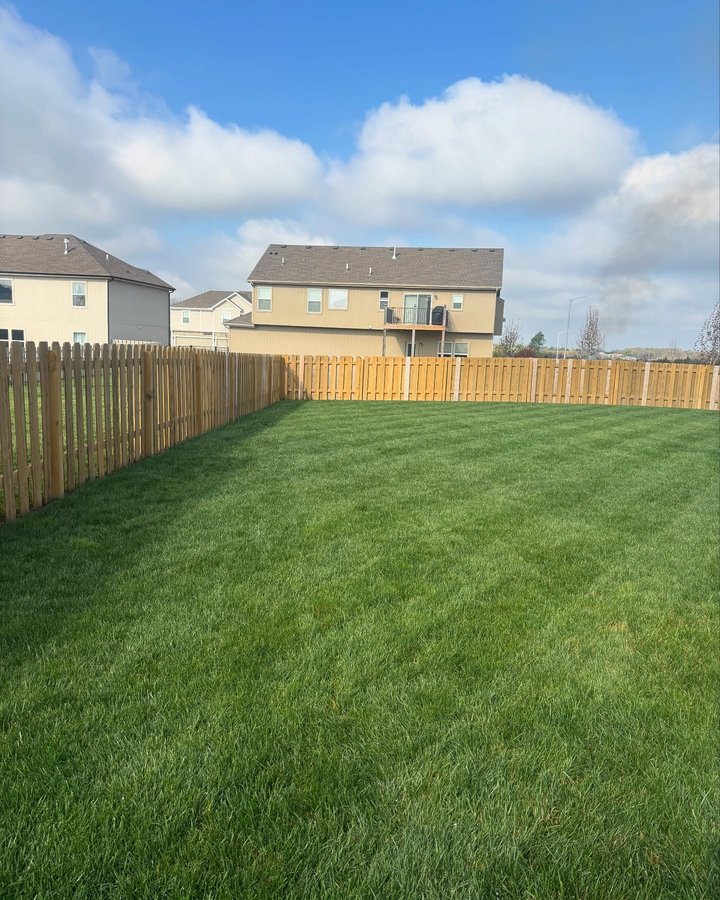
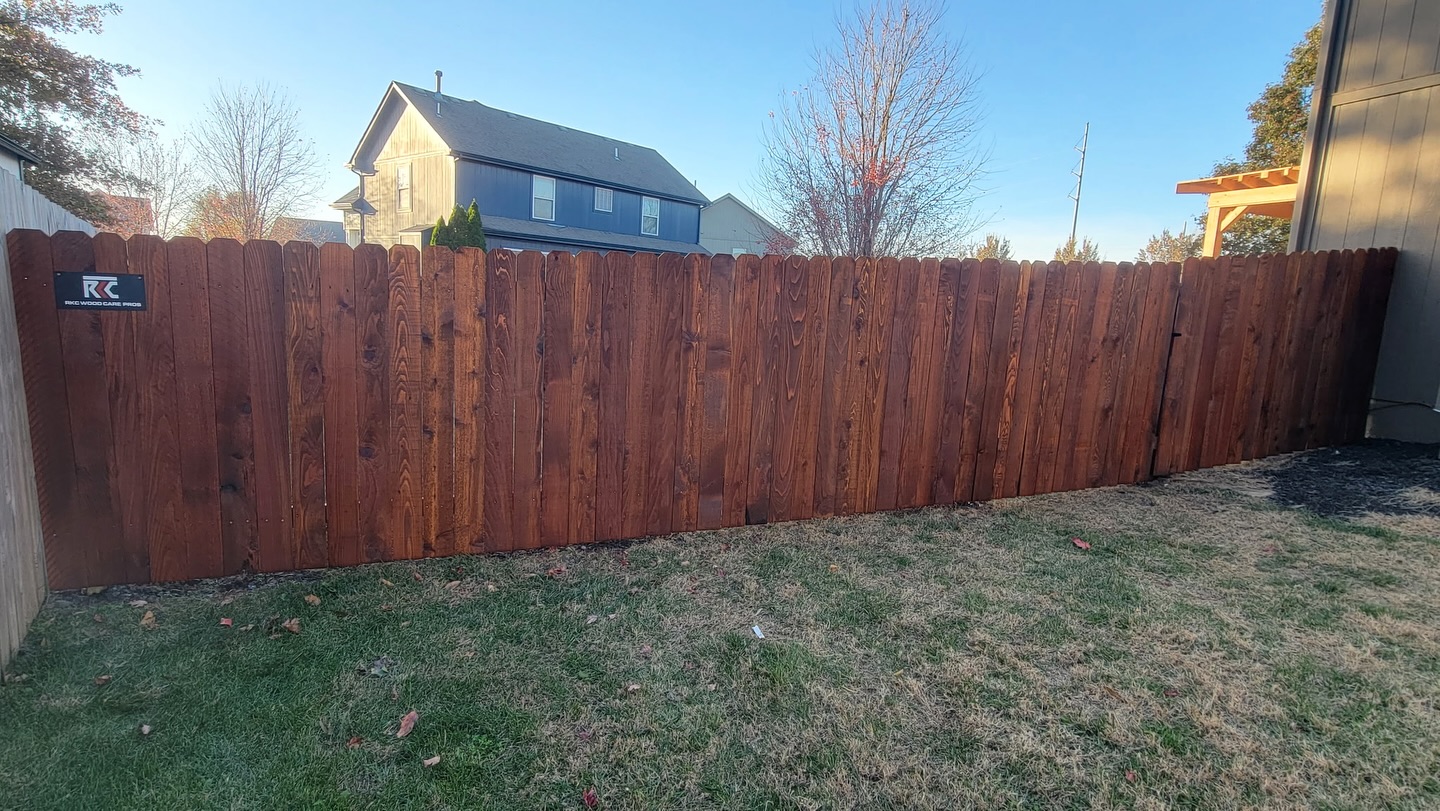
Traditional 6-foot dog-ear cedar is the Richmond standard — solid privacy for the residential blocks, set on over-dug, belled footings so the town's heavy silty soil can't swallow a post over the years.

Service details
Chain Link Fencing for Richmond, MO by RKC Wood Care Pros

Chain Link Fencing

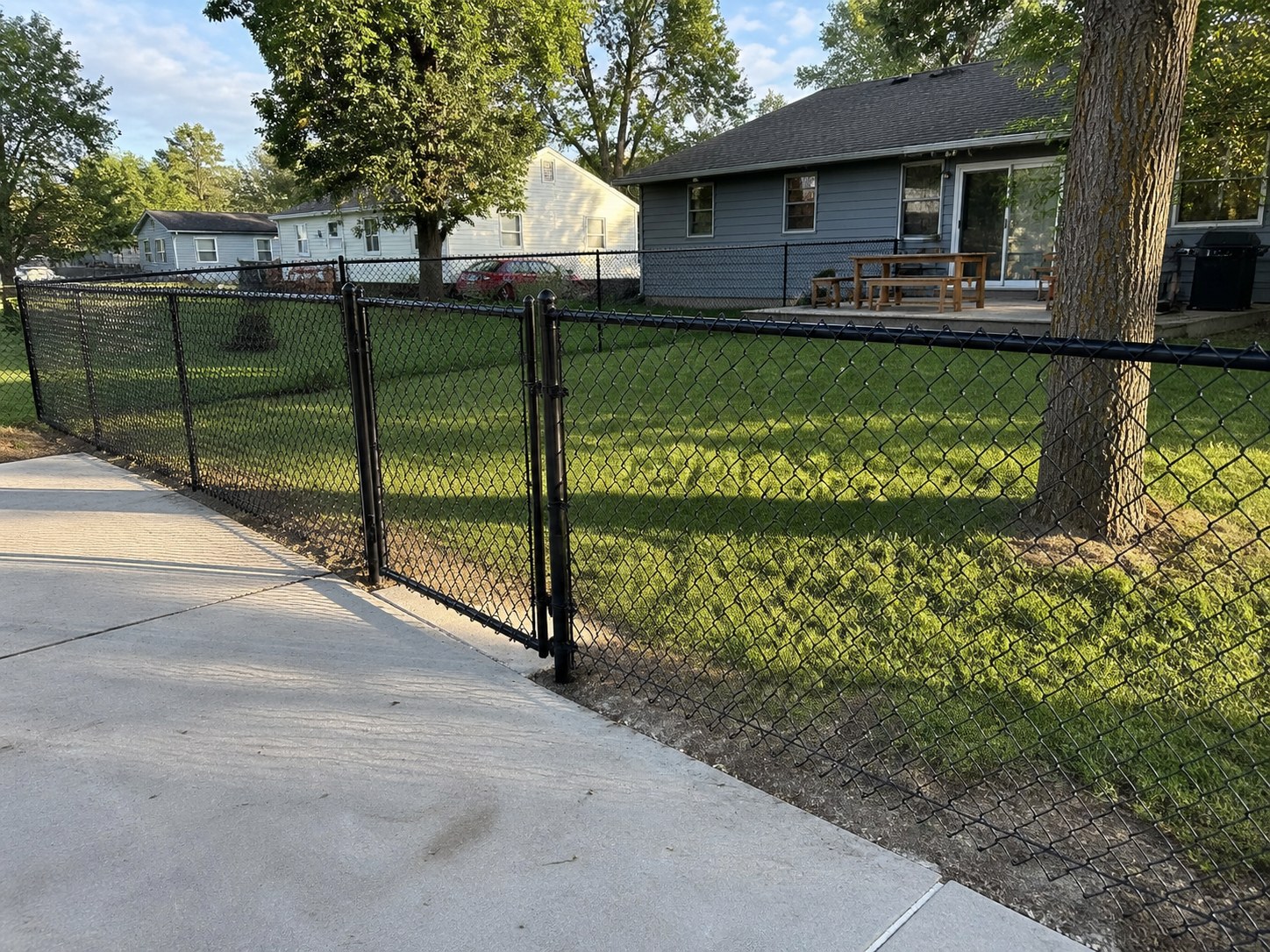
Chain link runs heavy through Richmond's older residential blocks — galvanized and black vinyl-coated fabric for pet runs, gardens, and backyards, re-tensioned or rebuilt where the old fabric has gone slack.

Service details
Fence Repair for Richmond, MO by RKC Wood Care Pros

Fence Repair

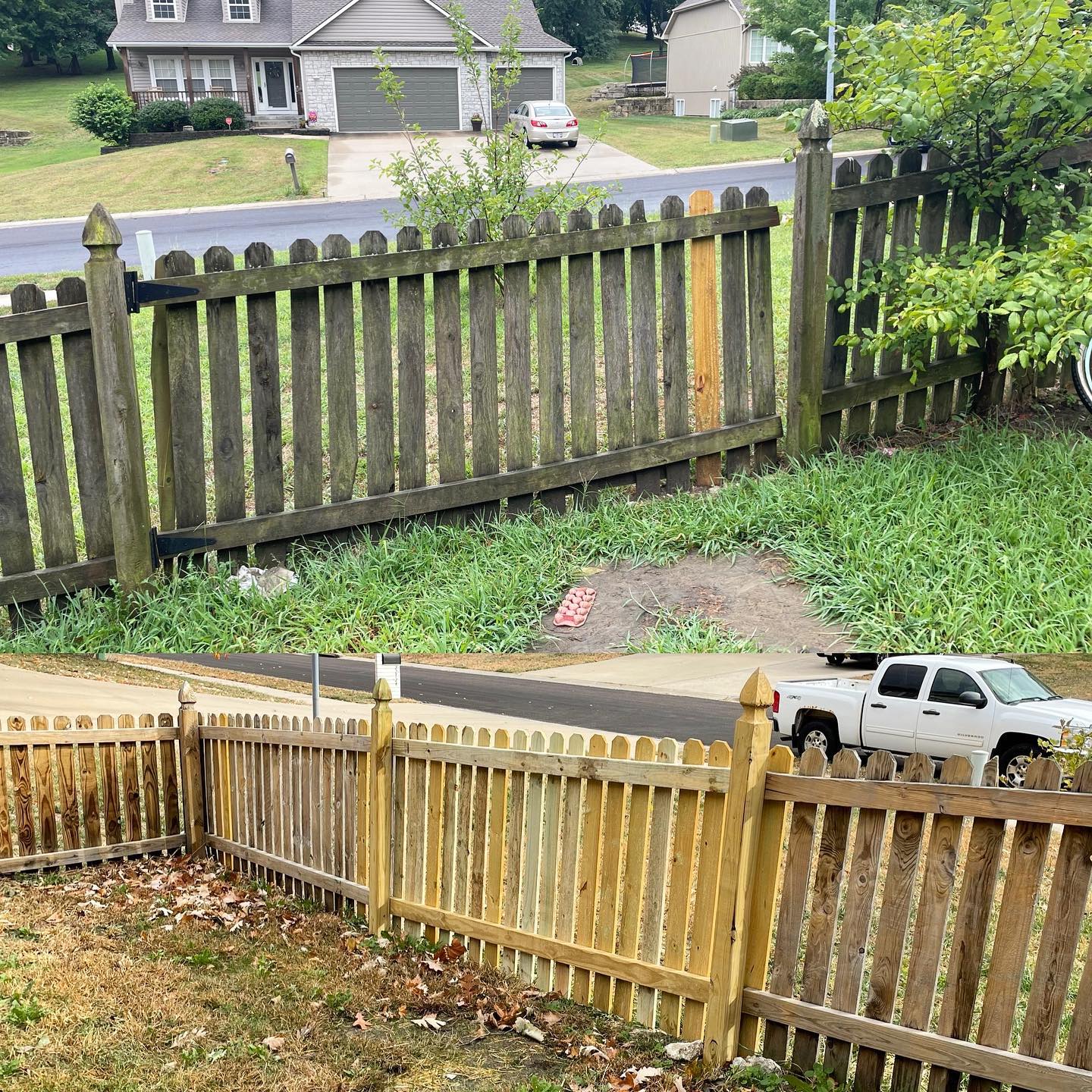
Re-setting posts that have leaned or sunk in the silty soil is the number-one repair call here — we dig out the failed footing, over-dig the new hole, and re-set to a true 36 inches so it stays put this time.

Service details
Privacy Fence Installation for Richmond, MO by RKC Wood Care Pros

Privacy Fence Installation

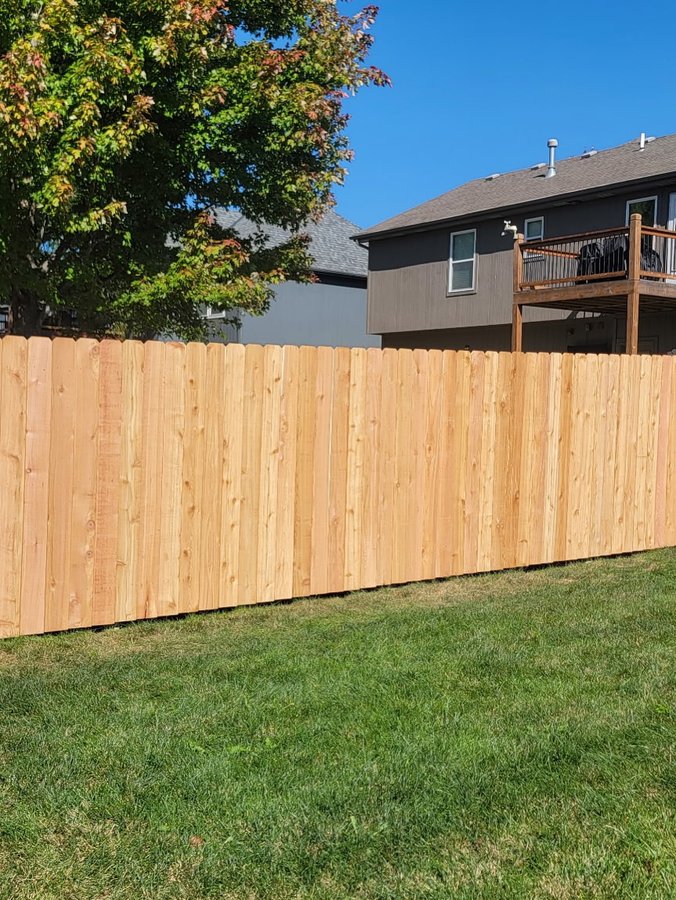
Solid cedar and pressure-treated privacy runs for the homes along the main thoroughfares — a 6-foot board line that closes off road noise and sightlines on the busier Richmond streets.

Service details
Vinyl Fence Installation for Richmond, MO by RKC Wood Care Pros

Vinyl Fence Installation

Still rare in town but growing on the newer builds — zero-maintenance vinyl for the homeowner who wants a clean line with nothing to restain, set on the same over-dug footings the silty ground demands.

Service details
Ornamental Iron Fencing for Richmond, MO by RKC Wood Care Pros

Ornamental Iron Fencing

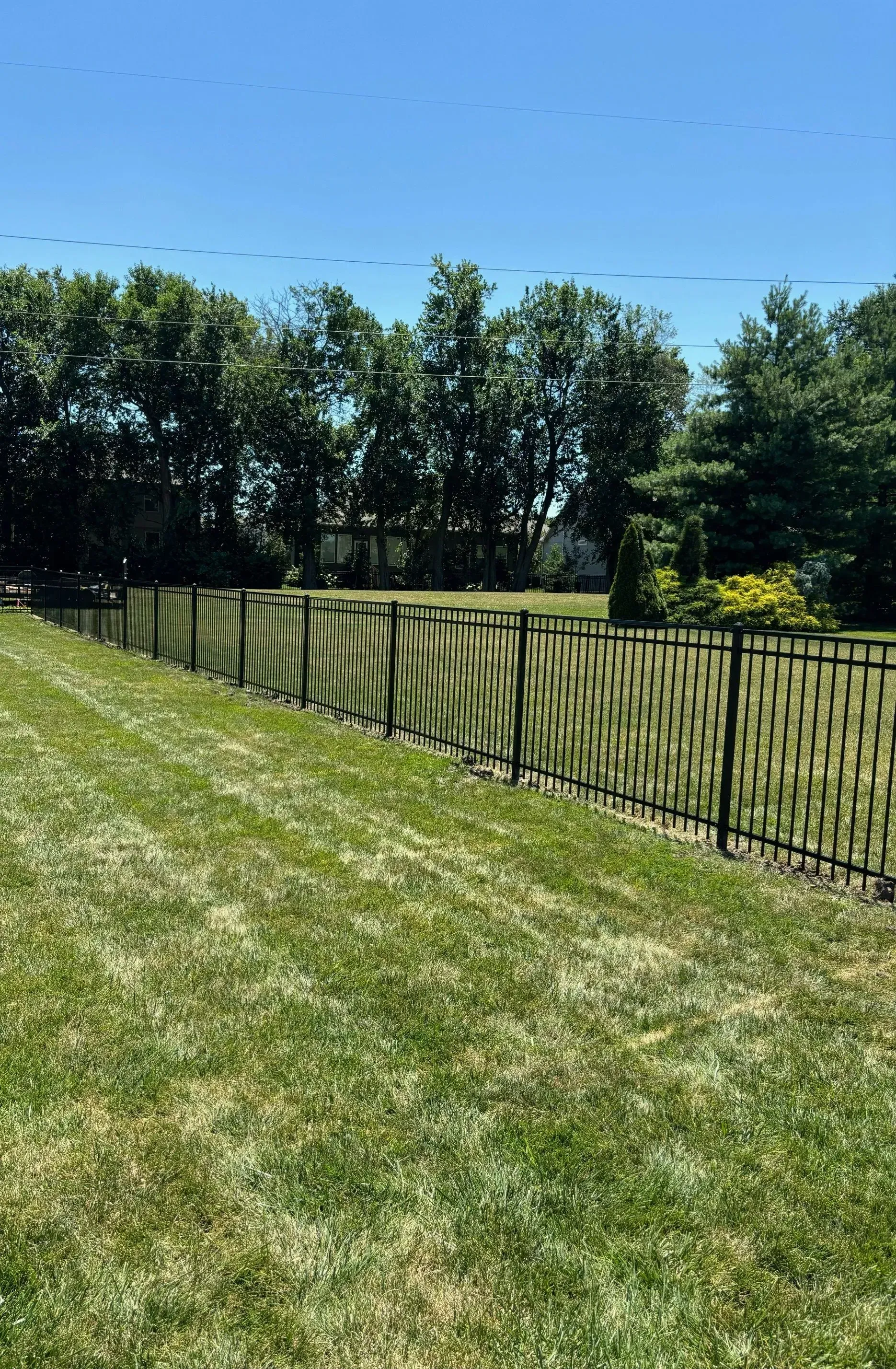
Powder-coated steel picket for a decorative front-yard line — the accent that suits an older Richmond home better than a solid wall, with clean sightlines onto the street.

Service details
Gate Installation for Richmond, MO by RKC Wood Care Pros

Gate Installation

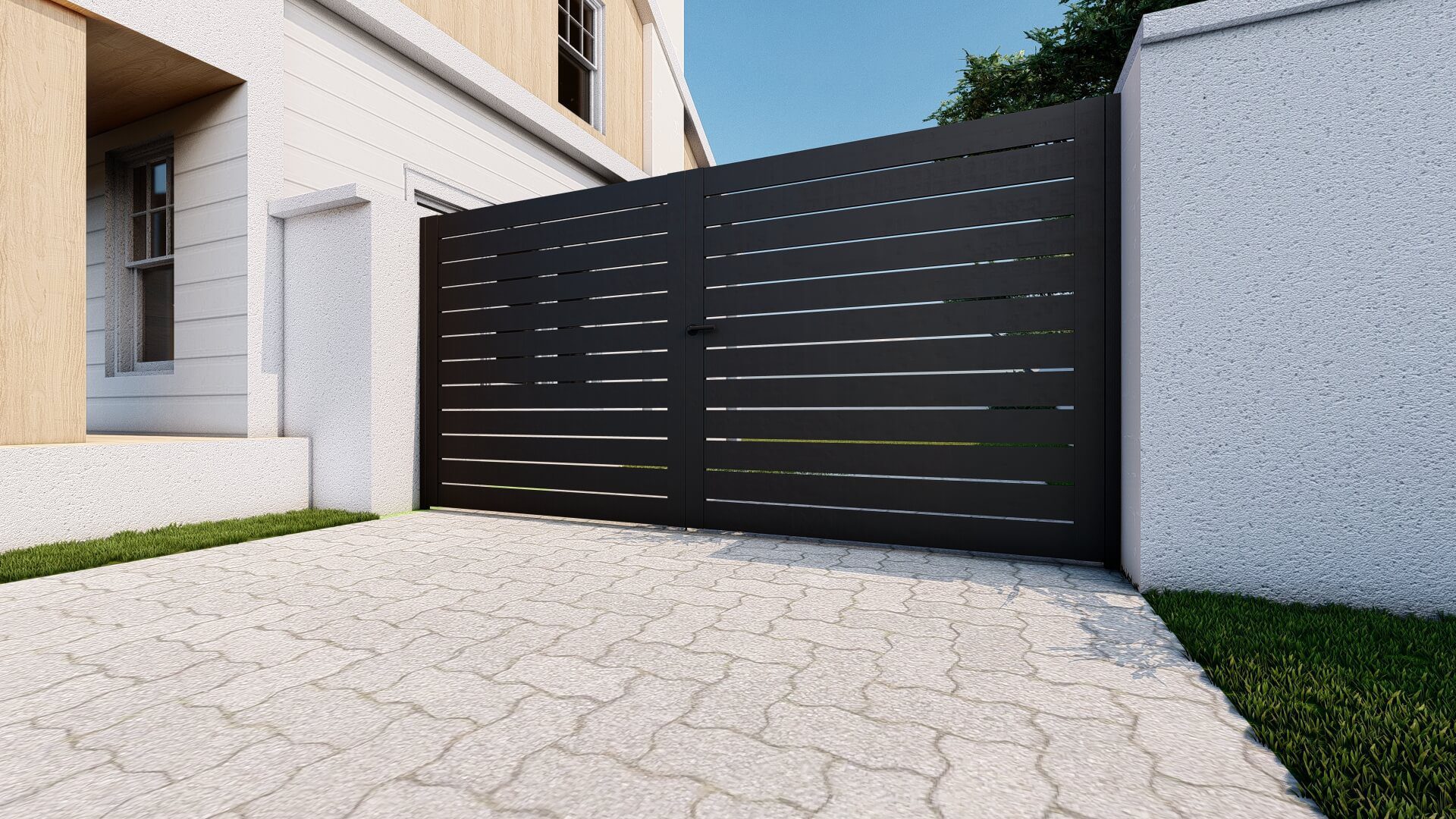
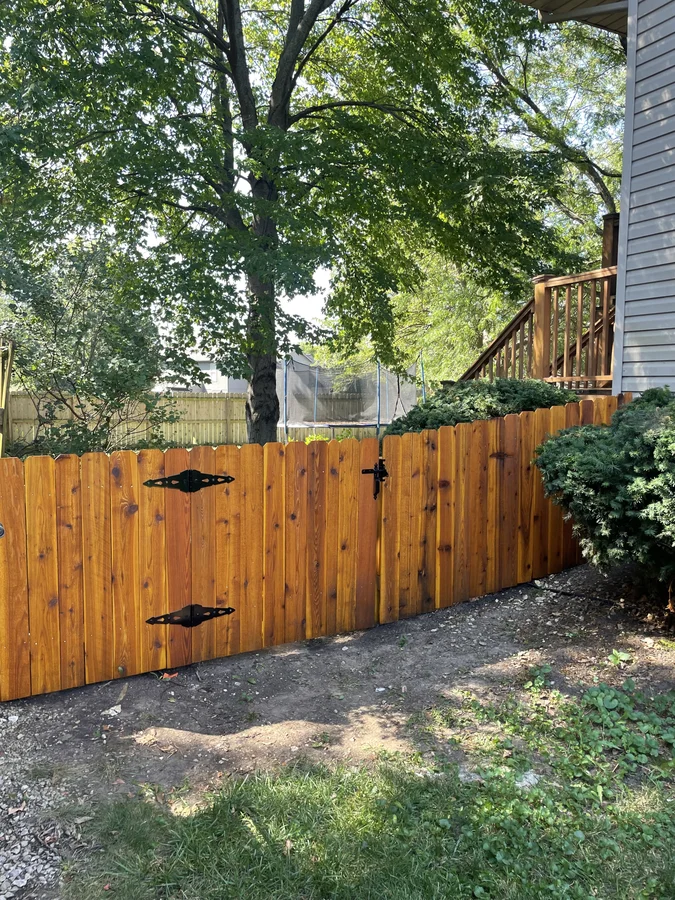
Walk gates, garden gates, and wide drive gates on braced steel frames — hung to swing true, plus the self-closing hardware that keeps a gate latched for the town's many active families and their pets.

Service details
Staining & Sealing for Richmond, MO by RKC Wood Care Pros

Staining & Sealing

Semi-transparent penetrating stain in natural and earth-tone finishes, applied by the same crew that built the fence — the coat that gets a yard photo-ready before the May Mushroom Festival and holds through the wet seasons.

Service details

Also serving Richmond across the metro: we install aluminum, pool, and commercial security fencing, plus fencing for the newer builds at the edges of town. Ask when you book your estimate.

THE RICHMOND GROUND READ

Six Things We Find on a Ray County Lot, and How Each Changes the Build

A Richmond fence is decided as much by the silty ground and the homestead layout as by the style you pick. Read those conditions right and the fence lasts; miss them and it settles, leans, or drags on a shed. Here's the working map: the conditions our crews actually meet on Richmond lots, and the build call each one forces.

Heavy silty soil under the whole town

Fine river-bottom silt that gives way and lets a normal-set post slowly sink and lean

The fix is under the ground: we over-dig each hole, pour a wider bell-bottom footing that the silt can't pull down, and set a gravel base so water drains instead of turning the soil to soup around the post. Depth alone isn't enough in silt — the footing has to flare.
Tying the fence into a shed or outbuilding

Richmond's homestead yards carry lots of sheds, garages, and outbuildings the fence has to meet

We set a dedicated post right at the structure and tie the fence to that — never lag-bolted straight into aging siding that's already flexing. The joint stays square, the building keeps its integrity, and the run has a solid anchor instead of a weak handoff.

Established garden beds along the line

Mature gardens and root balls sit right where the fence line wants to go on many older lots

We hand-dig around the established beds instead of trenching through them, shift a post to spare a root ball, and lay the line so it protects the garden rather than fighting it. On a homestead, the yard was here first — the fence works around it.

Old chain link in the historic blocks

High chain-link prevalence in the older residential core, much of it slack and dated

Serviceable fabric gets re-tensioned and re-hung on solid posts; tired fabric gets pulled and the run rebuilt — often converted to cedar privacy on the same footprint when a homeowner wants the yard closed off.

Privacy from the main thoroughfares

Homes along the busier Richmond streets wanting road noise and sightlines closed off

Solid 6-foot cedar or board-on-board on the road side, built tall and tight to cut the traffic view — with the finished side turned out to the street, because a privacy fence should look right from both directions.

Pet containment for an active family

One of the top reasons Richmond families fence a yard: a dog with room to run

A no-gap picket or rail at the bottom so nothing digs under, self-closing and self-latching gate hardware so it never gets left open, and post spacing tightened where a big dog leans on the line.

Landmarks near the Richmond lots we fence: the Ray County Courthouse, Maurice Roberts Park, and the Farris Theatre — off M-10, M-13, and M-210. Our crews run the Ray County corridor, so whether you're in the historic core or out on a homestead lot, you're on the route.

Richmond and the towns next door: the same crew fences the corridor around it — Excelsior Springs, Liberty, and Lexington — and it all runs out of our Kansas City metro fence shop in Olathe.

WHY RICHMOND HOMEOWNERS HIRE US

What Ray County Homeowners Weigh When They Pick a Fence Contractor

Out here the fence stands or falls on what's under it, so the crew's footing discipline matters more than the sales pitch. Here's what the Richmond homeowners we build for tend to weigh — and where a generic city-swap installer tends to come up short on the silty ground.

1

Footings built for silt, not for a catalog

Silt swallows an ordinary post. We over-dig, flare a bell-bottom footing below grade, and set a gravel drainage base — the buried work that keeps a Richmond fence standing straight when the leaning ones down the block never got it.

2

We build the homestead cleanly around what's there

Sheds, gardens, outbuildings — we tie into them with dedicated posts and hand-dig around root balls instead of bolting to siding or bulldozing a bed. The fence respects the yard you already have.

3

Repair-minded, not teardown-first

A leaning post or slack chain link doesn't always mean a new fence. We re-set, re-tension, and convert where it makes sense, and only recommend a rebuild when the run is genuinely past saving.

4

One owner-operated crew, estimate through stain

Owner-operated since 2021. Josh walks the Richmond install himself, and staining is in-house — so a yard can be built and sealed on one schedule, ready before a May festival, by the same people start to finish.

RICHMOND ESTIMATES · WHAT SHAPES THE NUMBER

What a Richmond Fence Project Typically Costs

A 6-foot cedar privacy fence in Richmond runs about $25 to $35 per linear foot installed on level lots. The flat Ray County ground keeps the layout simple, but the silty soil adds real scope you want in the price rather than skipped: over-dug bell-bottom footings and a gravel drainage base at every post are what keep the fence from settling, and they're built into how we quote — not an upsell. Tying cleanly into sheds and hand-digging around gardens can add a little labor on a homestead lot. Pressure-treated pine runs a touch under cedar; chain link runs well under; vinyl a few dollars over. Every Richmond estimate is free, written, and line-itemized.

Per linear foot, installed · common Richmond builds
Cedar Privacy (dog-ear) $25–$35/LF The Richmond standard
Pressure-Treated Pine Privacy $22–$32/LF The budget-conscious build
UV-Stabilized Vinyl $28–$45/LF No upkeep · newer builds
Chain Link (galvanized) $10–$18/LF Common in the older blocks
Restoration Stain (existing fence) $3–$6/LF Yard-ready before the festival

Free, written, line-itemized estimates — posts, concrete, over-dug footings, hardware, and cleanup each on their own line, so nothing shows up new at invoice. Tear-out and haul-off of an old fence is its own add-on line when you need it. See the full Kansas City pricing detail →

See full KC pricing FAQ →

REVIEWS

What Kansas City Homeowners Say About RKC

4.9 ★ · 85 Google reviews

Every review is on our Google Business Profile — read them there, unedited.

Read all 85 reviews on Google

RICHMOND FENCE QUESTIONS

Richmond Homeowners Ask, We Answer

The questions we field most often on Richmond jobs. Don't see yours? Call (913) 286-1091 — Josh usually picks up.

Richmond Ground & Install

Why do fence posts settle and lean in Richmond?
It's the soil. Much of Richmond sits on heavy, fine river-bottom silt, and silt behaves differently from clay or rock — it gives way under load and lets water move through it, so a post set the ordinary way slowly sinks and leans over the years. Depth alone doesn't solve it — the footing has to go wider at the bottom. We over-dig each hole and pour a bell-bottom footing that flares out below grade, so the silt has to lift the whole flared mass to move the post — which it can't. We also set a gravel base so water drains away instead of pooling and turning the ground to soup around the concrete. Skip that and you get exactly the leaning-post problem Richmond is known for; do it right and the fence sits where you put it.
Can you tie a new fence into my shed or outbuilding?
Yes, and it's a common ask on Richmond's homestead-style lots, which tend to have sheds, detached garages, and outbuildings the fence line has to meet. The right way is to set a dedicated fence post right next to the structure and anchor the run to that post — not to lag-bolt the fence rail straight into the building's siding. Old siding flexes, holds moisture, and pulls loose, so bolting a fence to it just transfers the fence's stress into the wall and eventually damages both. A dedicated post keeps the corner square, protects the outbuilding, and gives the run a real anchor. We do the same at the house wall on a privacy run that starts off the back of the home.
How do you keep from tearing up my garden and property line?
Two separate things, and we handle both up front. On the garden side, Richmond's older lots often have mature beds and root balls sitting right on the fence line, so we hand-dig around them rather than trenching straight through, and we'll shift a post to spare an established planting. On the property-line side, before we dig we confirm where the line actually runs, because a fence set even a few inches over can turn into a neighbor problem down the road — that's just good practice on any close-set lot. Getting both right means the finished fence protects your garden and sits cleanly on your own ground, with no surprises for you or the folks next door.
What do you do with the old chain link in the older blocks?
Richmond's historic residential core has a lot of chain link, and it's usually one of two situations. If the fabric and posts are still solid but the fence has gone slack and saggy, we re-tension the fabric and re-hang it on trued-up posts — a cost-effective refresh that makes an old fence tight again. If the fabric is rusted through or the posts are shot, we pull it and rebuild. The most popular version of that is a conversion: same footprint, but the see-through chain link comes out and a solid cedar privacy fence goes in, so a yard that was open to the street becomes genuinely private. Either way it's one crew and one project, with the old material hauled off.

Ray County, Cost & Process

Can you get my fence done before the Mushroom Festival?
We'll do our best to line the schedule up. The May Mushroom Festival is when a lot of Richmond folks want the yard looking its best, so late spring is a busy window — the sooner you get on the calendar, the better the odds. A fresh cedar fence and a stain go a long way toward yard-ready, and because our staining is in-house, we can build and seal on one coordinated schedule instead of waiting on a separate crew. If the timeline is tight, tell us at the estimate and we'll be straight with you about what's realistic rather than promising a date we can't hold.
How far is the drive from your Olathe base to Richmond?
Richmond is out in Ray County, northeast of the metro core, and it's a real drive from our Olathe base — but it's territory we work, not one we quote reluctantly. We're a Kansas City fence contractor that covers both states and the outer counties, and Richmond sits in the same corridor as Excelsior Springs, Liberty, and Lexington, so a crew heading that direction is a normal part of the rotation. There's no gimmicky distance surcharge; the estimate reflects the real scope of your fence. On a bigger homestead job we plan the days so the crew works efficiently once they're out there, rather than nickel-and-diming the mileage.
What is the install standard on a Richmond fence?
The same standard everywhere we build, adjusted for the silty ground: posts a true 36 inches deep in poured concrete, but with over-dug, bell-bottom footings and a drainage-gravel base so the silt can't work them loose. Every gate is cross-braced to swing true, and the finished side faces out to the neighbor. Josh Rangel walks the Richmond install personally before the final invoice — 400+ fences built since 2021 and a 4.9-star average across 85 Google reviews back the work. The soil here punishes shortcuts, so the discipline that matters most is the part you can't see: the footing under each post is what separates a Richmond fence that stands straight from one that's leaning by its third summer.

Ready to Plan Your Richmond Fence Project?

Free estimate, same-day response during business hours. Built on footings that beat the silty ground the first time.

Call (913) 286-1091

Full Kansas City metro service area →

Ready when you are

Get a free estimate — we usually respond the same day.

Call (913) 286-1091