Skip to content
Fence Repair in Olathe, KS — Leaning Posts, Rotted Groundlines & Storm Sections

Fence Repair in Olathe, KS — Leaning Posts, Rotted Groundlines & Storm Sections

Olathe's subdivisions built between 1990 and 2010 are hitting the same wall at the same time — the original cedar is sound up top, but the posts are rotting off at the groundline in the heavy clay and the whole run is starting to lean. That is the call that fills our spring book across Havencroft, Cedar Creek and Stonebridge Park. We walk the line post by post, sort the posts still worth saving from the ones that are gone, pull the failures, and reset them 36 inches deep in poured concrete below Johnson County's frost line — the same footing we build on a new install. Storm sections rebuilt to match the existing cedar and stain, insurance paperwork handled. 4.9 stars from 85 Google reviews, 400+ fences across the metro since 2021. Built for Every Storm, and repaired the same way.

★★★★★
4.9
from 85 reviews
Licensed
& Insured · KS + MO
400+
fences installed
A+ BBB Rated 400+ Fences Since 2021 48-Hour Storm Response Post-by-Post Diagnostic
Jump to the repairs we handle ↓

WHAT A REAL OLATHE REPAIR CHANGES

The Difference Between a Patch and a Fence That Stops Leaning

A shim and a bag of dry concrete buys you one season. A pulled-and-reset post buys you the next twenty years. Most Olathe homeowners have been walking past the same tired section for months — a post that wobbles, a gate that drags, a kick board soft to the thumb. Here is what actually changes when the repair is done to the depth a new fence is held to.

1

The lean stops for good, not for a season

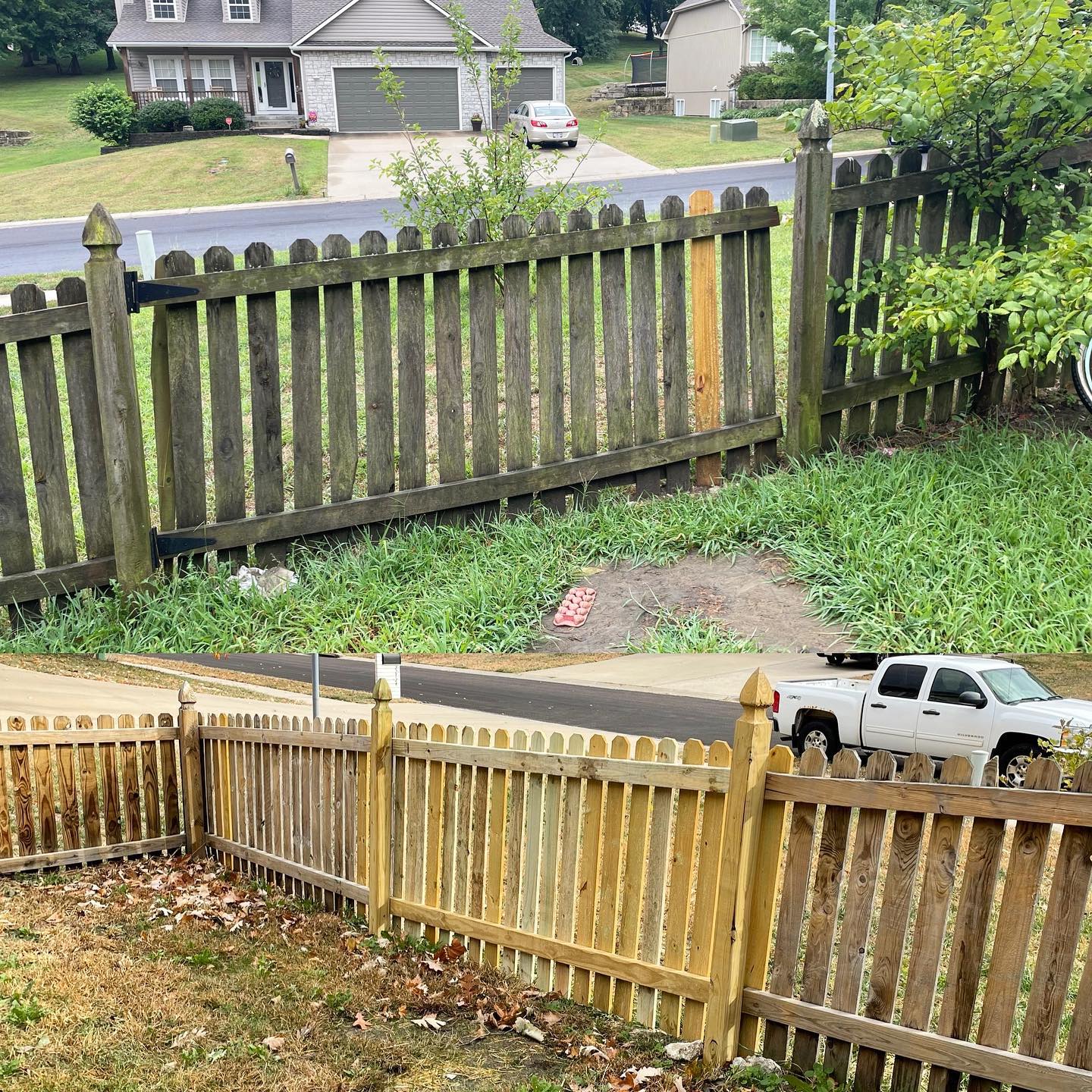
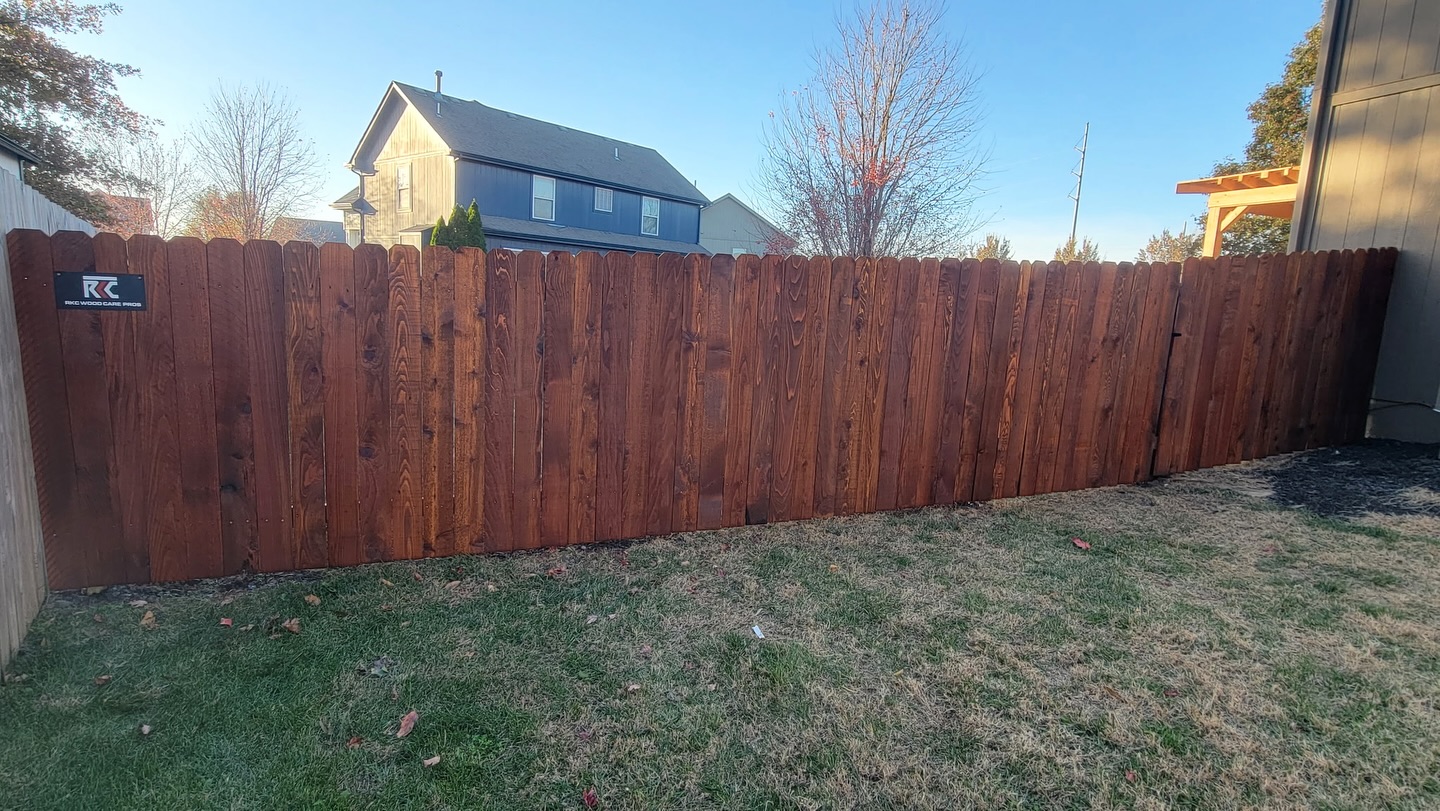
The reason an Olathe fence leans is almost never the pickets — it is a post that lost its footing in the clay. Shimming it back to plumb without a real footing just resets the clock. When we pull a failed post and reset it 36 inches deep in poured concrete, it holds through the freeze-thaw cycle that pushed the original one over. The section reads straight from the street again and stays that way.
2

The rot gets cut off at the source

In Olathe's dense Wymore-Ladoga clay, water sits against a post base long after the yard looks dry, and that is where cedar and pine give out first — right at the soil line. A cosmetic repair paints over it. A real one pulls the post, sets a fresh one on a drainage-gravel base so water moves away from the footing, and swaps any kick board that is already soft. The failure does not migrate down the line.

3

The gate swings clean off a footing that can hold it

A sagging gate on a long Olathe privacy run is a hinge-post problem, not a hinge problem. The Olathe wind coming off the plains works a shallow hinge post loose, and the gate starts scraping the latch. We reset that post deep, upsize the hinges to hardware rated over the gate's weight, and realign the latch on site so it catches on the first try instead of the third.

4

You get a straight answer on repair versus rebuild

Half the value of the diagnostic is being told when NOT to repair. If more than half your posts are failing, per-post work stops making sense and a full run becomes the better spend. We tell you which math fits your fence before a number goes on paper — no pressure to rebuild a fence that has fifteen good years left in it.

WHY OLATHE FENCES FAIL

The Clay, the Wind, and the 1990s Cedar Wave

Fence repair is engineering read backwards — you diagnose what gave out, why it gave out here, and how to keep it from giving out the same way twice. An Olathe fence rarely fails for the reason it looks like it failed. Three local conditions drive nearly every repair we run across the city, and each one changes what a lasting fix has to do.

1

Dense clay that holds water against the post

The Wymore-Ladoga clay under most of Olathe drains slowly and swells when it is saturated. That does two things to a fence: it keeps moisture pressed against the post base so the wood rots at the groundline, and it grips a shallow post and heaves it as the ground cycles wet to dry. A post set 18 to 24 inches deep — standard when Blackbob Park and Persimmon Hill went in — never had a chance against it. The fix is depth: 36 inches in poured concrete on a graveled base, below the reach of the seasonal soil movement.

2

The Olathe wind that works gates and long runs loose

The wind coming off the open ground west of K-7 and K-10 is not a storm event — it is a constant load, and it finds the weakest footing on a long privacy run first. That is why gate posts and end posts move before anyone notices the field posts. A repair that only addresses the panel misses the point; the load is on the footing, so the footing is what has to be rebuilt to carry it.

3

A whole generation of fences aging out at once

The subdivisions built from 1990 to 2010 put in tens of thousands of feet of cedar on the same short posts in the same season. Twenty-plus years later those posts are reaching end-of-life together, which is why one Cedar Creek block can have four leaning fences on it. The pickets are often still good — it is the buried part that is done. That is exactly the fence where a targeted post-by-post reset saves thousands over a teardown.

Olathe neighborhoods where we handle the most repairs run from Havencroft and Blackbob Park near the city center to Cedar Creek, Stonebridge Park, Persimmon Hill and Nottingham St. Andrews in the western expansion. Same 36-inch reset depth on every one. When a repair tips into a rebuild, the Olathe fence installation hub lays out every material and neighborhood.

REPAIR OR REPLACE

How to Tell Whether Your Olathe Fence Needs a Fix or a Rebuild

The honest answer usually turns on one number: what share of your posts are failing. This is the read our diagnostic gives you in writing, walked post by post. Use it as a rough guide before you call — then we confirm it on site against your actual fence, not a guess from the driveway.

What you're seeingUsually a repairUsually a replacement
One or two posts leaning, the rest solid Yes — pull and reset the failed posts, reuse the pickets No
Under ~30-40% of posts loose or rotted Yes — post-by-post reset is far cheaper than a teardown No
More than half the posts moving or soft at the base Rarely worth it Yes — a full run resets every footing to 36 inches at once
Pickets sound, posts rotted at the groundline Yes — the buried part is the problem, not the wood you see No
Pickets cupped, gray and cracking across the whole run Only if you plan to restain Often — the material itself is spent
A single storm-snapped section on an otherwise good fence Yes — rebuild the section to match, document for insurance No

Reading the Four Failure Modes on an Olathe Fence

Groundline rot

The tell: The post looks fine at eye level but is soft, dark or crumbling right where it meets the soil; a screwdriver sinks in at the base. Most common on the shaded, poorly drained sides of a clay lot.

The fix: Pull the post, set a fresh one 36 inches deep on a drainage-gravel base in poured concrete so water drains away from the footing instead of pooling against it.

Frost and clay heave

The tell: A post has lifted or tipped without rotting — the concrete collar is riding higher than it should, and the lean showed up after a hard freeze-thaw stretch, not a storm.

The fix: Re-dig below the seasonal movement zone and reset at 36 inches; the depth, not a bigger concrete blob near the surface, is what stops the heave.

Wind-worked gate and end posts

The tell: The gate scrapes the latch or the end post rocks when you push it, while the field posts are still tight. Shows up first on the runs most exposed to the west wind.

The fix: Reset the hinge or end post deep, upsize to hinges rated over the gate weight, and realign the latch so it catches square.

Board and rail fatigue

The tell: Individual pickets are loose or split and the kick board at the bottom is soft, but the posts are still plumb and firm. The cheapest failure to catch early.

The fix: Re-fasten or swap the failed boards and kick board, re-secure rails; no post work needed, and the section is good for years more.

REPAIRS WE HANDLE

Diagnostic, Post Resets, Storm Rebuilds & Gate Corrections in Olathe

The right scope depends on what is actually failing under the fence — which is why every job starts with the walk, not the quote. These are the four repair scopes we run across Olathe, what each one fits, and real pricing. We do not price repair work sight-unseen; the diagnostic is what makes the number honest.

Post-by-Post Diagnostic in Olathe, KS by RKC Wood Care Pros

Post-by-Post Diagnostic — $95–150

Where every Olathe job starts

Josh walks the full run with you, tests each post for plumb, rotation and groundline rot, and rates every section on a 1-to-5 scale. Salvageable posts get flagged separately from failed ones, and you leave with a written report and photos before a repair number exists. Most Olathe owners find the real scope is different from what they assumed from the porch — sometimes smaller, always clearer. The fee credits fully against the work if you proceed.

  • Price: $95–150 (credited to the repair)
  • Typical use: Any Olathe fence that is leaning, dragging or showing its age
Leaning-Post Reset in Olathe, KS by RKC Wood Care Pros

Leaning-Post Reset — $150–350 / post

The most common Olathe repair

The single most common fix in Olathe. We pull the failed post completely, widen the hole to a bell-bottom footing, add gravel at the base for drainage, and set a fresh cedar or treated post 36 inches deep in poured concrete. The original pickets and rails re-attach to the new post. The reset holds through the next freeze-thaw cycle the shallow original could not — which is the whole reason you are calling us and not the installer.

  • Price: $150–350 per post reset
  • Typical use: Posts leaning from clay heave or rotted off at the groundline
Storm-Section Rebuild in Olathe, KS by RKC Wood Care Pros

Storm-Section Rebuild — $350–1,800 / section

48-hour on-site response

When the spring line of storms comes off the plains and drops a section — a snapped post, a blown-down privacy panel, a torn ornamental run — we rebuild to the original spec or better. We photograph the damage for your adjuster, separate storm damage from age wear in the estimate, salvage undamaged pickets, and match the profile and stain. Eight-foot rebuilds run $350 to $700; ten-to-twenty-foot storm sections run $800 to $1,800.

  • Price: $350–700 (8ft) · $800–1,800 (10–20ft)
  • Typical use: Post-storm emergency rebuilds and wind-damaged sections in Olathe
Gate & Hinge-Post Correction in Olathe, KS by RKC Wood Care Pros

Gate & Hinge-Post Correction — $200–500 / gate

Sagging, scraping or dropped gates

A gate that sags or scrapes the latch on an Olathe run is almost always the hinge post moving, not the frame. We reset the hinge post 36 inches deep if it has shifted, upgrade to heavy galvanized hinges rated over the gate weight, and realign the latch on site. Most Olathe gate corrections are a single day, with a free adjustment pass if the new footing settles in its first month.

  • Price: $200–500 per gate
  • Typical use: Sagging walk gates and drive gates pulling out of plumb
Fence repair cost estimate — Olathe, KS — RKC Wood Care Pros

OLATHE REPAIR PRICING

What Fence Repair Actually Costs in Olathe

Repair pricing in Olathe turns on scope, how many posts are failing, and whether insurance documentation is part of the job. Every quote is free, written and itemized, and the diagnostic credit rolls into the repair if you move forward. Here are the three tiers most Olathe jobs land in.

Diagnostic Walk

$95–150

credited to the repair

Post-by-post plumb and rot testing, 1-to-5 section ratings, written report with photos. Applied as credit against any Olathe repair we perform.

Per-Post Reset

$150–350

per post

Pull, bell-bottom footing, drainage gravel, poured concrete at 36 inches — the depth we set on new installs. Pickets and rails re-attached.

Sections & Gates

$350–1,800

per rebuild

8ft section $350–700, 10–20ft storm section $800–1,800, gate correction $200–500. Insurance documentation included on storm work.

Once more than 40% of your posts are failing, a full run usually beats paying to reset each one. Rebuild pricing lives on the Olathe wood and Olathe vinyl pages. Every Olathe estimate is free and itemized — call (913) 286-1091 or book the on-site diagnostic.

HOW IT GOES

From the Phone Call to the Final Walk in Olathe

Four steps, and most Olathe repairs run one to three weeks start to finish — faster when storm damage moves the insurance clock. Repairs move faster than new installs: most per-post work is one to two days on site, storm sections two to three. The wait, when there is one, is usually the adjuster, not the crew.

1

The diagnostic walk

Josh walks the full Olathe fence line with you, tests every post for plumb, rotation and groundline rot, and marks salvageable posts green and failing ones red. Every section gets a 1-to-5 rating and the report is written with photos before a quote exists. The $95 to $150 fee credits toward the repair if you proceed — you only pay it if you decide to walk away.

2

Written estimate and storm documentation

You get an itemized estimate in writing. If the damage is storm-related, we document each failure with date-stamped photos and separate storm damage from age wear in the format Olathe adjusters approve — that separation is what gets a claim paid instead of reduced. No surprises land on install day.

3

The repair

Failed posts are pulled, holes widened to bell-bottom footings with gravel at the base, and fresh posts set 36 inches deep in poured concrete. Salvageable pickets and rails re-attach; damaged sections rebuild with matching cedar and stain; gates re-hang on plumb posts with upgraded hardware. Most Olathe per-post jobs are one to two days, storm rebuilds two to three.

4

Final walk and 30-day settling check

Before final payment we walk the whole repair — every reset post checked for plumb, every gate confirmed to swing and latch clean, the finished work photographed. Because fresh footings settle slightly in the first month, we come back at 30 days for a free adjustment on any drift. Most Olathe owners never need the return trip, but it is part of the job either way.

RECENT OLATHE REPAIR WORK

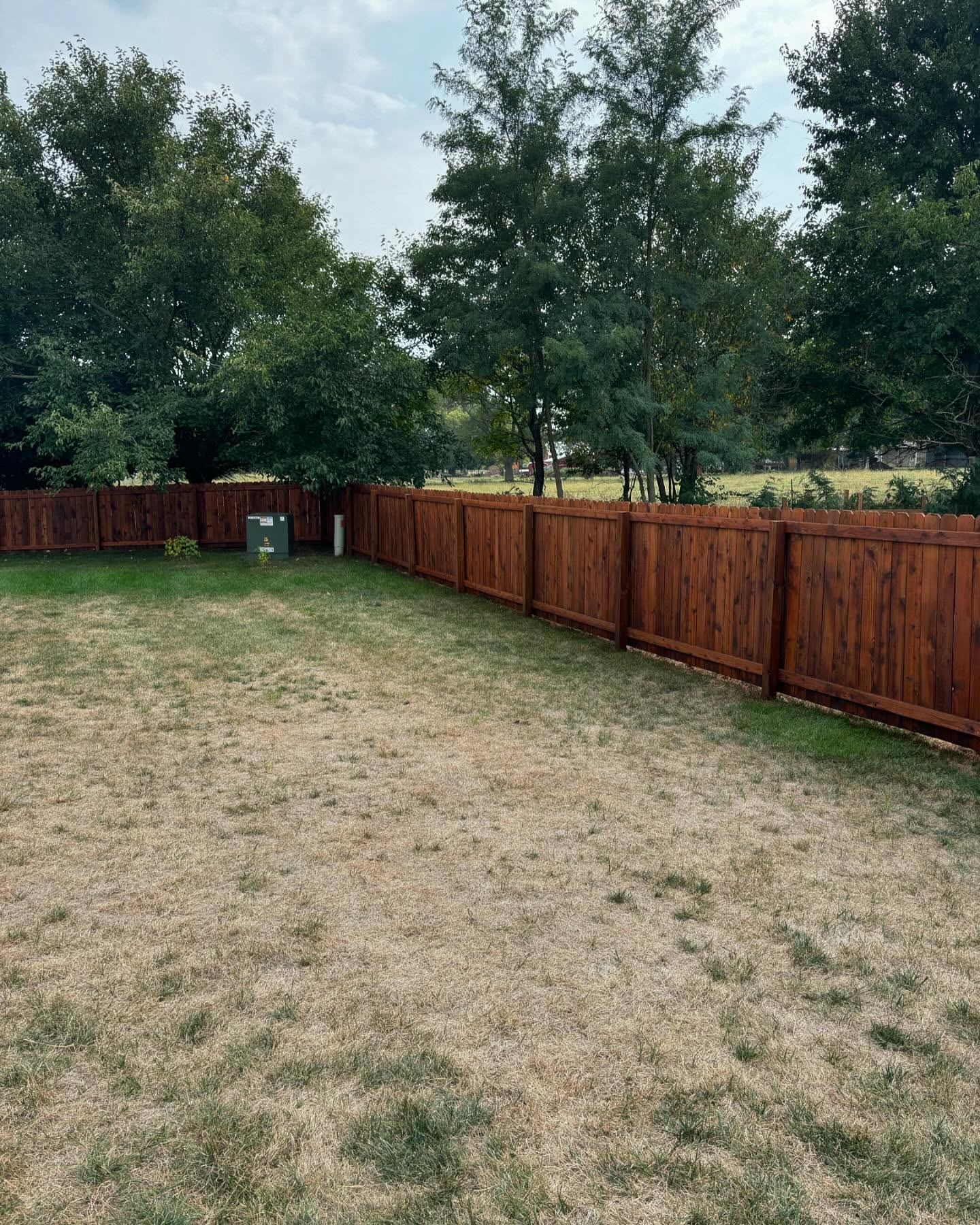
Post Reset · Olathe — Olathe, KS — RKC Wood Care Pros
Post Reset · Olathe
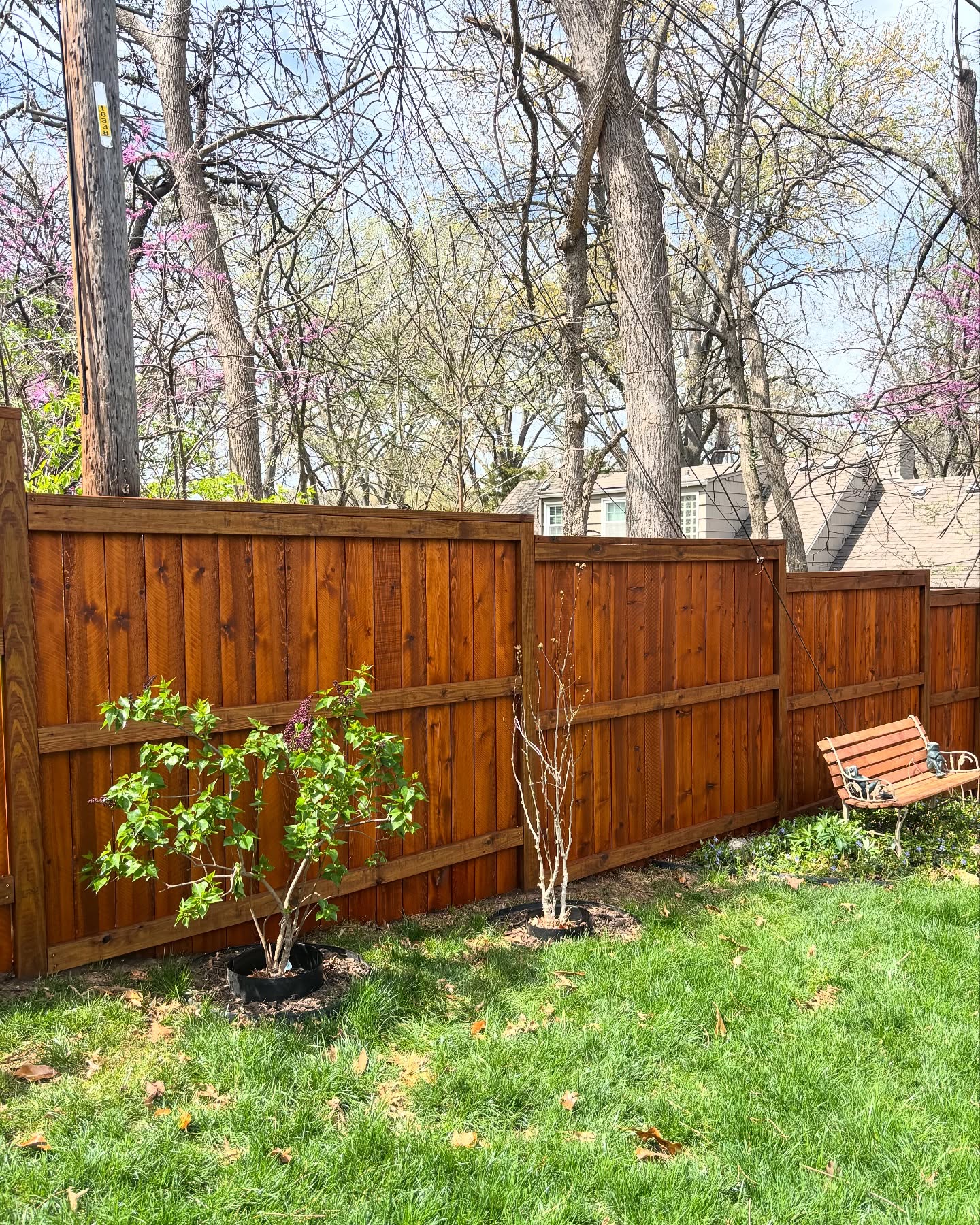
Storm Section Rebuild · Olathe — Olathe, KS — RKC Wood Care Pros
Storm Section Rebuild · Olathe
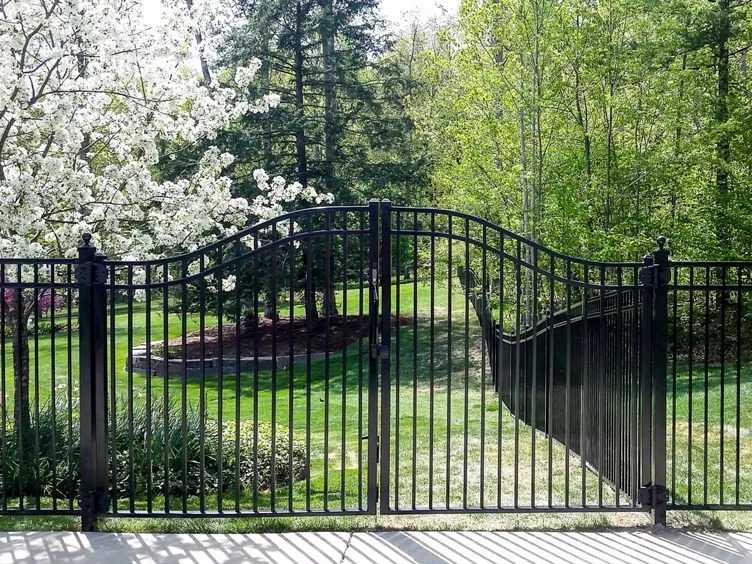
Gate Correction · Olathe — Olathe, KS — RKC Wood Care Pros
Gate Correction · Olathe
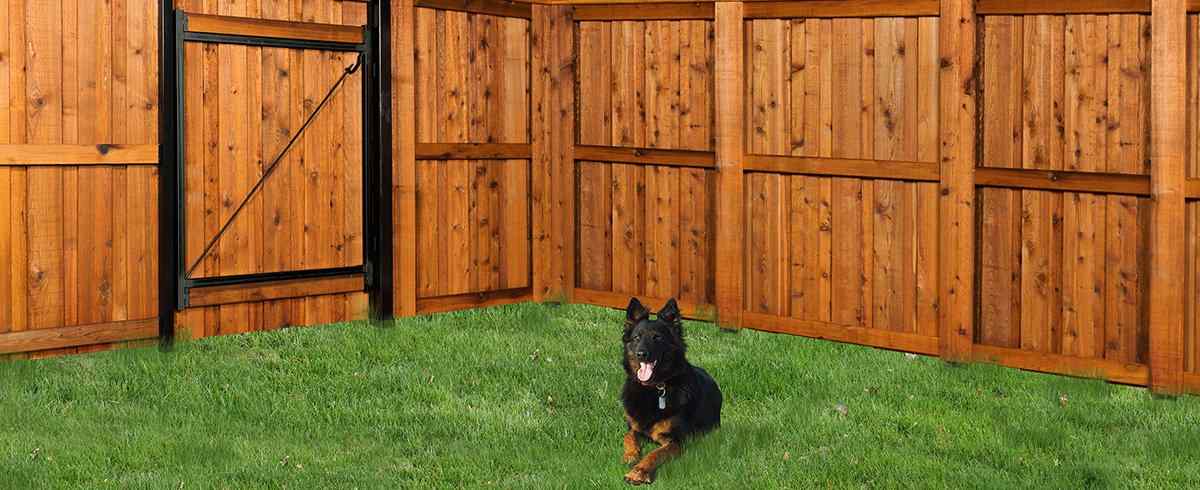
Diagnostic Walk · Olathe — Olathe, KS — RKC Wood Care Pros
Diagnostic Walk · Olathe

REVIEWS

What Kansas City Homeowners Say About RKC

4.9 ★ · 85 Google reviews

Every review is on our Google Business Profile — read them there, unedited.

Read all 85 reviews on Google

OLATHE REPAIR QUESTIONS

What Olathe Homeowners Ask on the Diagnostic Walk

The questions sort into three: what is actually failing and why, how storms and insurance work, and what it costs. These are the ones Olathe owners raise on the walk, answered against local clay, wind and pricing. If your question isn't here, call (913) 286-1091 and ask.

Fence repair in Olathe, KS by RKC Wood Care Pros

Why It's Failing

Why is my fence leaning in Olathe?
Almost always a shallow original post that lost its grip in the Wymore-Ladoga clay. Posts set 18 to 24 inches deep — standard when the 1990s and 2000s subdivisions went in — heave and lean as the heavy clay cycles wet to dry and freezes. Cedar runs across Havencroft, Cedar Creek and Stonebridge Park are reaching that point together. The durable fix is to pull the failed post and reset it 36 inches deep in poured concrete, below the Johnson County frost line and under the active soil-movement zone.
Can my Olathe fence be repaired, or does it need replacing?
It comes down to how many posts are failing and whether the pickets are still sound. If fewer than 30 to 40 percent of posts are loose and the wood above ground is good, a targeted post-by-post reset is usually the right call and saves thousands over a teardown. Past about half, rebuild economics take over because you are paying to reset nearly every footing anyway. Our diagnostic tells you which side of that line your fence is on before any number is written — see the repair-or-replace table above for the quick read.
The pickets look fine — why would the whole fence be a problem?
Because the part that fails first in Olathe is buried. Dense clay holds moisture against the post base and rots it at the groundline while the pickets you can see stay perfectly good. That is actually the best-case repair: the expensive-looking wood is fine, and resetting the posts underneath brings the whole run back for a fraction of a rebuild.

Storms & Insurance

Will my insurance cover storm damage to my Olathe fence?
Most Olathe homeowner policies cover fence damage from wind, hail and fallen trees under the other-structures clause, commonly around 10 percent of the dwelling limit. Coverage is almost always for storm damage, not age wear — so the estimate has to separate the two cleanly, which ours does. We document with date-stamped photos and an itemized scope. Clean paperwork gets approved; a vague one-line quote gets denied or cut.
How fast can RKC get to storm damage in Olathe?
Our committed window is 48 hours for on-site assessment. Same-day happens when the crew has room and the storm did not flood the whole city with calls, but 48 hours is the number we stand behind. We tarp an exposed boundary on that visit if there is a dog or kids behind the gap, photograph everything for the claim, and slot the rebuild into the next opening — usually two to three weeks out, faster if the adjuster clears quickly.
What paperwork do I need for an Olathe fence claim?
At minimum: date-stamped photos of every failure point, a written itemized estimate from a licensed contractor, and the date and rough wind speed of the storm. We supply all three. Some adjusters also want a pre-loss condition note, which is where our storm-versus-age separation earns its keep — we mark plainly which failures were already there and which the storm caused. That level of detail is what raises approval rates on Olathe claims.

Repair Pricing

What does a fence repair cost in Olathe?
By scope: a diagnostic runs $95 to $150 and credits toward the work, a per-post reset $150 to $350 per post, an 8-foot section rebuild $350 to $700, a 10-to-20-foot storm section $800 to $1,800, and a gate correction $200 to $500. Full-run rebuilds are priced on the Olathe wood and Olathe vinyl pages. Every Olathe quote is free, written and itemized.
Why isn't a repair always cheaper than a rebuild?
Once more than 40 to 50 percent of the posts are failing, the labor of pulling and resetting each one — plus re-hanging pickets and matching stain — starts to cost nearly what a fresh run would, and the rebuild carries a new 36-inch footing across the entire line instead of a patchwork. That is the break-even our diagnostic pins down. Some Olathe owners come in expecting a repair and leave with a rebuild recommendation, and plenty go the other way.
Is the diagnostic fee refundable?
It credits fully against any repair we perform, so if you proceed you pay nothing extra for it. If you decide not to, the fee covers the Olathe trip, the post-by-post plumb and rot testing, the written photo report, and the time to walk the whole line with you. We do not hand out free repair quotes because a real diagnostic takes 45 to 90 minutes and every downstream decision hangs on getting it right.

OTHER OLATHE FENCE SERVICES

More of What We Do in Olathe

RKC installs and repairs every type of fence — wood, vinyl, chain link, ornamental iron, aluminum and commercial security — plus custom gates and in-house staining. When the repair turns into a rebuild, when the gate needs building rather than resetting, or when a fresh stain is the right finish after the fix, here is where to go next in Olathe.

Ready when you are

Get a free estimate — we usually respond the same day.

Call (913) 286-1091