Skip to content
Gate Installation in Olathe, KS — Walk, Drive & Slide Gates Built to Beat the Olathe Wind, from Blackbob Park to the K-7 New Builds

Gate Installation in Olathe, KS — Walk, Drive & Slide Gates Built to Beat the Olathe Wind, from Blackbob Park to the K-7 New Builds

In Olathe the wind off the plains is what sags a gate — so the wider the leaf, the harder the frame and hinge post have to fight back. We build walk, single-drive, double-drive, and slide gates across town, and the width sets the spec: a welded square-tube frame, a bell-bottom hinge footing driven 42 inches into the dense JoCo clay and crowned to shed water, and hinges sized past the load. Olathe is our home base — Josh reads every opening himself before a number is written. Rated A+ by the BBB, 4.9 stars over 85 Google reviews, past 400 fences and gates in the ground. Call (913) 286-1091 to set up a free on-site walkthrough.

★★★★★
4.9
from 85 reviews
Licensed
& Insured · KS + MO
400+
fences installed
A+ BBB Rated 400+ Fences Installed Since 2021 Welded Gate Frames · Galvanized Hardware Free On-Site Estimates
See gate styles in our catalog ↓

WHAT A NEW GATE DOES FOR AN OLATHE YARD

Why Olathe Homeowners Replace a Sagging Gate

Three things separate a gate you never think about from one you're propping open by summer: it holds square in the wind, it seals itself shut, and it looks like it belongs on the fence. Olathe asks a lot of a gate — the property has to read right from the street, and the wind off the flats is genuinely rough on anything hung wrong. Get the build right and all three come free. Below is what each one buys you day to day, before we get into how the metal and the footing make them possible.

1

It survives the season that kills the cheap ones

Year one is where an under-built Olathe gate gives up — a plains gust works the leaf, the joints loosen, and by spring the latch no longer meets its catch. Ours is engineered so year one changes nothing: three things carry the load — a frame that can't twist, a footing driven below the frost line, and hinges spec'd past what the leaf weighs. The payoff isn't a feature you point at; it's that the gate keeps disappearing into your routine instead of becoming a chore.
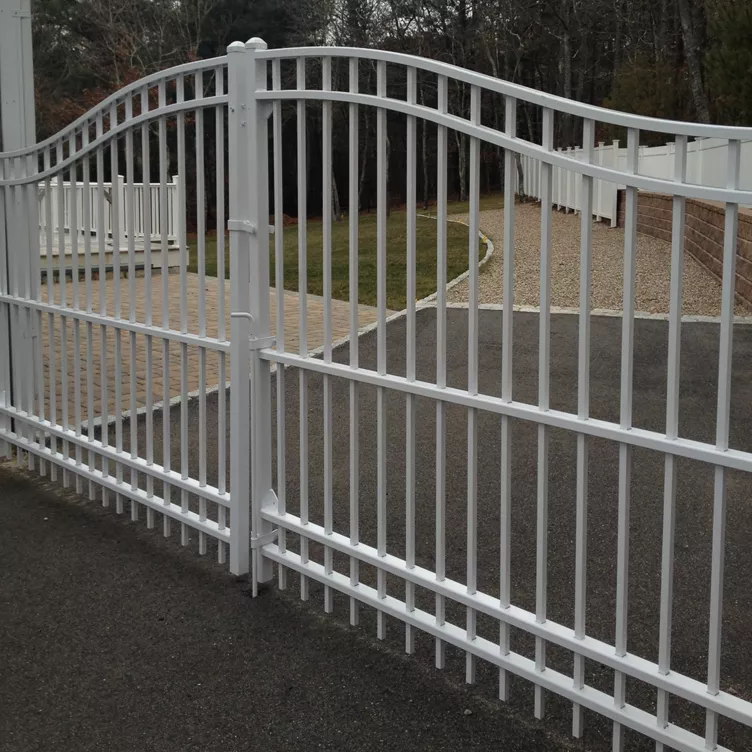
2

It latches on its own — no second thought at the gate

Set a spring hinge to the leaf's weight and mount the latch to catch by itself, and the gate stops needing you. It swings shut and locks whether your hands are full of groceries or holding a leash. That's the detail missing from most of the walk gates we're called out to rehang here — the ones wedged open with a paver because they never sealed on their own. On a yard fenced for a dog or a toddler, self-closing isn't a nicety; it's the reason the fence is there.

3

It clears what actually parks on the lot

The western Olathe lots are deep, and the driveways carry real equipment — a fishing boat, a fifth-wheel, a landscape trailer. Measure the vehicle, not a spec sheet, and a two-leaf drive gate opens wide enough to swallow it without a three-point turn at the apron. On the acreage builds out past K-7 and 175th, nobody treats a double gate as an extra; a drive that wide simply doesn't close on one leaf.

4

It reads as part of the house, not an add-on

In Olathe the curb tells the story, and a gate that doesn't match the fence is the tell that a job got rushed. We tone cedar to the exact weathered stain of a shadowbox run, or spec black iron picketed to keep a pond or greenbelt sightline open — the pieces line up, the finish agrees, nothing looks bolted on afterward. A gate done this way doesn't ask to be noticed. It just makes the property look handled.

BUILDING AGAINST THE OLATHE WIND

Why the Wind Off the Plains Decides How an Olathe Gate Gets Built

Nothing on a fence works as hard as a gate — a fixed panel just stands there, while a gate carries a swinging load into a single footing thousands of times, and Olathe hands it the wind on top. Between the plains wind, clay that won't drain, and the freeze-thaw riding behind it, this town is unusually good at dismantling a gate that was built like a fence. What keeps one plumb a decade on versus limping by its second winter comes down to three choices — and every gate we hang in Olathe answers all three the same way.

1

A gate leaf is a sail, and the Olathe Wind knows it

Ask us the most common reason we're called out to an Olathe gate and the answer barely varies: a leaf hanging low at the latch, wind-worked loose over a couple of winters. The 'Olathe Wind' rolls in off the open plains with nothing to slow it — the same pressure that leans the long cedar privacy runs all over town — and a gate is a flat panel swinging on two points, which is to say a sail. Bolt that frame together and every joint has a hair of play the wind exploits until the whole thing racks. We weld all four corners into one rigid piece instead, then clad it in cedar or powder-coat it in iron: the steel takes the wind, the finish takes the eye.

2

Wet clay rots a shallow gate post from the ground line up

Olathe's clay is dense enough to make hand-digging a hole genuinely brutal, and worse, it holds water instead of shedding it — which is exactly why so many of the old fences we replace here rotted right at the soil line. A gate footing catches the worst of it, since it carries the leaf's full weight plus the jolt of every swing rather than just steadying a panel. Our answer is depth and drainage together: the hinge footing is poured 42 inches down with a belled bottom, well under the Johnson County frost line, and the concrete is crowned at the top so water runs off it rather than pooling against the wood.

3

The hinge is where gates die, so we over-spec it

When we pull a sagging Olathe gate, the failure is at the hinge far more often than anywhere else — so that's the one piece we refuse to leave to a boxed kit. We size every hinge to carry the leaf plus a fifty-percent margin: heavy strap hinges past 100 pounds on a walk gate, ball-bearing or J-bolt pivots past 400 on a drive gate. And the metal itself matters as much as the rating — everything is hot-dip galvanized, stainless, or powder-coated, because the cheap zinc-plated stuff surrenders to a single humid Kansas City summer and weeps a rust stain down a brand-new cedar leaf. Do it right and the hardware outlasts fifteen years without complaint.

Olathe neighborhoods we've hung gates across run from the aging 1990s cedar in Blackbob Park and Havencroft to Cedar Creek, Stonebridge Park, and the new builds pushing west toward K-7 and south to 175th Street. Same 42-inch drained posts, same welded frames on every one. We also hang gates next door in Overland Park, Lenexa, and Gardner.

START WITH THE SPAN

How Wide Before the Olathe Wind Wins the Argument

The variable that sags a gate in Olathe is the wind, and the leaf width is what turns that wind into load — so the span decides the build before material ever comes up. A narrow walk gate shrugs the plains wind off; a wide single leaf becomes a sail on two hinges. Find your opening in the rows below to see what the Olathe Wind does at that width and the spec that answers it — then pick a material.

Your opening in Olathe What the Olathe Wind does The build that answers it
Walk gate, 3–4 ft (side yard in Havencroft, Blackbob Park) Barely a sail. A gust doesn't move a leaf this narrow enough to matter. One strap-hinge pair on a single 42-inch post, self-latching hardware. This is the one width where the Olathe Wind isn't part of the spec conversation.
Single-drive, 8–10 ft (typical Olathe driveway) Now it's a real sail — a plains gust puts a genuine twisting load on the hinge every time it hits. Corner-to-corner diagonal brace turning sag into compression, ball-bearing pivots rated over the leaf, 42-inch hinge post. This is exactly where the under-built gates in town start dropping at the latch inside two winters.
Single-drive, 12–14 ft (wider western-Olathe drives toward K-7) At the ceiling of what one leaf should carry in Olathe wind — the lever arm on the hinge is long and the sail area is large. Upsized hinge post set deeper, a heavier brace, and a rated ball-bearing pivot — or we recommend stepping to a double-drive instead of pushing one leaf past its limit.
14 ft and wider (estate entries, boat/RV clearance on the third-acre lots) Too much sail and too much leverage for a single leaf — this is the width where wind wins on a one-leaf gate. Split it into a double-drive: two leaves off opposite posts halve the lever arm and the sail on each hinge, meeting on a center drop rod into a ground receiver. Two 42-inch posts, both leaves braced.
Any width where the drive climbs or the lot pinches (sloped west-Olathe expansion) A wide swing leaf needs a clear arc the rising concrete or a retaining wall won't give it — and the more it sticks out, the more wind it catches mid-swing. Cantilever slide gate: it rolls to the side on rollers instead of swinging out, so it needs no arc and presents less to the wind while it moves. The fix for the graded lots in the K-7 and 175th builds.
A gate mid-run on a long privacy fence (6-ft cedar runs, the Olathe standard) The run itself catches the Olathe Wind and funnels that pull straight into the nearest post — the gate post — on top of the gate's own load. The hinge post gets isolated from the fence line, set deeper in its own poured footing, so the run's wind load and the gate's swing load don't share one hole. It's why the sagging gates we replace here almost always sit at the end of a long run.

Notice what doesn't change down the rows: the footing. Swing or slide, every one of these gates concentrates its full weight — and the wind's extra push — onto a single point in the ground, so each hinge post is sunk 42 inches into a belled, drained concrete footing, a good half-foot past the line posts beside it. On the free estimate we measure the span and gauge how exposed the opening is, then match the footing to both.

GATES WE BUILD IN OLATHE

Walk, Drive, Double & Slide — Matched to the JoCo Look and the Wind

Which gate you want follows two questions: how the opening gets used, and at what width the wind forces a second leaf. The four below cover nearly every Olathe job, each listed with its fit and installed range. Material is mostly a look — Western Red Cedar to vanish into a shadowbox run, black iron for the pond- and greenbelt-backed lots, vinyl on the newer builds up north. What never changes underneath is the spec: a welded frame over a drained 42-inch footing, whichever type sits on top.

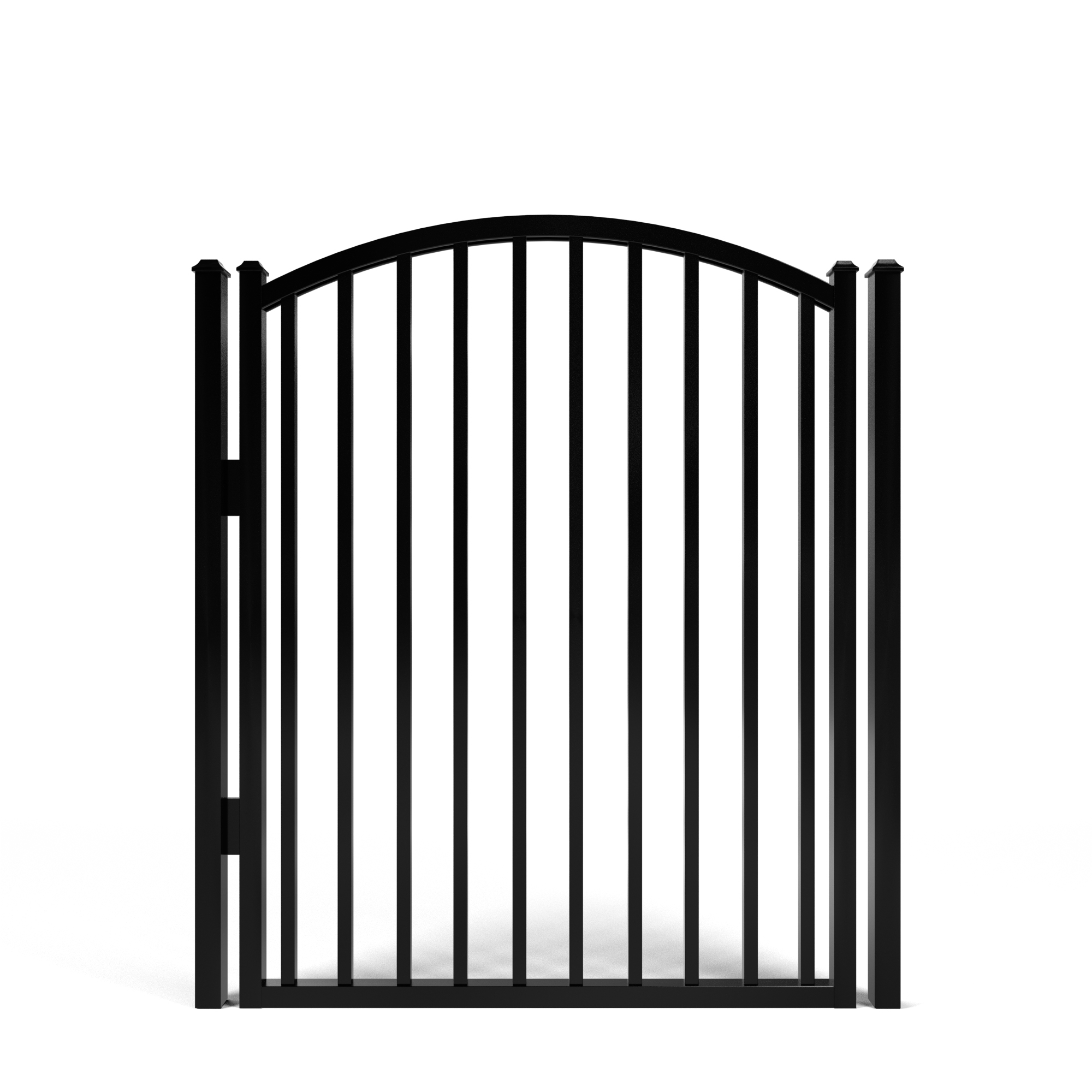
Walk Gate by RKC Wood Care Pros serving Olathe, KS

Walk Gate — 3–4 ft wide

The workhorse of the backyard

This is the gate that opens ten times a day and gets zero thought — until it stops shutting. We build it on a welded square-tube frame so it never sags out of true, hang it on galvanized straps, and add a self-closing latch wherever a dog, a toddler, or a pool sits on the far side. Older Olathe blocks usually want it in cedar matched to a weathered privacy run; the pond-backed lots lean to black iron so the gate agrees with the fence.

  • Price: $300–600 (wood) · $450–850 (iron)
  • Typical use: Fenced-yard access for pets, kids, trash and mower runs
Single-Drive Gate by RKC Wood Care Pros serving Olathe, KS

Single-Drive Gate — 8–14 ft wide

One leaf, kept under the wind ceiling

A single leaf spanning a standard Olathe driveway. A steel-welded frame carries a diagonal brace from the bottom hinge to the top latch, so the leaf's own weight loads that member in compression instead of pulling itself into a droop. Its footing is the whole game: 42 inches of poured concrete, six past the line posts, because Olathe's wet clay will rot a shallow one at grade and the freeze-thaw will lift it — and either failure ends with the latch out of reach.

  • Price: $650–1,200 (wood) · $900–1,800 (iron)
  • Typical use: A standard one-car drive, toned to the fence it joins
Double-Drive Gate by RKC Wood Care Pros serving Olathe, KS

Double-Drive Gate — 14–20 ft wide

The two-leaf answer to a wide opening

Two leaves meet in the middle over a center drop rod, each hung from its own post. The reason to split isn't looks — it's physics: beyond 14 feet a lone leaf becomes both too much sail for the plains wind and too long a lever for one hinge to hold, and halving the span cuts both problems at once. It's standard on the deeper western-Olathe lots where a boat or camper lives in the drive. Both posts go 42 inches down, both leaves are braced, and the rails and caps are matched so the pair looks like one gate.

  • Price: $950–2,800 installed
  • Typical use: Deep west-Olathe drives that park a boat, camper or trailer
Cantilever Slide Gate by RKC Wood Care Pros serving Olathe, KS

Cantilever Slide Gate — 10–20 ft travel

For climbing drives and boxed-in lots

Some openings can't give a swing gate the arc it needs — the pavement rises into them, a retaining wall sits in the path, or the lot is simply too tight. Here the gate rolls instead of swings, carried sideways on a cantilever that touches nothing on the ground. It's built for the graded third-acre lots in the K-7 and 175th Street subdivisions, where a swing leaf would catch the rising concrete partway open. A gate tracking sideways also offers the plains wind a smaller target as it moves.

  • Price: $1,200–2,400 installed
  • Typical use: Graded approaches and boxed-in lots with no room to swing

RKC installs and repairs every type of fence — wood, vinyl, chain link, ornamental iron, aluminum, and commercial security — plus custom gates and in-house staining. This page covers gate installation in Olathe; the full gate-type scope across the metro lives on the Kansas City gate installation hub.

OLATHE GATE PRICING

What a Gate Costs to Install in Olathe

Three variables move the Olathe number — gate type, material, and how wide the leaf runs. One thing never sits in the "extras" column no matter the config: the welded frame, the heavy galvanized hardware, and the deep drained footing are baked into the price you're quoted. These three builds are what we write up most often here.

Wood Walk Gate

$300–600

installed

Cedar or treated pine, galvanized strap hinges, a self-catching latch, all riding a welded frame over a 42-inch drained footing.

Single-Drive Driveway Gate

$650–1,800

installed

Cedar lands $650–1,200, ornamental iron $900–1,800. Includes the diagonal brace, the ball-bearing pivots, and the deep footing.

Double-Drive & Cantilever Slide

$950–2,800

installed

Priced on width plus swing or slide hardware. Center drop-rod, roller carriage, matched caps and rails all quoted at the walkthrough.

Every Olathe gate estimate is free, written, and itemized down to the hinge brand and post depth — no "we'll figure out the hardware on install day." Call (913) 286-1091 or request an on-site walkthrough.

HOW WE WORK

From First Measure to First Swing in Olathe

Four steps from the first call to the first swing — most Olathe gate jobs land in a 1-to-4-week window. The on-site part is quick: a day for a walk gate, one to two for a drive gate. What stretches the calendar is fabrication lead on the welded frame and any custom hardware, which we don't order until the opening's measured and the wind exposure's been read. Here's how the four steps run in Olathe.

1

The estimate — Josh measures, and reads the wind and the span

Josh comes out to the property himself — Olathe is RKC's home base, so this is home turf — measures the opening for real, and settles the two things that set an Olathe gate before anything else: how wide the leaf has to be, and how much wind that width will catch. A 10-foot drive off a long privacy run and a narrow side-yard walk gate are different builds, and that call gets made in your driveway, not over the phone. You leave knowing the gate type, the swing-or-slide direction, and roughly where the number lands; the itemized written quote follows inside the week.

2

Sizing the post and hinge to the leaf, not to a default

Between the estimate and setting day we spec the hinge post and hardware to what the leaf actually has to carry against the Olathe Wind. A 4-foot cedar walk gate and a 16-foot ornamental double-drive never share a post — the wide leaf gets a fatter post set deeper and a heavier pivot. We lock the hinge and latch ratings, decide whether the job wants a drop rod, a cane bolt, or a cantilever roller set, and put the welded frame into fabrication while the concrete schedule gets set.

3

Posts in the ground first, gate hung on top second

Setting day starts underground: hinge posts down 42 inches in poured concrete, crowned to drain, left to cure overnight so nothing creeps under load later. Frame and infill hang the next day once the footings are hard. We fit the hinges and latch on your lot, not on a shop bench, so the leaf hangs true to the real pitch of the yard instead of an assumed level. Budget a day on site for a walk gate, one to two for a drive gate.

4

Ten swings to sign off — then back at 30 days

Nothing gets paid until the gate has run ten full open-and-close cycles with a set of eyes on every hinge taking the weight; a drag, a scrape, a latch off by a hair gets sorted while we're standing there. Then a 30-day return goes on the calendar, because new footings settle a sliver in the first month and a sliver is enough to miss a catch in a wind gust. That trip — re-square the latch, take up any hinge drift, reset the self-close — is already inside the price you agreed to.

RECENT OLATHE & NEARBY GATE INSTALLS

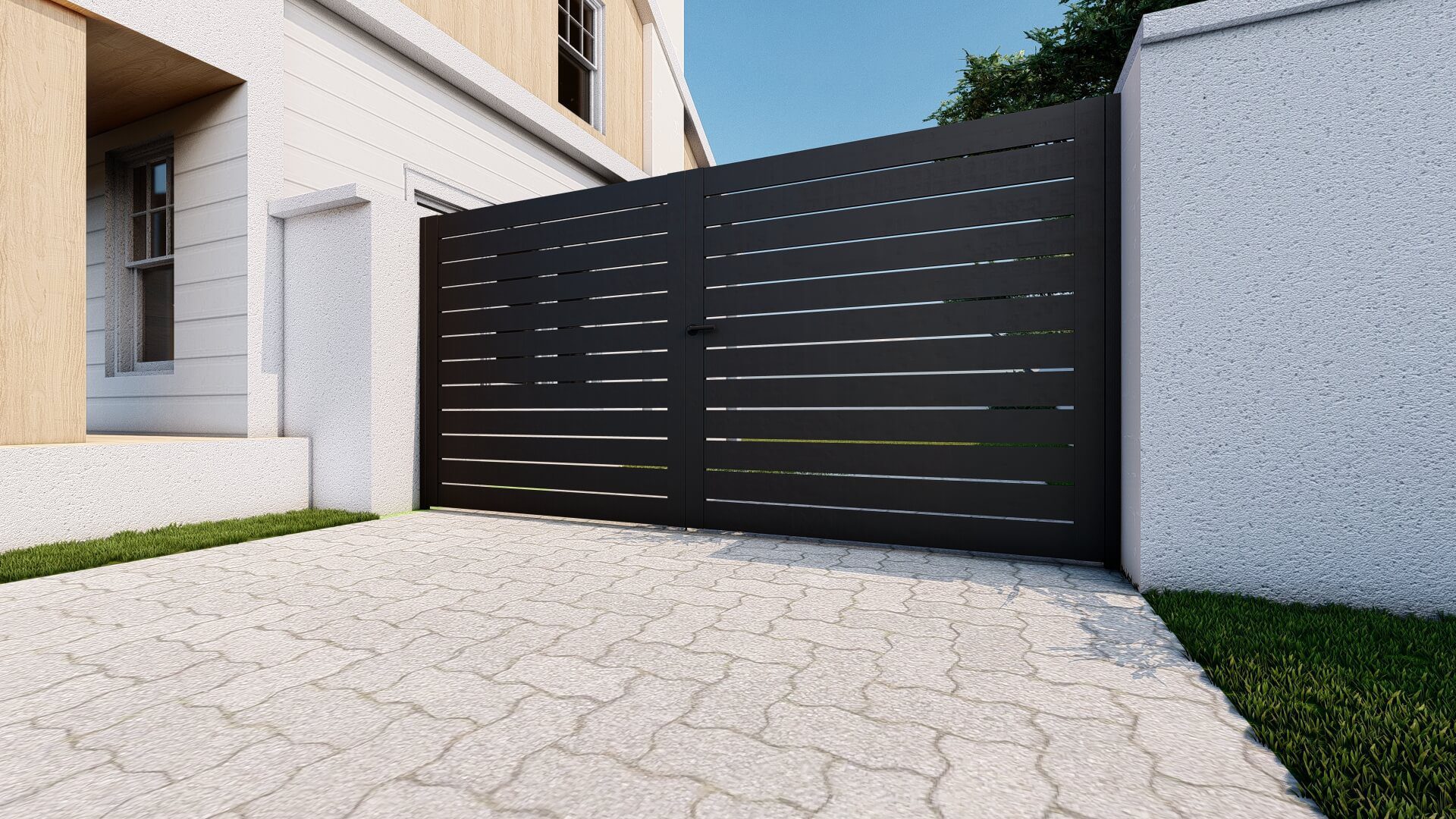
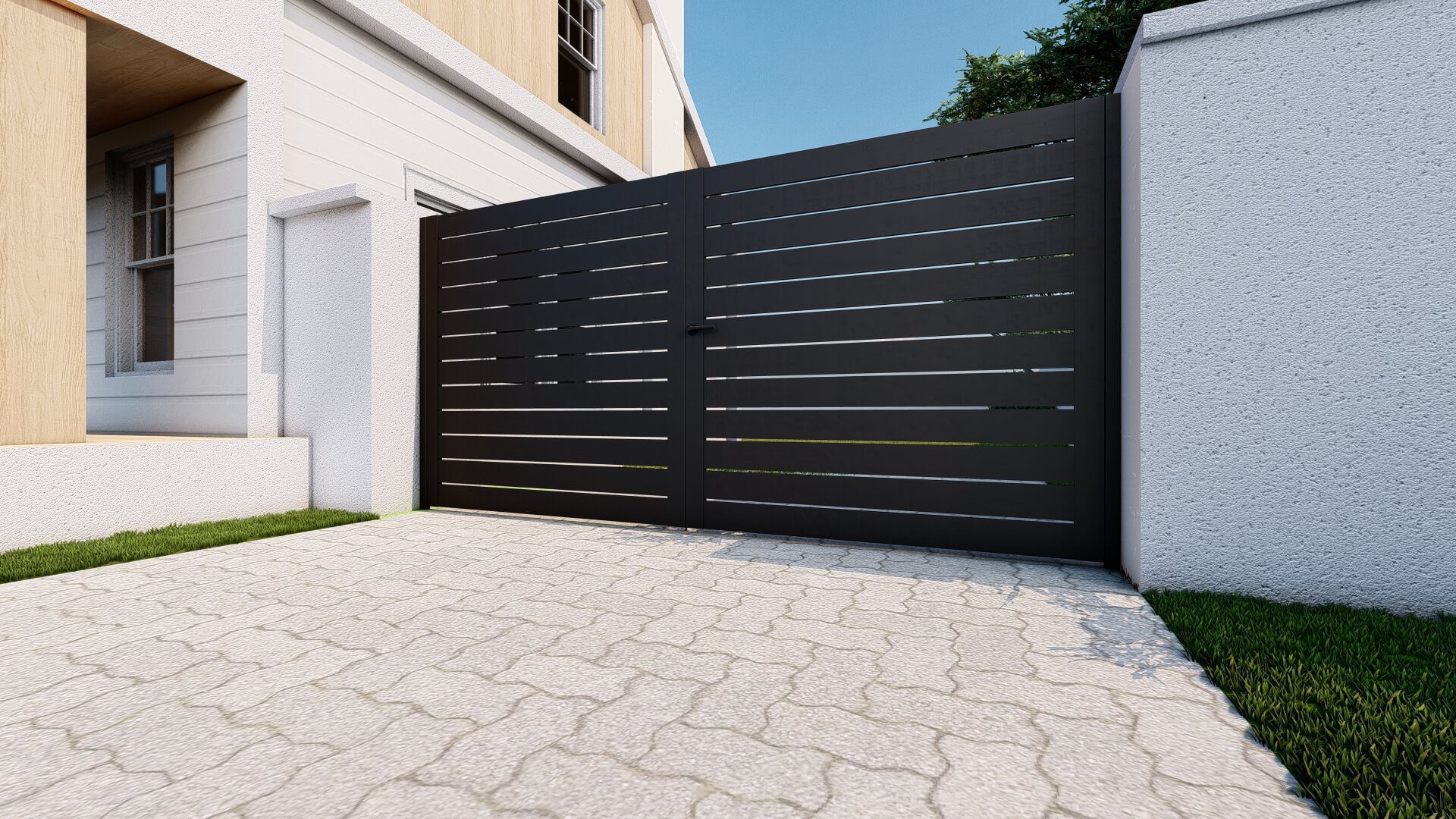
Black horizontal-slat driveway gate installed by RKC Wood Care Pros in Olathe, KS
Horizontal-Slat Drive Gate · Olathe
Modern black horizontal drive gate installed by RKC Wood Care Pros in Lenexa, KS
Horizontal Drive Gate · Lenexa
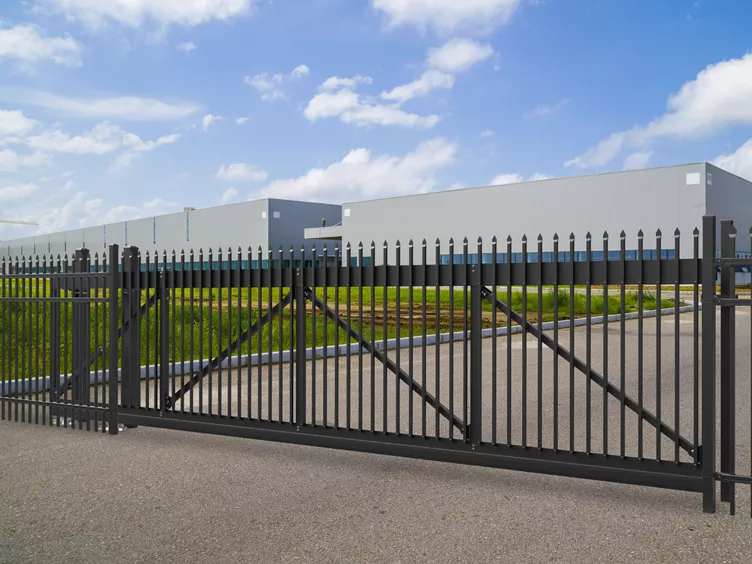
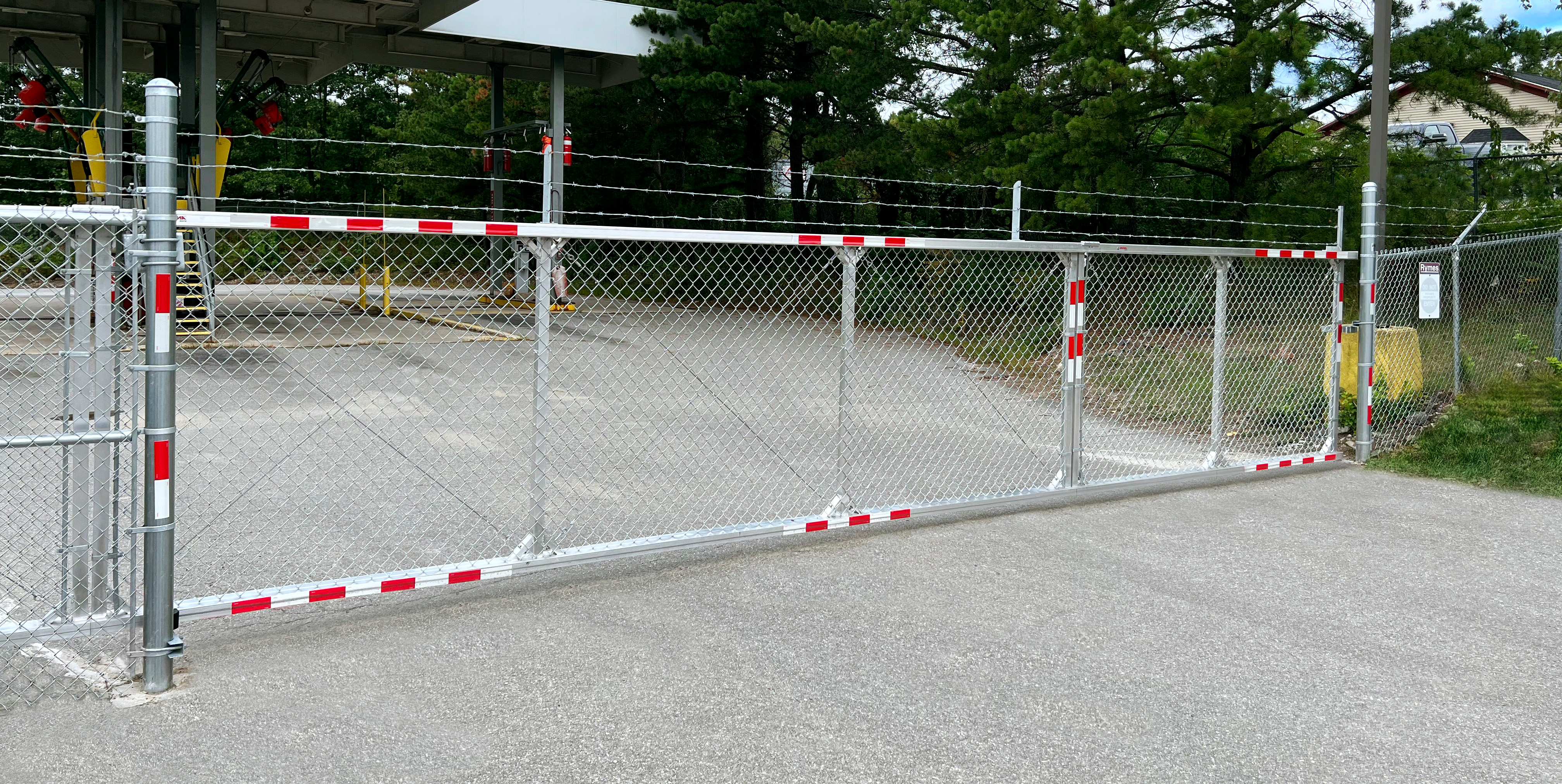
Industrial cantilever slide gate installed by RKC Wood Care Pros in Gardner, KS
Cantilever Slide Gate · Gardner
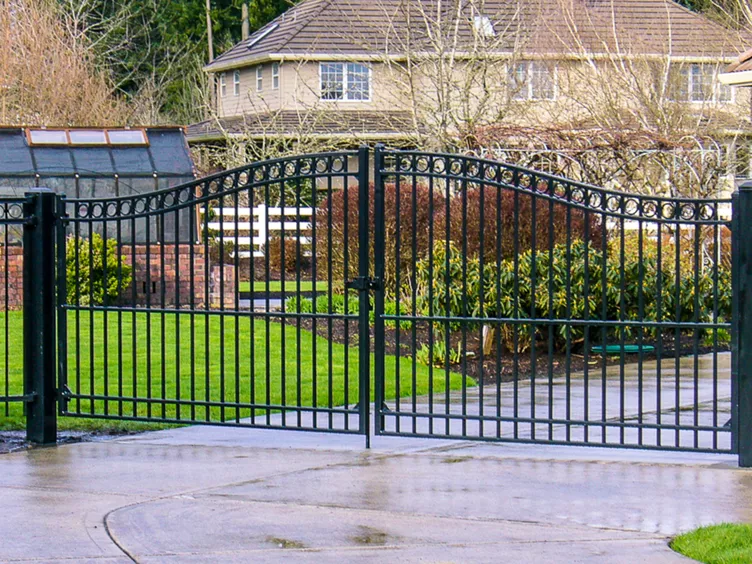
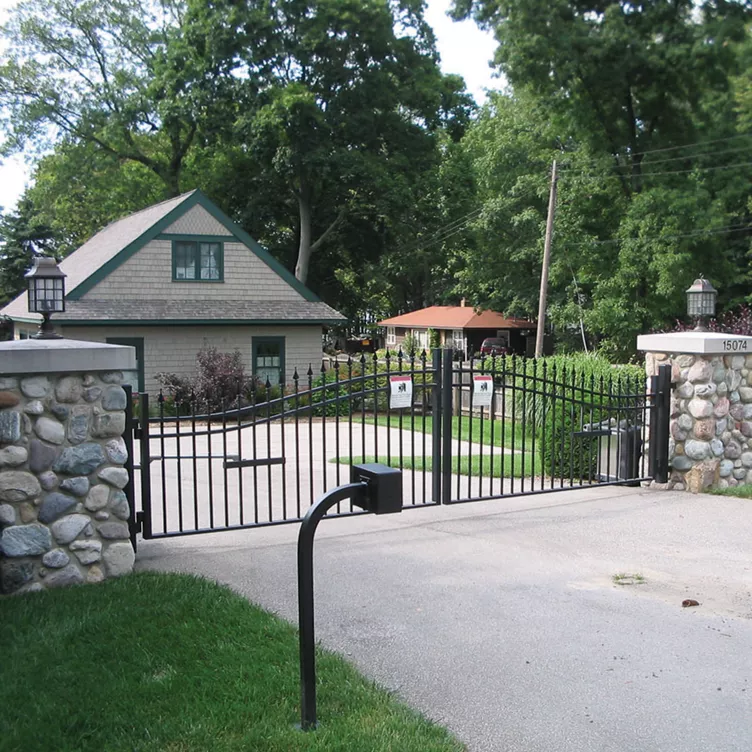
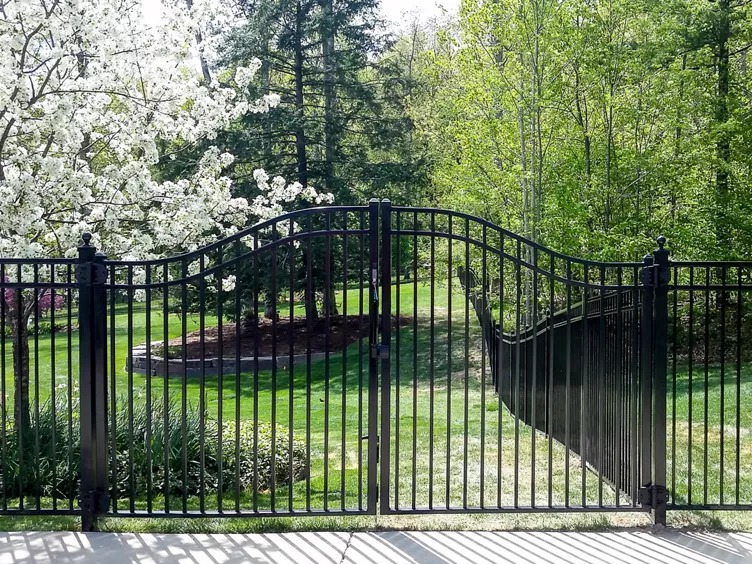
Ornamental iron double-swing driveway gate installed by RKC Wood Care Pros in Leawood, KS
Ornamental Double-Swing · Leawood

REVIEWS

What Kansas City Homeowners Say About RKC

4.9 ★ · 85 Google reviews

Every review is on our Google Business Profile — read them there, unedited.

Read all 85 reviews on Google

OLATHE GATE QUESTIONS

What Olathe Homeowners Ask Before a Gate Goes In

Most Olathe gate questions circle four things: width and the wind, why gates sag here, how the post gets set, and the hardware spec. These come up on the estimate itself, sorted by topic, each answer written to Olathe's clay, drainage, and plains wind rather than a generic gate. If yours isn't below, call (913) 286-1091 and ask it.

Black horizontal-slat driveway gate installed by RKC Wood Care Pros in Olathe, KS

Sizing & the Wind

What's the right gate width for a driveway in Olathe?
Ten feet handles most single-car Olathe drives, and one leaf carries that fine on a welded, cross-braced frame. Where it gets interesting here is the wind: push a single leaf past 14 feet and it becomes too much of a sail for the plains gusts and too long a lever on one hinge, so we split it into a double-drive — two leaves of roughly 7 to 10 feet meeting at the center. Walk gates sit at 3.5 to 4 feet, narrow enough that the wind is a non-issue.
Why do gates sag so often in Olathe specifically?
Two local things gang up on them. First, the 'Olathe Wind' off the open plains treats a gate leaf like a sail and works it on every gust — the same wind that sags the long cedar privacy runs all over town. Second, the dense clay drains poorly, so a shallow post rots at the ground line and heaves in the freeze-thaw. A gate dumps its whole weight onto one post, so either problem shows up there first. We beat both with a welded frame, a 42-inch concrete-set post crowned to drain, and hinges rated over the leaf.
Swing gate or cantilever slide — which does my Olathe lot need?
It comes down to whether the drive is level at the opening. On the flatter lots — much of central and northern Olathe — a swing gate wins on simplicity and cost. On the sloped third-acre lots in the western expansion toward K-7 and 175th, where the drive climbs into the opening, a swing leaf catches the rising concrete before it's half open, so a cantilever that rolls sideways on rollers is the answer. Rolling instead of swinging also gives the plains wind less to push on. Josh reads the pitch on the estimate before either gets recommended.
How long does a wood driveway gate last in Olathe?
Give a cedar single-drive a welded frame, ball-bearing pivots, and a 42-inch post crowned to drain, and you're looking at 15 to 20 years of service here. The cedar itself goes 15 to 25 on a stain every two or three years, the steel frame outlasts the wood, and rated hinges clear 15. What kills the average Olathe gate early is the pair we design out: a shallow post the wet clay rots and the frost lifts, and zinc big-box hinges that rust away in a KC-humid year.

Olathe Build Specifics

How deep does an Olathe gate post get set?
Deeper than any post on the fence line — 42 inches into a poured bell-bottom footing, six past the 36-inch line posts on the same run. A gate dumps its whole weight onto one footing and reworks it on every swing, and Olathe's dense, poorly draining clay punishes a shallow one with rot at the ground line plus frost heave. A wide double-drive gets a heavier post buried deeper still, since the leverage on a 14-foot leaf against the plains wind is a different animal than a 4-foot walk gate. The footing is crowned to shed water, not pool it against the wood.
Can you match a gate to a fence that's already up?
Yes — and in Olathe that's most of the job, because so many of these yards run 6-foot cedar privacy in shadowbox, and the gate has to disappear into it. On an RKC-built fence the specs are already on file; on anyone else's, we measure the picket spacing, the top-rail height, and the finish, then match to it — cedar by grain and stain, black ornamental iron by powder-coat color and picket spacing for the homes backing ponds and common areas, vinyl by panel color code.
My gate sits at the end of a long privacy run — does that change the build?
It does, and it's a detail a lot of installs miss in Olathe. A long 6-foot cedar run catches the plains wind and funnels that pull straight into the nearest post — which is your gate's hinge post — on top of the gate's own swing load. So we isolate that post: set it deeper in its own poured footing so the run's wind load and the gate's load don't share one hole. It's why the sagging gates we get called to replace here so often sit right at the end of a long run.

Pricing & Hardware

Is a welded frame really worth the extra cost over bolted?
It comes down to what the plains wind does to a joint over time. A bolted corner starts with a little tolerance and the wind slowly works it looser, until the leaf sits out of square and the latch no longer finds its keeper — usually by the second or third Olathe winter. Welding fuses the four corners into a single member that has nothing to loosen. It runs maybe a fifth to a quarter more on the frame, and what you're really buying is never getting the year-five sag phone call. We don't send a bolted gate out the door here, full stop.
How do you keep a heavy iron gate from dropping over the years?
Iron is the heavy end — a single ornamental leaf can run 80 to 250 pounds — so it stresses everything harder than cedar does. Three moves handle it: a beefier hinge post set deeper, a welded frame that won't flex, and ball-bearing pivots (plus a center drop rod on the widest pairs) rated well over the actual leaf weight. Worth knowing for diagnosis: when a heavy iron gate finally droops in Olathe, the culprit is almost always the post or the frame giving way, not the hinge wearing out.
What kind of warranty covers the gate and its hardware?
Two separate coverages. The moving hardware — hinges, latches, drop rods, cane bolts — falls under the manufacturer's terms, which typically means around a decade on ball-bearing pivots and five to ten years on straps and latches. The gate itself carries our workmanship warranty: if it racks, sags at the latch, or pops a weld in normal use, we come back and correct it. And the small first-month settle every new footing does? That's precisely what the complimentary 30-day return visit exists to tune out.

OTHER OLATHE FENCE SERVICES

More Fence Services Available in Olathe

Every service below stays in Olathe — dedicated pages with local pricing and recent project photos specific to your city. If you're adding a gate to a new fence, matching an ornamental run backing a pond, or refinishing graying cedar, here's where to go next.

Ready when you are

Get a free estimate — we usually respond the same day.

Call (913) 286-1091