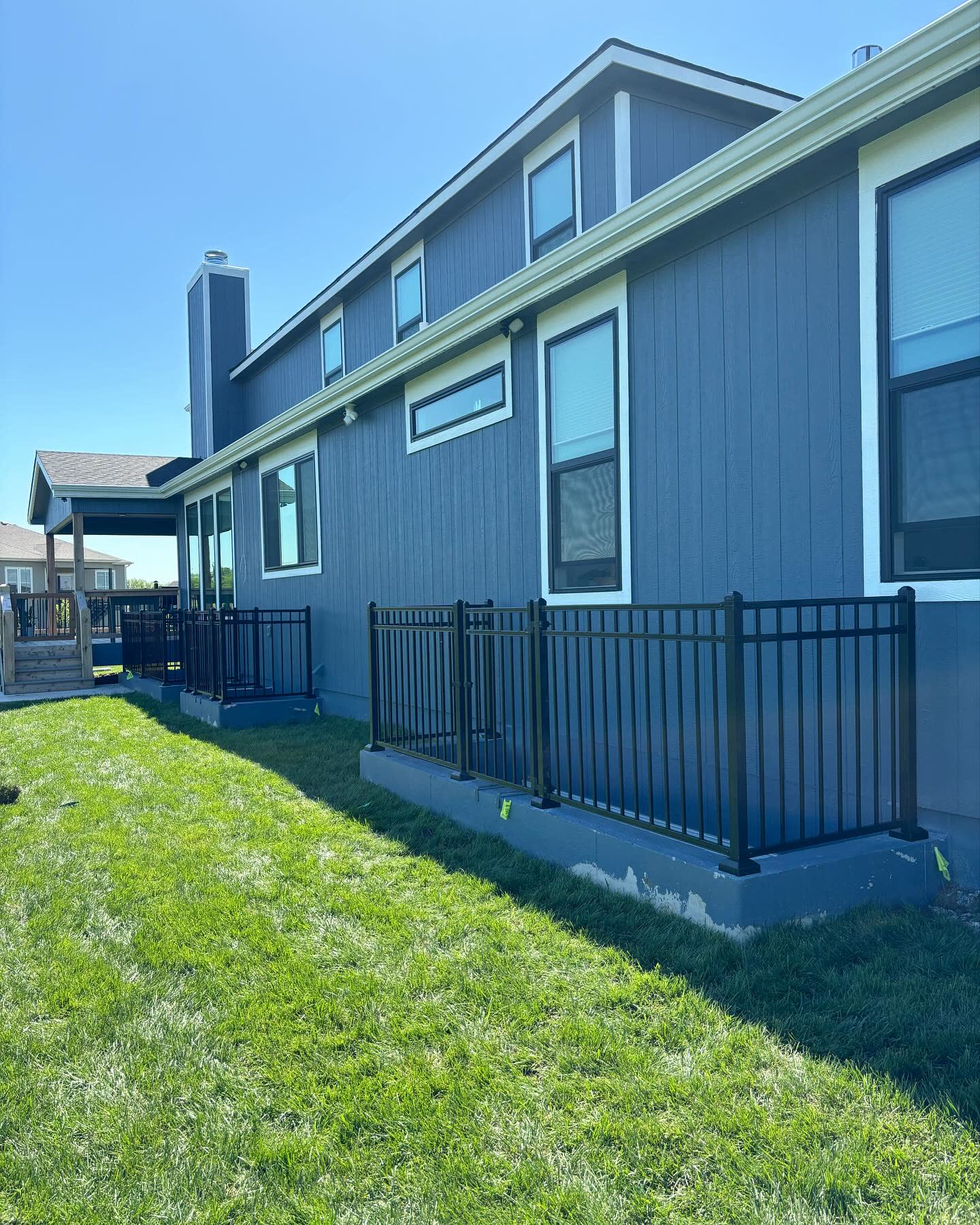
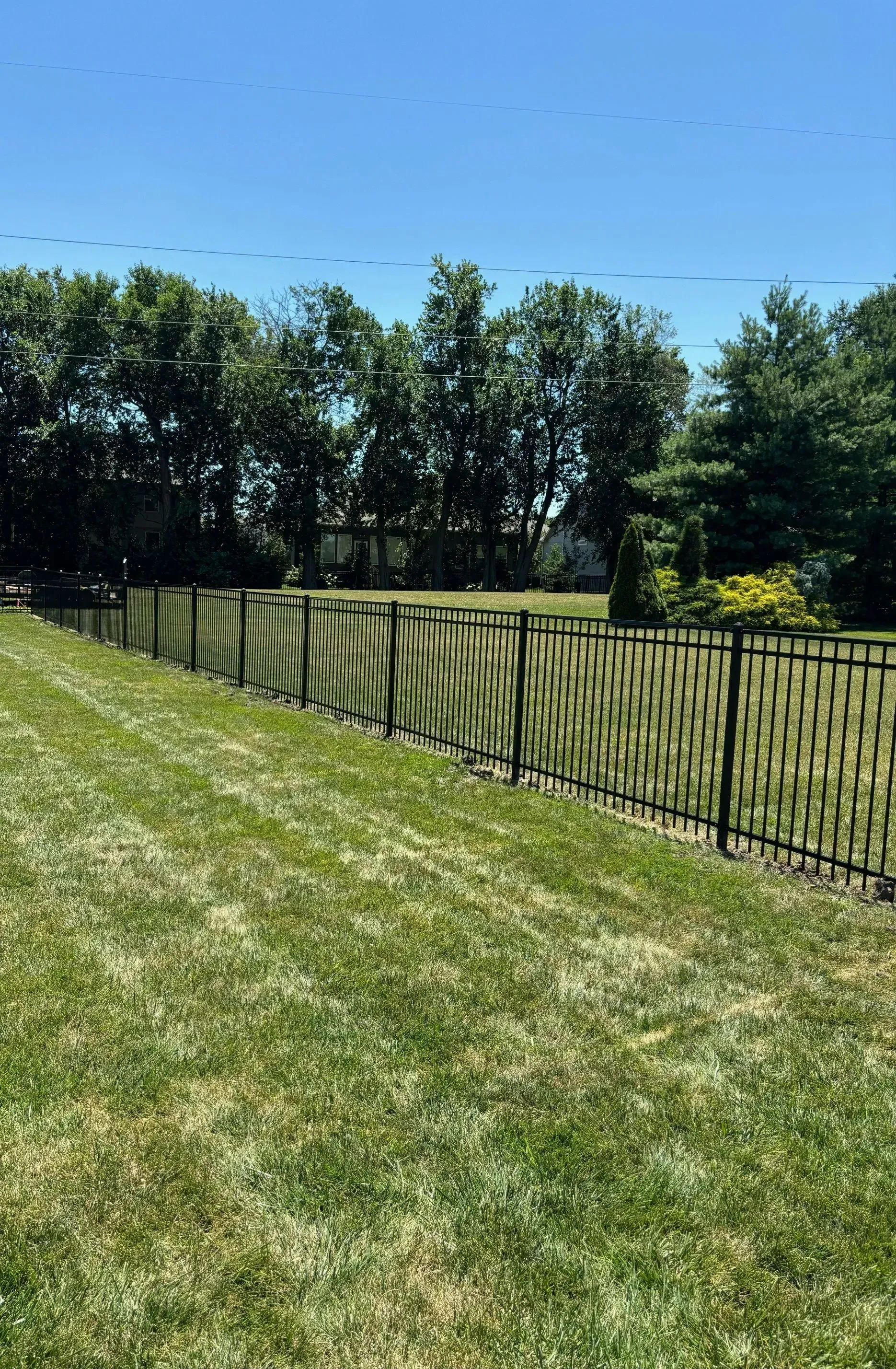
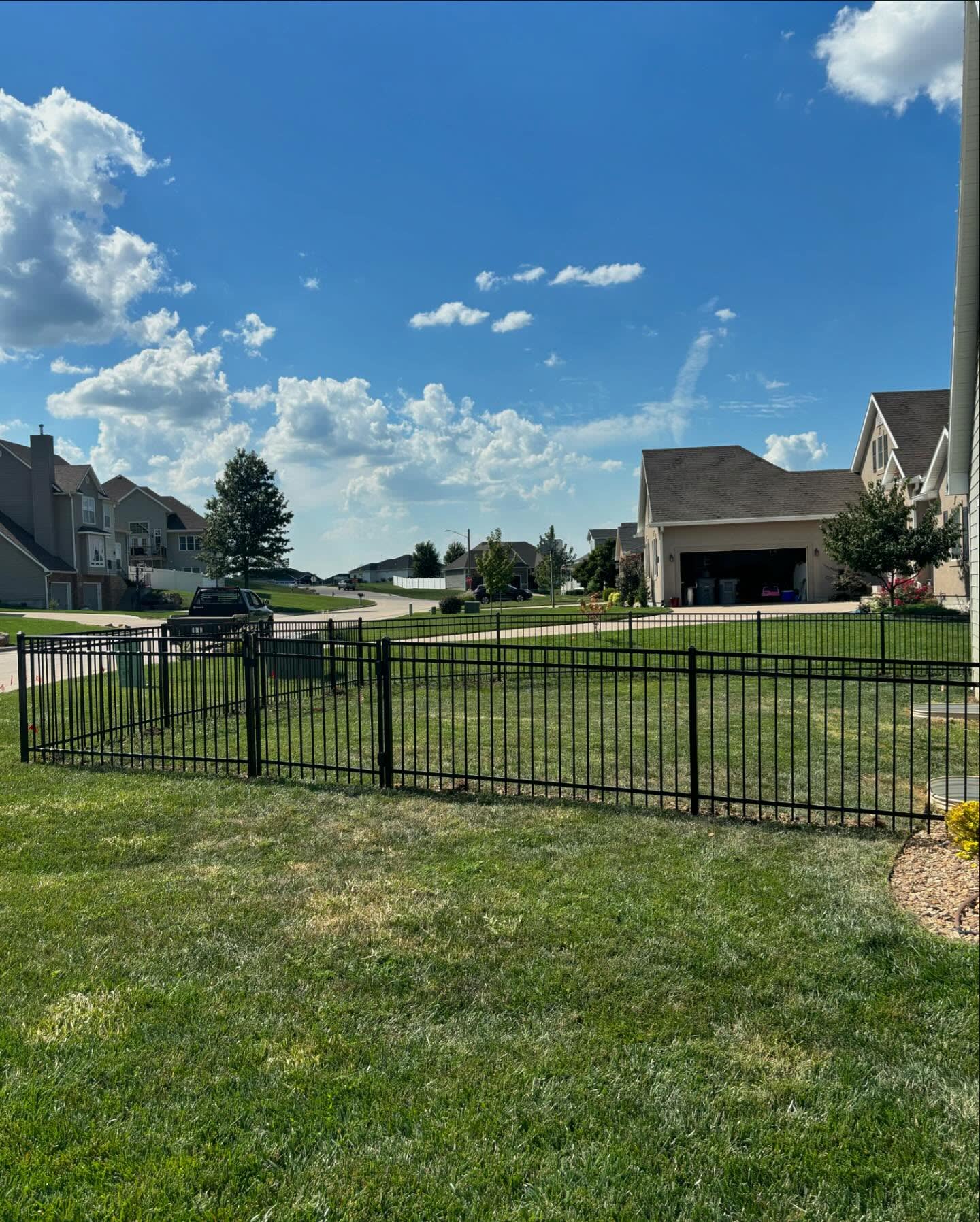
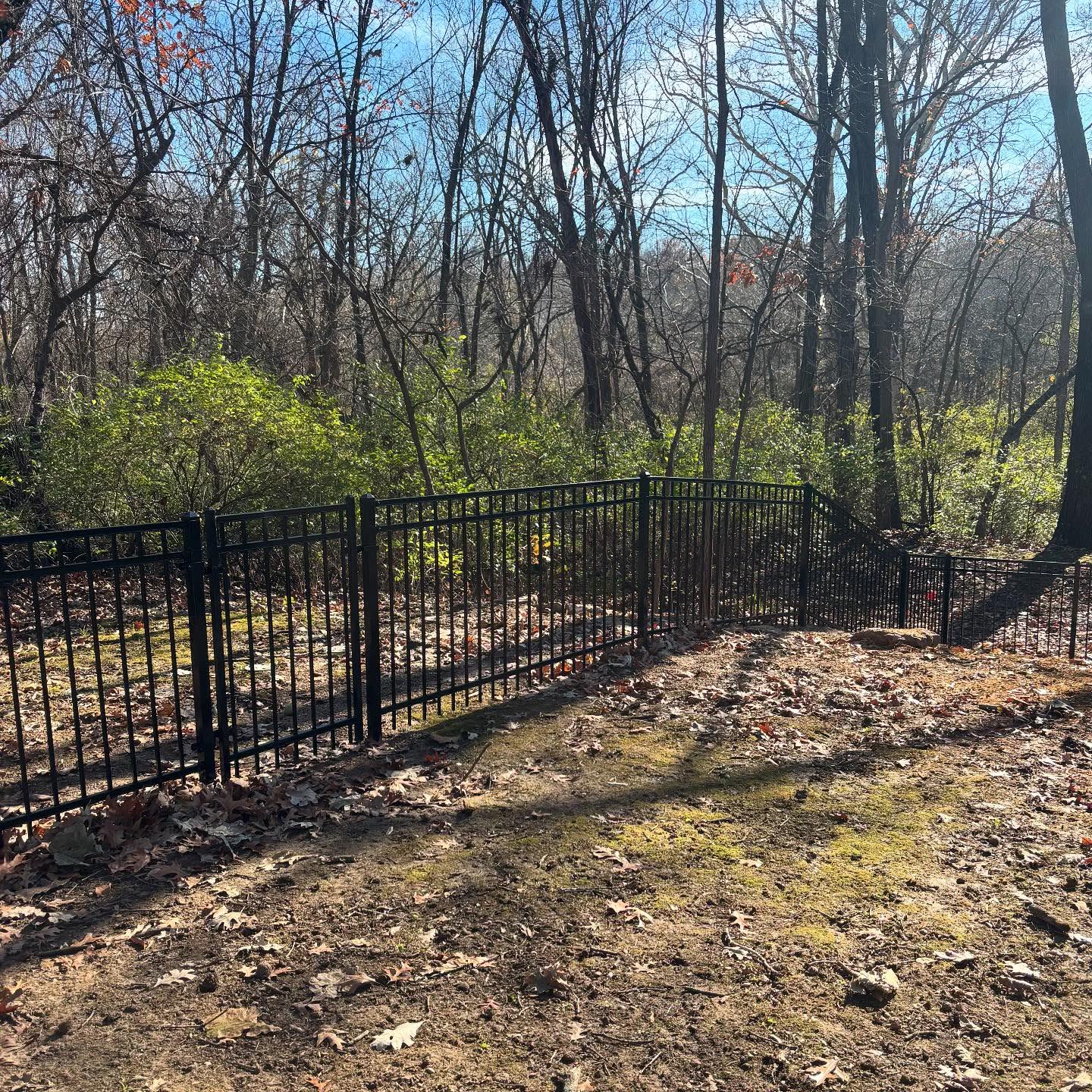
| A front-yard statement the whole street reads | Welded spear-top steel, heavier gauge, on braced posts | Olathe front yards tend to a low open ornamental line rather than a solid wall, and the front is the one place the real-steel premium visibly pays off — welded steel carries a mass and a shadow line a light aluminum extrusion can't fake, so it reads as permanent from the curb. On the frontage everyone sees, steel is worth the difference over the look-alike; farther back, that gap narrows fast |
|---|
| A heavy, hard-used drive gate on a wide Olathe lot | Welded steel gate frame on oversized, deep-braced posts | Gate sag is the most common fence-repair call in town, driven by the daily swing and the wind off the plains — and a welded steel gate is the frame that takes both without the flex a lighter section shows over a wide opening. It's the one spot where steel's weight is a straightforward advantage over aluminum, so long as the posts under it are sized and braced for the leverage a heavy gate puts on them |
|---|
| A traditional or older home in the pre-1990 pockets near the city center | Custom-welded scroll or scalloped pattern matched to the home's era | The 1970s split-levels and older homes around the city center carry a more traditional look than the new builds out west, and a custom-welded scroll or scalloped run suits them in a way a stamped stock panel can't — this is a fabrication and aesthetic match to the house, not a review-board requirement, and it's a detail only real welded steel can actually deliver |
|---|
| Pond or common-area frontage where you want the look to read permanent | Open flat- or spear-top steel — or matching aluminum if heft isn't the point | The black picket surge on Olathe's pond and common-area lots goes up in both steel and aluminum, and the honest split is whether you're paying for permanence you can feel. If the frontage is a showpiece, steel's mass earns it; if it's a long open run where nobody's testing the heft, aluminum gives the identical black line rust-free for less — we'll say which your run actually calls for |
|---|
| The clay footing under a rigid welded panel | Power-augered post, full 36-inch depth, poured concrete below the frost line | A rigid welded steel panel is the least forgiving thing you can hang on a bad footing — unlike a looser fence, it can't be shimmed back to plumb after the ground moves, so the footing is the one failure it can't hide. Olathe's clay is dense enough to make hand-digging a nightmare and it heaves in the freeze-thaw, so we power-auger every post to full depth in concrete below the frost line, deeper and braced at the gates |
|---|
| The finish where the steel meets Olathe's water-holding clay | E-coat electrocoat primer under the powder at every weld seam and hollow picket | This is steel's honest weakness against aluminum: the clay holds spring water against the base of a post, and bare or thinly coated steel bleeds rust at the ground line and the weld seams first. We run an E-coat primer that reaches the seams and the inside of the hollow pickets a topcoat skips, then powder over it — done right it holds for decades, but it's the reason a plain run that only needs the black look is often better off in aluminum |
|---|