Is aluminum the right fence for an Olathe pond or common-area lot?
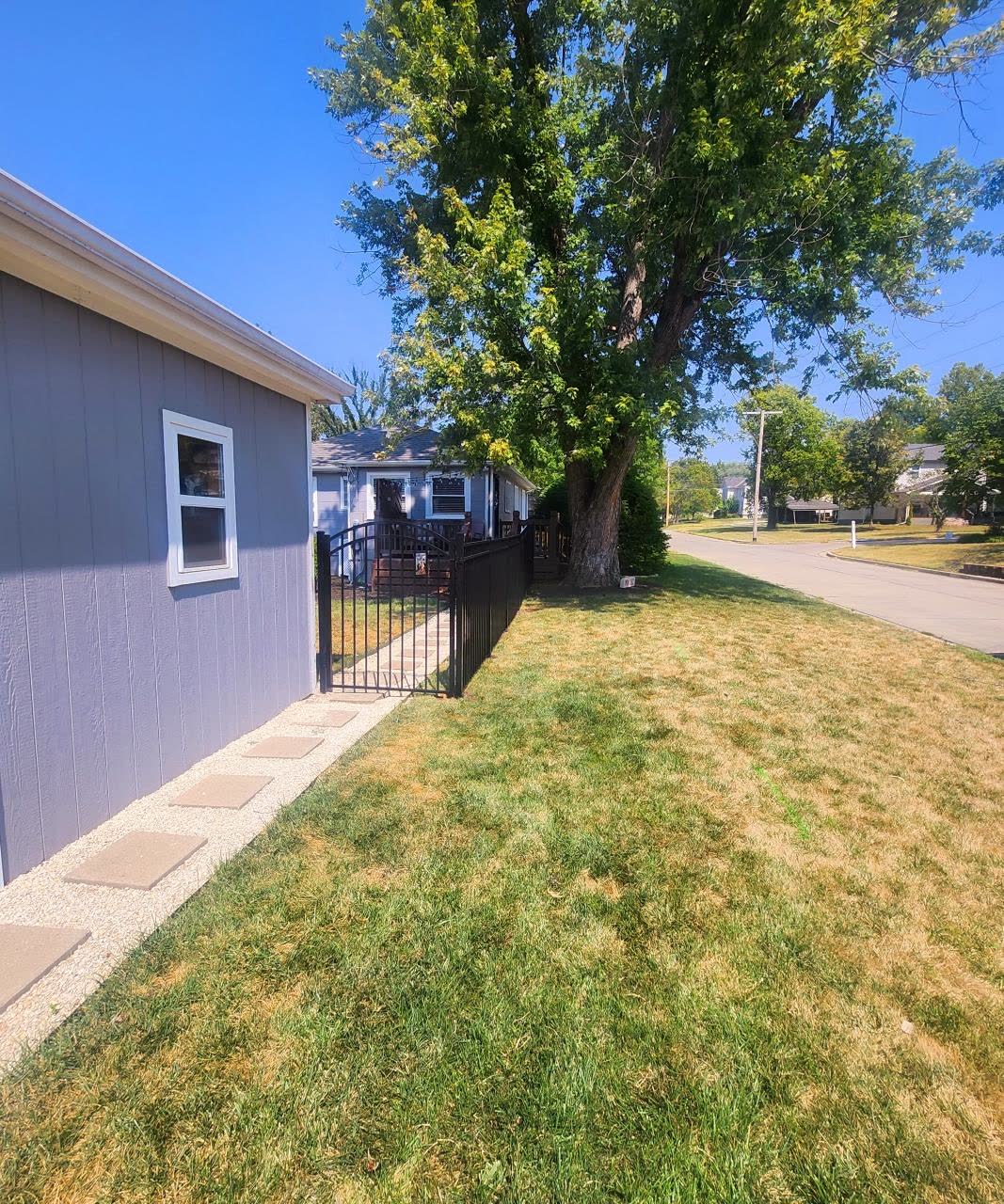
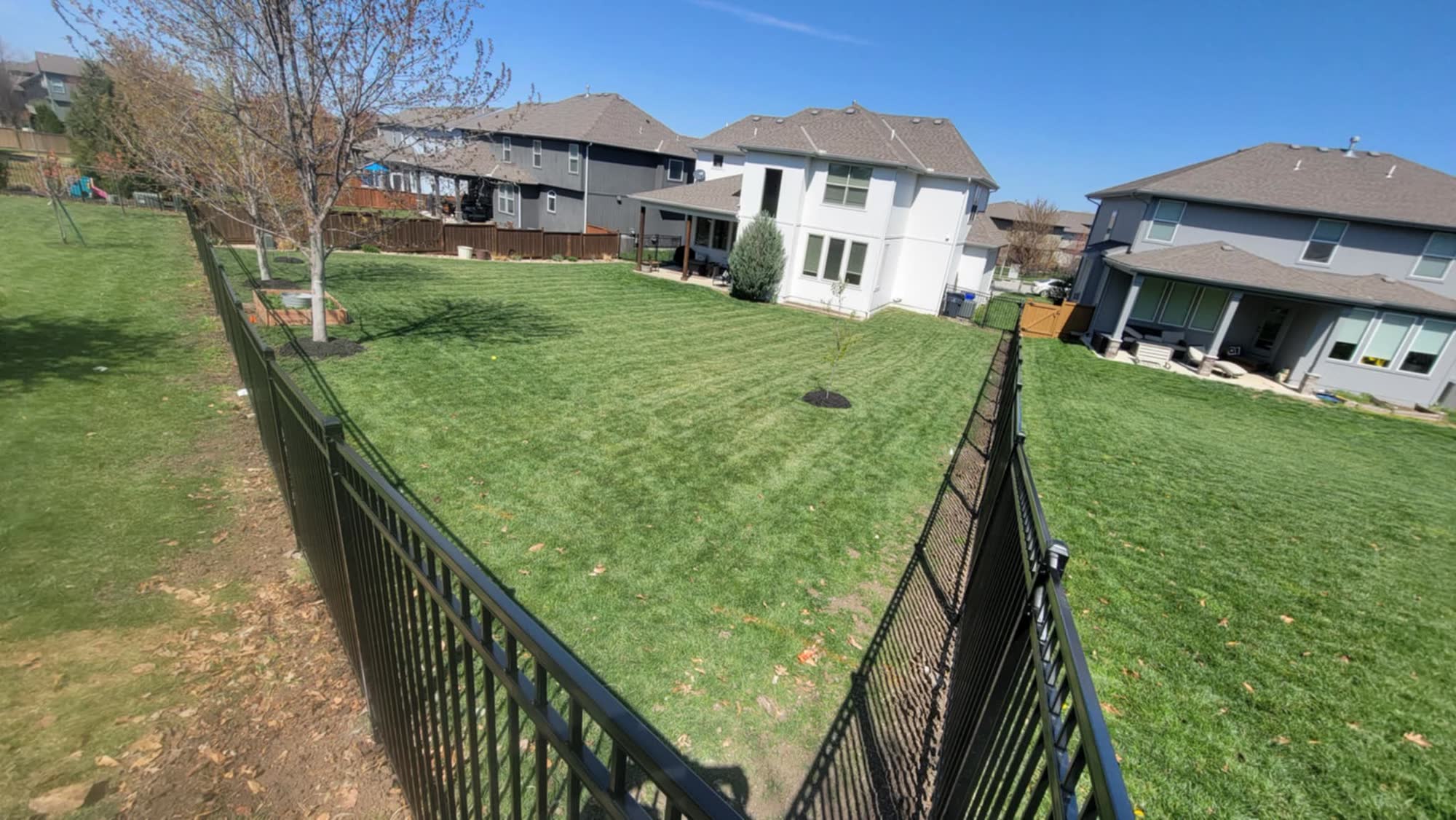
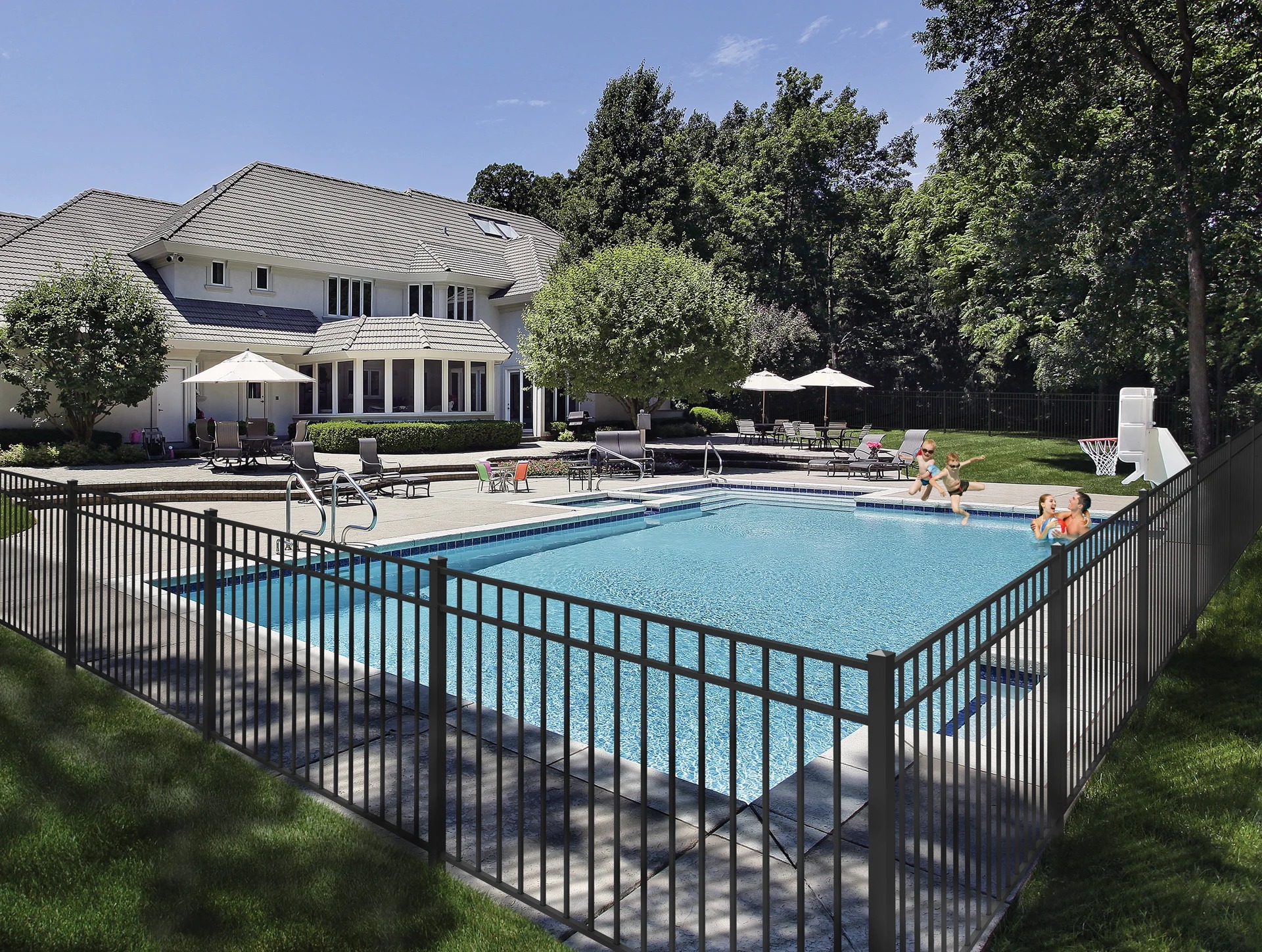
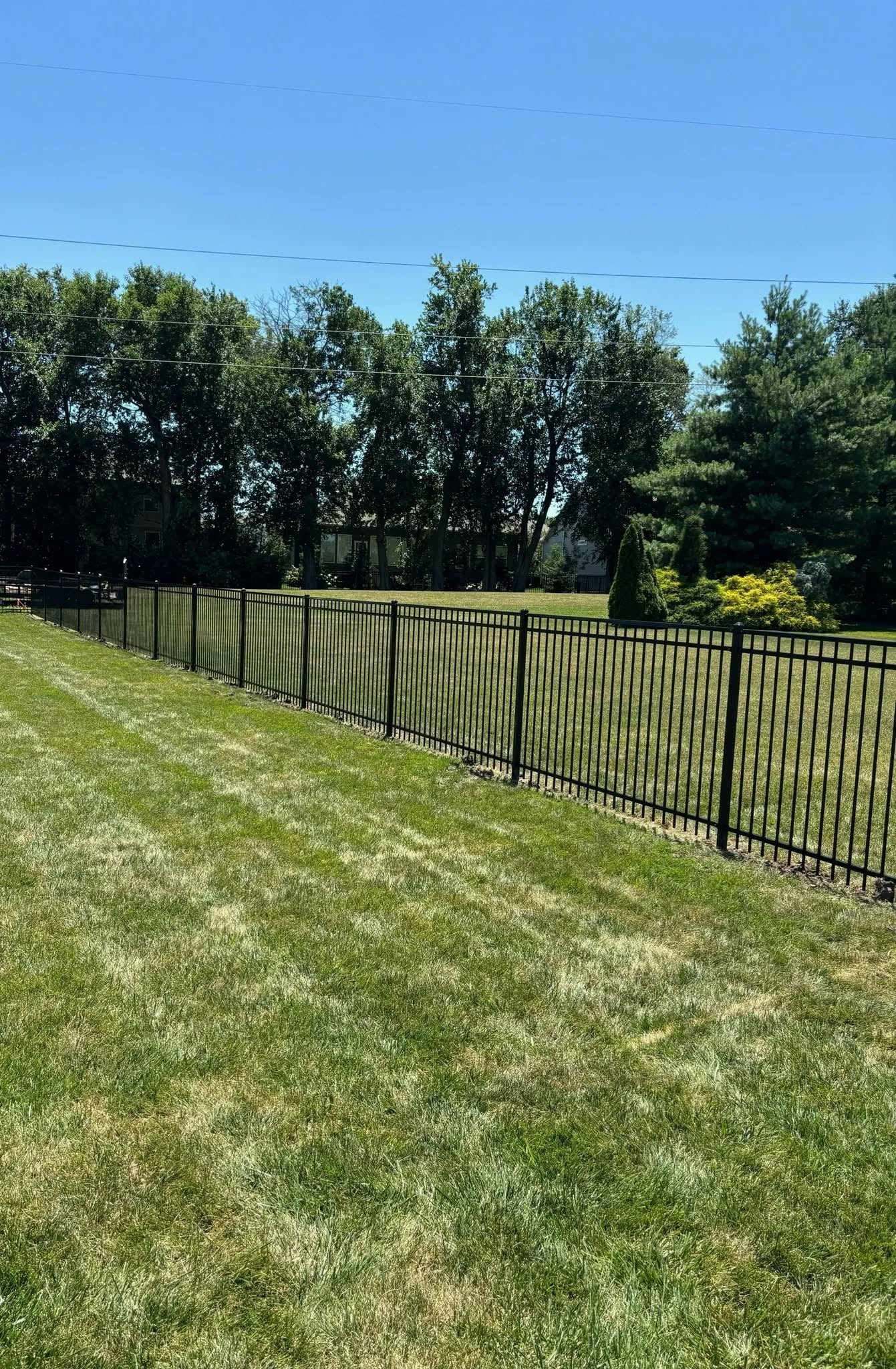
For most of them, yes — it's the fence you see going up all over those lots for a reason. A home that backs a pond or a neighborhood common green was bought partly for that open outlook, and a solid wood or vinyl run would wall it right off. An open black aluminum picket marks the property line and holds a dog while leaving the water or the greenway fully in view, and it does it in a material that never needs staining and can't rust. It reads like ornamental iron from the patio and keeps the sightline the lot is worth.
Will the Olathe wind damage an aluminum fence?
It's actually where aluminum has the edge. The wind coming off the plains is the hardest thing on any Olathe fence — it's what racks a long solid privacy run and drags gates out of square. An open aluminum picket is nearly all air, so a gust passes through it instead of shoving against a wall of boards, and there's no broad surface for the wind to lever on. The place sag still tries to start is the gate, so we hang a welded aluminum gate frame — a rigid triangle that won't work loose — on oversized posts set deeper and cross-braced. On a windward run, that's the combination that stays plumb.
How does aluminum hold up in Olathe's heavy clay soil?
It sidesteps the clay's worst trick. Olathe's clay is dense — hand-digging a post hole in it is a full day of misery — and it holds spring water against the base of a wood post until the post rots at the ground line, which is the most common way an Olathe wood fence dies. Aluminum has no wood anywhere near the dirt, so that failure is gone before it starts. We set every post with a power auger 36 inches into poured concrete, below the 30-to-36-inch frost line, so the clay's freeze-thaw heave can't push it out of plumb either. On a clay lot the footing method matters as much as the metal above it.
My neighbor's new cedar fence was cheaper — is aluminum worth it on a new build?
Up front, cedar and chain link both come in under aluminum — that part is true. What the aluminum premium buys is a fence you install once. The cedar going up next door will want a re-stain in about two years and will be near the end of its life around the time the aluminum is barely middle-aged, and in Olathe's clay it's fighting post rot the whole way. Aluminum has no stain schedule, no rust, and nothing at the ground line to rot, so across the years you own the house it's usually the cheaper fence, not the pricier one. On a new build fencing for a dog and kids, buying the last fence first is the honest math.
Does an open aluminum picket fence actually contain a dog?
It does, and that's one of the main reasons new Olathe builds land on it. We tune the space between pickets to the animal — closing it up for a small dog that would squeeze through a standard gap — and because the bottom is metal, there's nothing for the dog to gnaw, paw, or dig apart the way it eventually goes after a wood board. A dedicated jumper gets a taller run. So you keep the open pond or common-area outlook and still get a fence that holds the dog, instead of a good-looking line that only does half the job.
How much does an aluminum fence cost in Olathe?
Aluminum sits above wood and chain link at the start, and the trade for that is a fence that runs thirty to fifty years on an occasional rinse — no re-stain, no sealer, no rust, no rebuilding a rotted post line. Where a quote lands depends on the footage, the picket profile you pick, the number of gates, whether a windward or sloped run needs extra bracing and racking, and how hard the dense clay fights the auger — variables no one can price honestly sight-unseen. So we come out, walk the lot, and hand you a written breakdown with every line called out separately. There's no charge to get that number.