Skip to content
Wood Fence Installation in Belton, MO — Built for New Lots, Big Yards & Open Wind

Wood Fence Installation in Belton, MO — Built for New Lots, Big Yards & Open Wind

Belton asks a fence to survive two things: clay that shifts with the seasons and wind that comes wide open from the south. We build to both — and set the posts 36 inches deep so the fence still reads straight in two years.Our lineup runs from 6-foot cedar dog-ear and board-on-board through treated pine and composite, roughly $20 to $56 a linear foot. Posts drop below the shrink-swell layer so the summer clay can't lean them, exposed runs get built for the prairie wind, and our own crew lays the first stain coat. A+ BBB Rated, 400-plus fences across the metro since 2021, 4.9 stars on 85 Google reviews.

★★★★★
4.9
from 85 reviews
Licensed
& Insured · KS + MO
400+
fences installed
A+ BBB Rated 400+ Fences Installed Since 2021 In-House Stain Crew Free On-Site Estimates
Browse wood options ↓

WHY BELTON HOMEOWNERS CHOOSE WOOD

New-Build Privacy That Won't Lean in Two Years

1

New-build privacy, done right the first time

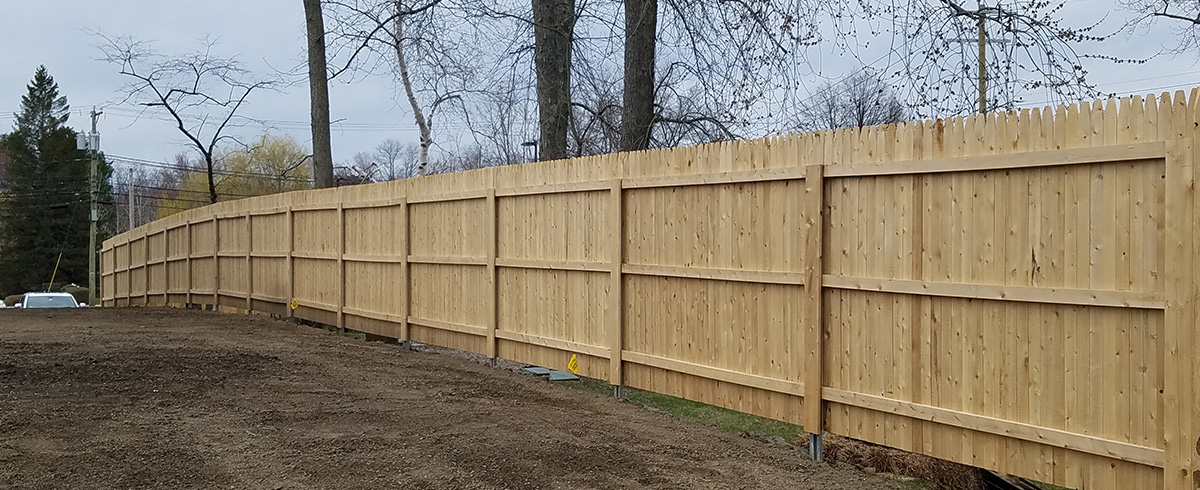
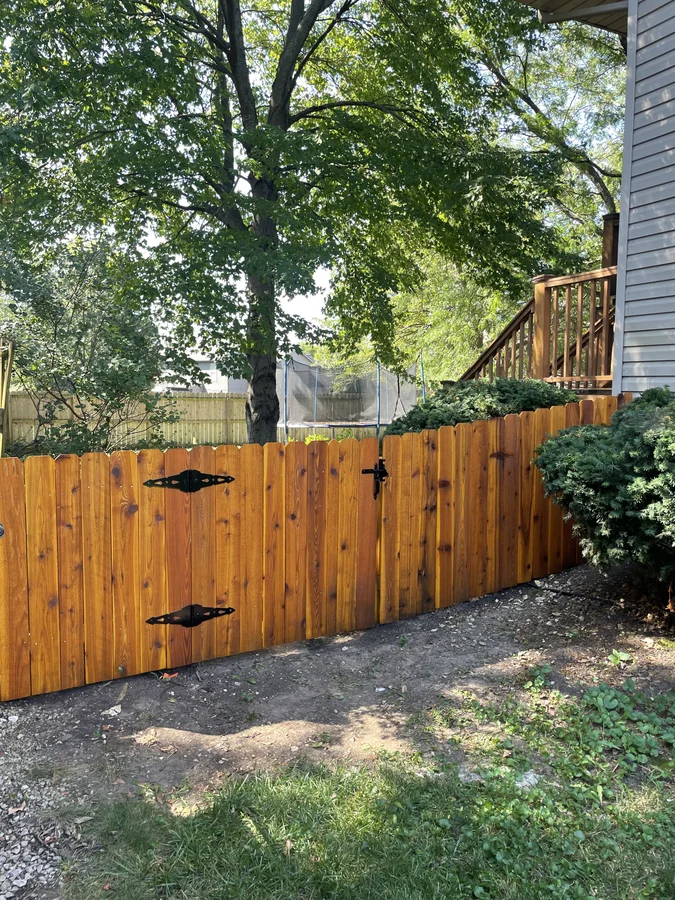
Belton is the Growth Hub of Cass County — subdivisions like Traditions and Autumn Ridge keep filling in, and a new house on a fresh 0.20-acre lot almost always needs a fence before the dog or the kids can go out back. That's the #1 job we do here. We build the standard the market actually wants — 6-foot dog-ear cedar, clean and private — and we set it to outlast the thin builder-grade line the neighbor put up that's already waving in the wind.
2

Posts that don't lean when the clay dries out

The #2 complaint we hear in Belton is a fence that started tilting after a couple of summers. The cause is the soil: deep, heavy clay that swells when it's wet and shrinks hard in a dry July, pulling away from any post that wasn't set below that moving zone. A shallow post rides that swing and leans. We drop every post a full 36 inches — down past the shrink-swell layer — into a poured concrete collar, so the clay can move at the surface and the fence still reads straight.

3

Built for the open-south prairie wind

Belton is wide open to the south, and the wind that comes across those flat fields is the single biggest thing that kills fences here — it's why fall is 'wind-proofing season' when people rush to firm up weak posts before winter. A tall privacy panel catches all of it, so the load lands on the posts and footings. We build the exposed runs to take it: deep-set posts, full concrete, and hardware that doesn't rattle loose the first storm.

4

Big lots handled economically, and finished in-house

Plenty of Belton is older ranchettes on half-acre-plus lots with long perimeters to close in. Pressure-treated pine keeps the math sane on a run that long, cedar steps it up where privacy matters, and we'll tell you honestly which belongs where. Then our own crew brushes on the first stain coat — mahogany, walnut, or a warm golden tone — and logs the two-year recoat so the wood never grays out. 4.9 stars across 85 Google reviews.

WHERE A BELTON FENCE HOLDS OR LEANS

Why a Belton Post Holds When the Clay Dries and the Wind Comes Up from the South

Where What we build there What it does in Belton
Below the shrink line Every post a full 36 inches down, past the layer where the clay moves The dry-summer lean that's Belton's #2 fence complaint — set below the shrink-swell zone, the post stays put while the surface clay swells and shrinks
0 – 36 inches A full poured-concrete collar bonded around each post The open-south prairie wind — the #1 fence-killer here — by carrying the load a tall privacy panel catches down into solid ground
At the groundline A gravel drainage bed under the footing in the heavy clay Water sitting against the post — the start of rot — plus the frost heave that works a shallow post loose over Missouri winters
The whole run Posts on true spacing, not the stretched gaps of a builder-grade fence The wave and lean you see on a thin new-subdivision fence two years in — proper spacing keeps a Belton line straight the length of the run

A Belton fence rarely dies of rotten boards — it dies when a shallow post lets the flexing clay and the prairie wind walk it out of plumb. Set below the shrink-swell layer, collared for the wind, drained at the base, and spaced true, a run stays straight for the long haul. Our metro Kansas City wood fence installation page lays out every species, grade, and the 36-inch standard in full; this page is that same build tuned to Belton's new lots and open ground.

PICK YOUR BOARD

Cedar Dog-Ear, Board-on-Board, Pine & Composite — for the Belton Yard

6-Foot Cedar Dog-Ear Privacy by RKC Wood Care Pros in Belton, MO

6-Foot Cedar Dog-Ear Privacy

The Belton subdivision standard

Six-foot dog-ear cedar is what goes up on most new Belton lots — full privacy, a clean solid top line, and cedar's natural oils fighting rot without added chemicals. It's the default for a reason: it looks right in a Traditions or Autumn Ridge backyard and, set on proper 36-inch posts, it stays straight where the builder-grade fence next door already leans. The workhorse of the Belton wood catalog.

  • Price: $25–34/LF installed
  • Lifespan: 15–25 years
  • Maintenance: Re-stain every 2 years
Cedar Board-on-Board by RKC Wood Care Pros in Belton, MO

Cedar Board-on-Board

Wind-tight · finished both faces

Pickets overlap so there's no gap and both neighbors see a finished face — courteous on a shared line and genuinely tougher in wind, because the doubled boards leave no slot for a gust to pry at. On the runs that face Belton's open-south exposure, this is the one we steer people toward. A step up from a single-picket privacy wall in both looks and staying power.

  • Price: $28–38/LF installed
  • Lifespan: 15–25 years
  • Maintenance: Re-stain every 2 years
Pressure-Treated Pine by RKC Wood Care Pros in Belton, MO

Pressure-Treated Pine

The big-lot value run

Southern yellow pine, kiln-dried and pressure-treated so rot and bugs stay out — the wood that makes sense when a Belton ranchette has a long perimeter to close and the tape measure, not the grain, is setting the budget. It's the cheapest way into a real wood fence. The one catch: the treatment has to weather out for roughly three months before it'll accept a stain, so plan the finish for the following season.

  • Price: $20–27/LF installed
  • Lifespan: 10–15 years
  • Maintenance: Re-stain every 3 years (first coat at 90 days)
Composite (Trex / TimberTech) by RKC Wood Care Pros in Belton, MO

Composite (Trex / TimberTech)

No stain, ever · long-hold home

Wood-polymer composite — recycled fiber and plastic pressed into boards that read like stained cedar but never see a brush. For a family settling into a new Belton build for the long haul, it trades the biggest up-front check for a maintenance calendar that stays blank: no 30-day first coat, no two-year recoat, just an occasional rinse. The manufacturer stands behind it for 25 years.

  • Price: $40–56/LF installed
  • Lifespan: 25–30 years
  • Maintenance: No staining — soap-and-water rinse

MATCHING WOOD TO THE LOT

Cedar, Pine, or Composite — What Fits the Belton Job

Material Installed Lifespan Stain cycle Best for
Cedar Dog-Ear Privacy $25–34 / LF 15–25 yrs Recoat every 2 yrs · first at 30 days The Belton standard — the 6 ft privacy run a new subdivision home wants, and cedar's oils fight rot on their own
Cedar Board-on-Board $28–38 / LF 15–25 yrs Recoat every 2 yrs · first at 30 days Overlapped, gapless, finished both faces — the pick for a shared line and for the exposed runs facing the open-south wind
Pressure-Treated Pine $20–27 / LF 10–15 yrs Recoat every 3 yrs · first at 90 days The long-perimeter value — closing in a half-acre ranchette or a big back run where the footage adds up fast
Composite (Trex / TimberTech) $40–56 / LF 25–30 yrs None — just a soap-and-water rinse The blank-calendar pick for a family planting roots — priciest up front, then no coats to keep, backed 25 years

The honest Belton advice is match the wood to the lot. A new-subdivision backyard wants cedar dog-ear; an exposed run facing the open-south wind wants board-on-board; a long ranchette perimeter is where pine earns its keep; and composite is for the owner planting roots who's done staining altogether. Tell us the lot and how you'll use it and we'll price the pair you're weighing.

Cedar fence cost guide — Belton, MO — RKC Wood Care Pros

BELTON WOOD FENCE PRICING

What Wood Fence Installation Costs in Belton

Cedar Dog-Ear Privacy — 6 ft

$25–34

per linear foot installed

The Belton subdivision standard — new-build backyards and privacy runs.

Cedar Board-on-Board — 6 ft

$28–38

per linear foot installed

Finished both faces, wind-tight for the exposed open-south runs.

Pressure-Treated Pine — 6 ft

$20–27

per linear foot installed

The lowest entry price — long ranchette perimeters and big back runs.

Composite runs $40–56 per linear foot with no stain schedule. Old-fence tear-out, wide gates, and taller wind-exposed runs are each their own line on every Belton estimate — call (913) 286-1091 or set up an on-site walkthrough.

FROM ESTIMATE TO FINAL COAT

A Belton Wood Fence Install, Step by Step

1

On-site estimate and property walkthrough

We come out and read the lot — a fresh subdivision build, a long ranchette perimeter, or an exposed run that catches the south wind — and note where the ground is open and where the load will be worst. Back comes a written, itemized quote: footage, cedar or pine, gates, concrete, and the first stain coat. On a big lot the per-foot number matters most, so nothing gets guessed at.

2

Layout, utility locates, and material staging

We snap the line, call the 811 locate, and stage the wood on-site to acclimate before it goes up. Belton's lots range from tight new-build backyards to half-acre ranchettes, and the deep heavy clay reads the same across both — we plan the post spacing for the run length and the exposure rather than stretching gaps to save a post, because that's exactly what leaves a fence waving two years on.

3

Install — posts 36 inches deep, below the shrink zone

Each post seats a full 36 inches down — below where Belton's clay swells and shrinks — bedded on gravel and locked in a poured collar so water drains off the base instead of rotting it. That same depth is what anchors a tall panel against the south wind. Rails hang next, pickets go up with ring-shank galvanized fasteners that won't back out, and every gate rides braced posts with hardware sized to the swing so it stays true.

4

First stain coat — in-house, before the fade

Give cedar about four weeks to shed its mill moisture before a stain will bite; treated pine wants roughly three months while the preservative sets. Then our crew — not a subcontractor — works in a penetrating, semi-transparent finish in mahogany, walnut, or golden, and marks the file for the next coat two years out. On an open, sun-and-wind Belton lot, that upkeep is the whole difference between a fence that's sharp at year ten and one that silvered by year five.

RECENT BELTON WOOD INSTALLS

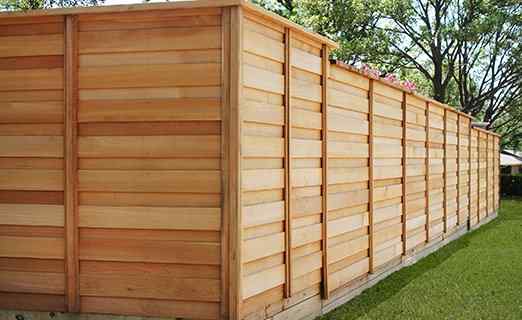
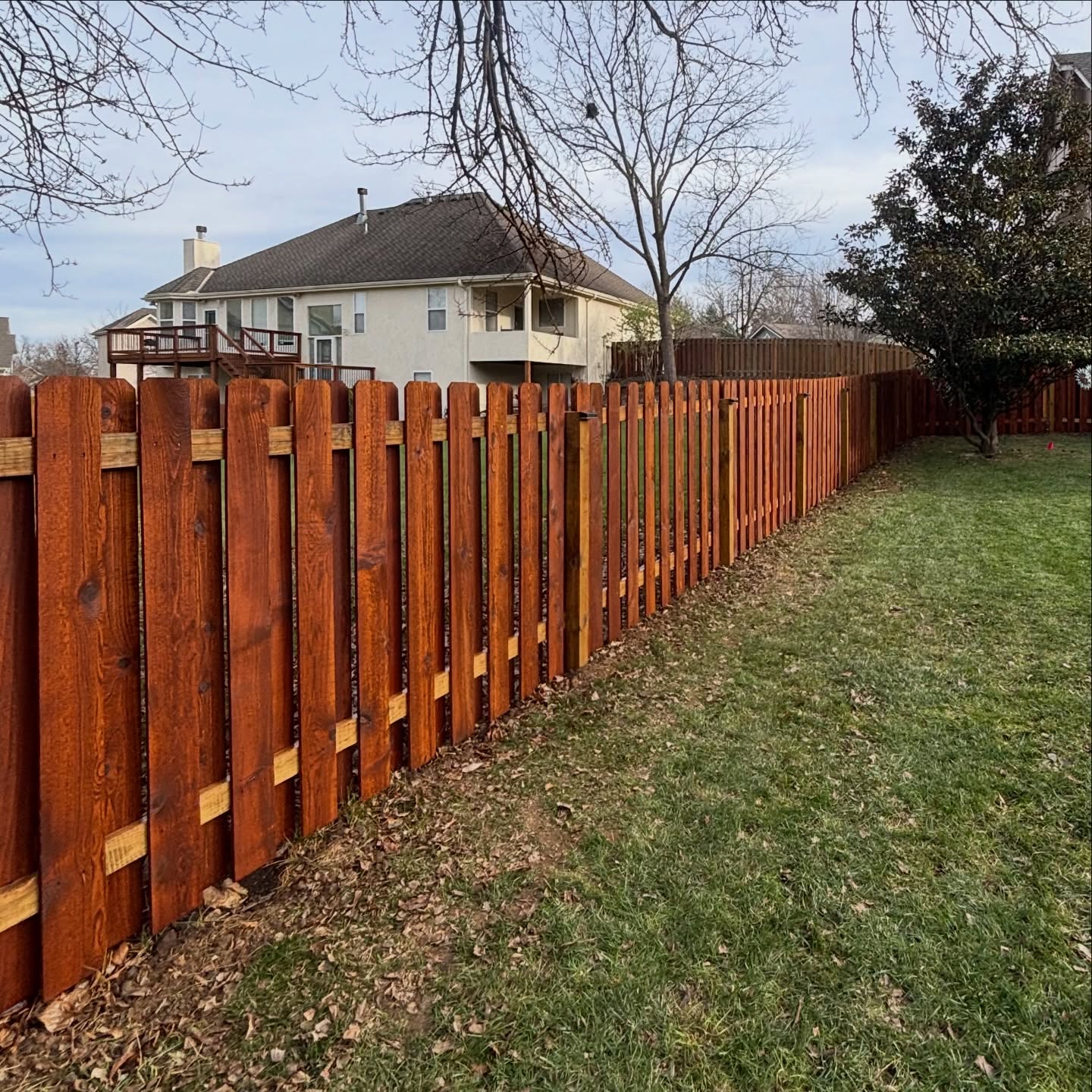
Cedar board-on-board privacy fence in Belton, MO by RKC Wood Care Pros
Board-on-Board · Belton
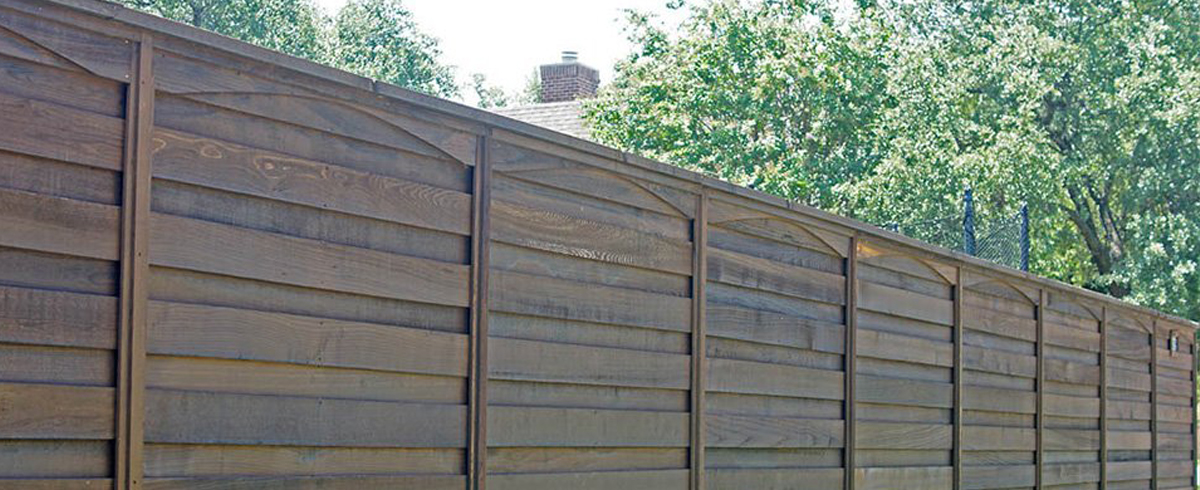
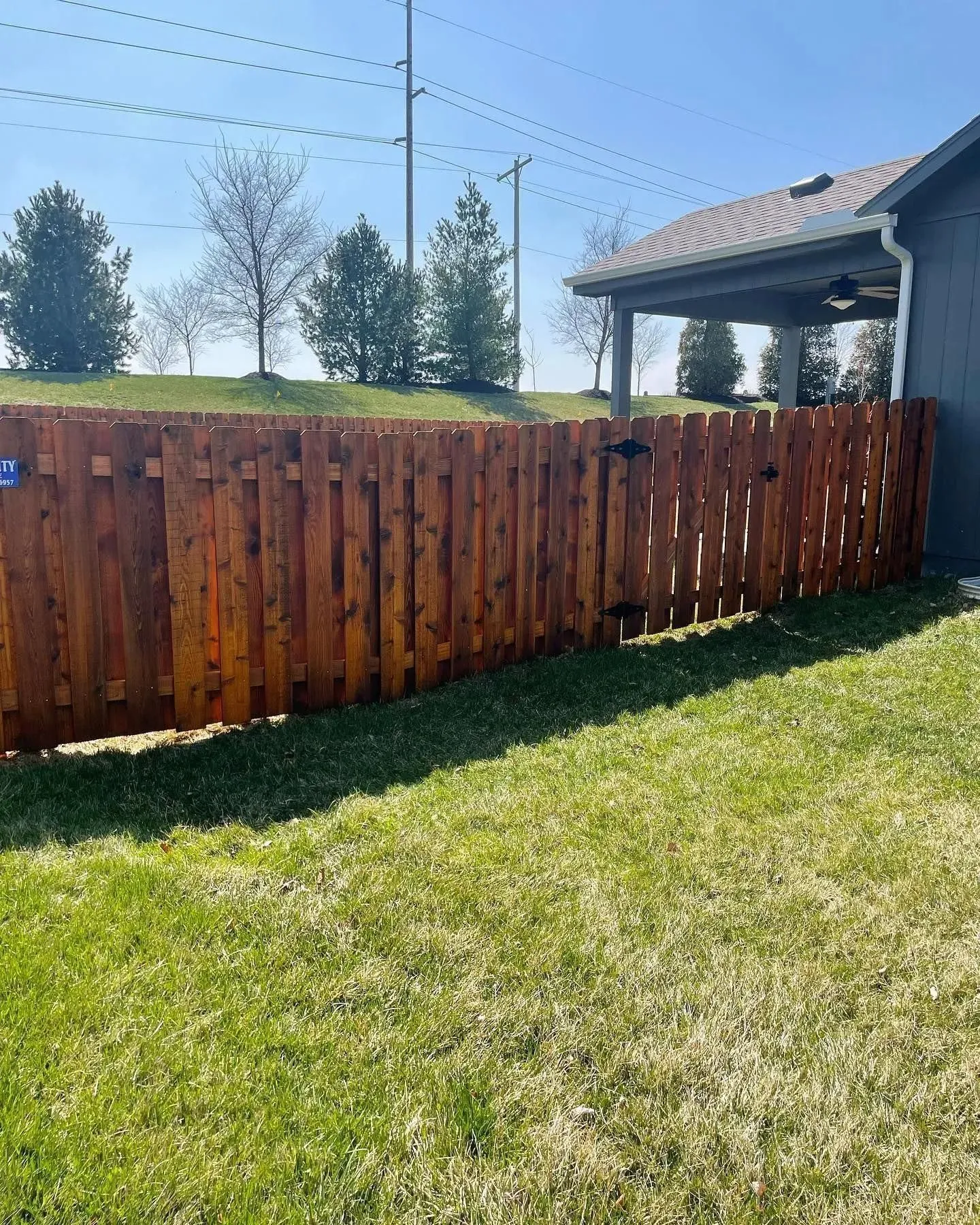
Walnut-stained cedar privacy fence in Belton, MO by RKC Wood Care Pros
Walnut Finish · Belton
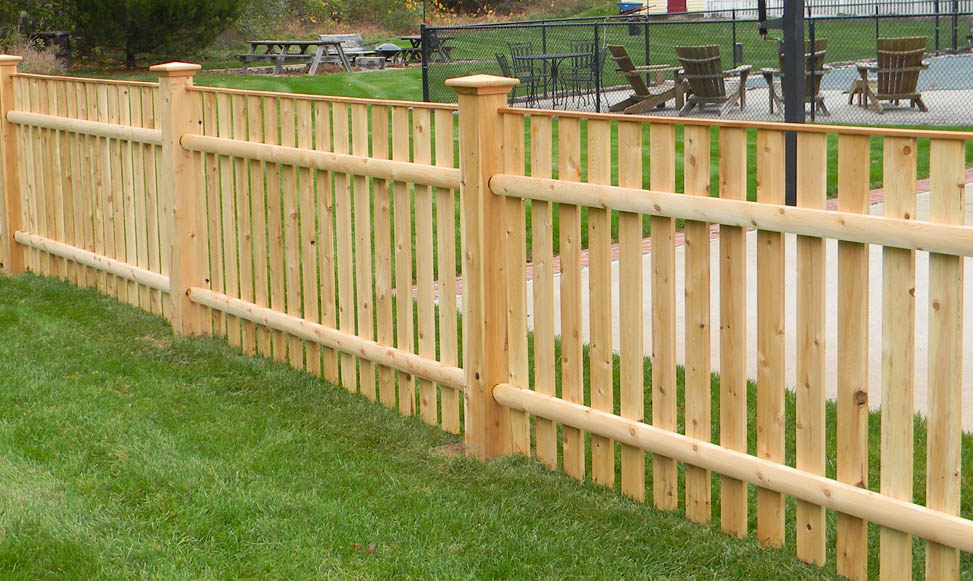
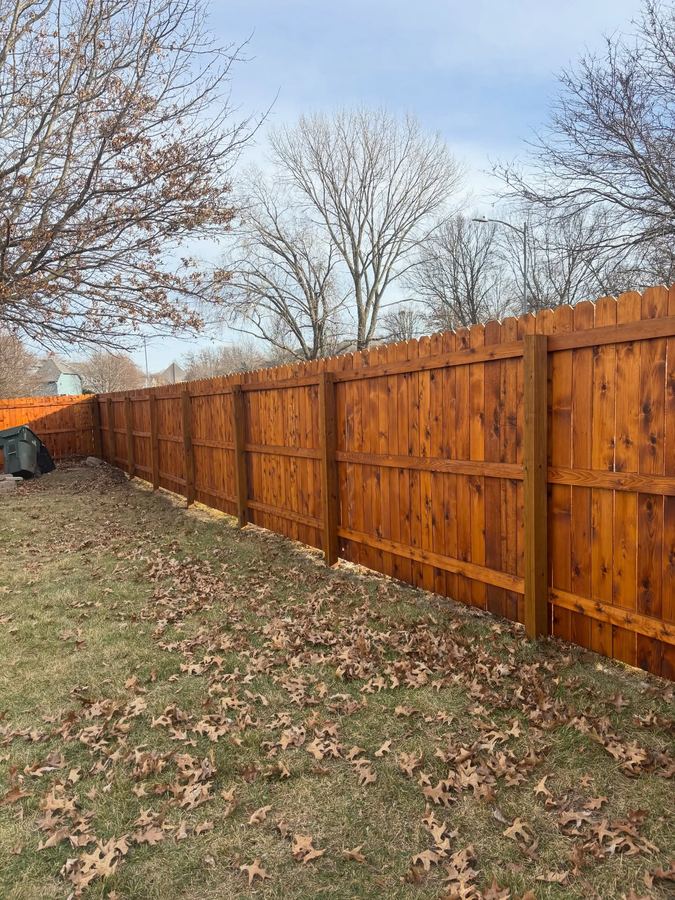
Golden-finish spaced-picket cedar fence in Belton, MO by RKC Wood Care Pros
Golden Picket · Belton
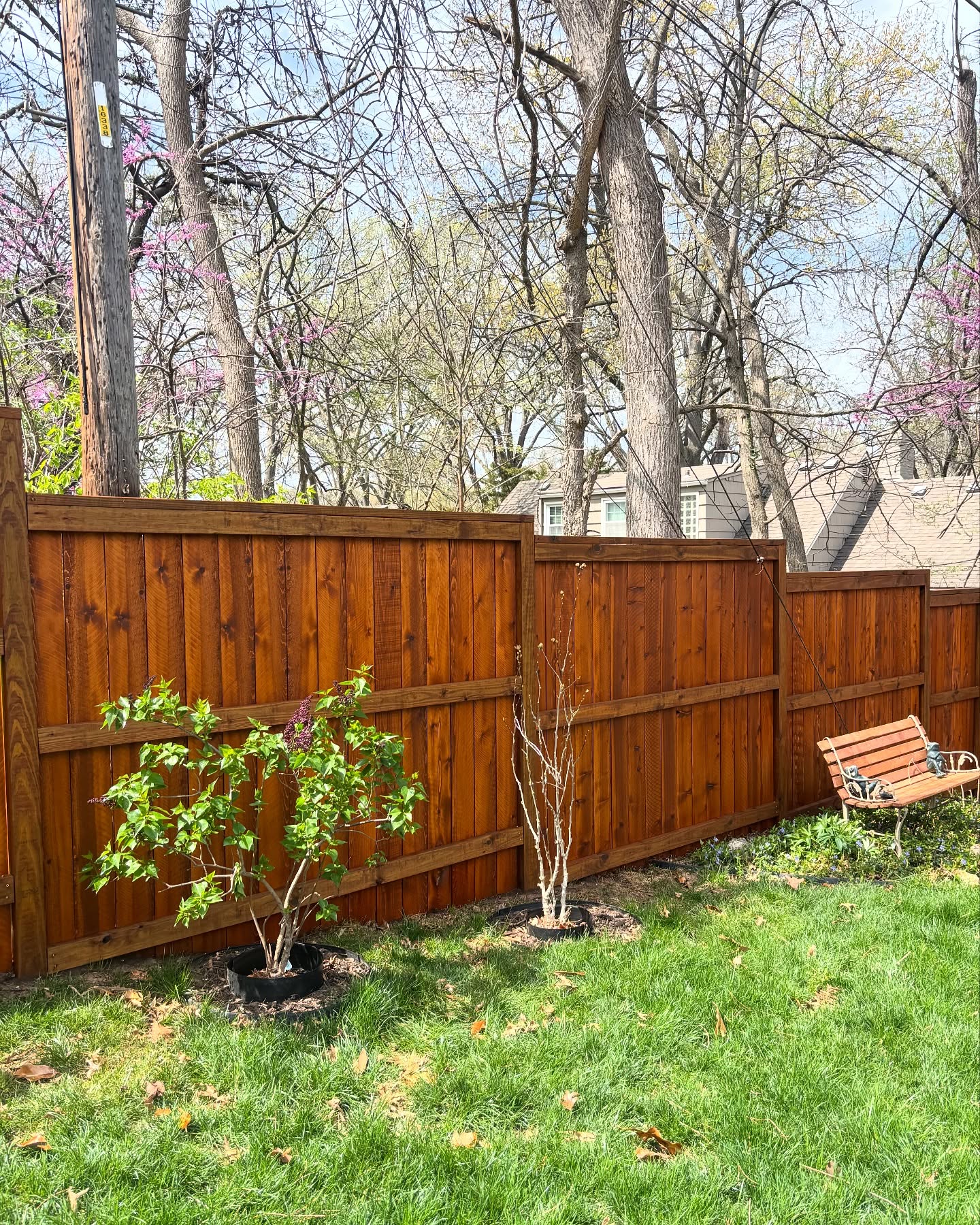
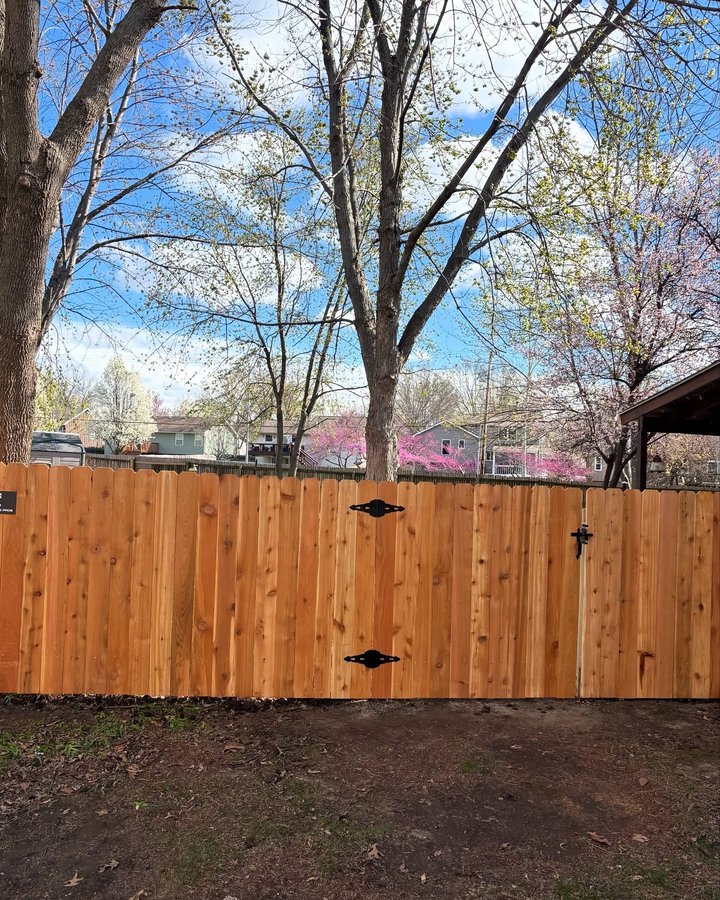
Stained cedar residential fence in Belton, MO by RKC Wood Care Pros
Stained Cedar · Belton

REVIEWS

What Kansas City Homeowners Say About RKC

4.9 ★ · 85 Google reviews

Every review is on our Google Business Profile — read them there, unedited.

Read all 85 reviews on Google

BELTON WOOD FENCE QUESTIONS

Wood Fence Installation Questions Belton Homeowners Ask Most

Cedar fence with fresh stain coat in Belton, MO by RKC Wood Care Pros

Wood Materials & Lifespan

We just closed on a new build in Belton — when's the right time to fence it?
As soon as you're settled is fine — most Belton new-build owners fence within the first year for the dog, the kids, or plain privacy from the neighbor. The one thing worth doing right the first time is the posts. New subdivisions are full of builder-grade fences set shallow to save a few dollars, and in Belton's clay those start leaning fast. We set every post a full 36 inches on true spacing, so yours holds straight while the quick jobs around it start to wave. Six-foot dog-ear cedar is the go-to for a new backyard here.
Why do so many Belton fences start leaning after a couple of years?
It's the soil, almost every time. Belton sits on deep, heavy clay that swells when it's wet and shrinks hard through a dry summer — and as it shrinks it pulls away from any post that wasn't set below that moving layer. A shallow post rides the swing and tilts a little more each season. The fix is depth: we drop every post a full three feet into concrete, down past the shrink-swell zone, so the surface clay can do its thing without ever grabbing the post. That, plus the open-south wind, is why we don't cut the 36-inch standard short in Belton.
I've got a big ranchette lot — what's the economical way to fence a long perimeter?
For a long run where the footage is what drives the cost, pressure-treated pine is usually the smart call — it's the lowest entry price of the wood options and closes in a half-acre-plus perimeter without the number getting out of hand. Where you want real privacy or a nicer face — the stretch behind the house — we'll step that section up to cedar and keep pine on the long back and side runs. Mixing the two along one property is common on Belton's bigger lots, and we'll lay out on the estimate exactly which goes where.
How long does a wood fence last in Belton?
Figure 15 to 25 years for cedar, 10 to 15 for treated pine, and 25 to 30 for composite. In Belton the two things that cut a fence short are the clay flexing at the footings and the south wind leaning the posts — so we answer both with depth, dropping every post three feet into concrete on a gravel bed, below the moving soil and braced for the load. Keep cedar on its two-year finish and it clears two decades even on a wide-open lot.

Pricing & Stain Schedule

What does a wood fence cost in Belton?
Pressure-treated pine runs $20 to $27 a linear foot installed, 6-foot cedar dog-ear $25 to $34, cedar board-on-board $28 to $38, and composite $40 to $56. A typical new-subdivision Belton backyard fences out to around 150 to 200 feet, which puts most cedar jobs in a predictable band; a half-acre ranchette perimeter is more footage, which is exactly where pine earns its keep. Wide gates and taller wind-exposed runs are each their own line, and every estimate is free, written, and itemized.
I'm running pine on a long perimeter — does it still need to be stained?
Yes — even a long utility run lasts longer and looks better sealed, but you can't rush it. Straight off the truck, treated pine is loaded with preservative and will reject a stain for about three months; coat it early and the finish just sits on top and flakes instead of penetrating. We let that first season do the drying, then lay a penetrating coat and keep pine on a roughly three-year cycle after that. Out on an exposed Belton perimeter, the finish is also what fends off the sun and wind that would otherwise silver the boards.
How often does a Belton wood fence need re-staining with all the sun and wind?
Plan on cedar every couple of years, pine about every three, composite not at all. An open Belton lot weathers a finish faster than a tucked-in city yard — steady wind and full sun are hard on a coat — so the schedule isn't really optional out here. Every Belton job goes into our records, and we circle back when a fence is coming due, so the color never slips away in the gap between coats.

OTHER BELTON FENCE OPTIONS

Weighing Other Materials or Services for Your Belton Fence?

Ready when you are

Get a free estimate — we usually respond the same day.

Call (913) 286-1091