Skip to content
Vinyl Fence Installation in Belton, MO — Built to Hold the Open South Wind, from Traditions to the Ranchettes off Y Highway

Vinyl Fence Installation in Belton, MO — Built to Hold the Open South Wind, from Traditions to the Ranchettes off Y Highway

Belton sits wide open to the south, and wind is the number-one thing that takes a fence down here — so a long vinyl run is only as good as the steel in its rail. Every run we build carries a galvanized channel sized to the panel height, set on posts 36 inches deep in the shifting clay, so the fence holds through the gusts instead of leaning by fall. And the color never fades: no stain weekend, ever. A 6-foot white vinyl privacy fence runs $40 to $55 a foot installed, in white, warm sand or woodgrain, or a shadow-board that bleeds the wind on the most exposed runs — capped, co-extruded PVC from CertainTeed, Bufftech, and Veka. Cedar is still Belton's standard fence, and we build that too; vinyl earns its place on the wind-exposed new-build backyard and the big ranchette lot tired of repainting rail. One owner-run crew measures it, builds it, and answers the warranty call years later.

★★★★★
4.9
from 85 reviews
Licensed
& Insured · KS + MO
400+
fences installed
A+ BBB Rating 400+ Fences Installed Since 2021 Owner-Operated Free On-Site Estimates
Browse vinyl options ↓

WHY BELTON HOMEOWNERS CHOOSE VINYL

Hold the Wind, Skip the Stain — Vinyl for a Belton Lot

A price on paper is the smallest part of the story. What you actually live with is a fence that skips the stain weekend entirely, wears a steel rail into the teeth of the south wind, and drops the fall post-reset off your to-do list. Nobody's knocking cedar — it's what most of Belton fences with, and for a few years and the look of real wood it earns that. Stretch the timeline out on an exposed lot, though, and cedar keeps reaching back into your wallet: a can of stain every couple of seasons, a shaky post every fall. We're the Kansas City fence contractor that installs, repairs, and stains under one roof — and the fence we're describing here is the one you buy a single time.

1

The white that outlasts the Belton sun — no stain weekend

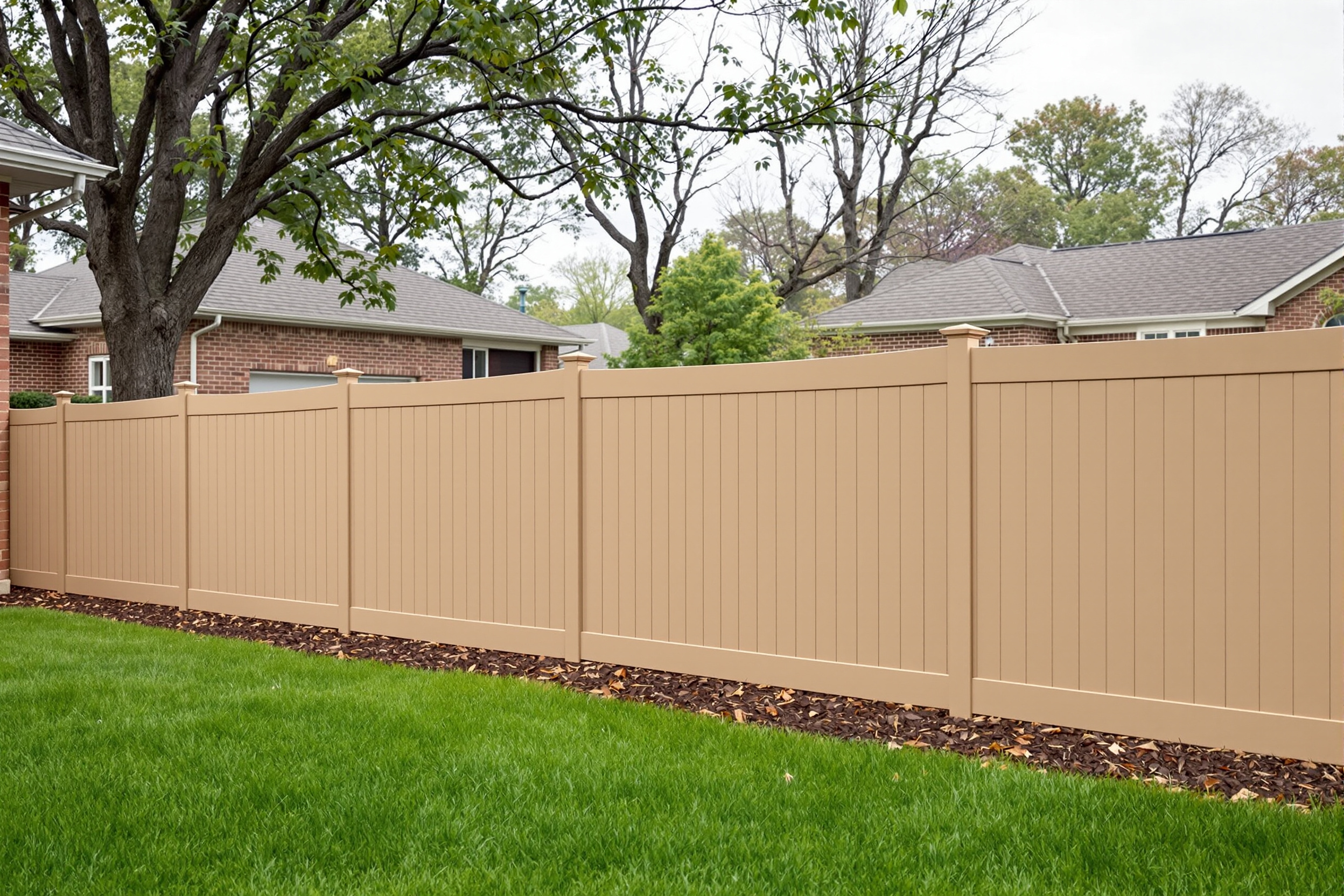
Cedar silvers gray inside a couple of Belton summers and wants a re-coat every two or three years after that. UV-rated vinyl holds its color for the life of the fence, so the backyard looks the same in year ten as it did the week it went up — and the whole maintenance plan is a garden hose. For most Belton owners that reclaimed weekend is the entire reason they went vinyl.
2

A steel rail for the run that faces the open south

Belton is wide open to the south, and wind is the top reason a fence fails here. A long solid run is a sail, and an unreinforced panel flexes in the gusts until it cracks at the post. Every run we build carries a steel channel sized to the panel height — a rigid spine inside the PVC that's the difference between a fence that holds through year ten and one that bows by year three.

3

Fall stops being fence-repair season

Every autumn, Belton homeowners walk the fence line hunting the weak post before the winter storms hit — wind-proofing is practically a season in this town. A 36-inch steel-cored post set in concrete takes that chore off the calendar for good: nothing to reset, nothing to shore up before the cold. If you'd rather fix it once than patch it every fall, this is the fence.

4

Built for the new-build street and the old ranchette both

Belton is really two towns — the new subdivisions going up off Y Highway where vinyl's clean look already fits right in, and the older half-acre ranchettes that have run split-rail and wire for generations. We build for both: a solid privacy wall for the new backyard, or a low-maintenance vinyl ranch rail that keeps the paddock look without the repainting and rot.

LOCAL CONDITIONS · BELTON

South Wind, Shifting Clay & a Fast-Growing Town — What Shapes a Belton Fence

Four things about this town decide how a fence has to be built: a wide-open southern exposure that makes wind the top fence-killer, a heavy clay that heaves in a dry August, a growth hub torn between brand-new subdivisions and generations-old ranchettes, and a building boom that puts the fence up in the first season. All four argue for the same thing — deep footings, a rail braced for the wind, and then nothing to think about. We walk through them one by one below. A backyard thrown open to the prairie doesn't get the same plan as a tucked-away older lot, and no plan here is lifted from a spec sheet written for another town.

1

Wide open to the south — Belton's signature wind

Belton sits with little between it and the open Cass County prairie to the south, and that exposure makes wind the number-one thing that takes a fence down in town. A gap-free run catches the full force of a gust like a sail, so on the most exposed south-facing lines we build for the load — a steel-reinforced rail on a solid wall, or a shadow-board profile that lets the wind pass through. A fence Built for Every Storm in Belton is planned around that wind, not in spite of it.

2

Heavy clay that shifts in a dry summer

Belton's soil is deep, heavy clay that's notorious for moving — swelling wet and shrinking tight in a dry August — and a post that rides that swing without enough depth is the number-two reason a fence leans here. There's no rock to fight, just physics: a post set a full 36 inches in concrete below the frost line stays plumb through the wet-dry cycle, where a shallow one is loose by its second dry summer.

3

The Growth Hub's two Beltons — new subdivisions and old ranchettes

As the growth hub of Cass County, Belton is adding new subdivisions fast off Y Highway and out toward Raymore, where vinyl's crisp new-build look already has a real foothold. But the older core and the half-acre-plus ranchettes are a different world — long runs of split-rail, wire, and dog-ear cedar. Cedar is still the dominant residential fence here, honestly; vinyl earns its place on the exposed new-build backyard and the big lot tired of repainting rail.

4

New homes are the driver — and the fence goes up early

New home completions are the number-one reason Belton calls a fence company, usually the first season after the sod goes down, with pets and privacy from the commercial build-out along M-58 and North Scott close behind. A first fence on a wide, wind-exposed new lot is exactly where vinyl's do-it-once value lands — set deep, reinforced against the south wind, and never asking for a stain can.

THE LONG-RUN NUMBER, NOT THE STICKER

Vinyl or Cedar in Belton? Run the Fifteen-Year Math

There's one honest reason cedar rules the Belton fence market: it's the smaller number the day it's built. But cedar earns nothing against the wind, and on an exposed lot the cheaper fence over time is settled by two recurring bills — the stain it demands every couple of years, and the loose post it leaves you every autumn. Vinyl asks more up front and then goes silent. The table walks a typical Belton backyard, cedar beside vinyl, with the re-coats and one mid-life post-and-rail repair dropped into the cedar column where they honestly belong.

Over 15 yearsDog-ear cedarVinyl
Day-one priceDog-ear cedar is the go-to residential fence in town and comes in cheaper the afternoon it's stood up — which is exactly why it lines nearly every new streetCosts more to start, and that figure already includes the galvanized steel channel in the rail
Two-to-three-year stain habitBare cedar silvers to gray within two summers of Missouri sun; to keep it looking new you're re-sealing on a two-to-three-year rhythm — roughly $2,500 and up across the run in product and labor, plus the weekend it eats each passZero — pigment is molded through the whole panel, so an occasional rinse with a soft brush is the entire upkeep for as long as the fence stands
Behavior in a prairie gustFace a long cedar line at the open south and the rails eventually split and the pickets rattle loose — every one of those is a repair ticketThe steel spine down the rail holds the exposed span rigid so it can't flex apart, and picking a shadow-board profile lets the worst gusts pass clean through
The autumn post-check ritualBy September the cedar owner is pacing the fence line, testing for the post that won't clear another winter — pre-storm wind-proofing is nearly a fixed part of the Belton calendarNone of that; a steel-cored post cast 36 inches into concrete has nothing to shore up before the cold arrives
The tally at fifteen yearsRuns well past what the vinyl came to once you total the seal cycles and one mid-life post-and-rail fixAbout the same amount you handed over on day one, and not a dollar more behind it
Best matchThe owner chasing the smallest number now, in love with real wood, and willing to stay on top of the stain canThe stay-put owner on a breezy, exposed lot who would rather write one check and never again fuss with a tilting post or a can of sealer

In the end it's the wind and the years that decide it. After the wood look at the lowest sticker, and happy to keep it up? Cedar's an honest choice — the Belton wood page lays out the sealing schedule that holds it. On a breezy lot you plan to keep? Vinyl earns that gap right back — no stain, no post to reset ahead of storm season. Hand us the lot and we'll price the pair of them, bottom line to bottom line.

THE BELTON DURABILITY QUESTION

Will the Wind or the Clay Crack Vinyl? Only the Cheap Kind

A reasonable question when you're paying above cedar. Here's the plain answer: a capped panel riding a steel-reinforced rail, footed deep in the clay, shrugs off both the south wind and the summer sun — it's the bargain single-wall board that yellows, turns brittle, and cracks apart. No rock to battle in Belton, but the open exposure and the moving clay are both very real, and together they dictate how a run gets put together. The four building decisions below are what keep a fence here standing up to the two of them.

On an open lot, the wind is the crack test — not the cold

Belton sits wide open to the south, with little between a backyard and the Cass County prairie, so wind is the number-one thing that takes a fence down here. A long solid run behaves like a sail, and every gust flexes an unreinforced panel until it splits at the post connection. That's why every rail we hang carries a galvanized steel channel sized to the panel height, and why we'll steer the most exposed south-facing runs toward a shadow-board profile that lets the wind through instead of fighting it.

Heavy clay shifts in a dry August — depth settles it

Belton's deep, heavy clay swells when it's wet and pulls back tight when it's dry, and a shallow post riding that swing is the number-two reason a fence leans in town. There's no rock to blame and no rock to drill — the fix is simply depth. We set every post a full 36 inches down in poured concrete, below the frost line, so the clay can move through its wet-dry cycle and the line above it stays true.

It has to hold its white through a Belton summer

The whole point of choosing vinyl over cedar is not repainting it, so color that lasts is the job. Co-extruded profiles from CertainTeed, Bufftech, and Veka carry titanium-dioxide UV blockers baked into the outer skin, and they hold their white, sand, or woodgrain through the full run of Missouri sun and humidity while a cedar fence three doors down is already going gray.

The cheap single-wall panel is the one that splits

There are two grades on the market, and only one belongs in your yard. The capped, co-extruded profile we hang bonds a tough impact-modified outer skin to the structural core — most of what we install is rated class-4 for hail, the same tier a premium roof shingle earns. Skip that skin, as the bargain single-wall board does, and you get the panel that yellows and turns brittle. And at every joint we build in the slight expansion gap PVC needs, so a run flexes with July heat and January cold rather than cracking a seam.

WHAT WE INSTALL MOST

The Vinyl Belton Owners Order Most

Nearly every Belton order settles onto this handful — each carrying a straight price, a lifespan you can count on, and the barely-there maintenance that's the entire reason to pick vinyl instead of cedar. Which one is right depends on the job in front of you — a value privacy wall to close a new backyard, a warm tone alongside brick or a refreshed ranch, a shadow-board for a south-facing run out in the open, or a ranch rail around a big ranchette lot. We carry samples to the walk-through, so the call gets made against your own siding in daylight, not off a color chip in a binder.

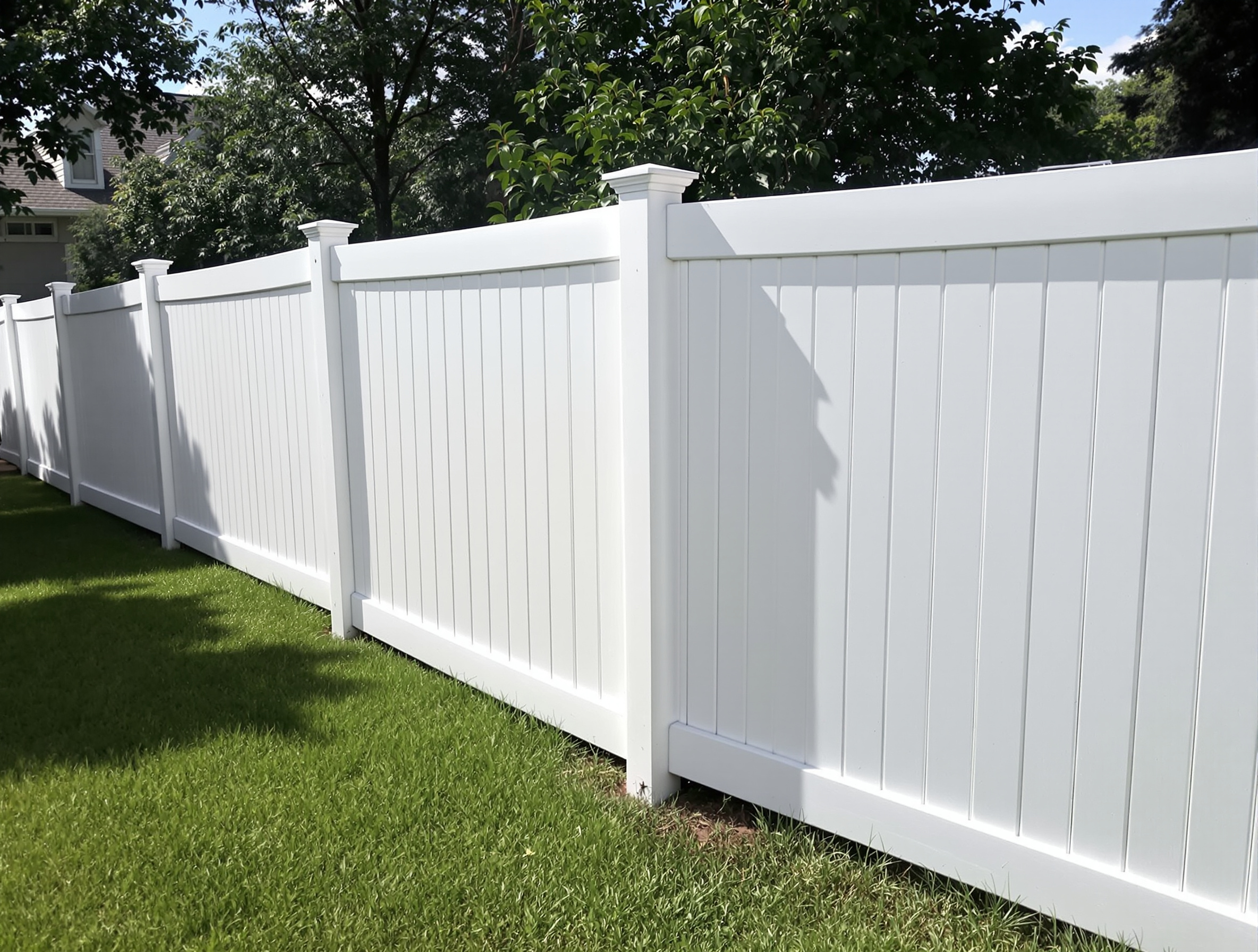
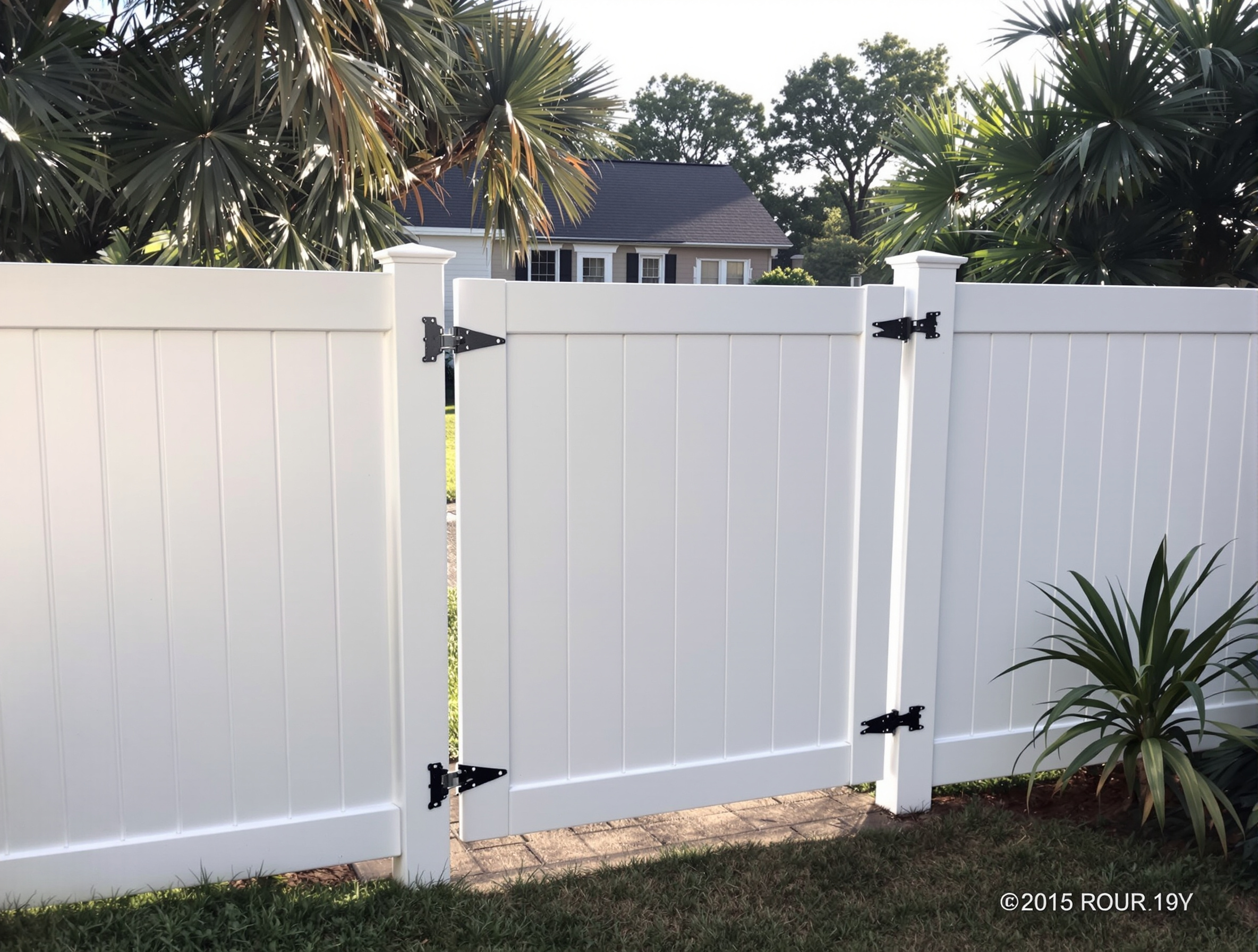
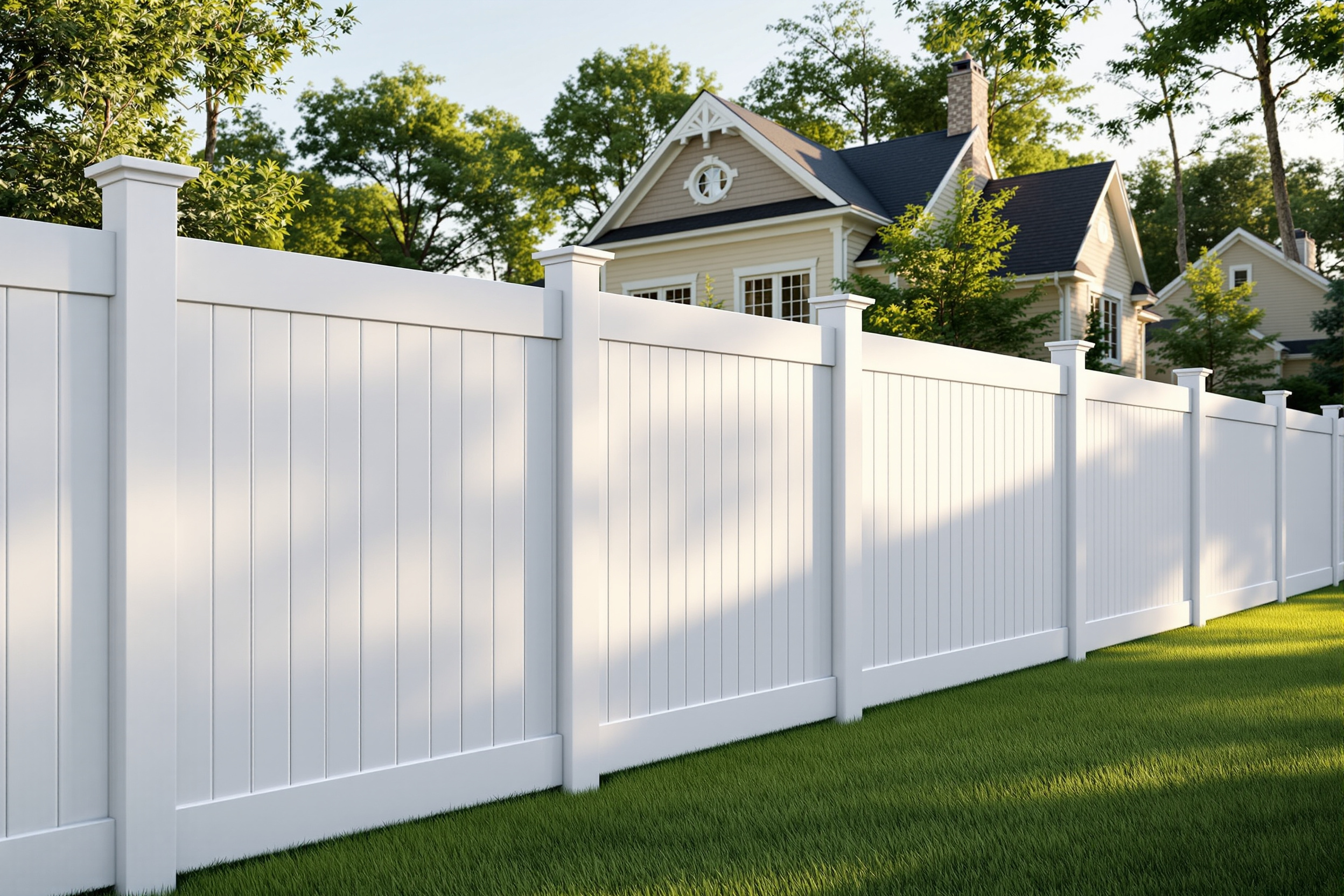
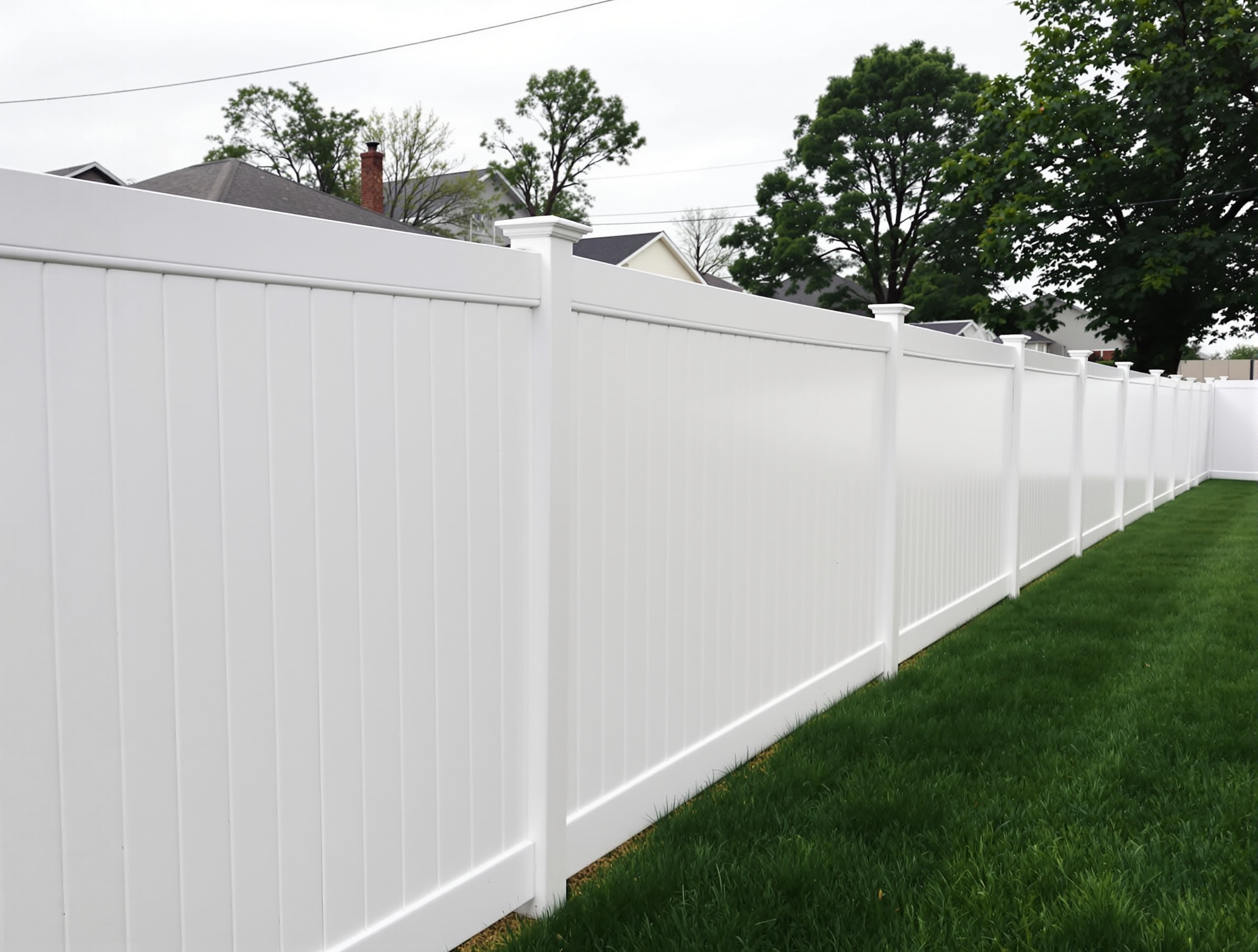
White Privacy — 6 ft vinyl fence by RKC Wood Care Pros in Belton, MO

White Privacy — 6 ft

The Belton new-build standard

The order that goes up as fast as the subdivisions do. Solid tongue-and-groove panels in UV-rated white PVC, stiffened by a galvanized steel channel run through the rail — the clean six-foot wall the new streets off Y Highway and out toward Autumn Ridge want, without the graying and re-staining cedar signs you up for. On a long run that faces the open south, that steel rail is what keeps the panel from flexing and hammering itself loose in a prairie gust.

  • Price: $40–55/LF installed
  • Lifespan: 30+ years
  • Maintenance: One rinse a year
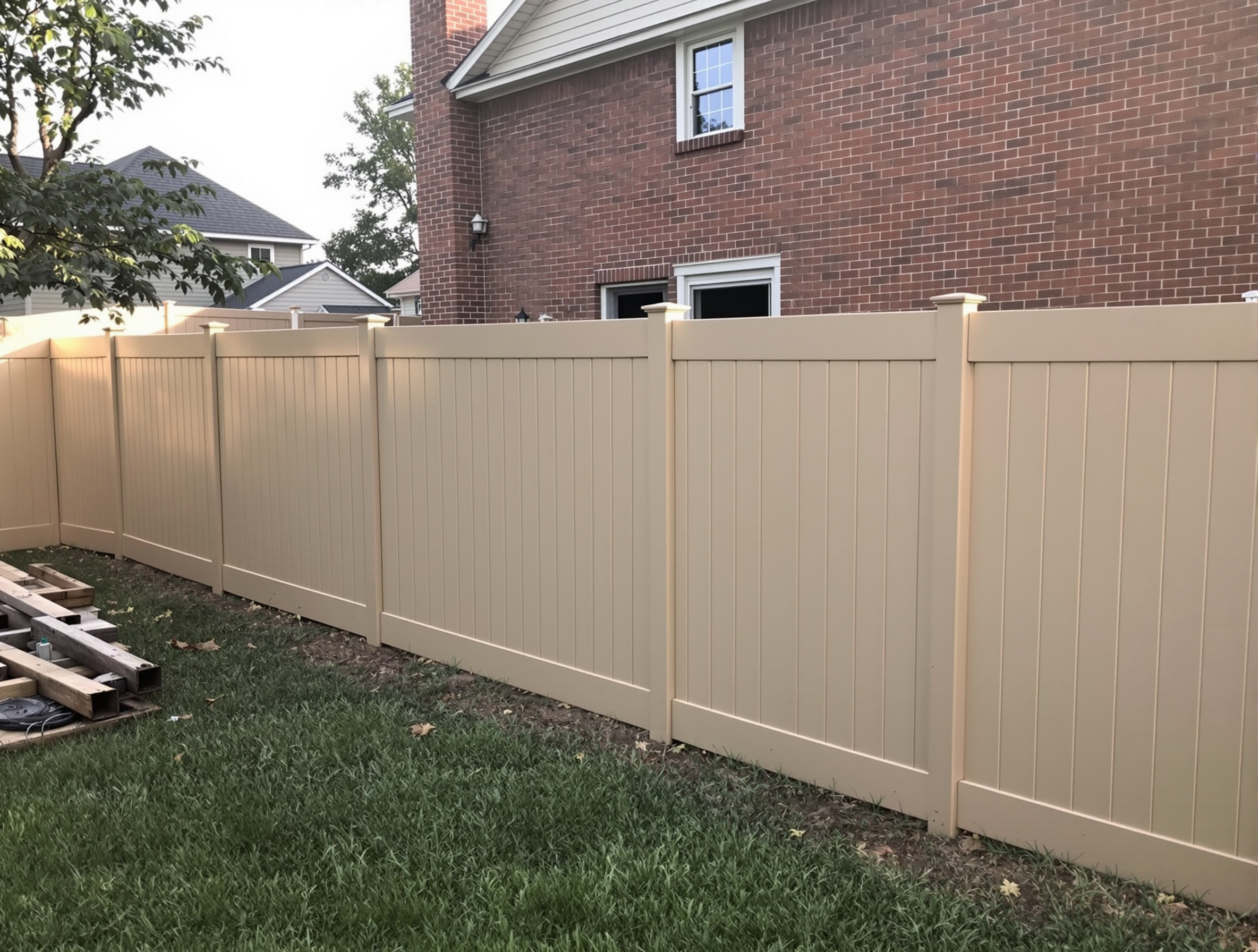
Sand / Woodgrain Privacy — 6 ft vinyl fence by RKC Wood Care Pros in Belton, MO

Sand / Woodgrain Privacy — 6 ft

Warmer against brick and an older ranch

Plenty of Belton homes — the brick facades in Traditions, the refreshed ranches in central town — want a fence with more warmth than stark white. A sand tone or an embossed woodgrain reads closer to the cedar the neighborhood grew up on and dresses up the house without adding a chore to the year. Same steel-reinforced rail, same thirty-year manufacturer backing; only the color changes.

  • Price: $42–58/LF installed
  • Lifespan: 30+ years
  • Maintenance: A wash when it needs it
Shadow-Board / Semi-Private — 6 ft vinyl fence by RKC Wood Care Pros in Belton, MO

Shadow-Board / Semi-Private — 6 ft

Bleeds the south gust on an exposed run

On a corner lot or a backyard edge that sits wide open to the prairie, a solid wall takes the full brunt of the wind like a sail. An alternating shadow-board profile lets some of that gust pass straight through while still closing the yard at eye level — a practical answer for Belton's most exposed south-facing runs, and one more way we keep a long line standing plumb through a decade of storms.

  • Price: $38–54/LF installed
  • Lifespan: 30+ years
  • Maintenance: A rinse now and then
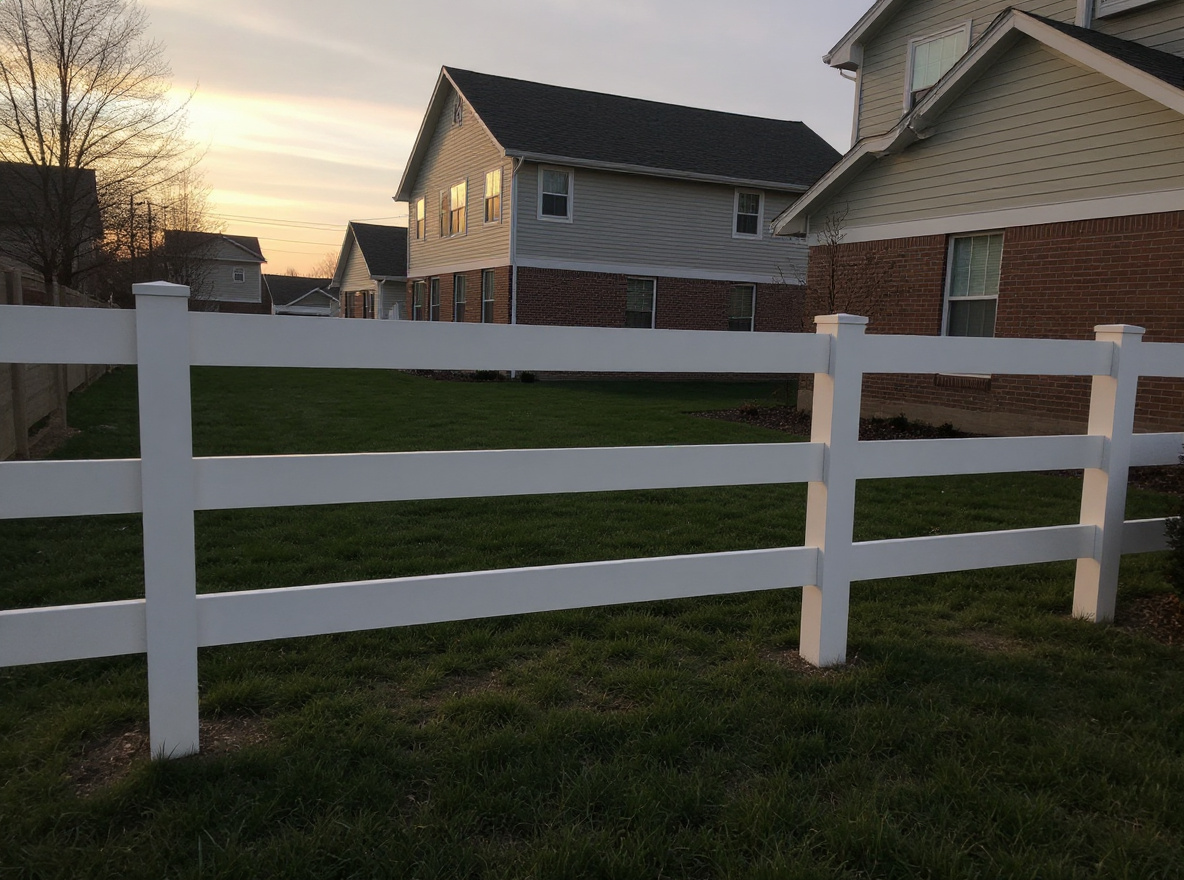
White Ranch Rail — 2 & 3-Rail vinyl fence by RKC Wood Care Pros in Belton, MO

White Ranch Rail — 2 & 3-Rail

For the big-lot ranchettes

Belton's older half-acre-plus ranchettes have run split-rail and wire around their big yards for generations, and those fences rot, sag, and want repainting. A vinyl two- or three-rail keeps that open, farm-style paddock look with none of the upkeep, and takes a welded-wire backing when there's a dog to hold. It's the low-maintenance way to close a long perimeter without turning it into a solid wall.

  • Price: $28–42/LF installed
  • Lifespan: 30+ years
  • Maintenance: Next to none
White vinyl privacy fence pricing — Belton, MO — RKC Wood Care Pros

PRICING A VINYL FENCE ON A BELTON LOT

What a Vinyl Fence in Belton Costs, Broken Down

Around Belton, vinyl runs $28 to $60 a foot depending on the profile and the length of the line — the privacy figures already fold in the steel-reinforced rail, and every gate gets its own line item. The three configurations here are the ones we bid most. Hauling off an old cedar run or a stretch of split-rail, extra gates, a bump up to a shadow-board or ranch-rail profile — every one of those is priced separately and shown. You get the whole thing on paper and broken out before a truck ever pulls up, so there are no spoken numbers and no change-order surprises down the line.

White Privacy — 6 ft

$40–55

per linear foot installed

Our most-bid Belton build — solid value privacy on a steel-reinforced rail, with every gate written on its own line.

Sand / Woodgrain — 6 ft

$42–58

per linear foot installed

The warmer face for the brick homes in Traditions and the older ranch refreshes across central Belton.

Shadow-Board or Ranch Rail

$28–54

per linear foot installed

An airflow profile for the exposed south-facing runs, or a two/three-rail for the big ranchette lots — priced to the run that's actually there.

Old cedar or split-rail to remove, gates to add, a jump up to a shadow-board or ranch-rail profile — all of it sits on its own line of the estimate, nothing buried — reach us at (913) 286-1091 or set up an on-site walk-through.

OUR PROCESS

The Steps Behind Your Belton Vinyl Fence

Four stages carry a project from the first phone call to a fence you can forget about — and on a wind-swept Belton lot, it's the deep footing and the steel rail going in ahead of the panels that separate a good-looking fence from a thirty-year one. Hanging the panels is quick work — a day to three on a typical yard. The part that decides whether a run stands proud for a decade or has you back out repairing it next fall is the layout and the 36-inch footings that come first.

1

Walking the Belton lot and reading the wind

We measure the line with you, mark every corner and gate, and note which runs sit open to the south and will need the most reinforcement. We flag the utilities and the property pins, and talk through whether an exposed stretch is better served solid with a steel rail or as a shadow-board that bleeds the gust. The estimate comes back written line by line — footage, gates, your chosen profile, and the steel and concrete going in the ground.

2

Utility locate, color, and clearing the old line

The 811 locate goes in first. You pick the look — value white, a warm sand or woodgrain, a shadow-board for the open runs, a ranch rail for a big lot — and we order the panels. Belton replaces a lot of tired fence, so where there's an old cedar privacy run or a stretch of split-rail and wire in the way, we pull it out clean and haul it off before the new posts go down.

3

Posts 36 inches into the clay, steel rail on the wind side

Every post drops a full 36 inches into poured concrete on a belled base — below the frost line and deep enough that Belton's dry-summer clay shift can't work it loose. The steel-reinforced rail goes in as the panels seat, so a long south-facing run has the spine to hold a prairie gust. Figure one to three days on a typical Belton yard, with panels hung once the footings cure.

4

Final walk and warranty in your hand

We walk the finished line and work every gate, checking that each one hangs plumb and latches clean against the wind. Your CertainTeed, Bufftech, or Veka registration is filed under your name and you keep the paperwork — no stain date on the calendar, no post to reset ahead of fall. Should anything move in that first year, the crew that raised it is the one that returns to true it up.

VINYL WE'VE RAISED · KC METRO

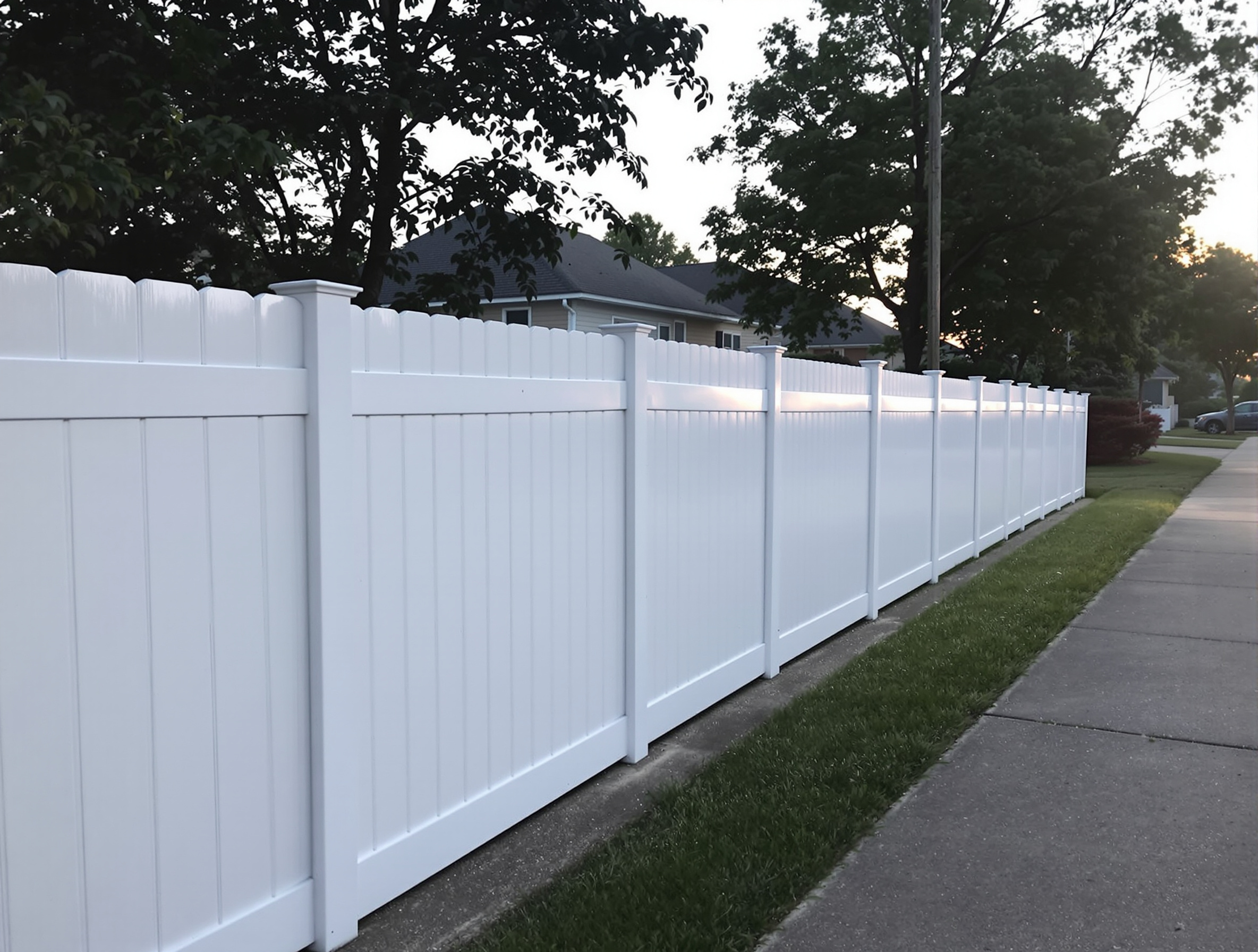
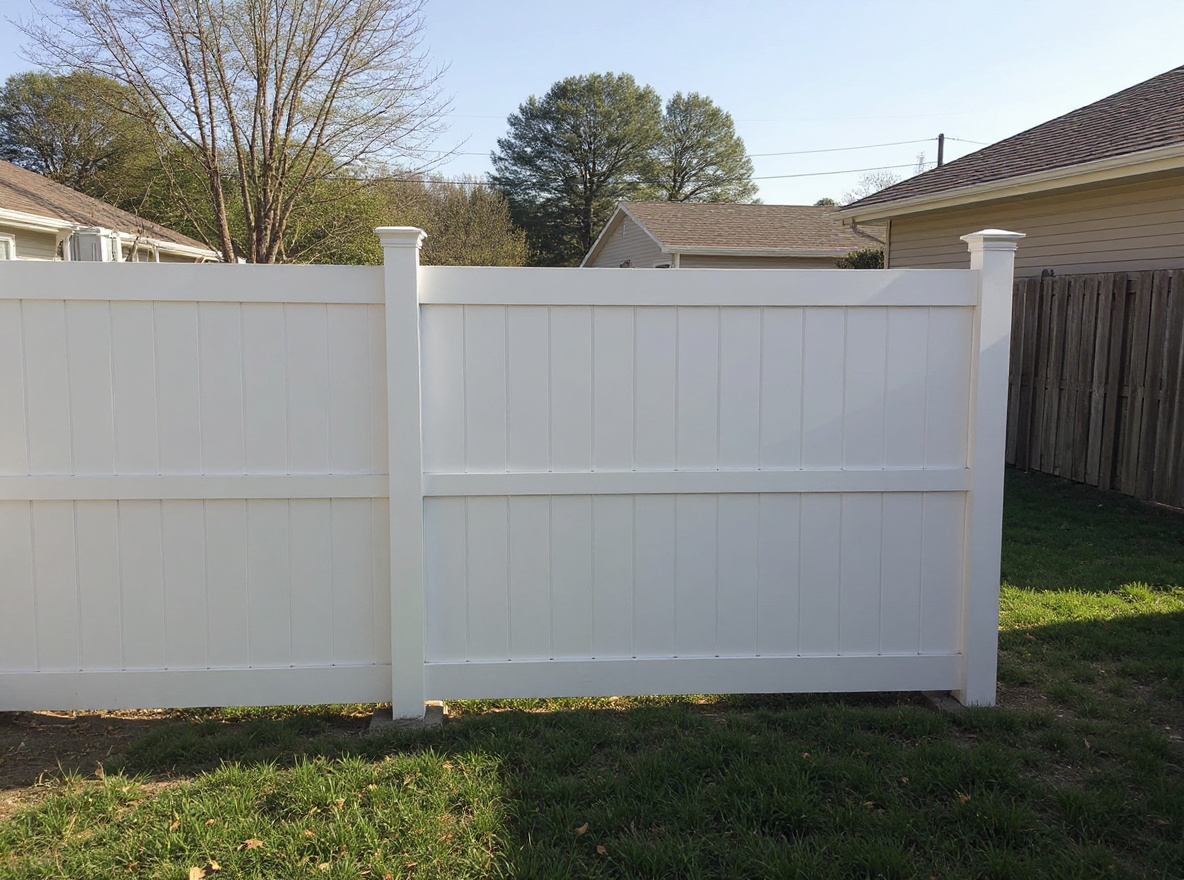
Vinyl fence installation by RKC Wood Care Pros, Kansas City metro
Vinyl install · KC metro
Vinyl fence installation by RKC Wood Care Pros, Kansas City metro
Vinyl install · KC metro
Vinyl fence installation by RKC Wood Care Pros, Kansas City metro
Vinyl install · KC metro
Vinyl fence installation by RKC Wood Care Pros, Kansas City metro
Vinyl install · KC metro

REVIEWS

What Kansas City Homeowners Say About RKC

4.9 ★ · 85 Google reviews

Every review is on our Google Business Profile — read them there, unedited.

Read all 85 reviews on Google

BELTON VINYL FENCE QUESTIONS

Vinyl Fence Questions Worth Asking in Belton

The questions Belton owners raise while we've got the tape on the lot and the estimate half-written — grouped by subject, every answer tied to real local pricing, the cedar it stacks up against, that open south wind, and the clay it all gets set into. Yours not here? Call (913) 286-1091 and ask us straight.

Vinyl fence installation in Belton, MO by RKC Wood Care Pros

Vinyl Materials & Lifespan

How long does a vinyl fence last in Belton?
Thirty years and up is the honest figure, and the post under it is what secures that. A capped, UV-rated panel on a steel-reinforced rail outlasts nearly anything else in the yard — provided the post is set right, and in Belton's heavy clay 'right' means depth. There's no rock here, but the clay swells wet and shrinks in a dry summer, so we set every post 36 inches in concrete below the frost line and the line stays plumb through that swing. CertainTeed, Bufftech, and Veka each warrant the panel against fading, cracking, peeling, and chalking, and that coverage carries to whoever owns the home next.
Cedar's cheaper and it's what everyone here has — why vinyl?
No argument that cedar is the standard Belton fence and the lower price on install day. The gap opens over the years. Bare cedar grays inside two summers and wants a re-coat every two or three after that — real money and a lost weekend each time — and on a wind-exposed lot it's the fence you're out repairing every fall before the storms. Vinyl costs more up front and then costs nothing: no stain, no autumn post-reset, a steel rail that holds the south wind, thirty-plus years, warranty in writing. If you love real wood and will keep after the stain, cedar's a fair call. If you'd rather pay once and forget it, vinyl wins the long run — and we'll price both so it's your decision on real numbers.
Will a vinyl fence really hold up to Belton's wind?
It's the whole reason we build the way we do. Belton is wide open to the south, and wind is the top cause of fence failure in town, so a bare panel between posts is the wrong thing to hang on a long exposed run — it flexes in the gusts and eventually splits at the connection. Every rail we install carries a galvanized steel channel sized to the panel height, which stiffens the run so it doesn't hammer itself loose. On the most exposed south-facing lines we'll also recommend a shadow-board profile that lets part of the gust pass straight through. Set that on a 36-inch post in concrete and the fence holds where an unreinforced one bows.
Does vinyl crack or yellow in the summer sun?
The capped, co-extruded profiles we install carry titanium-dioxide UV blockers in the outer skin, so direct Belton sun doesn't yellow them — that's the point of paying for co-extruded over single-wall. Cracking, when it happens, is almost always a flexing panel splitting at the post on an unreinforced run, which the steel rail we fit every time prevents. The bargain single-wall PVC at the low end of the market is the stuff that goes brittle and yellows — which is exactly why we don't hang it.

Pricing & Warranty

What does a vinyl fence cost in Belton?
A 6-foot white vinyl privacy fence runs $40 to $55 a foot installed with the steel-reinforced rail included. A typical Belton backyard is 150 to 200 linear feet, which puts most white privacy projects in the $6,000 to $11,000 range. Warm sand or woodgrain runs $42–$58; a shadow-board for the exposed runs and a two/three-rail ranch for a big lot both sit lower, $28–$54. Gates, old-fence tear-out, and profile upgrades are written on their own lines, never folded in. Every Belton estimate is free and on paper.
Is the warranty real, and does it transfer when we sell?
Real on both counts. CertainTeed, Bufftech, and Veka each back the panel against fading, cracking, peeling, and chalking, then shift to prorated coverage for the next owner when the home changes hands. We register it in your name the day we finish and leave you the paperwork. In a fast-growing Belton market with a lot of homes turning over, a fence still under active manufacturer coverage is a genuine line in the property's favor — and any brand that won't put that in writing doesn't go in your yard.
I've got an older ranchette with split rail — can vinyl do that look?
Yes, and it's a common ask on Belton's half-acre-plus lots. A vinyl two- or three-rail keeps the open, farm-style paddock line those big yards have always had, without the split-rail's rot, the wire's sag, or the repainting a wood rail wants. It takes a welded-wire backing when you need to hold a dog, and it closes a long perimeter for far less than a solid privacy wall. For a rural-edge Belton lot tired of chasing repairs on an old rail fence, it's usually the right answer.

OTHER BELTON FENCE OPTIONS

What Else We Build Across Belton

Vinyl isn't the only option — RKC installs and repairs every type of fence in Belton: wood, vinyl, chain link, ornamental iron, aluminum, and commercial security, plus custom gates and in-house staining. Every card below leads to its own dedicated Belton page — pricing, the conditions it's built to handle, and shots from jobs around the area.

Ready when you are

Get a free estimate — we usually respond the same day.

Call (913) 286-1091