Skip to content
Fence Staining & Sealing in Belton, MO — Timing a New Fence's First Coat

Fence Staining & Sealing in Belton, MO — Timing a New Fence's First Coat

New Belton cedar going up across the subdivisions? The most important staining question here isn't the color — it's when. Not day one: fresh cedar needs about a month to cure, and then the coat wants a good seasonal window on top of that. RKC Wood Care Pros times that first coat to both the wood's cure and the KC calendar — the stable early-fall window for choice, a dry late-spring stretch as backup — so the finish keys in and holds against the open-prairie sun and wind. Deeper pigment on the exposed sun faces, a penetrating finish that fades instead of peeling, every coat logged and the re-coat date on your invoice. 4.9 stars from 85 Google reviews. Call (913) 286-1091 for a free walk and quote.

★★★★★
4.9
from 85 reviews
Licensed
& Insured · KS + MO
400+
fences installed
A+ BBB Rated Kansas City Fence Contractor New-Cedar First Coats Timed to Cure & Season 2-Year Cedar / 3-Year PT Cycle
View stain options in our catalog ↓

WHY BELTON HOMEOWNERS STAIN WITH RKC

The Right Coat at the Right Time

With so much new cedar going up across Belton's subdivisions, the staining question that matters most isn't which tone — it's when. Coat a fence too early or in the wrong conditions and the finish beads off and wastes your money. A new fence needs to cure first — about a month for cedar, a season for treated pine — and then the coat wants a good seasonal window. We time it to both, aim deeper pigment at the open-prairie sun faces, and lay a penetrating finish that fades instead of peeling. Get the timing right and the fence starts life sealed against the sun and wind that weather a bare one fast.

1

New cedar isn't ready on day one

The most common mistake on a new Belton fence is staining it right away. Fresh cedar needs about a month for its moisture to fall so a penetrating finish can key in; treated pine needs a season to cure. Coat it too soon and the finish beads off. We time that first coat to the wood's cure and a good window, so it soaks in and holds — the whole difference on a brand-new run.

2

The season matters as much as the cure

Even a cured fence wants the right window. Early fall — mild, stable, low humidity — is the best, and it seals the fence before the winter storms Belton's open exposure invites; late spring is the backup. We schedule coats into those windows rather than whenever the phone rings, because a coat laid in good conditions simply lasts longer. The moisture meter always has the final say over the calendar.

3

Deeper pigment for the open-prairie sun

Belton sits wide open to the south, and the exposed faces bleach fast under an unbroken sun. We carry a touch more pigment onto the south and west runs, since deeper pigment blocks more UV and holds color longer, so the whole fence reaches its next re-coat at one even tone instead of the sunny side lightening ahead. Same color across the fence — a heavier hand where the sun is worst.

4

A finish that fades, never peels

The product choice is penetrating versus film. A penetrating semi-transparent soaks into the grain and wears by fading, so re-coating is a wash and a fresh coat. A solid film sits on top, looks bold a season, then peels under freeze-thaw — and in constant prairie wind it lifts even faster. Everything we lay in Belton penetrates, so the fence never reaches the scrape-it-off stage.

BELTON LOCAL CONDITIONS

Why Staining in Belton Comes Down to Timing

Three local factors shape stain work in Belton: a town full of brand-new subdivision cedar that raises the timing question, the open-prairie sun and wind that set the pace, and the shifting clay that makes a post-check part of the job. This is a growth-hub market where a huge share of the cedar is fresh out of the ground, and where the biggest staining mistake is coating it too soon or in the wrong season. Same crew, same standard: check the cure, pick the window, weight the sun faces, and inspect the posts before the coat.

1

A town full of brand-new cedar, and the timing question

Belton is the growth hub of Cass County — new home completions are the number-one driver of fence demand, so a huge share of the cedar here is fresh out of the subdivision. That makes timing the single biggest staining question in town: when does a new fence get its first coat? The answer is never day one. Fresh cedar needs about four weeks for its moisture to drop, treated pine closer to a season for the treatment to cure, and then the coat wants a good seasonal window on top of that. Get both right — the cure and the calendar — and the fence starts life sealed against the sun and wind; rush it, and the finish beads off and wastes your money.

2

Open-prairie sun and wind set the pace

Belton sits wide open to the south, with little to break the sun or the wind that sweeps across the prairie. That exposure is hard on a finish — the UV bleaches a bare or under-pigmented fence fast, and the constant wind dries and weathers the wood. It's also why the seasonal timing matters so much: a coat laid in the stable early-fall window seals the fence before the winter storms, while one rushed on in the wrong conditions doesn't get the chance to cure properly before that wind goes to work. We weight deeper pigment onto the exposed south and west faces that take the worst of it, and time the coat to give it the best start.

3

Shifting clay makes the post-check part of the job

Belton's deep, heavy clay is notorious for shifting — it swells when wet and pulls back from posts in the dry summers, which is why leaning posts are one of the top complaints in town and why fall is a big 'wind-proofing' season here. For staining, that means the posts get checked before the coat. There's no return on finishing a run whose posts are about to lean or heave, so on any older or weathered fence we probe and inspect the posts first. Where they're sound, we seal the run; where the clay has worked one loose or a probe finds rot, we reset it before finishing so the coat actually gets its full life.

The Belton streets we've stained and brought fences back on run from the new-construction subdivisions of Traditions, Autumn Ridge, and Eagle's Landing to the older ranchette lots along Y Highway and Mullen Road, out toward the growth pressure on the I-49 and M-58 corridors — fresh subdivision cedar, treated-pine perimeter runs, and sun-beaten older fences. Each one gets the cure checked and the season picked up front, the posts inspected on anything weathered, and the same matched penetrating coat — deeper on the sun faces — to close. A fence another company built earns the identical treatment — a well-timed coat has never cared whose truck showed up on install day.

PICKING THE WINDOW

The KC Staining Calendar — When to Coat a Belton Fence

Before the color, the thing that decides how well a Belton coat holds is when it goes on — the season and the conditions matter as much as the product, on top of a new fence's cure time. Here's the seasonal calendar we schedule Belton coats against: the typical conditions each part of the year, whether it's a good window to stain, and why. The short version is that early fall is the best window and late spring the reliable backup — but the moisture meter always overrules the calendar, which is why we read the wood before we commit a date.

Time of year Typical Belton conditions Stain window Why
Early spring (Mar–Apr) Cool and wet, the heavy Belton clay still saturated from snowmelt and spring rain Usually wait The wood rarely dries enough to take a coat, and a spring-installed new fence hasn't cured yet
Late spring (May–Jun) Warming up with real dry stretches between storms Good Dry windows open reliably; we meter the wood and work between the fronts that roll across the open prairie
High summer (Jul–Aug) Hot and dry, the shrink-swell clay at its driest and the wood right behind it Good — with care The wood reads driest, but we coat early or late in the day so the finish soaks in rather than flash-drying in midday heat
Early fall (Sep–Oct) Mild, stable, lower humidity — the steadiest stretch of the year Best window Prime conditions, and it seals the fence ahead of the fall wind-proofing season before winter storms hit
Late fall (Nov) Cooling fast, nights dropping toward freezing Marginal — race the frost Temps slip below the product's application minimum; we can still catch a warm dry day but the window narrows
Winter (Dec–Feb) Cold, freeze-thaw, wood frozen or damp Wait Below application temperature and the wood won't take a finish — we schedule for spring instead

The line that runs down the calendar: early fall is the best window and late spring the reliable backup — but a new fence's cure time and a true dry meter reading both overrule the season. A coat timed to the wood and the weather lasts noticeably longer than one rushed on whenever. Want us to time your fence's coat? A free staining walk checks the cure and picks the window, or start with a new Belton wood fence from the same crew that will time and lay its first coat.

STAIN SERVICES

First Coats, Re-Stains & Restoration — Every Belton Scenario

The scope your Belton fence lands in comes straight out of the read — fresh subdivision cedar timed for its first coat, cedar due for a matched re-stain, cured treated pine ready for its oil, or a sun-silvered older run that needs bringing back. Below are the four we run across Belton, what each one suits, and honest per-foot numbers. Colors are yours to choose; what stays fixed is the sequence — check the cure, pick the window, level the surface, lay a matched penetrating coat with a spray-and-back-brush pair, all by our own crew.

New-Install First-Coat Stain by RKC Wood Care Pros in Belton, MO

New-Install First-Coat Stain

The Belton specialty · timed to cure and season

Belton runs on new construction, which means a lot of brand-new cedar going up across the subdivisions — and the number-one question here is when to stain it. Not day one: fresh cedar needs roughly four weeks for the internal moisture to fall far enough that a penetrating finish keys into the grain instead of beading off, and treated pine needs closer to a season for the factory chemistry to cure. We stage that first coat to both the wood's cure and the KC calendar, aiming for the stable early-fall window or a dry late-spring stretch. Get it on at the right moment and the fence starts life protected against the open-prairie sun and wind. Many of our cedar packages fold this coat into the install price.

  • Price: $3–6 / LF · typically $450–900 per 150 LF
  • Typical use: Fresh cedar across the Traditions and Autumn Ridge builds, the opening coat after any RKC install, timed to cure and season
Existing Cedar Re-Stain by RKC Wood Care Pros in Belton, MO

Existing Cedar Re-Stain

The 2-year cycle · timed to the window

Once a Belton fence is on its cycle, the two-year re-coat keeps cedar reading like cedar instead of drifting to silver under the open-sky sun. We schedule it into a good seasonal window — early fall for choice, late spring as the backup — rather than whenever the phone rings, because a coat laid in the right conditions simply lasts longer. On the day it's a soft wash to lift oxidation, a meter check for the dry window, then the matched color driven into both faces. We log your exact product and color, so the re-coat matches and your next date lands on the invoice, timed to the calendar.

  • Price: $4–8 / LF · typically $600–1,200 per 150 LF
  • Typical use: Cedar dog-ear and privacy runs across the newer subdivisions, straight color refreshes scheduled to a good window
Pressure-Treated Pine Re-Stain by RKC Wood Care Pros in Belton, MO

Pressure-Treated Pine Re-Stain

90-day first coat, 3-year cycle after

Treated pine turns up on the big perimeter runs and the older ranchette lots around Belton, and it runs on a longer clock than cedar. The factory treatment has to fully cure — about three months from a new install — before an oil-based semi-transparent will penetrate the dense treated fiber; a waterborne would only skin over. Any board still tinged green or blackened gets a brightener first. Because pine takes longer to cure and to dry, its timing window is even more important than cedar's — we meter it and won't rush a coat onto wood that isn't ready, whatever the season.

  • Price: $3–7 / LF · typically $450–1,050 per 150 LF
  • Typical use: Treated-pine perimeter and boundary runs, larger ranchette lots, economy installs carried over from other builders
Gray-Fence Restoration by RKC Wood Care Pros in Belton, MO

Gray-Fence Restoration

Bringing a weathered Belton run back

Not every Belton fence is new — the older ranchette runs and the fences left unsealed a few summers can go silver under the relentless open-prairie sun. That gray is usually a thin weathered skin over sound wood, not a spent fence. Failed finish gets stripped, the run takes an oxalic brightener to one tone, several washes, a hard dry, then one penetrating coat. Because Belton's shifting clay and open wind can lean or loosen posts, we probe them first — if a probe finds soft fiber or a post has heaved, we reset it before finishing, since stain never goes over rot or a failing post.

  • Price: $6–12 / LF · typically $900–1,800 per 150 LF
  • Typical use: Silvered older ranchette cedar, sun-beaten runs on open lots, homes just changed hands, fences a former owner never sealed

New-cedar and cedar fence stain pricing timed to the season — Belton, MO — RKC Wood Care Pros

BELTON STAIN PRICING

What Fence Staining Costs in Belton

What a Belton job costs rides on the wood and the prep, not the season — a new run caught on a good window is a routine first coat, while a sun-silvered older one that needs stripping and a post check runs more. Each quote folds in the cure check, the wash, the brighten where needed, the metered dry window, the matched penetrating family with deeper pigment on the sun faces, the spray-and-back-brush pass by our own two-person crew, and a written next date timed to the calendar. The three setups we price most often for Belton homes are below.

New-Fence First Coat

$3–6 / LF

cure-timed penetrating coat

The opening coat on new subdivision cedar, staged to the wood's cure and a good seasonal window, tone proofed on a hidden board. A 150 LF new Belton cedar run generally lands at $450–900, and it's often folded into our install price.

Cedar Re-Stain

$4–8 / LF

wash + penetrating stain

The two-year coat scheduled into a good window — soft wash, a meter check, the matched family into both faces with deeper pigment on the sun-beaten runs, and your next date in writing. Most 150 LF Belton cedar runs settle near $600–1,200.

Gray-Fence Restoration

$6–12 / LF

strip · brighten · stain

Failed finish stripped, the run brightened to one tone, washes, a shifting-clay post check, then a penetrating coat. A weathered 150 LF Belton run is usually $900–1,800, quoted from how far the sun has taken it.

A restoration number comes only after an on-site look at how far the sun has taken the finish and whether the shifting clay has loosened any posts — that check is what stops you paying restoration rates on a fence that only wanted a routine coat, or coating a run whose posts are about to lean. Every Belton estimate is free, written, and itemized — call (913) 286-1091 or set up a walk. While the crew's on site they can flag any Belton fence repair — a clay-heaved or leaning post — that should be handled before staining protects the run — one trip, same hands.

OUR STAIN PROCESS

How a Belton Stain Job Comes Together

Four steps from the phone call to the final walk. Most Belton stain jobs span 2 to 4 days — but the timing, checked first, is what makes the coat hold. The stain itself is usually a single day on site for a standard run. The rest of the clock is the cure check and window pick, the wash-brighten cycle, and the metered dry window the clay and wind complicate. Here's what each step looks like on a Belton fence.

1

Walk it, check the cure, pick the window

Step one on a Belton fence is timing: on a new run, whether the wood has cured enough to take a coat, and on any run, which seasonal window fits best. Josh or a lead measures the footage, identifies the wood, takes a moisture reading, and on older fences probes the posts the shifting clay tends to loosen. Then we schedule the coat into a good window — early fall for choice, a dry late-spring stretch as the backup — rather than the next open day. Estimate's free and itemized, and we brush a tone sample on a hidden board so you judge the color on your own wood.

2

Wash, brighten, and meter the dry window

This is the stage that timing is all about. A run due on schedule gets a soft wash to lift oxidation and mildew; a sun-silvered older run takes an oxalic brightener to a true tone; any failed film gets stripped. Then the meter goes on the wood, because in Belton the moisture reading is the real trigger, not the calendar date — the heavy clay holds water after rain, and the open wind can dry a surface faster than the core. We wait for a true dry reading through the board, not just on top. A coat over damp wood beads and flakes, which is exactly what the seasonal timing is meant to avoid.

3

Lay the coat, weight the sun side, spray and back-brush

Surface level and dry, in a good window, we load the matched family and put it on the one way that works: a sprayer moving the finish, a second hand right behind back-brushing it into the grain before it sets. On Belton's open lots we carry a touch more pigment onto the south and west faces that take the full prairie sun, so the run reaches its next re-coat at one tone instead of the exposed side bleaching ahead. In high summer we work the early and late hours so the finish soaks in rather than flash-drying on a hot board.

4

Walk it together, then log the calendar

Last is your eyes alongside ours — a full pass catching any board that reads thin or skipped, touched in on the spot before we sign off. Then the finish lands on your file: the date, the wood, the product family, the exact color, the footage, and when the next coat is due — two years for cedar, three for pine — scheduled toward a good seasonal window. That record is why your re-coat matches and why the reminder comes from us, timed to the calendar, so a new Belton fence gets its coats when the conditions are right rather than whenever you happen to remember.

RECENT BELTON STAIN JOBS

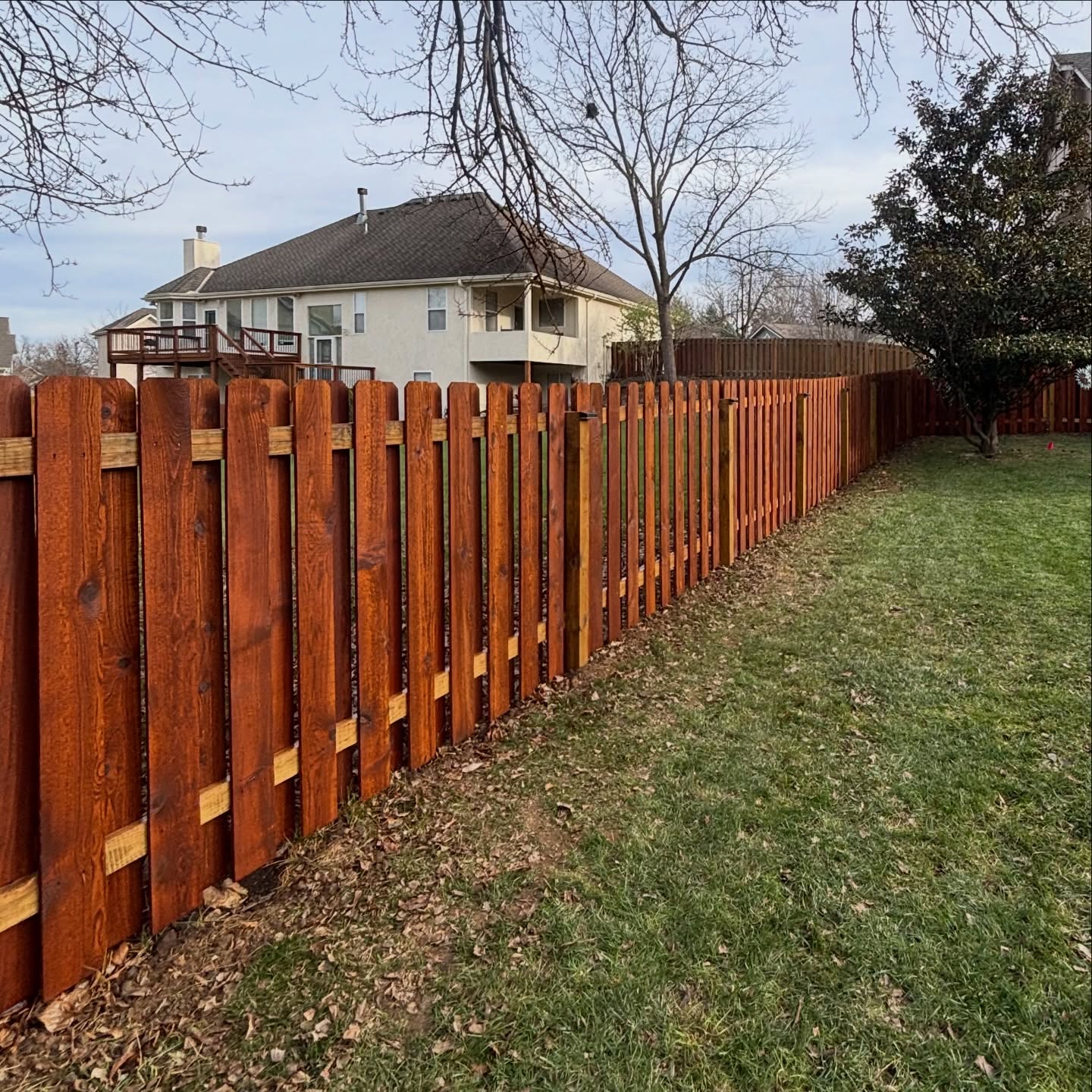
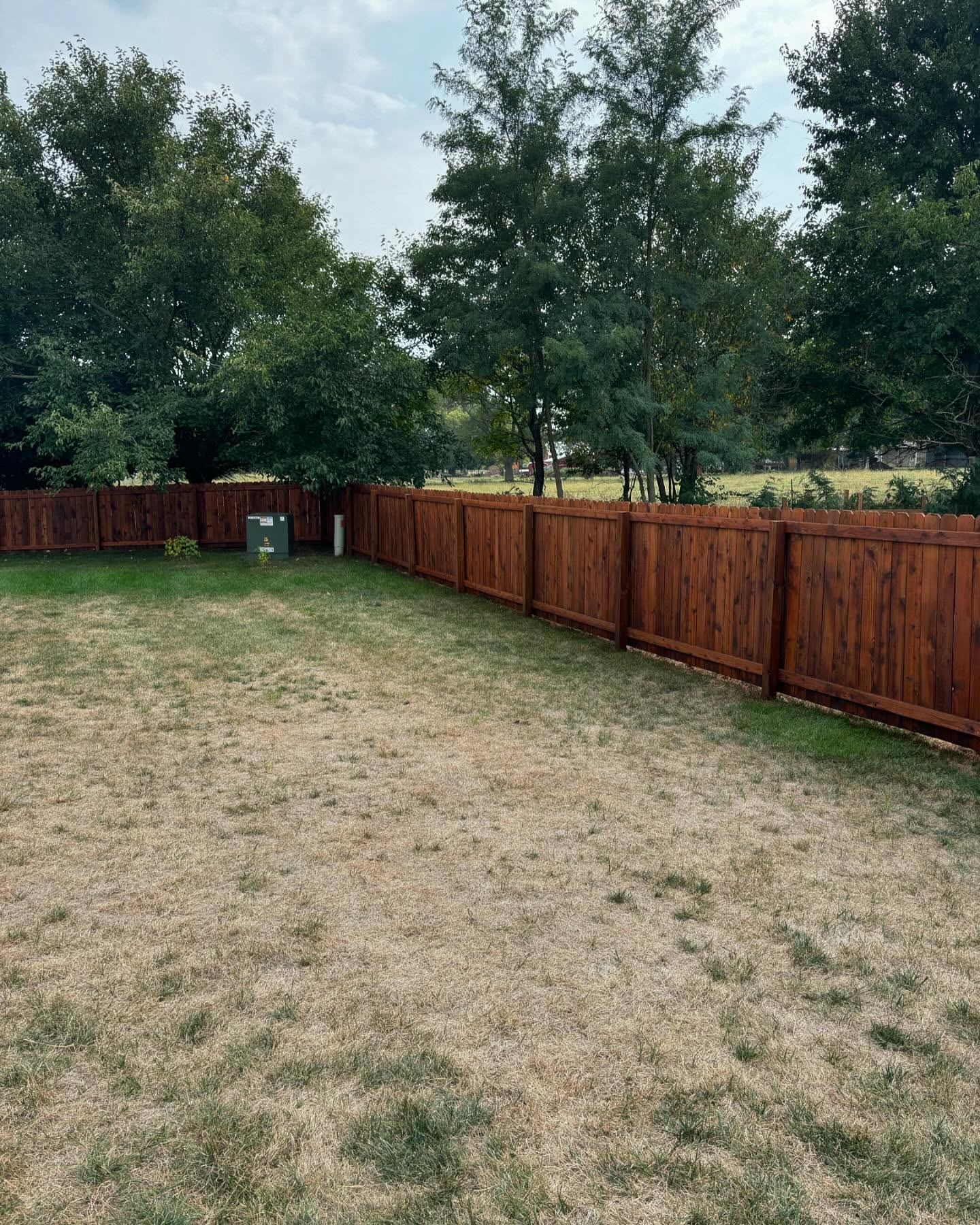
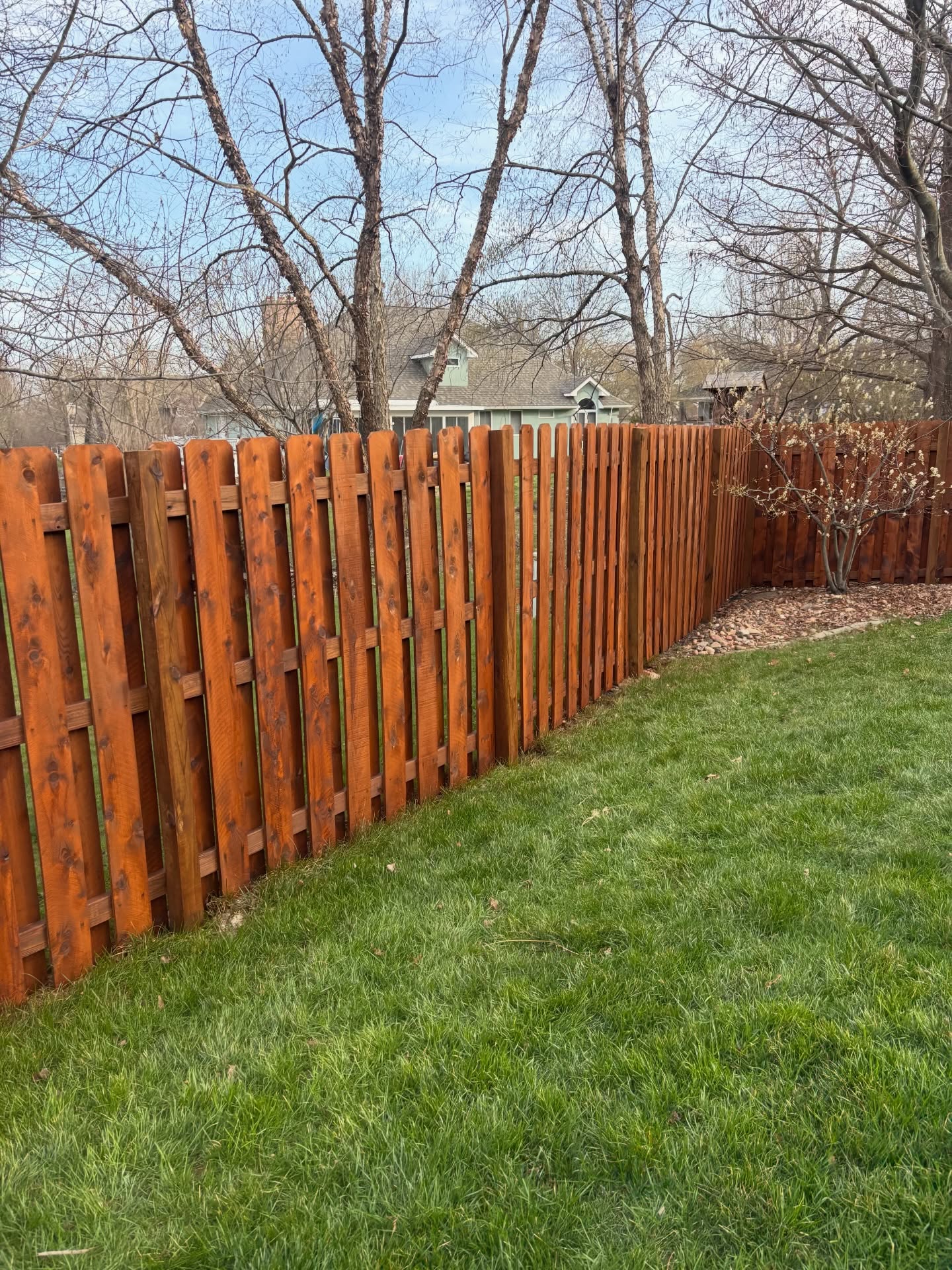
Spaced-picket cedar fence in a golden finish in Belton, MO by RKC Wood Care Pros
Cedar Re-Stain · Belton
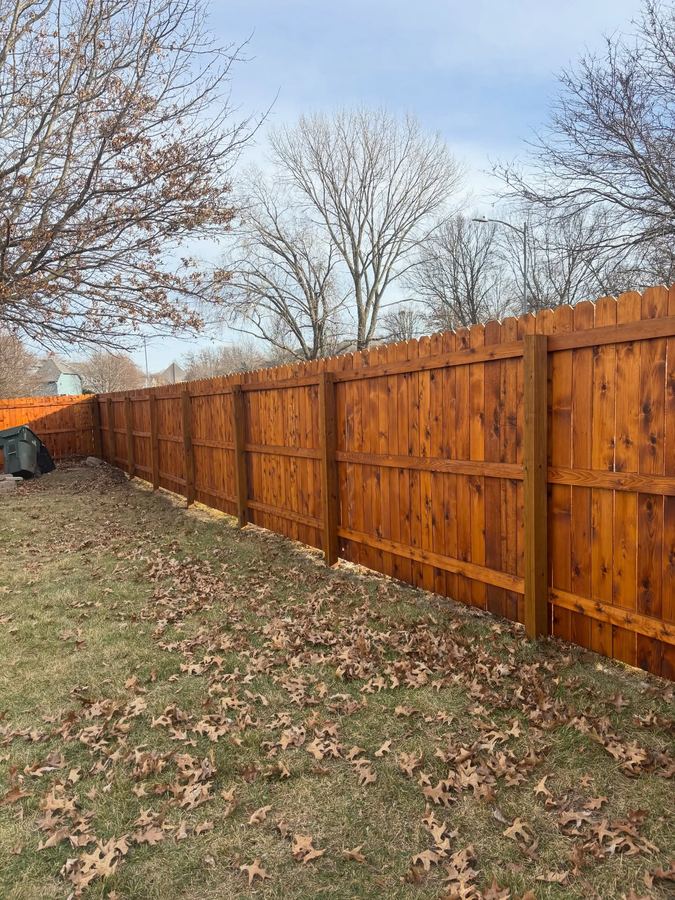
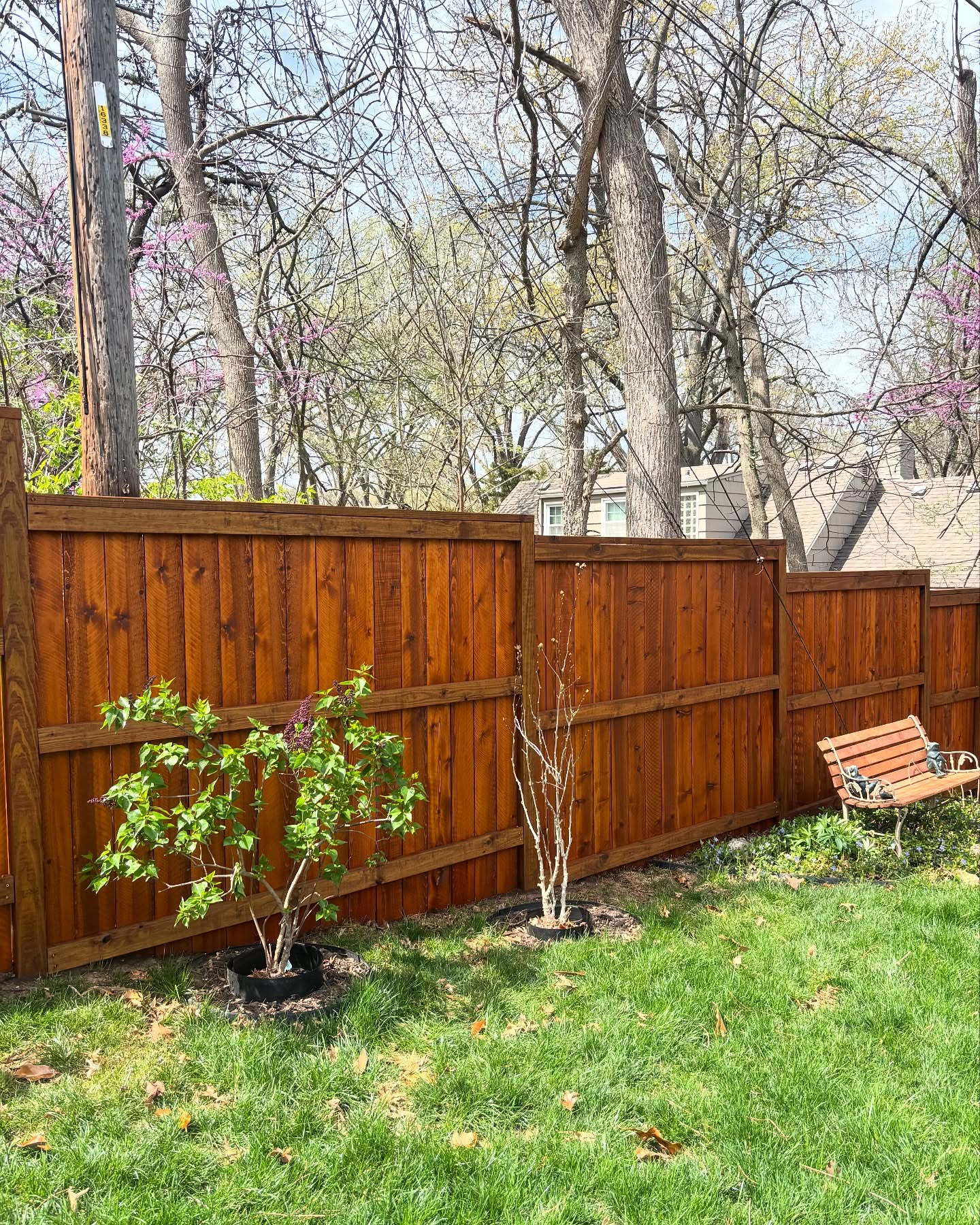
Fresh cedar first-coat stain on a new fence in Belton, MO
New-Fence First Coat · Belton
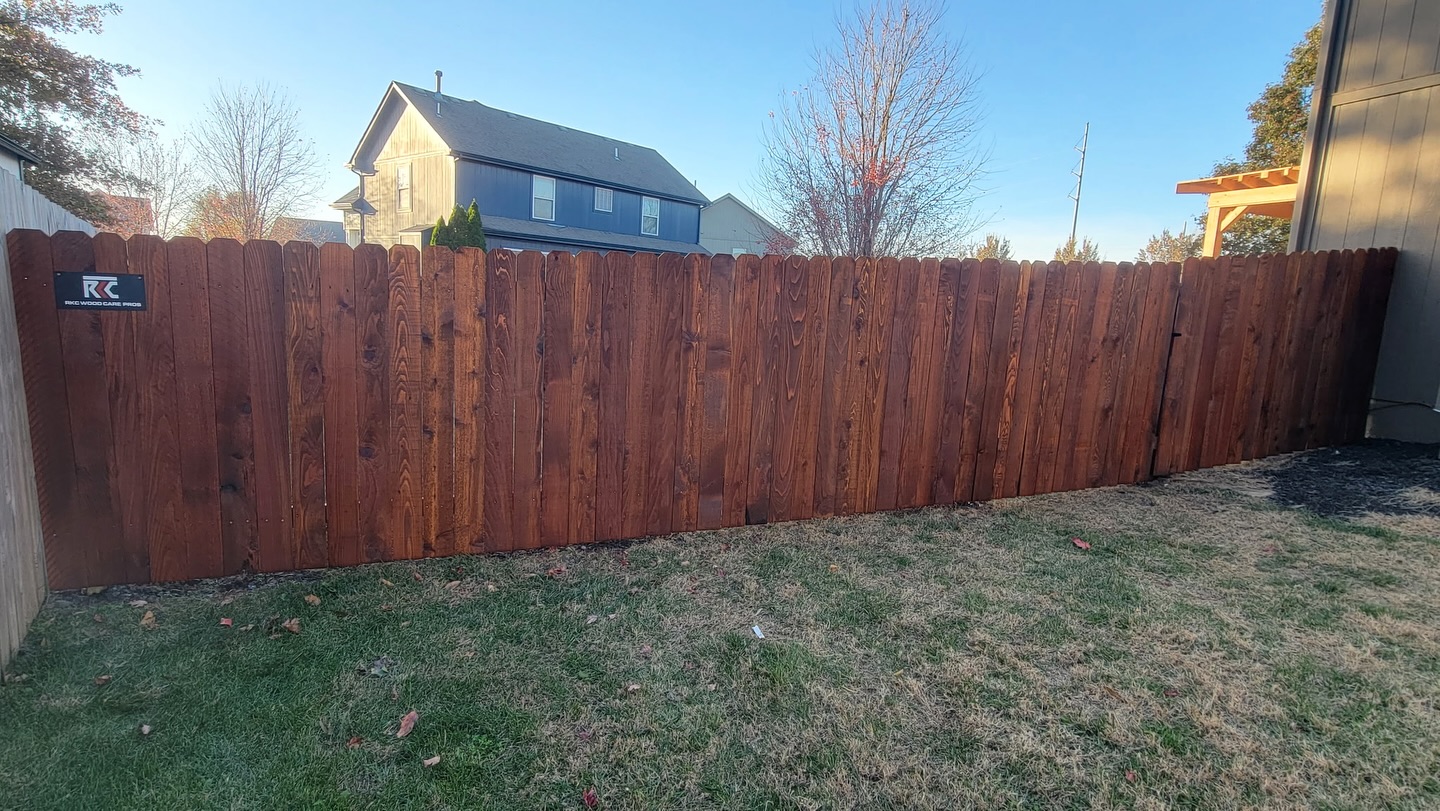
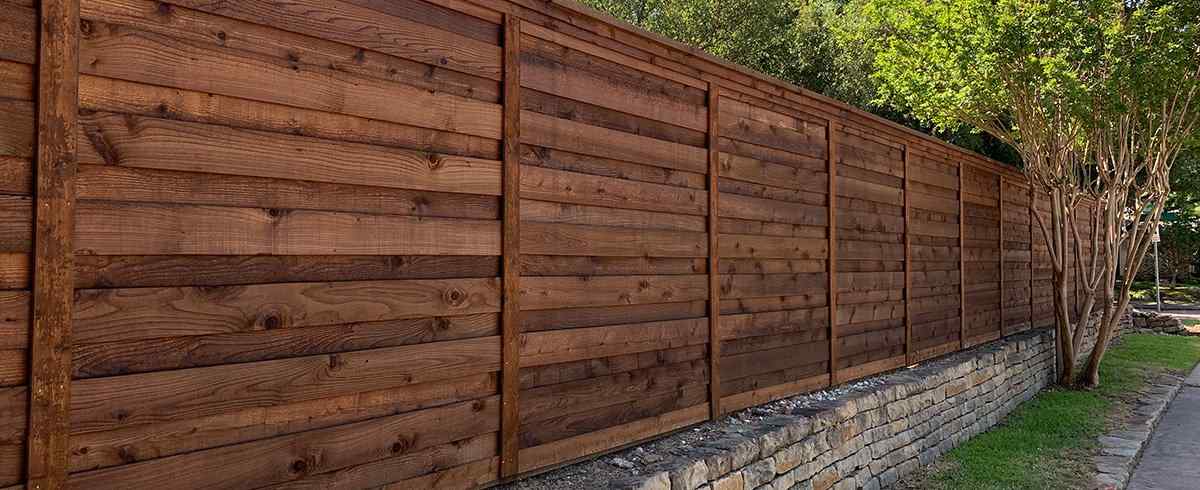
Pressure-treated pine re-stain in Belton, MO
PT Re-Stain · Belton
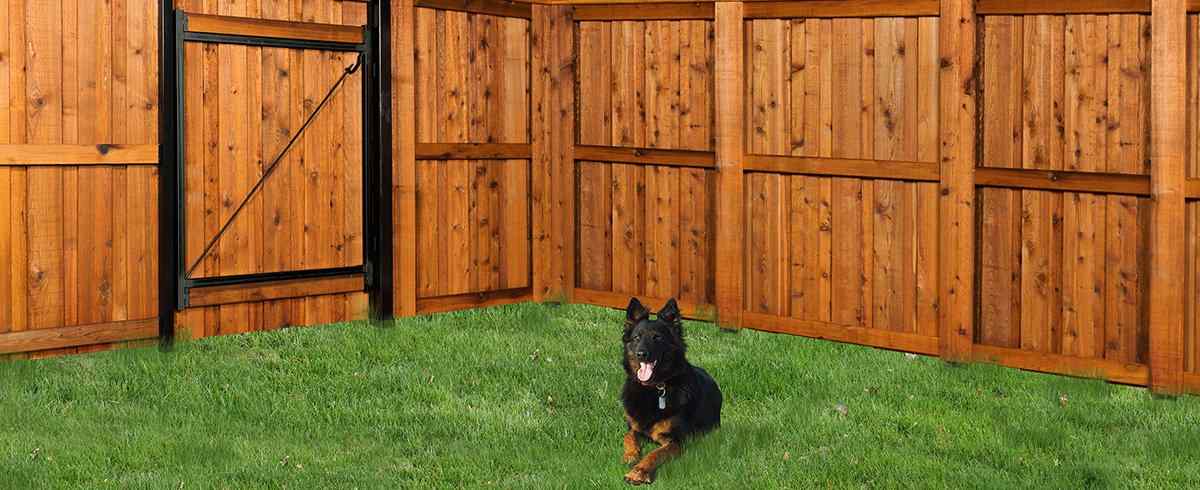
Professional fence staining on an open Belton, MO lot
Sun-Faced Run · Belton

REVIEWS

What Kansas City Homeowners Say About RKC

4.9 ★ · 85 Google reviews

Every review is on our Google Business Profile — read them there, unedited.

Read all 85 reviews on Google

BELTON STAIN QUESTIONS

Stain Questions Belton Homeowners Ask Most

Three questions decide most Belton stain jobs: when a new fence should get its first coat, what the sun and wind and clay do to it, and whether a sun-silvered older run can be brought back. These are the ones Belton homeowners raise at the estimate — sorted by topic, each answer tied to the seasonal calendar, the open-prairie exposure, and the shifting clay. Don't see yours? Call (913) 286-1091 and ask.

Belton, MO fence staining by RKC Wood Care Pros

When to Stain

I just had a new cedar fence installed in Belton — when should I stain it?
Not right away — give new cedar about 30 days first. That window lets the internal moisture fall so a penetrating finish keys into the grain instead of beading off a wet board. If it's treated pine, wait closer to 90 days for the factory treatment to cure. On top of the cure, the coat wants a good seasonal window: the stable early-fall stretch is ideal, and a dry period in late spring is the reliable backup. Since Belton is full of new subdivision cedar, this is the most common question we get here — and getting the timing right on that first coat is what starts the fence's long life. We schedule it for you and often fold it into the install price.
What's the best time of year to stain a fence in the Kansas City area?
Early fall is the best window — mild, stable, lower humidity, and it seals the fence ahead of the winter storms Belton's open exposure invites. Late spring is the strong runner-up, once the spring rains give way to dry stretches. High summer works too, but we coat early or late in the day so the finish soaks in rather than flash-drying in the midday heat on a hot board. We avoid early spring, when the clay is still saturated, and winter, when it's below the product's application temperature. The seasonal calendar above lays out each window. That said, the moisture meter always overrules the calendar — a dry reading is what actually greenlights a coat.
Can you stain in the summer, or is it too hot?
We can, and summer is actually a good window because the wood reads its driest then — but the heat does change how we work. Staining a hot board in direct midday sun makes the finish flash-dry on the surface before it can soak into the grain, which leaves it sitting on top and wearing early. So in high summer we coat in the early morning and the evening, when the boards are cooler and the finish has time to penetrate. Done that way, summer's low moisture is an advantage rather than a problem. What we won't do is spray a run baking in the afternoon sun and call it good.

Sun, Wind & Clay

My Belton fence faces open and the sun is brutal — does that change the stain?
It changes how we apply it. Belton sits wide open to the south with little to break the sun, so the exposed south and west faces bleach far faster than a shaded run would. We handle that by carrying a touch more pigment onto those hard-sun faces, since deeper pigment blocks more UV and holds color longer, so the whole fence reaches its next re-coat at one even tone instead of the sunny side lightening out ahead. It's the same color across the fence — just a heavier hand where the sun is worst. On an open prairie lot that small application difference is a lot of what makes a coat last its full cycle.
The wind out here is constant — does that affect staining?
It affects the timing more than the coat itself. Constant prairie wind dries the surface of a board faster than the core, which can fool you into thinking a fence is ready to stain when the inside is still holding moisture — coat it then and the finish flakes as the core dries out. So we meter through the board, not just the surface, and we time the work to a settled window rather than a gusty front. Once a properly-cured coat is on, the wind is exactly what it's protecting against — a sealed fence shrugs off the weathering that dries and grays a bare one. Getting there just means respecting the wind at application time.

Posts & Restoration

My older fence is gray and a couple posts lean — can it still be stained?
The gray is usually fine to bring back; the leaning posts are the real question. On an older Belton run the silver is typically a thin weathered skin over sound wood that an oxalic brightener neutralizes and a fresh coat restores. But Belton's shifting clay — swelling wet, pulling back dry — leans and loosens posts, and there's no point finishing a run whose posts are about to go. So we probe and inspect the posts before quoting a coat. Where they're sound, we seal the fence and it has years left. Where the clay has worked one loose or a probe finds rot, we reset it first, so the coat you pay for gets its full life.
How often will a Belton fence need re-staining out in the open sun?
Figure a cedar coat roughly every 2 years and treated pine every 3 — and Belton's open exposure favors the shorter end, because the constant sun and wind weather a fence faster than a sheltered suburban lot. A bare or under-pigmented run on an open prairie lot can start bleaching noticeably before the two-year mark. Staying on schedule, with deeper pigment on the sun faces, is what keeps it even. Your next date goes on the invoice, timed toward a good seasonal window, and we're the ones who circle back when it arrives — so the fence gets its coats when the conditions are right rather than after it's already gone silver.

OTHER BELTON FENCE SERVICES

More Fence Services Available in Belton

Each link below keeps you in Belton — its own page, with pricing, conditions, and recent job photos tied to this city rather than the metro at large. Weighing a fresh install, a repair, a gate, or one specific material alongside the staining? Here's where each of those picks up.

Ready when you are

Get a free estimate — we usually respond the same day.

Call (913) 286-1091