Skip to content
Fence Staining & Sealing in Grandview, MO — The ROI on a Value Fence

Fence Staining & Sealing in Grandview, MO — The ROI on a Value Fence

Do you even need to stain? On a Grandview value fence the numbers answer it: left bare, a run grays within a year and treated pine can rot in five to seven — a coat costs a fraction of replacing the fence years early, and pushes its life out to decades. RKC Wood Care Pros lays out the real lifetime math, then does the highest-return work first: an oil coat that turns a cheap pine fence into a lasting one, rental-turnover refreshes on a portfolio schedule, and restoration on the aging subdivision runs. A penetrating finish that fades instead of peeling, every coat logged and the re-coat date on your invoice. 4.9 stars from 85 Google reviews. Call (913) 286-1091 for a free walk and quote.

★★★★★
4.9
from 85 reviews
Licensed
& Insured · KS + MO
400+
fences installed
A+ BBB Rated Kansas City Fence Contractor Best-ROI Oil Coat on Value Pine · Portfolio Scheduling 2-Year Cedar / 3-Year PT Cycle
View stain options in our catalog ↓

WHY GRANDVIEW HOMEOWNERS STAIN WITH RKC

The Coat That Pays for Itself

The real question on a Grandview value fence isn't which tone — it's whether a coat is worth the money. On the numbers, it plainly is. A bare run grays within a year and, on treated pine, faces real rot risk in five to seven; a sealed one lasts decades and shows far better at resale. The cost of staining is a fraction of replacing the fence years early — which makes it one of the highest-return dollars you can spend on the yard. We lay the lifetime math out plainly, then do the best-ROI work first, so the money already in the ground is protected.

1

Staining is the ROI, not the upgrade

On a value fence a coat isn't a nice-to-have — it's the thing that protects the money you already spent on the fence. Bare wood grays in a year and, on pine, rots years sooner; sealed, it lasts decades. Since the coat costs a fraction of an early replacement, it's one of the highest-return dollars in the yard. We lead with that math, not with color swatches.

2

Pine is the value wood — and needs it most

Grandview runs a lot of treated pine because it's affordable, and pine is exactly the wood a coat pays off on fastest: bare, it grays and checks quicker than cedar and faces rot sooner. An oil-based penetrating stain turns a cheap pine run into a genuinely lasting fence for not much money. The single best-return coat we lay in town is an oil on a never-sealed pine fence.

3

A finish that fades, never peels

Why the ROI holds up comes down to the product. A penetrating semi-transparent soaks in and wears by fading, so re-coating is a cheap wash-and-reapply. A solid film sits on top, looks bold a season, then peels under freeze-thaw and can trap moisture at the cracks — a deceptively costly path that speeds rot. Everything we lay in Grandview penetrates, which is what keeps the lifetime cost low.

4

Asset protection for rentals

For Grandview's many single-family rentals, a stained fence reads maintained to tenants and protects the asset from the accelerated wear an unsealed run takes. A periodic refresh costs a fraction of replacing a neglected fence. We time coats to turnover and put multiple properties on one schedule, so a whole portfolio stays protected and presentable without the owner tracking each address.

GRANDVIEW LOCAL CONDITIONS

Why Staining in Grandview Is a Numbers Decision

Three local factors shape stain work in Grandview: a practical value market where staining is judged on return, the treated pine that gets the biggest payoff from a coat, and the rentals and 30-year subdivisions that drive the demand. This is a town that asks whether a coat is worth the money — and the honest answer, laid out in real lifetime numbers, is usually yes. Same crew, same standard: identify the wood, run the numbers, protect the asset with the right product.

1

On a value fence, staining is the ROI play

Grandview homeowners are practical — the question here isn't which designer tone, it's whether a coat is worth the money at all. The honest answer is that it's one of the highest-return things you can do to a value fence. A bare run grays in a year and, if it's treated pine, starts facing real rot risk in five to seven; a sealed one lasts decades and shows far better at resale. The cost of a coat is a fraction of replacing the fence years early. That's the whole case, and it's why we lay the lifetime numbers out plainly rather than selling color — the math makes the decision.

2

Pine is the value wood, and it needs the coat most

Because Grandview runs so much treated pine — the affordable choice on big enclosures and rentals — the staining ROI is even sharper than in a cedar market. Bare pine grays and checks faster than cedar, and its density means it wants an oil-based penetrating stain specifically to protect it. Left unsealed, a pine fence is the fastest to look and go bad; sealed on a three-year cycle, it becomes a genuinely lasting fence for not much money. The single best-return coat we lay in Grandview is an oil on a treated-pine run that's never been sealed.

3

Rentals and 30-year subdivisions drive the demand

Two things fill the Grandview staining schedule: the city's many single-family rentals, where a coat protects the asset and keeps it showing well between tenants, and the aging 1960s-70s subdivisions where fences are hitting their 30-year mark. For landlords it's straightforward asset protection — cheap insurance against replacing a neglected fence. For the older subdivisions it's usually a restoration decision: bring the gray run back for a fraction of replacement, or let it go and pay for a new one. Either way the conversation is about return on the dollar, which suits how Grandview thinks about a fence.

The Grandview streets we've stained and brought fences back on run from the 1960s-70s subdivisions of Belaire and Holiday Hills to the redevelopment along Main Street and the taller road-noise runs near the I-49 corridor and Blue Ridge Boulevard — treated pine, cedar dog-ear, and plenty of rental-property runs. Each one gets the wood identified up front, the numbers laid out honestly, and the same matched penetrating coat — an oil on the value pine, a waterborne on newer cedar — to close. A fence another company built earns the identical treatment — the right product for the wood has never cared whose truck showed up on install day.

THE REAL LIFETIME MATH

The Grandview Stain-or-Not Guide — What Each Choice Really Costs

Before the color, the decision on a Grandview value fence is whether to coat it at all — and the honest way to answer that is to compare what each approach costs over the fence's whole life, not just on day one. Here's the side-by-side we walk Grandview homeowners through: what each finish approach costs up front, how long it lasts before it fails, and what it actually costs over the life of the fence. The short version is that the cheapest choice today is usually the most expensive one over ten years — but your fence and your plans decide it, which is why we run the numbers at the estimate.

Finish approach Up-front cost How long it lasts The real lifetime cost
Left bare, never sealed Nothing up front Grays within a year; on treated pine, rot risk climbs after 5–7 Highest lifetime cost — you replace it soonest, and it reads neglected at sale
One-time seal, never re-coated Low, once Holds 2–3 years, then grays out like a bare fence Better than nothing, but the fence still ages out mid-life and needs restoring
On-cycle cedar stain (our standard) Moderate, recurring every ~2 years Never grays if kept up; rot pushed out to decades Lowest cost per year of life, and the fence that shows best at resale
On-cycle treated-pine oil Moderate, recurring every ~3 years Protects the value wood that grays and checks fastest bare Turns a cheap pine fence into a lasting one — the best ROI move on a budget run
Solid / opaque film stain Higher on every renewal Colored, but peels under freeze-thaw and can trap moisture at the cracks Deceptively costly — every renewal is a scrape-back, and trapped water speeds rot
Rental-turnover refresh coat Low, periodic Keeps the run presentable and protected between tenants Protects the asset and reads maintained — cheap insurance on a rental property

The line that runs down the guide: leaving a value fence bare is the cheapest thing today and the most expensive over ten years — an on-cycle coat costs a fraction of the early replacement it prevents, and pays off hardest on treated pine. That's the whole case for staining a Grandview fence. Want the numbers on your own run? A free staining walk lays out the math and brings the sample boards, or start with a new Grandview wood fence from the same crew that will finish it.

STAIN SERVICES

Pine Coats, Cedar Re-Stains & Rental Refreshes — Every Grandview Scenario

The scope your Grandview fence lands in comes straight out of the read — treated pine ready for its best-ROI oil coat, cedar due for a matched re-stain, a rental run that needs a turnover refresh, or a gray subdivision fence that needs bringing back. Below are the four we run across Grandview, what each one suits, and honest per-foot numbers. Colors are yours to choose; what stays fixed is the sequence — identify the wood, level the surface, lay the right penetrating product with a spray-and-back-brush pair, all by our own crew.

Pressure-Treated Pine Re-Stain by RKC Wood Care Pros in Grandview, MO

Pressure-Treated Pine Re-Stain

The best-ROI move on a value fence · 3-year cycle

Treated pine is the volume wood in Grandview — the affordable pick on the big backyard enclosures and the rental runs — and it's also the wood a coat pays off on fastest, because bare pine grays and checks quicker than cedar. It runs on its own clock: the factory treatment cures for about three months, then it wants an oil-based semi-transparent that penetrates the dense treated fiber where a waterborne would only skin over. Any board still tinged green or blackened gets a brightener first. Sealing a pine fence is what turns a cheap fence into a lasting one — the clearest ROI on any value run in town.

  • Price: $3–7 / LF · typically $450–1,050 per 150 LF
  • Typical use: Treated-pine value and rental runs, big backyard enclosures, budget boundary lines across the 1960s-70s subdivisions
Existing Cedar Re-Stain by RKC Wood Care Pros in Grandview, MO

Existing Cedar Re-Stain

The 2-year cycle · the lasting-fence choice

Cedar is the step-up wood in Grandview, and on a two-year rhythm it never has to gray. On schedule it's a soft wash to lift oxidation and mildew, a meter check for the dry window, then the matched color driven into both faces. Because we log your exact product and color the day we finish, the re-coat pulls the same can — no two-tone patch. For the security-minded owners who went to a taller cedar run to buffer the I-49 road noise, keeping it sealed is what protects that investment. Your next date goes on the invoice.

  • Price: $4–8 / LF · typically $600–1,200 per 150 LF
  • Typical use: Cedar dog-ear and privacy runs, taller road-noise-buffering fences, straight color refreshes on cycle
Rental & Turnover Refresh by RKC Wood Care Pros in Grandview, MO

Rental & Turnover Refresh

For property managers · protect the asset

Grandview has a lot of single-family rentals, and a stained fence does two jobs for a landlord: it reads maintained to prospective tenants, and it protects the asset from the accelerated wear an unsealed run takes. We time refreshes to turnover, work efficiently across whole runs, and can coordinate multiple properties on one schedule. It's cheap insurance — a periodic coat costs a fraction of replacing a fence that grayed and rotted from neglect, and it keeps the property showing well between tenants. We log each address so the whole portfolio stays on track.

  • Price: $3–7 / LF · typically $450–1,050 per 150 LF
  • Typical use: Single-family rentals, property-manager portfolios, turnover refreshes, protecting a fence between tenants
Gray-Fence Restoration by RKC Wood Care Pros in Grandview, MO

Gray-Fence Restoration

Bringing a 30-year subdivision run back

Grandview's 1960s and 70s subdivisions are full of fences hitting the 30-year mark, and plenty have gone gray from decades unsealed. Before you replace one, it's worth a look — the silver is often a thin weathered skin over sound wood, and restoration costs a fraction of a new fence. Failed finish gets stripped, the run takes an oxalic brightener to one tone, several washes, a hard dry, then one penetrating coat. Because these older runs sometimes have posts at the end of their life, we probe first — if a probe finds soft fiber we reset those posts before finishing, because stain never goes over rot.

  • Price: $6–12 / LF · typically $900–1,800 per 150 LF
  • Typical use: Silvered 1960s-70s subdivision cedar and pine, homes just changed hands, runs a former owner never sealed
Value-fence cedar and pine stain pricing — Grandview, MO — RKC Wood Care Pros

GRANDVIEW STAIN PRICING

What Fence Staining Costs in Grandview

What a Grandview job costs is best read against what skipping it costs — a coat runs a fraction of replacing a fence that grayed and rotted from years bare, which is the whole ROI case on a value run. Each quote folds in the wash, the brightener where the wood's grayed, the metered dry window, the right penetrating family for the wood, the spray-and-back-brush pass by our own two-person crew, and a written date for the next coat. The three setups we price most often for Grandview homes are below.

Pressure-Treated Re-Stain

$3–7 / LF

brighten + oil stain

The best-ROI coat on a value fence — wash, brightener on the green and blackened patches, then the oil-based semi-transparent that bites into treated pine, with the 3-year mark logged. A 150 LF Grandview pine run generally lands at $450–1,050.

Cedar Re-Stain

$4–8 / LF

wash + penetrating stain

The lasting-fence coat — soft wash, a meter check, the matched family into both faces, and your next date in writing. Most 150 LF Grandview cedar privacy runs settle near $600–1,200.

Gray-Fence Restoration

$6–12 / LF

strip · brighten · stain

A fraction of a new fence: failed finish stripped, the run brightened to one tone, washes, a post probe on the older 30-year runs, then a penetrating coat. A weathered 150 LF Grandview run is usually $900–1,800.

For rental portfolios we quote by the property and can put multiple addresses on one schedule, so the whole set stays protected without you tracking each one. Every Grandview estimate is free, written, and itemized — call (913) 286-1091 or set up a walk. While the crew's on site they can flag any Grandview fence repair — a 30-year post, a heavy DIY gate — that should be handled before staining protects the run — one trip, same hands.

OUR STAIN PROCESS

How a Grandview Stain Job Comes Together

Four steps from the phone call to the final walk. Most Grandview stain jobs span 2 to 4 days — but only one of them is stain day. The stain itself is usually a single day on site for a standard run. The rest of the clock is identifying the wood, running the honest ROI numbers, and the wash-brighten-dry cycle that gets the surface ready. Here's what each step looks like on a Grandview fence.

1

Walk it, meter it, run the numbers

Step one on a Grandview fence is an honest read of where it stands and what a coat returns. Josh or a lead measures the footage, identifies the wood — usually treated pine or cedar — takes a moisture reading, and probes the posts on the older subdivision runs. Then we lay out the actual case: what staining costs versus what an unsealed fence costs you in shortened life and lost resale. If it's a rental or a portfolio, we talk turnover timing and multi-property scheduling. Estimate's free and itemized, and we brush a tone sample on a hidden board so you judge the color on your own wood.

2

Wash, brighten, and dry — especially the pine

This is the stage that makes the coat worth the money. A run due on schedule gets a soft wash to lift oxidation and mildew; a bare or long-unsealed run takes an oxalic brightener to a true tone, with extra attention to the green and blackened patches treated pine develops; any failed film gets stripped rather than buried. Because pine holds moisture longer than cedar, the meter goes on the slowest-drying section and nothing opens until it reads ready. A coat over damp or dirty wood is money wasted — and on a value fence, not wasting money is the entire point.

3

Lay the right product, spray and back-brush

Surface level and dry, we load the product the wood and the budget call for — an oil across the treated pine and the value runs, a waterborne on newer cedar — and put it on the one way that works: a sprayer moving the finish, a second hand right behind back-brushing it into the grain before it sets. On pine especially the back-brush is what drives an oil coat into dense fiber that would otherwise let a sprayed film sit on top and peel, so the fence actually gets the protection you paid for rather than a surface film that fails early.

4

Walk it together, then log the schedule

Last is your eyes alongside ours — a full pass catching any board that reads thin or skipped, touched in on the spot before we sign off. Then the finish lands on your file: the date, the wood, the product family, the exact color, the footage, and when the next coat is due — two years for cedar, three for pine. For rental portfolios that record keeps every address on schedule; for a homeowner it means the reminder comes from us, so the value-fence ROI actually plays out instead of the fence quietly graying between good intentions.

RECENT GRANDVIEW STAIN JOBS

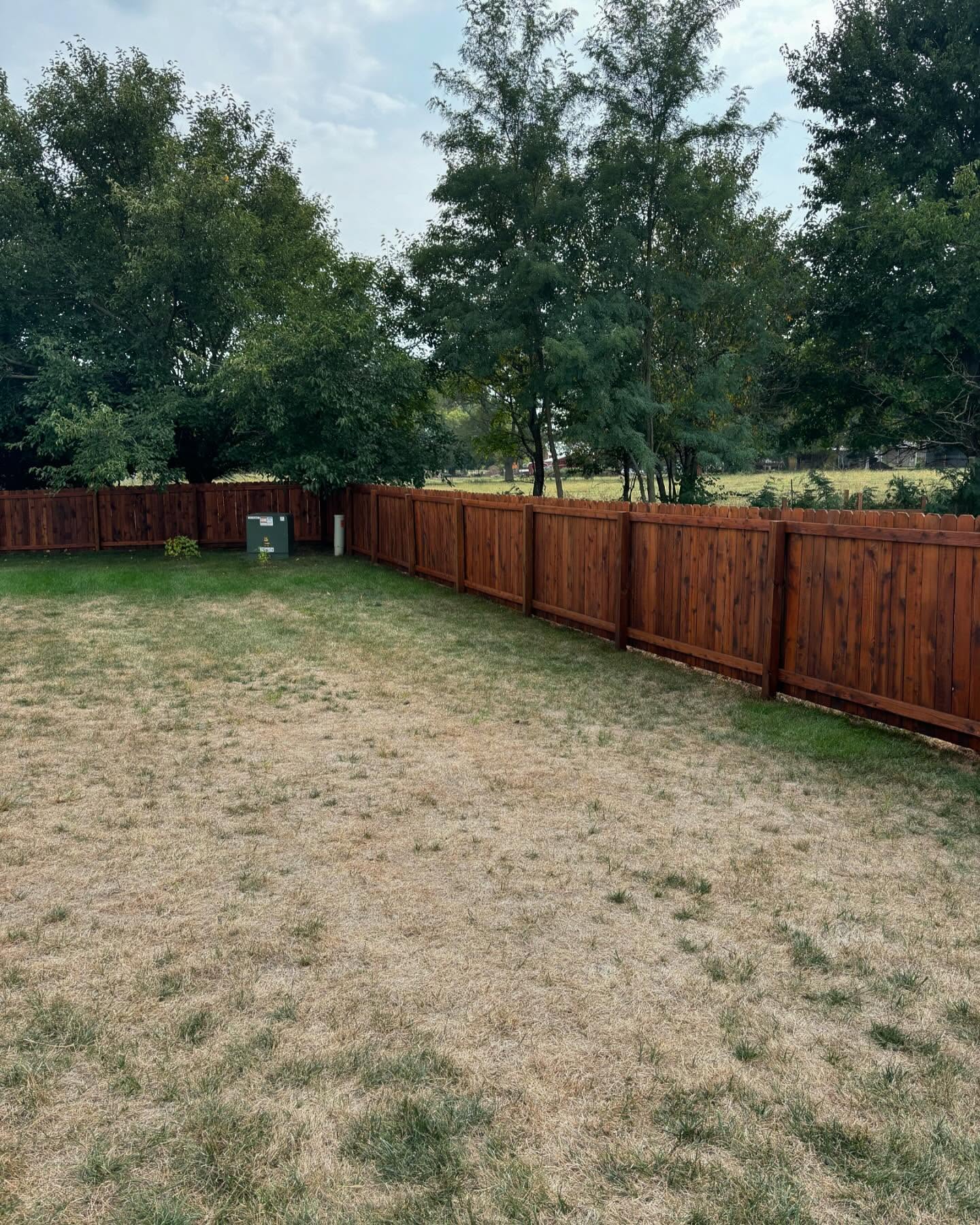
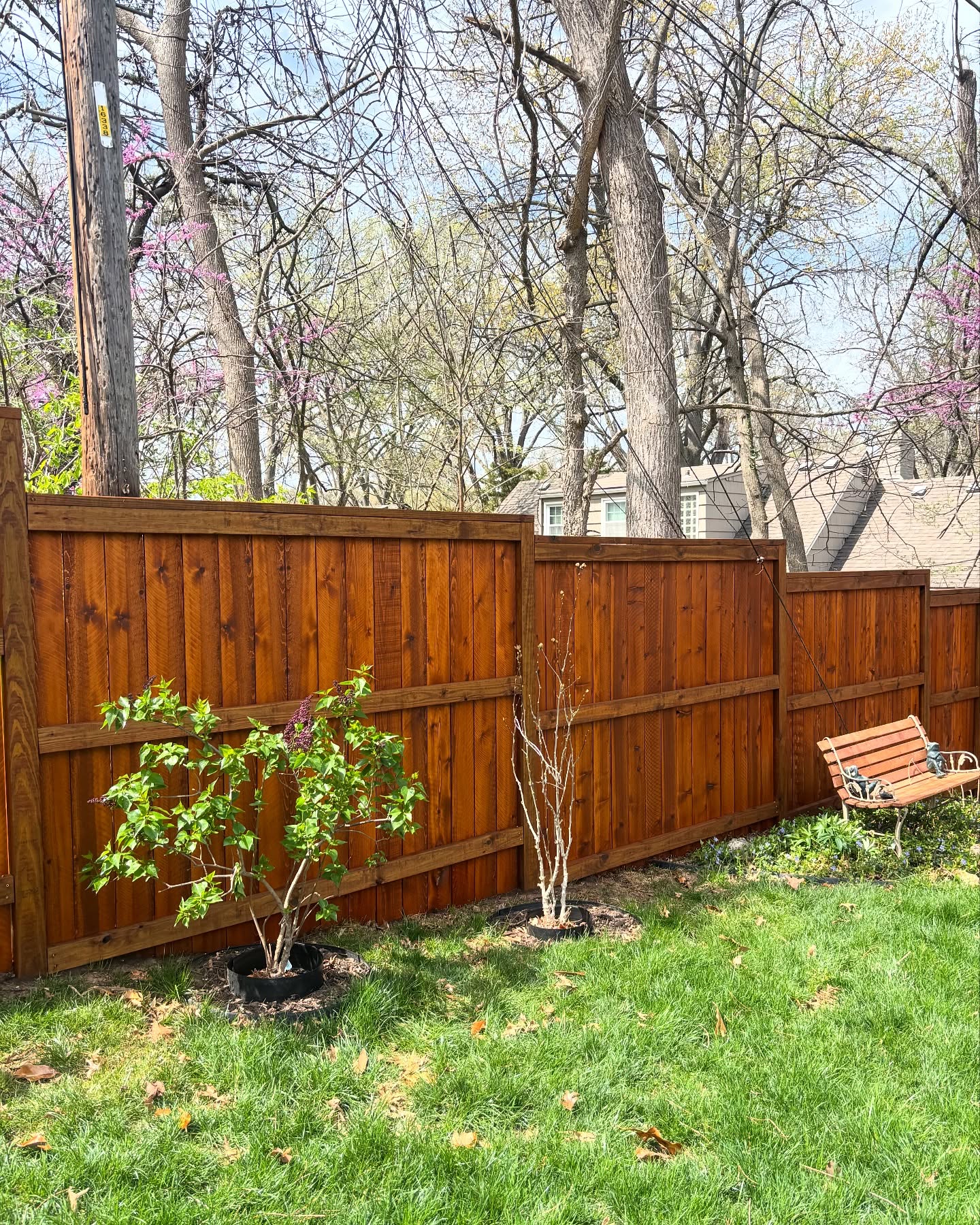
Cedar fence re-stained in deep walnut in Grandview, MO by RKC Wood Care Pros
Cedar Re-Stain · Grandview
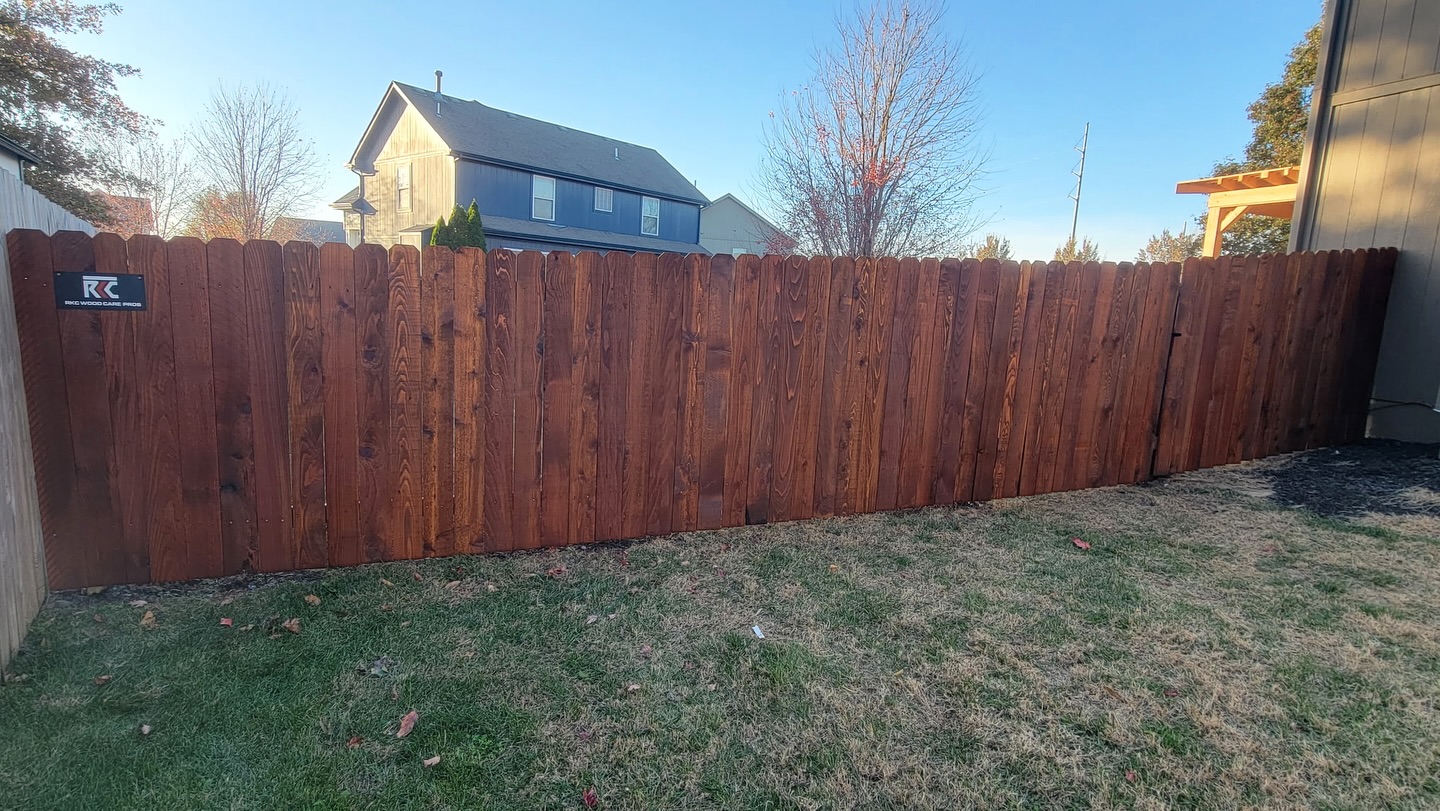
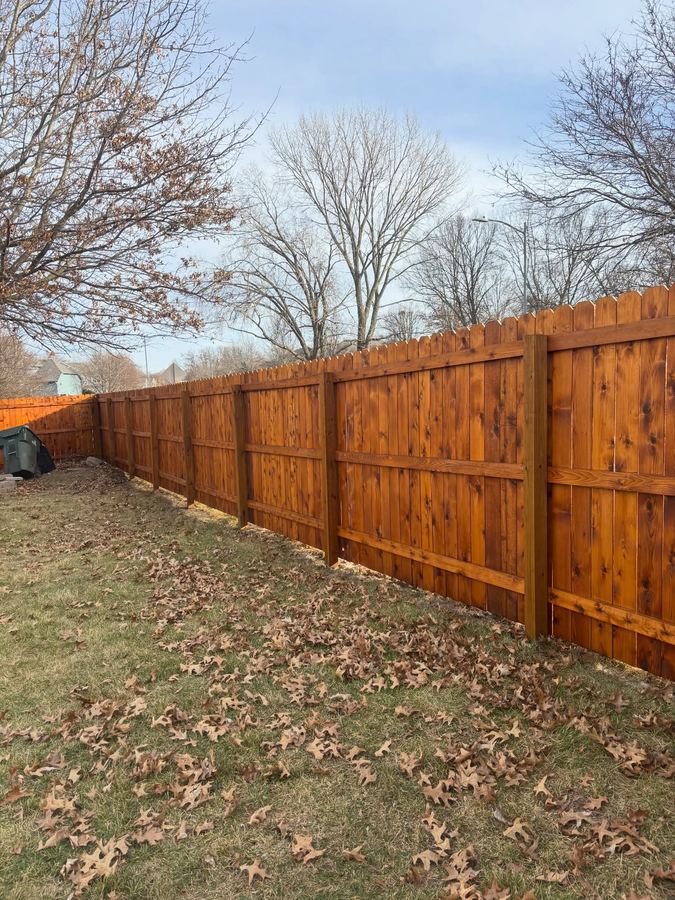
Value wood fence after staining in Grandview, MO
Value-Fence Coat · Grandview
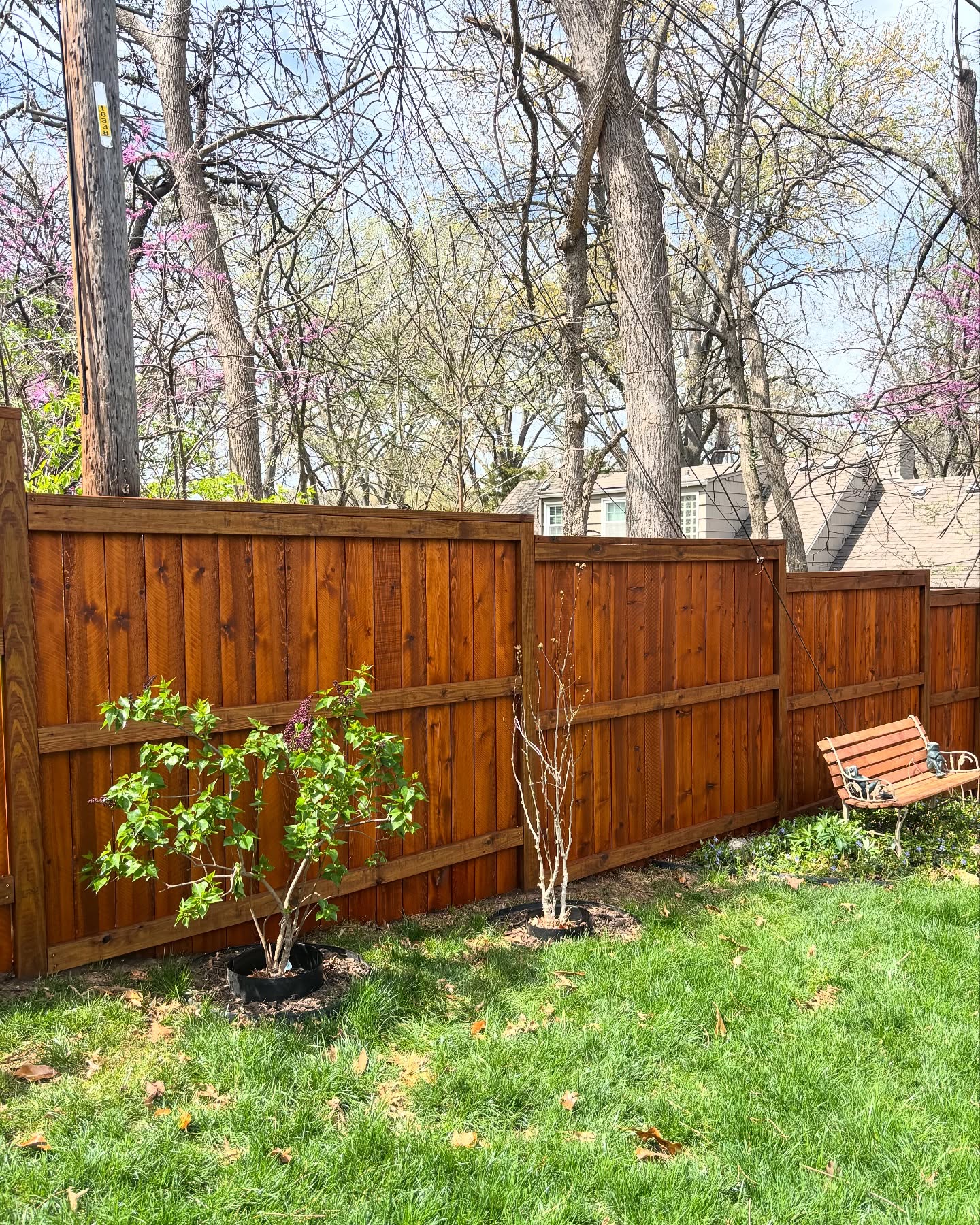
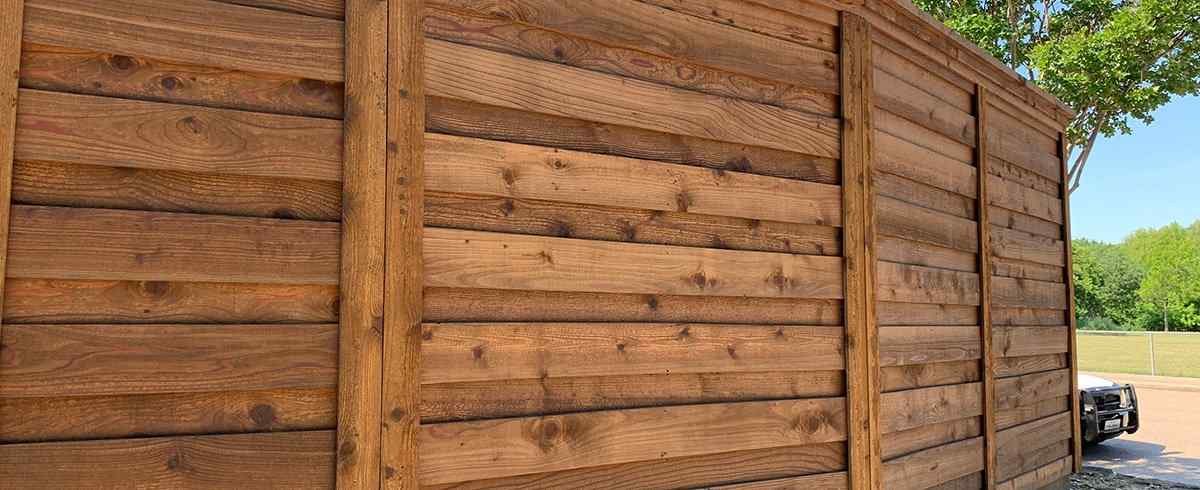
Pressure-treated pine re-stain in Grandview, MO
PT Re-Stain · Grandview
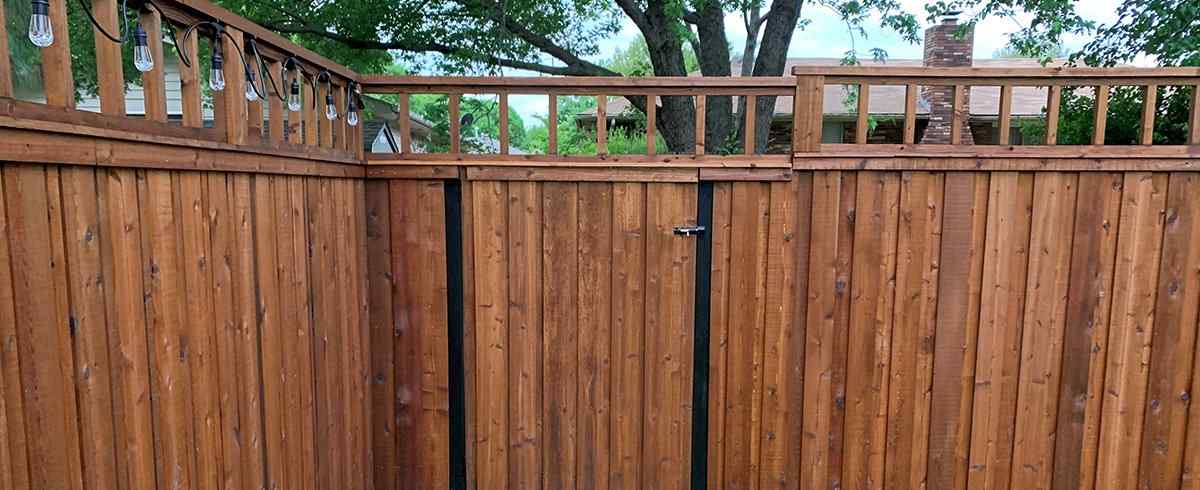
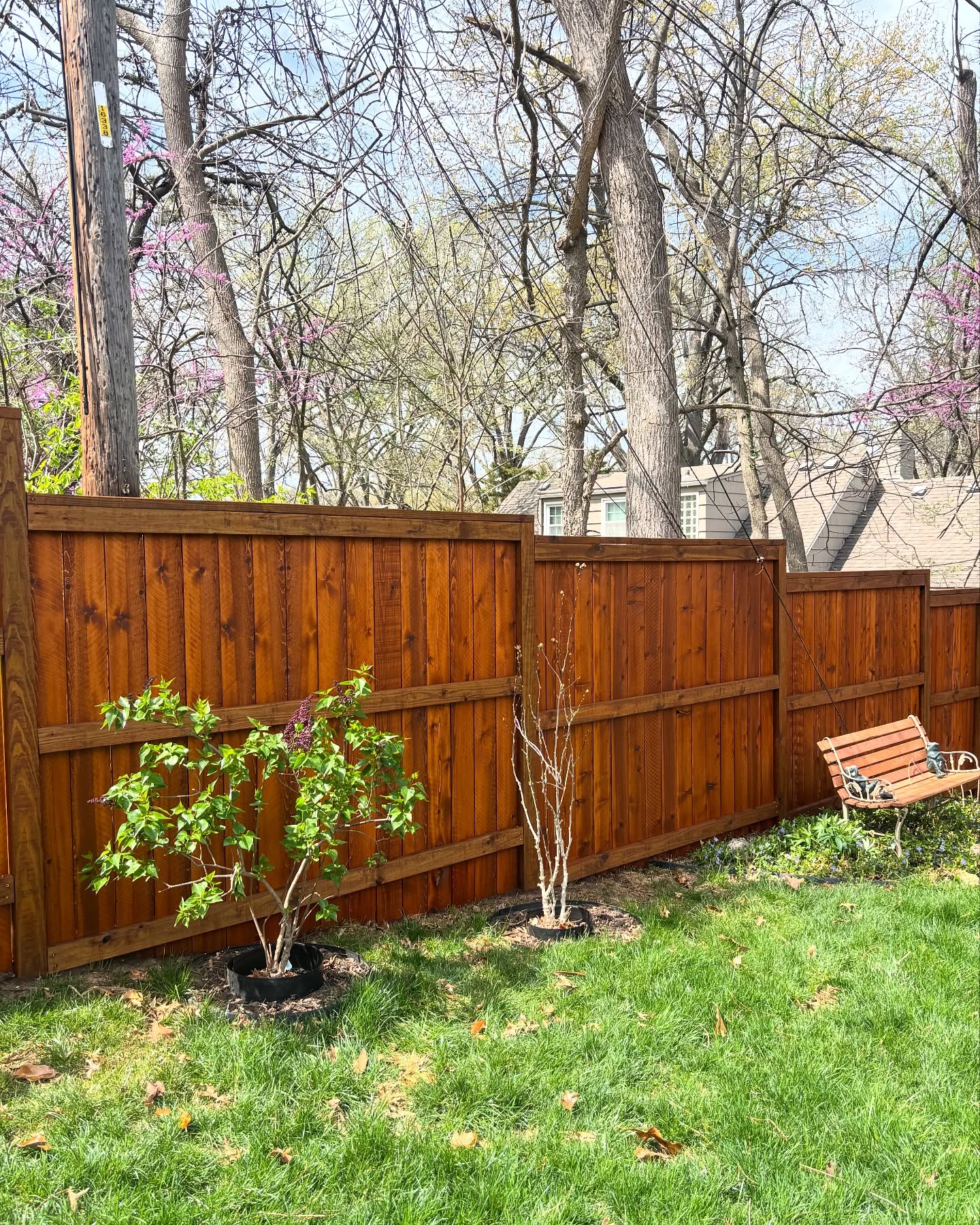
Cedar dog-ear fence stained mahogany in Grandview, MO
Dog-Ear Re-Stain · Grandview

REVIEWS

What Kansas City Homeowners Say About RKC

4.9 ★ · 85 Google reviews

Every review is on our Google Business Profile — read them there, unedited.

Read all 85 reviews on Google

GRANDVIEW STAIN QUESTIONS

Stain Questions Grandview Homeowners Ask Most

Three questions decide most Grandview stain jobs: whether a coat is worth it at all, when treated pine can be stained, and whether a gray 30-year subdivision fence should be restored or replaced. These are the ones Grandview homeowners raise at the estimate — sorted by topic, each answer tied to the lifetime ROI, the value-wood pine, and the aging subdivision runs. Don't see yours? Call (913) 286-1091 and ask.

Grandview, MO fence staining by RKC Wood Care Pros

Is Staining Worth It?

Do I really need to stain my fence, or can I just leave it?
You can leave it, but the numbers make a strong case not to — especially on a value fence. Left bare, a wood fence grays within a year, and treated pine starts facing real rot risk in five to seven, which means replacing it years early. A coat costs a fraction of that and pushes the fence's life out to decades, while keeping it looking maintained for resale. The ROI table above lays the comparison out plainly. For most Grandview homeowners the honest answer is that staining is one of the highest-return dollars you can spend on the yard — not an optional upgrade, but the thing that protects the money already in the ground.
Which fence gets the biggest payoff from staining?
Treated pine, by a clear margin — which matters here because pine is Grandview's value wood. Bare pine grays and checks faster than cedar and faces rot sooner, so sealing it delivers the sharpest return: for not much money, an oil coat turns a cheap, short-lived fence into a genuinely lasting one. Cedar benefits too, but its natural oils buy it a little more time bare, so the urgency is lower. If you've got an unsealed treated-pine run that's never had a coat, that's the single best-ROI staining job we do in town — and the one we'd point to first.
Is it worth staining a fence on a rental property?
Yes, and it's straightforward asset protection. A stained fence does two things for a landlord: it reads maintained to prospective tenants, which helps a property show and rent, and it protects the fence from the accelerated wear an unsealed run takes between tenants who won't maintain it. A periodic refresh costs a fraction of replacing a fence that grayed and rotted from years of neglect. We time refreshes to turnover, work efficiently across whole runs, and can put multiple properties on one schedule — so the whole portfolio stays protected and presentable without you tracking each address.

Timing & Schedule

How often does a Grandview fence need re-staining?
Figure a cedar coat roughly every 2 years and treated pine every 3 — pine's density holds a coat a little longer once it's cured. The Missouri freeze-thaw swings and summer sun set that pace, and letting a fence drift much past it is how you lose the ROI: a coat laid on time is a cheap wash-and-reapply, while one skipped for years lets the fence gray and turns the next job into a full restoration. Your next date goes on the invoice keyed to your wood, and we're the ones who circle back when it arrives — for a value fence, staying on schedule is the whole savings.
My fence is treated pine and fairly new — when can it be stained?
Give treated pine about 90 days from install. That factory treatment leaves the wood full of moisture and chemistry that has to cure before a finish will bite; coat it too early and it beads right off, wasting the product. Cedar moves faster, around 30 days. If you're not sure how old the pine is or whether it's ready, we take a moisture reading at the estimate rather than guessing off the calendar. Getting that first coat on at the right moment is what starts the value fence's long life — and it's often folded into the price on our new installs.

Gray Fences & Restoration

My 1970s subdivision fence is gray — restore it or replace it?
Look before you replace, because on a Grandview value fence restoration usually wins on the numbers. Plenty of the fences hitting 30 years in the older subdivisions have gone gray from decades unsealed, but the silver is often a thin weathered skin over sound wood — and bringing it back with a strip, brighten, and coat costs a fraction of a new fence. The one thing we check first is the posts: at 30 years some are near the end of their life, so we probe for rot before quoting. Where the wood and posts are sound, restoration is the clear-value call; where they're not, we'll tell you honestly that a few boards or posts — or occasionally the run — need replacing first.
Can a fence that was never sealed still be brought back to color?
Almost always, yes — and a lot of Grandview fences were never sealed after they went up. Bare wood that's grayed is oxidized on the surface, not rotted through, so an oxalic brightener neutralizes the silver and several washes clear it to clean fiber, then one penetrating coat pulls it back to real color. Treated pine especially takes to this because the wood underneath is so durable. Once it's back, the smart-money move is to put it on the re-coat schedule so it never grays again — which turns a one-time restoration into a cheap routine coat and locks in the value you just recovered.

OTHER GRANDVIEW FENCE SERVICES

More Fence Services Available in Grandview

Each link below keeps you in Grandview — its own page, with pricing, conditions, and recent job photos tied to this city rather than the metro at large. Weighing a fresh install, a repair, a gate, or one specific material alongside the staining? Here's where each of those picks up.

Ready when you are

Get a free estimate — we usually respond the same day.

Call (913) 286-1091