What fencing do Independence schools and campuses need?
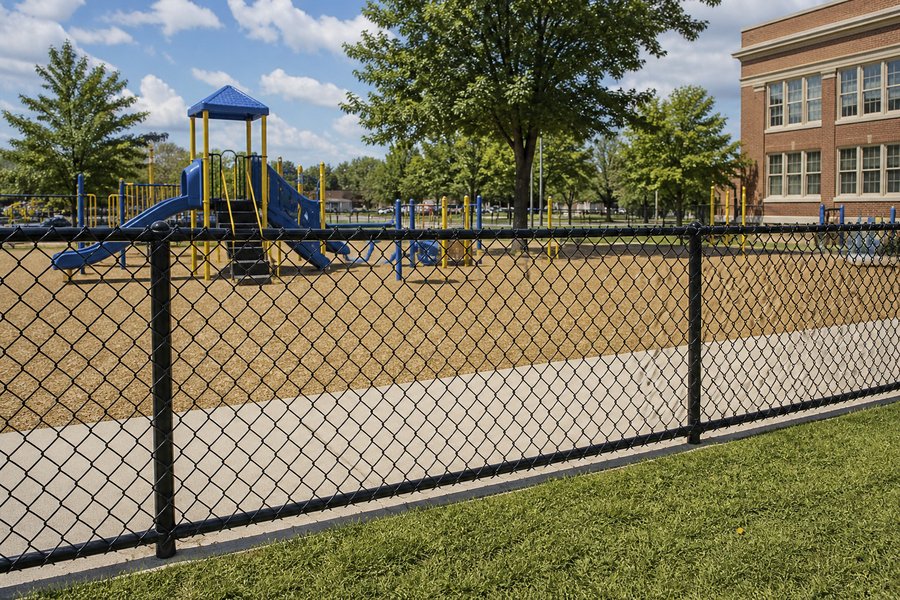
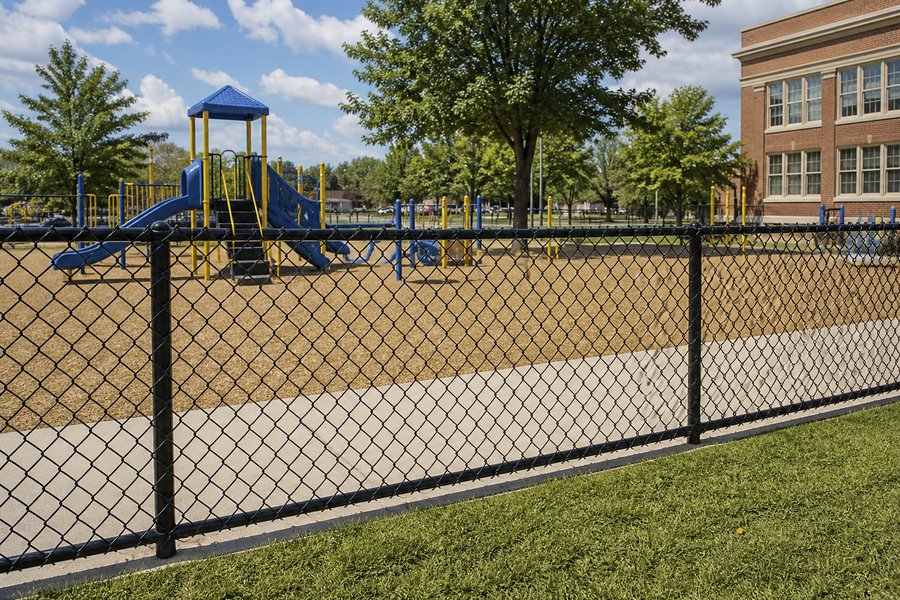
It's mostly galvanized chain link, and it's a distinct job from a business perimeter. A campus buys two things on a public budget — keeping students contained and keeping unauthorized people off the grounds — and chain link delivers the most secure footage per dollar to do it. The perimeter funnels foot traffic to one controlled, supervised entrance rather than leaving several ways in, the fabric is run tall enough to discourage a climb, and the top is deliberately spec'd without the razor or barbed arms that belong on an industrial yard but never near children. Ball fields, tennis courts, and playgrounds get their own tall enclosures. We've built this kind of work across the Independence, Fort Osage, and Blue Springs district areas.
Can you enclose a ball field, tennis court, or playground?
Yes — athletic and play enclosures are a steady part of the commercial book here. The requirements are specific: the fabric runs tall to keep balls and kids inside, it stays open galvanized mesh rather than a solid screen so staff can see across it and supervise, and the bottom is kept tight to grade so nothing slips under at a dip in the ground. Backstops behind home plate, full tennis-court surrounds, and playground perimeters each get the height and gauge the use demands. It's the same commercial-weight chain link as a yard perimeter, configured for containment and sightlines instead of pure deterrence.
What about retail and industrial sites along M-291 and I-70?
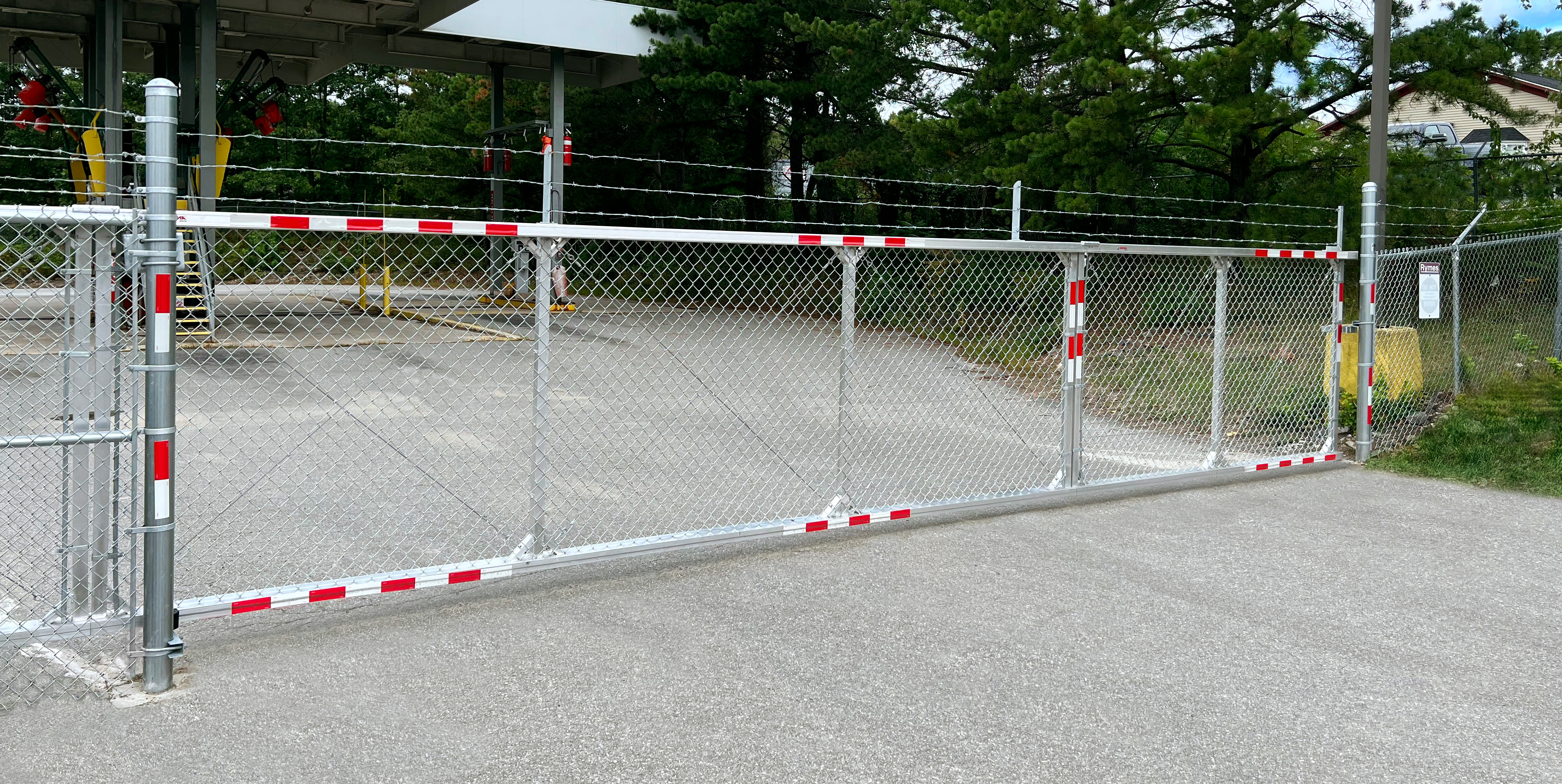
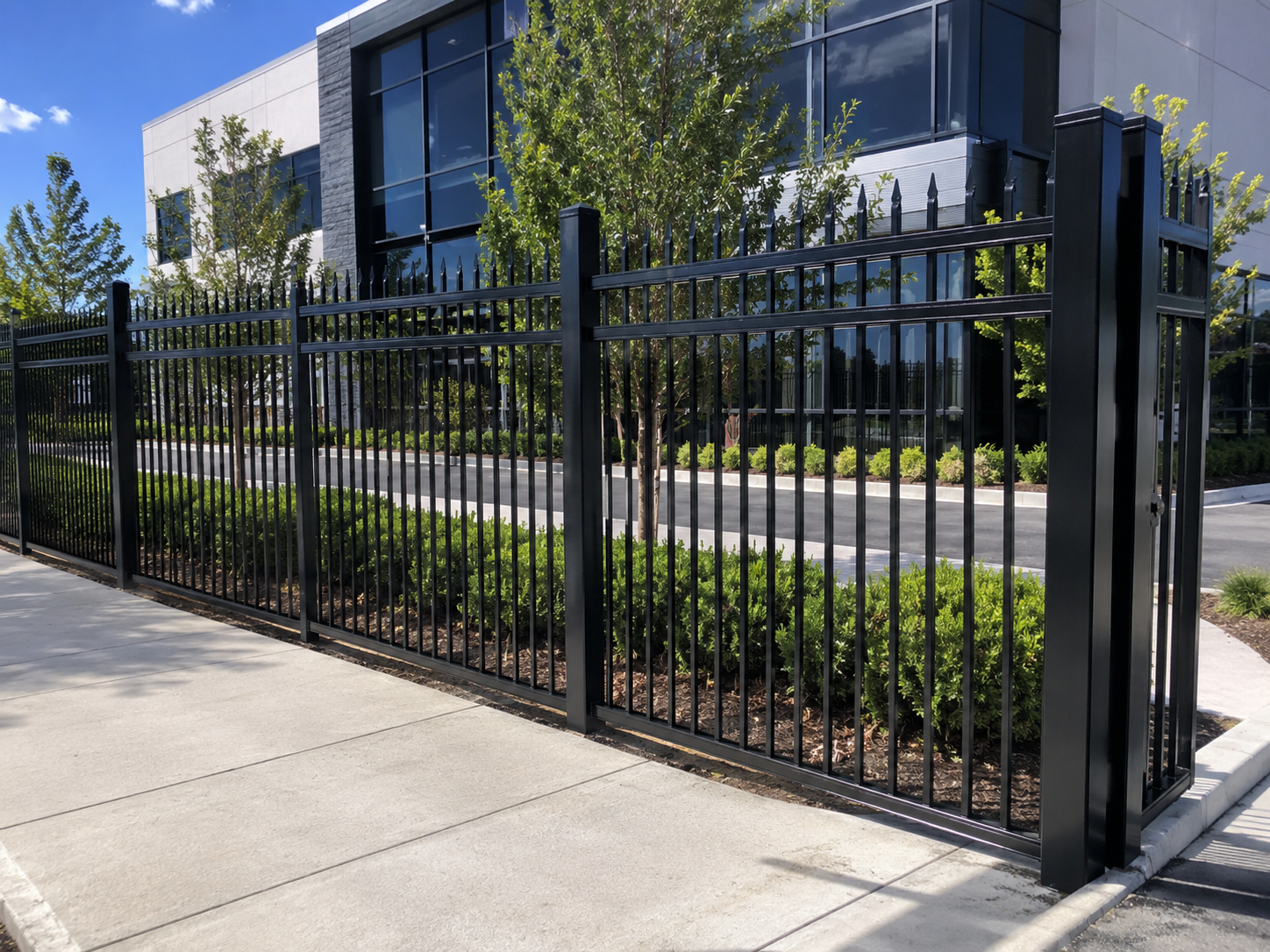
Those split by what the site does. A retail center on the M-291 or 24 Highway corridor usually needs two different fences on one parcel — an ornamental or clean picket line at the customer-facing edge that reads as a finished storefront, and a heavy slat screen hiding the loading yard and dumpsters behind. An industrial or distribution yard off I-70 flips the priority to pure security: 8-foot commercial-gauge chain link, braced framework, and an anti-climb top where deterrence is the whole point. A single property often needs more than one of these, and we spec each run to what that part of the site actually does.
How deep do commercial fence posts go, given Independence's clay?
Deeper than any residential line, because a taller fence loads its posts far harder and the heavy Missouri River clay works against a shallow one. A backyard fence rides on roughly 36 inches; a 6-foot commercial perimeter steps up to about 42, and an 8-foot security line and every gate post want four feet or more in a fatter footing. The driver is wind leverage — a tall run catches wind like a sail and pries on its base — and the clay compounds it, swelling and gripping a post as it takes on water and freezes. The extra depth and concrete are structural, not padding; a school perimeter or a yard line that skimps there is the one that leans within a couple of seasons.
Do you work with school-district facilities directors, GCs, and property managers?
Regularly — much of the commercial and institutional book comes through them. We carry licensing and insurance on both sides of the state line and hand over the vendor-file basics without being chased: a signed W-9 and a current certificate of insurance up front, and invoicing that maps to the approved scope so the office can reconcile it cleanly. On a phased job we slot into the general contractor's sequence so each run lands at the right point, and we close by walking the finished site with the owner, facilities director, or PM and documenting any punch items in writing. What we don't do is dress up the capability — we're a fencing contractor, not a bonded public-works house, and we'll tell you plainly what fits and what doesn't.
What does commercial fencing cost in Independence?
There's no single rate, because a school campus perimeter, an ornamental storefront run on M-291, a tennis-court enclosure, and an 8-foot anti-climb yard off I-70 are four different builds at four different prices — a per-foot phone quote would just be a guess. What we give instead is a line-itemed proposal after a site walk: fabric gauge, run height, total footage, each gate, and any enclosure or screen, all broken out so nothing is buried. The site visit is free, and we scope to what the property genuinely needs rather than padding it or shaving it thin to look cheap — which, in a value-minded town, is the number that actually matters.