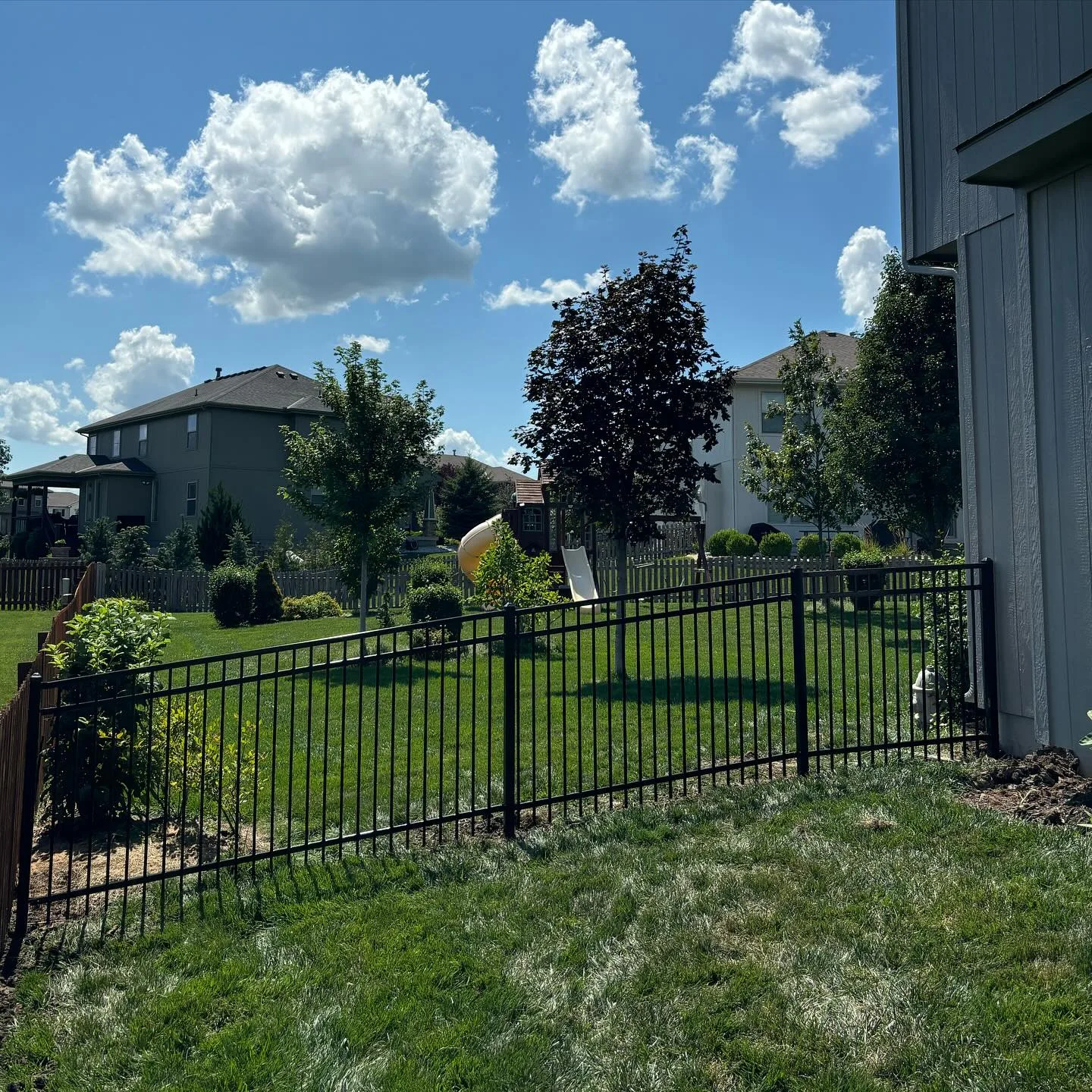
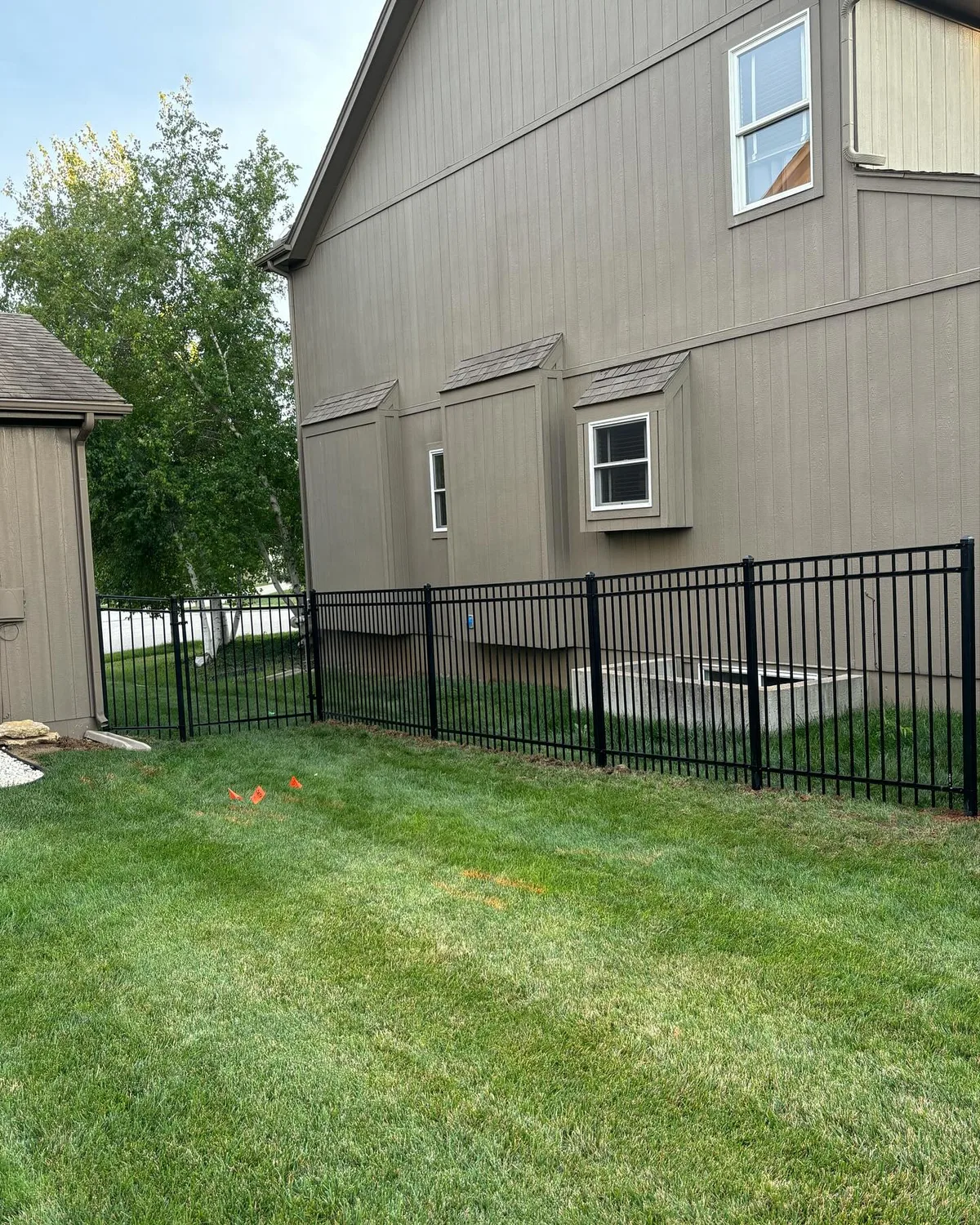
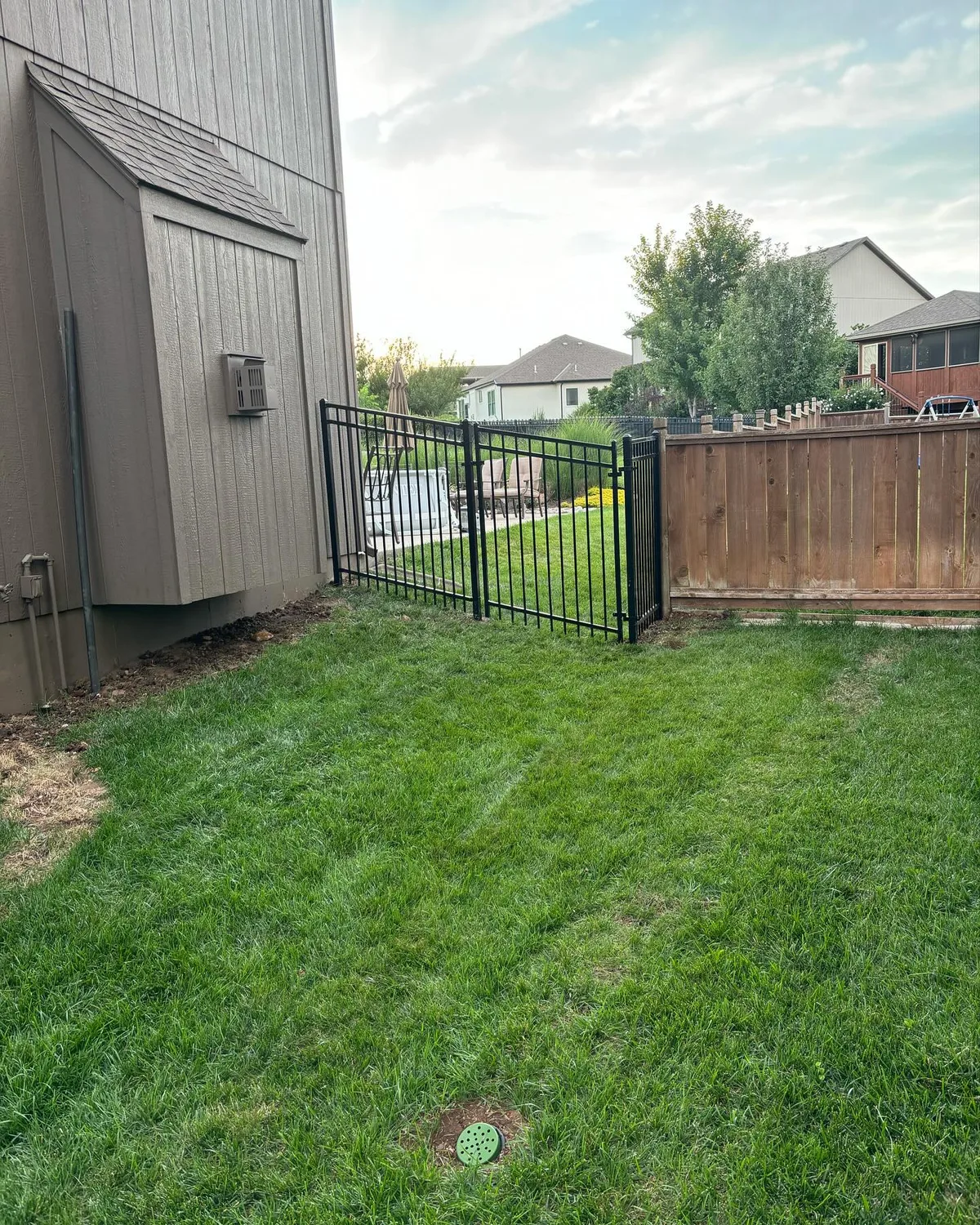
Is aluminum the right fence for a Leawood pool?
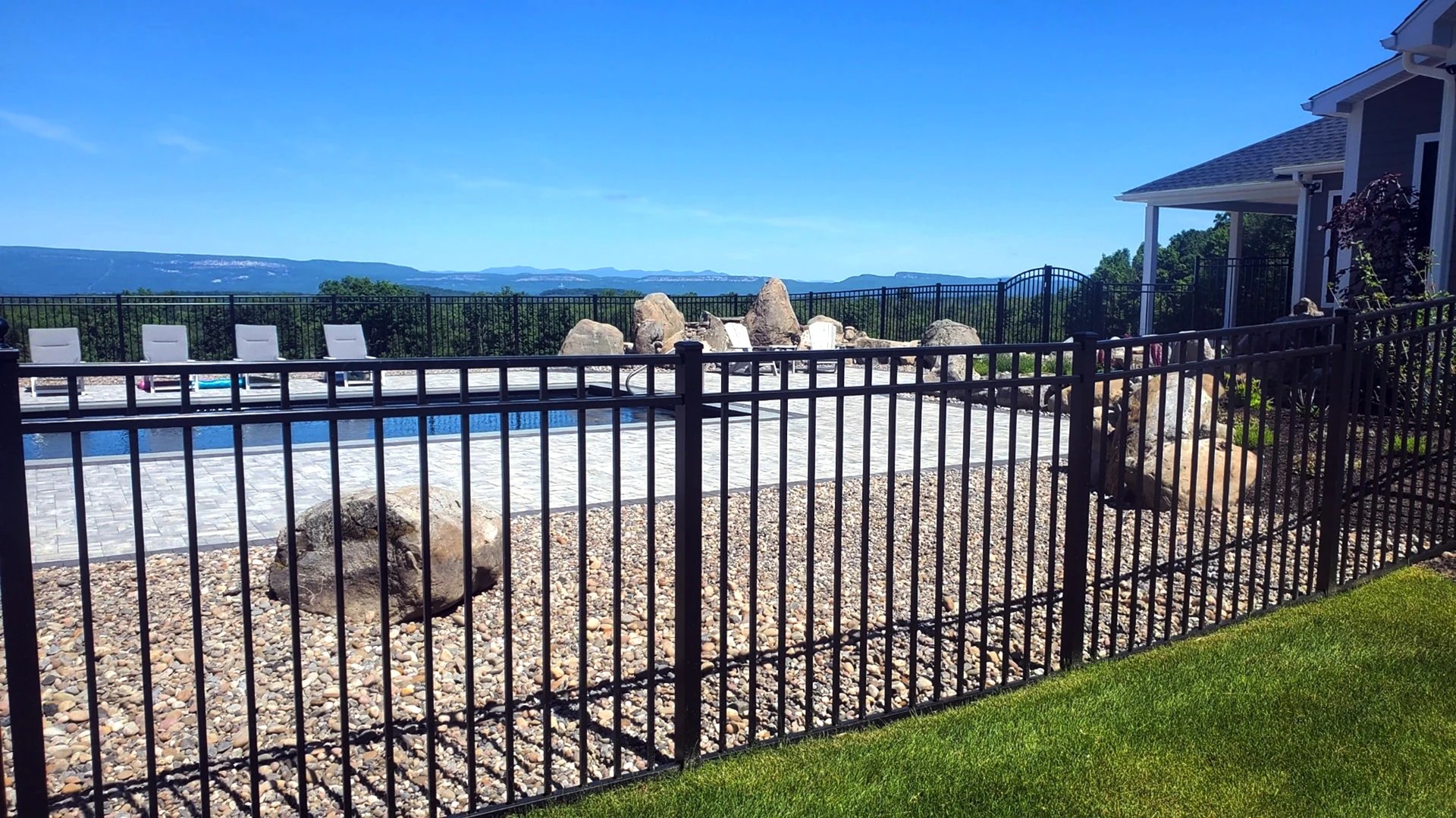
For most Leawood pools, yes — pool safety is the number-one reason people fence here, and aluminum is the material built to the barrier spec a pool inspection checks: a 48-inch minimum height, a picket gap too tight to be climbed, a flush bottom rail with no toe-hold, and a self-closing, self-latching gate. It reads open across the water instead of boxing the pool in, and pool chemistry — chlorine, salt systems, constant splash — does nothing to aluminum, where it would eventually pit and stain a lesser metal. We build the run to the spec your final inspection is looking for; the inspection itself is yours to schedule.
My old ornamental iron fence is rusting — should I replace it with aluminum?
It's the most common upgrade we do in Leawood. A lot of the ornamental steel installed here a generation ago is now bleeding rust at the ground line, where the coating finally failed and the bare steel underneath took over. Aluminum gives you back the exact black picket look with nothing under the finish that can rust — the metal itself doesn't corrode, so the replacement fence starts clean and stays that way — no bare steel left underneath to rust. If you specifically want real welded steel again for the heft and authenticity, that's a fair call too; weigh it against
ornamental iron.
Will aluminum posts set properly in Leawood's limestone soil?
They will, but it takes the right tool. Much of Leawood is amended topsoil over a limestone shelf, and a standard auger stops cold when it hits the rock — which is exactly where a shortcut install sets the post shallow and calls it done. We bring a rock drill so every post still reaches full depth and sets in poured concrete against the shelf, not perched on top of it. That's what keeps the fence plumb through the freeze-thaw cycle; on a limestone lot the footing method matters more than the metal above it.
Does an open aluminum picket fence still contain a dog?
Yes. Leawood tends to want an open look that keeps the sightline to the lawn or the course rather than a solid privacy wall, and an open aluminum picket does both jobs — the gap is set to the breed so it holds a small dog that would slip a standard spacing, and there's no board to chew or claw loose at the base. For a jumper we set a taller run. You get the open aesthetic the street reads and a fence that actually keeps the dog in, which a decorative-only fence doesn't.
How deep do aluminum posts go in Leawood?
Every post drops 36 inches into poured concrete, below the 30-to-36-inch frost line — and where the limestone shelf sits high we rock-drill to reach that depth rather than stopping short. Aluminum's light weight is a trap: it tempts a shallow hole, and a short footing heaves out of plumb on the first hard freeze even though the metal above ground is flawless. On a lot where a perfectionist owner will spot a quarter-inch of lean, the footing is the whole fence. Gate posts and corners go deeper still and get braced, since that's where the leverage concentrates.
How much does an aluminum fence cost in Leawood?
Aluminum prices above wood or chain link up front, and what the premium buys is thirty to fifty years of service with nothing but an occasional rinse — no staining, no sealing, no rust-spot touchup, and a wrought-iron look no other material matches. The total moves with the footage, the picket profile, how many gates hang on the run, whether the lot needs rock-drilling through the limestone shelf, and how much a large estate lot rolls — which is why no honest number comes over the phone. We measure on site and leave an itemized written sheet: footage, gates, concrete, rock-drilling if the shelf calls for it, and haul-away, each line broken out. The estimate is free.