Skip to content
Ornamental Iron Fencing in Leawood, KS — Real Welded Steel, Matched to the Estate

Ornamental Iron Fencing in Leawood, KS — Real Welded Steel, Matched to the Estate

In a market that pairs the fence to the car in the driveway and is replacing a generation of high-end steel, the question isn't whether ornamental iron looks the part — it's the role the steel plays: a status frontage that has to read permanent, a section matched in kind to an existing system, or a pool barrier that still looks like the rest of the estate. RKC fabricates genuine welded ornamental steel — pickets welded through the rail, E-coat under the powder at every seam so it won't bleed rust at the welds, spear-top or flat-top by the job, rock-drilled to the limestone shelf. And where a plain run doesn't need the steel, we'll say so. Built for every storm.

★★★★★
4.9
from 85 reviews
Licensed
& Insured · KS + MO
400+
fences installed
A+ BBB Rated Welded, Not Bolted 400+ Fences Installed Since 2021 Free On-Site Estimates

The short answer

In Leawood, ornamental iron is real welded steel doing a specific job: a status frontage that has to read permanent, a section matched in kind to an existing high-end system, or a pool barrier that still looks like the estate fence. The heft and the match are what the premium buys — the things a stock aluminum panel can't give. We weld pickets through the rail so nothing works loose, run E-coat under the powder so the welds won't bleed rust, and rock-drill every footing to the limestone shelf.

RKC installs and repairs every type of fence — wood, vinyl, chain link, ornamental iron, aluminum, and commercial security — plus in-house staining. Want the same black look rust-free for less on a plain run? That's aluminum. Enclosing a pool? Start at pool fencing. For the whole lot, see the Leawood fence hub.

The part that decides it

What Job the Real Steel Is Doing on Your Leawood Estate — Line by Line

Ornamental steel all reads the same from a distance; what changes is the role it plays. A grand frontage buys the mass and the shadow line. A repair or an extension buys a match into an existing run. A pool line buys the barrier spec. And an owner who inspects the welds buys the joinery and the finish. Find the job below — the steel spec and the reason it earns the premium sit beside it, and where aluminum does the same work for less, we say so.

The role on your Leawood lotThe steel spec that fitsWhy real steel earns it here
A grand entrance or estate frontage that has to read permanentTall formal spear-top welded steel on braced postsIn a market that pairs the fence to the car in the driveway, the front line is a statement, and real welded steel carries a mass and a shadow line a light aluminum extrusion can't fake — the heavy section and the spear top read as permanence from the street, which is the entire point of the premium on a status frontage
Matching new steel into an existing high-end ornamental runCustom-welded pickets and rails cut to the existing pattern, height, and spacingSo much Leawood work now is replacing or extending an ornamental system that went in a generation ago, and a section of aluminum next to real steel reads as a patch — we fabricate the new run in kind, matching the picket profile, the rail spacing, and the top so the repair or extension disappears into the original instead of announcing itself
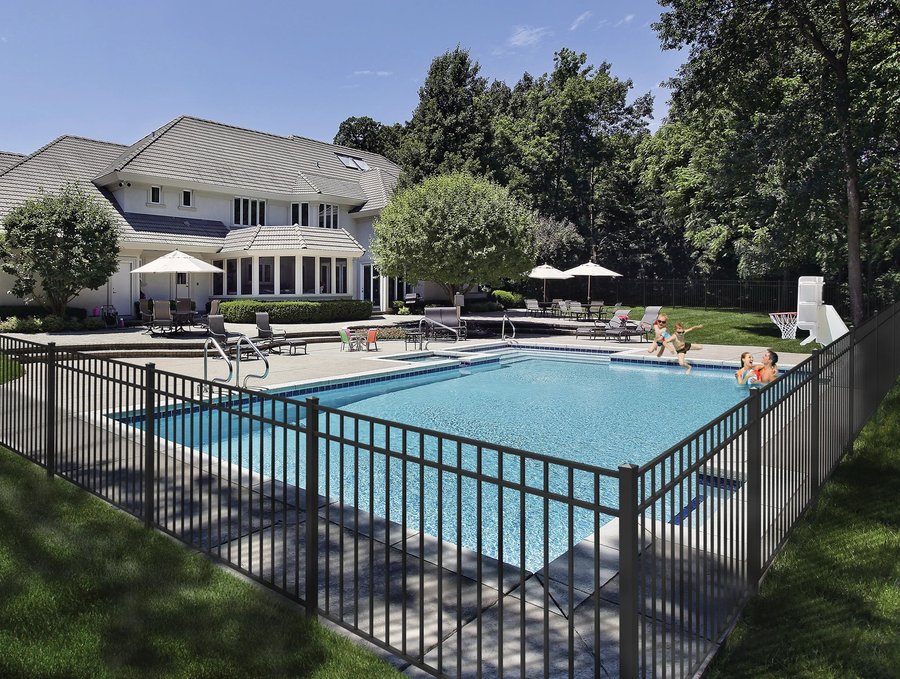
A private-pool enclosure that still has to look like the estate fenceFlat-top ornamental steel built to the barrier spec — no spear over the waterPrivate pools drive a lot of fencing here, and a pool barrier has its own rules — a flush no-toe-hold bottom, a non-climbable gap, a self-closing self-latching gate, and a flat top rather than a spear that has no place over a pool — so we build the enclosure to the spec an inspection checks while keeping the same black steel line as the rest of the estate
An owner who will inspect the welds and the finish up closeWelded pickets-through-rail with E-coat under the powder at every seamThis is a market that calls about a single warped picket or a gate that squeaks, so the joinery has to survive a close eye — pickets welded through the rail don't work loose into a rattle the way bolted joints do, and an E-coat electrocoat primer reaches the weld seams and the hollow picket interiors that a topcoat alone skips, so the finish won't bleed rust at the welds a year on
A post line that crosses the limestone shelf under the topsoilRock-drilled footing set full-depth in concrete to the rockMuch of Leawood is amended topsoil over a limestone base, and a rigid welded steel panel is the least forgiving thing you can hang on a bad footing — it can't be shimmed true later the way a looser fence can, so the footing is the one failure it can't hide, and we rock-drill to reach full depth in concrete rather than perching the post on the shelf
A long plain run where the real-steel premium isn't buying anythingPowder-coated aluminum in the same black profileHonest answer: on a straight back-of-lot run or a simple pool line where nobody's reading the frontage for status and the heft isn't doing work, aluminum gives back the identical black look with no steel to rust and a lower number — we'll say so on the estimate rather than sell steel where it isn't earning its keep

Whichever role is yours, two constants sit under the good ones: pickets welded through the rail so nothing rattles loose, and E-coat under the powder so the weld seams and the hollow picket interiors are sealed against rust — then a footing rock-drilled to full depth on the limestone shelf. Weighing the lighter, rust-free option for a plainer run? Read aluminum fencing in the metro. Need a solid private screen instead of an open steel line? Look at privacy fencing in Leawood.

A white-glove market, read honestly

What Makes Real Steel the Right Call in Leawood

Ornamental iron is heavier, rigid, and takes a hard knock — so in a market that judges a fence up close and is replacing a generation of it, what decides it is the match, the finish detail, and the ground it sets in. Three things about Leawood point to genuine welded steel.

This is the second-generation market

A great deal of Leawood ornamental work is replacing or extending steel that went in decades ago. Where the owner wants to stay in real steel, a match into the existing pattern is the whole job — same picket, same rail, same top — so the new run disappears into the original instead of reading as a stock-panel patch beside a custom system.

The finish is what a close eye judges

This is a market that calls about a single warped picket or a gate squeak, so the joinery and the coating have to survive an inspection. Pickets welded through the rail don't loosen into a rattle. E-coat under the powder reaches the weld seams and hollow picket interiors a topcoat skips — the exact spots that bleed rust first — so the finish holds where a paint-only fence fails.

The ground is topsoil over rock

Much of Leawood is amended topsoil on a limestone shelf, and a rigid welded panel is the least forgiving thing to hang on a shallow footing — it can't be shimmed true after the fact. We rock-drill so every post reaches full depth in concrete against the rock. On a limestone lot the footing is the one failure a steel fence can't cosmetically hide later.

Where real steel is the obvious pick

The Four Jobs Welded Steel Was Built For Here

Leawood wants a frontage that reads permanent, a match into an existing system, a pool line that still looks the part, and a finish that holds up close — and real steel answers each without a compromise. Here's how each job shapes the fence.

1

The status frontage that reads permanent

On a front line meant to state the property, we build tall formal spear-top welded steel on braced posts — the heavy section throws a shadow line and carries a mass a light extrusion can't fake. That permanence is the whole reason to pay for real steel on a frontage, and it's why the estate market here keeps choosing it over the look-alike.

2

The match that disappears into the original

When a section of an older ornamental system fails or the run needs extending, we fabricate the new steel to the existing pattern — picket profile, rail spacing, height, and top all matched — so the repair reads as original. A stock panel beside a custom system announces itself from the street; a welded match doesn't, which is the point of staying in real steel for the work.

3

The pool barrier that still looks like the estate

A private-pool enclosure has its own rules — a flush no-toe-hold bottom, a non-climbable gap, a self-closing self-latching gate, and a flat top instead of a spear that has no place over water. We build the enclosure to the spec an inspection checks while keeping the same black steel line as the rest of the property, so the safety line doesn't read as a different fence.

4

One owner-run crew, weld to final latch

Matching a picket to an existing system, welding pickets through the rail, running E-coat under the powder, rock-drilling a footing through the limestone shelf, and hanging a gate that won't squeak on a lot where a squeak gets a phone call — a Leawood steel install is a run of exacting calls, and Josh's crew carries every one on a single contract. No stage is subbed out, and no one hands your estate to a separate finish outfit.

Recent ornamental installs

Ornamental Steel We've Built Across Leawood and the Metro

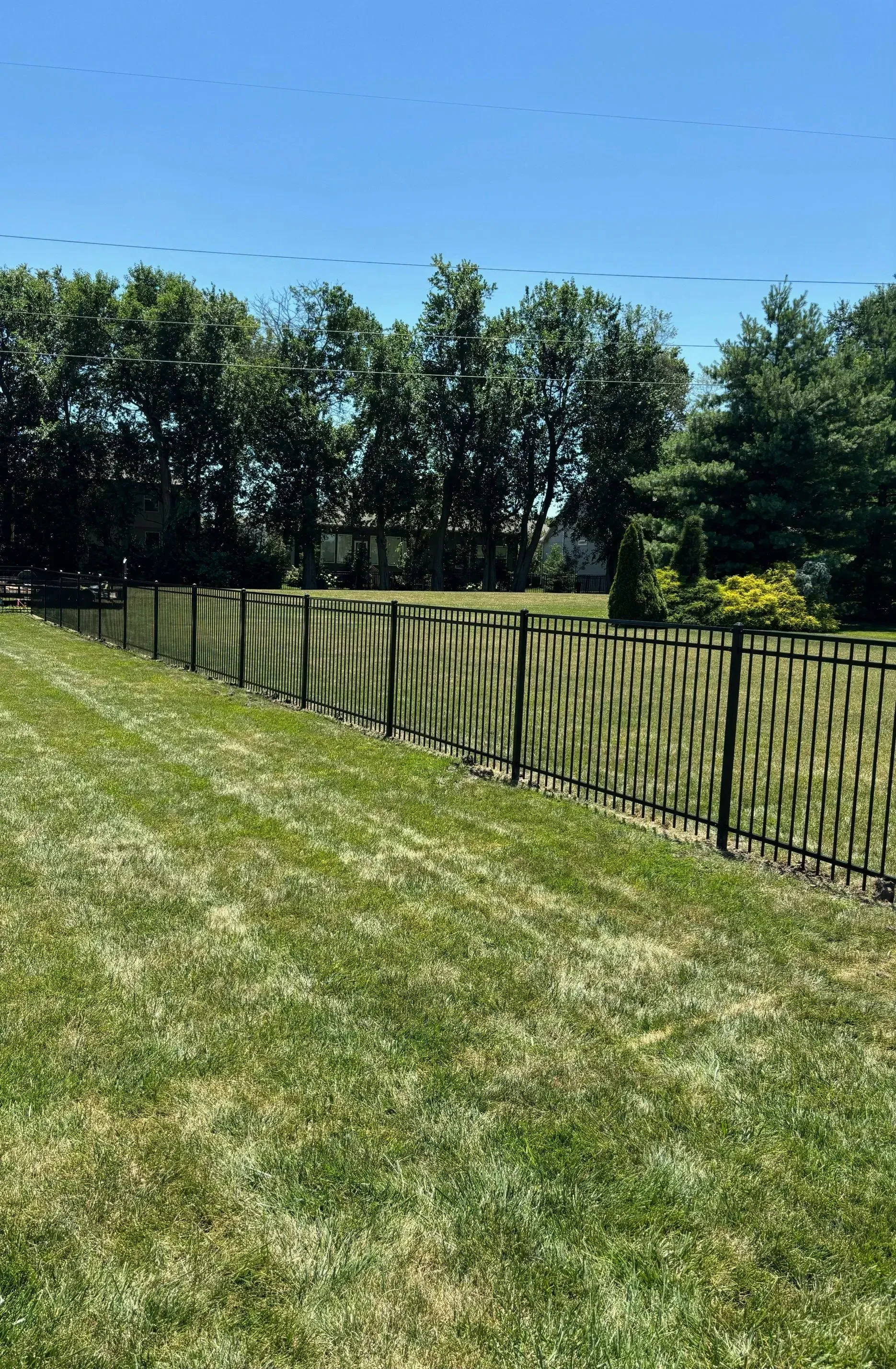
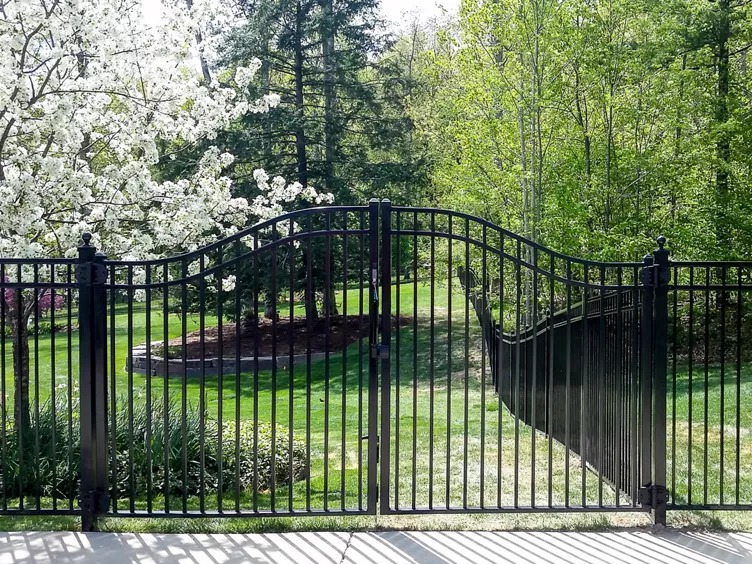
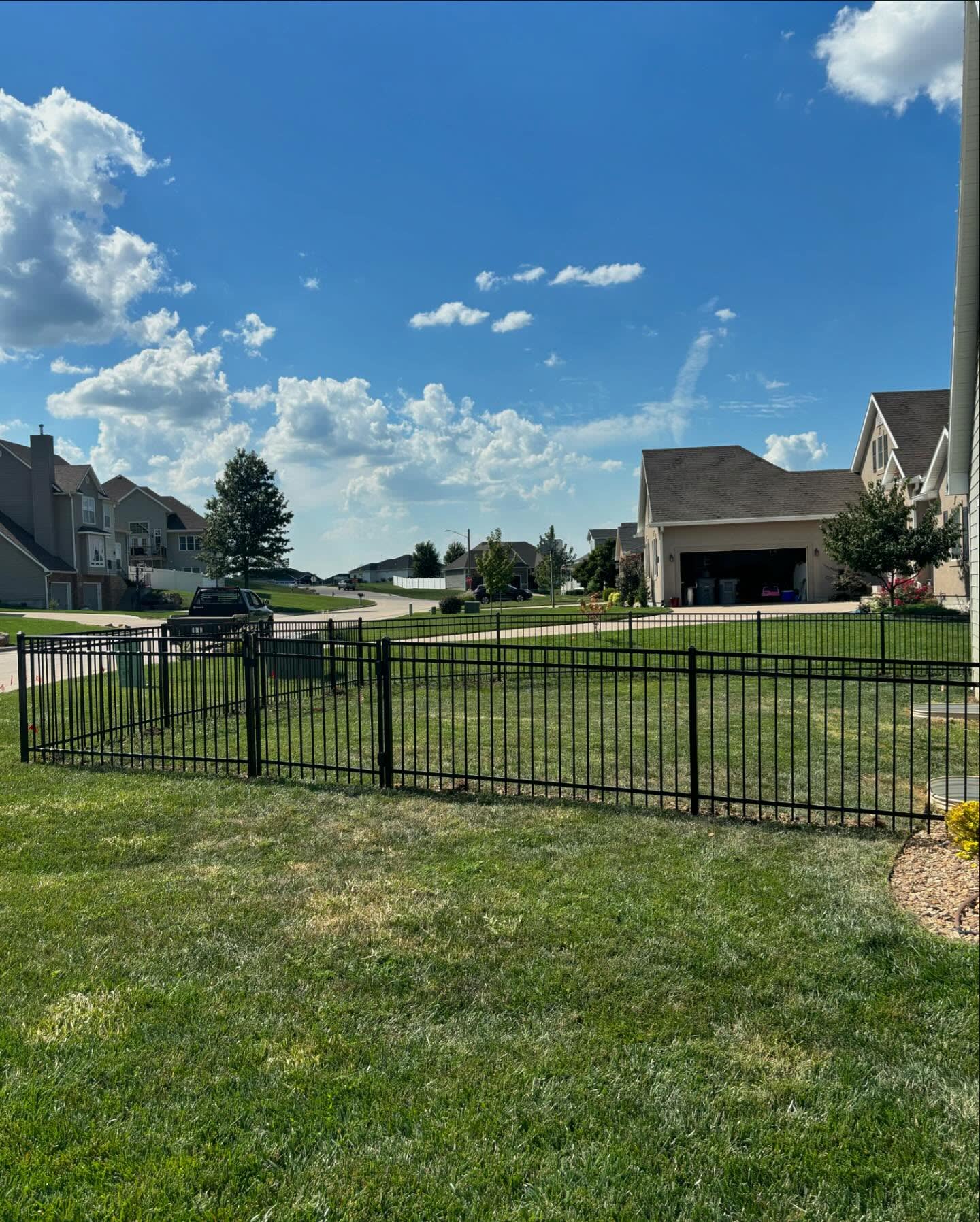
Every photo here is a real RKC ornamental install. Welded black steel — estate frontage, pool barriers, and drive gates in Leawood.

REVIEWS

What Kansas City Homeowners Say About RKC

4.9 ★ · 85 Google reviews

Every review is on our Google Business Profile — read them there, unedited.

Read all 85 reviews on Google

Leawood ornamental questions

What Leawood Homeowners Ask About Ornamental Steel

The questions we field most on a Leawood ornamental quote. Don't see yours? Get Josh on the line at (913) 286-1091.

What's the real difference between ornamental iron and aluminum in Leawood?
Ornamental iron is genuine welded steel — heavier, rigid, with a mass and a shadow line at the street that a light aluminum extrusion doesn't match, and it takes a hard knock without flexing. That heft is why it's the pick for a status frontage and for matching into an existing high-end system in kind. Aluminum's advantage is that it can't rust at all, where steel relies on its coating and will eventually bleed rust at the ground line if that coating is breached. In a white-glove market the call comes down to role: real steel where the mass and the match matter, aluminum where a plain run just needs the black look without the rust. We'll tell you which one your job actually calls for — see aluminum fencing for the other side of it.
Can you match new ornamental steel to my existing fence?
That's a large share of what we do in Leawood, because so many estates here are on their second generation of ornamental steel. We measure the existing picket profile, the rail spacing, the height, and the top detail, then fabricate the new section to match so an extension or a replaced run reads as original rather than as a patch. Dropping in a stock aluminum panel next to a custom steel system is the mismatch that shows from the street — matching in kind is the whole reason to stay in welded steel for a repair or an addition.
Will ornamental steel rust in Leawood?
Only if the finish is cut corners. Bare steel rusts; a properly finished ornamental fence doesn't for a very long time, and the difference is the coating system. We use an E-coat electrocoat primer that reaches the weld seams and the inside of the hollow pickets — the exact spots a sprayed topcoat skips and where rust starts — then a powder coat over it. Paint-only finishes bleed rust at the welds first because that's where the coverage is thinnest. Get the E-coat-under-powder right and the finish holds for decades; skip it and you're back to the rusting system aluminum gets called in to replace.
Do ornamental steel posts set properly in Leawood's limestone soil?
They do, but a rigid welded fence is the least forgiving thing you can hang on a shallow footing, so the method matters more here than almost anywhere. Much of Leawood is amended topsoil over a limestone shelf, and a standard auger stops on the rock — which is where a rushed crew sets the post short. A rigid steel panel can't be shimmed plumb later the way a looser fence can, so we rock-drill to reach full 36-inch depth in concrete against the shelf. On a limestone lot, the footing under a steel fence is the one failure you can't cosmetically fix after the fact.
What picket top should I choose for a Leawood ornamental fence?
The top is a function call, not just a look. A spear or pressed-point top reads formal and permanent and gives no handhold — the default for a status frontage or a security-minded estate line. A flat top is the right call over a pool, where a spear has no business and the barrier spec wants a clean non-climbable line. A scalloped or arched top suits a decorative garden or courtyard run where the fence is meant to be looked at rather than to state a boundary. We match the top to the job and to any existing run on the property so the whole estate reads as one system.
How much does an ornamental iron fence cost in Leawood?
Real welded steel prices above aluminum, and the premium buys the mass, the custom fabrication, and a match into an existing system that a stock panel can't give. The total moves with the footage, the picket profile and top, how much custom welding a match demands, how many gates hang on the run, whether the limestone shelf calls for rock-drilling, and how much a large estate lot rolls — so no honest number comes over the phone. We measure on site and leave an itemized written sheet, and where a plain run doesn't need the steel we'll show you the aluminum number beside it. The estimate is free.

Weighing the rust-free option? See aluminum. Fencing a business, school, or club perimeter? See commercial fencing in Leawood.

Ready when you are

Get a free estimate — we usually respond the same day.

Call (913) 286-1091