Skip to content
Commercial Fence Installation in Leawood, KS — Upscale Retail, Private Schools, and Country Clubs

Commercial Fence Installation in Leawood, KS — Upscale Retail, Private Schools, and Country Clubs

Leawood commercial work isn't the bare-galvanized yard line most towns start with — it's upscale retail at Town Center and Park Place, private-school campuses, and country clubs, sites where the fence has to secure the property and still present as part of it. RKC installs finished commercial ornamental steel and black-clad chain link where a customer or member sees it, slat screening for the service yards behind, and amenity enclosures built to the barrier spec — all secured by height, detailing, and one controlled entry rather than a barbed top nobody here wants to see. Posts rock-drilled and engineered to the height against the limestone shelf. Licensed and insured, KS and MO.

★★★★★
4.9
from 85 reviews
Licensed
& Insured · KS + MO
400+
fences installed
A+ BBB Rated Licensed & Insured KS + MO Commercial-Gauge Spec Free On-Site Site Visit

The short answer

Leawood commercial fencing has to secure the property and still present as part of it — so the site sets the system. An upscale retail edge at Town Center or Park Place wants finished black steel at the customer face and a screened yard behind; a private-school campus wants a controlled single entry finished to the property's standard, no bare galvanized and no razor; a country club wants a tall decorative line that contains without walling off the course. RKC builds in commercial gauge and rock-drills posts to engineered depth against the limestone shelf.

RKC installs and repairs every type of fence — wood, vinyl, chain link, ornamental iron, aluminum, and commercial security — plus in-house staining. A Leawood commercial job usually lands on ornamental steel at the face, a chain link yard or campus line, or both on one property. For the full picture, see the Leawood fence hub.

The part that decides it

Which Leawood Commercial Site Are You Fencing? — System by Site

Leawood commercial demand runs to upscale retail at Town Center and Park Place, private-school campuses, and country clubs — sites that share one rule the usual commercial playbook doesn't: even the fence has to present. A storefront edge has almost nothing in common with a service-yard screen, and a club boundary can't look like a lockup. Find your site below; the system and the reasoning follow, so the spec fits the property and the standard it's held to rather than a template.

Your Leawood siteThe system that fitsWhy that's the call here
An upscale retail center at Town Center or Park PlaceBlack ornamental or clean picket at the customer face, slat screen at the service yardA shopping district that trades on its look shows two faces — a storefront edge the customer reads as part of the architecture and a back-of-house yard hiding deliveries and dumpsters — so the face gets finished black steel and the yard gets a heavy screen, each spec'd on its own rather than one bare perimeter wrapped around both
A private-school campusPowder-coated ornamental or black-clad chain link, one controlled entry, no razor and no bare galvanizedA private campus wants the same containment and single-controlled-entry a public school does, but held to the property's presentation standard — so the perimeter is finished black rather than raw galvanized, the deterrent comes from height and detailing instead of a barbed top no family wants to see, and it still reads as part of a well-kept campus
A country-club or golf-course boundaryTall decorative black steel or aluminum that contains without blocking the viewA club boundary has to keep non-members out and hazards defined while never walling off the course, the clubhouse, or the sightlines the membership pays for — so it runs tall enough to secure but open and decorative, the security doing its work without ever looking like security
A club pool, tennis, or amenity enclosureFlat-top ornamental or aluminum barrier built to the spec, matched to the club lookAn amenity enclosure carries its own barrier rules — a flush no-toe-hold bottom, a non-climbable gap, a self-closing self-latching gate, and a flat top over water — but at a club it also has to match the aesthetic of everything around it, so we build to the safety spec in the same black line as the rest of the grounds
A mechanical, service, or dumpster screen behind an upscale buildingHeavy slat screen matched to the building, out of the member and customer sightlineEven the ugly necessities have to disappear here — a solid three-sided screen keeps the trash corral and the ground equipment out of view, built stout enough to shrug off the daily bump of a hauler while finished to sit quietly behind a building that's meant to be looked at
Any of these on a lot that hits the limestone shelfRock-drilled footing engineered to the height of the lineMuch of Leawood is amended topsoil over limestone, and a tall commercial line loads its posts far harder than a residential one — so we rock-drill to reach full engineered depth in concrete against the shelf rather than setting a tall perimeter shallow on the rock, which is the footing that leans within a season or two

Whichever row is yours, two things hold down the whole list: the material is commercial-weight — thicker galvanized fabric or a heavier ornamental wall that takes a beating — and it's finished to the property's standard, then set on a post engineered to the height and rock-drilled where the shelf demands it. Want a face that reads as architecture? See ornamental iron in Leawood. Need a secure boundary or amenity enclosure at the least cost per foot? Chain link, black-clad, disappears behind the planting.

What Leawood commercial property asks for

Even the Perimeter Has to Present, and the View Has to Survive

Leawood's commercial demand clusters around upscale retail, private schools, and country clubs — sites that want security and containment without a raw industrial look and without losing the sightlines they trade on. Two things about this market shape the perimeter.

Security that never reads as security

In most towns a commercial fence can be bare galvanized with a barbed top — the point is deterrence and nobody minds the look. Here the fence sits where customers, members, and families see it, so the deterrent has to come from height, detailing, and a single controlled entry instead of razor arms and raw mesh. The perimeter does the same job an industrial line does; it just isn't allowed to look like one.

The view is part of what's being sold

A country club sells the course and the clubhouse; an upscale retail center sells the storefront; a private campus sells being well-kept. A solid wall of fence kills all three. So the boundary runs open and decorative — tall enough to secure, but pickets and spacing chosen so the eye reads through to the fairway or the building rather than stopping at the line. Containment and an intact sightline at the same time is the whole brief.

The presentation-first perimeter

Fencing a Club or Campus — Secure It Without Walling It Off

A country club, a private campus, or an upscale retail edge is a different problem from a yard — it has to secure and contain while presenting like part of the property and keeping the view intact. Four build details lock down a presentation-first site the right way.

1

Finish it to the property, not to the yard

The perimeter is finished black — powder-coated ornamental steel or black-clad chain link — wherever a customer, member, or family sees it, never raw galvanized. The material is full commercial gauge underneath; the difference is entirely in the finish, so the security line reads as a deliberate part of a well-kept property instead of a fence borrowed from an industrial lot.

2

Deter with height and detailing, not a barbed top

Razor ribbon and barbed arms have no place where members and families are, so the deterrent comes from the build: the line runs tall enough to discourage a boost-over, there's no low horizontal rail to give a foothold, and any secondary access is on controlled gates rather than open gaps. The fence deters without ever announcing that deterrence is its job.

3

Keep the sightline through the line

Around a course, a campus, or a storefront the boundary can't become a wall. We run open decorative pickets with spacing chosen so the eye reads through to the fairway, the grounds, or the building — the line secures and defines without blocking the view the property is built to show. That open-but-secure balance is the entire reason a decorative steel or aluminum line beats a solid one here.

4

Match the amenity enclosures to the grounds

Club pools, tennis courts, and clubhouse enclosures each carry their own barrier rules — a flush no-toe-hold bottom, a non-climbable gap, a self-closing self-latching gate, a flat top over water — but at a Leawood club they also have to match the aesthetic of everything around them. We build each enclosure to the safety spec in the same black line as the rest of the grounds, so the safety fence doesn't read as a different fence.

Recent commercial installs

Commercial Fences We've Built Across Leawood and the Metro

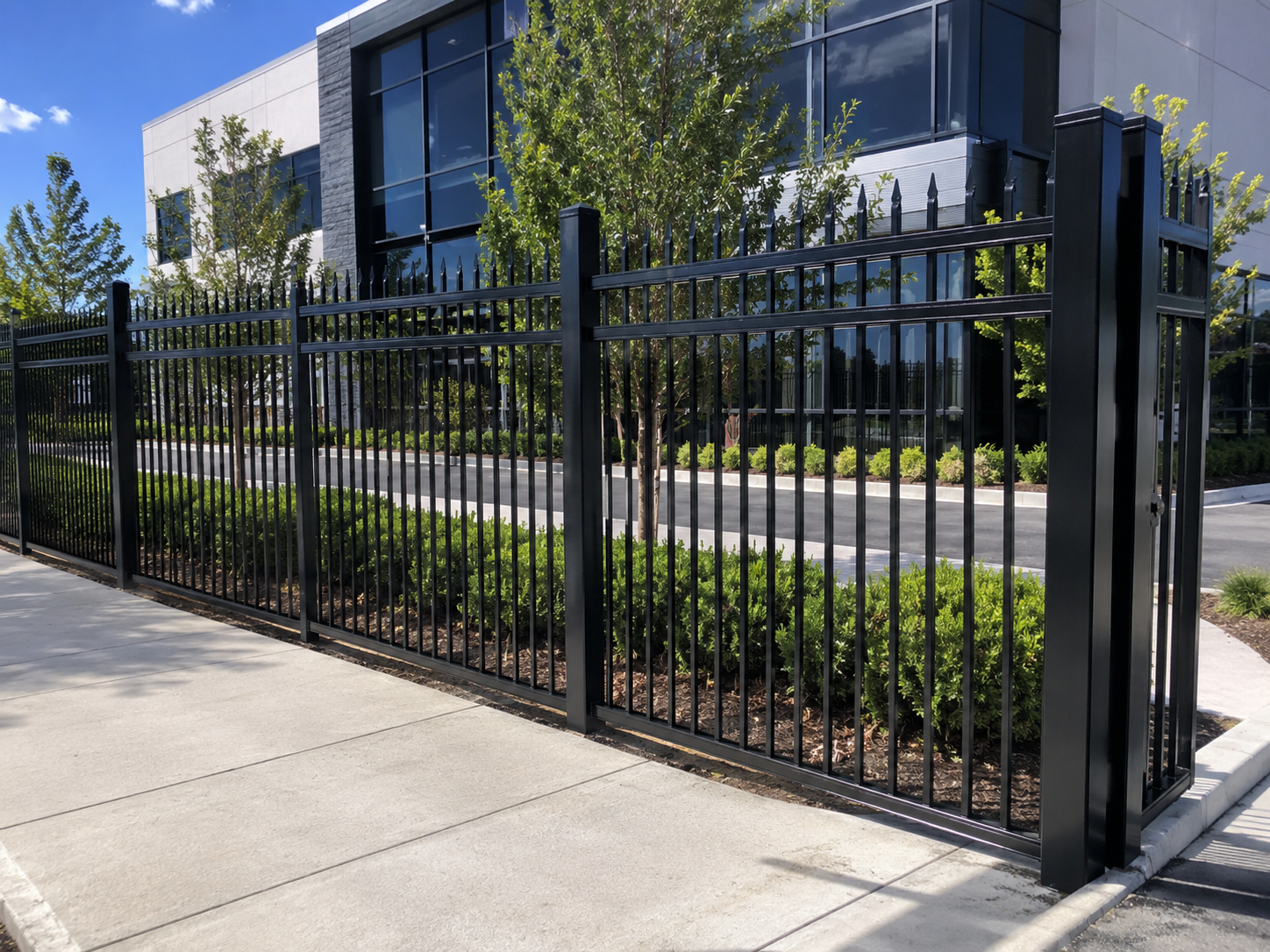
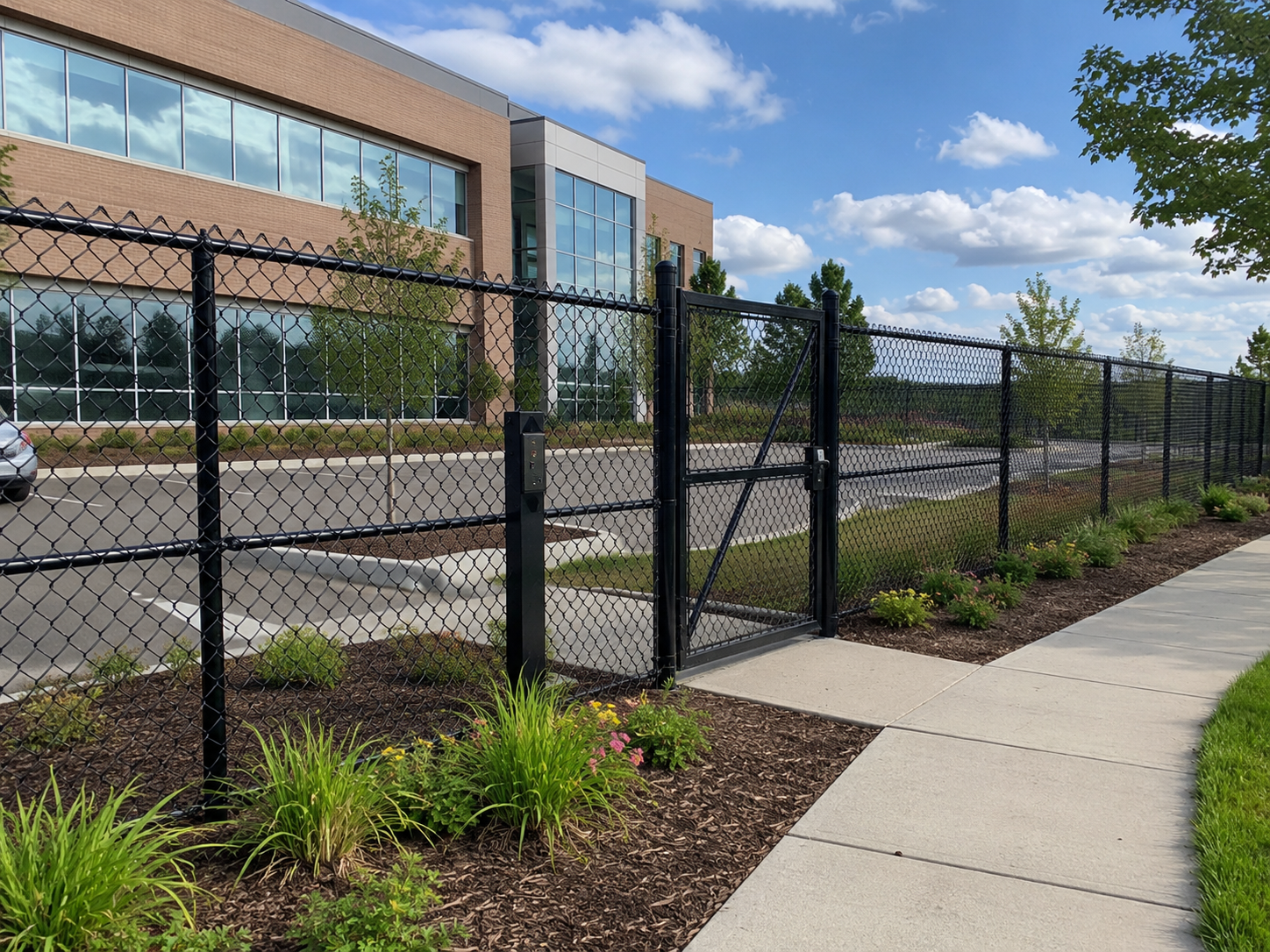
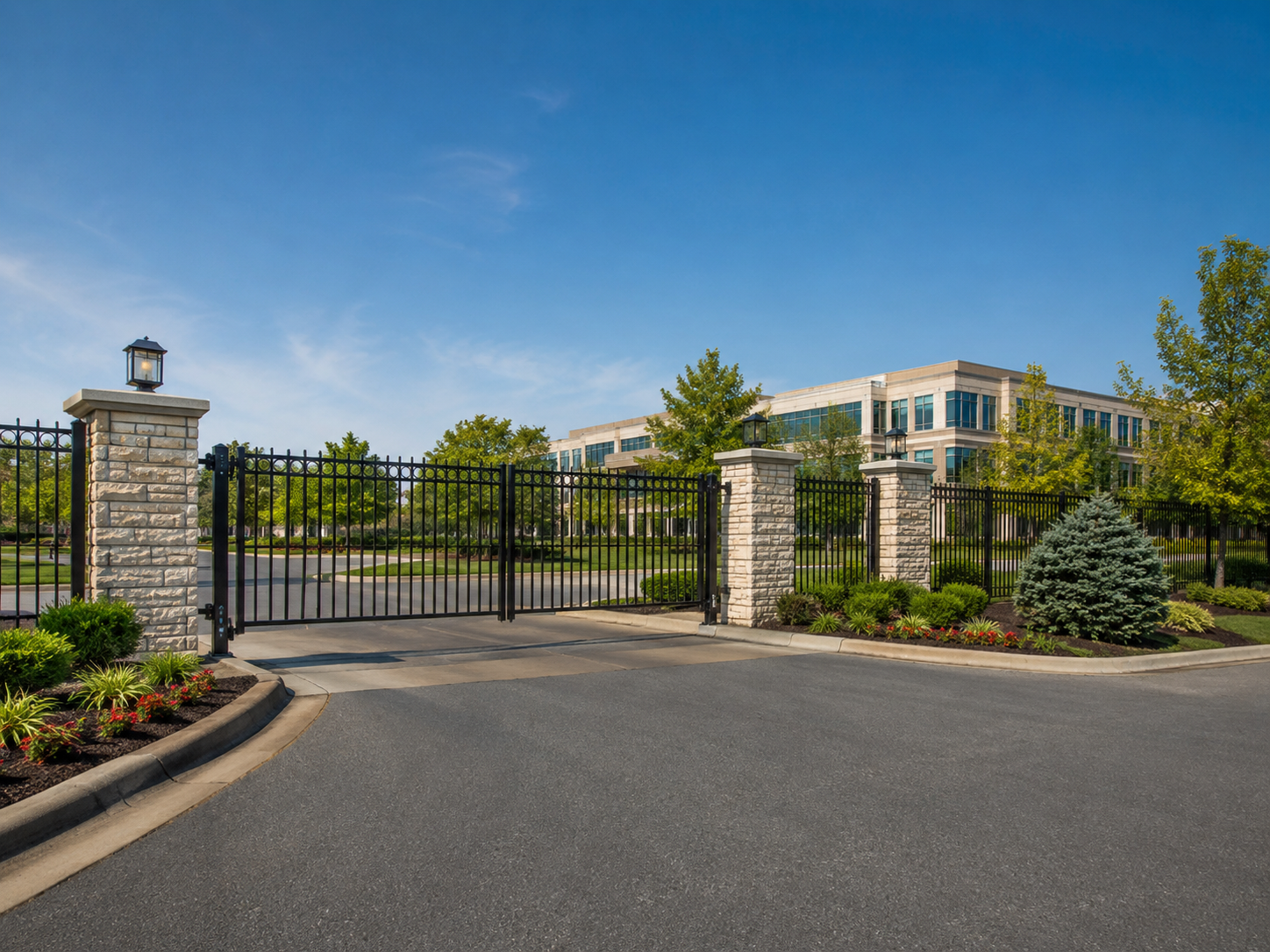
Every photo here is a real RKC commercial install. Finished black-steel perimeters, security lines, and access gates.

REVIEWS

What Kansas City Homeowners Say About RKC

4.9 ★ · 85 Google reviews

Every review is on our Google Business Profile — read them there, unedited.

Read all 85 reviews on Google

Leawood commercial questions

What Leawood Property Managers Ask About Commercial Fencing

The questions we field most on a Leawood commercial site visit. Don't see yours? Get Josh on the line at (913) 286-1091.

What kind of commercial fencing does Leawood actually call for?
Not the bare-galvanized yard line most towns lead with. Leawood's commercial demand runs to upscale retail at Town Center and Park Place, private-school campuses, and country clubs — sites where the fence has to secure the property and still present as part of it. That means finished black steel or aluminum where a customer, member, or family sees it, a controlled single entry instead of several open gaps, and the deterrent built from height and detailing rather than a barbed top nobody here wants to look at. The commercial gauge and the engineering underneath are the same as anywhere; what changes is that even the perimeter has to look the part.
Can you fence a country club or golf-course boundary without blocking the view?
That's the whole design problem, and it's a common one here. A club boundary has to keep non-members off, define hazards and pool areas, and secure the clubhouse — while never walling off the course or the sightlines the membership is paying for. The answer is a tall but open decorative line: black ornamental steel or aluminum run high enough to secure, with the pickets and spacing chosen so the eye reads through it to the fairway rather than stopping at a wall. The security does its job without ever looking like a fence line around a lockup. Amenity enclosures — pool, tennis, clubhouse — match that same black line while meeting their own barrier spec.
How is a private-school fence here different from a public-school one?
The security job is nearly identical — contain the grounds, funnel traffic to one controlled, supervised entry, keep the mesh see-through so staff can supervise across it, and never hang razor or barbed arms near children. What differs at a Leawood private campus is the presentation standard: the perimeter is finished — powder-coated ornamental or black-clad chain link rather than raw galvanized — so it reads as part of a well-kept campus instead of an industrial lot. You get the same containment and the same sightlines, held to the property's own look.
How deep do commercial fence posts go, given Leawood's limestone soil?
Deeper than any residential line, and the limestone shelf is the wrinkle. A tall fence loads its posts far harder than a backyard run — a 6-foot commercial perimeter steps up from the residential 36 inches to about 42, and an 8-foot line and every gate post want four feet or more in a fatter footing — because a tall run catches wind like a sail and pries on its base. Much of Leawood is amended topsoil over limestone, and where the shelf sits high a standard auger stops on the rock, which is exactly where a rushed crew sets a tall post short. We rock-drill to reach full engineered depth in concrete against the shelf. The depth is structural, not padding; a tall line that skimps there leans within a couple of seasons.
Do you work with property managers, GCs, and facilities directors?
Regularly — much of the commercial and institutional book comes through them. We carry licensing and insurance on both sides of the state line and hand over the vendor-file basics without being chased: a signed W-9 and a current certificate of insurance up front, and invoicing that maps to the approved scope so the office can reconcile it cleanly. On a phased job we slot into the general contractor's sequence so each run lands at the right point, and we close by walking the finished site with the owner, PM, or facilities director and documenting any punch items in writing. What we don't do is dress up the capability — we're a fencing contractor, not a bonded public-works house, and we'll tell you plainly what fits and what doesn't.
What does commercial fencing cost in Leawood?
There's no single rate, because an ornamental storefront run at Town Center, a private-school perimeter, a decorative country-club boundary, and a pool enclosure at a club are four different builds at four different prices — a per-foot phone quote would just be a guess. What we give instead is a line-itemed proposal after a site walk: material and finish, run height, total footage, each gate, any amenity enclosure or service screen, and rock-drilling where the shelf calls for it, all broken out so nothing is buried. The site visit is free, and we scope to what the property genuinely needs and to the presentation standard it's held to.

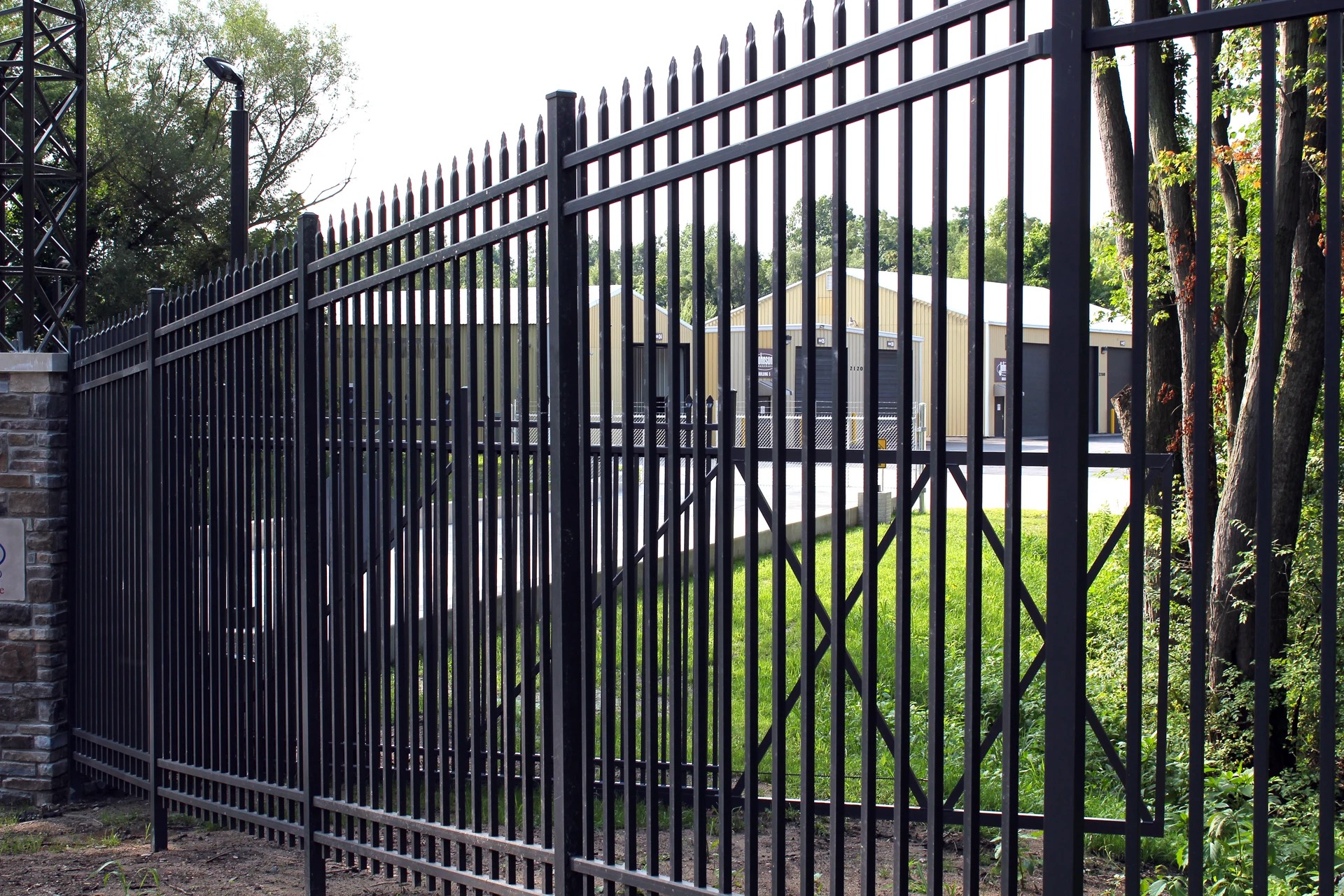
Weighing a specific system? See chain link for the campus, yard, and amenity workhorse, or ornamental iron in Leawood for a face that reads as architecture.

Ready when you are

Get a free estimate — we usually respond the same day.

Call (913) 286-1091