Why do the Lee's Summit lake communities use so much aluminum?
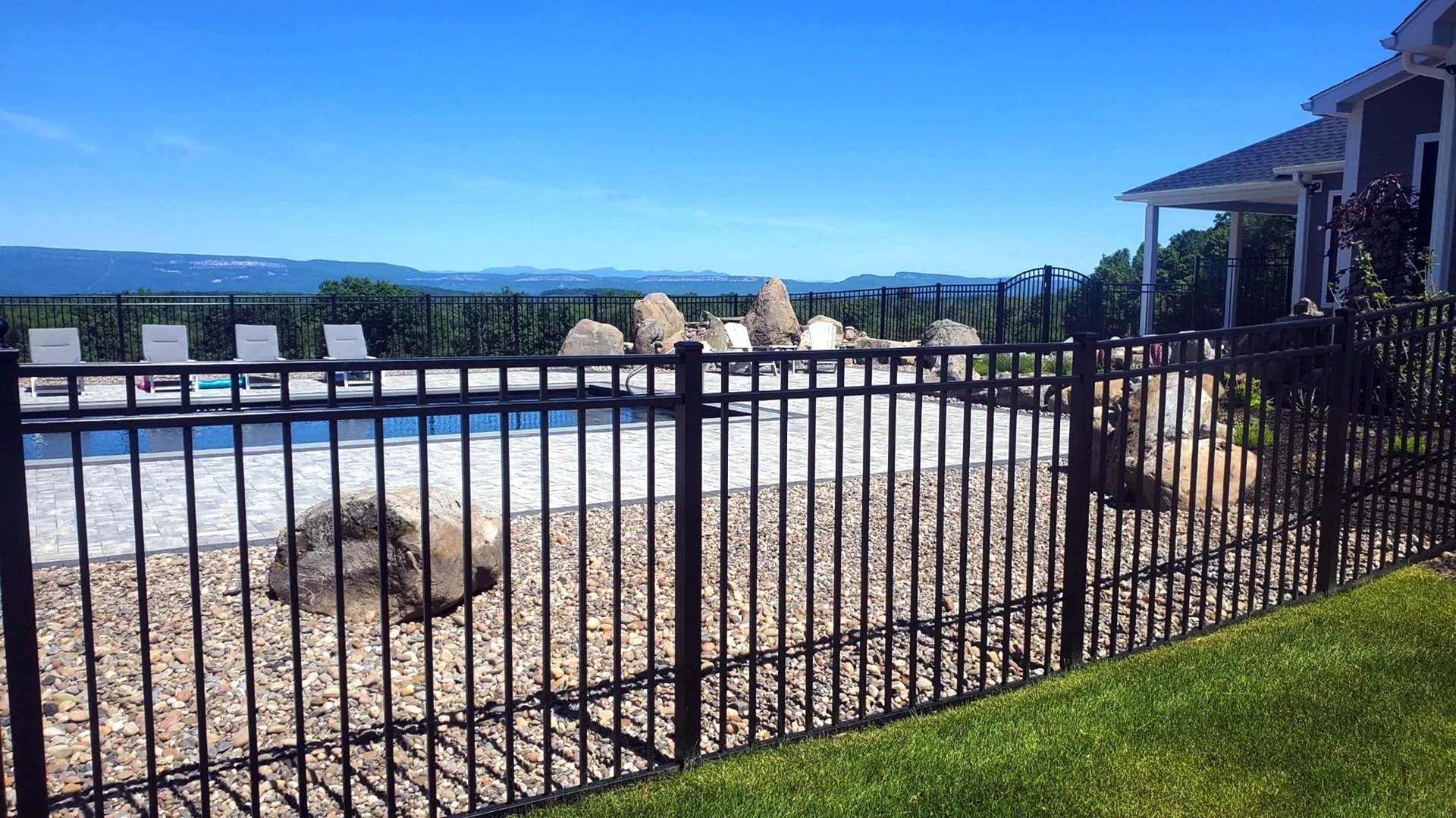
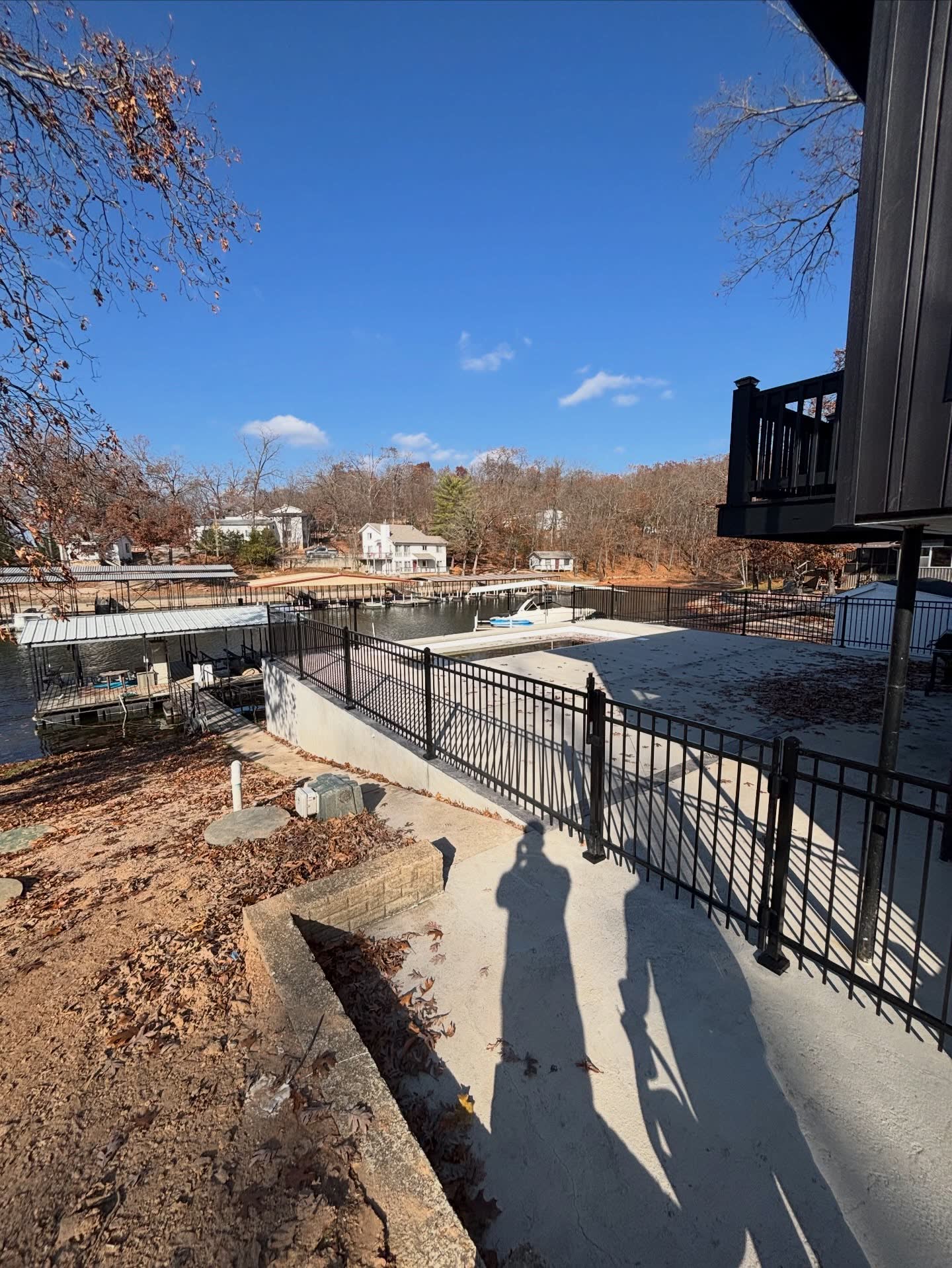
Because the water view is the whole point of the lot. In Raintree, Lakewood, and around Longview Lake, an open black aluminum picket line contains the yard and the dog while the eye reads straight through to the lake — a solid cedar or vinyl fence would wall that view off. Aluminum also can't rust, which matters at a damp shoreline where a steel fence bleeds orange in a few seasons. It gives the black ornamental look with essentially no upkeep: no staining, no sealing, no rust. For the same silhouette in real steel weight, that is
ornamental iron.
Will an aluminum fence survive a lakefront lot where the bank is eroding?
Better than most materials, on two counts. First, the metal itself can't rust, so the damp shoreline and the splash line don't corrode it the way they eat a steel fence. Second, the fence lives or dies on the footing near an eroding bank — so we set the posts back from the wash line and deep enough that a receding shoreline doesn't undermine them. Erosion undermining posts is one of the most common lakefront fence failures in Lee's Summit, and it's a footing problem, not a material one. We walk the shoreline at the estimate and place the line where it will hold.
Is aluminum the right pool fence for a Lee's Summit backyard?
Yes — it's the material most of the private-pool enclosures in this town are built from, and there are a lot of them. What a pool needs isn't a taller fence but a safety barrier, and the barrier code has its own checklist: roughly four feet tall at minimum, pickets set close enough that nothing fits through, a bottom rail low to the ground with no foothold, and a gate that swings shut and locks itself without anyone touching it. Off-the-shelf aluminum already satisfies that checklist, and we build the enclosure to whatever your pool's final inspection is going to look for. Pool-first? Begin at
pool fencing.
Does a sloped lot around the lakes change how the fence is built?
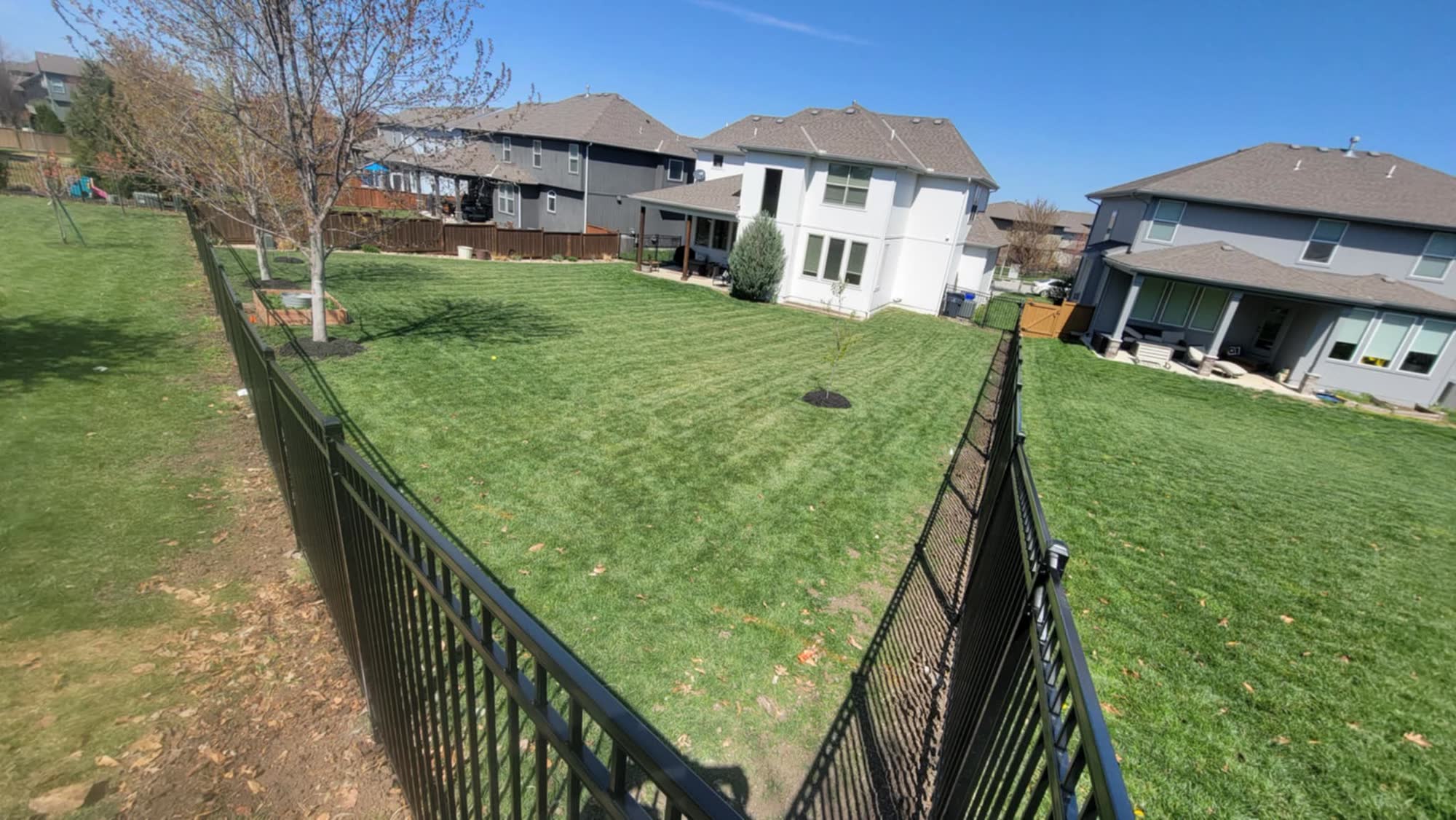
Quite a bit. The ground around Raintree, Lakewood, and Longview tilts down toward the shoreline, and on that kind of fall a stiff panel drops in steps and opens a wedge of daylight under each section. Aluminum solves it by racking: the pickets hinge a little at the rails so a panel tips to match the incline and rides just above the turf the entire way down. It looks like one unbroken line on a view lot, and it closes the under-rail gap a pool barrier can't have. We match the rack to the actual fall of your yard, not a standard step.
How deep do aluminum posts go in Lee's Summit?
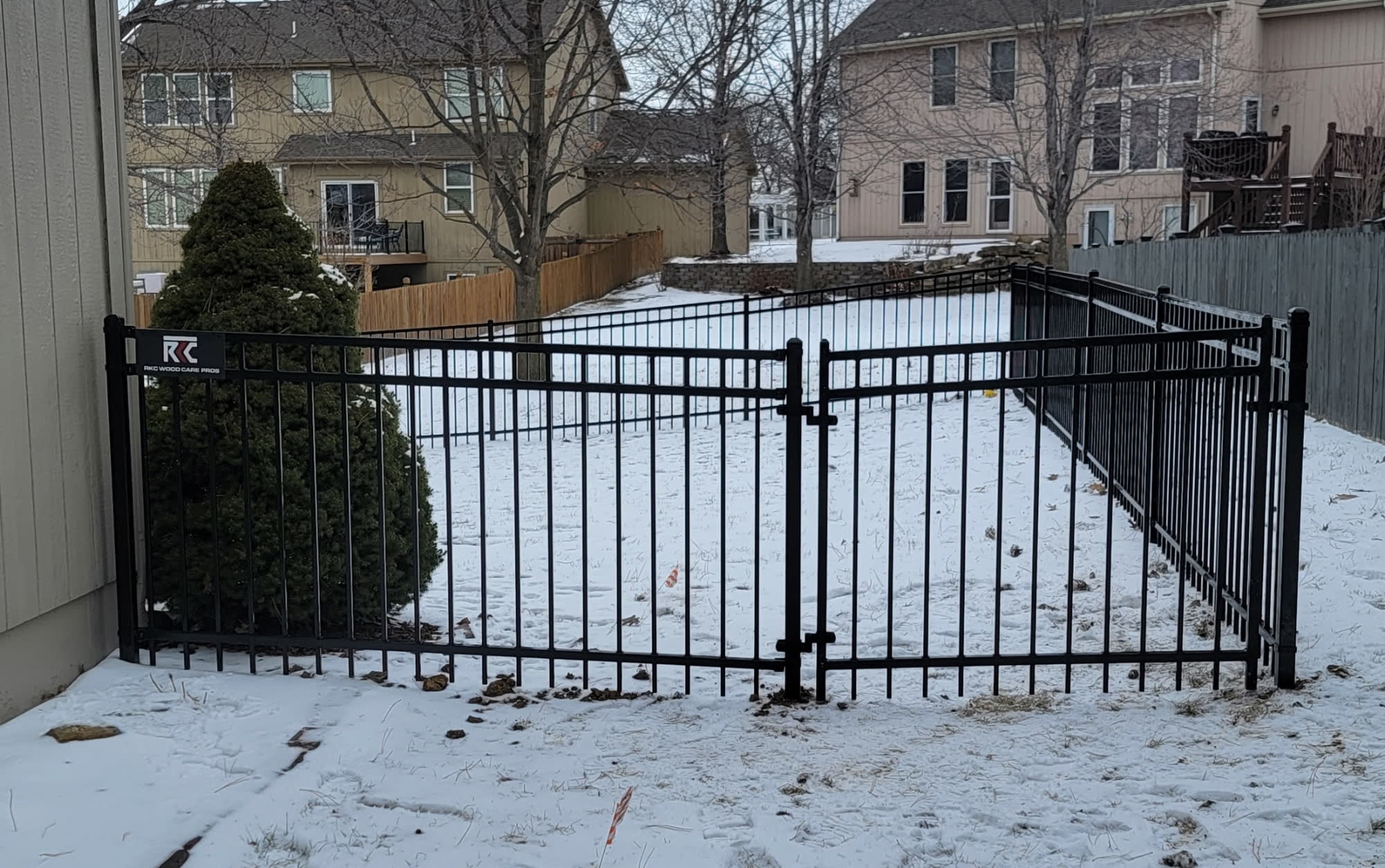
The footing is 36 inches of poured concrete, which drops the post below the local frost depth of 30 to 36 inches. Because aluminum is so light, it's tempting to dig a shallow hole and skip the concrete — but a short footing lifts on the first freeze and throws the whole run crooked, so how the post is set matters more than the metal above it. Out on the breezy ridges toward the airport we add a brace to the gate and end posts, and along a lake we pull the line back from a bank that's washing out. The aluminum takes care of itself; the hole in the ground is what we obsess over.
How much does an aluminum fence cost in Lee's Summit?
It sits at the top of the material ladder, above cedar and vinyl, and the money buys three decades of service, an ornamental profile a solid panel can't match, and a fence you never stain, seal, or sand. What it actually totals turns on the run length, the picket style, how many gates, the grade, and whether it's a pool barrier — too many variables to name a per-foot price over the phone. So we come out, measure, and hand you an itemized sheet: footage, gates, concrete, and haul-off each on their own line. The visit costs nothing.