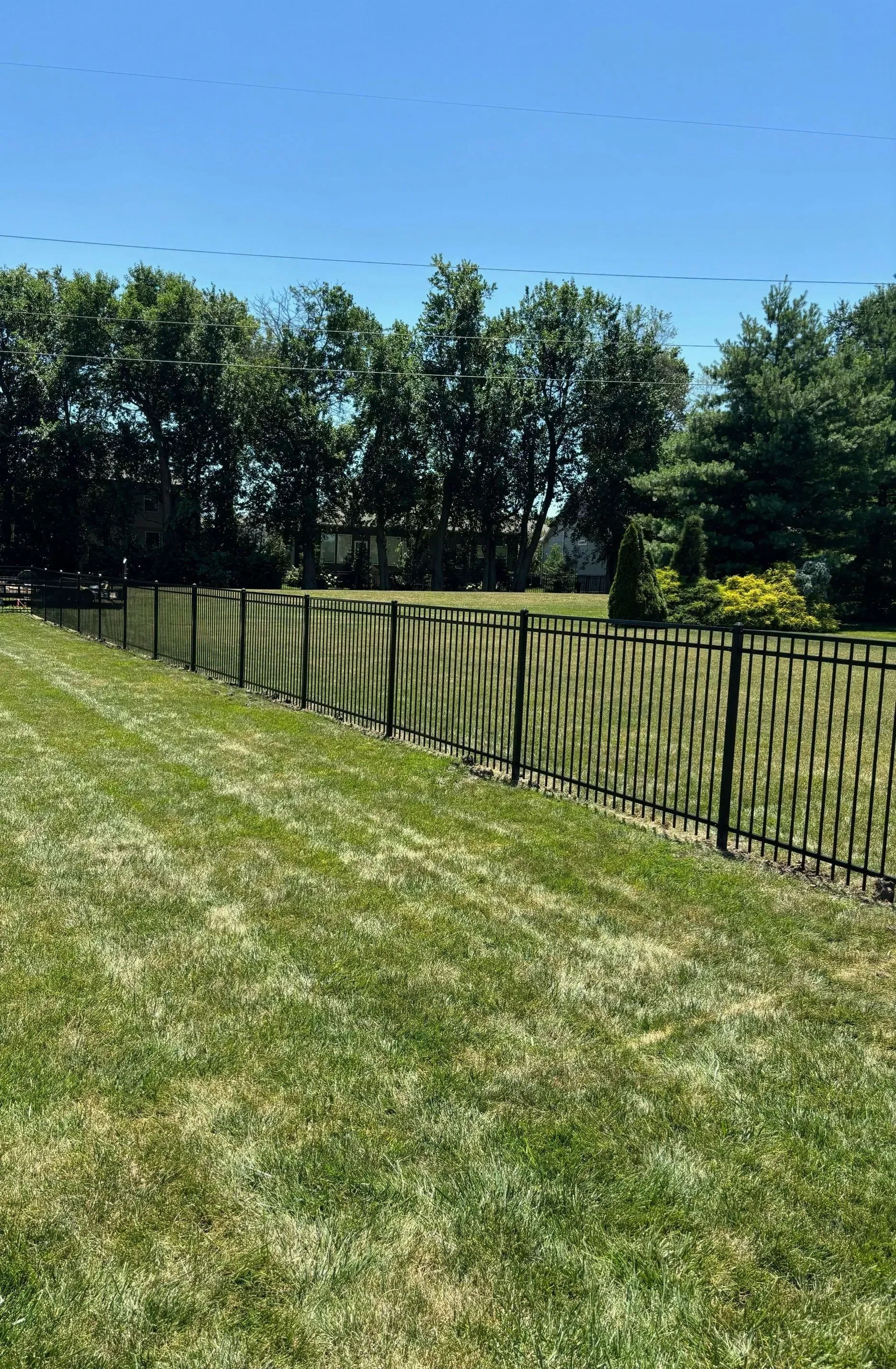
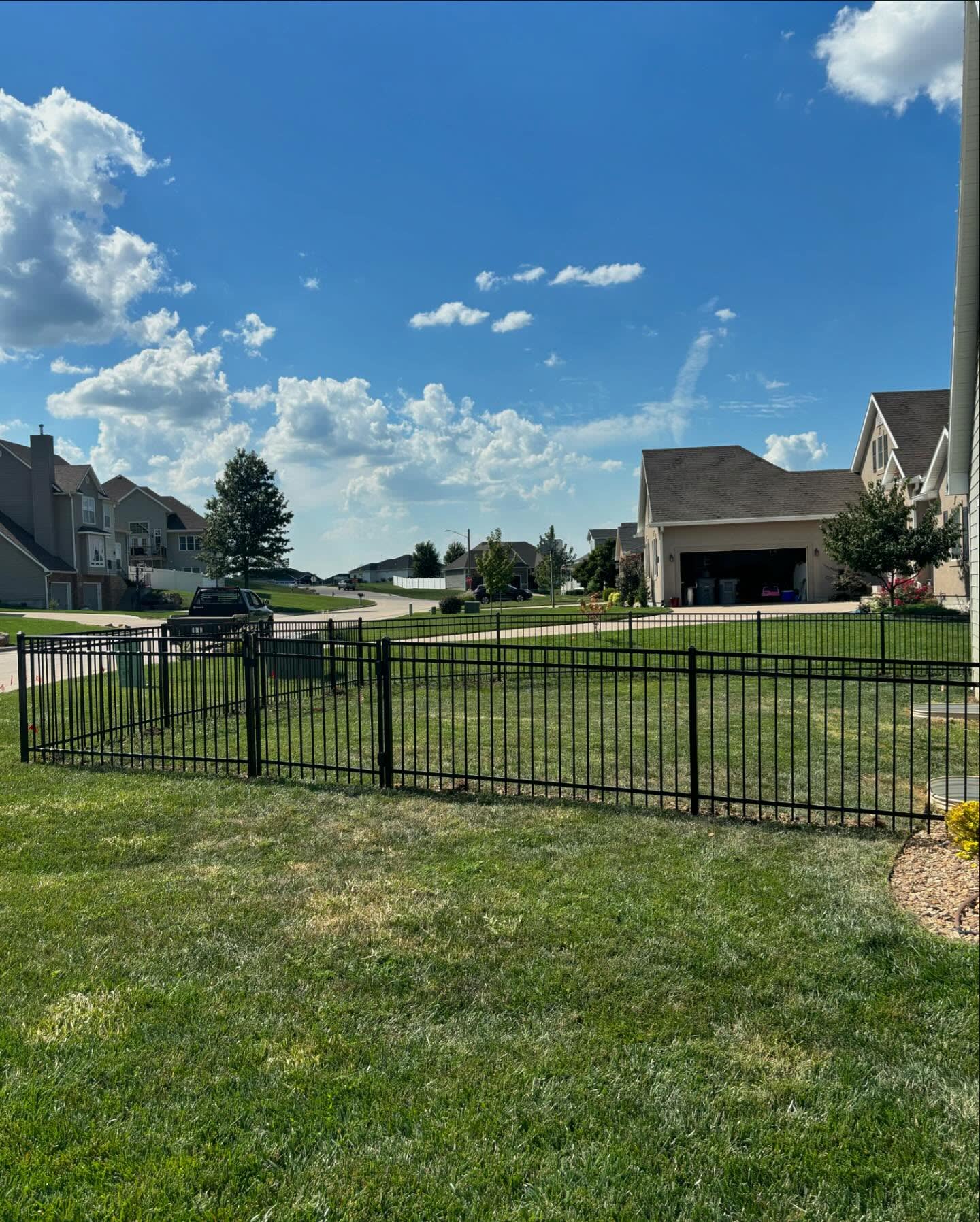
| A clean modern front or entry line in a master-planned community | Welded flat-top steel, minimal top, matte black over E-coat — no scrollwork | Lenexa is the metro's most design-forward suburb, and the wrought-iron look that reads as 'estate' in an older town can read as dated here. So the honest Lenexa expression of ornamental iron is the modern one: a welded flat-top line with a clean, minimal top and no fussy finials. It gives the black-framed contemporary look the town already reaches for, but in real steel — heavier, more rigid, and more permanent than the aluminum version — with the powder coat over E-coat holding that crisp black edge for decades. It's the black line the block already speaks, built in the material that outlasts it |
|---|
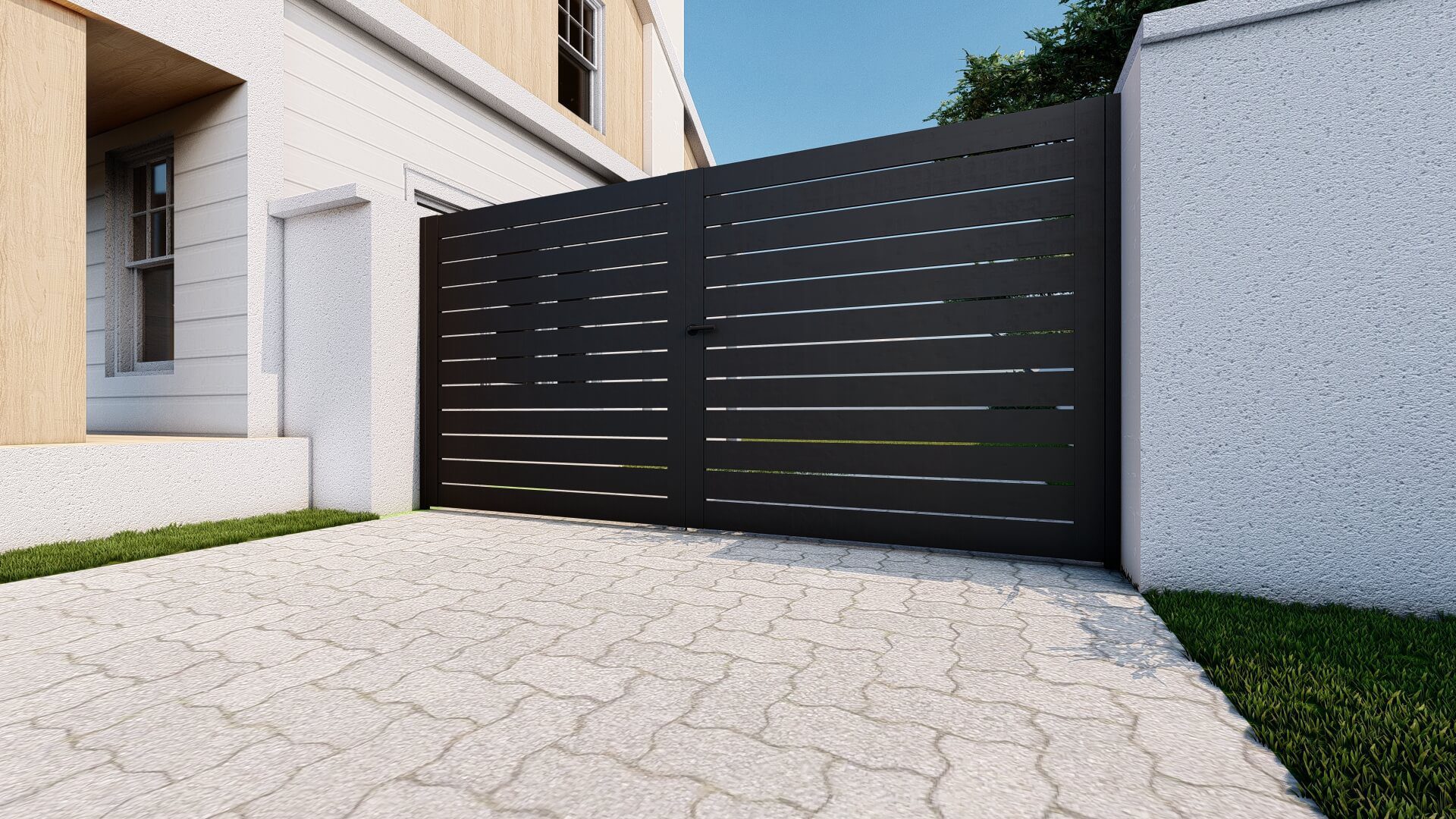
| A drive entrance or a subdivision-style monument that has to read as permanent | Heavier welded section on oversized, cross-braced entry posts | An entry is where a boundary either looks intentional or looks priced by the foot, and real welded steel is the material that carries a monument. The mass backs up a heavier top rail or a clean pier-and-panel entry without looking flimsy, and we set the entry posts oversized and cross-braced so the heaviest, most-seen run on the property stays dead-square through the seasons. In a town that puts real money into the front of a master-planned home, the steel entry is the piece that reads as finished rather than added on |
|---|
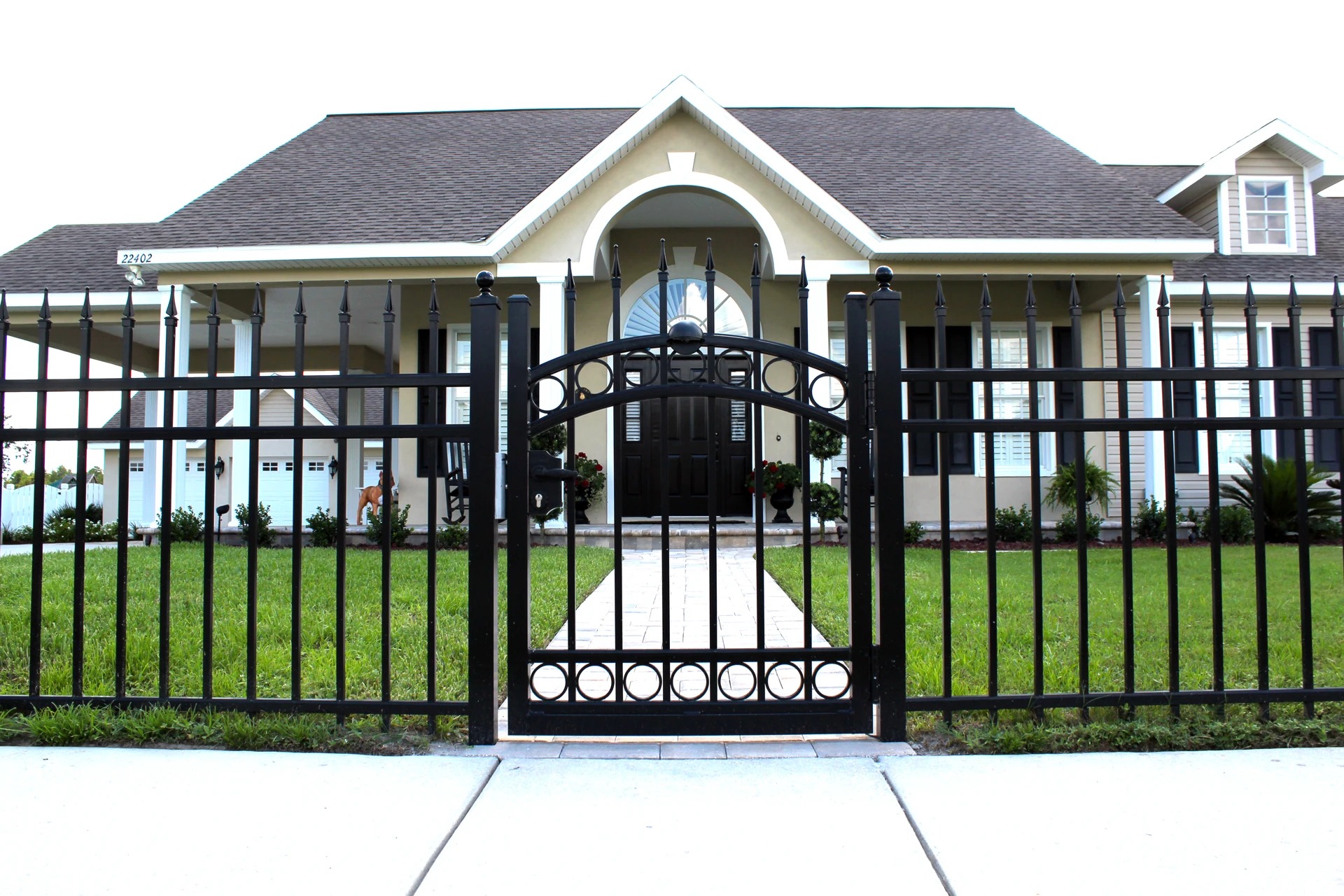
| A property that wants genuine security, not just the look of it | Spear-top or tight-picket welded run, pickets welded through the rails | This is where steel truly separates from aluminum. Real welded iron — pickets driven through the rails and welded, not screwed into brackets — resists being spread or pried and takes a hard hit without folding, which is why it's the pick when a higher-value home or a business-adjacent property wants security that's real and not just decorative. A spear- or pressed-top gives a hard, hand-holdless edge up top; the tight lower course closes the gap a determined climber or a big dog would use. It's the fence that means it |
|---|
| An open, wind-swept lot in the newer areas west of I-435 | Rigid welded panel above an oversized footing set below the frost line | The open ground west of I-435 catches wind and heaves posts harder than the sheltered interior, and steel's rigidity cuts both ways here. On the upside, a welded panel is stiff — it won't rack or rattle in a gust the way a looser assembly can. The catch is that a rigid panel telegraphs a heaving post immediately, with no flex to hide it, so the footing isn't optional: we set it oversized and below the frost line so the freeze-thaw can't lever the post out of plumb and put a visible lean in a fence that shows every degree of it |
|---|
| A steel line in one of the poorly-drained, fast-built new developments | E-coat primer driven into every weld and seam, then powder coat over it | Rapid development around Lenexa left some newer yards holding water against the post base, and standing moisture at the ground line is exactly where cheap 'ornamental iron' fails — painted straight over the steel, it blooms rust at the welds within a decade. E-coat, the electrodeposition primer that bonds into every joint and cavity before the color coat goes on, is the layer that stops it. On a wet, poorly-drained lot the E-coat under the powder coat is what keeps a welded steel fence from rusting where it meets the ground. Every run we quote is primed first, coated second |
|---|
| An open view line, a sloped run, or a pool barrier on a budget | Honestly — aluminum, not welded iron | Straight answer: if the job is an open sightline to a pond or greenbelt, a run down a graded slope, or a straightforward pool barrier, welded steel is more fence than it needs — heavier, pricier, and harder to rack to a slope than it's worth. Lenexa leans low-maintenance for a reason, and aluminum gives the same black line, can't rust at all, follows a grade more easily, and costs less. We'll steer you to aluminum for those runs and save the welded steel for the entry, the security line, and the front where its mass and rigidity actually earn the spend |
|---|