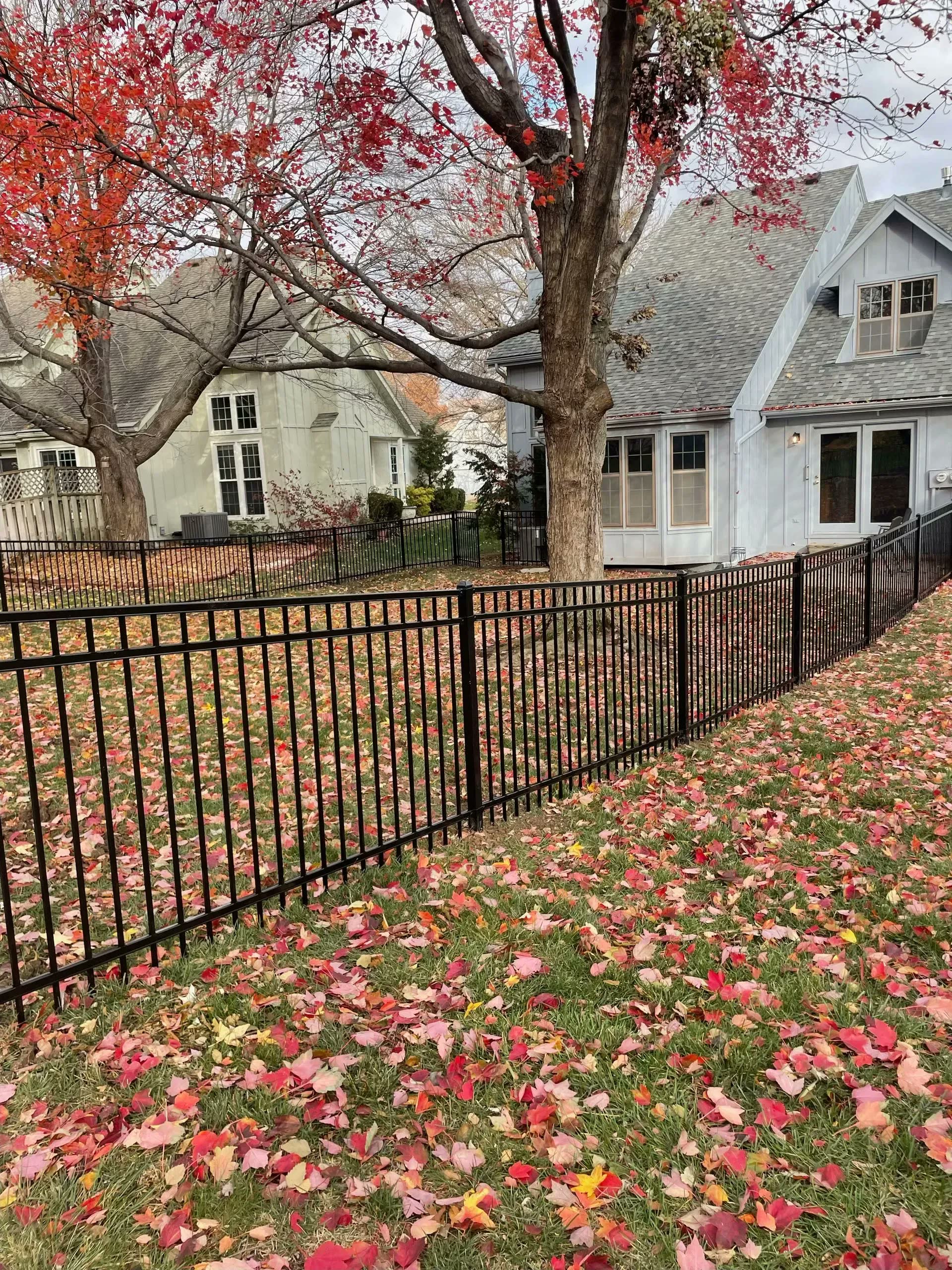
Why do so many Overland Park homes use aluminum instead of wood?
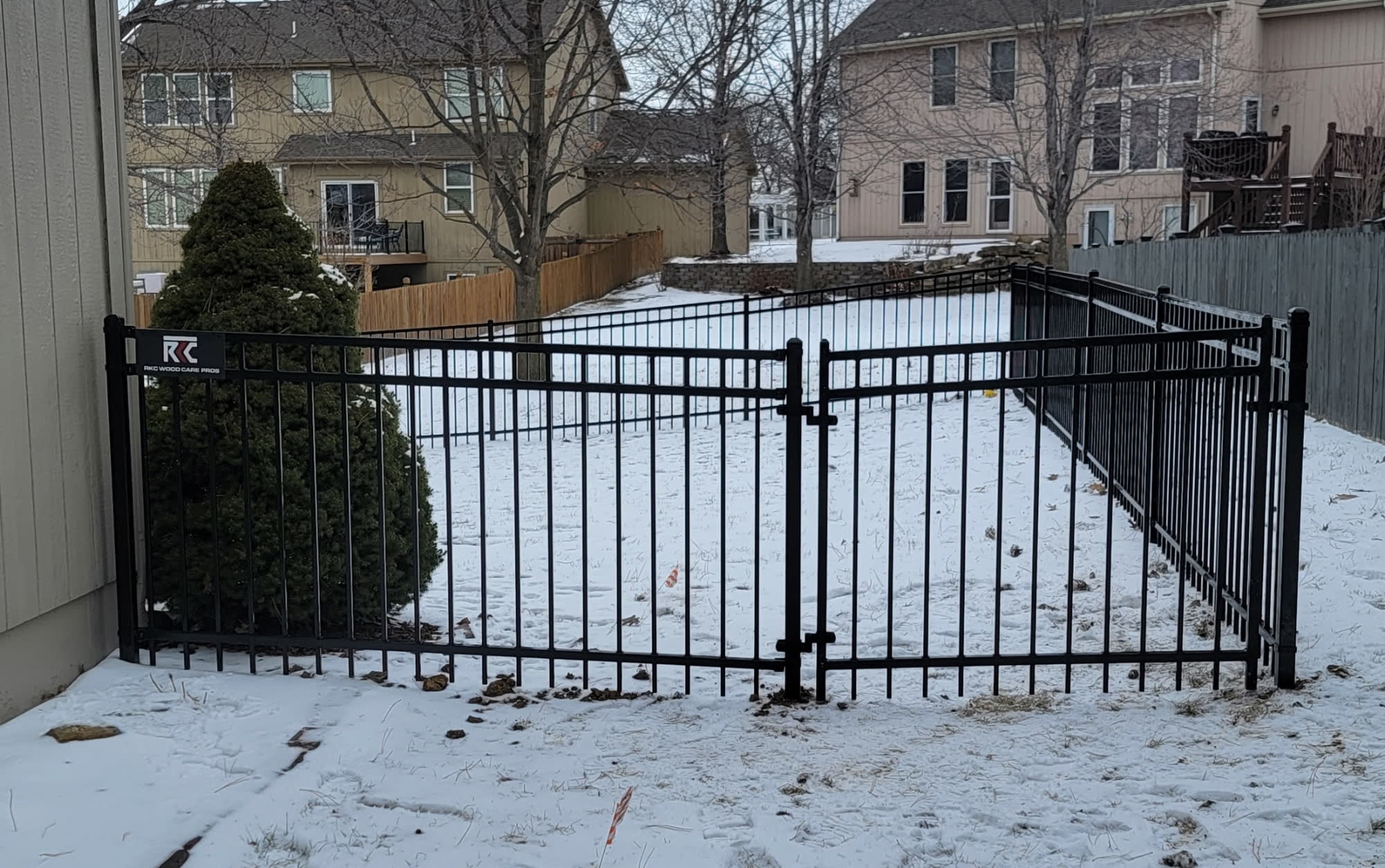
Two reasons that are specific to Overland Park. First, the Blue Valley corridor in the south is full of golf-course, greenbelt, and pond lots where the view is the whole point of the property — an open aluminum picket line contains the yard without walling the sightline off the way a solid cedar fence would. Second, aluminum can't rust, so it holds its factory finish through the wet ground and the 80-plus freeze-thaw cycles that punish other metals here. It gives the black ornamental look with essentially no upkeep — no staining, no sealing, no rust.
Does a sloped Overland Park lot change how the aluminum fence gets built?
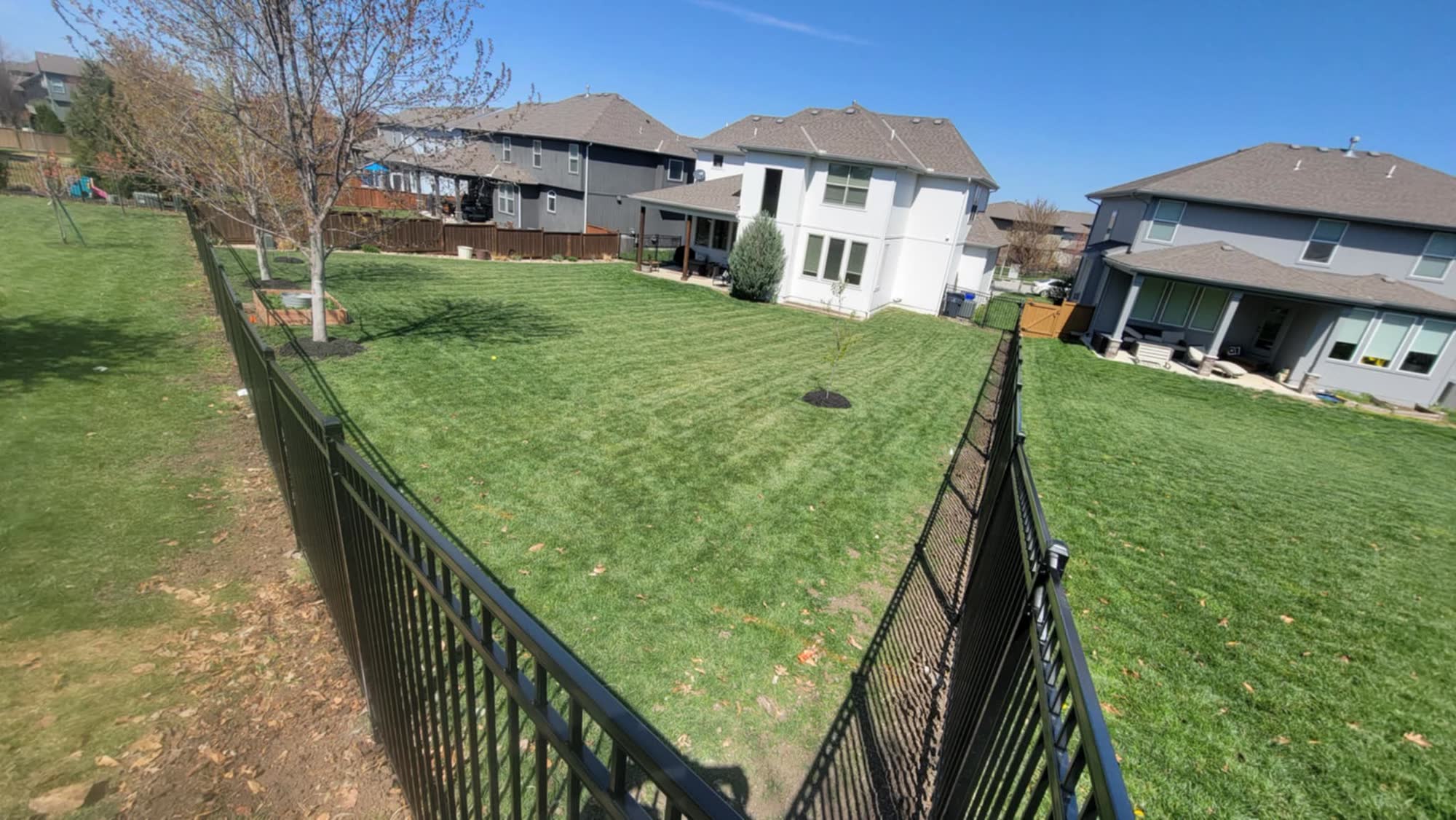
It does south of 135th, where the rolling estates and daylight basements create real grade changes along a fence line. Aluminum is installed as a rackable panel — each picket pivots slightly where it meets the rails, so the whole panel rakes to follow the slope instead of stepping down in stair-steps. That keeps the bottom rail tight to the ground the whole run, with no sawtooth gaps under it. On flatter north Overland Park lots it simply installs level. Either way we walk the grade at the estimate and spec the panel to the ground you actually have.
Will an aluminum fence rust on a pond or lakefront lot in Overland Park?
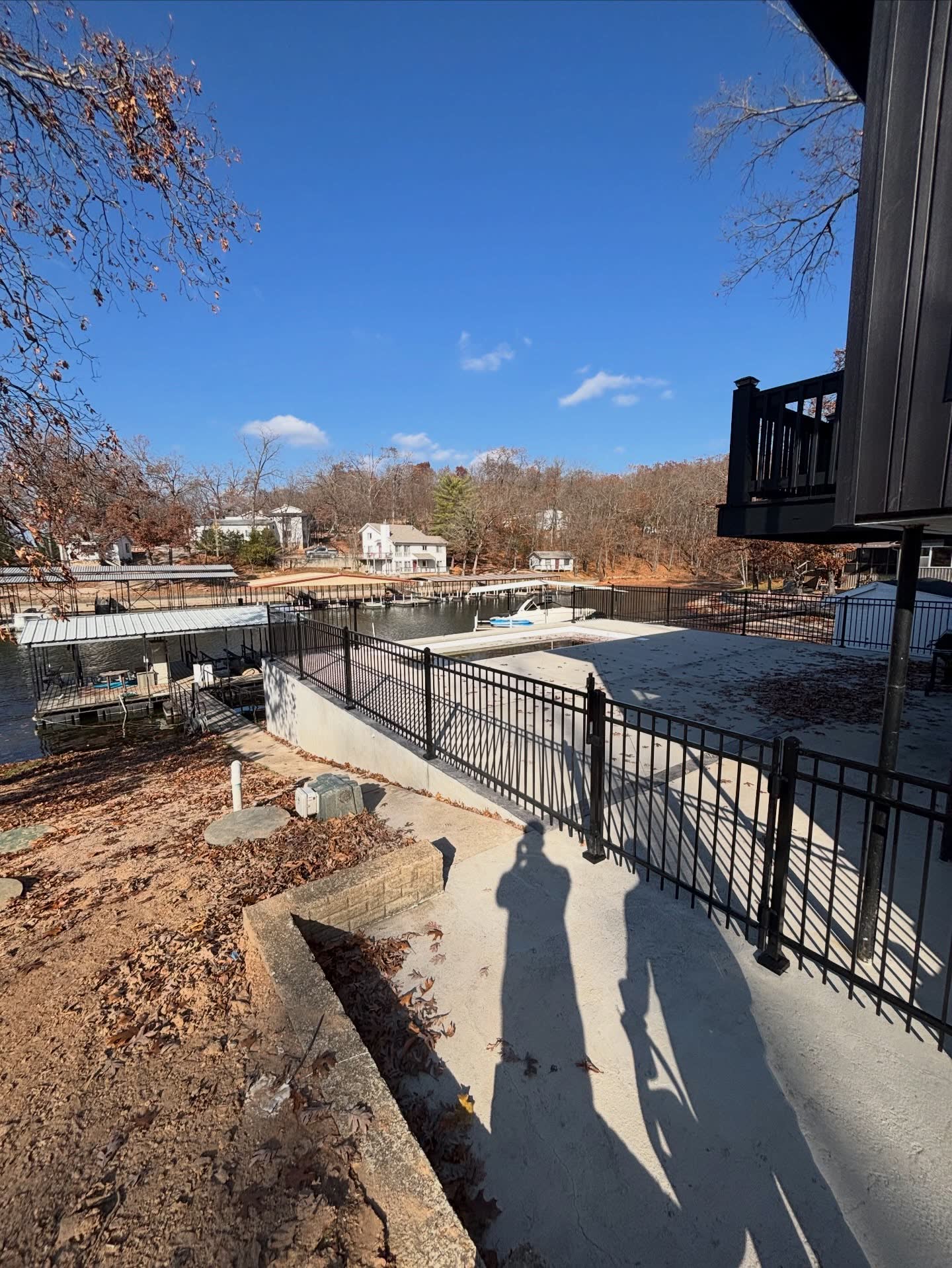
No — that's exactly where it beats steel. Aluminum forms a sealed oxide layer that stops corrosion, and the color is a baked-on powder coat over an E-coat primer, not paint. At a wet pond or lakefront edge, a steel ornamental fence eventually bleeds rust down the pickets and needs sanding and repainting; aluminum just holds its finish. We've built aluminum right down to the waterline across the metro, and the finish is still the part you never have to touch years on.
How deep do the posts go, given the clay and frost heave in Overland Park?
Every post goes 36 inches deep in poured concrete, below the Kansas City frost line, which runs 30 to 36 inches. That matters more here than the metal does: Overland Park sees 80-plus freeze-thaw cycles a winter, and the Wymore-Ladoga clay grips a shallow post and lifts it, which racks the panels out of square. Aluminum panels are light, which tempts a shallow hole — so the footing, not the metal, is what actually decides whether the fence stays true. Gate and corner posts get a cross-brace on top of that.
Can aluminum meet pool code for an Overland Park backyard pool?
Yes — aluminum is the default pool-barrier material in the metro because it meets the barrier rules out of the box. A pool barrier wants a minimum height (typically 48 inches), a picket gap no wider than 4 inches, a flush bottom rail with no toe-hold, and a gate that is self-closing and self-latching. We build the enclosure to the barrier spec your pool's final inspection checks. If the pool is the entire reason you're fencing, start at
pool fencing, where the barrier rules lead.
How much does an aluminum fence cost in Overland Park?
Aluminum is the premium fence material, so it runs above cedar or vinyl — what you're paying for is a 30-plus-year lifespan, zero staining or sealing, and the open ornamental look a solid panel can't give you. The real number depends on height, picket profile, gate count, slope work, and whether it's built to pool code, which is why we don't quote a flat per-foot figure sight-unseen. Every Overland Park estimate is free, on-site, and itemized — linear feet, gates, concrete, and cleanup all broken out.