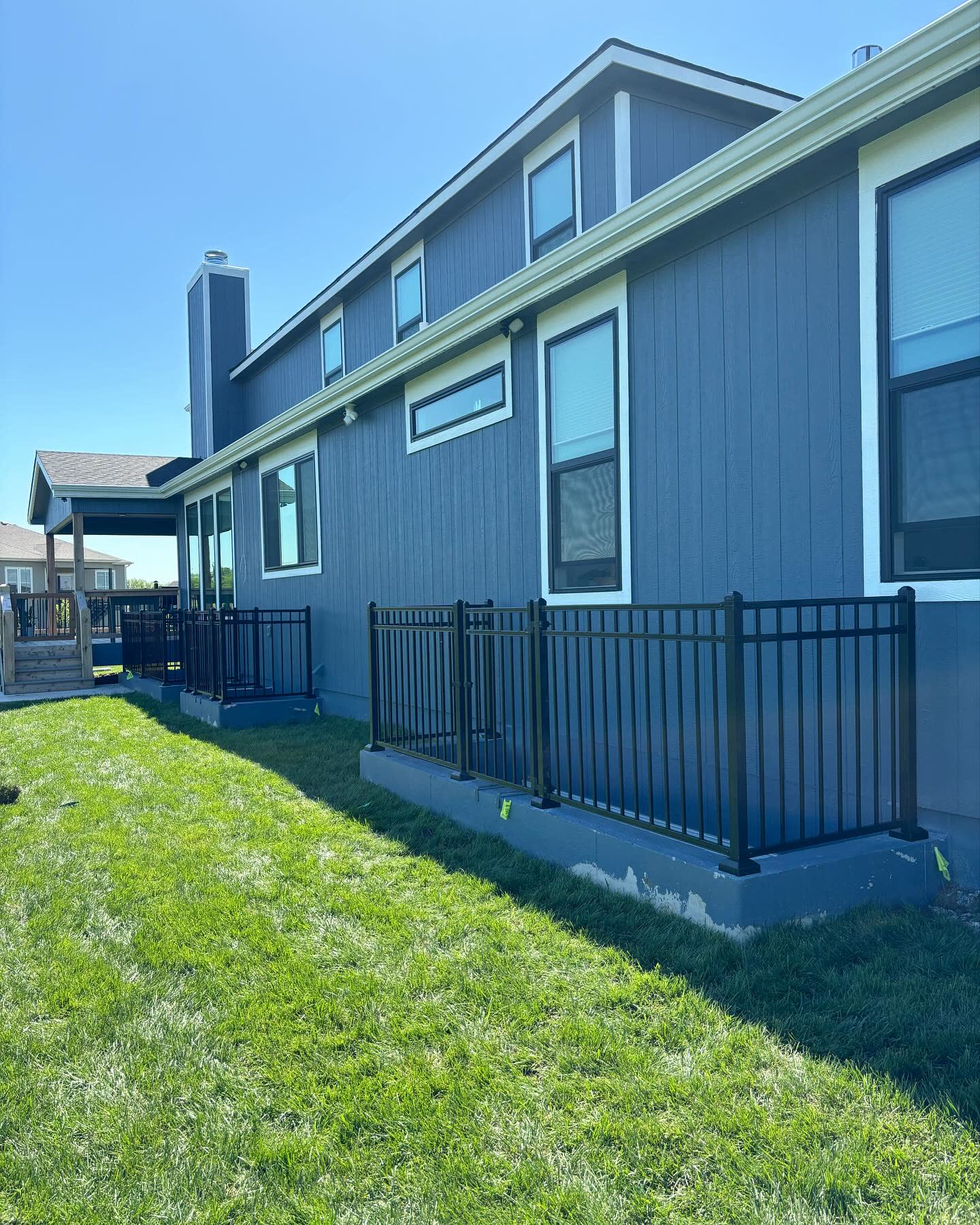
Why is ornamental iron so common on Overland Park front yards?
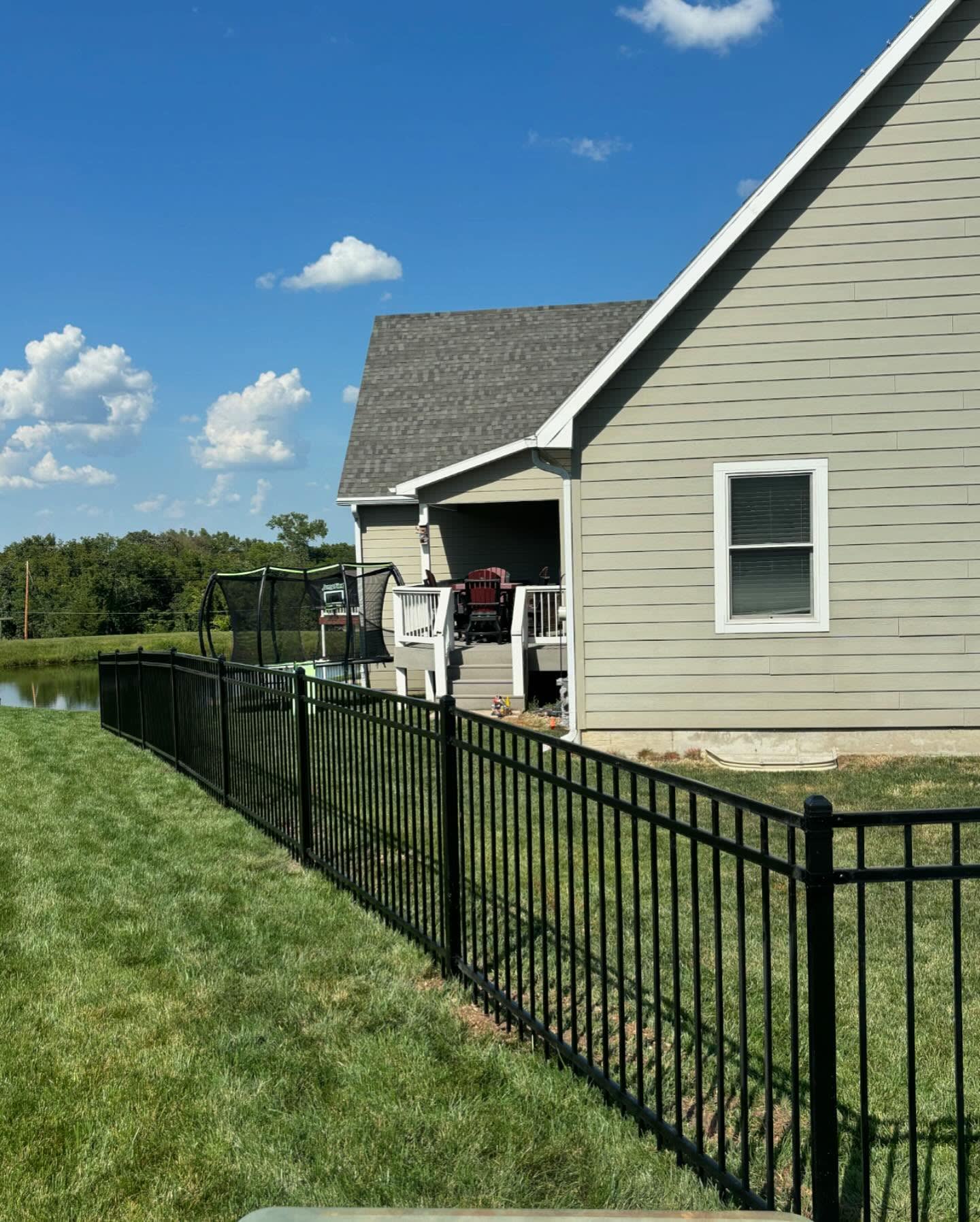
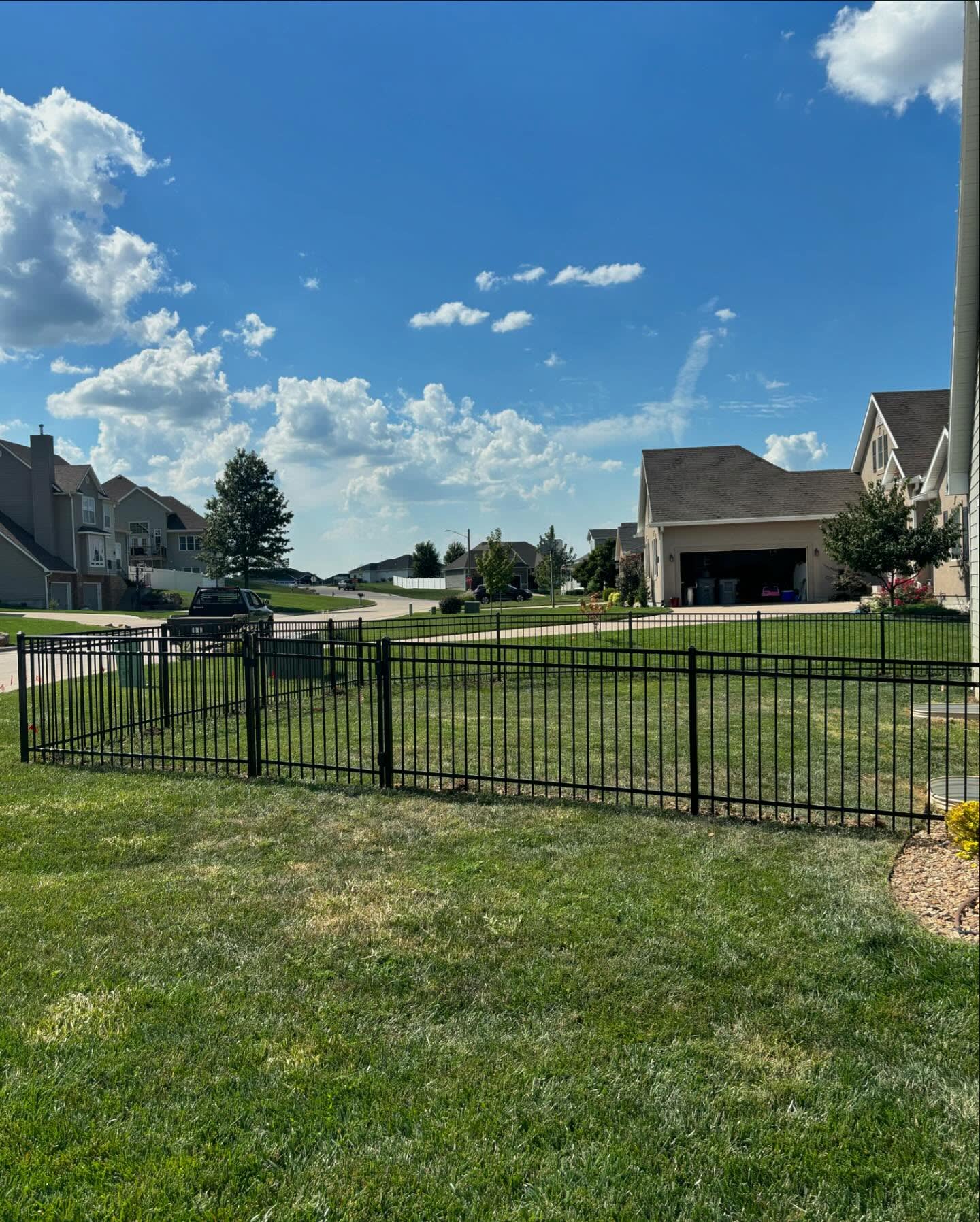
It's the one fence that does curb appeal and a security edge at the same time, and that's exactly what the Overland Park market asks for. Through the Blue Valley corridor in the south, the black ornamental picket line is the estate look that matches homes built and maintained to a high standard — it frames the house instead of hiding it, keeps a golf or greenbelt sightline open, and still contains the yard. It's real welded steel, so it carries a weight and authenticity a lighter panel can't. For the same silhouette with no rust worry and less weight,
aluminum is the alternative.
Will ornamental steel rust at the welds in the Overland Park climate?
Bare steel would; a properly finished panel won't for a very long time. Every panel we install is E-coated first — an electrocoat primer that reaches inside the hollow pickets and over the weld seams where a paint gun can't — then powder-coated over that. Painted ornamental typically gives up at the welds within a couple of Overland Park winters because the coating is thinnest exactly where water sits. The two-layer E-coat-plus-powder-coat system is the difference between a fence that holds its color for decades and one that bleeds rust early. It's the single biggest thing to ask a quote about.
Is steel worth the extra cost over aluminum in Overland Park?
It depends on the job. Steel is heavier and more rigid, so it wins where a hard impact is likely — a corner lot on Metcalf or 135th, a driveway edge, a gate that gets used hard — and where authenticity is the point, like a period home in the older north pockets or a Blue Valley estate front. Aluminum is lighter, can't rust at all, and installs for a little less, so it wins on a quiet boundary line or a pond lot you don't want to think about again. We spec whichever fits the situation and put the reasoning on the written estimate rather than pushing the heavier material by default.
How deep do ornamental posts go, given the Overland Park clay?
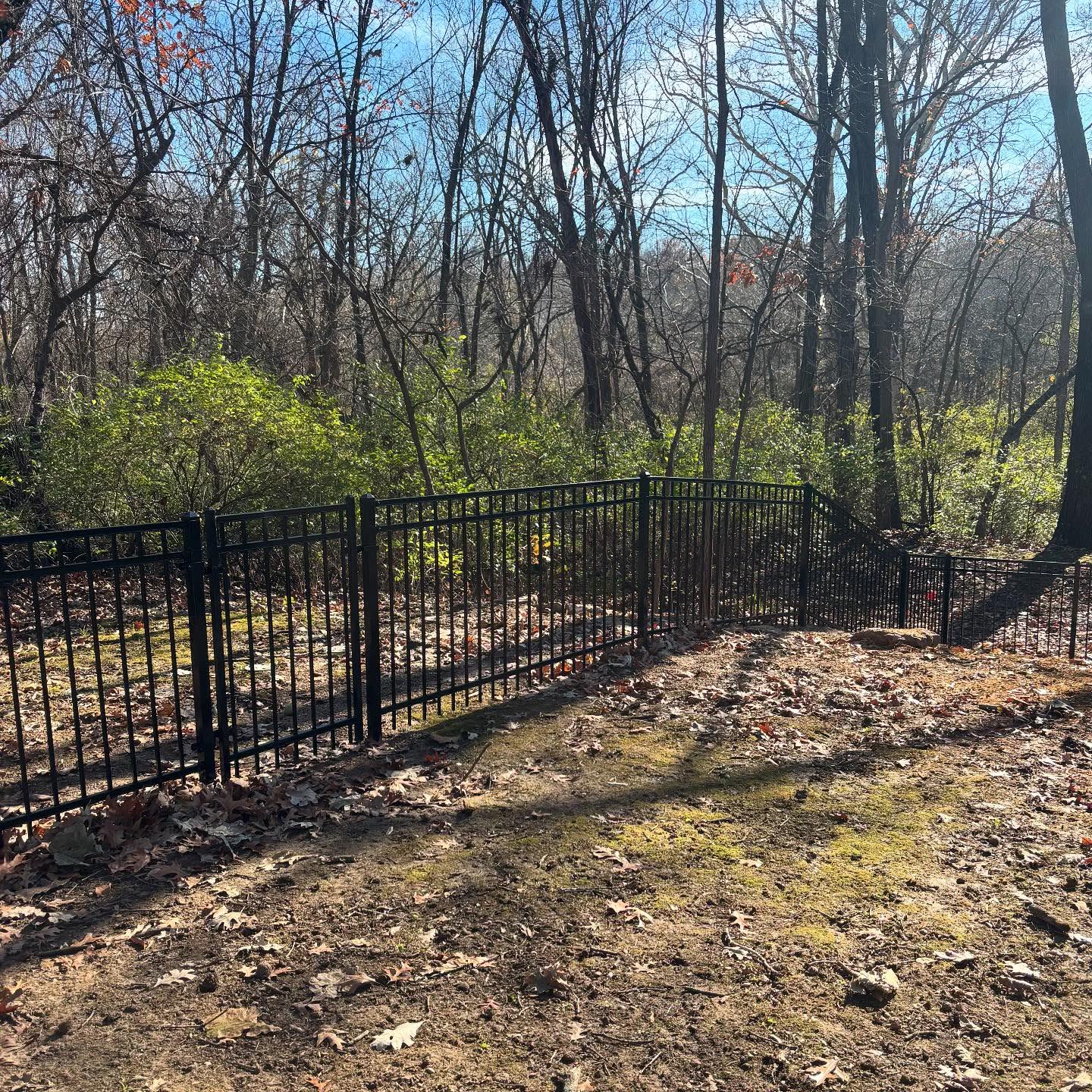
Every post goes 36 inches deep in poured concrete, below the Kansas City frost line, which runs 30 to 36 inches. Ornamental steel is unforgiving of a shallow footing because the panel is rigid — it can't be shimmed or trimmed on site the way a wood run can — so a post that heaves in the clay racks the whole panel out of square. Overland Park sees 80-plus freeze-thaw cycles a winter and the Wymore-Ladoga clay grips and lifts a shallow post, which is why the depth below the frost line, not the metal, is the number that decides the lifespan. Gate and corner posts get a cross-brace on top of that.
Which picket top suits an Overland Park home — spear, flat, staggered, or scalloped?
Function usually settles it before looks do. Spear-top reads as classic estate security and is the common front-yard pick through the Blue Valley south. Flat-top is the clean modern profile and the one that suits a pool barrier, where no toe-holds or points are allowed. Staggered picket is the curb-appeal upgrade — a high-low rhythm that dresses up a plain run. Scalloped or arched suits the older, traditional north-OP homes. We bring physical samples to the on-site estimate so you can hold each top against your actual house before anything is welded.
What does an ornamental iron fence cost in Overland Park?
Ornamental steel is a premium material — it runs above cedar and above aluminum — and what you're paying for is real welded steel, the E-coat-plus-powder-coat finish, and a fence that does curb appeal and security in one. The real number depends on height, picket top, gate count, whether any panels are custom-welded for a period home, and the run's slope, which is why we don't quote a flat per-foot figure sight-unseen. Every Overland Park estimate is free, on-site, and itemized down to the linear feet, gates, and concrete.