Skip to content
Vinyl Fence Installation in Raymore, MO — The Forever-Fence Answer for a Forever Home, from the Move-Up Subdivisions to a Creekmoor-Caliber Backyard

Vinyl Fence Installation in Raymore, MO — The Forever-Fence Answer for a Forever Home, from the Move-Up Subdivisions to a Creekmoor-Caliber Backyard

Raymore is where families settle in for the long haul — Ray-Pec schools, a keep-it house, a lot they plan to stay on. The fence should match that horizon, and vinyl is the one you buy a single time: no stain weekend ever again, a warm earth-tone that holds through the summers, on posts set 36 inches deep so the open-lot winter freeze-thaw can't tip them. A 6-foot white vinyl privacy fence runs $40 to $55 a foot installed, in white, a warm sand or woodgrain that reads like the town's pre-stained cedar, a finished-both-sides shadowbox, or a lattice-top for the backyard that shows — capped, co-extruded PVC from CertainTeed, Bufftech, and Veka. Cedar and black aluminum still rule the Creekmoor golf-view lots, and we build those too; vinyl earns its place in the move-up backyard that's done with maintenance. The same owner-run shop that hands you the quote is the one setting the footings — and picking up the phone about the coverage a decade later.

★★★★★
4.9
from 85 reviews
Licensed
& Insured · KS + MO
400+
fences installed
A+ BBB Rating 400+ Fences Installed Since 2021 Owner-Operated Free On-Site Estimates
Browse vinyl options ↓

WHY RAYMORE HOMEOWNERS CHOOSE VINYL

A Warm Look, Set Once — Vinyl for a Raymore Forever Home

What settles it in Raymore isn't the sticker — it's a fence that keeps a warm, finished look for decades, drops the stain weekend for good, and sits deep enough that an open new lot's winter heave never tips it. This isn't a knock on cedar — pre-stained warm, it's the earth-tone standard and it looks every bit the part. The catch is that cedar keeps asking for the stain can, and on the town's bare newer streets it's the run you're out re-plumbing come spring. RKC works as one Kansas City fence contractor across installation, repair, and staining — and the fence in these cards is the kind a settled-in family pays for exactly once.

1

The forever fence for a forever home

People come to Raymore for the keep-it house — good Ray-Pec schools, a lot they plan to stay on. The fence should match that horizon. Cedar makes you re-earn its look every couple of years; vinyl is the one you buy a single time and stop thinking about. For the move-up family that just left a maintenance-heavy fence at the old address, that's the whole appeal — set it once, and it's still doing its job in year twenty.
2

An earth-tone that never sees a stain can

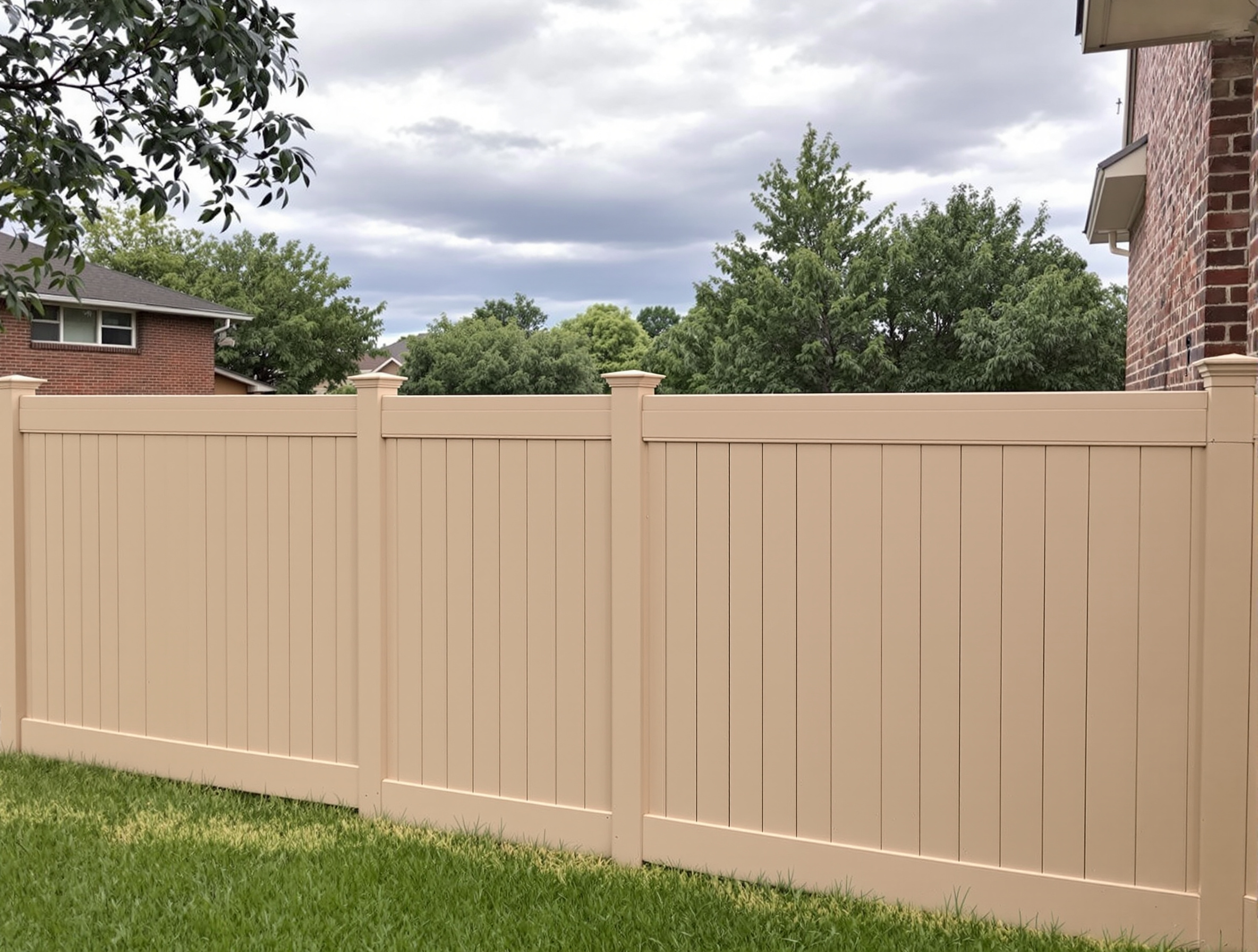
Raymore likes its fences warm — pre-stained cedar browns against brick and stone. A co-extruded sand or woodgrain vinyl gives you that same settled tone with the color molded clear through the board, so it holds in the summer sun instead of graying out. The entire upkeep plan is a garden hose. You get the high-end look the neighborhood expects and none of the weekend it usually costs.

3

Sunk deep for the bare, wide-open new lot

The town's newer subdivisions sit unsheltered — saplings, open sky, ground with nothing to break the cold — and out there the freeze cycle cants a short post and kicks off the lean that packs the spring repair calendar. We bury every post three feet in concrete under the frost depth, a steel spine threaded inside the sleeve, so the winter lift finds nothing to seize. That's the quiet gap between a fence that stands square through a decade of Missouri winters and one leaning by its third.

4

Finished on both sides, the way Raymore builds

The picture-frame and shadowbox cedar all over Raymore shows the same clean face to both yards — and vinyl does it too. A framed panel finishes the good side out on your line and the neighbor's, and a lattice-top header dresses the run up to a Creekmoor standard. In a town where the fence is part of how the property presents, that finished, both-sides line is worth building for on purpose.

LOCAL CONDITIONS · RAYMORE

Upscale Cass, Big Graded Lots & Open New Ground — What Shapes a Raymore Fence

Raymore hands a fence four conditions to answer for: a market where the perimeter is part of the curb appeal, a buyer who wants it to outlast the mortgage, generous modern lots that pitch away across the yard, and raw new subdivisions where the winter freeze-thaw does the real damage. Every one of them argues for the same build — a finished, warm-toned look, a run walked down the slope in steps, and footings sunk well below the frost. Each gets its own paragraph below. An exposed new-build backyard earns a different plan than a settled, shaded lot, and nothing here is copied off a template drawn up for some other town.

1

Upscale Cass — an honest place for vinyl

Raymore is the premier residential corner of Cass County, closer in feel to Lee's Summit than to anywhere south of it — big modern homes, brick and stone, active neighborhoods. It's honestly cedar-and-aluminum country: Creekmoor and the golf-view lots run black ornamental aluminum to keep the sightlines open, and pre-stained cedar dresses much of the rest. Vinyl earns its place in the move-up subdivisions and the backyard that's done with maintenance — not by pretending it's the town's default, but by being the forever-fence answer for the owner who wants one.

2

The move-up buyer wants a fence that outlasts the mortgage

The thing driving fence calls in Raymore is people arriving from older suburbs for a long-haul home and wanting the perimeter to match — a 'forever' fence system, not another round of the upkeep they just left. That's exactly the buyer vinyl is built for: pets contained, backyard closed, and a look that stays put for decades. A first fence on a fresh Raymore lot is a do-it-once decision, and it gets treated like one.

3

Big modern lots that fall away across the yard

Raymore homes sit on generous quarter- to nearly-half-acre lots, and a lot of them carry real grade change — the ground drops across the backyard in these planned developments. That means a fence here can't just run straight into the dirt; it has to be stepped down the slope so the top stays level and the bottom stays tight, and set so it clears the drainage the neighborhood was laid out around. A run built for the grade sits right for thirty years; one forced flat starts gapping and leaning fast.

4

Open new ground and the winter heave

The newer streets expanding east and south toward Peculiar sit wide open — young landscaping, no mature canopy, weather coming across unbroken. Out there the number-one thing that moves a fence isn't a dramatic soil or a rock shelf, it's the plain freeze-thaw: saturated clay swelling and lifting through a Missouri winter, tipping any post that wasn't set deep enough. A fence Built for Every Storm on a Raymore new-build is planned around depth first — 36 inches of concrete under every post, below where the frost reaches.

THE LONG-RUN NUMBER, NOT THE STICKER

Vinyl or Cedar in Raymore? Run the Fifteen-Year Math

Cedar leads the Raymore market and lands a touch lower the day it's built. But most of the people fencing here just left a stain-hungry cedar run at the last house — and over fifteen years the cheaper fence is decided by the two bills you came to escape: the re-coat every couple of years, and the tipped post the open-lot winter leaves you. Vinyl asks a little more up front and then goes quiet. The table walks a typical Raymore backyard, cedar beside vinyl, with the re-stains and one winter post-reset dropped into the cedar column where they honestly land.

Over 15 yearsPre-stained cedarVinyl
The upfront checkPre-stained cedar is the Raymore default and lands a little lower the day it's built — one reason it lines the older established streetsA bit more to start, and that number already folds in the galvanized rail reinforcement and the earth-tone color molded through the panel
The chore you moved to escapeThe staining treadmill you probably just stepped off at the old place — wood needs recoating on a two-to-three-year cycle to hold its warm color, and a Raymore-length run runs somewhere north of $2,500 in stain and labor each go-round, weekend includedRetired for good — color is fused through the board, so wiping it down with a soft brush now and then is the sum total of the work, for the life of the fence
Holding the earth-tone lookSkip a re-coat or two and the warm brown weathers to a driftwood gray that fights the brick-and-stone facades the neighborhood is built aroundA co-extruded sand or woodgrain keeps its warmth in year ten the way it looked the week it went up — the settled high-end look, on autopilot
The open new-lot freeze-thawOn the bare newer streets a short wood post rides the winter lift and begins to cant — that tilted post is the repair Raymore generates mostA steel-hearted post buried three feet in the clay, under the frost depth, has nothing to be lifted by — the line holds square through the same winters
When the forever home sellsA graying, upkeep-behind fence reads as a to-do item to the next buyerThe CertainTeed, Bufftech, or Veka warranty transfers with the deed — a maintenance-free perimeter still under coverage is a quiet mark in the home's favor
Who it fitsThe owner who loves real wood, is happy pre-staining it warm, and keeps the coat currentThe move-up family here for the long haul who would rather write one check and never again chase a stain can or reset a winter-tipped post

It comes down to your timeline and whether you want the upkeep back in your life. If you love the wood and don't mind keeping it warm, cedar's a straight call — the Raymore wood page walks the sealing rhythm that keeps it that way. If you're digging in for years on a lot you'd rather not think about, vinyl makes that gap back — nothing to stain, nothing to re-plumb after a brutal winter. Give us the yard and we'll quote both, total against total.

THE RAYMORE DURABILITY QUESTION

Will the Winter or the Grade Crack Vinyl? Only the Cheap Kind

A reasonable worry when the price sits above cedar. Straight answer: a capped panel riding a reinforced rail, sunk past the frost and walked down the grade in steps, brushes off both the bare-lot freeze cycle and the July sun — the stuff that fades, embrittles, and finally cracks is the discount single-wall board. There's no rock ledge to wrestle in Raymore, but the winter lift on the open lots and the pitch on the larger ones are both real, and between them they dictate how the run gets assembled. The four calls laid out below are what hold a fence up against the pair of them.

The exposed new-build lot lifts a shallow post — go deep

Out on Raymore's newer subdivisions the yards are broad and bare, young saplings and open sky with nothing to soften the weather, and that's precisely where a short-set post fails: winter drives water into the clay, it freezes and swells, and the post rides up and cants over — a tilted line is the repair these streets generate more than any other. No rock shelf complicates it; the whole cure is reach. We plant each post three feet down in concrete over a flared bell, past where the frost bites, so there's nothing for the freeze cycle to grab and the run overhead holds its line.

Grade gets stepped down, so the water keeps running

A lot of the bigger Raymore yards tilt across their width, and because these are engineered subdivisions, the slope and its drainage channels were platted deliberately. Rather than force a stiff panel to chase the dirt and leave a gap along the bottom, we walk the run down the incline in level steps so each section stays square and the base stays snug — and we route the line to keep those channels clear instead of choking them. That's what separates a fence that reads right on a rolling Creekmoor-area lot from one that ponds water and starts leaning inside a couple of seasons.

It has to hold an earth-tone, not just a bright white

Where the neighborhood pre-stains its cedar in warm browns, a fence that keeps its color is doing half the work. The profiles we run — capped CertainTeed, Bufftech, and Veka stock — cook titanium-dioxide sunblock into the outer layer, which is why a sand or woodgrain keeps reading warm through summer after summer instead of chalking out to a washed pastel. Paying up for co-extruded stock buys exactly that: the finished, high-end face is meant to still look finished and high-end ten years down the line.

The cheap single-wall board is the one that splits

The vinyl aisle stocks two very different things, and only the better one has any business on a Raymore home. Our panels are capped and co-extruded — a hard impact-grade shell fused over the load-bearing core — and most carry a class-4 hail rating, the mark a top-tier roof shingle wears, no small thing given how Cass County springs go. The discount single-wall board leaves that shell off, so it ambers in the sun and gets brittle enough to fracture. We also hold a breathing gap at each connection, letting a run swell in August and shrink in January without popping a joint.

WHAT WE INSTALL MOST

The Vinyl Raymore Owners Order Most

Most Raymore jobs land on one of these four — every one with its number spelled out, a service life you can plan around, and the almost-nothing upkeep that's the point of going vinyl to begin with. The right pick tracks the job: a plain privacy wall to wrap a move-up backyard, a warm woodgrain that echoes the pre-stained cedar down the block, a two-faced shadowbox for the stretch on display, or a lattice cap that lifts a run to Creekmoor polish. Samples ride along to the walk-through, so you're judging color against your actual brick and siding in real daylight — never off a swatch in a binder.

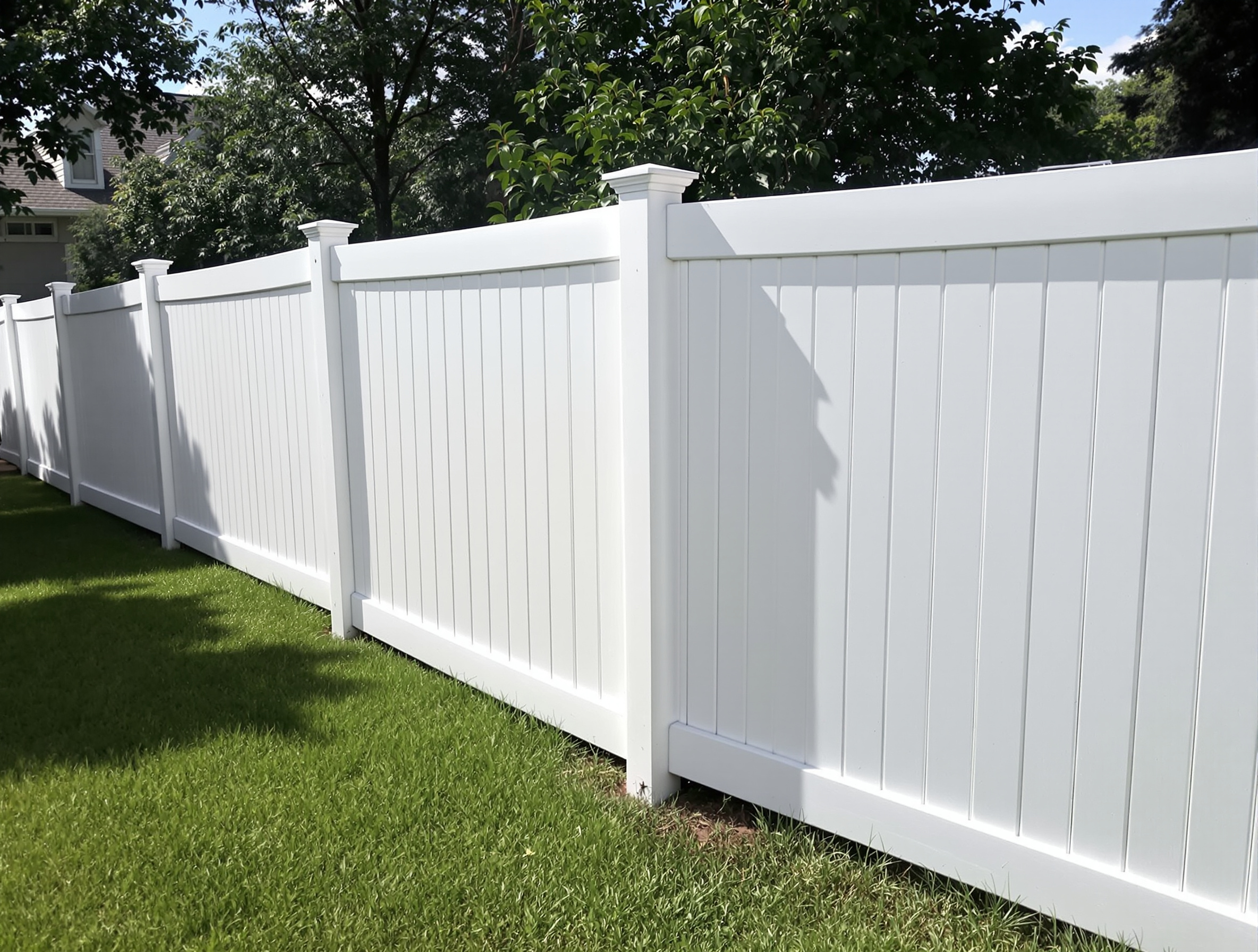
White Privacy — 6 ft vinyl fence by RKC Wood Care Pros in Raymore, MO

White Privacy — 6 ft

The mid-level subdivision standard

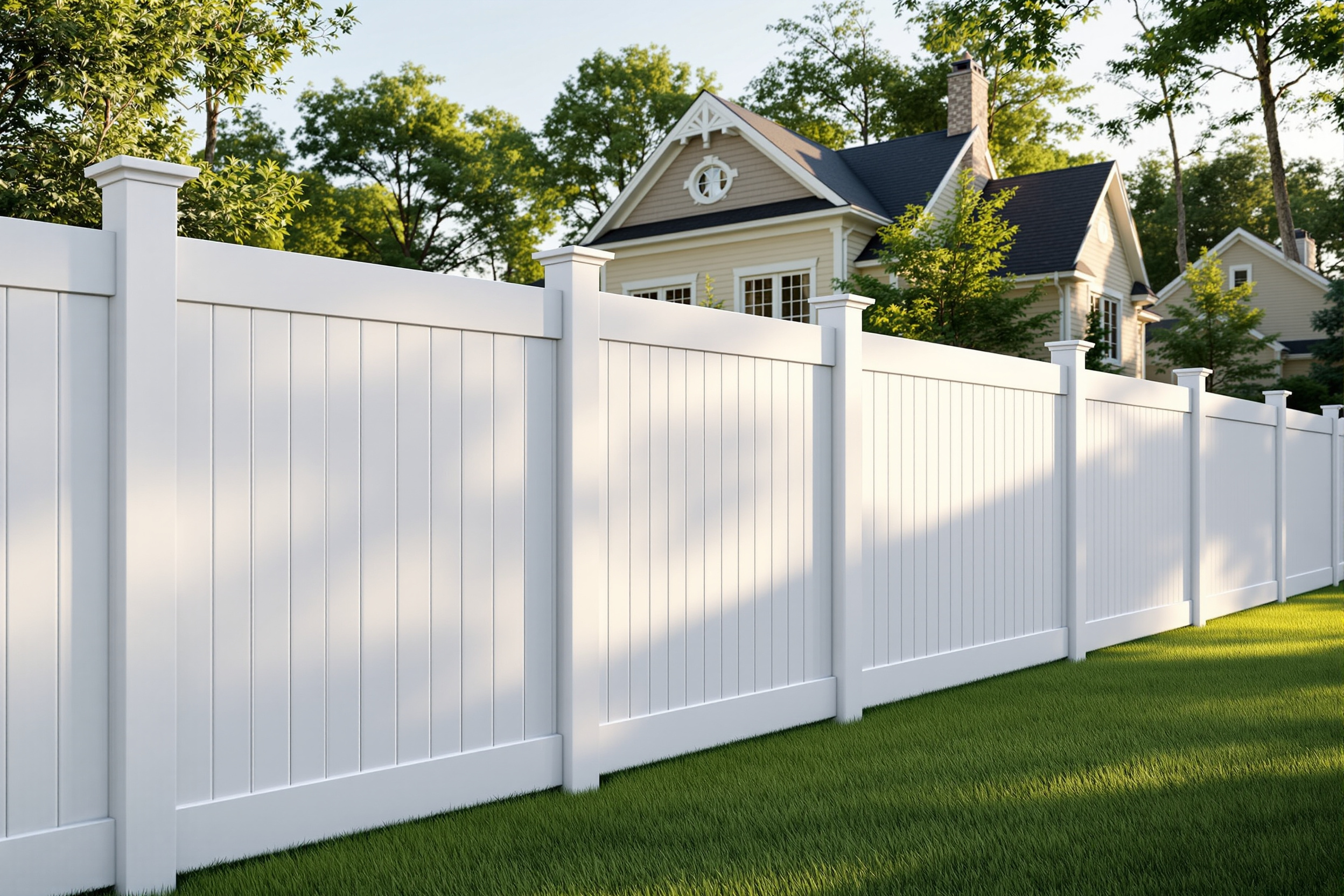
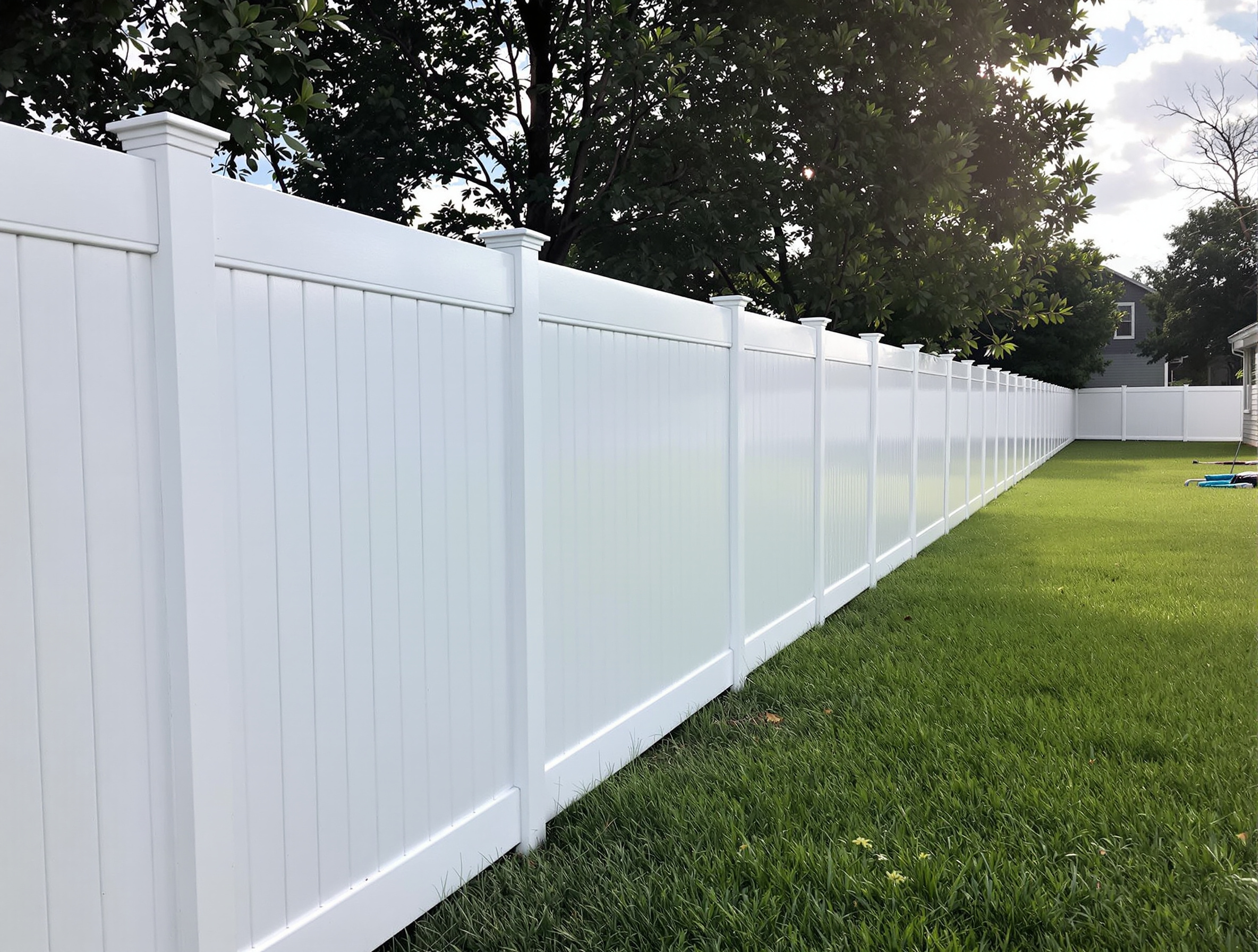
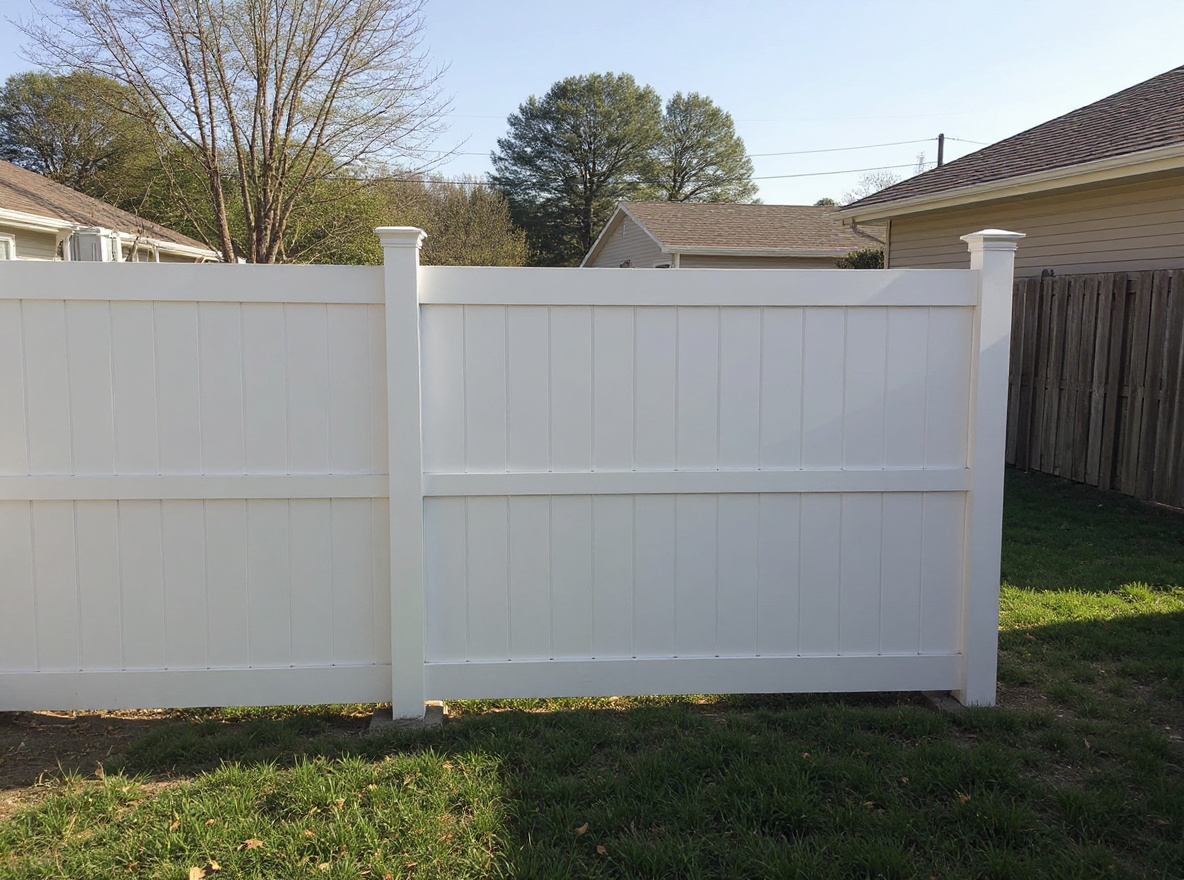
The vinyl that goes up across Raymore's move-up subdivisions — Ward Park, Shadowood, the newer streets east toward Peculiar. Solid tongue-and-groove panels in UV-rated white PVC, braced by a galvanized spine seated inside the rail, standing on posts sunk deep against the freeze cycle. It's the clean, buy-it-once privacy wall for the family that came to Raymore for a keep-it house and is done spending Saturdays on a stain can.

  • Price: $40–55/LF installed
  • Lifespan: 30+ years
  • Maintenance: One rinse a year
Sand / Woodgrain Privacy — 6 ft vinyl fence by RKC Wood Care Pros in Raymore, MO

Sand / Woodgrain Privacy — 6 ft

Reads like the pre-stained cedar Raymore favors

Raymore is an earth-tone town — the cedar here goes up pre-stained in warm browns to sit right against the brick-and-stone facades. A sand or embossed-woodgrain vinyl carries that same warm look off the street, with none of the re-coating the wood signs you up for. It's how a Silver Lake or Stonegate backyard gets the settled, high-end look without adding a chore to the calendar. Same reinforced rail, same thirty-year backing; only the color reads warmer.

  • Price: $42–58/LF installed
  • Lifespan: 30+ years
  • Maintenance: A wash when it needs it
Shadowbox / Picture-Frame — 6 ft vinyl fence by RKC Wood Care Pros in Raymore, MO

Shadowbox / Picture-Frame — 6 ft

The good-neighbor line, finished both sides

The picture-frame and shadowbox look is everywhere on Raymore's better cedar fences, and it translates straight to vinyl — framed panels that finish the same handsome face on both sides of the line, so your yard and the neighbor's both get the good side. On a shadowbox profile the alternating boards also let a breeze move through an open backyard instead of fighting it. It's the choice when the fence is part of how the property presents, not just a boundary.

  • Price: $44–60/LF installed
  • Lifespan: 30+ years
  • Maintenance: A rinse now and then
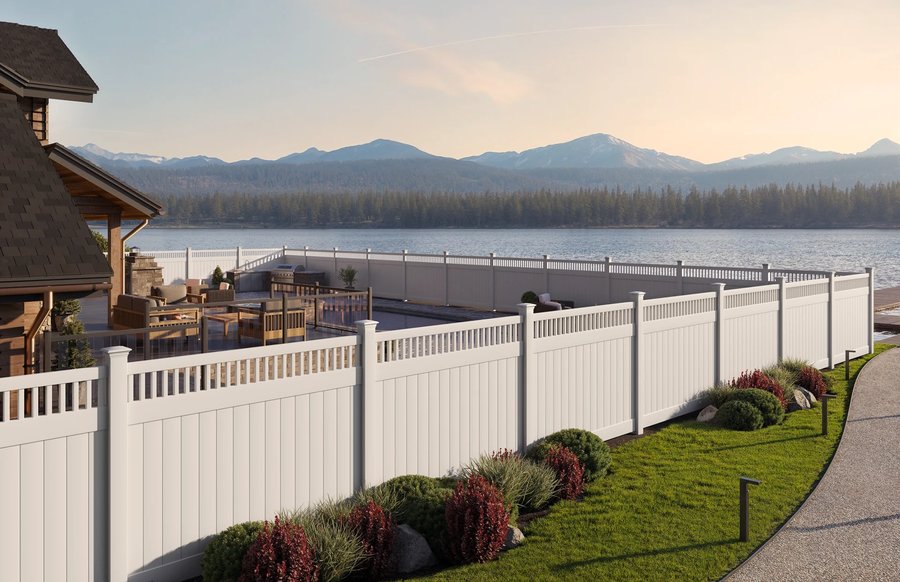
Lattice-Top Privacy — 6 ft vinyl fence by RKC Wood Care Pros in Raymore, MO

Lattice-Top Privacy — 6 ft

A decorative topper for the upscale backyard

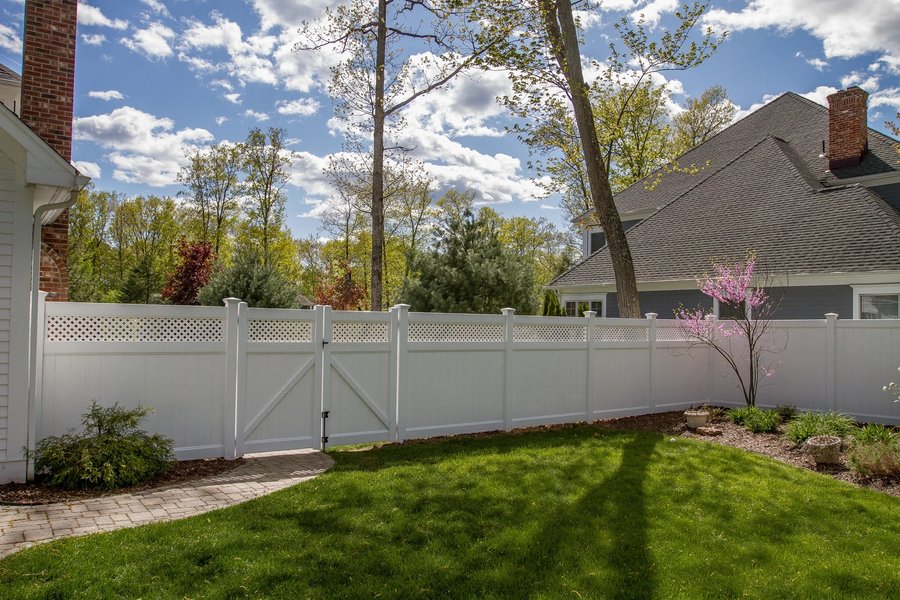
A run of solid privacy capped with a vinyl lattice header — the detail that dresses a plain six-foot wall up to match a Creekmoor-caliber backyard or a patio-and-pool surround. It lifts a little light and sky over the top of the fence while still closing the yard below, and it never needs the sanding or repaint a wood lattice wants after a couple of Missouri winters. A small upgrade that reads as a custom, finished perimeter.

  • Price: $46–62/LF installed
  • Lifespan: 30+ years
  • Maintenance: Next to none
White vinyl privacy fence pricing — Raymore, MO — RKC Wood Care Pros

PRICING A VINYL FENCE ON A RAYMORE LOT

What a Vinyl Fence in Raymore Costs, Broken Down

In Raymore, vinyl lands between $40 and $62 a foot, set by the profile and how long the line runs — and the privacy prices already carry the reinforced rail, with each gate broken out on its own. These three builds are what we quote most often. Tearing out an old cedar run, stepping a lot that grades away, additional gates, stepping up to a shadowbox or lattice-cap profile — every one lands on its own line, shown plainly. The full sheet is in your hands, itemized, before any truck rolls up, so nothing gets quoted verbally and nothing turns into a surprise later.

White Privacy — 6 ft

$40–55

per linear foot installed

The move-up subdivision workhorse — solid privacy on a reinforced rail, every gate written on its own line.

Sand / Woodgrain — 6 ft

$42–58

per linear foot installed

The warm earth-tone face that sits right against Raymore's brick-and-stone homes without the cedar upkeep.

Shadowbox or Lattice-Top — 6 ft

$44–62

per linear foot installed

The finished-both-sides good-neighbor line, or a decorative lattice header for the upscale backyard — priced to the run.

A cedar run to haul off, a graded line to step, more gates, a step up to a shadowbox or lattice-cap profile — each rides its own line on the estimate, nothing tucked away — call us at (913) 286-1091 or book an on-site walk-through.

OUR PROCESS

The Steps Behind Your Raymore Vinyl Fence

Getting from the first call to a fence you never think about again runs through four stages — and on a Raymore lot that grades away and sits open to the weather, it's the depth in the ground and the way the run is laid out to the slope, both handled before a panel goes up, that decide whether the fence lasts a few seasons or thirty years. Standing the panels is the fast part — a yard usually closes inside one to three days. Whether the line still reads plumb a decade on, or has you calling us back after the thaw, comes down to the staking and the three-foot footings that happen before any of that.

1

The on-site measure and a read of the grade

It starts with a tape on your lot: we run the boundary, drop a mark at each corner and gate opening, and pick out where the ground falls off enough that the fence has to step down it. Buried lines and the survey pins get located, and we settle on the mix that suits the yard — solid privacy where you want a wall, shadowbox or a lattice header where the run is on display. What you get back is an itemized sheet: footage, gate count, the profile and color you chose, and the concrete and reinforcement that go underground. Nothing quoted out loud.

2

Locates called, color settled, old fence pulled

First the 811 utility locate gets scheduled. Then you choose the finish standing in your own driveway in daylight against the brick — plain white, a warm sand or woodgrain to echo the pre-stained cedar next door, a two-sided shadowbox, or a lattice cap for the showpiece backyard — and the panels get ordered to match. If a worn-out wood run is coming out to make room, we tear it down and cart it away before a single new hole is dug.

3

Footings three feet down, then the stepped run

Each posthole gets a post seated a full three feet into concrete over a widened bell — past the frost depth, far enough that the exposed-lot freeze-thaw has nothing to lift. Where the yard grades away, we drop the run one panel at a time so the cap line reads level and the pickets stay close to the ground, and we hold the line clear of the swales so water keeps moving. The reinforced rail beds in as each section rises. Most Raymore yards wrap in one to three days, once the footings have set up.

4

A closing walk and your registered coverage

Together we pace the whole line and cycle every gate, confirming each swings true and catches square. We register your CertainTeed, Bufftech, or Veka coverage under your name and hand you the documents — no re-stain date to track, no post to shore up after a rough winter. Anything that moves in the first twelve months, the same crew that stood it up comes back to set it right.

VINYL WE'VE RAISED · KC METRO

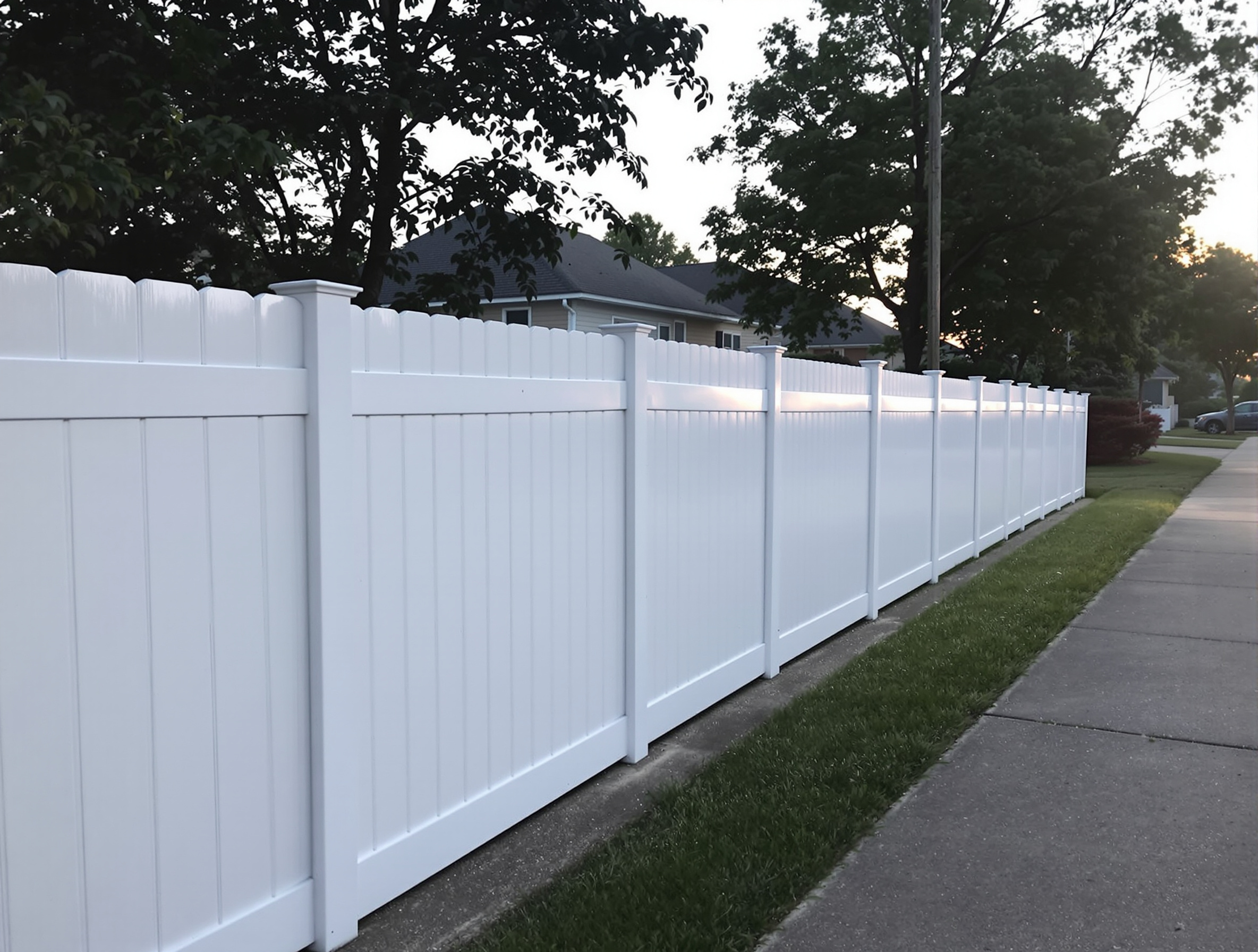
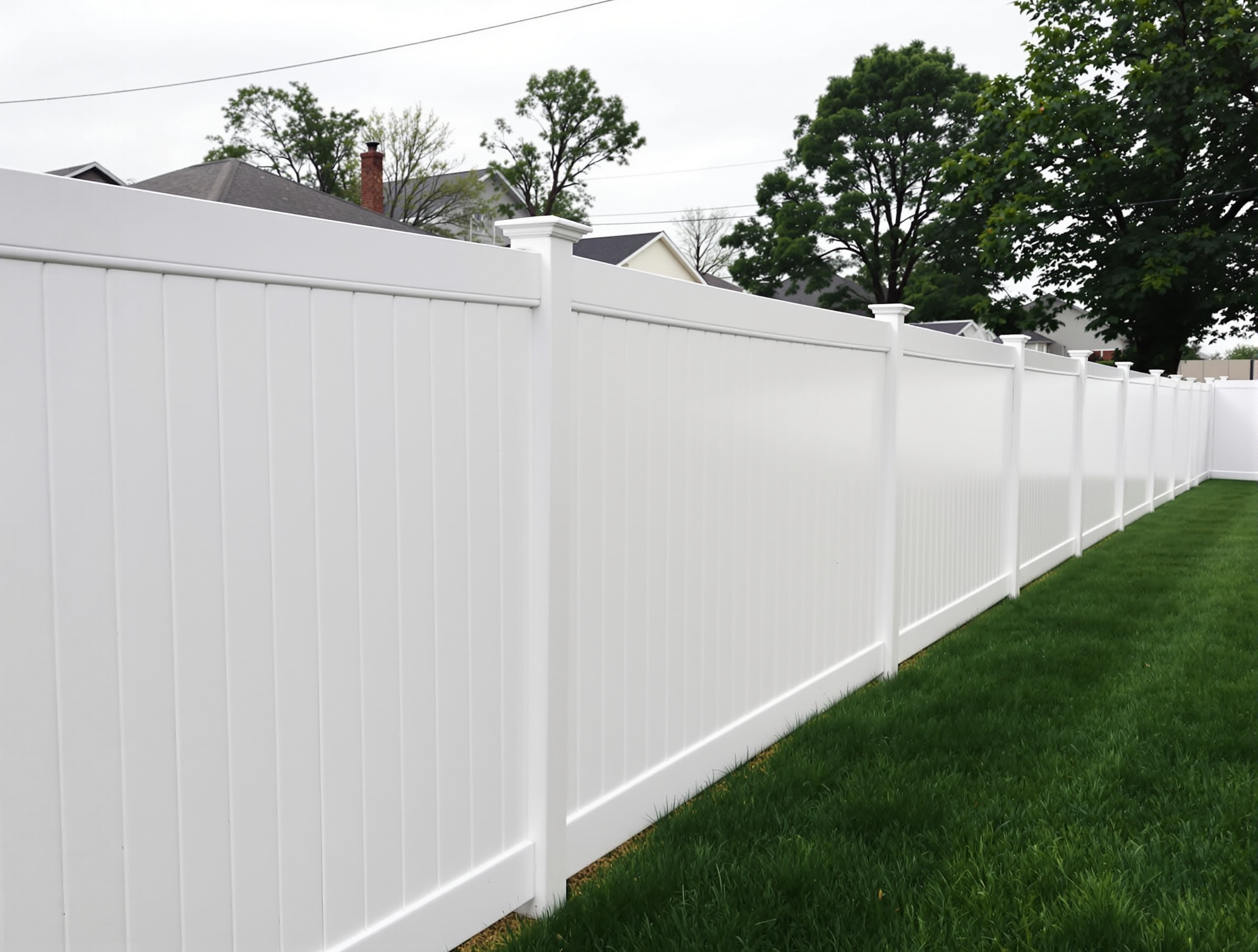
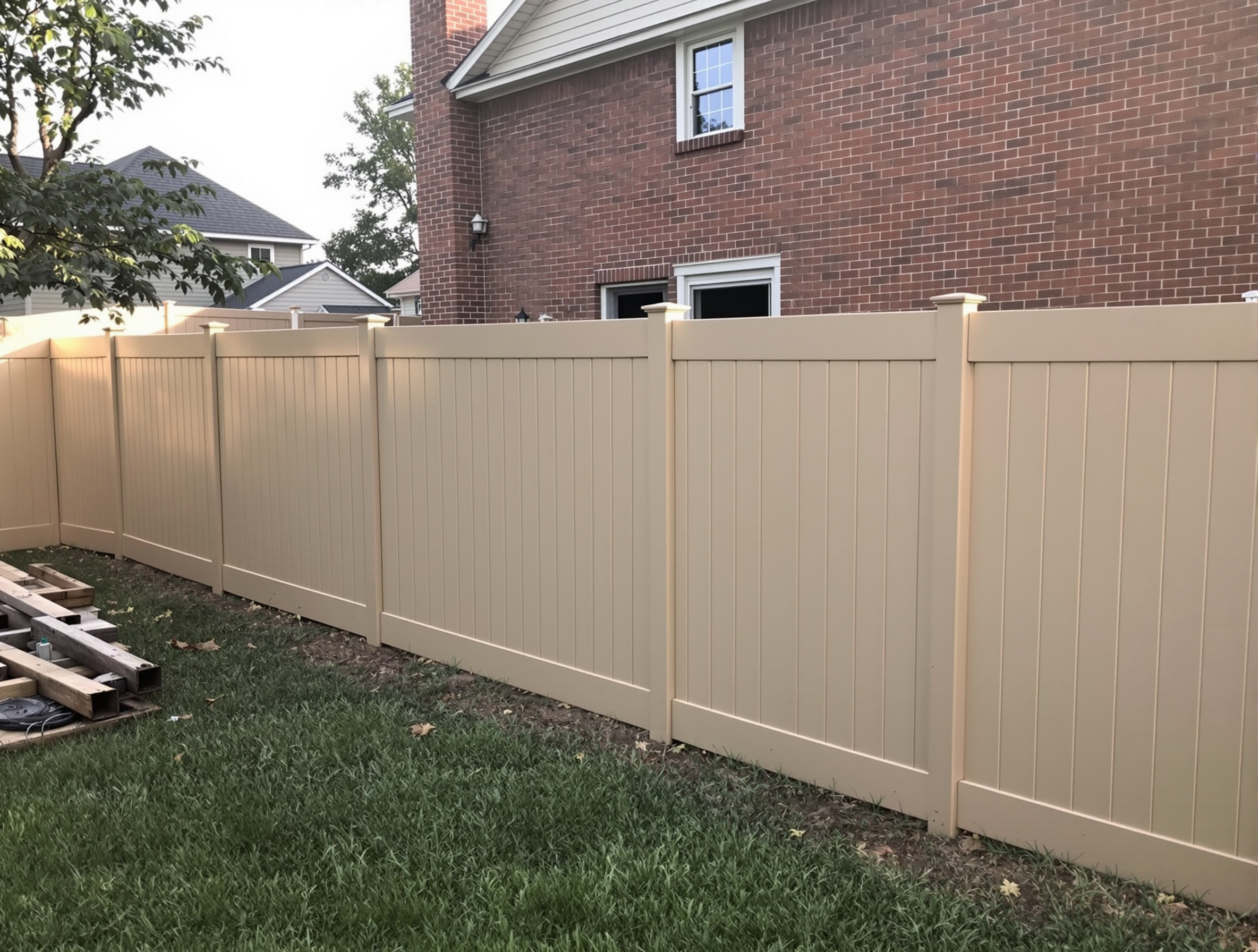
Vinyl fence installation by RKC Wood Care Pros, Kansas City metro
Vinyl install · KC metro
Vinyl fence installation by RKC Wood Care Pros, Kansas City metro
Vinyl install · KC metro
Vinyl fence installation by RKC Wood Care Pros, Kansas City metro
Vinyl install · KC metro
Vinyl fence installation by RKC Wood Care Pros, Kansas City metro
Vinyl install · KC metro

REVIEWS

What Kansas City Homeowners Say About RKC

4.9 ★ · 85 Google reviews

Every review is on our Google Business Profile — read them there, unedited.

Read all 85 reviews on Google

RAYMORE VINYL FENCE QUESTIONS

Vinyl Fence Questions Worth Asking in Raymore

What Raymore owners tend to ask while the tape's still on the lot and the quote is half-done — sorted by topic, each answer grounded in what it actually costs here, the cedar and aluminum it competes with, the yards that grade away, and the bare-lot winter it has to survive. Yours not here? Call (913) 286-1091 and ask us straight.

Vinyl fence installation in Raymore, MO by RKC Wood Care Pros

Vinyl Materials & Lifespan

How long does a vinyl fence last in Raymore?
Three decades and then some is the fair number for a capped, UV-rated panel on a reinforced rail — and what protects it is whatever's holding it up. Raymore's newer lots sit bare and exposed, so the winter lift is the real trial; short-set a post and it cants, and the panel goes crooked with it. We drive every post three feet into concrete over a widened bell, past the frost depth, leaving the heave nothing to catch. CertainTeed, Bufftech, and Veka each stand behind the panel against fading, cracking, peeling, and chalking, and that protection follows the house to its next owner.
We just left a stain-hungry cedar fence — is vinyl really no upkeep?
It's exactly why most Raymore owners cross over. Wood needs re-coating on a two-to-three-year clock to keep its warm color — the very job you likely moved here to be rid of. Vinyl closes the book on it: the tone is baked clear through the board, so a hose-down with a soft brush is the whole routine, permanently. No stain weekend, no ladder, no autumn touch-up. If you genuinely enjoy working real wood, cedar earns the nod; if you'd sooner the yard just stayed finished, vinyl's the pay-once answer.
Will vinyl look cheap next to the cedar and aluminum here?
Not the grade we hang, and the trick is picking the right profile. Raymore is an earth-tone, finished-fence town, so we lean toward a warm sand or embossed woodgrain that reads like the pre-stained cedar next door, and toward framed shadowbox or lattice-top runs that finish clean on both sides. That's a different animal from a flat, stark-white big-box panel. On the golf-view lots where black aluminum rules the sightline, we'll tell you straight that aluminum is the better fit — vinyl's place is the private backyard, where a warm woodgrain wall looks every bit the part.
Does vinyl yellow or crack in Raymore's sun and hail?
Our capped, co-extruded stock bakes the sunblock into its outer layer, so a Missouri summer doesn't amber it — that's what the extra money over single-wall actually buys. When a panel does crack, it's almost always one flexing loose at the post on an under-built run, and a stiffened rail plus a deep post shut that down. As for hail, most of what we install carries a class-4 rating, the same grade the better roof shingles hold. It's the bottom-shelf single-wall PVC that washes out and turns brittle — the reason it never leaves our trailer.

Pricing & Warranty

What does a vinyl fence cost in Raymore?
A 6-foot white vinyl privacy fence runs $40 to $55 a foot installed with the reinforced rail included. A typical Raymore backyard is 150 to 200 linear feet, which puts most white privacy projects in the $6,000 to $11,000 range. A warm sand or woodgrain runs $42–$58; a finished-both-sides shadowbox or a lattice-topped run sits a little above, $44–$62. Gates, old-cedar tear-out, stepping a graded run, and profile upgrades are each written on their own line, never folded in. Every Raymore estimate is free and on paper.
Is the warranty real, and does it transfer when we sell?
Genuine, and yes. CertainTeed, Bufftech, and Veka each stand behind the panel against fading, cracking, peeling, and chalking, then roll to prorated terms for the buyer once the home trades hands. We file it under your name the day the crew wraps and hand you the documents. In a Raymore market that trades on how a property shows, an upkeep-free fence still riding live manufacturer terms is a real point in the home's column — and a brand unwilling to commit that to paper simply doesn't get installed here.
Our backyard slopes and drains toward the neighbors — can vinyl handle that?
Yes, and it's a routine call on Raymore's graded lots. We step the fence down the slope panel by panel so the top line stays level and the bottom stays tight to the ground, rather than forcing a rigid run to follow the dirt and leave gaps a dog walks under. And we set the line to keep the drainage swales the neighborhood was planned around flowing, not dammed. On a lot with real grade change, that stepping is the difference between a fence that sits right for decades and one that leans within a few seasons — it's built into the layout, not an upcharge surprise.

OTHER RAYMORE FENCE OPTIONS

What Else We Build Across Raymore

Vinyl isn't the only option — RKC installs and repairs every type of fence in Raymore: wood, vinyl, chain link, ornamental iron, aluminum, and commercial security, plus custom gates and in-house staining. Every card below leads to its own dedicated Raymore page — pricing, the conditions it's built to handle, and shots from jobs around the area.

Ready when you are

Get a free estimate — we usually respond the same day.

Call (913) 286-1091