Skip to content
Gate Installation in Greenwood, MO — Matched to the Fence, Set to Hold Its Line

Gate Installation in Greenwood, MO — Matched to the Fence, Set to Hold Its Line

In an exclusive enclave where the landscaping is the point, a Greenwood gate has to disappear into the line it ties into — matched picket-for-picket, installed without cutting the irrigation, and set deep enough that the shifting clay can't walk it out of true. RKC Wood Care Pros builds walk, single-drive, double-drive, and sliding gates across Greenwood from one local crew — welded steel frames, hinge posts over-dug and belled a true 36 inches into the clay, and alignment held to a tolerance you'll actually inspect. A+ BBB rated, 4.9 stars from 85 Google reviews. Call (913) 286-1091 and we'll walk the property the same week.

★★★★★
4.9
from 85 reviews
Licensed
& Insured · KS + MO
400+
fences installed
A+ BBB Rated 400+ Fences Installed Since 2021 Welded Gate Frames · Galvanized Hardware Free On-Site Estimates
See gate styles in our catalog ↓

WHY GREENWOOD GATES ARE BUILT TO A FINER TOLERANCE

A Gate That Belongs to the Landscape

In an enclave where the fence and its plantings are a designed thing, a gate is judged on whether it disappears into the line — and on whether it still reads straight after the clay has moved. A Greenwood gate call is rarely "the latch is broken." It's the entrance that should read deliberate instead of assembled, the picket spacing that has to line up on a close look, the install that can't cut a five-figure irrigation system, and the alignment that has to survive deep, shifting clay. Get those four right and the gate stops being a thing you notice and becomes part of the property.

1

A gate that disappears into the landscape

On an enclave property the fence and its plantings are a designed thing, and a gate that reads as an add-on spoils it. We build the leaf into the cedar or ornamental run so it continues the line — matched boards or matched profile, spacing that lines up with the fence, a finish that complements the landscaping instead of interrupting it. The best compliment a Greenwood gate gets is that nobody can tell where the fence ends and the gate begins.
2

Picket spacing that survives a close look

Greenwood owners are particular about alignment and spacing, and they should be — it's what separates a built entrance from an installed one. We lay the gate out from a story pole to match the run picket-for-picket and set the reveal even top to bottom, then let a welded frame hold that geometry for good. When a guest runs their eye down the line, the gate doesn't give itself away.

3

An install that doesn't cut your irrigation

A Greenwood yard is a five-figure landscape, and the quiet disaster of a gate install is an auger through a sprinkler mainline or a footing dropped in the middle of a bed. We locate and cap the irrigation first and hand-dig around roots and plantings, so the gate lands where the design wants it and the system still runs the next morning. The install is judged by what it doesn't break as much as what it builds.

4

An alignment the clay can't walk out of true

The soil here is deep, shifting clay that swells and shrinks with the season and will drop a latch corner on an under-built gate — the exact drift a particular owner notices first. We beat it under the ground: the hinge post over-dug, belled, and set a true 36 inches below the frost line, on a welded frame with galvanized hardware sized over the leaf. The reveal you sign off on is the reveal you still have in year ten.

CRAFT ON A LANDSCAPED LOT

What an Enclave Property Asks of a Gate Install

The gate a Greenwood owner wants — matched to the line, sitting exactly where the design put it — runs straight into two facts of the lot: a five-figure landscape the footing has to miss, and deep shifting clay that will move an under-built one. This isn't a market where a gate leans from wind or rots by the water; it's one where the install is judged on what it protects and how true it stays. Three decisions separate a Greenwood gate that still reads flawless in year ten from one that drifts by year two. Built for Every Storm comes down to these three on every RKC gate in Greenwood.

1

We find the irrigation before the auger does

A Greenwood yard is usually a five-figure landscape — buried sprinkler zones, drip lines, specimen trees, established beds — and the fastest way to ruin a gate install is to bore a hinge footing straight through a mainline. So before anything turns, we locate and cap the irrigation around the opening and hand-dig the footing where a bed or a root ball sits in the way. The gate ends up exactly where the design wants it, and the sprinkler system still runs the morning after we leave.

2

Deep shifting clay is what throws a gate's alignment

The one structural fact that decides a Greenwood gate is the soil: deep, shifting clay that swells wet and shrinks dry, and will walk an under-built footing enough to drop a latch corner or open a gap in a picket line. On lots where the owner is watching the reveal, that movement isn't cosmetic — it's the whole complaint. Every hinge post here is over-dug, belled, and set a true 36 inches in wet-poured concrete below the frost line, so the clay's seasonal movement has nothing to grab and the alignment holds.

3

Alignment held to a tolerance you'll actually inspect

Greenwood owners are particular about gate alignment and picket spacing in a way most markets aren't, so we build to a tolerance that survives a close look. The gate's spacing is laid out from a story pole to match the fence run picket-for-picket, the reveal along the latch edge is set even top to bottom, and a welded square-tube frame holds that geometry instead of racking loose like a bolted one. Galvanized hardware sized over the leaf keeps it there — because on a property like this, the gate is judged on the details, and it should be.

Greenwood lots we've installed gates across run from Greenwood Estates, Woodland Creek, and Pryor Ridge to The Village and the newer high-end streets near the Creekmoor border, out along M-150 and M-291. Same irrigation care, same belled clay footings, same matched line on every one.

START WITH THE LOT

Installing a Gate Into a Greenwood Landscape — and How We Protect It

On an enclave lot the hard part isn't the gate — it's threading the install through irrigation, plantings, and shifting clay while holding the alignment to a tolerance the owner will inspect. Find the row that sounds like your property. The left column is the situation on the ground; the middle is the gate or method that answers it; the right is how we build it so the landscape survives and the line reads flawless. The same opening gets handled two different ways depending on what's buried around it.

The situation on the lot The gate or method How we build it to last
An opening that crosses a buried irrigation zone Hand-dug footing, irrigation located first We locate and cap the sprinkler zone around the opening and hand-dig the hinge footing rather than boring blind through a mainline. The post still goes a true belled 36 inches; it just gets there without cutting a drip line the landscaper laid last spring.
A gate through an established bed or specimen-tree roots Hand-set post, bed and roots protected On a landscaped lot the gate often lands right where the design put a bed or a tree. We hand-dig around the root ball, protect the plantings, and thread the footing in so the gate sits where it belongs instead of where the auger found it easy — nothing in the bed gets sacrificed for the post.
An owner who wants ‘perfect’ picket spacing and reveal Story-pole layout, matched gate-to-run The spacing on the gate is laid out from a story pole to match the fence run picket-for-picket, and the reveal down the latch edge is set even top to bottom. A welded frame holds that geometry so it still reads flawless on the close inspection a Greenwood owner is going to give it.
A hinge footing in deep, shifting clay Over-dug, belled 36-inch concrete post The clay here swells and shrinks with the season and will walk an ordinary footing out of true. We over-dig and bell the hole so the concrete plug locks below the movement, set the post a true 36 inches under the frost line, and the alignment the owner is watching stays put.
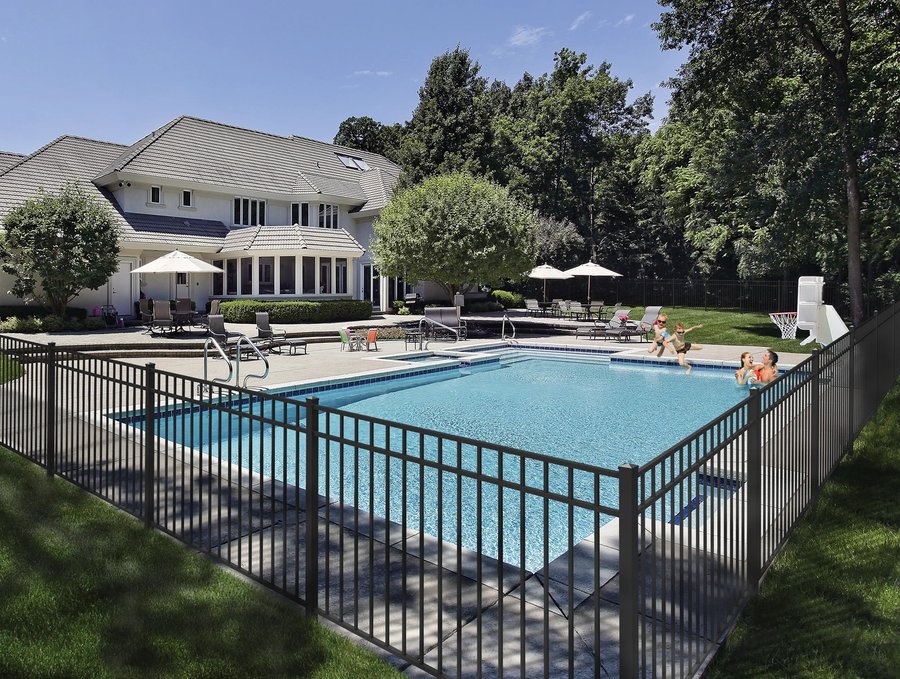
A pool-safety walk gate on a landscaped surround Self-close, self-latching ornamental leaf On the pool yards this market is full of, the walk gate is a barrier first. It self-closes and self-latches above a child's reach every time, in a black ornamental profile that reads as part of the landscape rather than a safety afterthought bolted onto it.
A drive or entry gate meant to complement the design Custom black ornamental iron or aluminum Where the gate is a design element on an enclave property, we build it in powder-coated iron or high-gauge aluminum to the enclave look — matched to stone pillars, sized to the entrance, finished so it complements the landscaping instead of interrupting it, and coated to shrug off the KC humidity.

This isn't a menu you order from cold. On the estimate visit Josh reads what's buried around the opening, how the fence line and pillars want the gate to sit, and how the clay will move under it — and the method follows from that. Protect the landscape, bell the footing, and match the line, and a Greenwood gate reads as part of the property instead of a thing bolted onto it.

GATE TYPES

Walk, Drive, Double & Sliding — Every Gate for Your Greenwood Property

The right gate follows from how it ties into the fence and the landscape — a pool surround to close, a matched entrance to continue, a drive the plantings crowd. Here are the four gate types we build across Greenwood, what each one fits, and real pricing. The face swaps within each — Western Red Cedar with matched caps, high-gauge black aluminum, powder-coat ornamental — but the welded frame, the matched picket spacing, and the belled 36-inch clay footing stay the same underneath every one.

Walk Gate install by RKC Wood Care Pros in Greenwood, MO

Walk Gate — 3–4 ft wide

The pool-yard and side-garden gate

The pedestrian leaf a Greenwood family uses every day — out to the pool, through to a manicured side garden, back from the trash pad. We build it into the Western Red Cedar run rather than bolting a panel beside it, so the boards and top caps read as one continuous line, and we set the picket spacing on the gate to match the run exactly — because on a lot like this, a gate whose gaps don't line up with the fence is the first thing a guest notices. Self-close, self-latch hardware where a pool sits behind it.

  • Price: $300–600 (wood) · $450–850 (aluminum)
  • Typical use: Pool-enclosure barrier, side-garden access, backyard walk-through
Single-Drive Gate install by RKC Wood Care Pros in Greenwood, MO

Single-Drive Gate — 10–14 ft wide

The entrance to an enclave property

A single leaf across a standard Greenwood drive, built to hold a line straight enough for a property where the landscaping is the point. It rides a welded steel frame with a brace from the low hinge to the high latch and hinges rated well past the leaf's weight. The part that decides whether it stays aligned is underground: a hinge post over-dug and belled a true 36 inches into the deep, shifting clay that moves an under-built footing — and moves the reveal a Greenwood owner is watching — season to season.

  • Price: $650–1,200 (wood) · $900–1,800 (aluminum)
  • Typical use: Single-vehicle entry, cedar or high-gauge black aluminum, landscaped approach
Double-Drive Gate install by RKC Wood Care Pros in Greenwood, MO

Double-Drive Gate — 14–20 ft wide

Matched to the fence, sized to the property

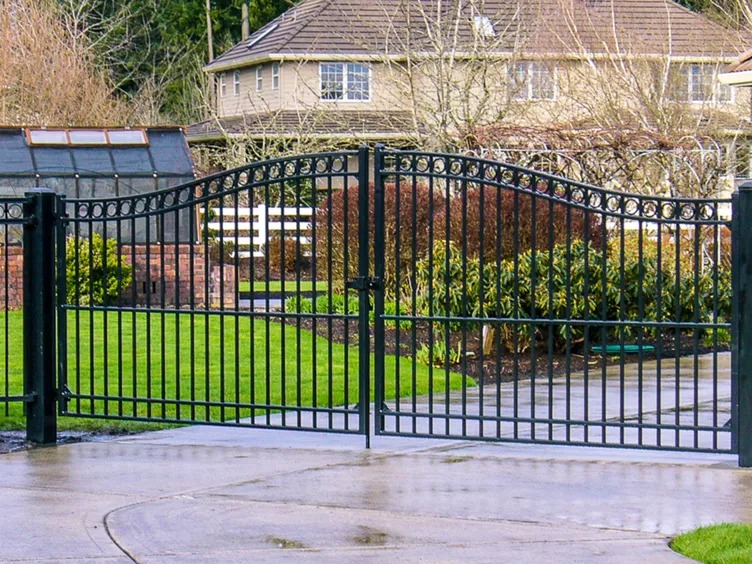
Two leaves off opposite posts meeting at a center drop rod, cut and hung as a matched pair so the whole entrance reads deliberate rather than assembled. Splitting the span halves each leaf's lever arm, which keeps a wide opening from sagging on a lot where a drooping latch corner is not going to be tolerated. Common where the fence carries across matched stone pillars and the gate has to continue the line without a seam. Both hinge posts belled 36 inches into the clay, both leaves cross-braced.

  • Price: +30–50% over single-drive
  • Typical use: Wider entrances, matched-pillar openings, boat or trailer clearance on larger lots
Cantilever slide gate on a steel track, built by RKC Wood Care Pros

Sliding Gate — 10–20 ft travel

For a drive that won't give a leaf room to arc

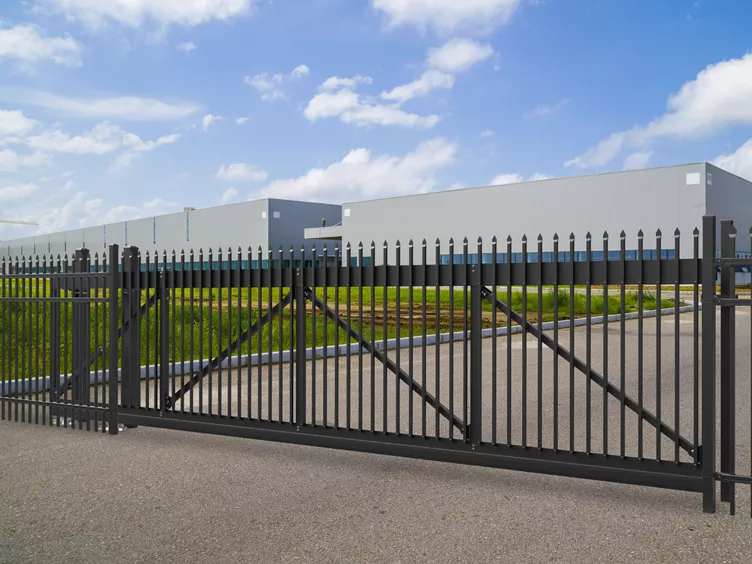
When a drive rises off the road, a lot runs narrow, or a landscape wall crowds the swing path, a swing leaf catches halfway open. A cantilever slide rolls sideways clear of the arc instead, on rollers with no track to trap the leaves and mulch a manicured bed hides. It's the answer whenever the grade or the planting won't give a swing gate the room it needs — and it keeps the opening clear without sacrificing the ground the landscaping occupies.

  • Price: +$400–900 over swing-gate pricing
  • Typical use: Rising drives, narrow lots, landscape-wall and tight-planting fence lines
Black ornamental iron fence and gate on a landscaped Greenwood, MO yard by RKC Wood Care Pros

GREENWOOD GATE PRICING

What Gate Installation Costs in Greenwood

Gate pricing in Greenwood comes down to type, material, size, and how much the entrance is meant to complement the landscape. Every quote includes a welded steel frame, galvanized hardware, matched picket spacing, and a hinge post over-dug and belled a true 36 inches into the clay. Below are the three configurations we quote most often for Greenwood properties.

Wood Walk Gate

$300–600

installed

Western Red Cedar with matched top caps. Welded frame, galvanized strap hinges, self-close latch on a pool surround.

Single-Drive Driveway Gate

$650–1,800

installed

Wood $650–1,200 · Aluminum $900–1,800. Welded frame, diagonal brace, ball-bearing hinges, belled 36-inch clay footing.

Double-Drive / Custom Gates

+30–50%

over single-drive

Matched-pair leaves on a center drop rod, custom widths, matched finials, and ornamental profiles built to the enclave look — quoted on site.

Building gates elsewhere across the metro? The Kansas City gate installation hub lays out the full gate-type scope and pricing. Every Greenwood gate estimate is free, written, and itemized — call (913) 286-1091 or request an on-site walkthrough.

OUR PROCESS

How a Gate Install in Greenwood Actually Happens

Four steps from the phone call to the first swing. Most Greenwood gate projects run 1 to 4 weeks start to finish. Install days themselves are short — walk gates are often same-day, drive gates one to two. The longer stretch is fabrication and letting the belled footings cure, plus the up-front planning that maps the irrigation and matches the gate to the fence line. Here's what each step looks like on a gate install in Greenwood.

1

On-site measurement — the opening and the landscape

Josh walks the Greenwood property, tapes the actual opening, and reads what's around it — where the irrigation runs, which beds and trees the footing has to miss, and how the fence line and stone pillars want the gate to sit. Gate type, swing, and finish get settled on that visit, and a written estimate follows the same week listing the hinge, the post depth, and the frame material. Nothing quoted by mouth, nothing improvised the day the crew arrives on a landscaped lot.

2

Plan the gate around the landscape and the clay

Before anything's built we lock in three things: how the gate matches the fence run and the pillars, how we protect the irrigation and plantings the footing sits near, and how deep we bell the post to beat the shifting clay that would otherwise walk the alignment out of true. On a property judged by its details, this is the step that keeps a gate from being the seam that spoils the line — it gets planned to disappear into the landscape, not fight it.

3

Install — irrigation protected, posts first, frame second

Day one starts with the sprinkler zones capped and the hinge footings over-dug and belled a true 36 inches, poured wet and left to cure overnight. The welded frame and panels go up once the concrete has set. We hang and tune the hinges right there in the drive rather than presetting them in the shop, and we set the picket spacing and reveal to match the run on site — so the gate ends up square to the ground you have and even to the eye. A walk gate is usually one day; a drive gate runs two.

4

Walkthrough and a 30-day settling check

We don't take the last payment until we've cycled the gate a full ten times with somebody watching every hinge take the load — any drag, scrape, or missed latch gets fixed before we leave, and we check the reveal and spacing read even. Then, because a fresh footing keeps settling a touch through the first month, we come back at 30 days to re-true anything the clay nudged and re-time the self-close, free. On the way out we'll show you the one quarter-turn adjustment to make yourself down the road.

RECENT GREENWOOD GATE INSTALLS

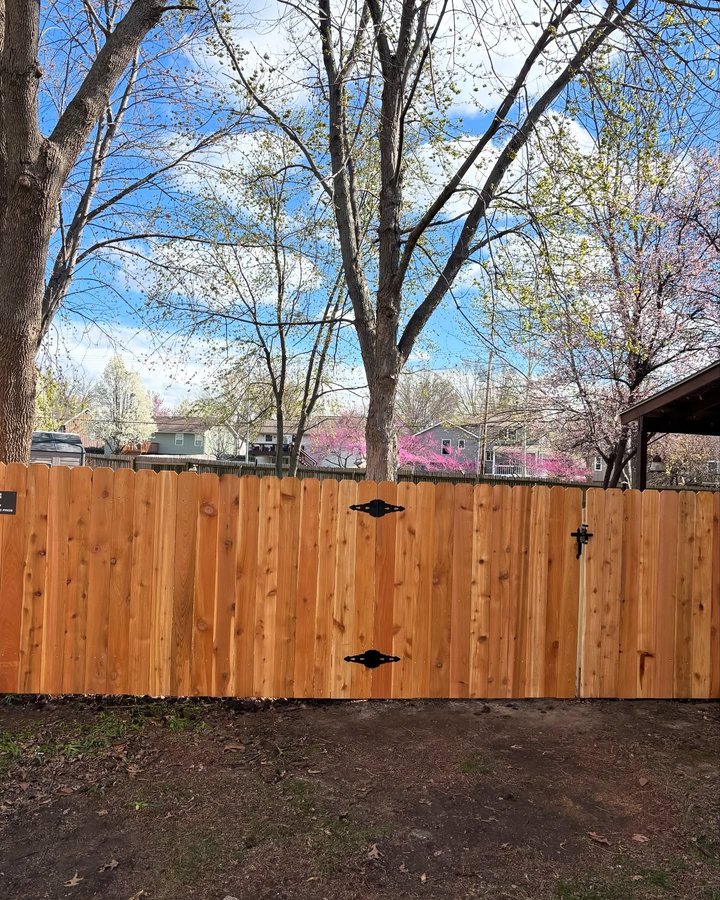
New cedar fence with matching gates in Greenwood, MO by RKC Wood Care Pros
Cedar Fence & Matching Gates · Greenwood
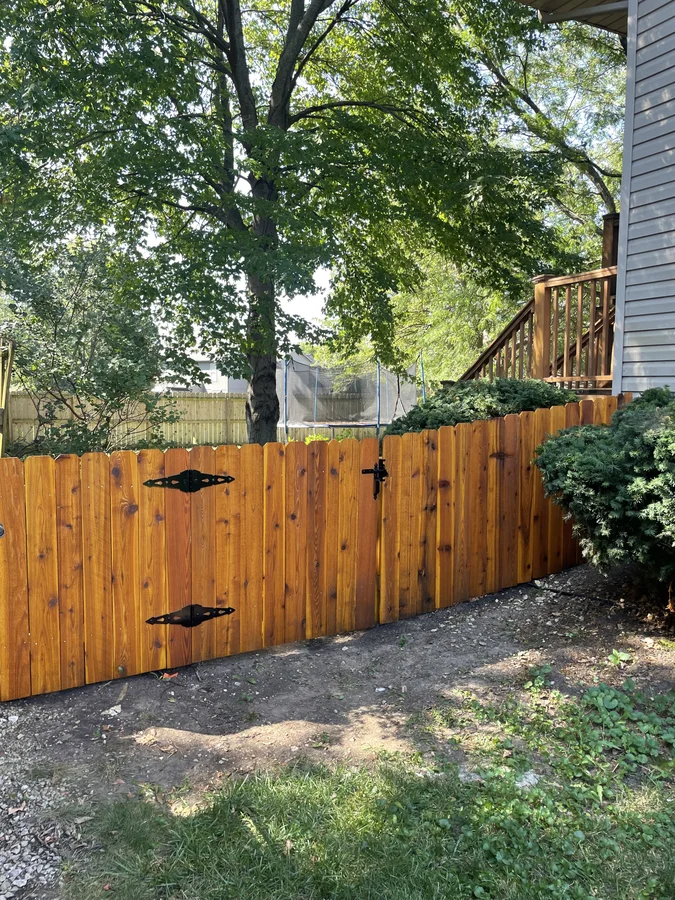
Cedar walk gate installation in Greenwood, MO by RKC Wood Care Pros
Cedar Walk Gate · Greenwood
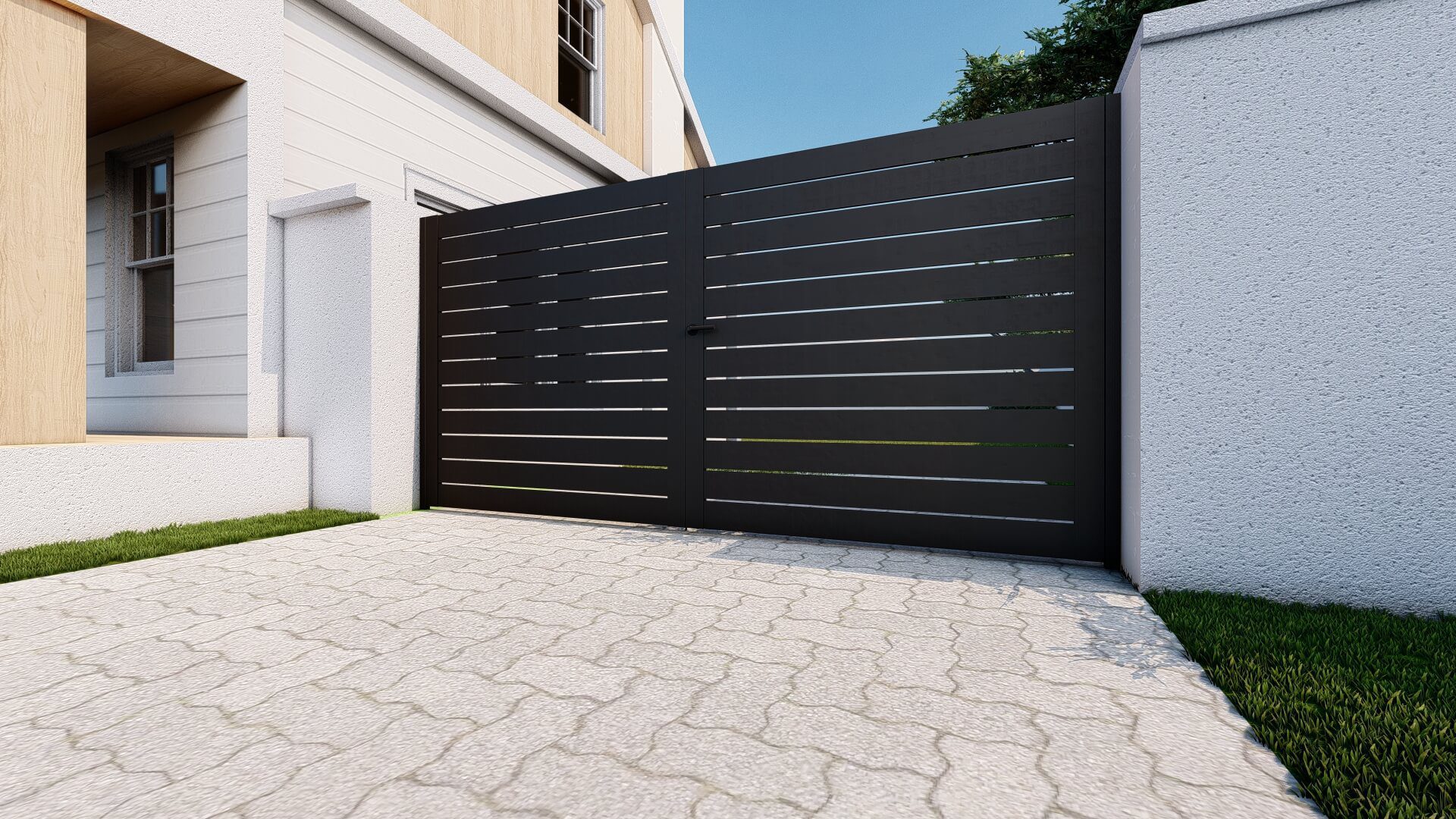
Horizontal-slat aluminum driveway gate in Greenwood, MO by RKC Wood Care Pros
Aluminum Drive Gate · Greenwood
Black iron pool-enclosure fence and self-latching gate in Greenwood, MO by RKC Wood Care Pros
Iron Pool-Enclosure Gate · Greenwood

REVIEWS

What Kansas City Homeowners Say About RKC

4.9 ★ · 85 Google reviews

Every review is on our Google Business Profile — read them there, unedited.

Read all 85 reviews on Google

GREENWOOD GATE QUESTIONS

Gate Questions Greenwood Homeowners Ask Most

Gate installation in Greenwood comes down to matching the fence line, protecting the landscape, and setting a footing the shifting clay can't move. Below are the questions Greenwood homeowners actually ask during the estimate — grouped by topic, each answer specific to the enclave's landscaped lots, deep clay, and particular eye for alignment. If your question isn't here, call (913) 286-1091 and ask.

Gate installation on a Greenwood, MO property by RKC Wood Care Pros

Gate Types & Sizing

What gate width fits a Greenwood driveway, and when do I need a double?
Most Greenwood drives run 10 to 14 feet between the pillars, with 12 the common single-drive width, and a welded, cross-braced single leaf handles that comfortably. Past 14 feet we move to a double-drive — two leaves meeting at a center drop rod — because a single 16-foot leaf hangs too much lever arm off one hinge and starts to droop, which on a property judged by its details is exactly the sag you don't want. On the wider matched-pillar entrances common out here, the double also just reads better: a balanced pair rather than one long slab. Walk gates land at 3.5 to 4 feet.
Can a gate hang off my existing fence posts, or do they need replacing?
The post decides it, not the panel. If the current hinge post was over-dug and set a genuine 36 inches in concrete, it can usually carry a new leaf — but on a lot with shifting clay, a post that was set shallow has often already drifted enough to throw the alignment, even if the lean is too slight to catch at a glance. If it's shallow, surface-mounted, or off-plumb, it comes out and a properly belled post goes in, because a gate can't hold a reveal straighter than the post it hangs from. We check depth and plumb at the estimate before quoting.
Cedar or ornamental aluminum for an enclave property — and how long does each last?
Both are the standard here; the choice is look and upkeep. Western Red Cedar gives the warm, private line most Greenwood backyards run, lasts 15 to 25 years with a stain roughly every couple of seasons, and takes finish beautifully — worth knowing this market stains heavily in late summer for a reason. High-gauge black aluminum is the open, formal look for a front entrance or a pool surround: powder-coated, effectively no maintenance, and it won't rot or need refinishing. Under either one the welded frame and the belled clay footing are identical, so what you're really choosing is the face, not the lifespan.
Swing gate or a slide for a rising or tightly-landscaped Greenwood drive?
If the drive climbs off the road or a planting bed and wall crowd the swing path, lean toward a slide. A swing leaf needs clear, level ground to arc across, and on a rising or tightly-landscaped approach it catches halfway open. A cantilever slide rolls sideways clear of the arc with no track to trap mulch, which keeps it from disturbing the beds a Greenwood lot is designed around. On a flat, open approach a swing gate is simpler and cheaper; the grade or the landscaping is what makes the case for a slide, and it runs roughly $400 to $900 more than the same-size swing.

Greenwood Conditions & Craft

How do you keep a Greenwood gate aligned in the shifting clay?
It's the whole ballgame here, because the soil is deep clay that swells wet and shrinks dry and will slowly walk an ordinary footing until the latch corner drops and a gap opens in the picket line — the exact drift a particular owner spots first. We beat it under the ground rather than chasing it later: the hinge footing is over-dug and belled so the concrete plug locks below the seasonal movement, and the post sets a true 36 inches under the frost line. The reveal you approve on install day is the one that's still there after the clay has been through a few of its cycles.
Will installing a gate tear up my sprinkler system or landscaping?
Not the way we work it. A Greenwood yard is usually a five-figure landscape, so before anything turns we locate and cap the irrigation zones around the opening and hand-dig the hinge footing wherever a bed or a specimen-tree root ball sits in the path, instead of boring blind and hoping. The post still reaches its full belled 36 inches; it just gets there without severing a drip line or dropping a footing in the middle of a planting. The install is judged as much by what it leaves untouched as by the gate it puts up.
Can you match the gate's picket spacing to my existing fence exactly?
Yes — and it's the detail this market cares about most. We lay the gate out from a story pole taken off the fence run so the picket spacing lines up gap-for-gap across the opening, and we set the reveal down the latch edge even from top to bottom. A welded frame then holds that geometry instead of racking loose the way a bolted one does, so the alignment survives the close look a Greenwood owner is going to give it. The goal is that you can't tell where the fence stops and the gate starts.

Pricing & Hardware

Why is a welded gate frame worth more than a bolted one?
Welding costs shop hours — every corner cut, fitted, tacked, then burned in with a clean pass — and what that buys is a frame that keeps its geometry. A bolted frame has play in every joint, and on a lot where the alignment is inspected that play shows up fast: the corners work loose, the leaf racks, and the even reveal you paid for drifts within a season or two. The welded premium runs about 15 to 25 percent on the frame, against a near-certain alignment call later. We weld every corner, and the bolted gates are the ones we get called out to re-square.
Greenwood stains heavily in late summer — do you handle the gate's finish too?
We do, and on a cedar gate it matters more than most owners expect. The same in-house crew that builds the fence and gate can back-brush a semi-transparent penetrating stain on the whole line so the gate and the run weather as one instead of the gate standing out a shade off. Late summer is the busy stretch for it here for good reason — it's the window that sets the cedar up before winter. Matching the gate's finish to the fence is part of making the gate disappear into the line rather than announce itself.
What's the warranty on gate hardware?
Whatever the manufacturer stamps rides on their coverage — generally around a decade on ball-bearing hinges and five to ten years on straps, latches, drop rods, and cane bolts. The frame is on us: our workmanship warranty means if a welded corner racks, the latch side droops, or a bead fails under normal use, we come back and set it right. And every job carries the no-charge check at the one-month mark, when we re-true anything the clay's first cycle nudged, re-even the reveal, and re-dial the self-close.

OTHER GREENWOOD FENCE SERVICES

More Fence Services Available in Greenwood

Every service below stays in Greenwood — dedicated pages with local pricing, enclave conditions, and recent project photos specific to your city. If you're matching a gate into a new cedar line, keeping best-in-class cedar on the late-summer stain cycle, or straightening a fence the clay pushed off true, here's where to go next.

Ready when you are

Get a free estimate — we usually respond the same day.

Call (913) 286-1091