Skip to content
Vinyl Fence Installation in Greenwood, MO — A Clean, Private Enclave Line That Never Needs a Stain, Set Deep in the Shifting Clay

Vinyl Fence Installation in Greenwood, MO — A Clean, Private Enclave Line That Never Needs a Stain, Set Deep in the Shifting Clay

Greenwood is cedar-and-iron country — a quiet, high-end enclave where the fences are held to a standard. Vinyl earns its place here as the private, best-in-class line for the owner who's done with the late-summer stain treadmill: capped, co-extruded panels on a steel-reinforced rail, posts cast 36 inches into the deep shifting clay so the line stays dead-plumb the way a Greenwood owner expects. Installed, a 6-foot white vinyl privacy fence runs $40 to $55 a foot — white, a warm sand, or a woodgrain that reads close to real cedar, all from CertainTeed, Bufftech, and Veka. Before the auger turns we hand-locate the irrigation these landscaped lots run, shoot the line straight with a laser, and set every gate to swing true. Cedar is genuinely the standard here — we build and seal that in-house as well; vinyl is simply the version that never asks for a coat. And from the first measurement through the warranty years later, the estimator, the installer, and the person who answers your call are the same owner-operated outfit, not a rotation of subs.

★★★★★
4.9
from 85 reviews
Licensed
& Insured · KS + MO
400+
fences installed
A+ BBB Rating 400+ Fences Installed Since 2021 Owner-Operated Free On-Site Estimates
Browse vinyl options ↓

WHY GREENWOOD OWNERS ADD VINYL

A Best-in-Class Private Line — Vinyl for a Greenwood Enclave Home

Vinyl earns a spot in a cedar-and-iron town for one reason: it delivers the same high-end private line and then disappears into the background — no late-summer stain, an install that leaves the beds and irrigation intact, and posts set deep enough to shrug off the seasonal clay. None of this is a knock on cedar — it's the enclave standard, and a real-wood purist will always want it. But stretch the timeline across a half-acre and the wood starts collecting on you: a reseal every couple of summers, billed over a long line, plus the day the clay finally tugs a post out of true. As the Kansas City fence contractor that installs, repairs, and stains under one roof, we'll build you either — the cards below are for the owner who'd sooner write the check a single time.

1

A best-in-class line without joining the stain club

A good share of Greenwood's fences keep a standing date with a stain can. Vinyl keeps none. It puts up the same clean, high-end private line the enclave expects, then steps out of your calendar entirely — a rinse with the hose a couple of times a year is the whole of it. For someone who moved here for the quiet, getting the weekends back is a large part of the point.
2

The late-summer stain weekend, gone for good

Greenwood's staining season peaks in late summer for a plain reason — that's when the town's cedar comes due for another coat. Vinyl deletes the appointment. Nothing silvers, nothing needs recoating on a two- or three-year clock, because the pigment is fused clear through the extrusion rather than brushed on top. The fence holds its own face; you do nothing to it.

3

An install that leaves the landscaping intact

The yards here are kept to the inch, and plenty of them sit over serious irrigation and mature plantings that took years and real money to establish. So we find the sprinkler lines by hand ahead of the dig, keep the digging tight around heads and beds, and route the line to thread what's already in the ground — the fence arrives without a trench of damage cut through the garden to make room for it.

4

Dead-plumb in the shifting clay — because you'll notice

Owners here read a fence the way other markets read a price — gate swing, picket gaps, whether the top line runs true across a long span — and the seasonal clay is what puts all of that to the test. Sink each post 36 inches into concrete below the frost line and the clay's swell and shrink has no leverage on it. That's what stands between a line still ruler-straight in ten years and one you're squinting at every March.

LOCAL CONDITIONS · GREENWOOD

Cedar-and-Iron Country, Impeccable Yards & Shifting Clay — What Shapes a Greenwood Fence

Four realities set how a fence gets built in this enclave: a high-end market where cedar and iron are the standard, half-acre yards landscaped to the inch over live irrigation, deep clay that shifts with the seasons, and owners who expect the finish done to the detail. All four steer toward one kind of fence — a clean line, footed deep, installed without churning up the yard, and finished to the detail. Each gets its own paragraph below. A landscaped enclave lot doesn't inherit a plan drawn for some other town's dirt; the build is fitted to Greenwood's.

1

The exclusive enclave — cedar-and-iron country

Greenwood is the quiet, moneyed edge of Lee's Summit — a hidden-gem town of high-end homes and a semi-rural calm the residents pay to keep. The fences tell you the market at a glance: cedar privacy and black ornamental iron set the tone here, with budget wood and chain link nowhere in sight. We won't pretend otherwise — this is cedar-and-iron territory. Where vinyl fits is the owner who wants that same private, top-shelf line but is finished paying the wood its yearly dues.

2

Impeccable yards, and the irrigation running under them

The lots here are large and modern — a third to a half acre — and the yards on them are often landscaped to the inch, with high-end sprinkler systems and plantings the owners have invested in for years. That changes how you install a fence: the line has to be laid to spare the beds, the irrigation has to be located by hand before the auger touches ground, and the dig has to stay tight and clean. A careless crew can do more damage to a Greenwood yard than the old fence ever did.

3

Deep, shifting clay — the enclave's one real fence problem

If a fence gives Greenwood trouble, it's post stability in the deep, shifting clay. The ground here takes on water in a wet stretch and pulls back tight in a dry one, and a post set too shallow gets levered off plumb by that yearly push and pull. No rock to auger through, no odd soil to outwit — the remedy is simply depth. A fence Built for Every Storm in this town is one with its footings buried: 36 inches of concrete under each post, below the frost line, so the season moves and the fence stays put.

4

Owners who want it perfect — and a pool to fence right

Two things book most of the fence work here — new high-end construction and pool safety — and each arrives with the same demand: get the details right. Because owners in Greenwood clock gate alignment and picket gaps the way other buyers clock the quote, the finish is the whole job. That means a line shot true with a laser, an even reveal down every board, gates trued to latch clean, and self-closing hardware wherever a picket wraps a pool. We hold to that standard because it's the standard the enclave sets.

THE LONG-PERIMETER MATH, NOT THE STICKER

Vinyl or Cedar in Greenwood? Run It Across the Whole Half-Acre

Cedar is the enclave's default, and fairly so — it's warm, it's what the block wears, and a purist will always reach for real wood. What the opening number leaves out are the two recurring costs a big Greenwood lot amplifies: the coat cedar demands every second or third summer, multiplied across a long perimeter, and the eventual lean the clay works into a shallow post. Vinyl costs a bit more on day one and then stops costing. Below, a typical half-acre line is laid out side by side — cedar against vinyl — with those recoats and the one clay-driven repair sitting in the cedar column, where they belong.

Over 15 yearsCedar privacyVinyl
The look the block expectsCedar is the enclave's aesthetic default — high-end privacy and black iron are what Greenwood fences with, and real wood carries a warmth people here pay for on purposeA sand or woodgrain skin now holds that same warm look off the street, and keeps it without a refinish ever touching the boards
The late-summer stain ritualThere's a reason the town's staining calls bunch up in late summer — untreated cedar goes gray inside two seasons and needs a fresh coat on a two- or three-year loop for as long as it stands, a chore that keeps its slot and a cost that never clocks outNo loop to keep — the pigment lives inside the extrusion, so wiping it down once in a while is the whole of the upkeep
A half-acre of perimeter to keep upLots here run a third to a half acre, which makes for a long fence line — and each of those coats gets charged against the full run, which is exactly where cedar quietly turns pricey on a large Greenwood propertyThat long perimeter works in your favor instead: more footage you'll never coat, scrub, or re-plumb
Staying dead-plumb in shifting clayThe deep clay drinks in a wet spell and clenches in a dry one, and a shallow cedar post gets nudged off plumb — the sort of lean an exacting owner catches at a quarter-inch, and a repair stacked on top of the stainingA steel-cored post cast 36 inches down over a belled base takes the same clay year after year and holds the line honest
The fifteen-year totalRuns ahead of the vinyl once the coats pile up along a long line and the eventual clay-driven post fix gets added inSettles near the figure you paid on install day, with nothing trailing behind it
The owner it suitsThe purist who wants real wood standing on the property and keeps to a stain schedule without begrudging itThe top-shelf owner who's after the look and the privacy but would rather enjoy the yard than maintain the fence around it

It comes down to how you'd rather spend the coming years, not only today's budget. Set on real wood and content to maintain it? Cedar's a fair pick — the Greenwood wood page lays out the sealing cadence that keeps it right. Planning to stay put on a landscaped enclave lot? Vinyl closes that gap over time — nothing to recoat, no post to reset after a clay season. Walk us the yard and we'll bid both together.

THE GREENWOOD DURABILITY QUESTION

Will the Clay or the Sun Crack Vinyl? Only the Cheap Kind

A reasonable worry when the quote sits above cedar. Straight answer: a capped panel on a reinforced rail, footed deep in the clay, shrugs off the seasonal movement and the summer sun — the thing that actually fails is the cut-rate single-wall board, and the thing that actually leans is a shallow post, not the vinyl. Greenwood spares you the rock, but the deep clay churning under these lots and the long uninterrupted spans a half-acre demands are both very real, and between them they dictate how the fence gets assembled. The four build decisions below are what hold a Greenwood line true year after year.

On a big lot it's the shifting clay under the post — not the panel

Greenwood's genuine fence problem is the deep, shifting clay: it takes on water through a wet spring and cinches down tight in a dry August, and a shallow post rides that movement until the run tilts. Here that tilt gets caught fast — these are owners who eyeball picket gaps — and the culprit is the footing, not the vinyl. So each post drops a full 36 inches into concrete on a widened bell, below the frost line, letting the clay work through its year without ever prying the fence off true.

A half-acre perimeter is a long span — so the rail gets reinforced

Big lots mean long stretches of panel with no corner to break them. Left unreinforced, a rail bows over that distance and, after enough seasons, loosens at the post joint — which is where vinyl actually cracks. So every bottom rail, plus the top rail on the 6-foot privacy runs, carries a galvanized insert: a stiff spine threaded through the PVC that keeps a long Greenwood run reading tight and straight end to end.

It has to keep a best-in-class look through the sun

An enclave owner walks away from cedar precisely to quit refinishing, so a fence that dulls has defeated its own purpose. The capped, co-extruded stock we run — CertainTeed, Bufftech, Veka — cooks titanium-dioxide sunblock into the outer skin, so white reads white and a woodgrain keeps its warmth clean through the KC summers while the wood fence two doors down is already turning gray.

The bargain single-wall board is the one that shatters

Two very different products answer to the word vinyl, and only the stronger one belongs on a Greenwood lot. Ours is capped and co-extruded — a hard impact shell bonded over a structural core, most of it rated class-4 for hail, the grade a quality roof shingle carries. The cheap single-wall board goes without that shell, so it yellows and grows brittle enough to split in a hard freeze. We also leave a breathing gap at each joint, so the run grows in July and contracts in January without ever blowing a seam.

WHAT WE INSTALL MOST

The Vinyl Greenwood Owners Order Most

Nearly every Greenwood order lands on one of these four — each with a straight price, a lifespan you can bank on, and the barely-there maintenance that is, after all, why an enclave owner chooses vinyl over cedar in the first place. Which one fits follows the job: a solid privacy wall to enclose a landscaped backyard, a warm woodgrain to live beside the block's cedar and brick, a shadowbox that shows a clean face to both sides of a shared line, or a picket to trim a garden or pool. Samples ride along to the walk-through, so you judge the color against your own stone and siding in real daylight rather than off a swatch in a folder.

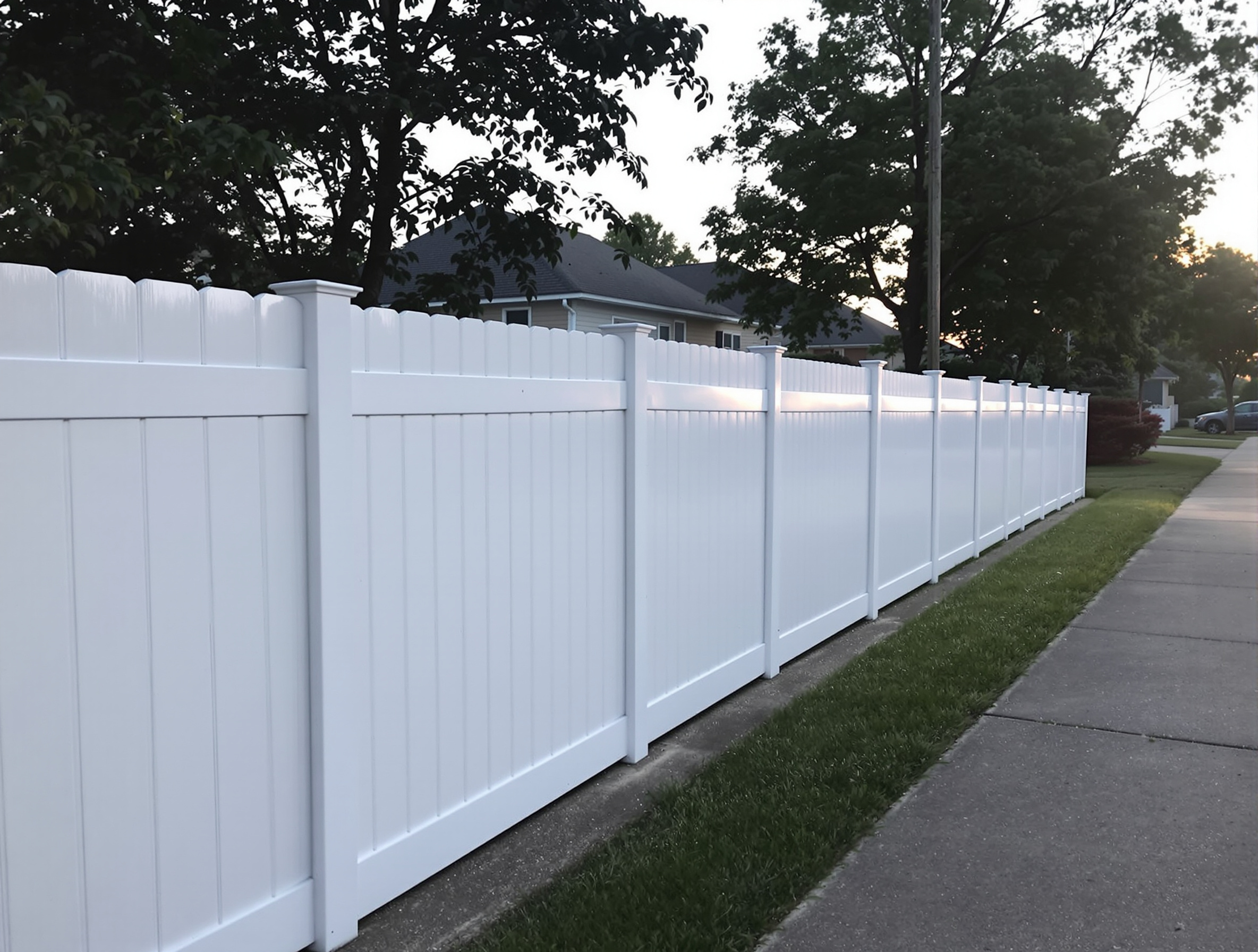
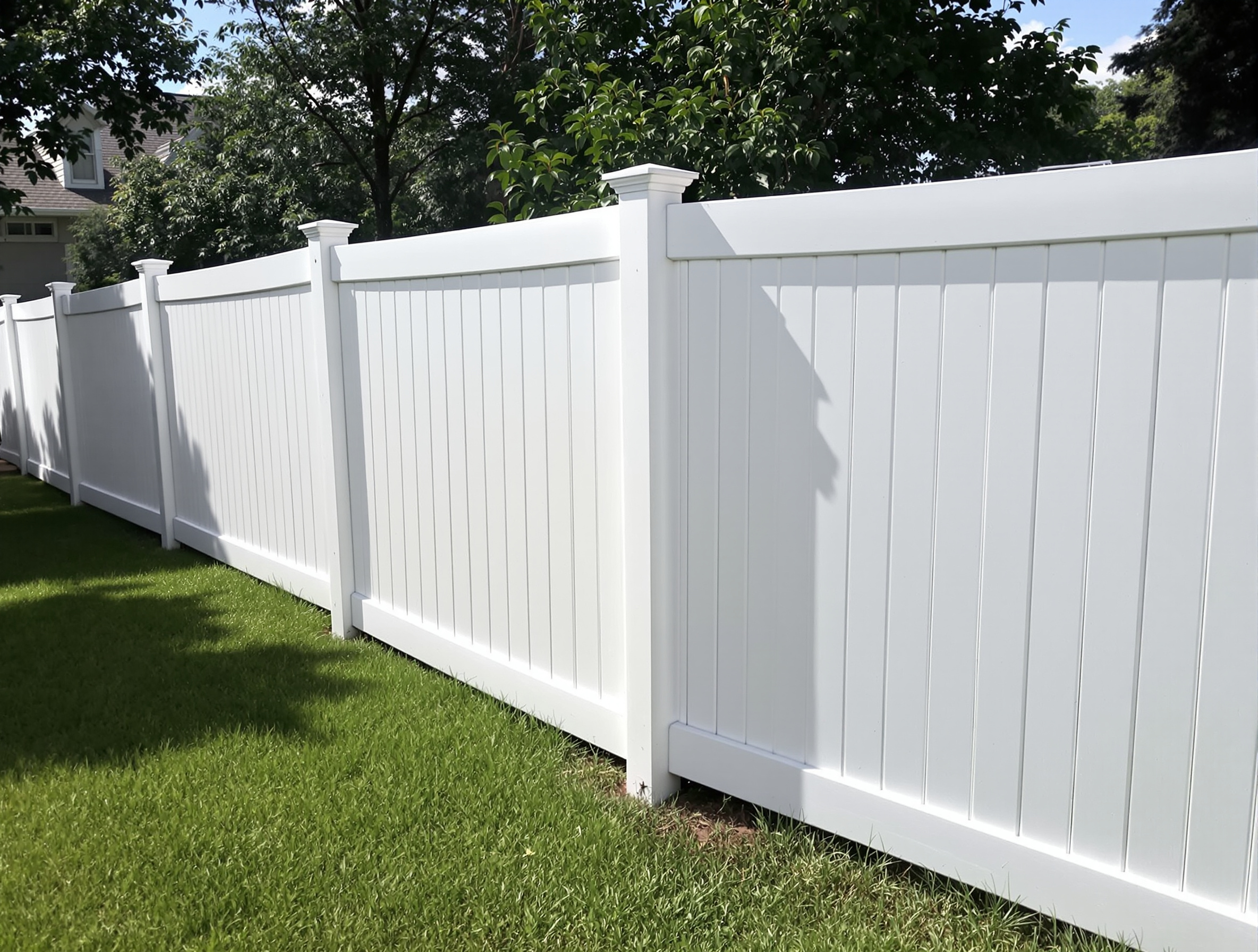
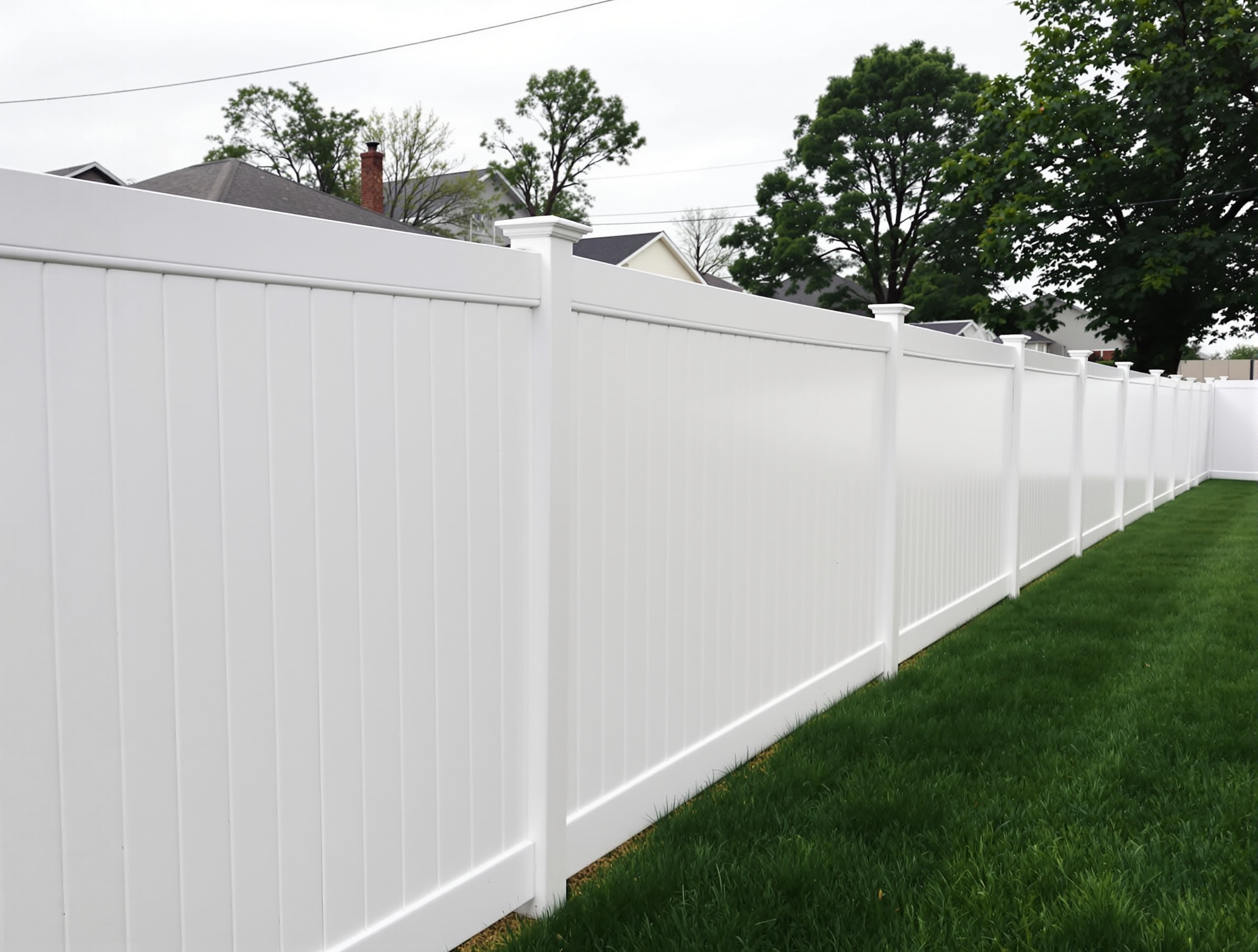
White Privacy — 6 ft vinyl fence by RKC Wood Care Pros in Greenwood, MO

White Privacy — 6 ft

The quiet enclave alternative to cedar

This is the one for the Greenwood owner who wants the privacy but not the standing cedar-upkeep the rest of the street signed up for. Interlocking tongue-and-groove boards in UV-stabilized white PVC, a galvanized spine run down the rail, posts anchored deep in the shifting enclave clay. Across a half-acre in Greenwood Estates or Woodland Creek it lays down a crisp edge the plantings frame off of — and ten years on it still reads the same clean white it did the day the trailer pulled away.

  • Price: $40–55/LF installed
  • Lifespan: 30+ years
  • Maintenance: One rinse a year
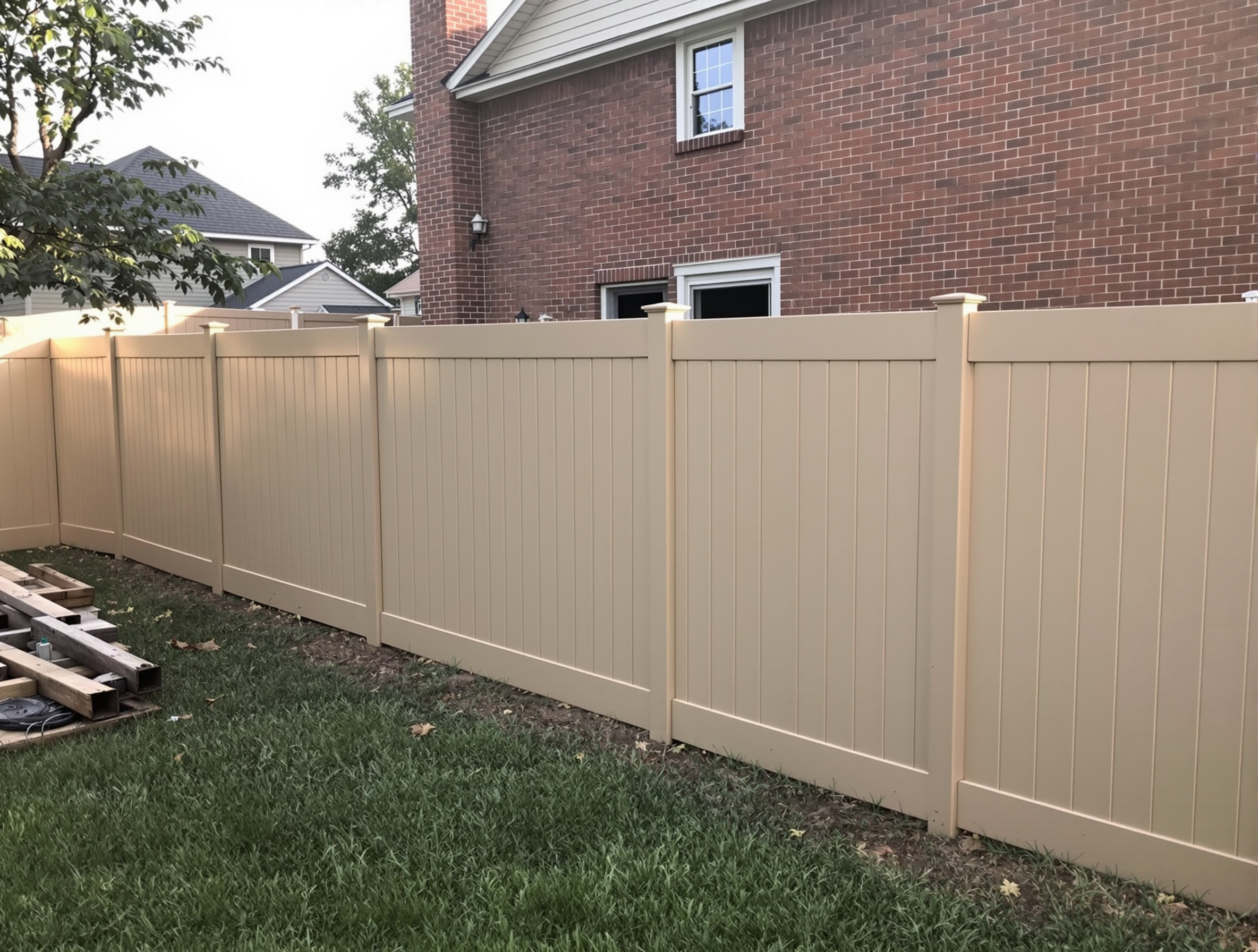
Sand / Woodgrain Privacy — 6 ft vinyl fence by RKC Wood Care Pros in Greenwood, MO

Sand / Woodgrain Privacy — 6 ft

For the owner who loves the cedar look

Made for the Greenwood owner who's fond of the warm cedar-and-iron look the neighborhood wears but is done coating it every second summer. A sand tone or an embossed woodgrain passes for real cedar from the curb, so it settles in against brick, stone, and the established plantings these yards keep — while no stain can ever finds its way into the garage. Identical reinforced rail, identical thirty-year manufacturer coverage standing behind the finish.

  • Price: $42–58/LF installed
  • Lifespan: 30+ years
  • Maintenance: A wash when it needs it
Shadowbox / Semi-Private — 6 ft vinyl fence by RKC Wood Care Pros in Greenwood, MO

Shadowbox / Semi-Private — 6 ft

The good face on both sides of the line

A shadowbox stacks its boards on alternating sides, so the finished run looks identical from either yard — the courteous build for a shared enclave line, where both neighbors have earned the good face. It lets a bit of air and daylight slip through on a long backyard stretch while still closing the yard off, and it sets off the heavy landscaping a half-acre Greenwood lot carries instead of boxing it in flat.

  • Price: $38–52/LF installed
  • Lifespan: 30+ years
  • Maintenance: Next to none
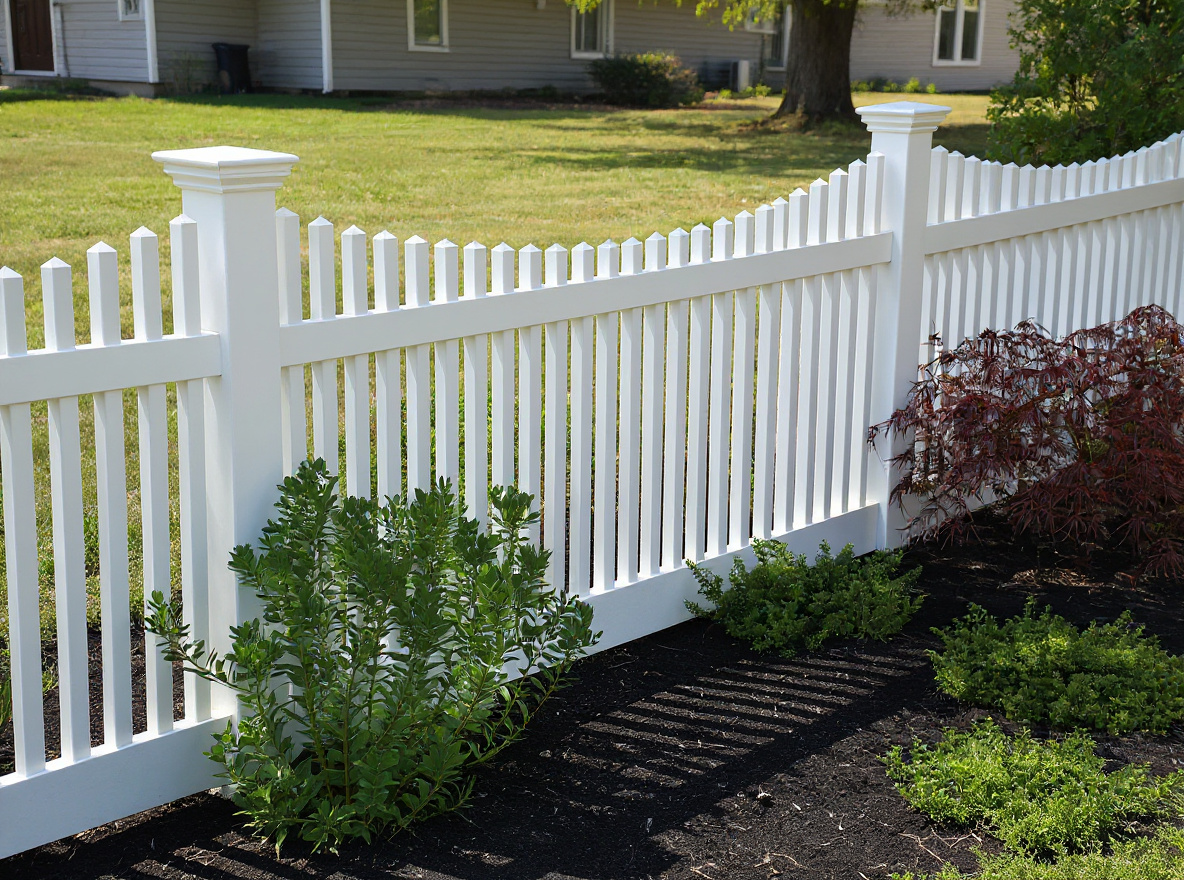
White Picket — 4 ft vinyl fence by RKC Wood Care Pros in Greenwood, MO

White Picket — 4 ft

For the pool deck, the garden, or a dog yard

Not every stretch needs to stand six feet and solid. A 4-foot vinyl picket edges a garden, borders a pool deck, or pens a dog yard without closing the sightline down — self-closing gate hardware and a reveal held even across every picket, which happens to be the first thing a Greenwood owner's eye checks. It keeps its bright white right through the worst KC summer where a painted wood picket would be peeling, and drops in alongside a 6-foot privacy run on the back and sides.

  • Price: $30–45/LF installed
  • Lifespan: 30+ years
  • Maintenance: Next to none
White vinyl privacy fence pricing — Greenwood, MO — RKC Wood Care Pros

PRICING A VINYL FENCE ON A GREENWOOD LOT

What a Vinyl Fence in Greenwood Costs, Line by Line

In Greenwood, vinyl lands between $30 and $60 a foot by profile — the reinforced rail is already baked into the privacy prices, and each gate rides its own line. The three builds here are the ones we quote most. The single biggest lever on a Greenwood total is the length of the line, since the lots run long — then any old fence to haul off, added gates, a jump to a taller solid profile. Every one of those is broken out separately and named. It all reaches you on paper, itemized, before a truck ever rolls up — so nothing's quoted by mouth and nothing turns into a change-order surprise mid-job.

White Privacy — 6 ft

$40–55

per linear foot installed

The enclave standard for a private, upkeep-free backyard line — the reinforced rail is in the number and every gate is its own line item.

Sand / Woodgrain — 6 ft

$42–58

per linear foot installed

The warm, cedar-adjacent face for the brick-and-stone homes across Greenwood Estates, Woodland Creek, and Pryor Ridge.

Picket — 4 ft

$30–45

per linear foot installed

A pool, garden, or dog-yard run with self-latching hardware and an even picket reveal — the detail a Greenwood owner checks before anything else.

An old fence to haul away, extra gates, a step up to a taller solid run — every item is spelled out on its own estimate line, nothing tucked away — reach us at (913) 286-1091 or book an on-site walk-through.

OUR PROCESS

How Your Greenwood Vinyl Fence Gets Built

Four stages move a project from the first phone call to a fence that leaves your mind — and on a landscaped Greenwood lot, the difference between a job done right and a yard torn up with a leaning line is decided in the layout and the deep footings, before a single panel goes up. Hanging the panels goes fast — one to three days on most yards. Whether the run holds plumb for a decade, and whether the garden comes through the week unscathed, is settled by the locating and the 36-inch footings that come first.

1

The walk-through starts with your landscaping

Because a Greenwood yard is organized around its plantings, that's where the visit begins: we measure the run, mark corners and gate openings against your survey pins, and note the sprinkler heads, bed edges, and established trees the line has to defer to. What you get back is written and itemized — linear feet, gates, profile and color, the concrete and steel below grade — with no figure ever tossed out verbally on the spot.

2

Locating first, then the line laid out by laser

We book the 811 public locate up front, and on these high-end properties we trace the private irrigation by hand as well, so no posthole ever catches a head or a drip line. From there you pick the look on your own grass in daylight — plain white, a warm sand or woodgrain to live beside the cedar and brick, a picket for a garden or pool edge — and we set the run with a laser so a long enclave line reads arrow-straight before anyone digs.

3

Footings 36 inches down, panels after they cure

Each posthole gets a post locked a full 36 inches into poured concrete on a belled base — under the frost line, and far enough down that the clay's season-to-season movement can't tip it the way it tips a shallow one. Near heads and beds the digging is done by hand to leave the landscaping whole. The reinforced rail nests in as the sections go up, and once the footings cure a typical Greenwood yard wraps in one to three days.

4

A final walk, gates trued, warranty on file

With the fence standing we cover the whole line together, sight down the picket reveal, and adjust each gate until it swings free and latches flush — the finish work an exacting Greenwood owner has every right to expect. We file your CertainTeed, Bufftech, or Veka coverage under your name and leave the documents with you — no stain date to keep. If anything moves in that first year, the crew that raised it returns and trues it back up.

VINYL WE'VE RAISED · KC METRO

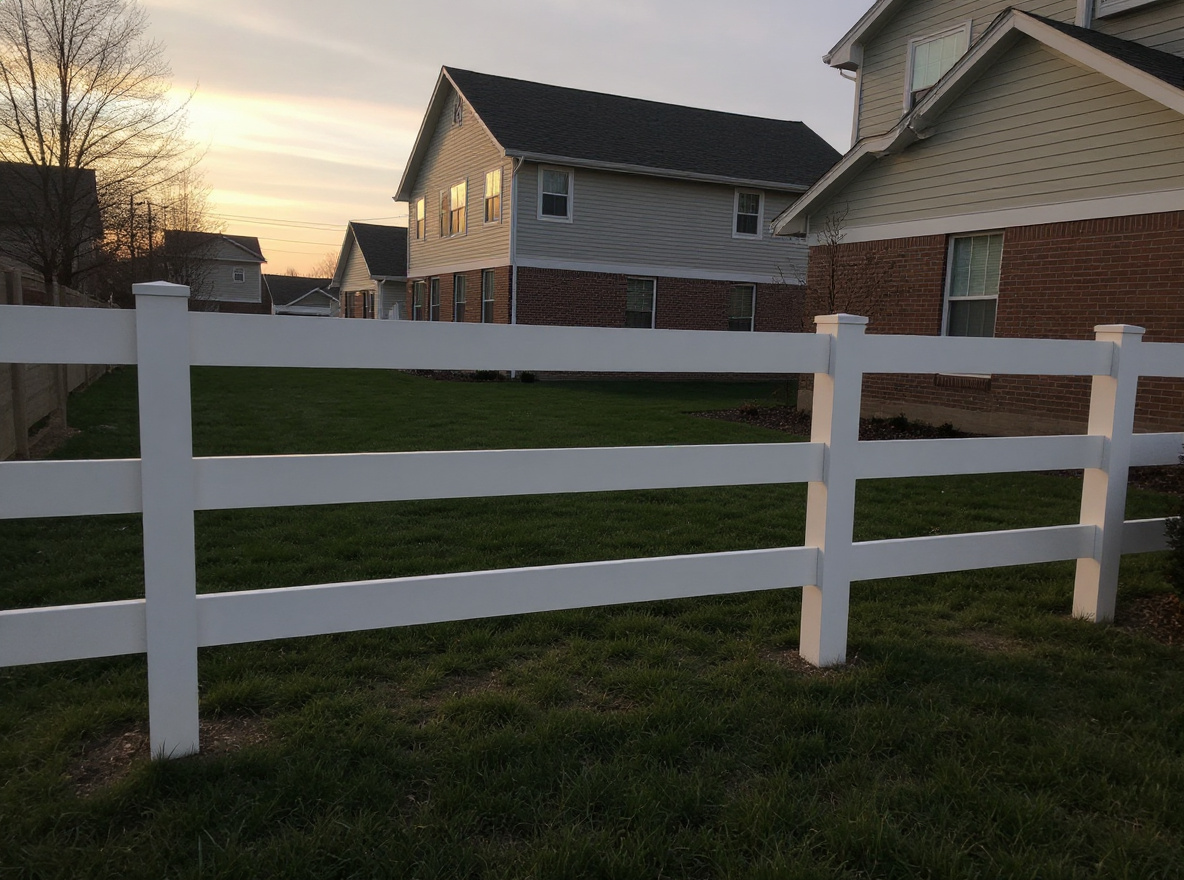
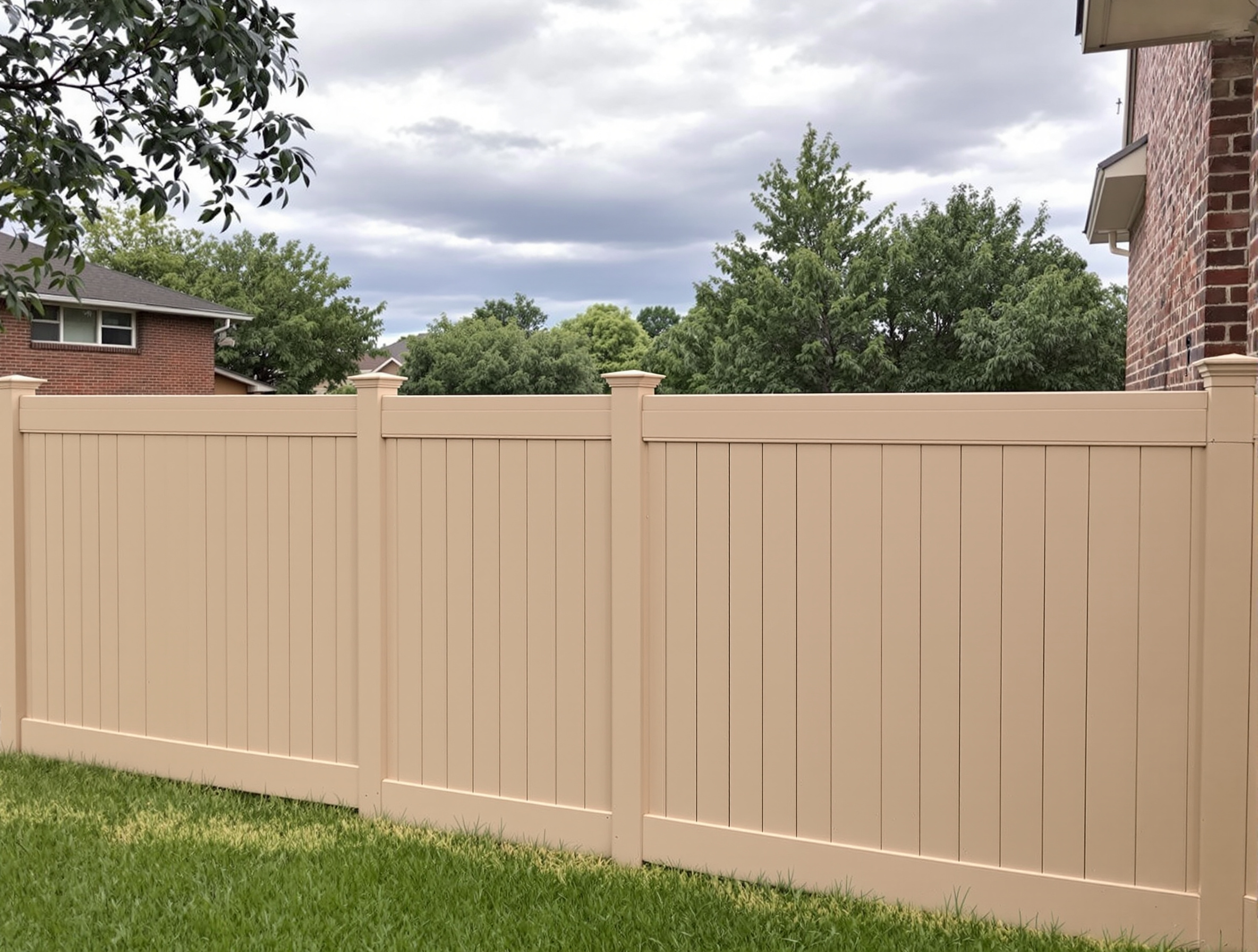
Vinyl fence installation by RKC Wood Care Pros, Kansas City metro
Vinyl install · KC metro
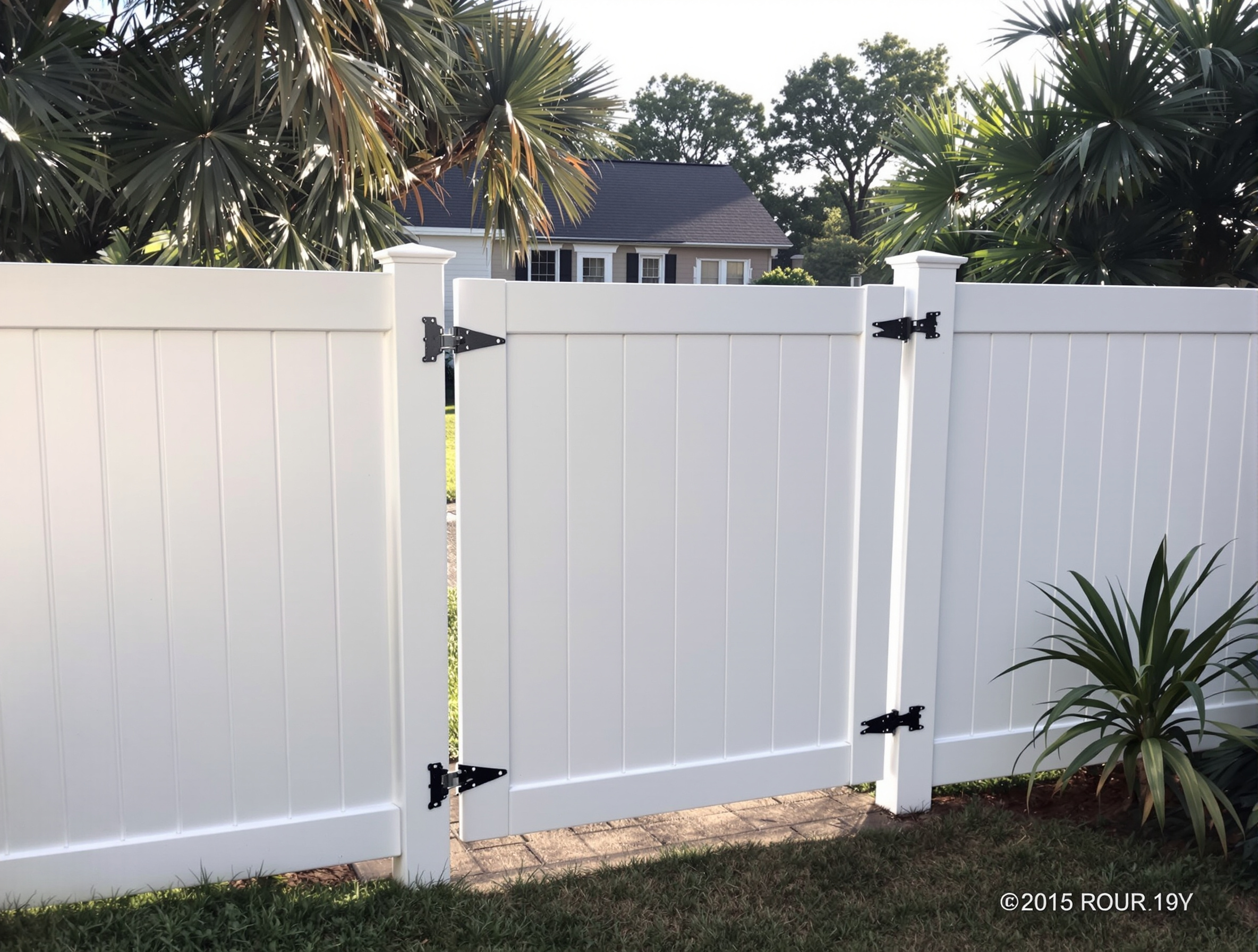
Vinyl fence installation by RKC Wood Care Pros, Kansas City metro
Vinyl install · KC metro
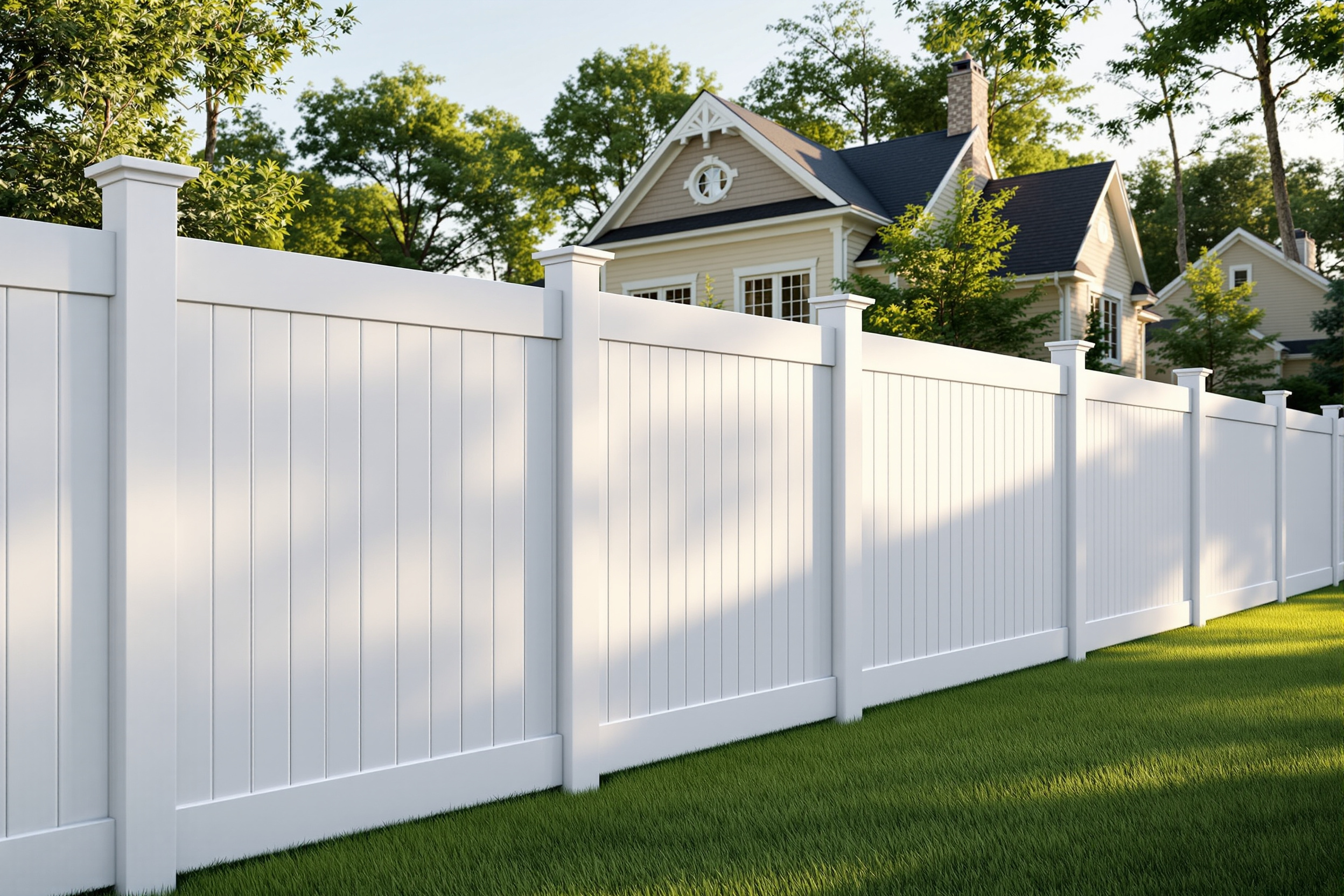
Vinyl fence installation by RKC Wood Care Pros, Kansas City metro
Vinyl install · KC metro
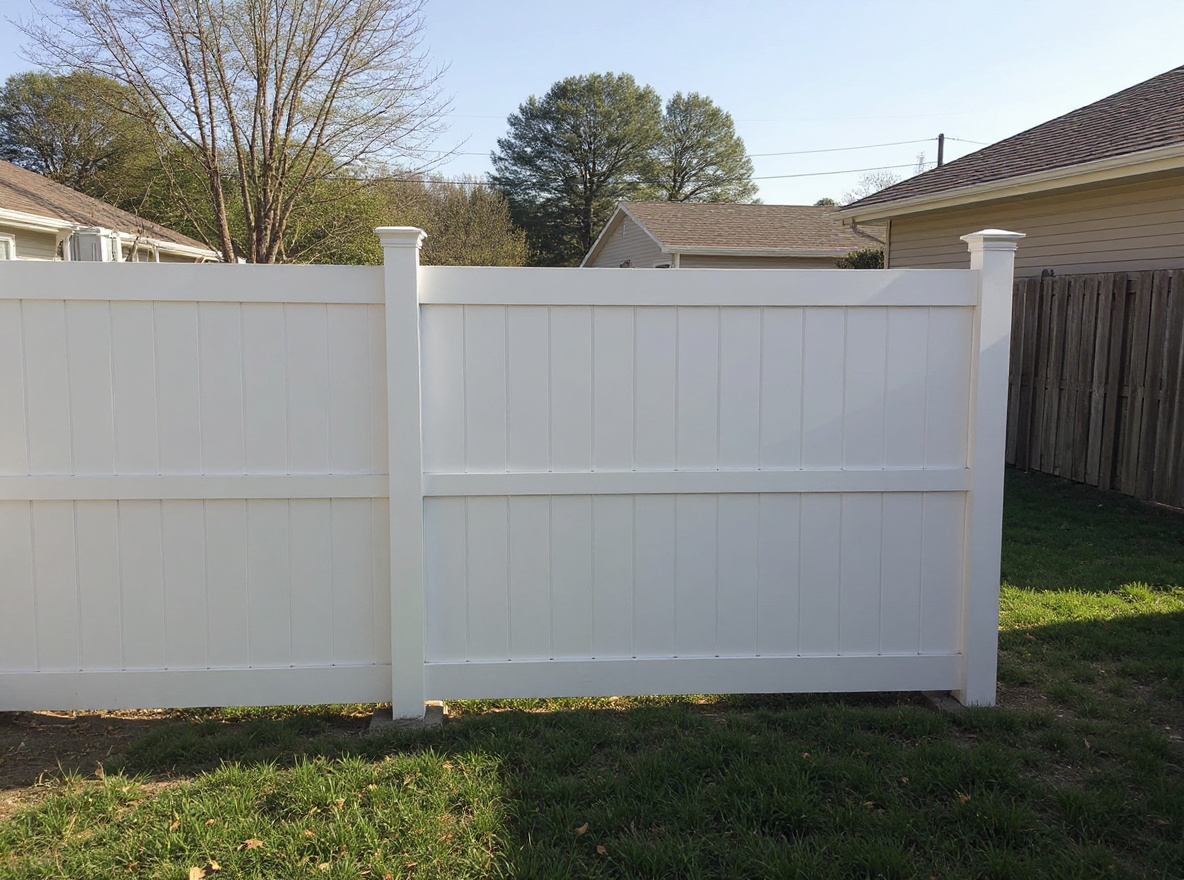
Vinyl fence installation by RKC Wood Care Pros, Kansas City metro
Vinyl install · KC metro

REVIEWS

What Kansas City Homeowners Say About RKC

4.9 ★ · 85 Google reviews

Every review is on our Google Business Profile — read them there, unedited.

Read all 85 reviews on Google

GREENWOOD VINYL FENCE QUESTIONS

Vinyl Fence Questions Greenwood Owners Ask

What Greenwood owners tend to bring up mid-estimate, tape still out and the numbers half-down — grouped by topic, each answer grounded in what it truly costs here, the cedar-and-iron standard it's measured against, the irrigation the crew has to protect, and the shifting clay the whole thing has to sit in. Don't see yours? Ring (913) 286-1091 and we'll give it to you straight.

Vinyl fence installation in Greenwood, MO by RKC Wood Care Pros

Vinyl Materials & Lifespan

How long does a vinyl fence last in Greenwood?
Figure thirty-plus years out of a capped, UV-rated panel on a reinforced rail — and the thing that guarantees that number is the footing beneath it. Greenwood's challenge isn't wind or cold, it's the deep, shifting clay that expands and contracts with the calendar and nudges a shallow post off plumb. Setting each post 36 inches into concrete on a belled base, below the frost line, leaves that movement nothing to push against. The panel itself is warrantied by CertainTeed, Bufftech, or Veka against fading, cracking, peeling, and chalking, and that protection transfers with the deed when the home sells.
Everyone in Greenwood fences in cedar and iron — why vinyl?
No dispute that cedar and black ornamental iron are the enclave's calling card — it's what the neighborhood is built in, and a real-wood purist has good reason to want it. The daylight opens up in the upkeep. Cedar grays within two summers and wants recoating on a two- or three-year cycle, and across a half-acre that expense repeats over a long perimeter. Vinyl runs a touch higher on install day and then runs to nothing: no coat, no shallow-post reset, a steel rail that rides the shifting clay, three decades and up, coverage in writing. Sold on the wood and fine with the schedule? Cedar's a fair choice, and we build and seal it under our own roof. After the look minus the recurring chore? Vinyl carries the long game — and we'll bid the two together so it's your call on real numbers.
Will the install damage my sprinkler system or landscaping?
It's the first thing plenty of Greenwood owners ask, and rightly — these yards are groomed to the inch and most sit over serious irrigation. Ahead of the auger we trace the sprinkler lines and drip mains by hand, route the fence to keep clear of beds and plantings, and dig tight and careful anywhere a posthole crowds them. The aim is a fence that lands clean, with the yard looking the next morning as though no crew had ever been through. Anything we can't route around gets flagged at the estimate, never sprung on you afterward.
Does vinyl crack or yellow in Greenwood's sun?
The capped, co-extruded profiles we run carry titanium-dioxide UV blockers cooked into the outer skin, so summer sun won't yellow them — that's precisely the edge co-extruded holds over single-wall. When cracking does show up, it's a panel that's worked loose at the post on an under-built or shallow run, and a reinforced rail over a 36-inch footing shuts that door. Most of what we install rates class-4 for hail, the grade a solid roof shingle carries. It's the bargain single-wall PVC at the floor of the market that fades and turns brittle — the reason it never comes off our trailer.

Pricing & Warranty

What does a vinyl fence cost in Greenwood?
Installed with the reinforced rail included, a 6-foot white vinyl privacy fence runs $40 to $55 a foot. A warm sand or woodgrain comes in at $42–$58, and a 4-foot picket around a garden or pool edge sits at $30–$45. The number that swings a Greenwood total is footage — half-acre lots carry long perimeters — so the rate per foot stays fixed while the project figure tracks the run. Gates, removal of an old fence, grade transitions, and profile upgrades each get their own line, never rolled into the base. Every Greenwood estimate comes free and in writing.
Is the warranty real, and does it transfer when we sell?
It's real, and it does. CertainTeed, Bufftech, and Veka warranty the panel against fading, cracking, peeling, and chalking, then shift to prorated coverage for the next owner when the property trades hands. We file it in your name the day the crew finishes and hand you the paperwork. On a Greenwood resale, a top-shelf fence still riding live manufacturer coverage and asking for no upkeep is a real point in the seller's column — and a brand unwilling to commit that to writing simply doesn't earn a spot on your lot.
The lots here are big — does that change the price?
It moves the total, not the rate. A larger Greenwood lot carries more linear feet of fence, so the project prices out above a small suburban yard — but the per-foot figure holds steady, and the written estimate shows exactly how the footage stacks up. Where the big lot quietly rewards you is down the road: over a long perimeter, cedar's every-couple-summers recoat is a far heavier recurring bill than it is on a short run, which is much of why vinyl's math only sharpens the more fence you're responsible for keeping up.

OTHER GREENWOOD FENCE OPTIONS

What Else We Build Across Greenwood

Vinyl isn't the only option — RKC installs and repairs every type of fence in Greenwood: wood, vinyl, chain link, ornamental iron, aluminum, and commercial security, plus custom gates and in-house staining. Each card opens its own Greenwood page — the pricing, the local conditions it's built for, and photos from work around the area.

Ready when you are

Get a free estimate — we usually respond the same day.

Call (913) 286-1091