Skip to content
Vinyl Fence Installation in Smithville, MO — The Off-Lake Yard Closed for Good, with a Boat Gate That Still Swings Square Ten Summers On

Vinyl Fence Installation in Smithville, MO — The Off-Lake Yard Closed for Good, with a Boat Gate That Still Swings Square Ten Summers On

Smithville is lake country — big rolling lots, damp ground near the water, and a boat or RV that needs a wide gate into the side yard. Every post we set is buried a full 36 inches in concrete on a steel-reinforced rail, and the wide access gates hang on oversized steel-cored posts: the run holds firm on sloping, moisture-heavy ground, and the gate keeps latching square long after a decade of hauling the boat in and out. Expect $40 to $55 a foot installed for 6-foot white privacy — with sand, woodgrain, a 4-foot pool-safe picket, and the wide boat-and-RV gate all on the menu, every panel capped, co-extruded PVC backed by CertainTeed, Bufftech, and Veka. Out on the water-view lots, cedar and black ornamental aluminum still win, and RKC builds those too; vinyl comes into its own on the off-lake streets and the pool-and-boat backyard, for owners who'd sooner be out on the water than kneeling over a stain tray. The same owner-run crew that measures your lot builds the fence and takes the warranty call later on.

★★★★★
4.9
from 85 reviews
Licensed
& Insured · KS + MO
400+
fences installed
A+ BBB Rating 400+ Fences Installed Since 2021 Owner-Operated Free On-Site Estimates
Browse vinyl options ↓

THE SMITHVILLE CASE FOR VINYL

Why Lake-Country Owners Skip the Stain Weekend

A written quote is just a number on a page. What actually changes when the fence goes up on a Smithville lot is the weekend — no stain tray, a boat gate that keeps working, and a footing set deep enough that rolling, damp ground can't tip it. Near the water, cedar and aluminum often make sense, and RKC hangs both. But on the working backyard behind the house, wood wants a fresh coat every couple of seasons — quicker still in lakefront damp — and a heavy timber gate starts to droop. As the Kansas City fence contractor that installs, repairs, and stains under one roof, we build the version in these cards for the owner who wants to pay once and forget it.

1

One fence, closed once, done with the upkeep

A lake house already keeps you busy — a boat, a dock, a lawn, a full summer of chores. Nobody wants the fence to be another one. Wood commits you to a stain tray every year or two, and the damp near the water grays it faster than that; vinyl is the boundary you finish and then ignore, hosed off once a season and otherwise left alone. For a Smithville family that would rather be out on the lake, paying a single time and walking away is exactly the draw.
2

A boat gate that still latches after ten seasons

The wide gate that lets a boat or an RV into the side yard is the piece most likely to fail on a wood fence — heavy timber sags, and a sagging gate drags and stops latching. We build the access gate for the span from the start: oversized steel-cored posts, a welded diagonal brace in the leaf, a drop rod on the still side. It swings true through a decade of hauling the boat out every spring and back every fall, which on a lake lot is the whole point.

3

Set deep for hilly, moisture-soft lake ground

Rolling, damp lakeside ground is precisely where a poorly-set post gives up — it sinks, tilts, and drags the run along with it. To beat that, each post is sunk three feet into concrete over a belled base, a galvanized-steel core threaded up the sleeve, drilled through the Northland shelf or over-dug through soft clay to hit full depth no matter what the hole hands us. That's what stands a fence true through ten years of lake seasons instead of leaving you to reset leaners every March.

4

Honest about where vinyl fits in a lake town

We won't tell you vinyl is the answer for every Smithville lot. On the water-view properties, cedar and black ornamental aluminum still rule — an open aluminum line keeps the sightline to the lake that a solid fence would wall off, and plenty of owners want exactly that. Vinyl's home here is the off-lake neighborhood and the pool-and-boat backyard, where a private, no-upkeep run is worth more than a view of the water. We build all of it, and we'll tell you straight which one your lot actually wants.

LOCAL CONDITIONS · SMITHVILLE

Lake Lots, Boat Gates & Moisture-Soft Ground — What Shapes a Smithville Fence

Four local realities steer how we build in this town: a recreational-luxury lake market, the wide boat-and-RV gate almost every lot asks for, hilly moisture-soft ground with rock scattered near the water, and a luxury-upgrade wave that crests each spring ahead of Lake Season. On the off-lake and working lots they all argue for the same thing — a deep footing, a gate built for its span, and no upkeep to chase. Each gets its own paragraph below. A view lot on the water is a different job from a pool yard set back from it, and nothing here is traced off a plan drawn for a flat suburb.

1

The lake-life market — recreational luxury on the water

Smithville is the lake-life capital of the Northland, defined by Smithville Lake, a downtown seeing a modern renaissance, and homeowners who'll pay for quality that stands up to lakefront living. That shows up in the fences. On the view lots near the water, cedar privacy and black ornamental aluminum dominate — the open styles that keep the sightline to the lake. Vinyl's honest home is the off-lake residential clusters like Greyhawke Ridge, Otter Creek, and Diamond Crest, where privacy and zero upkeep beat a water view. We build for both sides of that line, and we don't pretend vinyl wins every yard in town.

2

The boat and RV gate — the defining Smithville install

Ask what makes a Smithville fence different from one in the flat suburbs and the answer is usually parked in the side yard: a boat or an RV that needs a wide gate to reach the back. Twelve to sixteen feet of clear opening is a real engineering problem — a gate that wide sags under its own weight unless it's built for it. We hang the access gate on oversized steel-cored posts, brace each leaf with a welded diagonal, and set a ground rod on the inactive side, so it swings square through years of a boat going in and out.

3

Lakefront moisture, hilly ground, and the Northland rock

The lots that make Smithville what it is are the ones that fight an install: bigger than the metro average at a third to three-quarters of an acre, hilly, wooded, and rock-heavy near the water. Two things test a fence here — the moisture that rots a cedar post close to the lake, and the soft, sloping ground that settles a shallow one out of plumb. A vinyl sleeve has no wood at grade to rot, and a 36-inch concrete footing — rock-drilled through the Northland shelf where it turns up — keeps the post from walking downhill. A fence Built for Every Storm on a lake lot is a deep-footed, moisture-proof one.

4

The luxury-upgrade wave and the spring rush before Lake Season

Rising property values around the lake are driving a luxury-upgrade trend — owners tearing out a tired old fence for something that matches the home, often with a pool picket or a proper boat gate this time. Pool and boat safety and lakefront privacy are the drivers, and the calendar has a clear peak: spring, as everyone preps the house before Lake Season kicks off Memorial Day. Book the walk-through early in the year and the fence is standing before the first warm weekend on the water.

COUNT THE FIFTEEN-YEAR COST

On a Lake Lot, Does Cedar or Vinyl Cost Less Over Time?

The day it's finished, cedar is the smaller number — and on a sprawling lakeside lot that head start looks big, which is half the reason cedar still fronts most Smithville streets. Where it loses the lead is later, in the costs the lake quietly adds: rot from the damp near the water, a seal cycle that grows with every foot of a half-acre perimeter, and a wide wood gate that eventually droops. Vinyl costs a bit more at the start and then falls silent. Below, a typical lake lot runs cedar against vinyl, with the re-coats, the moisture rot, and the gate rebuild landing in the cedar column where they belong.

Over 15 yearsDog-ear cedarVinyl
Move-in-week stickerCedar is the lower figure the day the crew wraps, and on a lot that can run past 300 feet the gap looks large up front — part of why cedar still fronts the drive-up side of most Smithville streetsA step up that same week, but the figure already carries the steel rail and hides no coating bill behind it
The lakeside moisture billDown closer to the water the ground stays damp, and damp is what rots a cedar post at the base and silvers the boards early — the lake that sells the house is hard on the wood you fence it withNothing at the ground line to rot; the PVC sleeve rides a concrete footing, and the moisture rolling off the lake does nothing to it
Re-sealing the whole big lotA stain cycle every two or three years is one bill on a small yard and another thing entirely wrapped around a half-acre — the re-coat scales with every foot of a long lakeside perimeterA rinse with a hose and a soft brush, whatever the length — the upkeep doesn't grow just because the lot did
The boat gate a decade inA wide wood boat gate is heavy, and heavy wood sags; ten years of swinging it drops the far corner into the gravel and it quits latchingA steel-cored vinyl gate holds square through the same ten years of boats going in and out, because the weight rides steel instead of softening wood
The fifteen-year total on a lake lotEnds up the higher figure once the seal cycles, the lakefront rot, and a wide-gate rebuild are all added inSits close to the install-day number, with nothing extra piling on to chase repairs
Best fitAn owner who genuinely likes wood, keeps a stain schedule, and shrugs off what the lake does to itA lake-town family that wants the big yard closed, the boat gate dependable, and their weekends spent on the water rather than on the fence

The call comes down to your lot, this year's budget, and whether the water view or a private yard matters more. Love real wood and don't mind tending it? Cedar's fair — the Smithville wood page lays out the sealing schedule that holds off the lakefront gray. Staying put for years on a big off-lake lot? Vinyl repays the difference — no coat, no leaning post, a gate that holds. Send us the yard and we'll price both against each other.

STRAIGHT TALK ON DURABILITY

Does a Lake Lot or a Hard Freeze Crack Vinyl?

Reasonable to ask when you're paying over cedar. Short version: a capped panel on a steel-reinforced rail, footed deep through the hilly clay, shrugs off the moisture and the summer glare — the thing that actually fails is the discount single-wall board, and the thing that leans is an under-set post in soft ground, never the vinyl. The lake hands Smithville its own conditions — damp, tilting ground and a Northland rock shelf that surfaces in some holes and not others — and those two facts drive how a run is assembled. The four decisions below are what hold a fence up here where a cut-corner build wouldn't.

On a lake lot it's the ground that moves under the post, not the panel

Smithville ground rolls, sits wooded, and holds moisture near the water — looser and less predictable than a flat suburban pad, and that's exactly where a fence here lets go. Under-set a post in tilting, damp ground and it sinks, leans, and tows the whole line downhill across a few seasons, the panels themselves untouched. Footing, not vinyl. So every post drops a full 36 inches into poured concrete on a widened bell, below the frost and into ground the wet season can't loosen.

Some holes hit the Northland rock, some hit saturated clay — we dig for what's there

Near the lake a posthole is a coin toss: a shelf of Northland rock a couple of feet down in one spot, waterlogged clay in the next. There's no single trick to it — the honest answer is a rock drill where we hit stone and a clean over-dig where we hit soft, wet clay, so every post reaches the same 36 inches regardless of what the ground hands us. It's slower on a rocky lakeside lot, and it's the reason the fence stays plumb when the shortcut version wouldn't.

It has to keep its color through a bright lake-country summer

Skipping cedar is about skipping the repaint, so a panel that fades defeats the point. The capped, co-extruded profiles we run — CertainTeed, Bufftech, Veka — carry titanium-dioxide sunblock right in the outer skin, holding white white and a woodgrain warm through a summer of glare off the water, while the wood fence next door is already going silver.

The bargain single-wall board is the one that shatters

The vinyl label covers two very different boards, and only the good one earns a spot on a lake-view lot. Ours is capped and co-extruded — an impact shell fused onto the structural core, most profiles rated class-4 for hail, the grade a solid roof shingle carries. The cut-rate single-wall board leaves that shell off, so it yellows and grows brittle enough to split in a deep freeze. And a breathing gap sits at every joint, letting a run expand in July and pull back in January without splitting a seam.

THE SMITHVILLE LINEUP

The Four Vinyl Builds We Set Most Around the Lake

A handful of builds cover most Smithville orders — each with an up-front price, a lifespan you can plan around, and the near-zero upkeep that pulls owners off cedar in the first place. Which one fits follows the job: a solid privacy wall for the off-lake yard, a warm woodgrain to sit against brick, a pool-safe picket by the water, or the steel-cored gate that lets a boat reach the side yard. Samples come to the walk-through, so you match color to your own brick and siding in daylight instead of guessing off a chip.

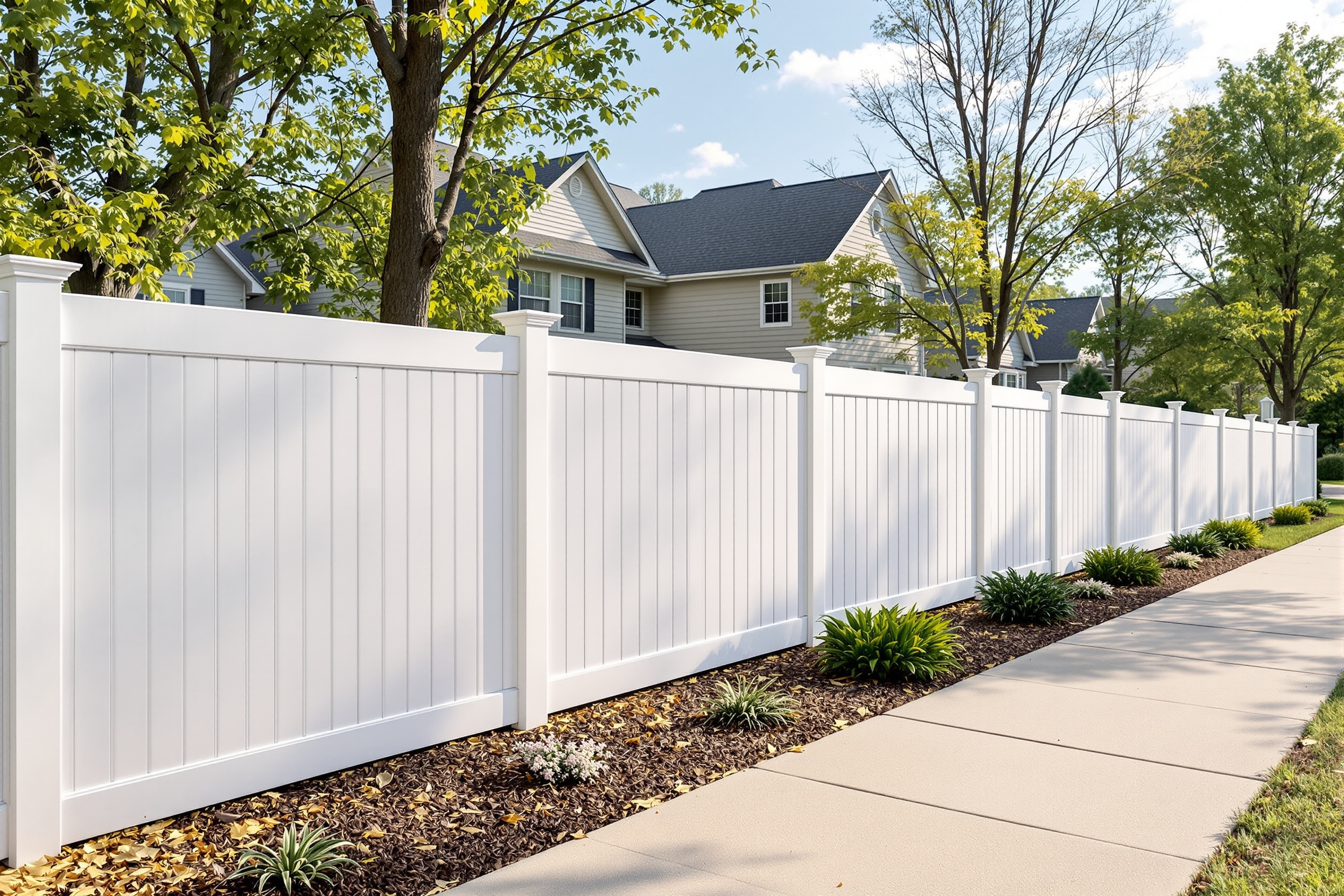
White Privacy — 6 ft vinyl fence by RKC Wood Care Pros in Smithville, MO

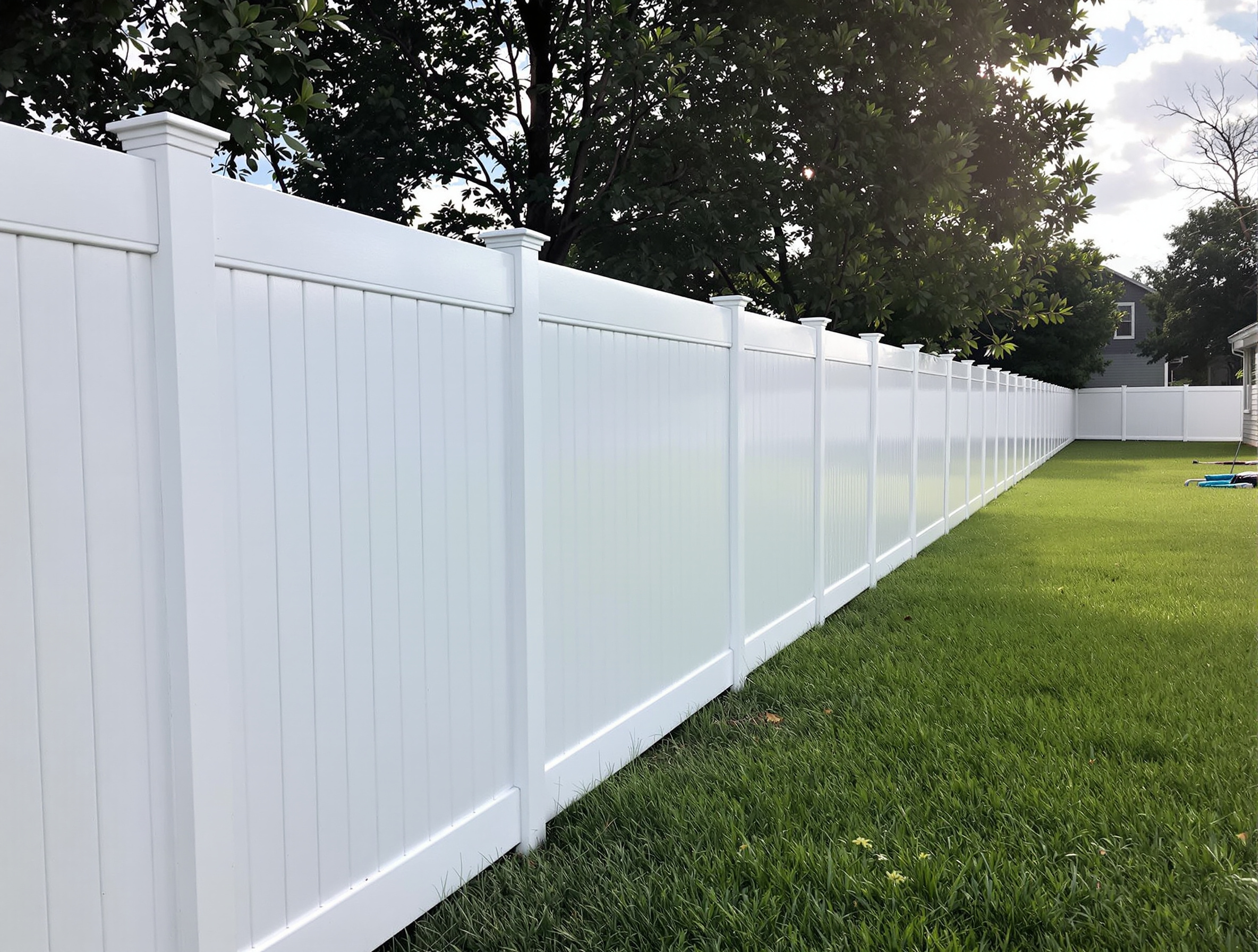
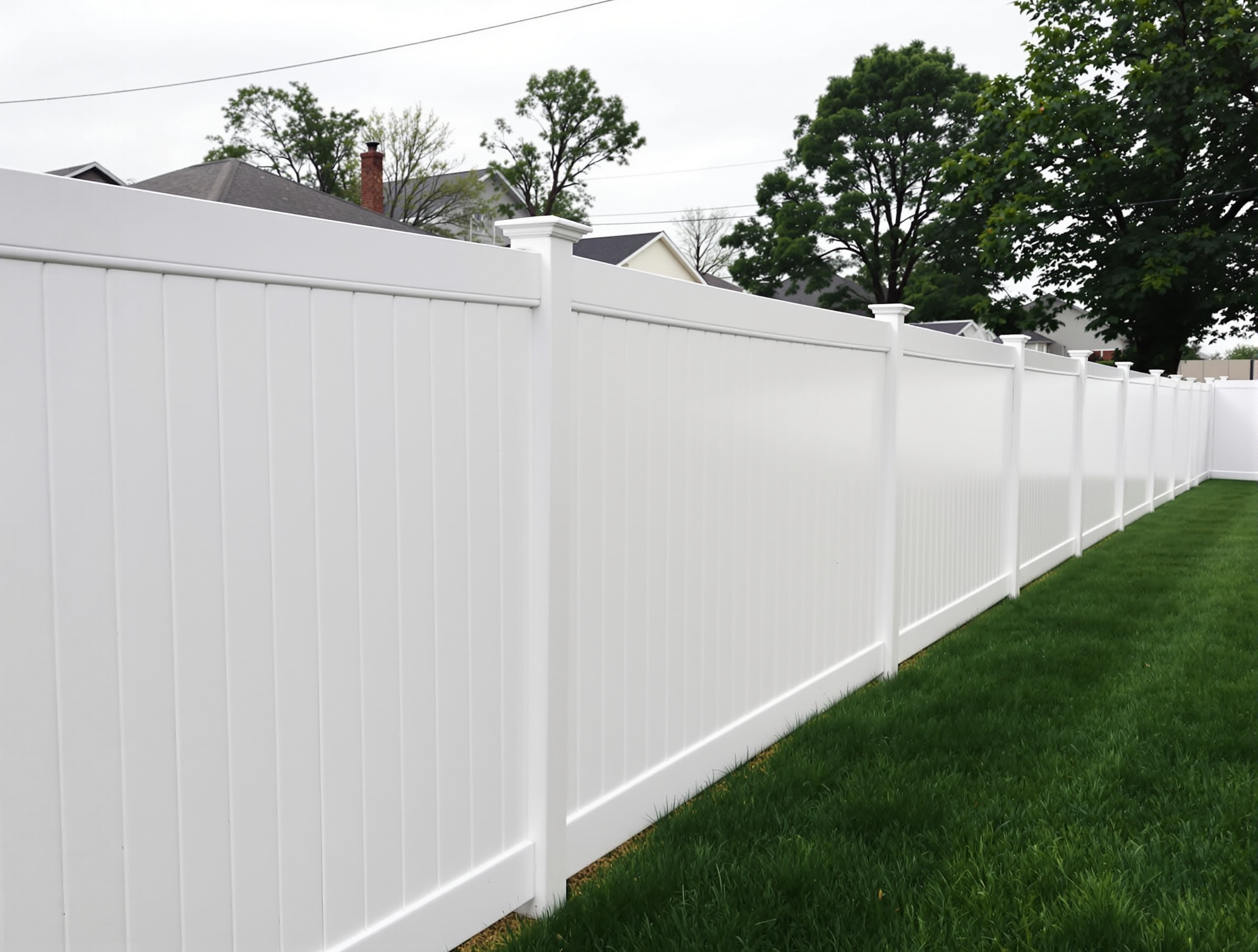
White Privacy — 6 ft

The off-lake neighborhood standard

The order that closes a backyard up in Smithville's off-lake clusters — Greyhawke Ridge, Otter Creek, Diamond Crest, the residential streets set back from the water where vinyl has quietly become the going choice. Solid tongue-and-groove panels in UV-stabilized white PVC over a galvanized-steel rail, on posts driven three feet into the hilly clay. For a lake-town family it's the whole yard settled at once: private for the kids, the dog, and the pool, closed a single time and never sanded, stained, or straightened again.

  • Price: $40–55/LF installed
  • Lifespan: 30+ years
  • Maintenance: One rinse a year
Sand / Woodgrain Privacy — 6 ft vinyl fence by RKC Wood Care Pros in Smithville, MO

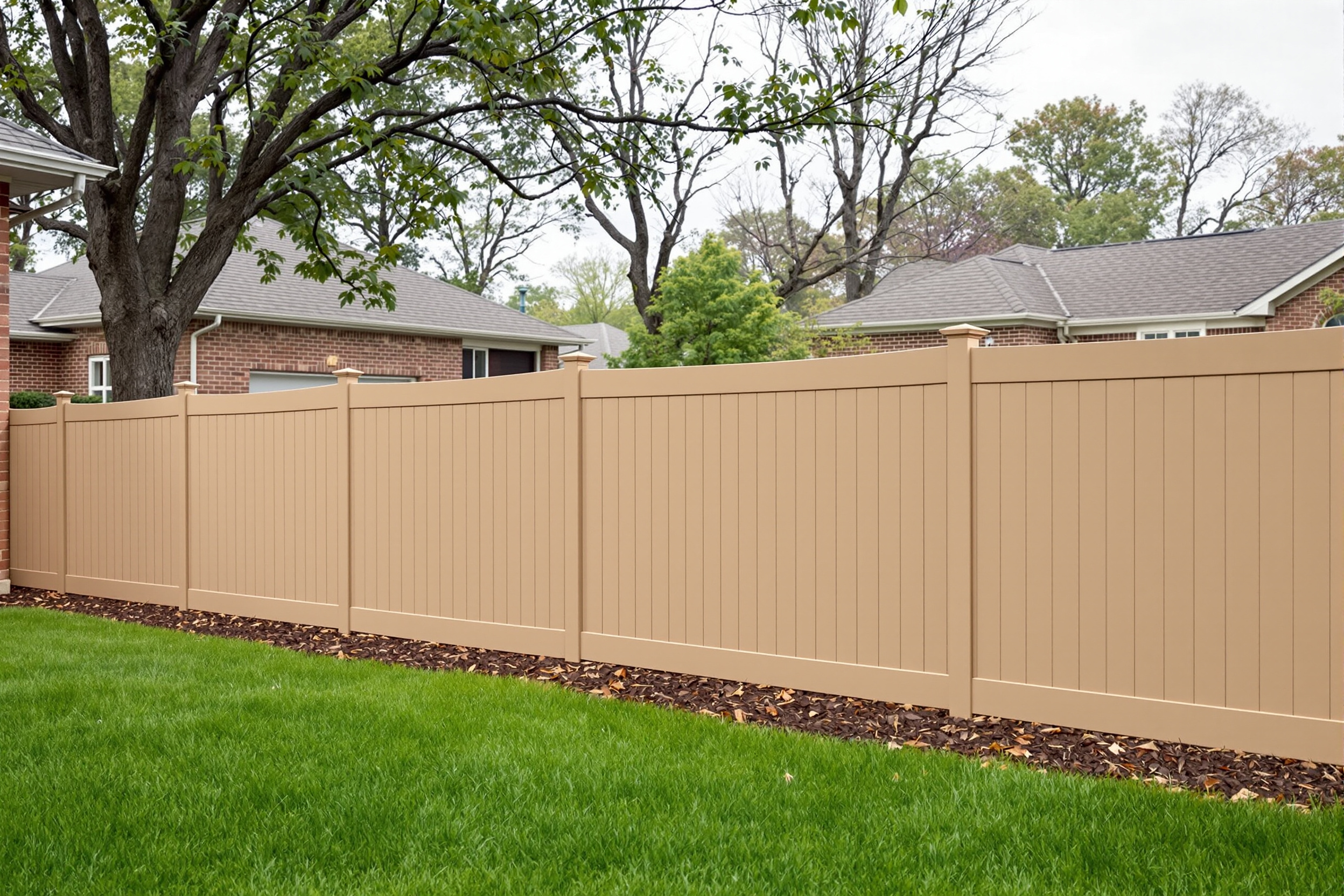
Sand / Woodgrain Privacy — 6 ft

The warmer face for an upscale lot

Smithville homes lean higher-end — brick-and-stone fronts and finishes chosen to match a lake-view lifestyle — and stark white isn't always the look a nicer house wants at its perimeter. A warm sand tone or an embossed woodgrain reads closer to cedar off the street, dressing the home up without buying you a yearly chore. The steel-reinforced rail underneath and the thirty-year manufacturer backing don't change; the only thing that does is the color you end up living beside.

  • Price: $42–58/LF installed
  • Lifespan: 30+ years
  • Maintenance: A wash when it needs it
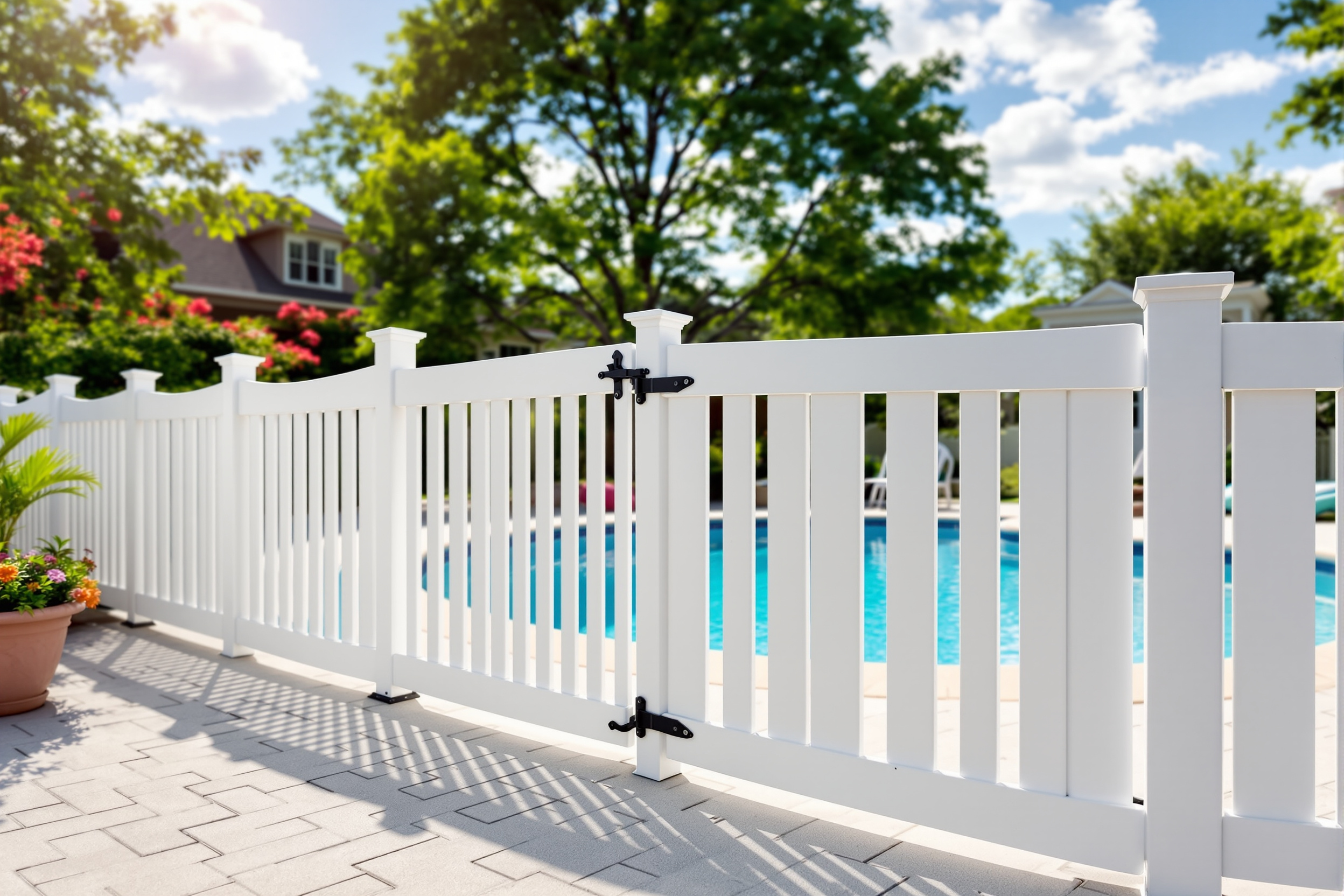
Pool & Patio Picket — 4 ft vinyl fence by RKC Wood Care Pros in Smithville, MO

Pool & Patio Picket — 4 ft

Pool and boat-country safety, done right

Pool and boat safety is one of the honest reasons people fence at all in Smithville, and a 4-foot vinyl picket rings a pool or a patio without shutting the yard down to the water. We hang it on a self-closing, self-latching gate set to swing out and latch up high — the safe layout around a pool — and the white holds through a full lake-country summer instead of flaking the way a painted wood picket does. It pairs with a 6-foot privacy run on the sides when you want the pool framed open and the yard closed behind.

  • Price: $30–45/LF installed
  • Lifespan: 30+ years
  • Maintenance: Next to none
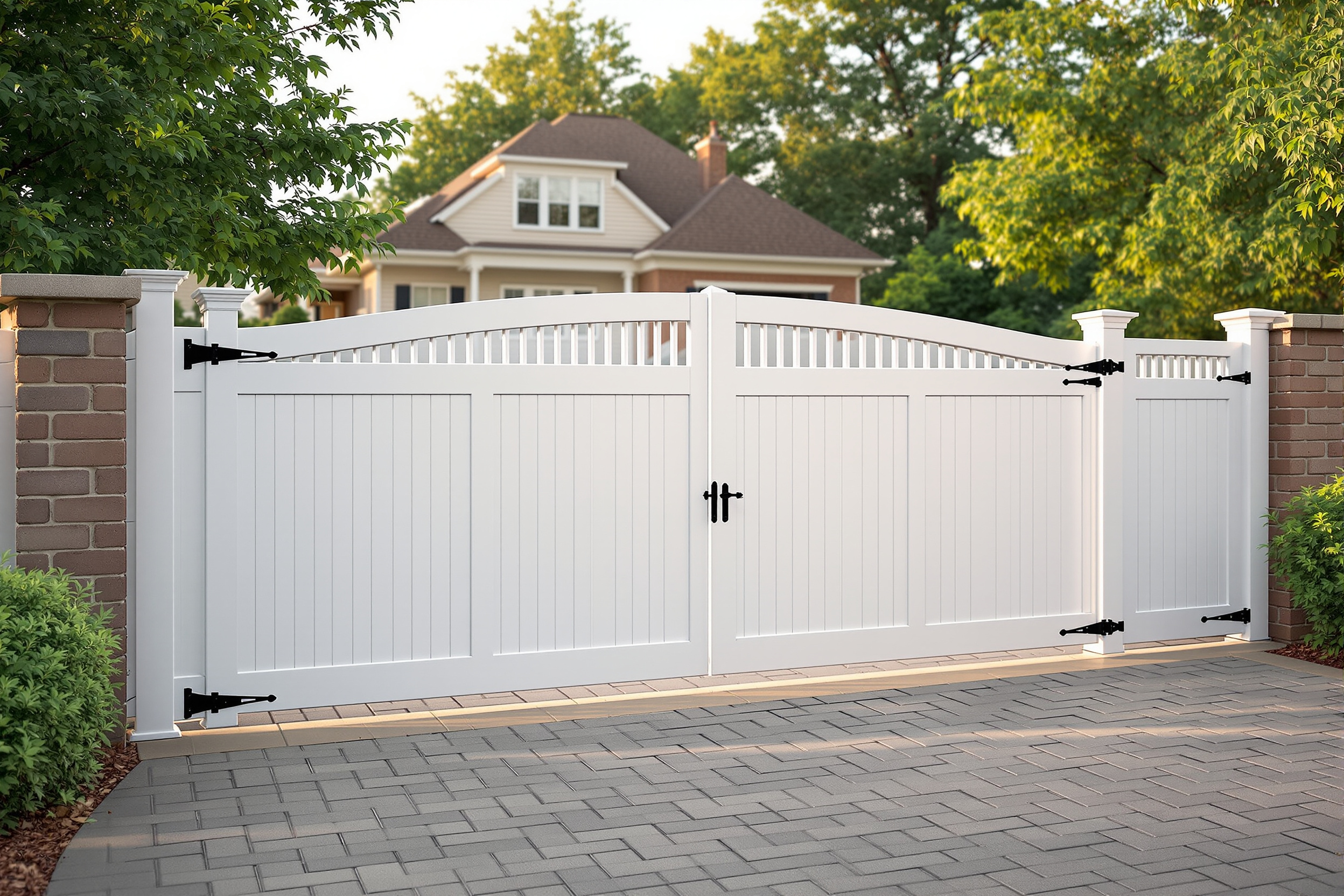
Boat & RV Access Gate — Steel-Cored vinyl fence by RKC Wood Care Pros in Smithville, MO

Boat & RV Access Gate — Steel-Cored

The install that says lake town

The most Smithville request there is: a wide side-yard gate that lets a trailered boat or an RV reach the back. A gate that wide — twelve to sixteen feet of clear opening — sags on its own weight unless it's built for the span, so we hang it on oversized steel-cored posts, frame each leaf with a welded diagonal brace, and drop a ground rod to lock the still side. It swings true and latches square season after season of boat-in, boat-out, instead of dragging into the gravel by year two — and it matches the privacy run it opens out of.

  • Price: $1,400–2,600 per gate
  • Lifespan: 30+ years
  • Maintenance: Hinge check, otherwise none
White vinyl privacy fence pricing — Smithville, MO — RKC Wood Care Pros

PRICING A VINYL FENCE ON A SMITHVILLE LOT

What a Vinyl Fence in Smithville Costs, Broken Down

Around Smithville, vinyl lands between $30 and $60 a foot by profile and run length — and the privacy figures already fold in the steel-reinforced rail, with each gate quoted separately. The three builds below are our most-bid, and since a lake lot's perimeter often clears 300 feet, it pays to quote the real line rather than a rule of thumb. A wide boat or RV gate, tearing out an old fence, stepping up to a taller solid profile — each shows on its own line. The full estimate is on paper and itemized before the truck arrives, so nothing's quoted out loud and no change-order surprise turns up mid-job.

White Privacy — 6 ft

$40–55

per linear foot installed

The off-lake workhorse — solid privacy on a steel-reinforced rail, with each gate quoted on its own line.

Sand / Woodgrain — 6 ft

$42–58

per linear foot installed

The warm-tone option for the brick-and-stone homes across Greyhawke Ridge, Harborview, and The Hills.

Pool & Patio Picket — 4 ft

$30–45

per linear foot installed

Self-closing, self-latching pool picket for a lake-town backyard. Pairs with a 6-foot privacy run on the sides.

A wide boat or RV access gate runs $1,400 to $2,600 on its own, old fencing to clear and profile upgrades each land on their own line, nothing buried — call us at (913) 286-1091 or set up an on-site walk-through.

OUR PROCESS

The Steps Behind Your Smithville Vinyl Fence

Four stages carry a project from the first phone call to a fence you quit thinking about — and on rolling, moisture-soft Smithville ground, it's the deep footing set before any panel that decides whether a run holds or leans by its third year. Raising the panels is the fast part — one to three days on most lots. What determines a decade of staying plumb, versus a call after a wet spring, is the layout and the 36-inch footings that go in first.

1

We walk the lakeside lot and lay out the line

A Smithville yard tends to run bigger than the metro norm — a third to three-quarters of an acre, rolling, often wooded — so the first visit is a full walk of it. We pull measurements, mark the corners against your survey pins rather than eyeballing the neighbor's, note where a boat or RV gate has to open, and locate the buried utilities. You leave with a written, itemized quote: linear footage, each gate, the profile and color, and the concrete and steel headed underground. Nothing quoted verbally across a tailgate.

2

Locates go in and the panels and gate get ordered

First we book the 811 locate — no small thing on lakeside lots, where drainage and utility easements thread through a lot of the development near the water. With that clear, you lock the look standing on your own ground in daylight: plain white for an off-lake street, a warm sand or woodgrain against brick, a pool picket, the wide access gate sized to your exact boat or RV. We order to that and strip out any worn-out fence in the path before a shovel goes in.

3

Posts three feet into the hilly clay, then panels and the wide gate

Each posthole gets a post set three full feet into poured concrete on a belled base — cored through the Northland shelf where stone shows up, over-dug where the ground runs soft and wet by the water, so depth never varies. The steel-reinforced rail seats as the sections go up, and the boat gate mounts on its oversized steel-cored posts with the diagonal brace already welded in. Most Smithville yards finish in one to three working days after the footings cure, and we hold the line snug to the grade as it rolls so no gap opens under the bottom rail.

4

We walk it with you and hand over the warranty

With the fence standing, we pace the full line together and work every gate — the walk-throughs and that wide boat gate — checking each one catches square and swings clear. Your CertainTeed, Bufftech, or Veka coverage is registered in your name, the documents handed to you: no stain date to keep, nothing to redo before the next lake season. If anything moves in the first year, the crew that built it is back to true it up.

VINYL WE'VE RAISED · KC METRO

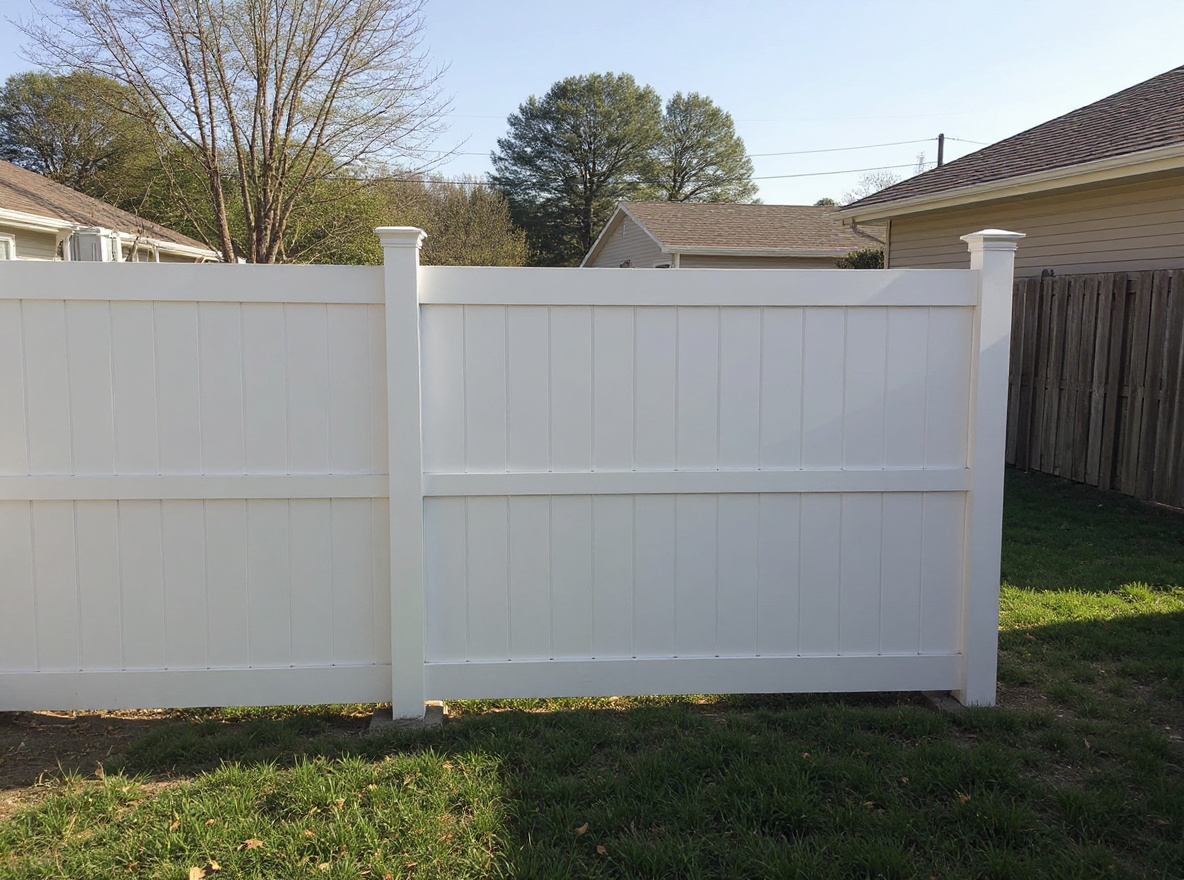
Vinyl fence installation by RKC Wood Care Pros, Kansas City metro
Vinyl install · KC metro
Vinyl fence installation by RKC Wood Care Pros, Kansas City metro
Vinyl install · KC metro
Vinyl fence installation by RKC Wood Care Pros, Kansas City metro
Vinyl install · KC metro
Vinyl fence installation by RKC Wood Care Pros, Kansas City metro
Vinyl install · KC metro

REVIEWS

What Kansas City Homeowners Say About RKC

4.9 ★ · 85 Google reviews

Every review is on our Google Business Profile — read them there, unedited.

Read all 85 reviews on Google

SMITHVILLE VINYL FENCE QUESTIONS

Vinyl Fence Questions Worth Asking in Smithville

The questions that come up while the tape's still stretched across a Smithville lot and the quote's half-done — grouped by topic, each answer pinned to what a fence really runs on a big lake lot, the cedar and aluminum it competes with, the boat gate, and the moisture-soft ground it all has to sit on. Yours not here? Call (913) 286-1091 and ask us straight.

Wide vinyl boat and RV access gate in Smithville, MO by RKC Wood Care Pros

Vinyl Materials & Lifespan

How long does a vinyl fence last in Smithville?
Plan on thirty years and more from a capped, UV-rated panel on a steel-reinforced rail — and on a lake lot what carries that number is the post holding it up. Smithville's ground is hilly and damp near the water, and a shallow post settles and leans there, not the vinyl. We drive every post three feet into concrete over a belled base, rock-drilled through the Northland shelf where it turns up and over-dug where the clay runs soft and wet, so the depth is the same whatever the hole gives us. CertainTeed, Bufftech, and Veka each stand behind the panel against fading, cracking, peeling, and chalking, and that protection follows the house to whoever buys it next.
The water views run cedar and aluminum — why would I put vinyl on a lake lot?
On a true water-view lot, we'd often steer you the other way: an open black aluminum line keeps the sightline to the lake that a solid fence walls off, and cedar has a warmth some owners want by the water. Vinyl earns its place off the water and in the working backyard — the off-lake neighborhoods, the pool yard, the side run with the boat gate. There, the case is upkeep: cedar grays fast in lakefront damp and wants sealing every two or three years, worse across a big half-acre perimeter, while vinyl closes the yard once and asks for nothing but a rinse. If the priority is privacy and no maintenance rather than a view, vinyl wins — and we'll tell you honestly which one your lot is.
Can you build a gate wide enough for my boat or RV?
Yes — it's the most common thing we're asked in Smithville. A boat or RV gate needs twelve to sixteen feet of clear opening, and the trick is keeping a span that wide from sagging. We hang it on oversized steel-cored posts set deep in concrete, weld a diagonal brace into each leaf, and set a drop rod to lock the inactive side while the active leaf swings. Built that way, a vinyl access gate holds its square through years of the boat coming out every spring and going back every fall — where a heavy wood gate that wide starts dragging in the gravel within a couple of seasons.
Does the moisture off the lake hurt a vinyl fence?
It's what makes vinyl a good call near the water, not a problem for it. Lakefront damp is hard on wood — it rots a cedar post at the ground line and silvers the boards early — but a vinyl fence has no wood at grade to rot. The PVC sleeve rides a concrete footing, and the co-extruded, UV-stabilized panel doesn't absorb water, mildew into the grain, or fade from the sun bouncing off the lake. On a moisture-heavy lakeside lot, that's the exact reason a lot of Smithville owners switch off cedar when they replace an old fence.

Pricing & Warranty

What does a vinyl fence cost in Smithville?
A 6-foot white vinyl privacy fence runs $40 to $55 a foot installed with the steel-reinforced rail included. Smithville lots run larger than the metro average, though — a third to three-quarters of an acre — so the perimeter is often 300 feet or more, which is worth pricing on the actual line rather than a rule of thumb. A warm sand or woodgrain runs $42–$58; a 4-foot pool picket sits at $30–$45. A wide boat or RV access gate is its own build, generally $1,400 to $2,600 depending on the span and hardware. Old-fence tear-out and profile upgrades are each written on their own line. Every Smithville estimate is free and on paper.
Is the warranty real, and does it transfer when we sell?
Real, and yes. CertainTeed, Bufftech, and Veka each back the panel against fading, cracking, peeling, and chalking, then carry prorated coverage to the next owner when the home changes hands. We register it in your name the day the crew wraps and leave you the documents. In a rising Smithville market where lake homes trade on the strength of the outdoor setup, a maintenance-free fence and a solid boat gate still under live manufacturer coverage are a genuine plus when it's your turn to sell — and any brand that won't put that in writing doesn't go in your yard.
We want a fence around the pool — is vinyl safe and code-friendly?
Vinyl is a common pool pick in Smithville for exactly that reason. We build a 4-foot picket with the safe configuration around water: a self-closing, self-latching gate set to swing outward with the latch mounted high, and picket spacing a child can't slip through. The white holds its finish through a full lake-country summer instead of flaking like painted wood, and it takes the poolside splash and sun without warping. Pool and boat safety is one of the real reasons people fence here, so we build the run to protect the water without walling off the yard behind it.

OTHER SMITHVILLE FENCE OPTIONS

What Else We Build Across Smithville

Vinyl isn't the only option — RKC installs and repairs every type of fence in Smithville: wood, vinyl, chain link, ornamental iron, aluminum, and commercial security, plus custom gates and in-house staining. Every card below leads to its own dedicated Smithville page — pricing, the conditions it's built to handle, and shots from jobs around the area.

Ready when you are

Get a free estimate — we usually respond the same day.

Call (913) 286-1091